Anchored VWAP a thread 🧵

Luckshury@Luckshuryy
4 views
Sep 30, 2024
~2 min read
1
Anchored VWAP
a thread 🧵
a thread 🧵
2
What will be covered:
- Placing from major pivot highs & lows
- At the start of ranges
- Breakout/impulse points
Important:
Ensure your anchored VWAP setting is set to "open" if you want to replicate my use cases.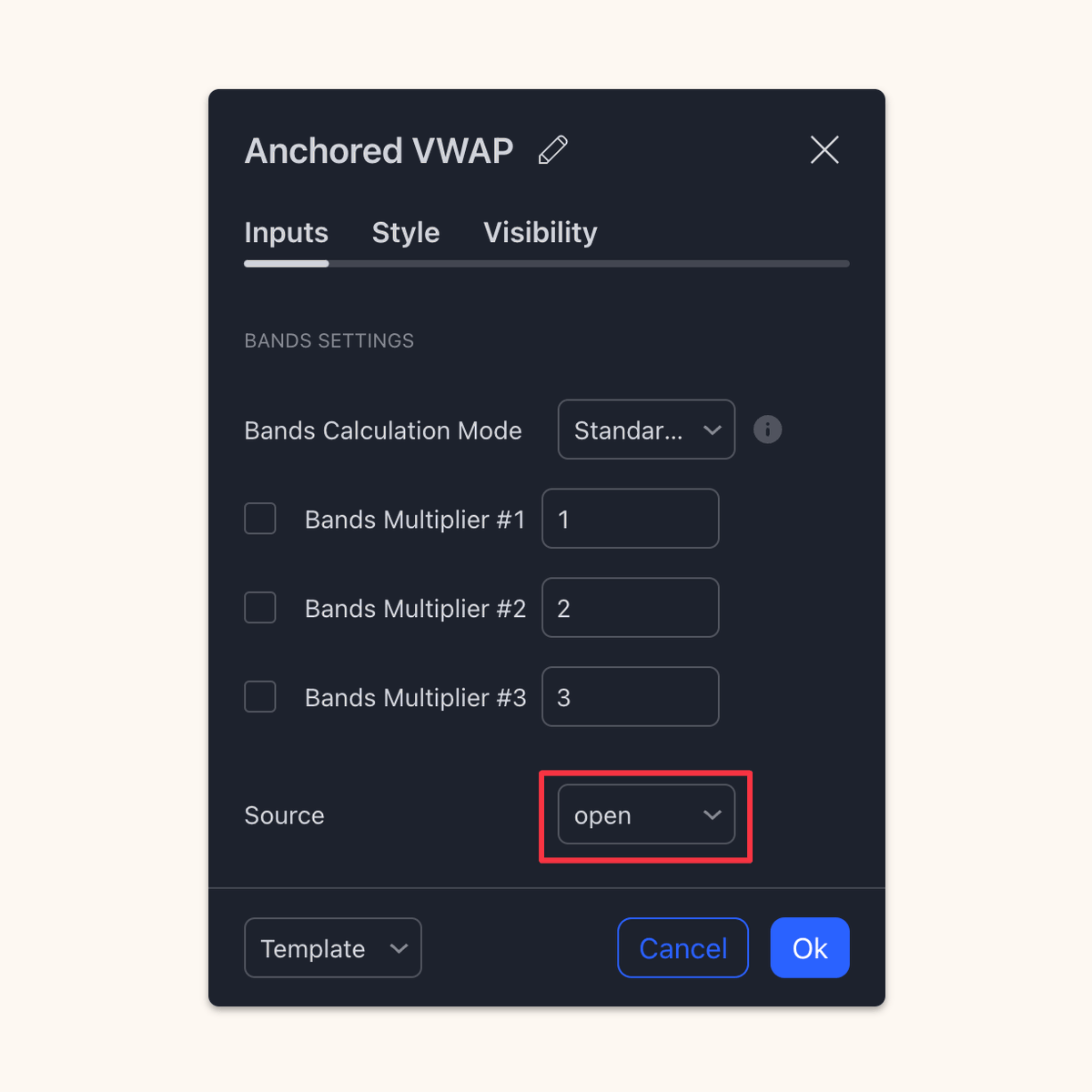
- Placing from major pivot highs & lows
- At the start of ranges
- Breakout/impulse points
Important:
Ensure your anchored VWAP setting is set to "open" if you want to replicate my use cases.
3
Pivots:
I primarily trade reversals, inherently then aiming to catch different pivots.
Anchored VWAP from pivots can indicate strength or weakness when level is lost or reclaimed.
Allowing me to cut trades sooner & not allowing for round trips.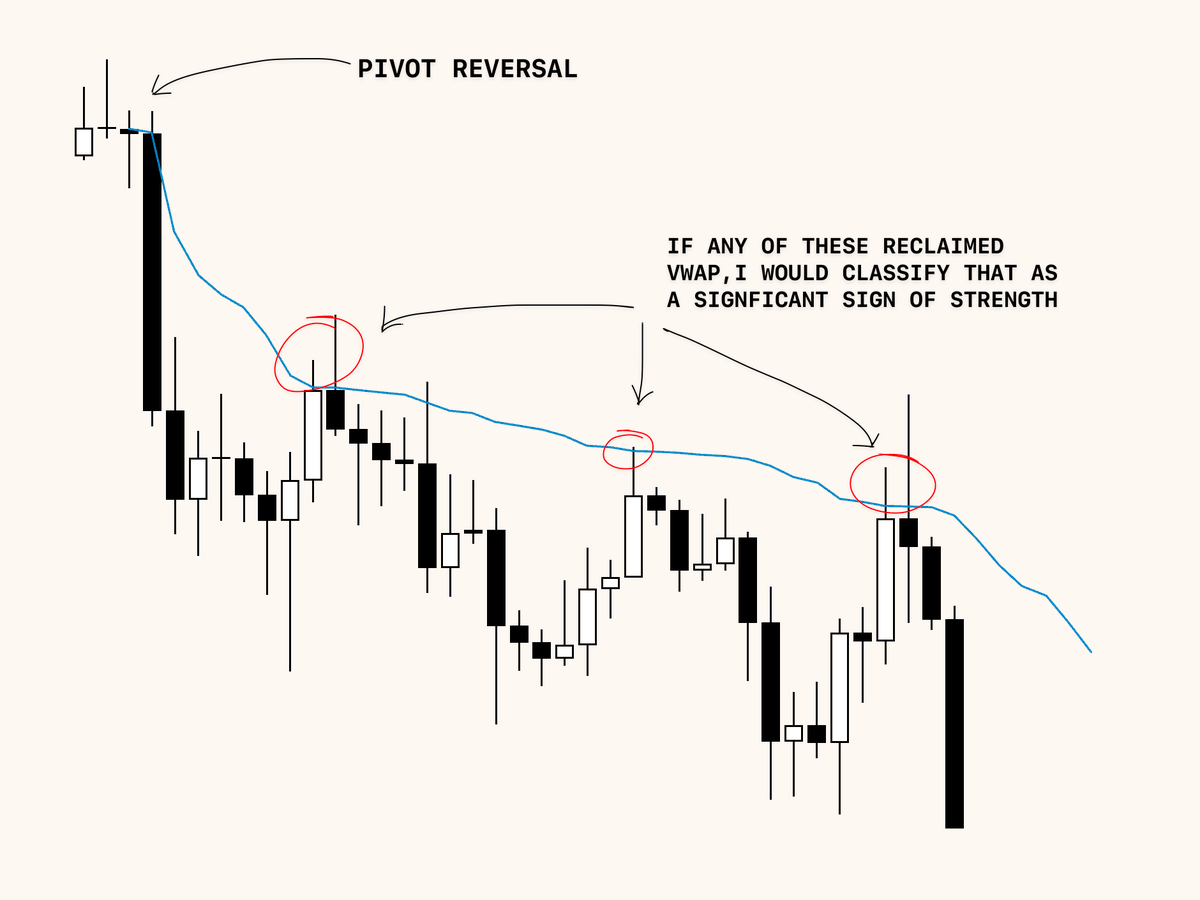
I primarily trade reversals, inherently then aiming to catch different pivots.
Anchored VWAP from pivots can indicate strength or weakness when level is lost or reclaimed.
Allowing me to cut trades sooner & not allowing for round trips.
4
Start of ranges:
An alternative or to be used in conjunction with the generic volume profile POC.
When looking for "long-range lows" or "short-range highs," if I have no initial clear first trouble area, this is my go-to level for having a chance to see it get hit.
An alternative or to be used in conjunction with the generic volume profile POC.
When looking for "long-range lows" or "short-range highs," if I have no initial clear first trouble area, this is my go-to level for having a chance to see it get hit.
5
Ranges [2]:
Anchoring within a range also helps identify market control. If below anchored vwap, anticipate range lows unless vwap is reclaimed.
Very useful to quickly anchor this tool upon identifying your range, and gauging a bias upon where price is more likely to head next.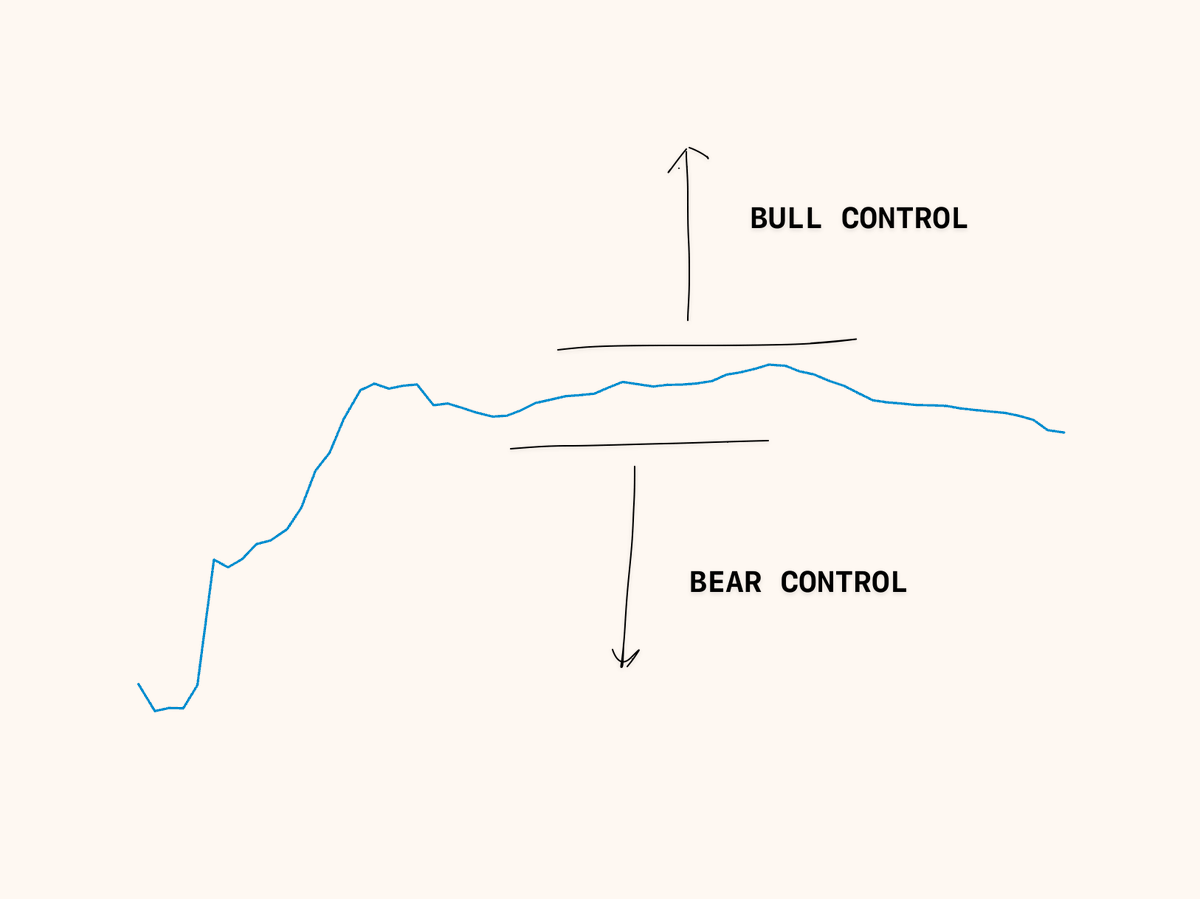
Anchoring within a range also helps identify market control. If below anchored vwap, anticipate range lows unless vwap is reclaimed.
Very useful to quickly anchor this tool upon identifying your range, and gauging a bias upon where price is more likely to head next.
6
Impulses:
After a range has occurred you will typically get this start of impulse region, where the range breaks from, this is a good place to anchor the vwap to.
Beyond the break of range, the anchored vwap can then be tested as either s/r level for further continuation ↓
After a range has occurred you will typically get this start of impulse region, where the range breaks from, this is a good place to anchor the vwap to.
Beyond the break of range, the anchored vwap can then be tested as either s/r level for further continuation ↓
7
Example:
Below shows a recent htf trade I took where I was long from a pivot low, and decided to close out the remaining 35% upon price losing the anchored vwap.
From there it saw much further subsequent downside ↓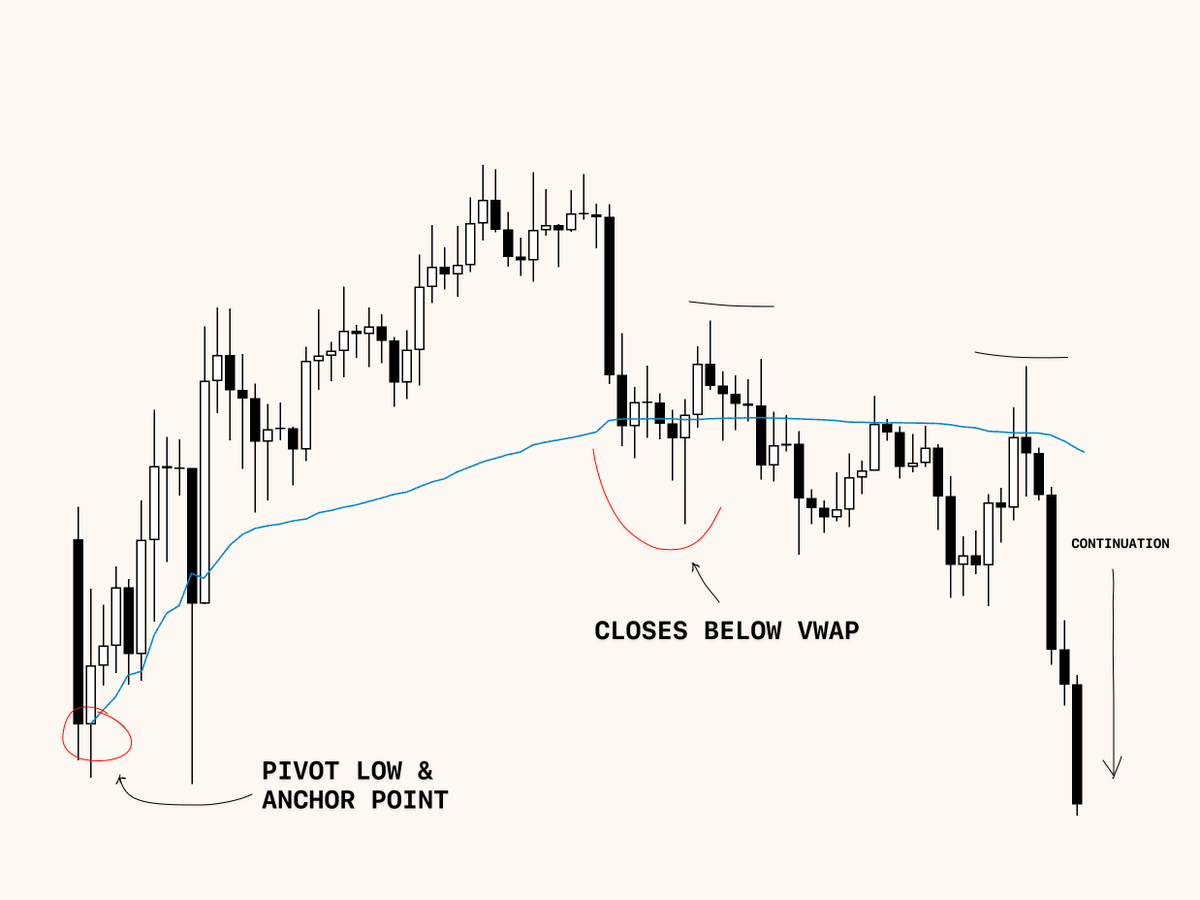
Below shows a recent htf trade I took where I was long from a pivot low, and decided to close out the remaining 35% upon price losing the anchored vwap.
From there it saw much further subsequent downside ↓
8
For further knowledge on vwaps and the anchored vwap tool, I HIGHLY recommend you check out threads made by @Exoticktrades & @Stoiiic on this topic.
Hope you found this valuable, likes are always appreciated.
For free Exocharts & journal check out my pinned post.
Hope you found this valuable, likes are always appreciated.
For free Exocharts & journal check out my pinned post.