Vlad Dracula, the Vampire Ruler Who was Vlad Dracula, the infamous...

TheBlackWolf@thewolvenhour
40 views
Apr 20, 2024
~9 min read
Advertisement
1
Vlad Dracula, the Vampire Ruler
Who was Vlad Dracula, the infamous ruler who inspired both terror and fascination? Was he a merciless tyrant, a bloodthirsty creature of the Night, or a misunderstood Christian leader fighting to preserve his homeland against relentless invaders?
I promised you a story that would combine myth, terror, bravery and War. Join me as we unravel the enigma of Vlad the Impaler, delving into the depths of his crypts to uncover the truth behind the legend, and perhaps, unearth the secrets that still haunt the land he once ruled.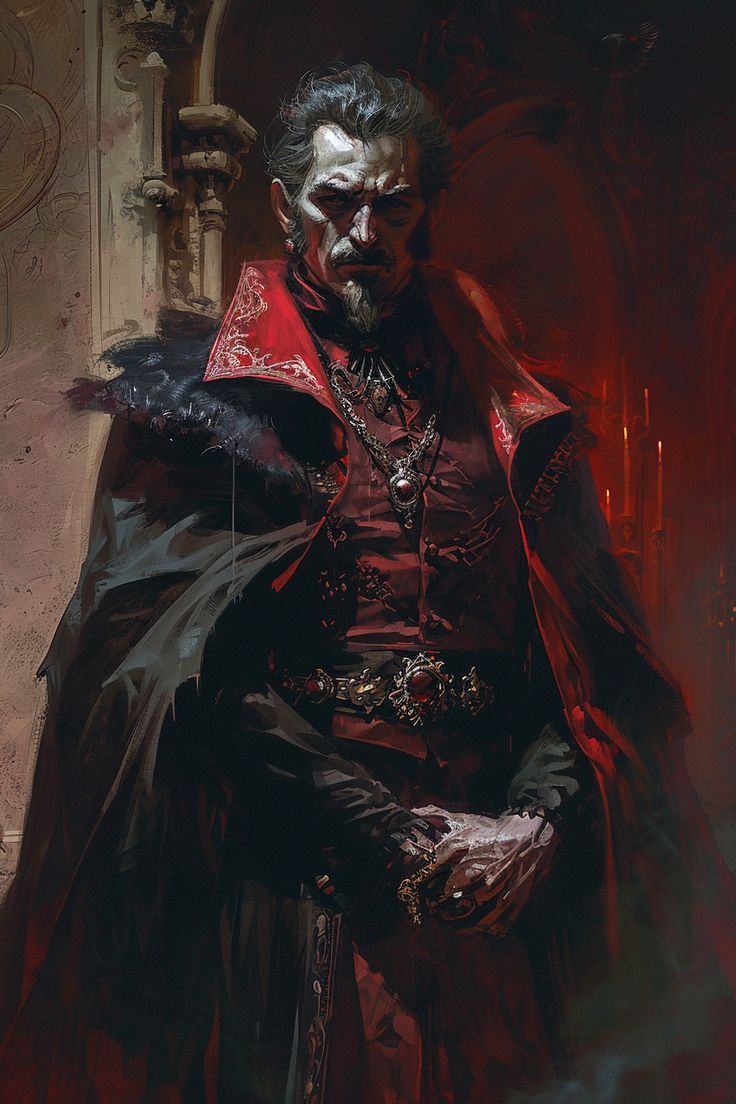
Who was Vlad Dracula, the infamous ruler who inspired both terror and fascination? Was he a merciless tyrant, a bloodthirsty creature of the Night, or a misunderstood Christian leader fighting to preserve his homeland against relentless invaders?
I promised you a story that would combine myth, terror, bravery and War. Join me as we unravel the enigma of Vlad the Impaler, delving into the depths of his crypts to uncover the truth behind the legend, and perhaps, unearth the secrets that still haunt the land he once ruled.
2
I love Romania; I’ve spent much time there and consider it a Home; what you may not know is that Dracula is their national Hero. Vlad III, known in Romanian as Vlad Țepeș, ruled as Voivode of Wallachia (a sort of Eastern Duke) three times between 1448 and his death in 1476/77. He is often considered one of the most important rulers in Wallachian history.
Byzantium had already fallen to the Turks who were already spreading in Eastern Europe, consolidating their infidel grip over the Cristians in the Balkans and beyond. Vlad was the second son of Vlad Dracul, who became the ruler of Wallachia in 1436. Dracul means Dragon, and it was assigned to members of the Order of the Dragon. Dracula is the Slavonic form of Dracul, meaning ‘the son of Dracul’. In modern Romanian, “Dracul” means ‘the devil’ which spices up even more the story and has sinister implications.
Byzantium had already fallen to the Turks who were already spreading in Eastern Europe, consolidating their infidel grip over the Cristians in the Balkans and beyond. Vlad was the second son of Vlad Dracul, who became the ruler of Wallachia in 1436. Dracul means Dragon, and it was assigned to members of the Order of the Dragon. Dracula is the Slavonic form of Dracul, meaning ‘the son of Dracul’. In modern Romanian, “Dracul” means ‘the devil’ which spices up even more the story and has sinister implications.
3
The Order of the Dragon, in Latin Societas Draconistarum - literally "Society of the Dragon-like", was a monarchical chivalric order only for selected higher aristocracy and monarchs, founded in 1408 by Sigismund of Luxembourg, who was then King of Hungary and Croatia and later became Holy Roman Emperor. It was fashioned after the military orders of the Crusades, requiring its initiates to defend the cross and fight the enemies of Christianity, particularly the Ottoman Empire.
According to standard operating procedure, the Ottomans demanded from their vassals/subjects to send their sons to occupied Constantinople as guests/hostages in case the fathers had any second thoughts. The then sultan Mehmed II kept little Vlad as prisoner at his court. Vlad becomes fluent in Turkish and Ottoman habits, along with receiving military education, impaling included. In 1447 his father dies by a Hungarian invasion and Vlad comes to take over the throne supported by an Ottoman army.

According to standard operating procedure, the Ottomans demanded from their vassals/subjects to send their sons to occupied Constantinople as guests/hostages in case the fathers had any second thoughts. The then sultan Mehmed II kept little Vlad as prisoner at his court. Vlad becomes fluent in Turkish and Ottoman habits, along with receiving military education, impaling included. In 1447 his father dies by a Hungarian invasion and Vlad comes to take over the throne supported by an Ottoman army.
4
Wallachia was a boiling geopolitical melting pot at the crossroad between the Kingdoms of Hungary and Poland and the Ottoman Empire. Vlad's eldest brother Mircea and their father were murdered after John Hunyadi, regent-governor of Hungary, invaded Wallachia in 1447. Hunyadi installed Vlad's second cousin, Vladislav II, as the new voivode.
Hunyadi launched a military campaign against the Ottomans in the autumn of 1448, and Vladislav accompanied him. Vlad broke into Wallachia with Ottoman support in October, but Vladislav returned, and Vlad sought refuge in the Ottoman Empire before the end of the year. Vlad went to Moldavia in 1449 or 1450 and later to Hungary.
Hunyadi launched a military campaign against the Ottomans in the autumn of 1448, and Vladislav accompanied him. Vlad broke into Wallachia with Ottoman support in October, but Vladislav returned, and Vlad sought refuge in the Ottoman Empire before the end of the year. Vlad went to Moldavia in 1449 or 1450 and later to Hungary.
5
In 1456 Vlad invaded Wallachia with Hungarian support this time, killing and overthrowing Vladislav. Our boy began a purge among the Wallachian boyars to strengthen his position before moving against the Transylvanian Saxons, who supported his opponents. Vlad plundered the Saxon villages, taking the captured people to Wallachia, where he had them impaled; this is where the strange part starts, as he starts descending down a sinister, dark path.
The Ottoman Sultan then ordered Vlad to pay homage to him personally, but Vlad had dinner plans apparently and did not have time for Turkish delights. The Sultan sent two emissaries who acted gangsta and refused to take off their silly hats in front of our boy, showing him disrespect, like the vassal they considered them to be; this was the moment they realized, they F..ed up; he captured them, pinned the silly turkey hats to their heads (probably with nails, since they liked them so much – AND DON’T YOU DARE TELLING ME YOU DIDN’T SMIRK) and then impaled the turkey bois.
The Ottoman Sultan then ordered Vlad to pay homage to him personally, but Vlad had dinner plans apparently and did not have time for Turkish delights. The Sultan sent two emissaries who acted gangsta and refused to take off their silly hats in front of our boy, showing him disrespect, like the vassal they considered them to be; this was the moment they realized, they F..ed up; he captured them, pinned the silly turkey hats to their heads (probably with nails, since they liked them so much – AND DON’T YOU DARE TELLING ME YOU DIDN’T SMIRK) and then impaled the turkey bois.
6
But that wasn’t enough for Dracula. In February 1462, he attacked Ottoman territory, massacring tens of thousands of Turks and Muslim Bulgarians. Mehmed launched a campaign against Wallachia to replace Vlad with Vlad's younger brother, Radu.
Having learnt of Vlad's invasion, Mehmed II raised an army of more than 150,000 strong that was said to be "second in size only to the one" that occupied Constantinople in 1453, according to Chalkokondyles. The Ottoman fleet landed at Brăila (which was the only Wallachian port on the Danube) in May.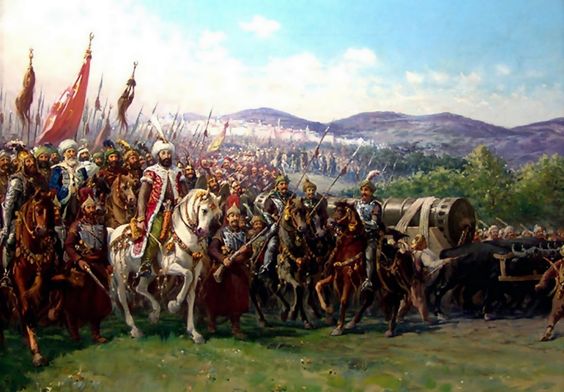
Having learnt of Vlad's invasion, Mehmed II raised an army of more than 150,000 strong that was said to be "second in size only to the one" that occupied Constantinople in 1453, according to Chalkokondyles. The Ottoman fleet landed at Brăila (which was the only Wallachian port on the Danube) in May.
7
Vlad – this mad dude - attempted with a commando-type raid to capture the sultan himself at Târgoviște during the night of 16–17 June 1462. Under the cover of night, Vlad and his men descended upon the Ottoman camp like wraiths, their faces masked by the darkness and their swords glinting in the moonlight. With stealth and precision, they infiltrated the enemy lines, bypassing guards and patrols with a skill that spoke of years of training and discipline. They could also speak Turkish and knew the way their camps were organized.
Our madman managed to get into the camp and close to the Royal tent; his target: Mehmed II himself. But as the raid party closed in on their objective, disaster struck. The alarm was raised, probably because they stormed the wrong tent, and the Ottoman soldiers surged forth to meet their attackers in a furious melee. Vlad's forces fought bravely, cutting a swath through their foes with a ferocity that bordered on madness. Yet, despite their valor, they were ultimately overwhelmed by the sheer numbers arrayed against them.
In the chaos of battle, Vlad himself was forced to retreat, his dreams of capturing the Sultan dashed upon the bloody sands of the battlefield. The raid had failed, but its audacity sent shockwaves throughout the Ottoman Empire, earning Vlad a fearsome reputation as a cunning and unpredictable adversary.
Our madman managed to get into the camp and close to the Royal tent; his target: Mehmed II himself. But as the raid party closed in on their objective, disaster struck. The alarm was raised, probably because they stormed the wrong tent, and the Ottoman soldiers surged forth to meet their attackers in a furious melee. Vlad's forces fought bravely, cutting a swath through their foes with a ferocity that bordered on madness. Yet, despite their valor, they were ultimately overwhelmed by the sheer numbers arrayed against them.
In the chaos of battle, Vlad himself was forced to retreat, his dreams of capturing the Sultan dashed upon the bloody sands of the battlefield. The raid had failed, but its audacity sent shockwaves throughout the Ottoman Empire, earning Vlad a fearsome reputation as a cunning and unpredictable adversary.
8
Mehmed entered Târgoviște at the end of June. The town had been deserted, but the Ottomans were horrified to discover a "forest of the impaled" (thousands of stakes with the carcasses of executed people), according to Chalkokondyles.
Chalkokondyles also writes: There were large stakes there on which, as it was said, about twenty thousand men, women, and children had been spitted, quite a sight for the Turks and the sultan himself. The sultan was seized with amazement and said that it was not possible to deprive of his country a man who had done such great deeds, who had such a diabolical understanding of how to govern his realm and its people. And he said that a man who had done such things was worth much. The rest of the Turks were dumbfounded when they saw the multitude of men on the stakes. There were infants too affixed to their mothers on the stakes, and birds had made their nests in their entrails.
Chalkokondyles also writes: There were large stakes there on which, as it was said, about twenty thousand men, women, and children had been spitted, quite a sight for the Turks and the sultan himself. The sultan was seized with amazement and said that it was not possible to deprive of his country a man who had done such great deeds, who had such a diabolical understanding of how to govern his realm and its people. And he said that a man who had done such things was worth much. The rest of the Turks were dumbfounded when they saw the multitude of men on the stakes. There were infants too affixed to their mothers on the stakes, and birds had made their nests in their entrails.
9
The Ottoman army retreated after multiple skirmishes but Vlad had already turned. Whispers spread like wildfire through the cobblestone streets of his kingdom, tales spun of unspeakable atrocities committed within the grim fortress of Poenari. Villagers spoke in hushed tones of impaled corpses lining the roads, a grisly warning to any who dared defy the will of the voivode.
Yet, amidst the horror, a question lingered like a ghostly spectre: What drove Vlad Dracula to such depths of depravity? Was it the spectre of his traumatic childhood, held captive by the Ottoman Turks and witness to unspeakable cruelties? Or did the dark forces that whispered in the night hold sway over his soul, guiding his hand towards acts of unspeakable cruelty?
Yet, amidst the horror, a question lingered like a ghostly spectre: What drove Vlad Dracula to such depths of depravity? Was it the spectre of his traumatic childhood, held captive by the Ottoman Turks and witness to unspeakable cruelties? Or did the dark forces that whispered in the night hold sway over his soul, guiding his hand towards acts of unspeakable cruelty?
10
Books describing Vlad's cruel acts were among the first bestsellers in the German-speaking territories. In Russia, popular stories suggested that Vlad was able to strengthen his central government only by applying brutal punishments, and many 19th-century Romanian historians adopted a similar view.
Legends arose, painting Vlad as a creature of the night, a vampire who drank the blood of his enemies to sustain his unholy reign. It is also known that he cried tears of blood. But truth, as ever, is a slippery thing, elusive and obscured by the mists of time. Perhaps the answers lie buried in the dusty tomes of forgotten libraries or whispered by the restless spirits that haunt the ruins of his castle.
Legends arose, painting Vlad as a creature of the night, a vampire who drank the blood of his enemies to sustain his unholy reign. It is also known that he cried tears of blood. But truth, as ever, is a slippery thing, elusive and obscured by the mists of time. Perhaps the answers lie buried in the dusty tomes of forgotten libraries or whispered by the restless spirits that haunt the ruins of his castle.
11
The precise circumstances surrounding the death of Vlad III, commonly known as Vlad the Impaler or Vlad Dracula, remain shrouded in mystery and debate. However, historical accounts suggest that he met his end on the battlefield in 1476 during one of his many conflicts with the Ottoman Empire. Other accounts have him being betrayed by his allies or assassinated.
Regardless of the exact circumstances, Vlad Dracula's death marked the conclusion of a tumultuous and violent chapter in the history of Wallachia. His legacy, however, would endure far beyond the battlefield, as his name instilled fear in the hearts of the Turks, including the sultan himself.
Regardless of the exact circumstances, Vlad Dracula's death marked the conclusion of a tumultuous and violent chapter in the history of Wallachia. His legacy, however, would endure far beyond the battlefield, as his name instilled fear in the hearts of the Turks, including the sultan himself.
12
Vlad the Impaler’s legacy is complex and controversial. He is widely regarded as a national hero in Romania, where he is seen as a defender of the Christian faith and the Romanian identity against the Ottoman threat. He is also admired for his justice and his reforms, such as building fortresses, roads, and bridges, improving the economy and the trade, and protecting the peasants from the exploitation of the nobles.
Some say that on moonlit nights, the ghostly figure of Vlad Dracula can still be seen stalking the halls of his ancient castle, or the forest around it; I have personally lived on those mountains, roaming with my axe in those very woods and I can tell you with certainty: there is a certain darkness that you do not want to find yourself engulfed by in those woods. Some claim to hear the chilling sound of impaled souls wailing in the night, their anguished cries a grim reminder of the horrors that once transpired within those blood-stained walls. Some others still se shadows roaming at the edge of those darks forests, while wolves and dogs howl alike. My dogs were going crazy every night.
As the mists of time enshroud the tale of Vlad Dracula, whispers linger in the shadows, carrying with them the echoes of his dark legacy. His death may have brought an end to his mortal existence, but his presence lingers like a haunting specter, haunting the land he once ruled.
Some say that on moonlit nights, the ghostly figure of Vlad Dracula can still be seen stalking the halls of his ancient castle, or the forest around it; I have personally lived on those mountains, roaming with my axe in those very woods and I can tell you with certainty: there is a certain darkness that you do not want to find yourself engulfed by in those woods. Some claim to hear the chilling sound of impaled souls wailing in the night, their anguished cries a grim reminder of the horrors that once transpired within those blood-stained walls. Some others still se shadows roaming at the edge of those darks forests, while wolves and dogs howl alike. My dogs were going crazy every night.
As the mists of time enshroud the tale of Vlad Dracula, whispers linger in the shadows, carrying with them the echoes of his dark legacy. His death may have brought an end to his mortal existence, but his presence lingers like a haunting specter, haunting the land he once ruled.
