The tongue plays a central role in breathing, gait, and posture of...

CO2 + T3 + B1@spheno_xiphoid
24 views
Jan 28, 2025
~3 min read
Advertisement
1
The tongue plays a central role in breathing, gait, and posture of the entire body. Contrary to popular belief, its own posture is never static but always in motion. How the tongue moves will go on to influence your metabolism, nervous system, and the shape of your body/face.


2
The most basic function of the tongue is to open the airways and promote breathing through the nose. This is accomplished by the tongue moving forward/upward during the inhale, expanding the pharynx, and creating a vacuum seal in the mouth. The tongue relaxes upon exhaling.

3
Failure to perform this movement will limit the expansion of the pharynx. Without a seal in the mouth, the nose must work harder to draw in (less) air. Chronic snorers often feature a loss in tone of the genioglossus muscle, the primary mover for this act.

4
This motion is also necessary for craniosacral rhythm as the tongue features connections to the sphenoid and temporal bones. The contractions during inhale pull the bones into flexion, expanding the skull in unison with the muscles of the neck (gills).


CO2 + T3 + B1@spheno_xiphoid
Movement comes from the parasympathetically innervated muscles of the throat, tongue, and neck. These contract during the inhale, expanding the airways/cranium. These muscles pull on the sphenoid, temporal bones, and occiput.
5
Insufficient movement not only makes breathing more difficult but reduces the pumping of CSF through the brain and spinal cord. The health of the central nervous system as well as the shape of the face/skull depends on the tongue.


CO2 + T3 + B1@spheno_xiphoid
The skull and face expand (widen) during inhalation, drawing the nourishing CSF into the brain. It closes back up (narrows) during the exhale to pump CSF out into the rest of the spine. In time, the skull takes on the shape that it assumes the most.
6
Connections to the tongue span the entire body. The lingual chain is a band of connective tissue that runs from the tongue down through the body into the big toe and thumb. This means that whatever happens with the tongue will be felt through the limbs and vice versa.
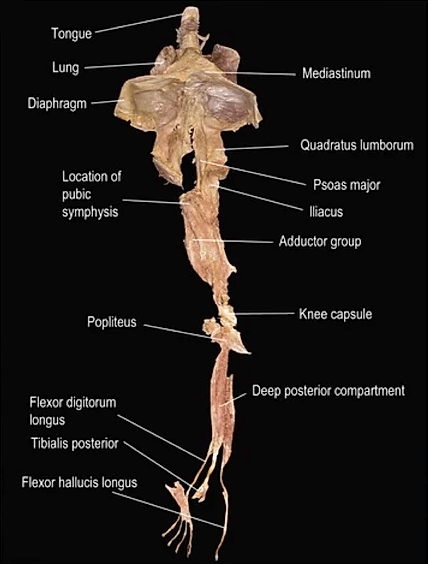

7
The tongue is also bound to the eyes, whose relationship with the suboccipital and paraspinal muscles dictates the position of the spine in space. The eyes and tongue will track together during lateral movements to maintain balance.


CO2 + T3 + B1@spheno_xiphoid
Your posture is determined by your eyes. This occurs with the help of small muscles on the bottom of your skull, the subocciptals. Named for their position below the occipital bone, these muscles are also sensory organs due to the concentration of spindle cells within them.
8
The tongue should be thought of as a plug in the mouth. Each time you inhale you should feel the tongue (especially the rear portion that attaches to the throat) being sucked forward and upward onto the palate. This is the position that is often talked about in “mewing”.

9
Reinforcing some the muscles involved can be done by brushing your tongue against the roof of your mouth. The ridges on the hard palate also help to scrape debris and bacteria that may linger and cause issues such as endotoxin accumulation in the mouth.

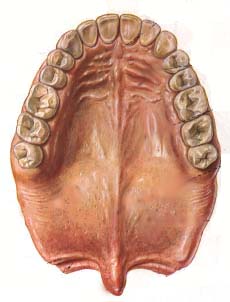
10
Stretching the tongue can be done through the Khechari Mudra: reaching your tongue back into your nose. This usually takes decades to master as most people only ever reach their soft palate (that's OK). Regardless, a stretch of the tongue muscles takes place during this exercise.

11
Lateral eye movement exercises can be done with the tongue as well. Your tongue will travel with your eyes as the gaze shifts from one side to another. Keeping this in mind can help to recenter posture and eliminate noticeable asymmetries that may be present in the body and face.


12
What are some signs that your tongue may not be functioning as needed?
-Postural issues (especially in the neck)
-A recessed jaw/TMD
-Malocclusion
-Snoring/mouth breathing
-Swallowing issues
-Digestive problems
-ANS dysfunction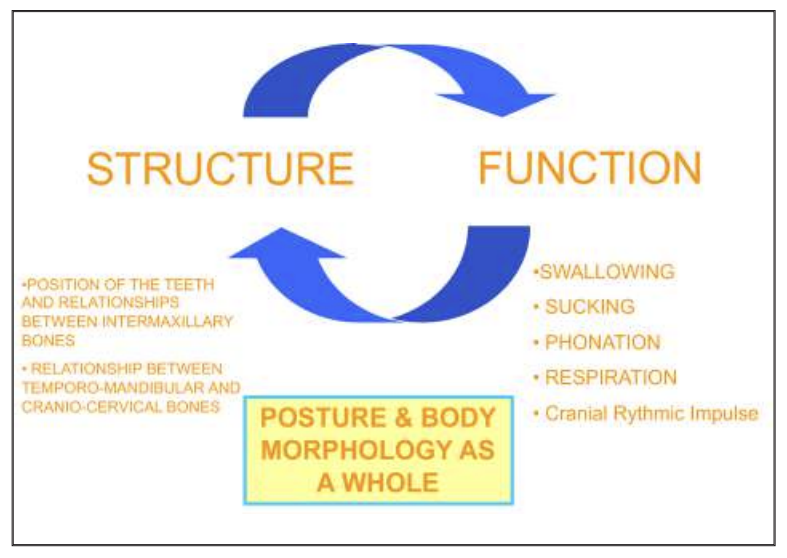

-Postural issues (especially in the neck)
-A recessed jaw/TMD
-Malocclusion
-Snoring/mouth breathing
-Swallowing issues
-Digestive problems
-ANS dysfunction
13
What can negatively affect the posture/motion of the tongue?
-ANS dysfunction (thiamine deficiencies)
-Hyperventilation (especially through the mouth)
-Gut irritation
-Stress
-Tongue/lip ties
-Damage to cranial nerves
-ANS dysfunction (thiamine deficiencies)
-Hyperventilation (especially through the mouth)
-Gut irritation
-Stress
-Tongue/lip ties
-Damage to cranial nerves
14
What can help the posture/motion of the tongue?
-Slowed breathing patterns
-Vagal/Parasympathetic stimulation
-A clean/happy gut
-Relaxing/avoiding unnecessary stress
-Sufficient thyroid metabolism
-Slowed breathing patterns
-Vagal/Parasympathetic stimulation
-A clean/happy gut
-Relaxing/avoiding unnecessary stress
-Sufficient thyroid metabolism
