1/ The Real-World Asset revolution in #DeFi is already here — but...

Ignas@DefiIgnas
66 views
Jan 04, 2024
~4 min read
Advertisement
1
1/ The Real-World Asset revolution in #DeFi is already here — but many aren't paying enough attention yet.
Here's the current state of RWAs to help you catch the wave 🌊
Here's the current state of RWAs to help you catch the wave 🌊
2
2/ Take a look at the top 10 lending protocols based on 180-day cumulative interest fees paid by users.
Four of them are RWA lending protocols (TrueFi, Maple Finance, Goldfinch, and Centrifuge).
MakerDAO is also generating 57% of its total revenue from RWAs.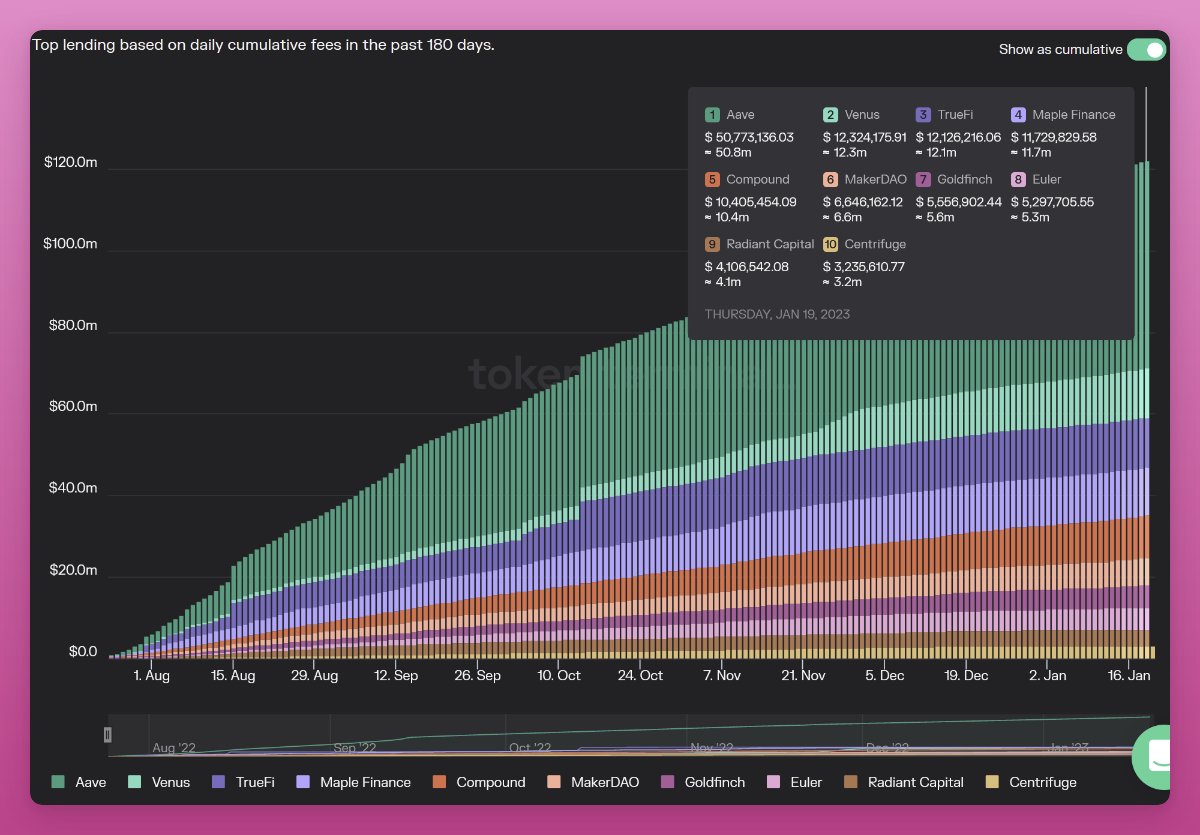
Four of them are RWA lending protocols (TrueFi, Maple Finance, Goldfinch, and Centrifuge).
MakerDAO is also generating 57% of its total revenue from RWAs.
3
3/ Borrowing demand on protocols like Aave or Compound depends mostly on leverage.
But RWA protocols offer under-collateralized lending outside the circular crypto world.
RWAs enable DeFi lending to grow from tens of billions to a $1.6T TradFi private credit loan market.

But RWA protocols offer under-collateralized lending outside the circular crypto world.
RWAs enable DeFi lending to grow from tens of billions to a $1.6T TradFi private credit loan market.
Zach Rynes | CLG@ChainLinkGod
The point of crypto is to improve society, which means providing products/services that people actually want in a superior format
In regards to finance, this means RWAs (traditional commodities, currencies, and securities)
Without RWAs, what exactly do we aim to achieve here?
In regards to finance, this means RWAs (traditional commodities, currencies, and securities)
Without RWAs, what exactly do we aim to achieve here?
4
4/ What's more, RWA protocol tokens are all below $100M circulating market cap:
• Centrifuge (CFG) - $90M
• Maple (MPL) - $46M
• TueFi (TRU) - $34M
• Goldfinch (GFI) - $20M
To put this in perspective, Aave has a market cap of $1.2B.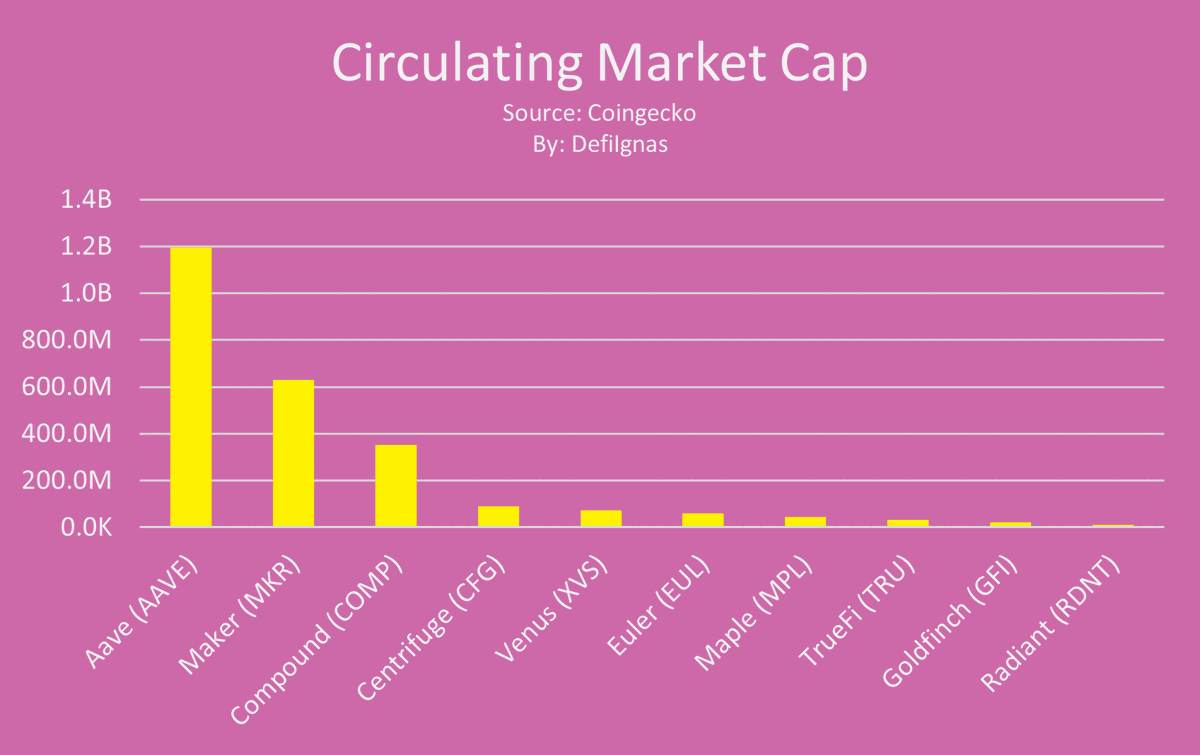
• Centrifuge (CFG) - $90M
• Maple (MPL) - $46M
• TueFi (TRU) - $34M
• Goldfinch (GFI) - $20M
To put this in perspective, Aave has a market cap of $1.2B.
5
5/ Below is the price-to-sales ratio based on 180 days cumulative interest fees (lower is better).
With the exception of $CFG and Maker, RWA lending protocols are cheaper than pure crypto lending protocols.
(Radiant incentivizes borrowing through liquidity mining).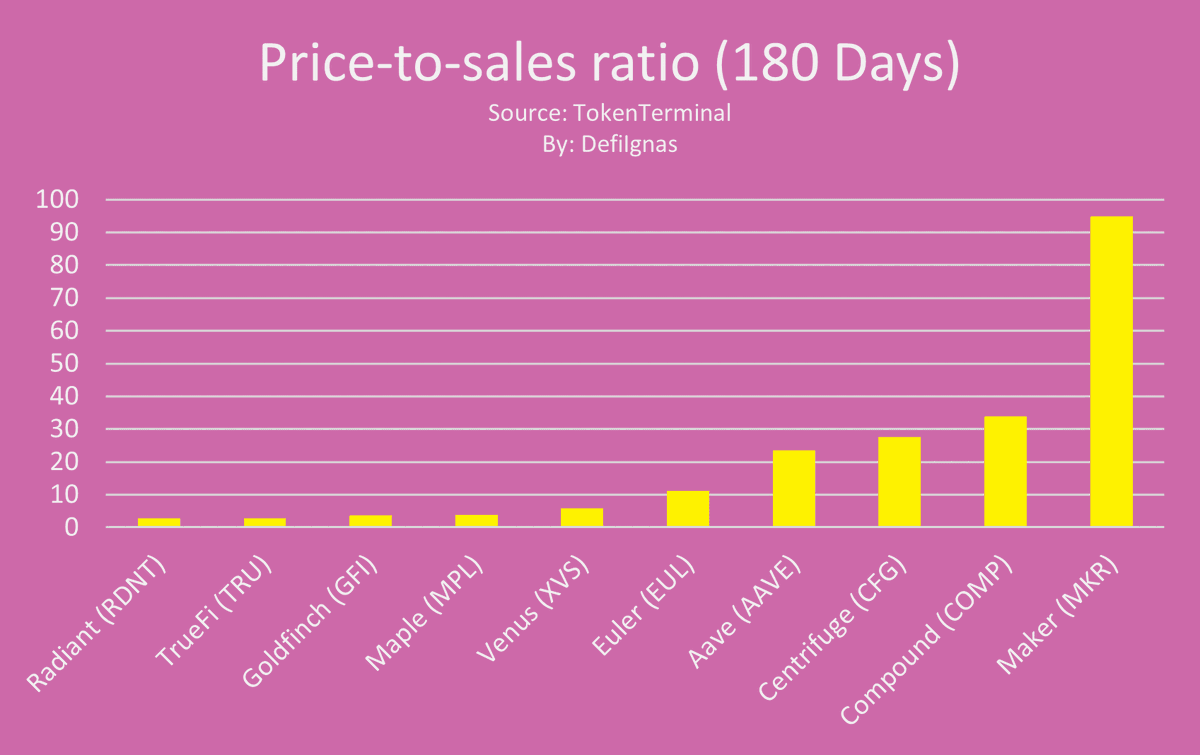
With the exception of $CFG and Maker, RWA lending protocols are cheaper than pure crypto lending protocols.
(Radiant incentivizes borrowing through liquidity mining).
6
6/ The current active loans value in 9 protocols stands at $361M:
Top 5 protocols by active loans are:
• Maple - $127M
• Goldfinch - $103M
• Centrifuge - $77M
• Credix - $30M
• TrueFi - $19M
This doesn't include most of Maker's RWAs, standing at ~$620M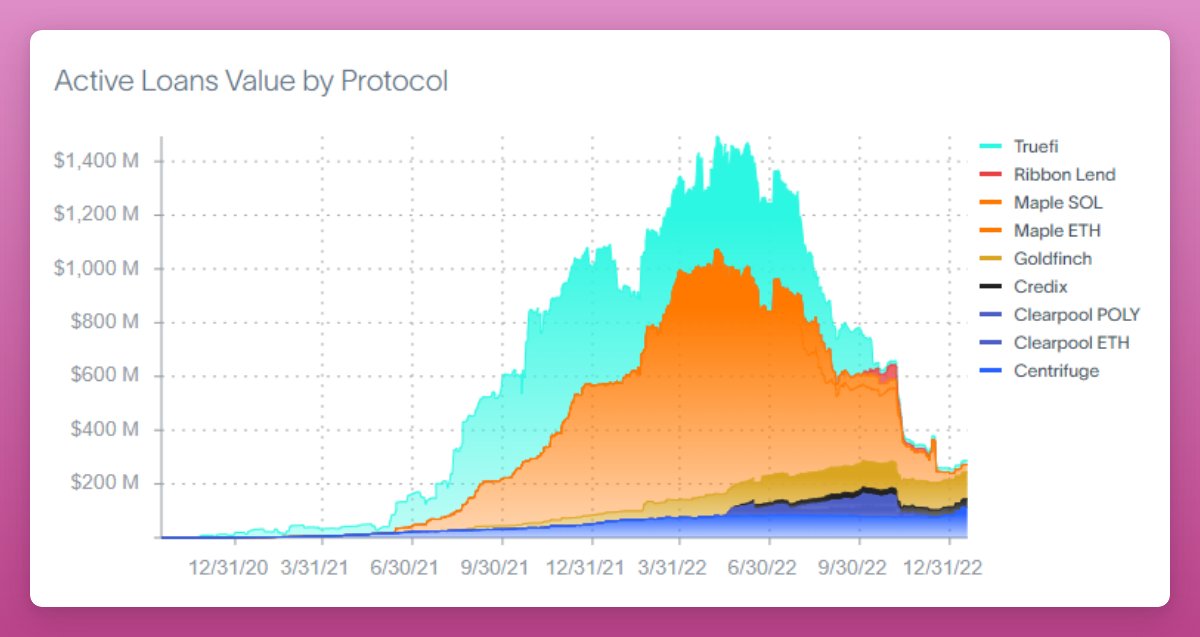
Top 5 protocols by active loans are:
• Maple - $127M
• Goldfinch - $103M
• Centrifuge - $77M
• Credix - $30M
• TrueFi - $19M
This doesn't include most of Maker's RWAs, standing at ~$620M
7
7/ The base average yield per protocol varies from 3.5% to 16%, and gets even higher when token rewards are included.
This is much higher than the current stablecoin yields on crypto-to-crypto lending protocols like Aave or Compound.
(Data: @rwa_xyz)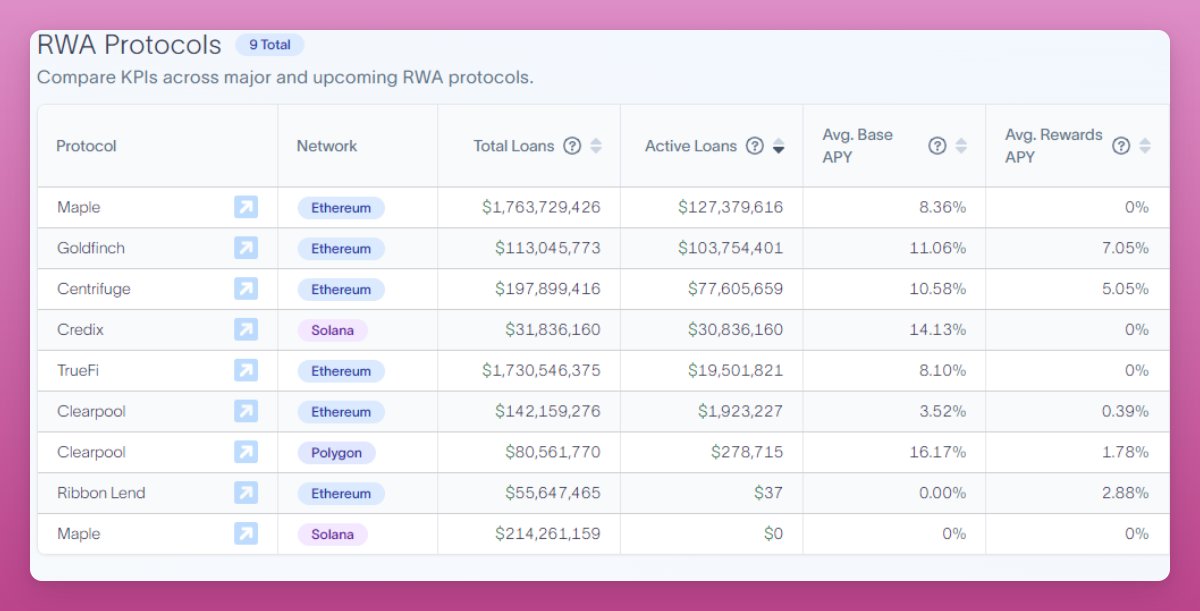
This is much higher than the current stablecoin yields on crypto-to-crypto lending protocols like Aave or Compound.
(Data: @rwa_xyz)
8
8/ The yield is generated by investing in private credit loans to real world businesses.
Top 3 sectors are:
• Fintech - $104M
• Real estate - $42M
• Carbon projects - $39M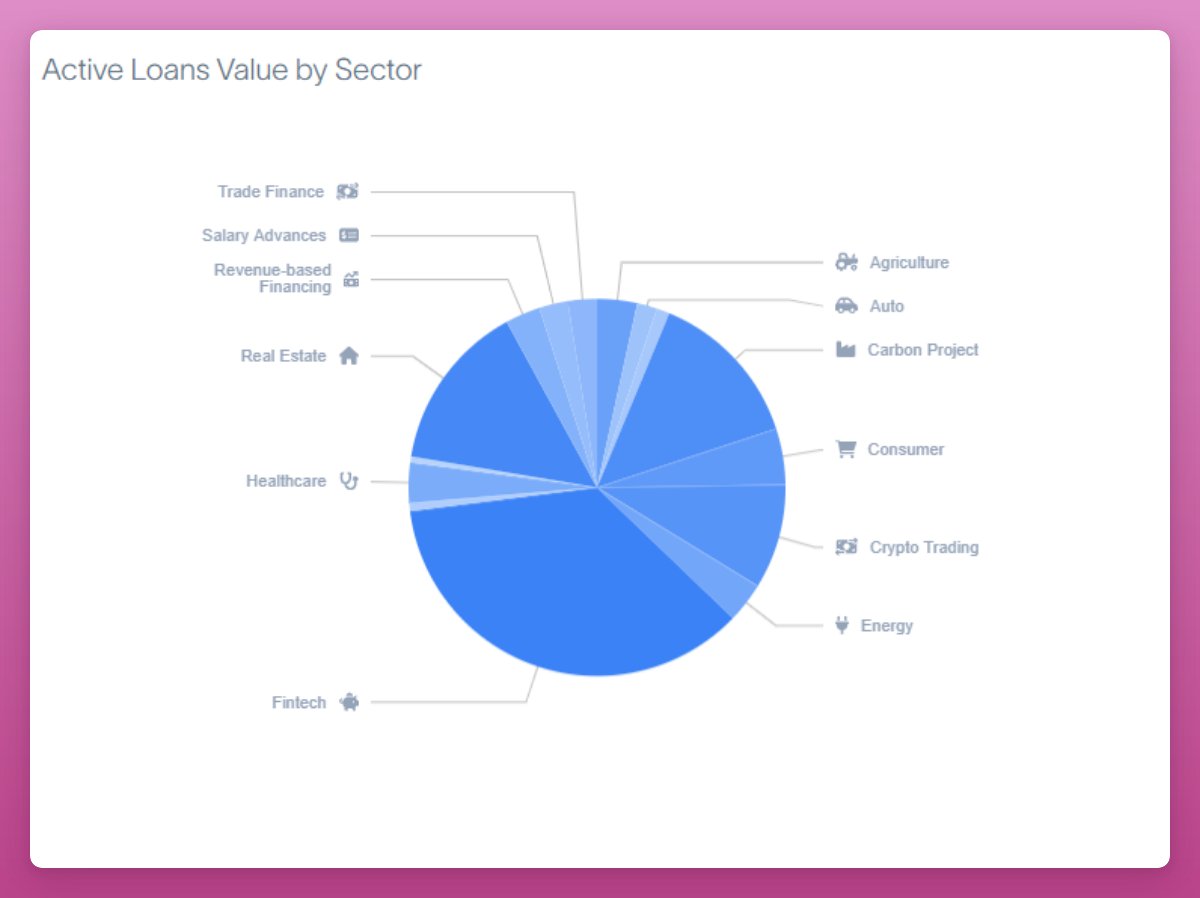
Top 3 sectors are:
• Fintech - $104M
• Real estate - $42M
• Carbon projects - $39M
9
9/ Carbon projects are offered by Goldfinch yielding up to 27% APY.
e.g. Almavest Basket is a credit fund that deploys capital for sustainable development into high-growth, impact-oriented companies in emerging markets.
It includes cook-stove suppliers or clean water solutions.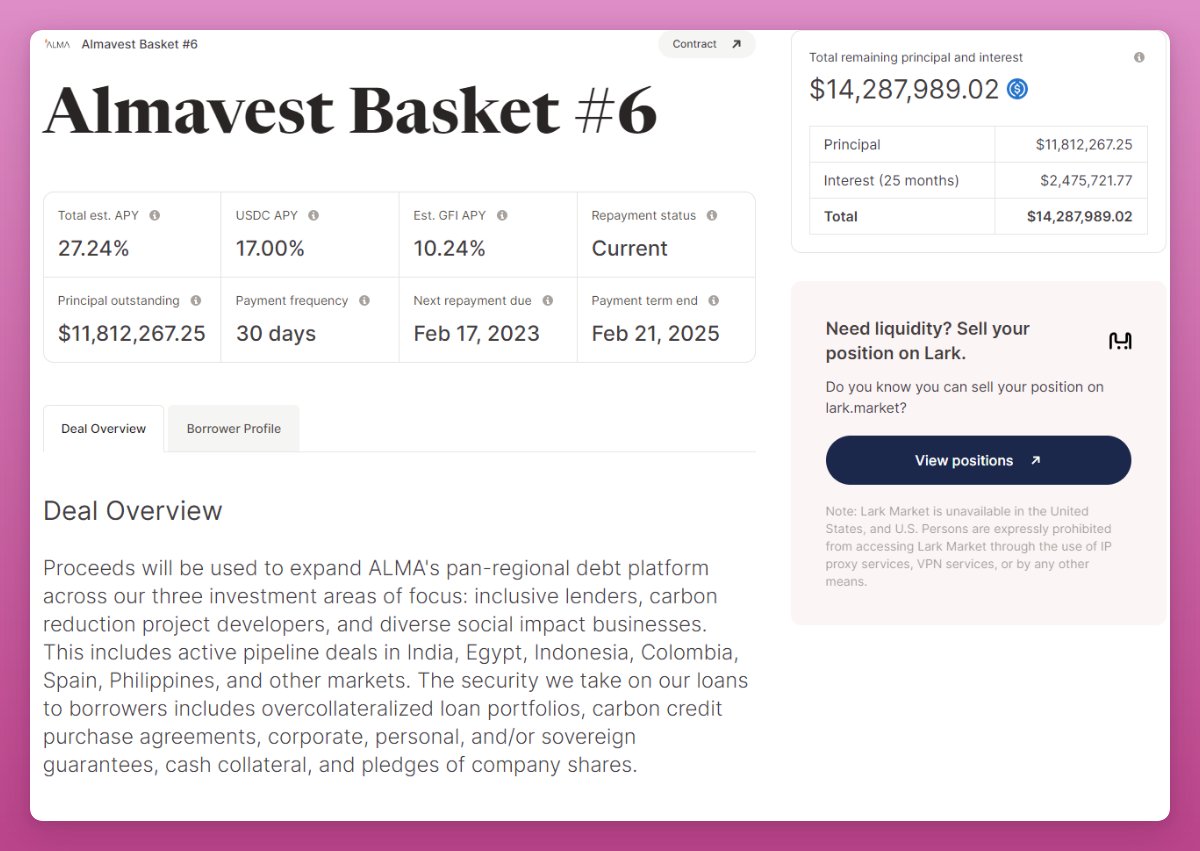
e.g. Almavest Basket is a credit fund that deploys capital for sustainable development into high-growth, impact-oriented companies in emerging markets.
It includes cook-stove suppliers or clean water solutions.
10
10/ Almost all Goldfinch's end-borrowers are located in the emerging and developing markets.
Mexico, Kenya, Nigeria, and the Philippines are the largest recipients.
Since launching in late 2020, Goldfinch hasn't had a single default.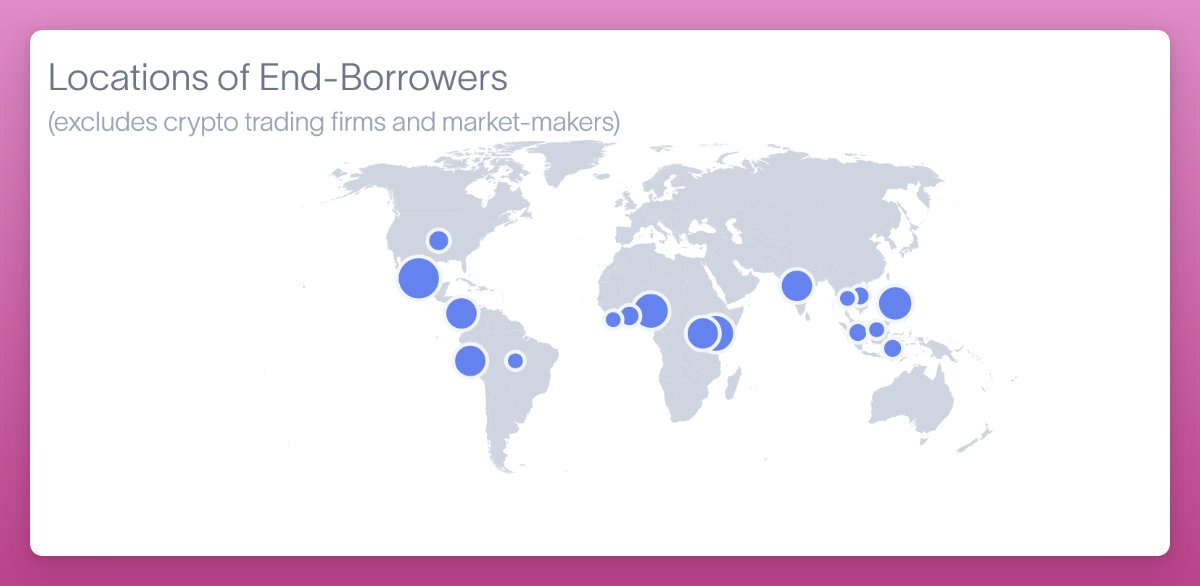
Mexico, Kenya, Nigeria, and the Philippines are the largest recipients.
Since launching in late 2020, Goldfinch hasn't had a single default.
11
11/ But it doesn't mean RWA lending is without risk.
Total defaulted loans by protocol:
• Maple: $68M
• TrueFi: $4.4M
• Centrifuge: $2.5M
Creditors on Maple defaulted after the FTX collapse, when Orthogonal and Auros market makers had their funds stuck in FTX.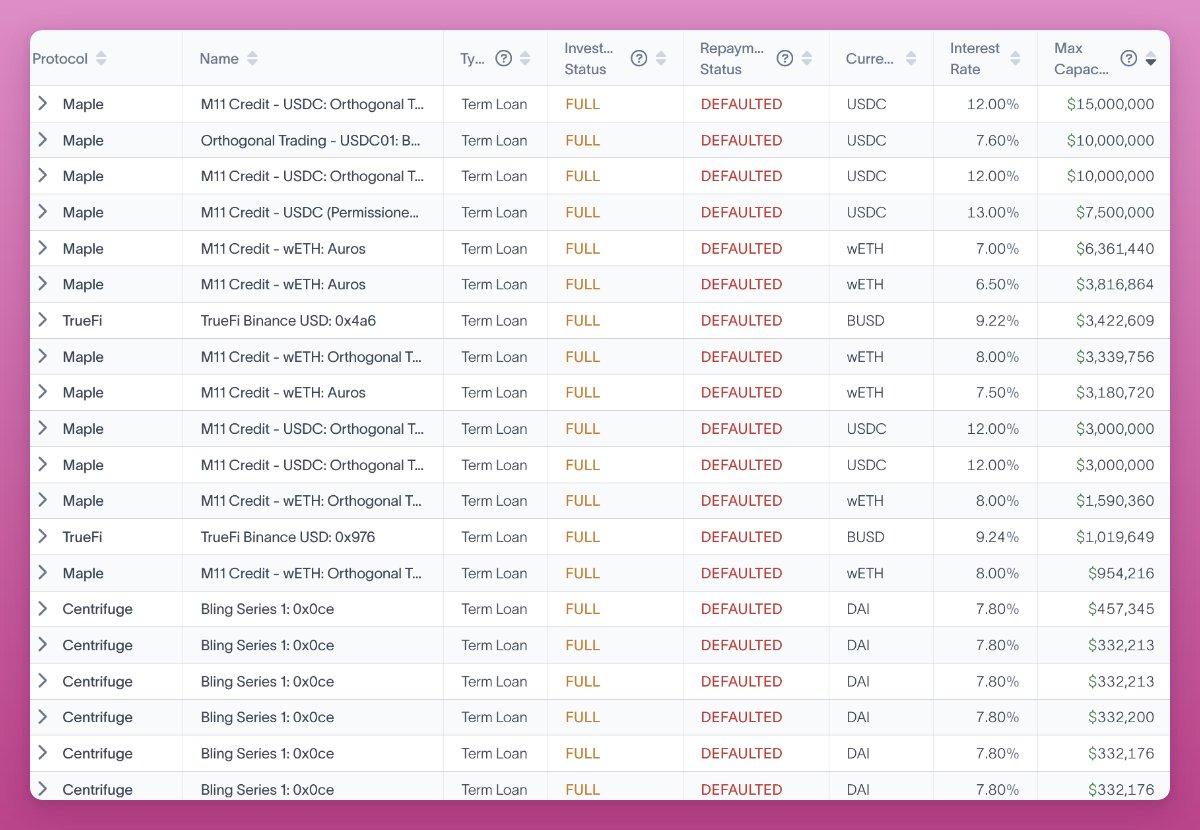
Total defaulted loans by protocol:
• Maple: $68M
• TrueFi: $4.4M
• Centrifuge: $2.5M
Creditors on Maple defaulted after the FTX collapse, when Orthogonal and Auros market makers had their funds stuck in FTX.
12
12/ Tokenomics of each protocol are slightly different, but some have staking for revenue sharing rewards.
As of writing token staking APYs are:
• $TRU - 22.94%
• $GFI - 9.37%
Maple staking used to generate yield, but defaults hit the protocol hard.
#realyield?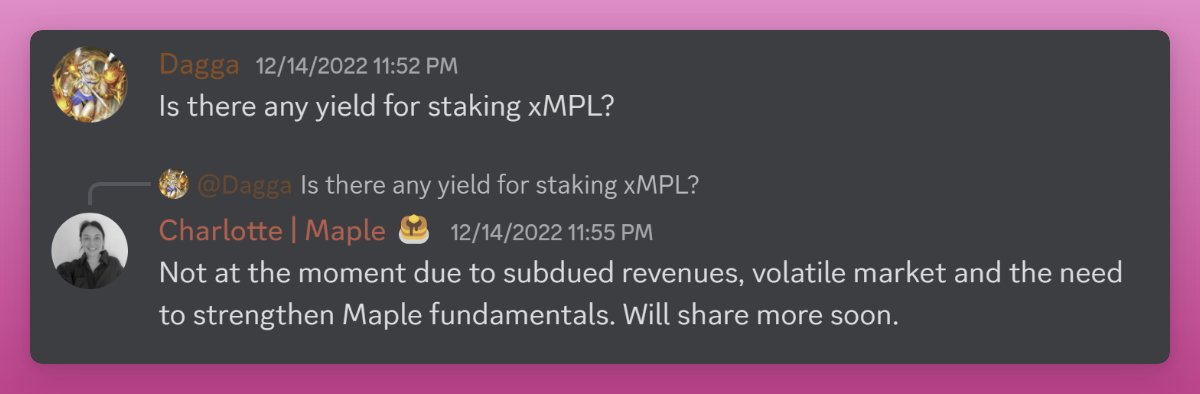
As of writing token staking APYs are:
• $TRU - 22.94%
• $GFI - 9.37%
Maple staking used to generate yield, but defaults hit the protocol hard.
#realyield?
13
13/ Maple recently announced Maple 2.0, which removes MPL from First Loss Capital.
The main goal of Maple 2.0 is to handle defaults more quickly by loan managers (known as "pool delegates"), who will suffer first in the event of a default.
maple.finance/news/maple-2-0…
The main goal of Maple 2.0 is to handle defaults more quickly by loan managers (known as "pool delegates"), who will suffer first in the event of a default.
maple.finance/news/maple-2-0…
14
14/ Goldfinch manages risk by having Auditors who vote to approve Borrowers.
Goldfich also requires all participants to pass 'Unique Entity Check'.
These are Soulbound tokens (SBTs) in a form of non-transferrable NFTs.
To learn more, check my thread below: 👇

Goldfich also requires all participants to pass 'Unique Entity Check'.
These are Soulbound tokens (SBTs) in a form of non-transferrable NFTs.
To learn more, check my thread below: 👇
Ignas@DefiIgnas
6/ @goldfinch_fi brings real-world investment to #DeFi with uncollateralized lending.
Instead of over-collateralization, borrowers show creditworthiness based on the collective assessment of other participants.
Yields on $USDC are around 17%.
Instead of over-collateralization, borrowers show creditworthiness based on the collective assessment of other participants.
Yields on $USDC are around 17%.
15
15/ TrueFi allows Portfolio Managers ("PMs") to run their own funds.
PMs decide who to lend to, and set loan terms with borrowers.
To become a PM, the TrueFi governance needs to approve the submission.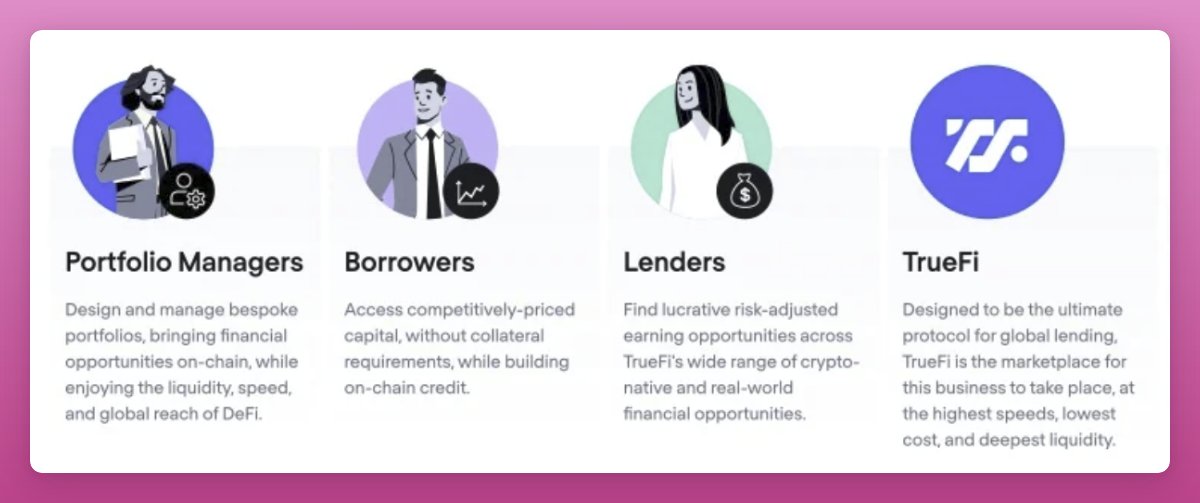
PMs decide who to lend to, and set loan terms with borrowers.
To become a PM, the TrueFi governance needs to approve the submission.
16
16/ Overall, I think RWA lending has a lot of room to grow: Maker went all-in on RWAs and Aave will introduce them too.
Only a few protocols exist at the moment, but with yields on crypto-to-crypto lending so low, more protocols will enter the space & boost yields in DeFi.
Only a few protocols exist at the moment, but with yields on crypto-to-crypto lending so low, more protocols will enter the space & boost yields in DeFi.
Ignas@DefiIgnas
1/ DeFi yields are low, but there's an opportunity to bring TradFi yields into the mix.
A few protocols are doing just that: 🧵
A few protocols are doing just that: 🧵
17
17/ I think RWA narrative boom is yet to come.
For 'Token Performance and Token On-Chain Data' check my free blog post on Substack.
I'm migrating my blog from Medium to Substack so make sure to subscribe 🔔
ignasdefi.substack.com/p/the-real-wor…
For 'Token Performance and Token On-Chain Data' check my free blog post on Substack.
I'm migrating my blog from Medium to Substack so make sure to subscribe 🔔
ignasdefi.substack.com/p/the-real-wor…
18
18/ What are your thoughts on RWAs?
Follow me @DefiIgnas for more.
Like/Retweet the first tweet below if you can:
Follow me @DefiIgnas for more.
Like/Retweet the first tweet below if you can:
Ignas@DefiIgnas
1/ The Real-World Asset revolution in #DeFi is already here — but many aren't paying enough attention yet.
Here's the current state of RWAs to help you catch the wave 🌊
Here's the current state of RWAs to help you catch the wave 🌊