WAS ALAHAZRAT SUPPORTIVE OF BRITISH RULE? Since they cannot refute...

ابنِ خان@IbneKhan01
108 views
Aug 27, 2026
~7 min read
Advertisement
1
WAS ALAHAZRAT SUPPORTIVE OF BRITISH RULE?
Since they cannot refute the writings of the Imām, they feel the need to cast false accusations against him. Anybody who has read the writings of the Imām would know he hated Kāfirs, especially the British, and did not support them.
t.co/oypoEfY61R
Since they cannot refute the writings of the Imām, they feel the need to cast false accusations against him. Anybody who has read the writings of the Imām would know he hated Kāfirs, especially the British, and did not support them.
t.co/oypoEfY61R
2
Mawlānā Arshad al-Qādirī [1343-1422/1925-2002] was a famous debator, prolific author, prominent activist and educationist. He wrote in the foreword to Sawāniĥ Imām Aĥmad Riđā by Shaykh Badruddīn Aĥmad:
“Often, I have challenged those who try to clean the dirt upon their faces by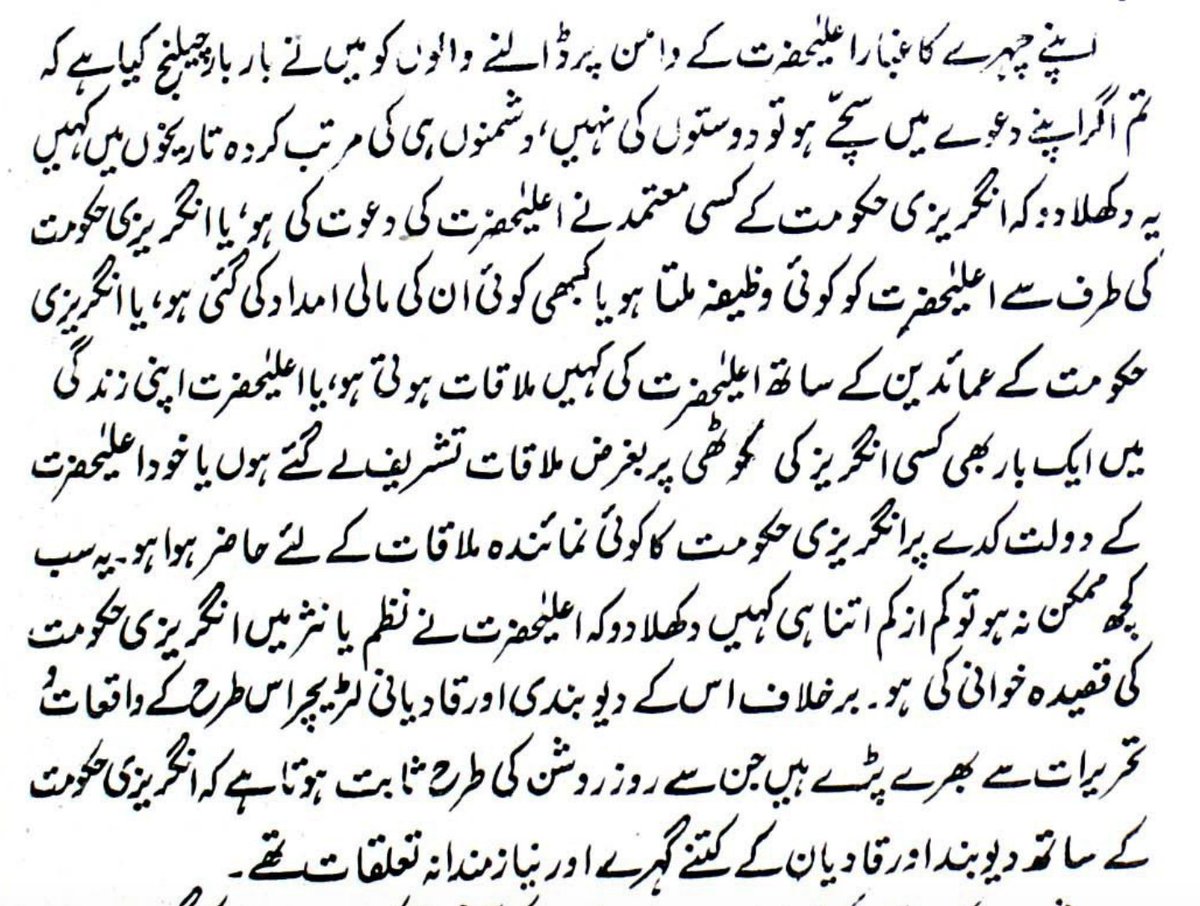
“Often, I have challenged those who try to clean the dirt upon their faces by
3
trying to wipe it with the mantle of Alahazrat, to show us proof for their claims; regardless of such proofs in the books of his admirers or in those of his adversaries. Show us a single instance where Alahazrat was invited by any officer of the British government; or that any
4
grant or pension was given by the British to Alahazrat; or that he was given economic assistance by the British at any time; or that Alahazrat had met any British officer anywhere; or that Alahazrat ever went to an Englishman’s residence to meet him; or that any representative of
5
the British government ever visited Alahazrat in his home. If this is not possible, then show us a single example where Alahazrat has praised the British in his writing, whether it is in his prose or his poetry. Contrast this with examples of Deobandī and Qadiyani leaders,
6
mentioned in their own literature, which clearly shows who really had cordial relations with the British.”
An example of what is meant by the reference to Deobandī leaders is the fact that Rashīd Gangohī famously pleaded in the aftermath of the Sepoy Rebellion, that he was a
An example of what is meant by the reference to Deobandī leaders is the fact that Rashīd Gangohī famously pleaded in the aftermath of the Sepoy Rebellion, that he was a
7
servant of the [English] government.
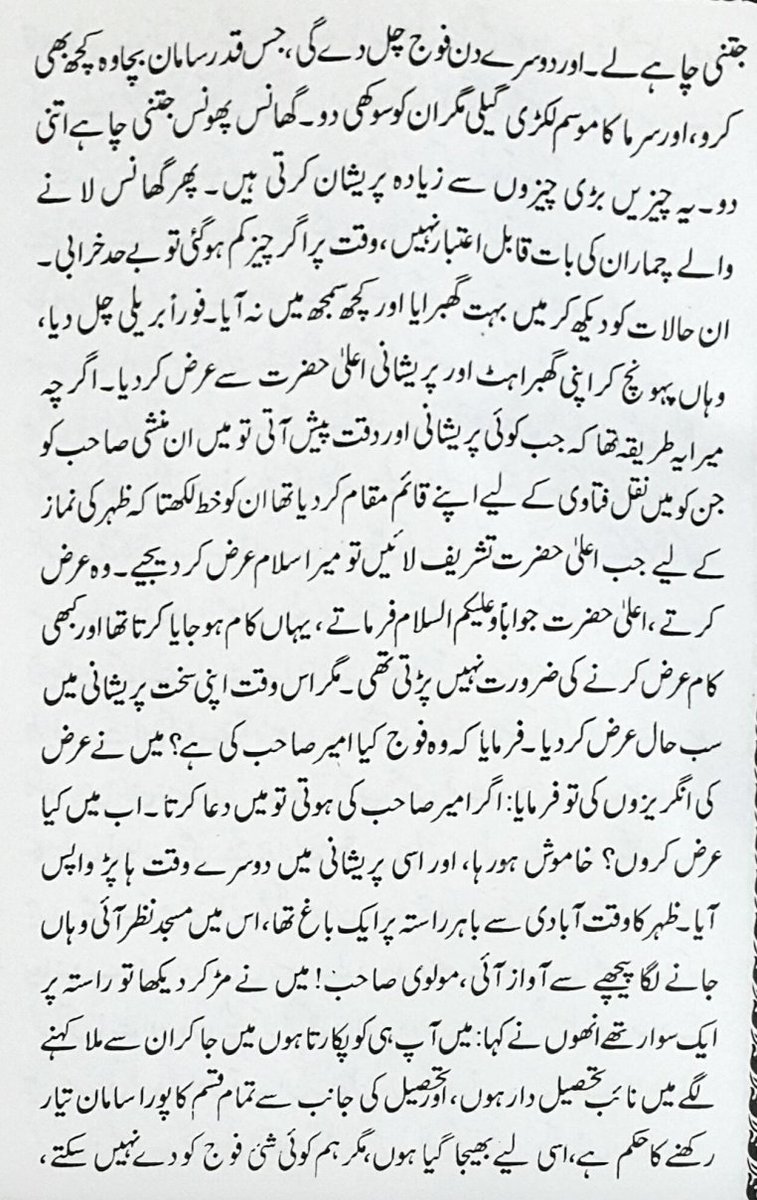
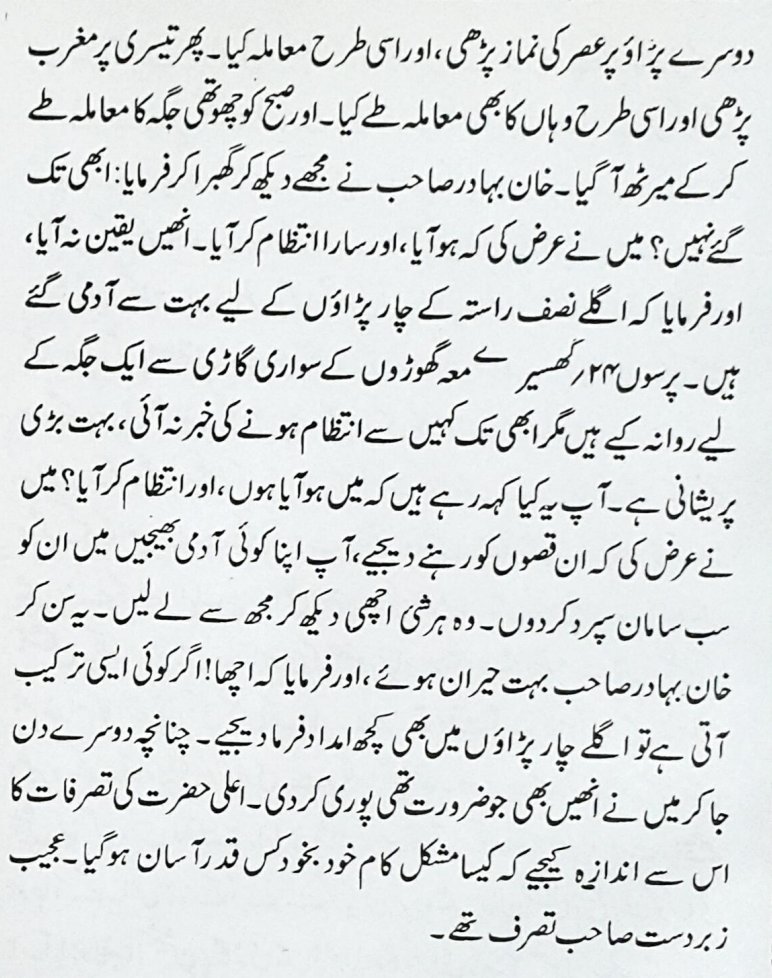
In Ĥayāt e Alahazrat by Malik al-Úlama Mawlānā Sayyid Żafaruddīn Bihārī [d. 1382/1962], a student and khalīfah of the Imām, an incident is narrated by Maulavi Muĥammad Ĥusayn Meeruti, about the visit of Amīr Ĥabibullah Khān, the governor of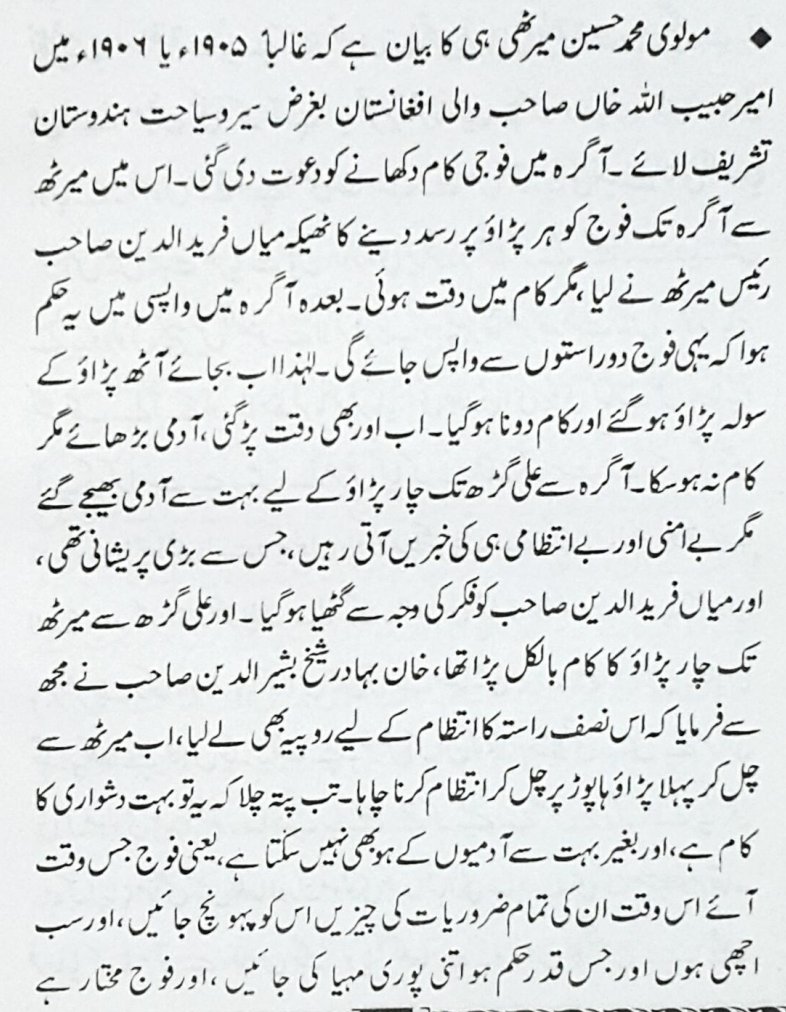

In Ĥayāt e Alahazrat by Malik al-Úlama Mawlānā Sayyid Żafaruddīn Bihārī [d. 1382/1962], a student and khalīfah of the Imām, an incident is narrated by Maulavi Muĥammad Ĥusayn Meeruti, about the visit of Amīr Ĥabibullah Khān, the governor of
8
Afghanistan in 1905. Apparently, there was a disarray in the arrangements made for the army accompanying the Amīr, as there was a change in the scope of work and the contractors were unprepared to respond to additional requirements. The narrator was involved in this contract
9
himself, and he says that he went to Alahazrat to request him to pray for him; after he had explained the situation, the following exchange took place:
Alahazrat: The army; is it the Amīr’s own army?
Maulavi Muĥammad Ĥusayn: No, it is the British army.
Alahazrat: The army; is it the Amīr’s own army?
Maulavi Muĥammad Ĥusayn: No, it is the British army.
10
Alahazrat: If this was the Amīr’s own army, I would have prayed for you.
The rest of the story describes how things fell into place and the narrator escaped hardship and according to the narrator, due to the barakah of Alahazrat.
But the aspect of this story that is relevant
The rest of the story describes how things fell into place and the narrator escaped hardship and according to the narrator, due to the barakah of Alahazrat.
But the aspect of this story that is relevant
11
here, is that Alahazrat refused to pray for his own disciple, because this was for the benefit of the British, albeit indirectly. Alahazrat would go to such lengths to keep his distance from the British; yet, Wahābīs continue to slander that he was an agent without furnishing a
12
shred of evidence.
In 1334 AH / 1916 CE, the Imām was summoned by a British court, however he refused to attend. This was because his opponents decided to legally proceed against him. The Imām wrote to his student and khalīfah, Mawlānā Ábd al-Salām Jabalpūrī [d. 1372/1953], as
In 1334 AH / 1916 CE, the Imām was summoned by a British court, however he refused to attend. This was because his opponents decided to legally proceed against him. The Imām wrote to his student and khalīfah, Mawlānā Ábd al-Salām Jabalpūrī [d. 1372/1953], as
13
recorded in Ikrām e Imām Aĥmad Razā by another student and khalīfah of the Imām, Mawlānā Ábd al-Bāqī Burhān al-Ĥaq Jabalpūrī [d. 1405/1985]:
“Being helpless, the opponents want to tread on the path of the Wahābīs by complaining to the Christians [the British].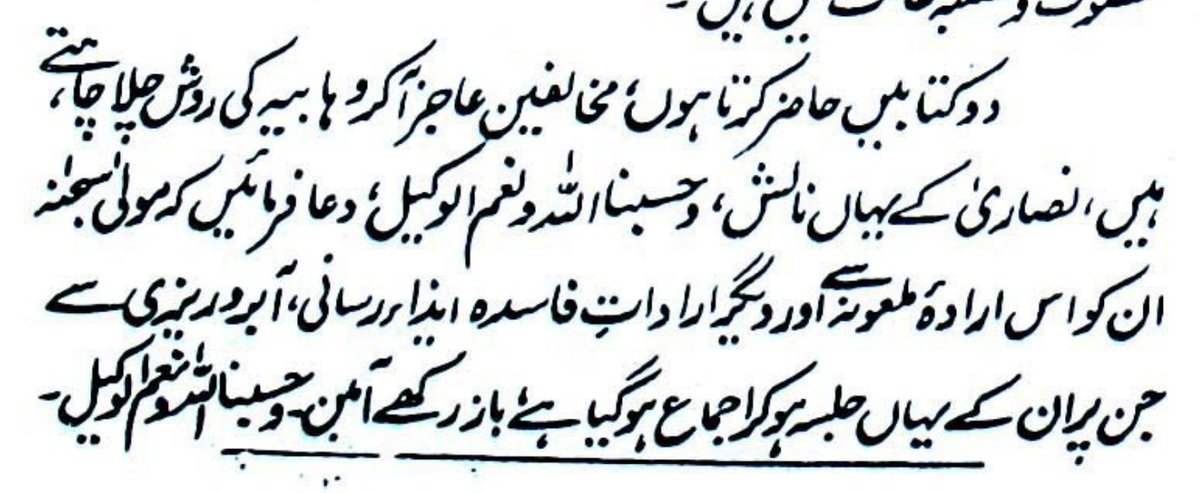
“Being helpless, the opponents want to tread on the path of the Wahābīs by complaining to the Christians [the British].
14
Make Duáā that Mawlā Subĥānahu [Allāh] prevents them from this accursed intention and other corrupt intentions to cause harm and disgrace, upon which there is an agreement of theirs after holding a gathering. Āmīn. وحسبنا اللہ ونعم الوکیل.”
Here we see that it was the way of his
Here we see that it was the way of his
15
opponents to resort to the British courts for help and support, the Imām himself gave no importance or authority to the British Christians whose beliefs he had strongly refuted and proven their absurdity.
An eyewitness to this event, Sayyid Alţāf Álī,
An eyewitness to this event, Sayyid Alţāf Álī,
16
wrote in the Daily Jung (Karachi):
“As such, it was the vow of Ĥazrat that he would never attend the British court. The most famous incident regarding this, that was witnessed by myself, that he had ikhtilāf with the scholars of Badaun on the issue of whether the second Adhān of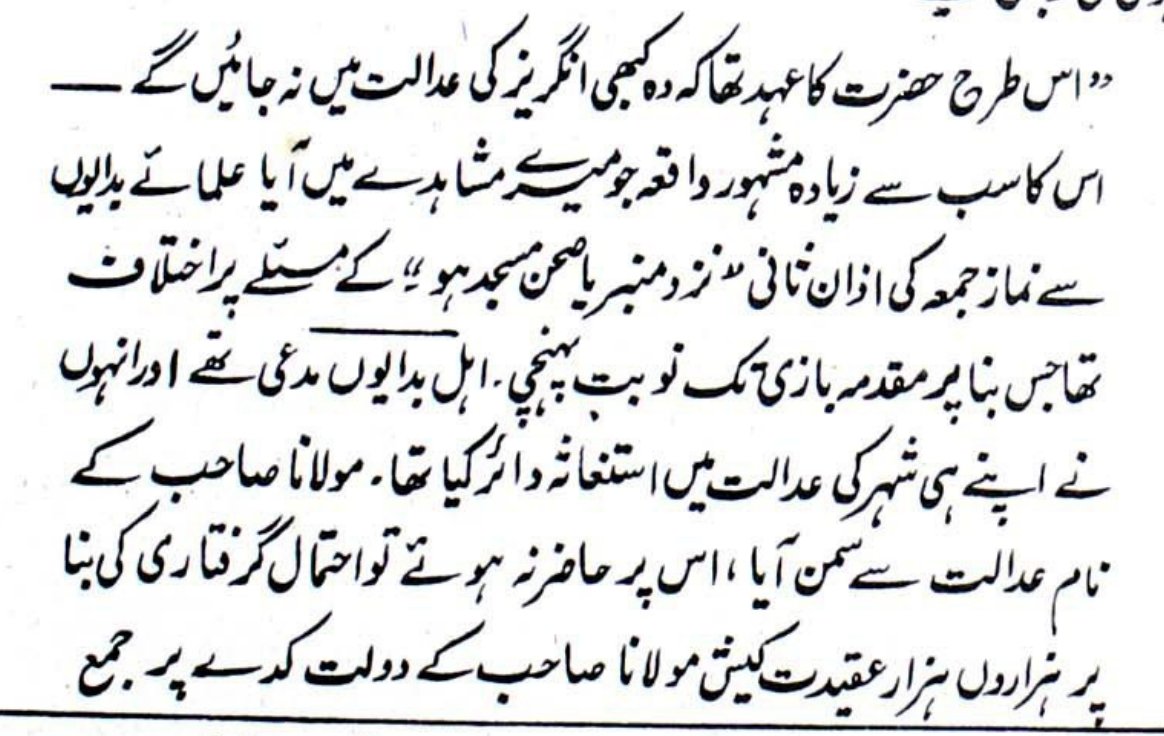
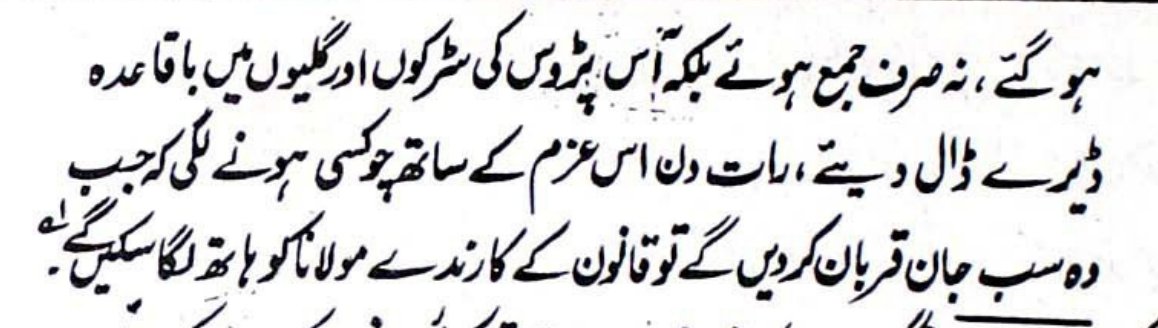
“As such, it was the vow of Ĥazrat that he would never attend the British court. The most famous incident regarding this, that was witnessed by myself, that he had ikhtilāf with the scholars of Badaun on the issue of whether the second Adhān of
17
Jumuáh should be called near the Minbar or in the courtyard of the Masjid. Upon which the situation reached legal proceedings. The people of Badaun were the plaintiffs and they filed a complaint in the court of their city. A summon arrived from the court with the name of Mawlānā
18
Sahib, he did not attend it, and upon the possibility of arrest, thousands of followers gathered in front of his house, not only did they gather but they encamped on the neighbouring streets and lanes, they guarded day and night with this conviction that when they had all
19
sacrificed their lives, then the representative of the law would be able to touch Mawlānā.”
If the Imām was a loyalist to the British, he would not have hated the British court of law and nor would he have risked arrest, but would have willingly attended the British court.
If the Imām was a loyalist to the British, he would not have hated the British court of law and nor would he have risked arrest, but would have willingly attended the British court.
20
Sayyid Alţāf Álī confirmed this when he also wrote:
“In terms of political outlook, Ĥazrat Mawlānā Aĥmad Razā Khān Sahib undoubtedly approved of freedom [from the British], he had deep hatred for the English and the English government. It was never even imagined by him or his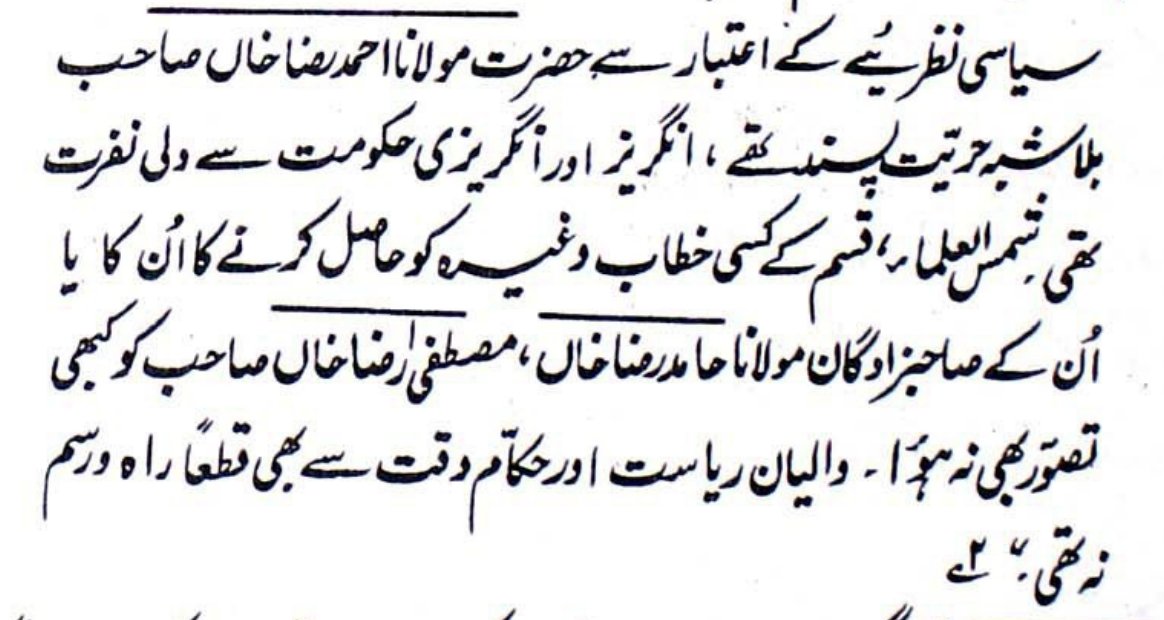
“In terms of political outlook, Ĥazrat Mawlānā Aĥmad Razā Khān Sahib undoubtedly approved of freedom [from the British], he had deep hatred for the English and the English government. It was never even imagined by him or his
21
sons, Mawlānā Ĥāmid Razā Khān and Muşţafā Razā Khān Sahib, to receive any title such as Shams al-Úlama’a. They certainly had no familiarity with the governors of the government and rulers of the time either.”
It must be remembered that Sayyid Alţāf Álī was a contemporary of the
It must be remembered that Sayyid Alţāf Álī was a contemporary of the
22
Imām and also an eyewitness. Moreover, he partook in the Janāzah of the Imām. His uncle, Sayyid Ayyūb Álī Riđawī was a disciple of the Imām and was under his shade for 26 years. If there was any such love for the British, then it would not have gone unnoticed by him.
23
As demonstrated earlier, Alahazrat had no love and respect for the British army, and likewise did not allow for any military support to be given to the British.
Maulvi Muýīnuddīn Ajmerī, a leader of the Non-cooperation movement, despite the opposition of Alahazrat towards the
Maulvi Muýīnuddīn Ajmerī, a leader of the Non-cooperation movement, despite the opposition of Alahazrat towards the
24
movement writes in Kalimatu’l Ĥaqq:
“One resolution of the Non-cooperation movement, number 5, is such that both elders [Alahazrat and Ashraf Álī Thānawī] have accepted it, and that is, that military aid not be given to the British government.”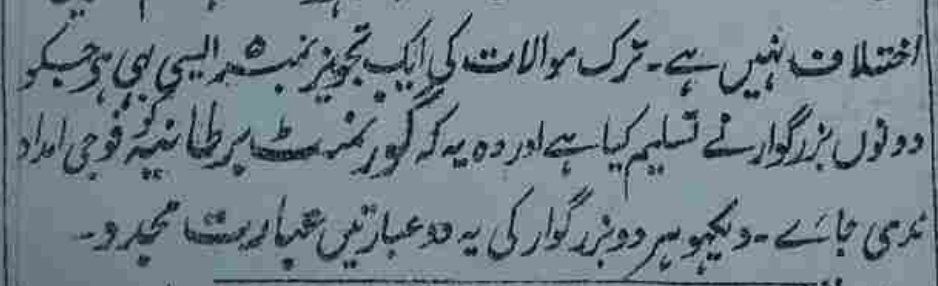
“One resolution of the Non-cooperation movement, number 5, is such that both elders [Alahazrat and Ashraf Álī Thānawī] have accepted it, and that is, that military aid not be given to the British government.”
25
If he was indeed a loyalist and supporter of the British, why would he be against them receiving military aid and support?
Many points have been produced thus far that prove Alahazrat was far from being a supporter but rather was an enemy of the British.
Many points have been produced thus far that prove Alahazrat was far from being a supporter but rather was an enemy of the British.
26
Alahazrat also held the British monarchs in contempt. He would place the stamps bearing images of the monarch upside down on envelopes, as a manner of expressing disrespect.
Sayyid Alţāf Álī writes:
“According to the statement of the late Sayyid al-Ĥājj Ayyub Álī Riđawī,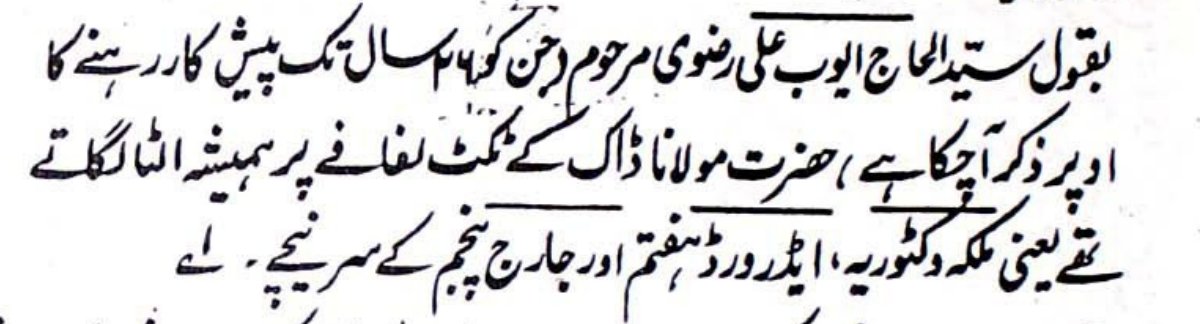
Sayyid Alţāf Álī writes:
“According to the statement of the late Sayyid al-Ĥājj Ayyub Álī Riđawī,
27
Ĥazrat Mawlānā would always affix the postal stamp on the envelopes upside down, that is, the heads of Queen Victoria, Edward VII and George V were downwards.”
Alahazrat did not restrict this to envelopes but also did so with postcards; he would turn it upside down such that the
Alahazrat did not restrict this to envelopes but also did so with postcards; he would turn it upside down such that the
28
image of the monarch would be at the bottom, with the head in the downwards direction, and then write the address.
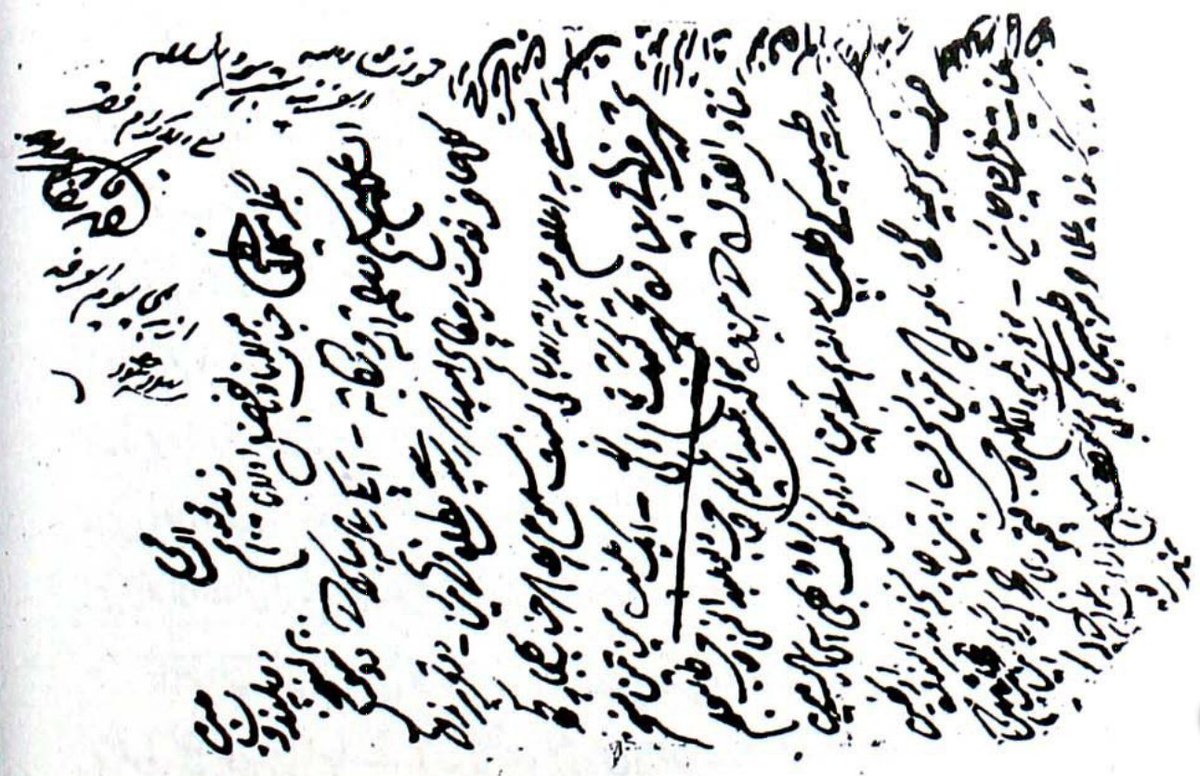
Here we see an East India postcard with a quarter anna stamp bearing the picture of Queen Victoria. This postcard was addressed to Mawlānā Nadhīr Aĥmad Rāmpūrī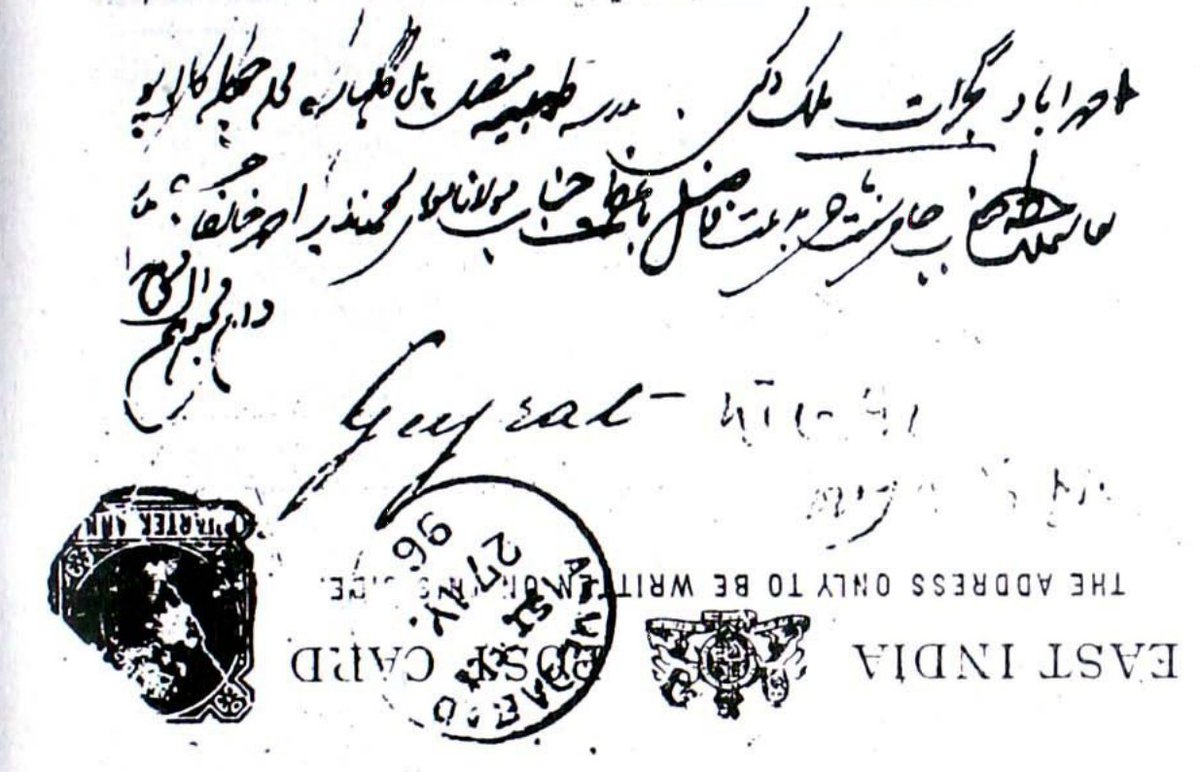
Here we see an East India postcard with a quarter anna stamp bearing the picture of Queen Victoria. This postcard was addressed to Mawlānā Nadhīr Aĥmad Rāmpūrī
29
[d. 1323 AH / 1905 CE], teacher at Madrasah e Ţayyibah, Ahmedabad on Yawm al-Árafah 1313 AH / 24 May 1896 CE and reached Ahmadebad on 27 May.
If he were a supporter of the British, then he would have nothing but respect for the monarch, but we observe this was not the case.
If he were a supporter of the British, then he would have nothing but respect for the monarch, but we observe this was not the case.
30
In fact, Alahazrat did not even tolerate the usage of stamps of higher value due to it benefitting the British, even though only by a trifle amount.
Mawlānā Sayyid Żafaruddīn Bihārī records and incident in Ĥayāt e Alahazrat narrated from Maulavi Muĥammad Ĥusayn Meeruti that a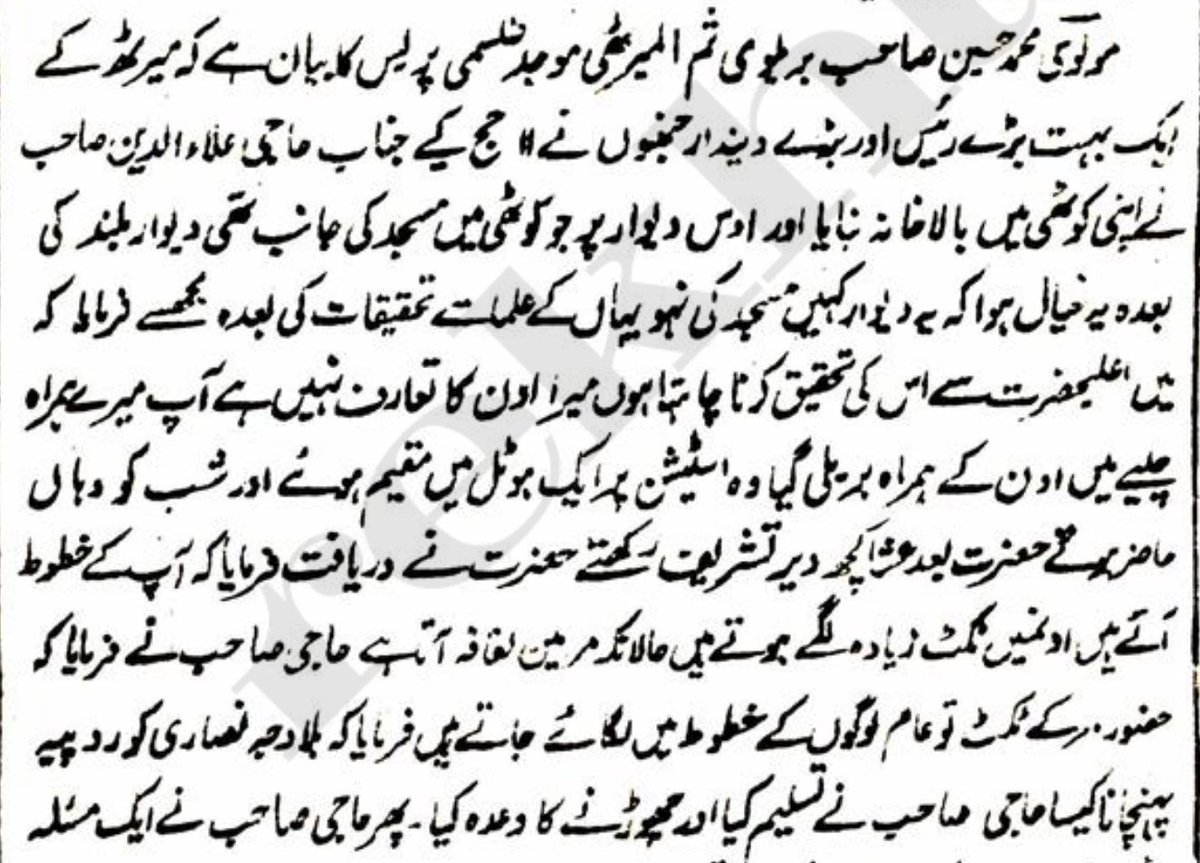
Mawlānā Sayyid Żafaruddīn Bihārī records and incident in Ĥayāt e Alahazrat narrated from Maulavi Muĥammad Ĥusayn Meeruti that a
31
very rich and pious man of Meerut, who had performed Ĥajj eleven times, Janāb Ĥājī Álāuddīn Sahib wanted to visit Alahazrat in order to seek a verdict on a matter, and requested his company as he had not met Alahazrat prior to this. After meeting him, Alahazrat questioned him
32
as to why he sent letters with higher value postal stamps. He also asked him:
“How is it to send money to the Christians [British] without reason?”
Upon this, Ĥājī Sahib accepted and vowed to abandon doing so.
“How is it to send money to the Christians [British] without reason?”
Upon this, Ĥājī Sahib accepted and vowed to abandon doing so.
33
ابنِ خان@IbneKhan01
Pronunciation of Turkey
Alahazrat was presented a fatwa in which Turkey was written according to the English pronunciation, he criticised this, stating:
“Expressing 'turkī' with the disliked word 'Ṭurkī', in following of the pronunciation of the Christians...”
Alahazrat was presented a fatwa in which Turkey was written according to the English pronunciation, he criticised this, stating:
“Expressing 'turkī' with the disliked word 'Ṭurkī', in following of the pronunciation of the Christians...”
