𝙏𝙝𝙚 𝘾𝙝𝙪𝙧𝙘𝙝 𝘼𝙣𝙙 𝙀𝙪𝙜𝙚𝙣𝙞𝙘𝙨 : 𝘼 𝙘𝙧𝙞𝙩𝙞𝙘𝙖𝙡 𝙚𝙭𝙖𝙢𝙞𝙣𝙖𝙩𝙞𝙤𝙣 𝙗𝙮 𝙍𝙚𝙫. 𝙏𝙝𝙤𝙢𝙖𝙨 𝙅....

𝙇𝙚𝙭 𝘼𝙚𝙩𝙚𝙧𝙣𝙖 | 🇻🇦@CiviltaChristi
50 views
Sep 25, 2026
~3 min read
Advertisement
1
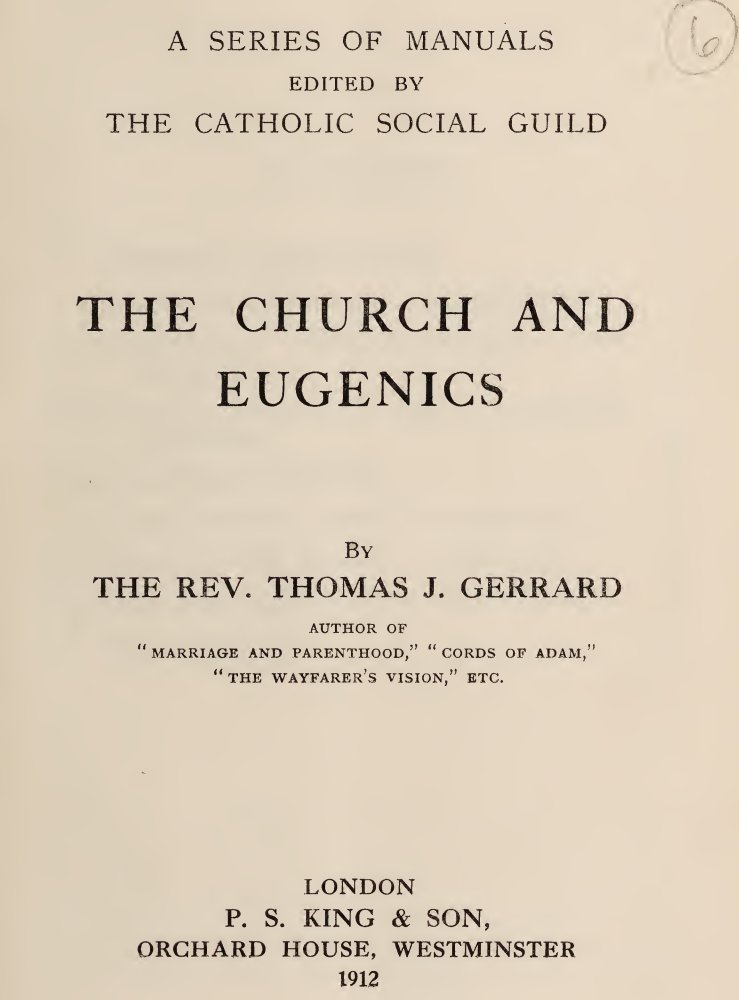
𝙏𝙝𝙚 𝘾𝙝𝙪𝙧𝙘𝙝 𝘼𝙣𝙙 𝙀𝙪𝙜𝙚𝙣𝙞𝙘𝙨 : 𝘼 𝙘𝙧𝙞𝙩𝙞𝙘𝙖𝙡 𝙚𝙭𝙖𝙢𝙞𝙣𝙖𝙩𝙞𝙤𝙣 𝙗𝙮 𝙍𝙚𝙫. 𝙏𝙝𝙤𝙢𝙖𝙨 𝙅. 𝙂𝙚𝙧𝙧𝙖𝙧𝙙.
2
The dilemma presented by the development of contemporary eugenics has been one of considerable controversy and scrutiny ever since its coinage by Sir Francis Galton in 1883.
The Catholic Church took it upon itself to properly apprehend this new surge of scientific progress, and essentially separate the wheat from the chaff when it came to the dilemmas in question.
One of the works which tackled this question comes from Rev. Thomas J. Gerrard’s 'The Church and Eugenics', published in London by P. S. King & Son in 1912. Gerrard was a Catholic priest writing before Pius XI’s definitive treatment of eugenics in Casti connubii (which substantially coincides with his own findings).
Below, we will review the main premises and conclusions drawn by Rev. Gerard in order to present a theologically sound perspective.
The Catholic Church took it upon itself to properly apprehend this new surge of scientific progress, and essentially separate the wheat from the chaff when it came to the dilemmas in question.
One of the works which tackled this question comes from Rev. Thomas J. Gerrard’s 'The Church and Eugenics', published in London by P. S. King & Son in 1912. Gerrard was a Catholic priest writing before Pius XI’s definitive treatment of eugenics in Casti connubii (which substantially coincides with his own findings).
Below, we will review the main premises and conclusions drawn by Rev. Gerard in order to present a theologically sound perspective.
3
1. 𝙀𝙪𝙜𝙚𝙣𝙞𝙘𝙨 𝙞𝙨 𝙣𝙤𝙩 𝙬𝙝𝙤𝙡𝙡𝙮 𝙘𝙤𝙣𝙙𝙚𝙢𝙣𝙚𝙙
This is Gerrard’s governing thesis. “Eugenics” can refer either to legitimate efforts to improve public health and responsible family life or to coercive measures violating natural rights. The term itself therefore requires moral distinctions. He also highlights the integral nature of race to the development of human life and culture. (pg. 9, 15, )
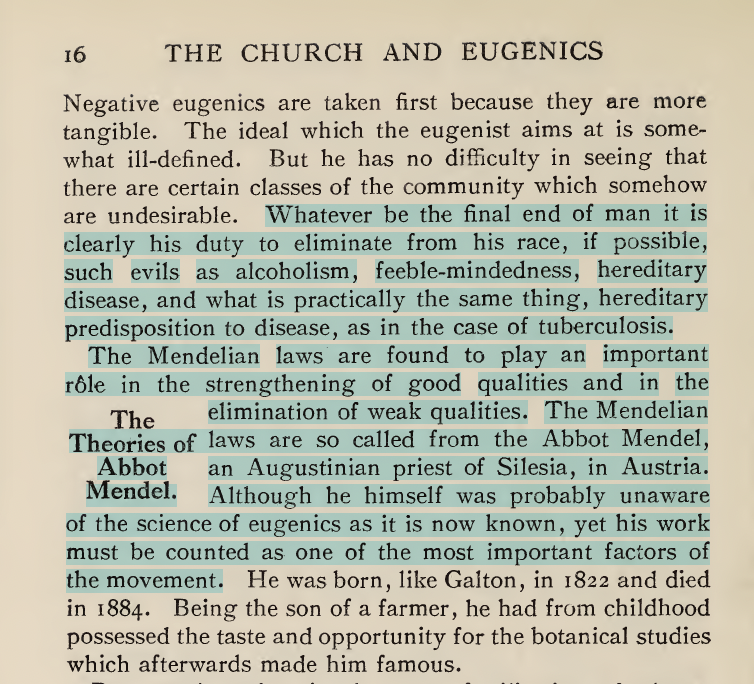
He even affirms the logical factors that come into play with "ill-defined Eugenicism", and recognizes the Catholic influence that came into play when developing such a worldview, specifically through Abbot Gregor Mendel. His main quarrel with conventional eugenics is that they approach human biology from an unnecessarily materialist perspective, highlighting that pure biological determinism is an illogical perspective to hold in regards to a being with a hylomorphic nature. (pg. 16, 22)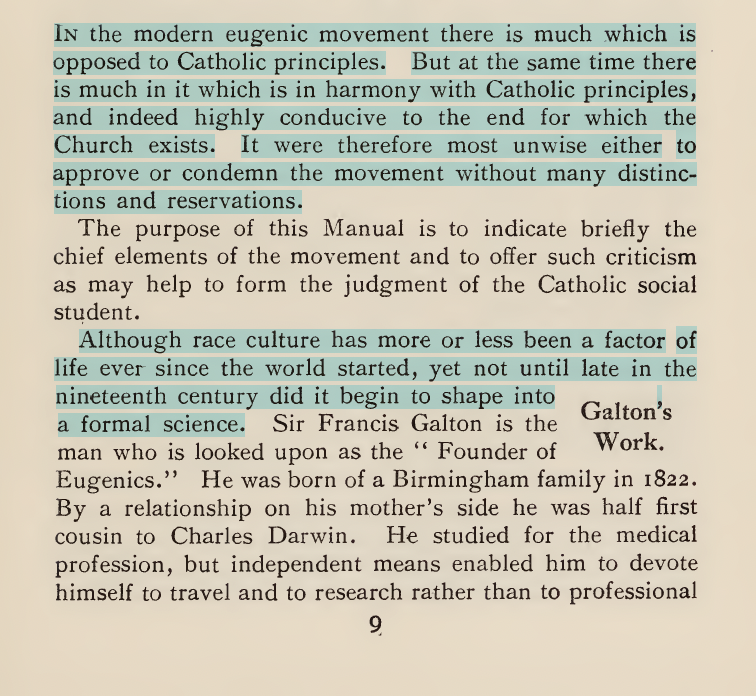
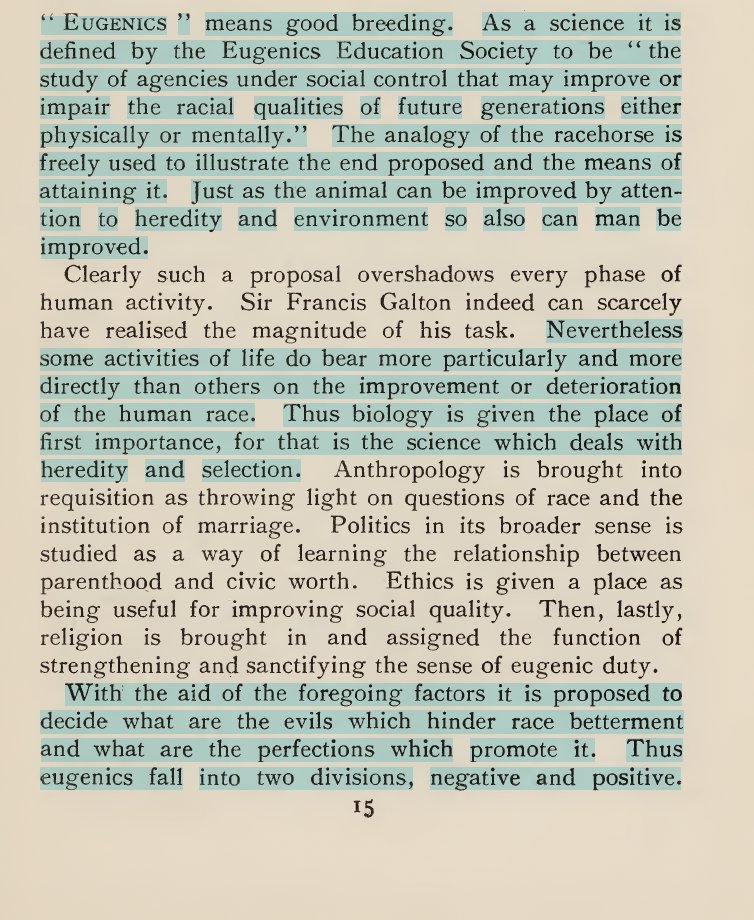
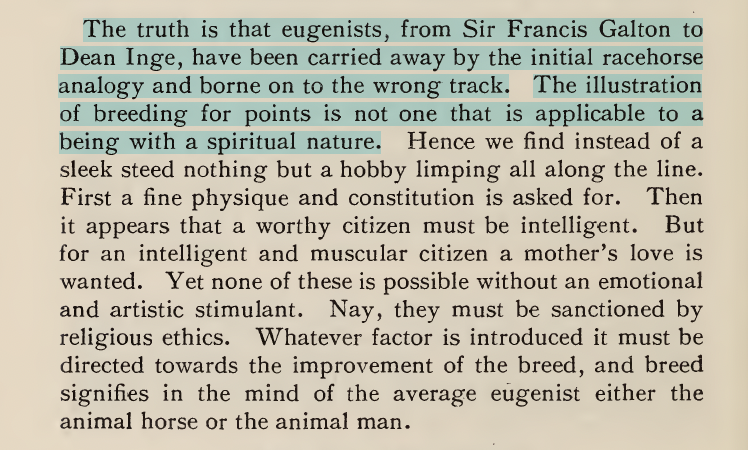
This is Gerrard’s governing thesis. “Eugenics” can refer either to legitimate efforts to improve public health and responsible family life or to coercive measures violating natural rights. The term itself therefore requires moral distinctions. He also highlights the integral nature of race to the development of human life and culture. (pg. 9, 15, )
He even affirms the logical factors that come into play with "ill-defined Eugenicism", and recognizes the Catholic influence that came into play when developing such a worldview, specifically through Abbot Gregor Mendel. His main quarrel with conventional eugenics is that they approach human biology from an unnecessarily materialist perspective, highlighting that pure biological determinism is an illogical perspective to hold in regards to a being with a hylomorphic nature. (pg. 16, 22)
4
2. 𝙈𝙖𝙧𝙧𝙞𝙖𝙜𝙚 𝙨𝙚𝙡𝙚𝙘𝙩𝙞𝙤𝙣 𝙘𝙤𝙣𝙨𝙞𝙙𝙚𝙧𝙨 𝙥𝙝𝙮𝙨𝙞𝙘𝙖𝙡 𝙖𝙣𝙙 𝙨𝙥𝙞𝙧𝙞𝙩𝙪𝙖𝙡 𝙝𝙚𝙖𝙡𝙩𝙝
Rev. Gerrard begins this portion by highlighting the fact that lifestyles which include sexual immorality and depravity contribute to the degeneration of racial quality, and that the sanctity of restraint itself is a eugenic proponent. (pg. 41)
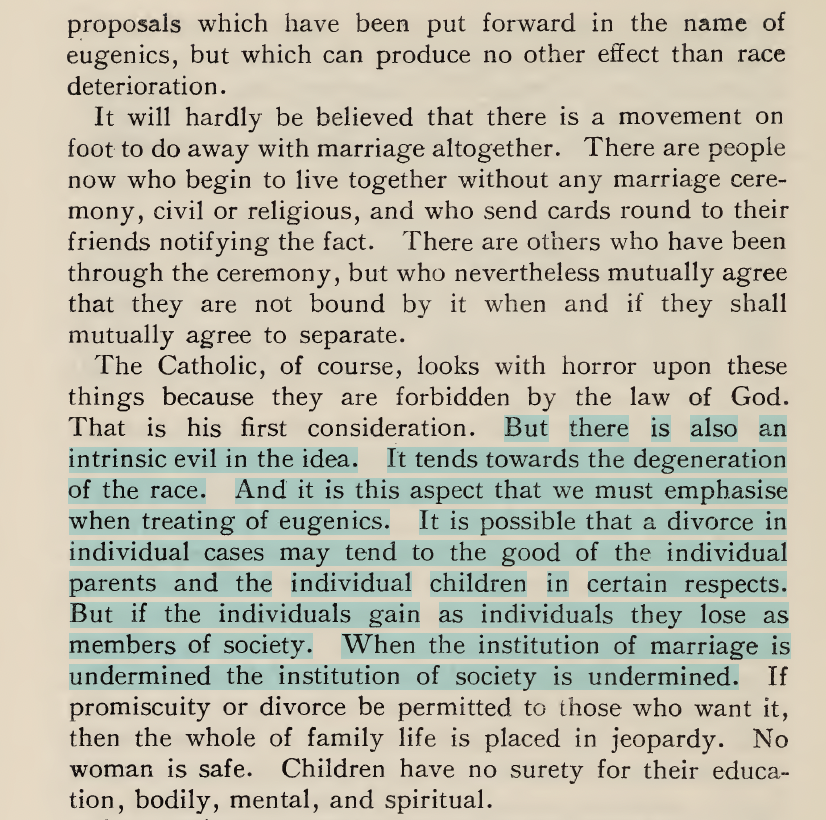
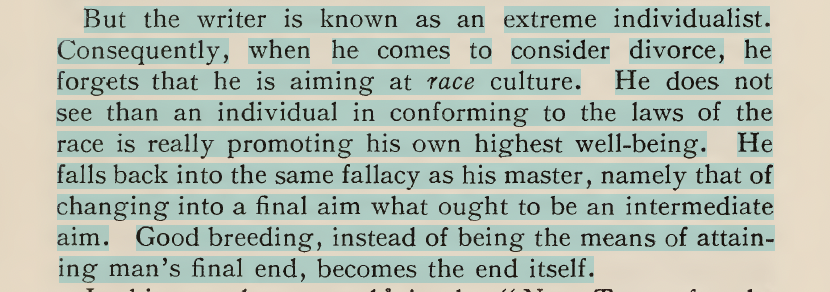
He critiques certain propositions posited by certain figures within the eugenics movement as actually being anti-eugenic, such as the raising of children within a union outside of marriage, which results in their orientation not being focused on higher-goods due to the secular nature of non-marital relationships. Another proposition is in regards to the rampant individualism that had been permeating eugenic circles, where Gerrard insists that this is representative of a lack of the type of collectivism that Eugenicism requires. He attacks divorce for this same reason. (pg.46-48)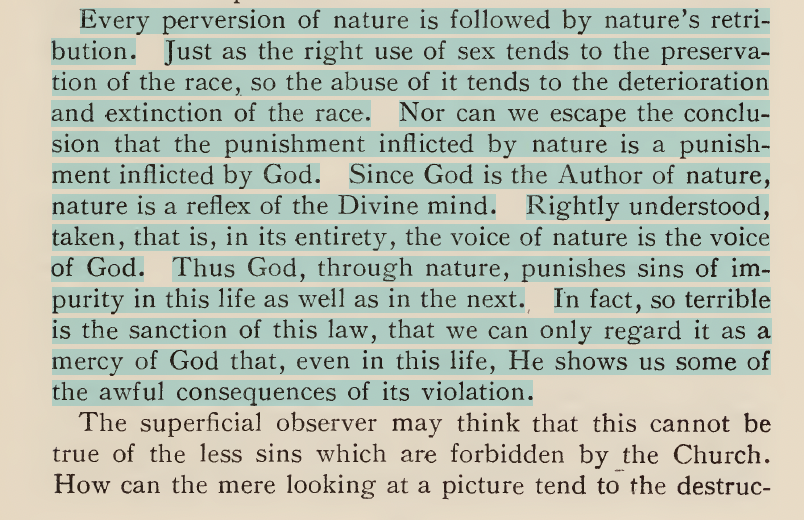
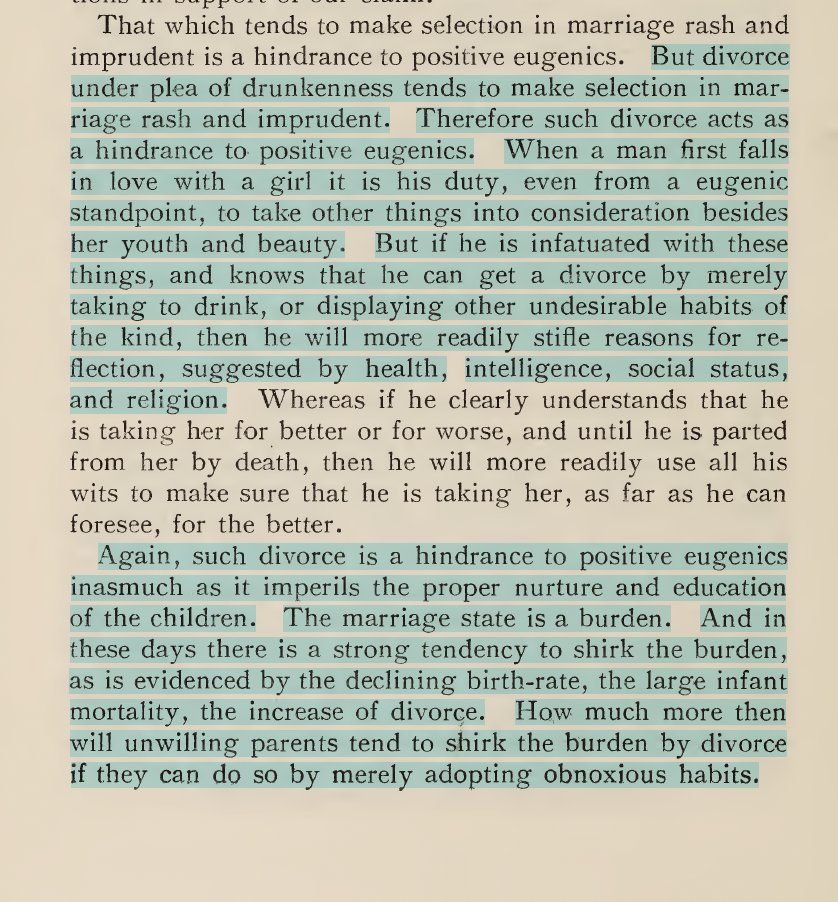
Rev. Gerrard begins this portion by highlighting the fact that lifestyles which include sexual immorality and depravity contribute to the degeneration of racial quality, and that the sanctity of restraint itself is a eugenic proponent. (pg. 41)
He critiques certain propositions posited by certain figures within the eugenics movement as actually being anti-eugenic, such as the raising of children within a union outside of marriage, which results in their orientation not being focused on higher-goods due to the secular nature of non-marital relationships. Another proposition is in regards to the rampant individualism that had been permeating eugenic circles, where Gerrard insists that this is representative of a lack of the type of collectivism that Eugenicism requires. He attacks divorce for this same reason. (pg.46-48)
5
3. 𝙏𝙝𝙚 𝙞𝙢𝙥𝙖𝙘𝙩 𝙤𝙛 𝙈𝙤𝙣𝙖𝙨𝙩𝙞𝙘𝙞𝙨𝙢 𝙤𝙣 𝙩𝙝𝙚 𝙥𝙧𝙖𝙘𝙩𝙞𝙘𝙚 𝙤𝙛 𝙀𝙪𝙜𝙚𝙣𝙞𝙘𝙞𝙨𝙢 𝙞𝙣 𝙖𝙣𝙩𝙞𝙦𝙪𝙞𝙩𝙮
Rev. Gerrard brings this excellent point up in order to clear up the misconception within Eugenicist circles that celibacy will always be a dysgenic practice regardless of context, setting, or reasoning. He highlights that the exceptional focus on academic, intellectual, and spiritual faculties initiated by Catholic monks is largely accredited with the development of the institutions that made the White Western world so profoundly advanced, therefore contributing to the cultivation of the White intellect. (pg. 52-53)
Rev. Gerrard brings this excellent point up in order to clear up the misconception within Eugenicist circles that celibacy will always be a dysgenic practice regardless of context, setting, or reasoning. He highlights that the exceptional focus on academic, intellectual, and spiritual faculties initiated by Catholic monks is largely accredited with the development of the institutions that made the White Western world so profoundly advanced, therefore contributing to the cultivation of the White intellect. (pg. 52-53)
6
4. 𝙏𝙝𝙚 𝙀𝙪𝙜𝙚𝙣𝙞𝙘 𝙫𝙖𝙡𝙪𝙚 𝙤𝙛 𝙍𝙚𝙡𝙞𝙜𝙞𝙤𝙣 𝙖𝙣𝙙 𝙎𝙥𝙞𝙧𝙞𝙩𝙪𝙖𝙡𝙞𝙩𝙮
Gerrard primarily draws from the work of Professor Whetham, who himself was a staunch Eugenicist, in order to show that the latter-day Eugenicist movement was becoming increasingly (And rightfully) fond of Religion as an animative principle for selection. He explains that Religiosity itself acts as a collectivizing factor, aligning the will of entire demographics towards common goals, therefore hindering the issue of individual interests going against the collective interests of the common good. He concludes that Religions place in society is the supreme biological and social factor of societies. (pg. 54-55)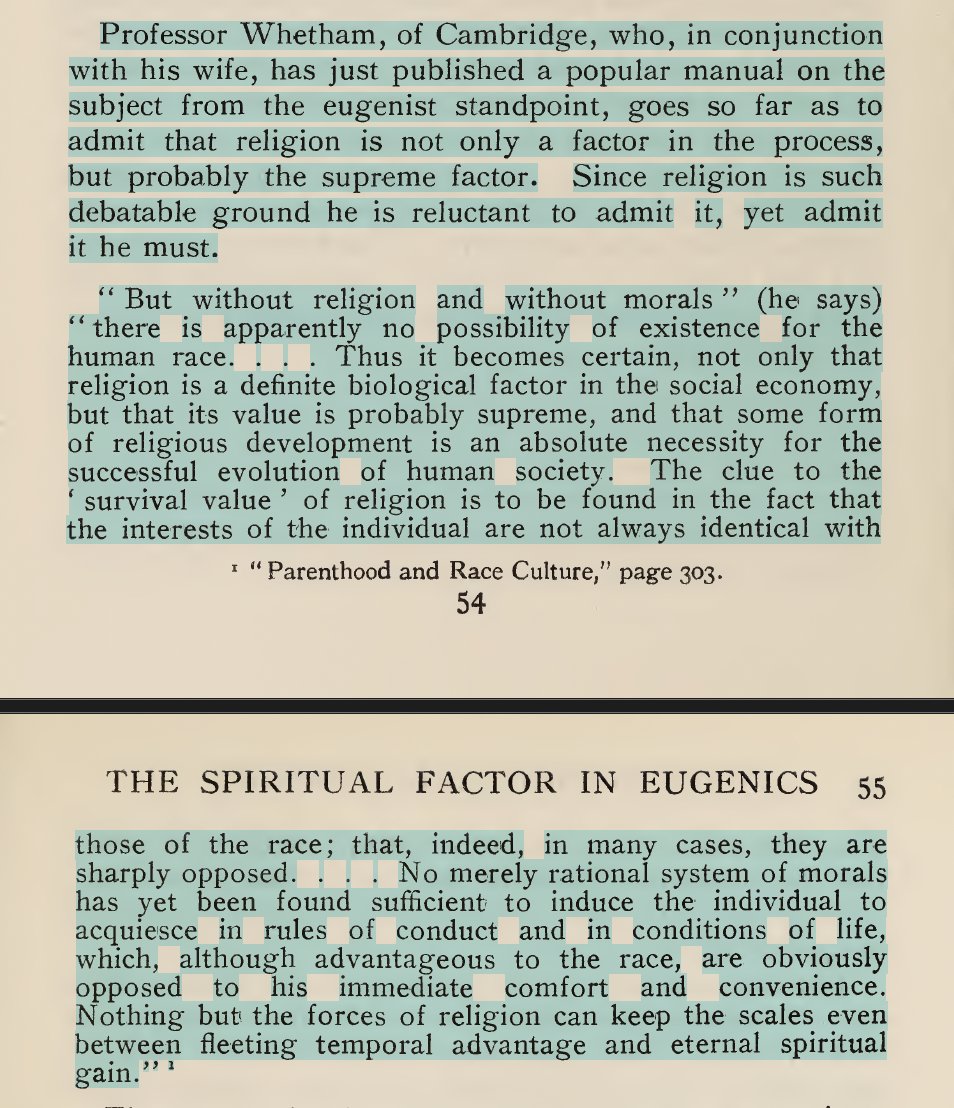
Gerrard primarily draws from the work of Professor Whetham, who himself was a staunch Eugenicist, in order to show that the latter-day Eugenicist movement was becoming increasingly (And rightfully) fond of Religion as an animative principle for selection. He explains that Religiosity itself acts as a collectivizing factor, aligning the will of entire demographics towards common goals, therefore hindering the issue of individual interests going against the collective interests of the common good. He concludes that Religions place in society is the supreme biological and social factor of societies. (pg. 54-55)
7
To conclude, it is evident that the concerns with Eugenics that the Catholic Church has do not lie within a worldview that views the purification of races as immoral, but rather the erroneous idea that man can be reduced to simply being an animal whose sole purpose is reproduction. To coincide such a sociological viewpoint with the Catholic faith, you ought to concede the necessity of the Mystical Body of Christ to guide all biological and social faculties, rather than simply condemning it for a sentimental idea of it being immoral.
Full text: archive.org/details/b18035…
Full text: archive.org/details/b18035…