Why is Tokyo, the biggest city in the world, the capital of...

Tomas Pueyo@tomaspueyo
31 views
Sep 25, 2026
~3 min read
Advertisement
1
Why is Tokyo, the biggest city in the world, the capital of earthquakes, volcanoes, tsunamis, and typhoons?
It's not a coincidence: It's big because of these calamities
As far as I know, this is the first time somebody makes this connection: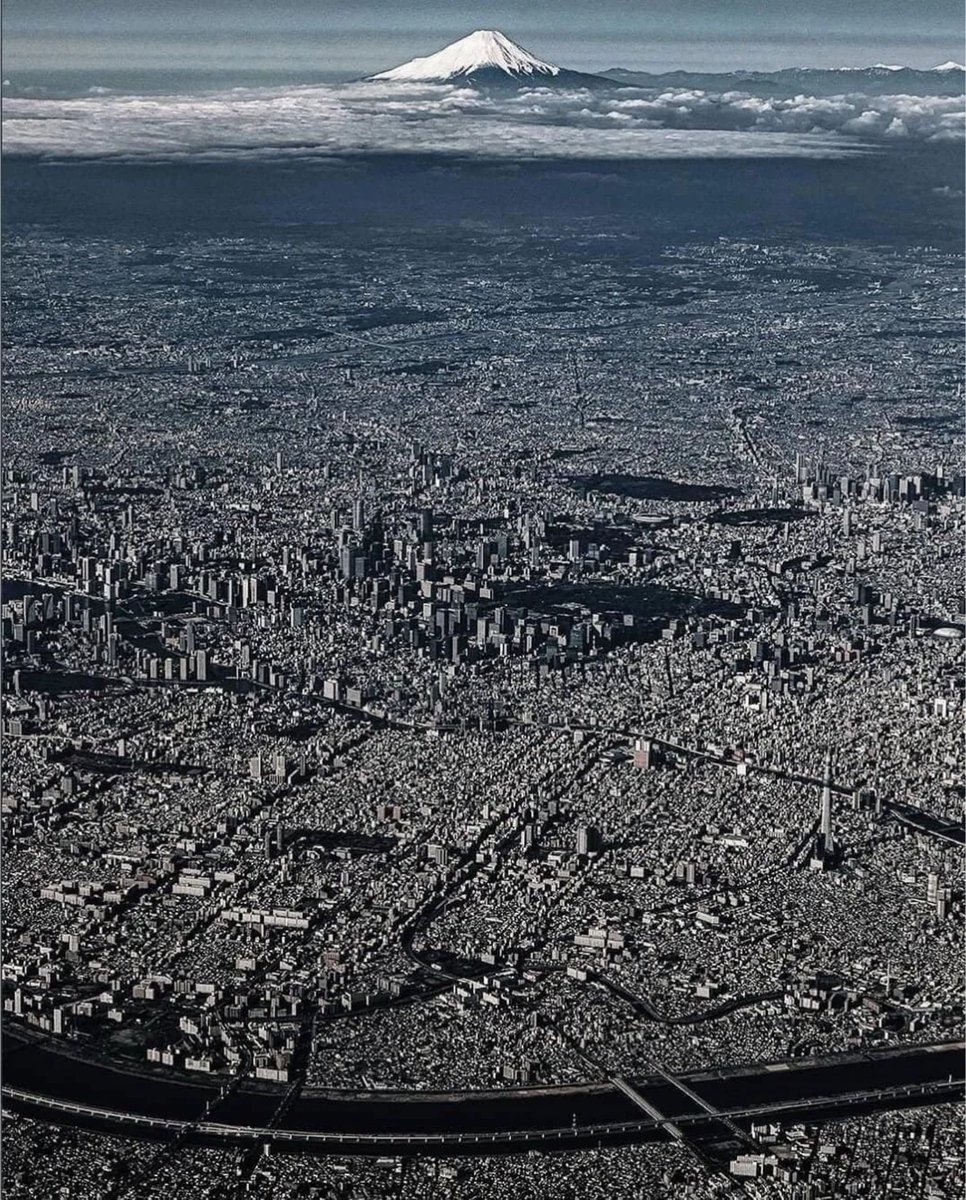
It's not a coincidence: It's big because of these calamities
As far as I know, this is the first time somebody makes this connection:
2
Tokyo is on one of the worst earthquake areas in the world.
And since their epicenter is sometimes in the ocean, maritime earthquakes can easily become tsunamis that affect Tokyo's seaside plain
And since their epicenter is sometimes in the ocean, maritime earthquakes can easily become tsunamis that affect Tokyo's seaside plain
3
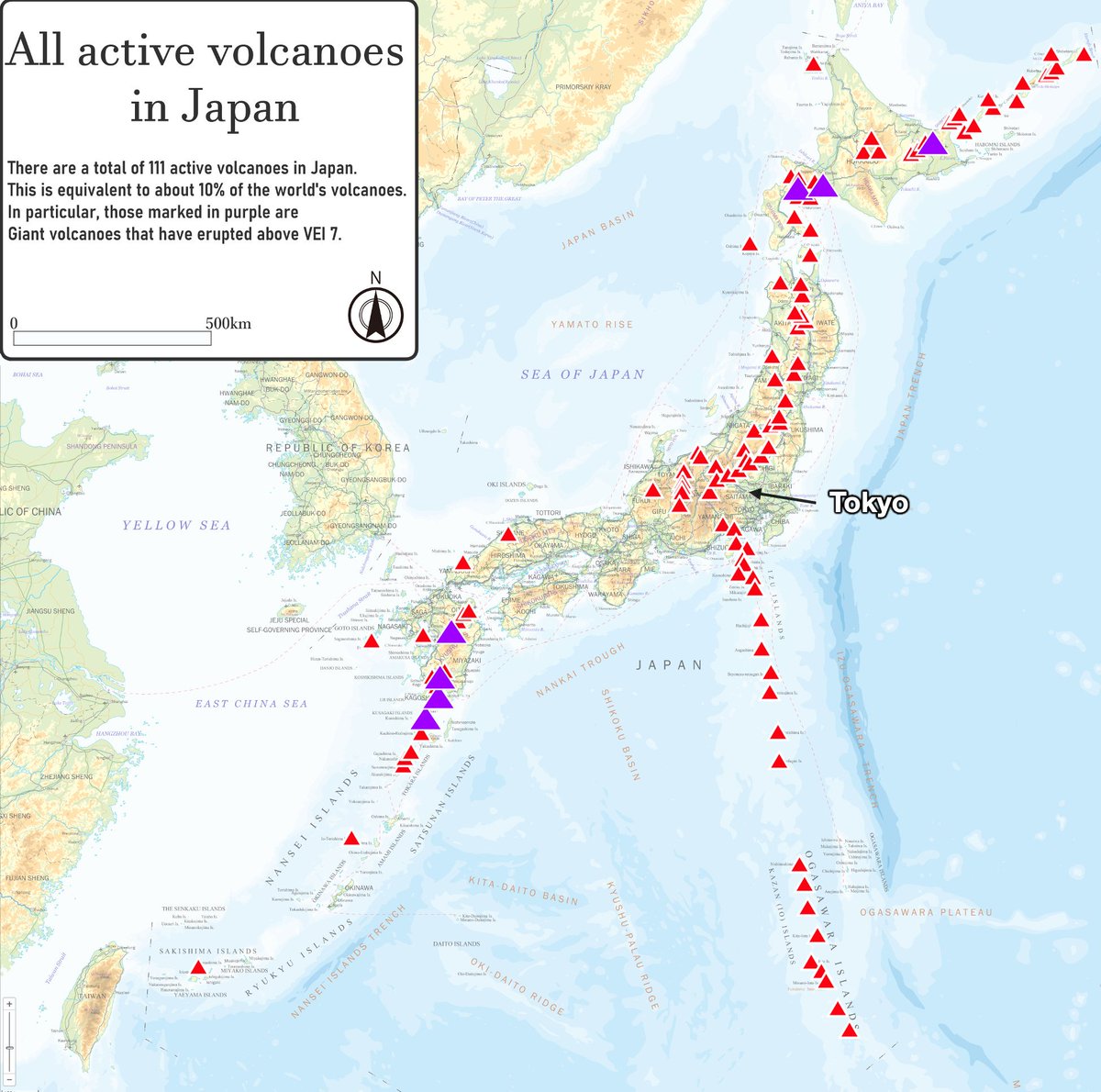
Tokyo is also surrounded by active volcanoes to its south, west, and north!
4
And of course, Japan is in the middle of a high typhoon/hurricane/cyclone region
Forget about a huge city, why would anybody build a civilization there at all!?
Forget about a huge city, why would anybody build a civilization there at all!?
5
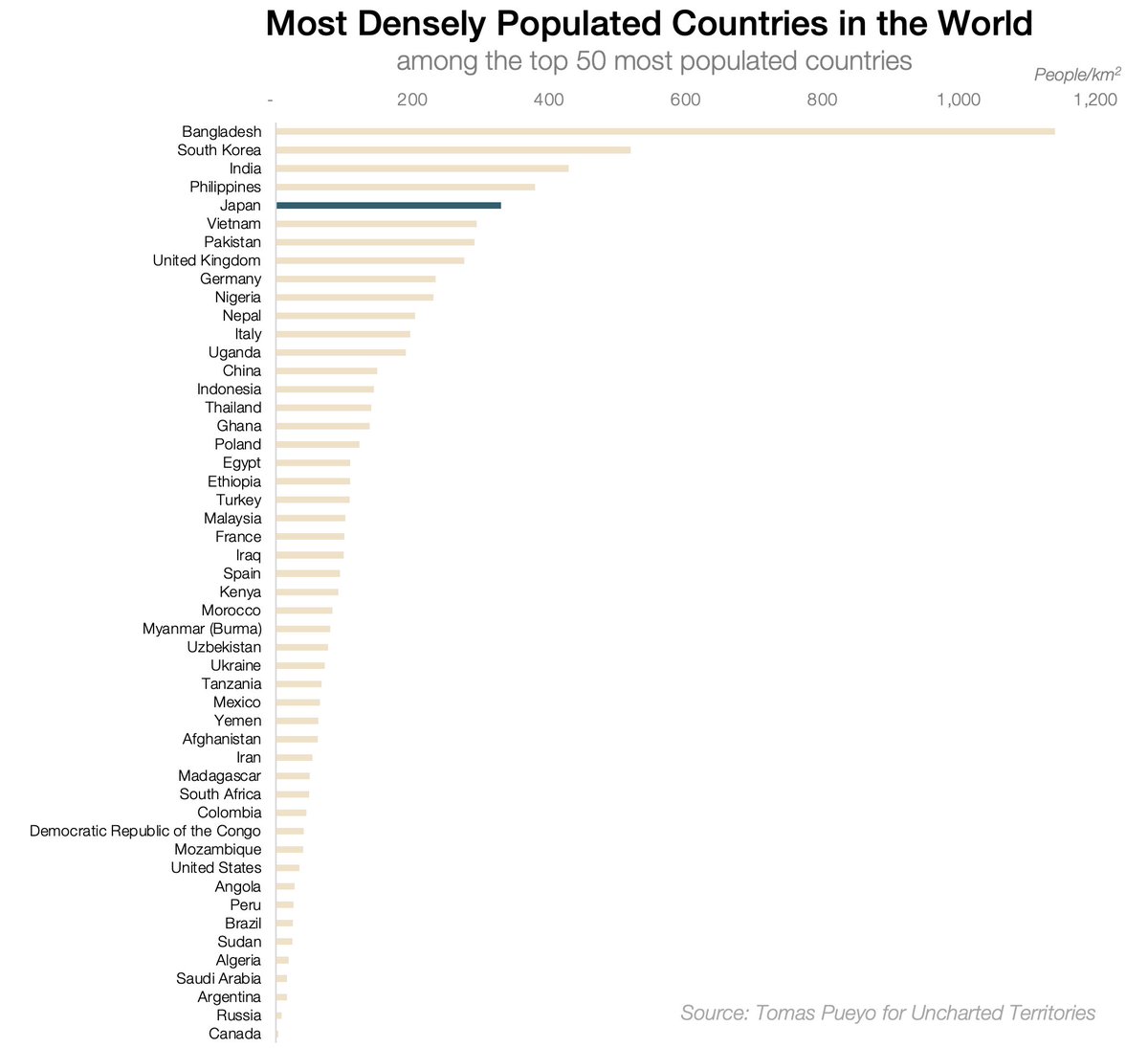
So why is the world's biggest city there? First, because Japan is an extremely densely populated country.
6
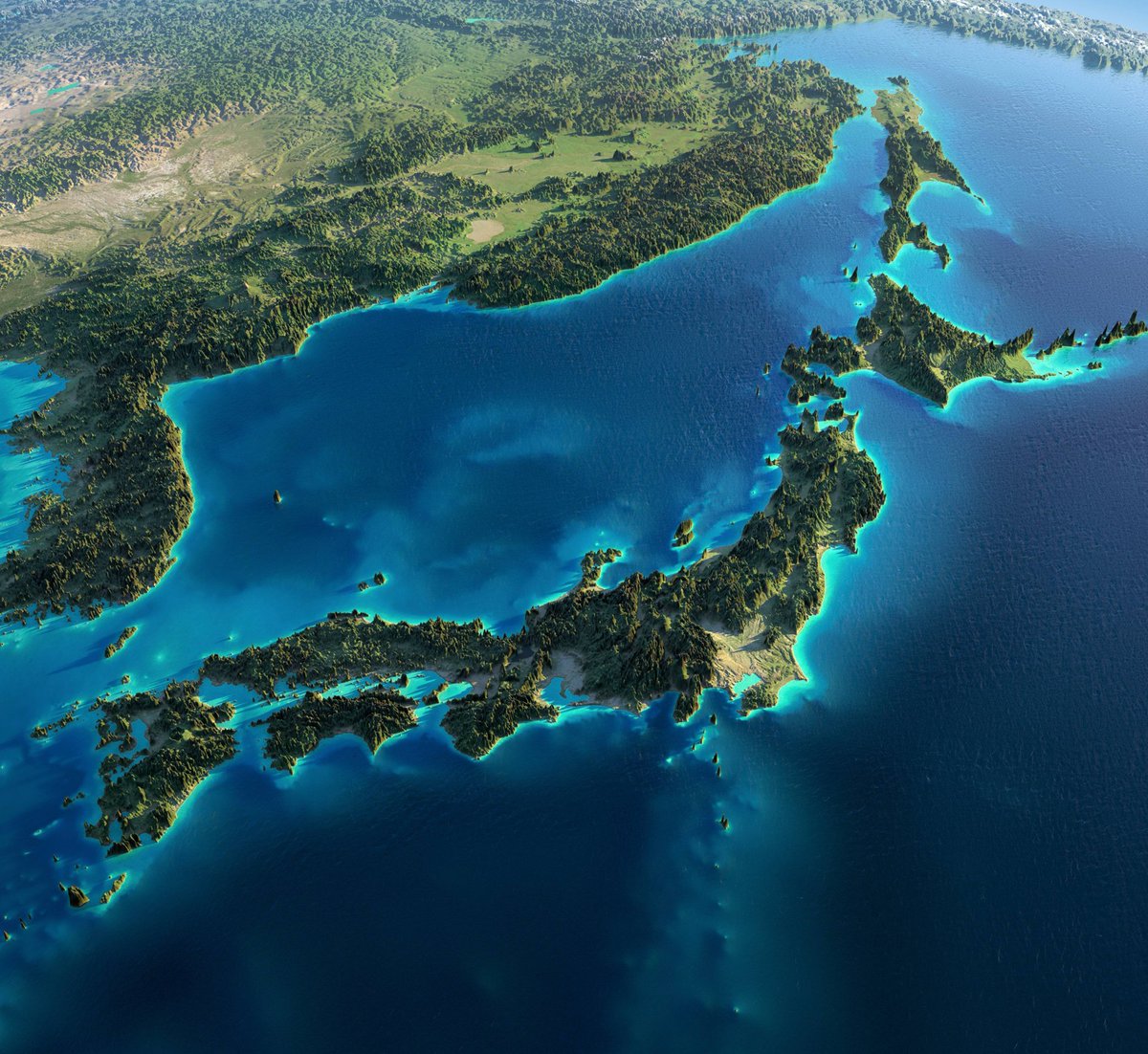
How is it possible, given how mountainous it is? People don't live in mountains.
7
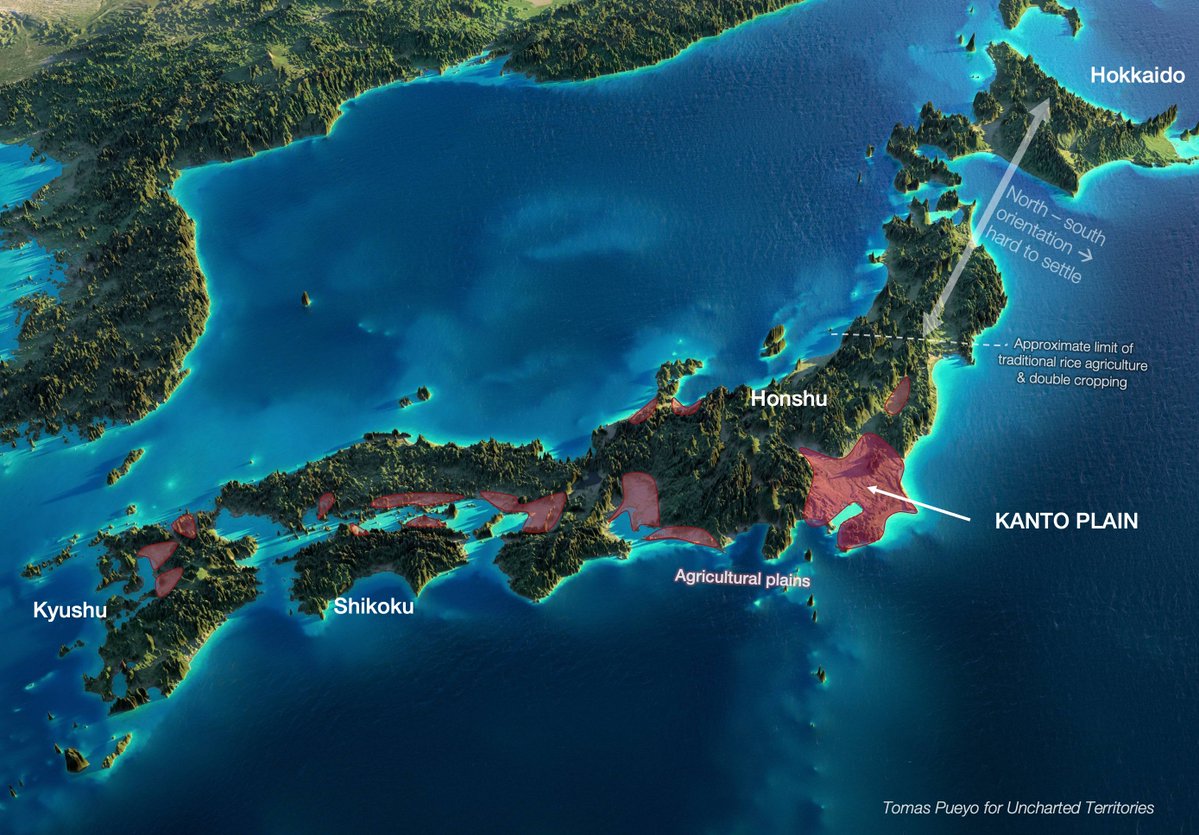
Normally, a country's population depends on its fertile plains: The more it has, the more food it produced, and the larger its population. But only 12% of Japan's land is arable plains. If you account for that, Japan is even more dense!
How did they reach this density?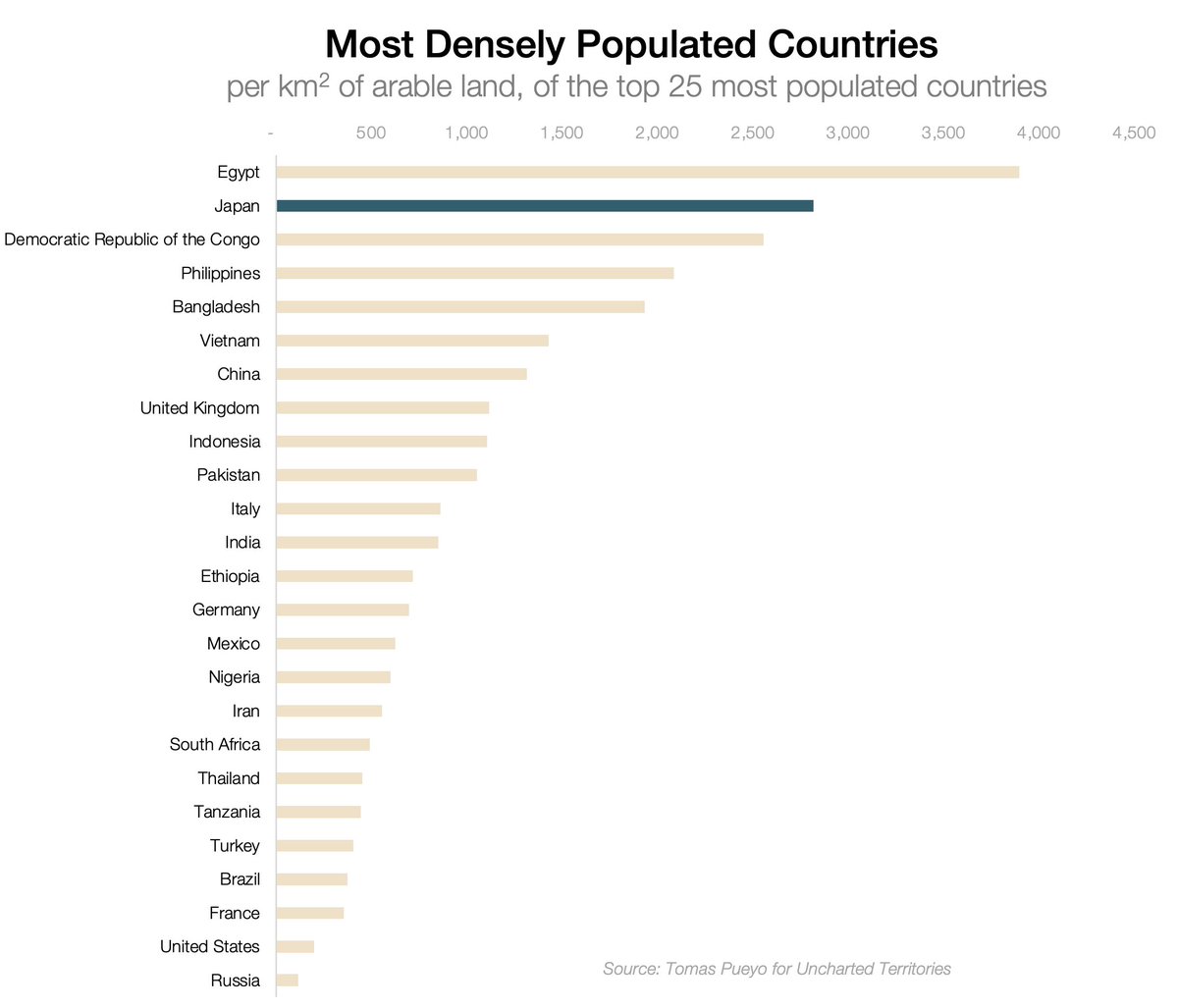
How did they reach this density?
8
• Japan cultivated rice, which produces among the highest densities of calories per hectare
• But rice needs lots of heat & water, which this region has
• In fact, it has so much that it could produce 2 crops: summer (rice) & spring (wheat/barley)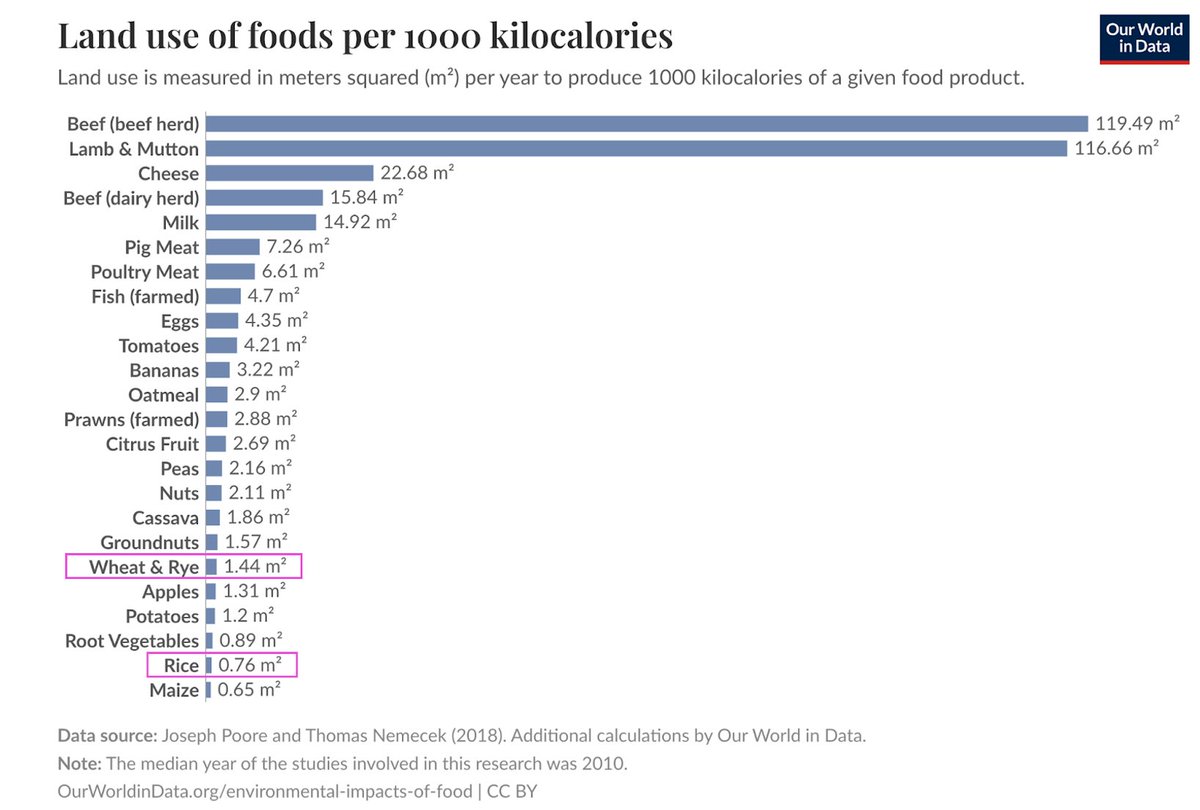
• But rice needs lots of heat & water, which this region has
• In fact, it has so much that it could produce 2 crops: summer (rice) & spring (wheat/barley)
9
That's why 2/3 of Japan's population lies on the southern plains (red=ppl, yellow=plains)
Japan received rice agriculture & iron tools ~2300y ago, and has grown its population ever since
The heavy rains water crops and bring fertilizing sediments from the tall mountains too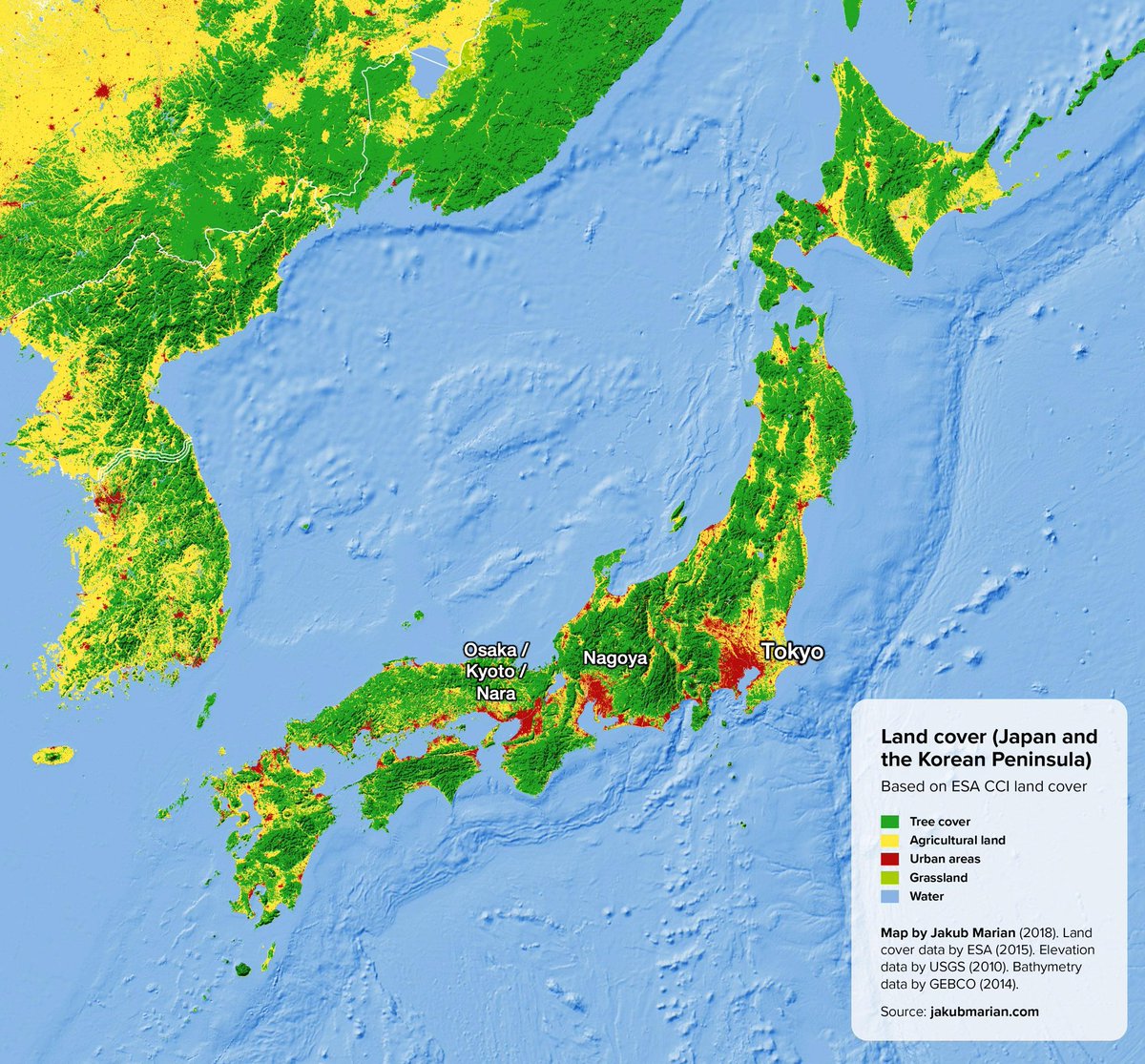
Japan received rice agriculture & iron tools ~2300y ago, and has grown its population ever since
The heavy rains water crops and bring fertilizing sediments from the tall mountains too
10
Also, since it is quite isolated as a series of islands, it suffered fewer wars and waves of infectious diseases, so its population died less.
Finally, sea currents bring plenty of fish (~4% of calories, but ~33% of protein)
That's why Japan is so densely populated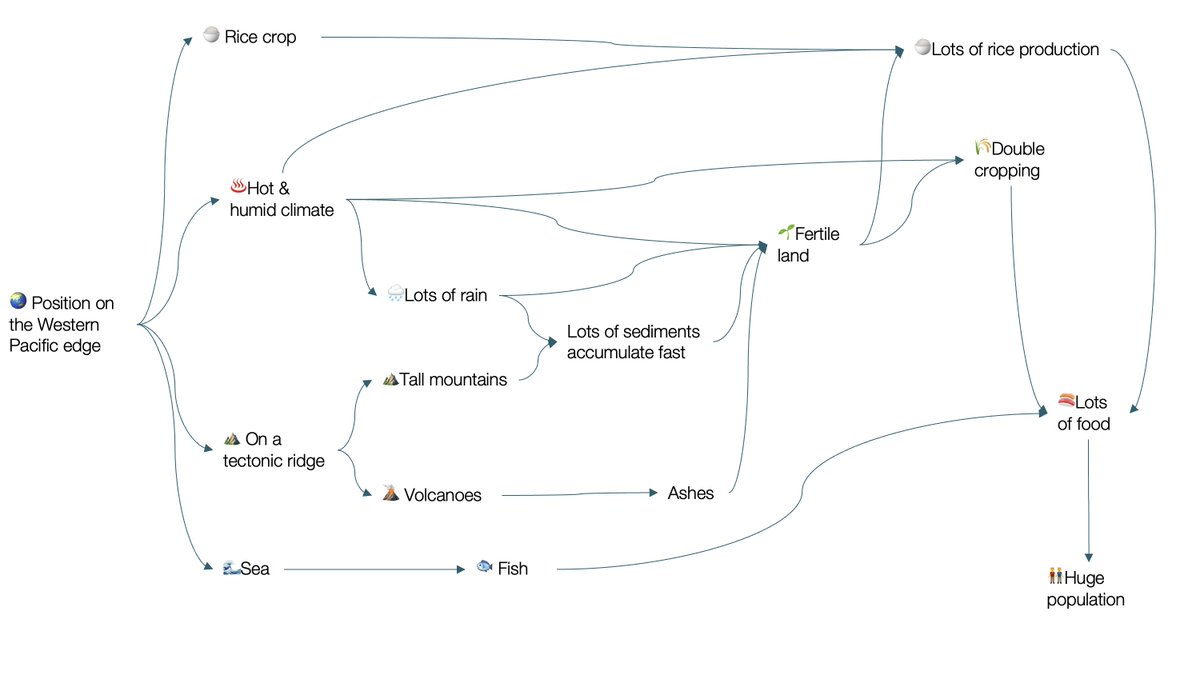
Finally, sea currents bring plenty of fish (~4% of calories, but ~33% of protein)
That's why Japan is so densely populated
11
And why is Tokyo the most populous city in Japan? Simply because it has the biggest plain in the warm part of the islands, the Kanto Plain.
12
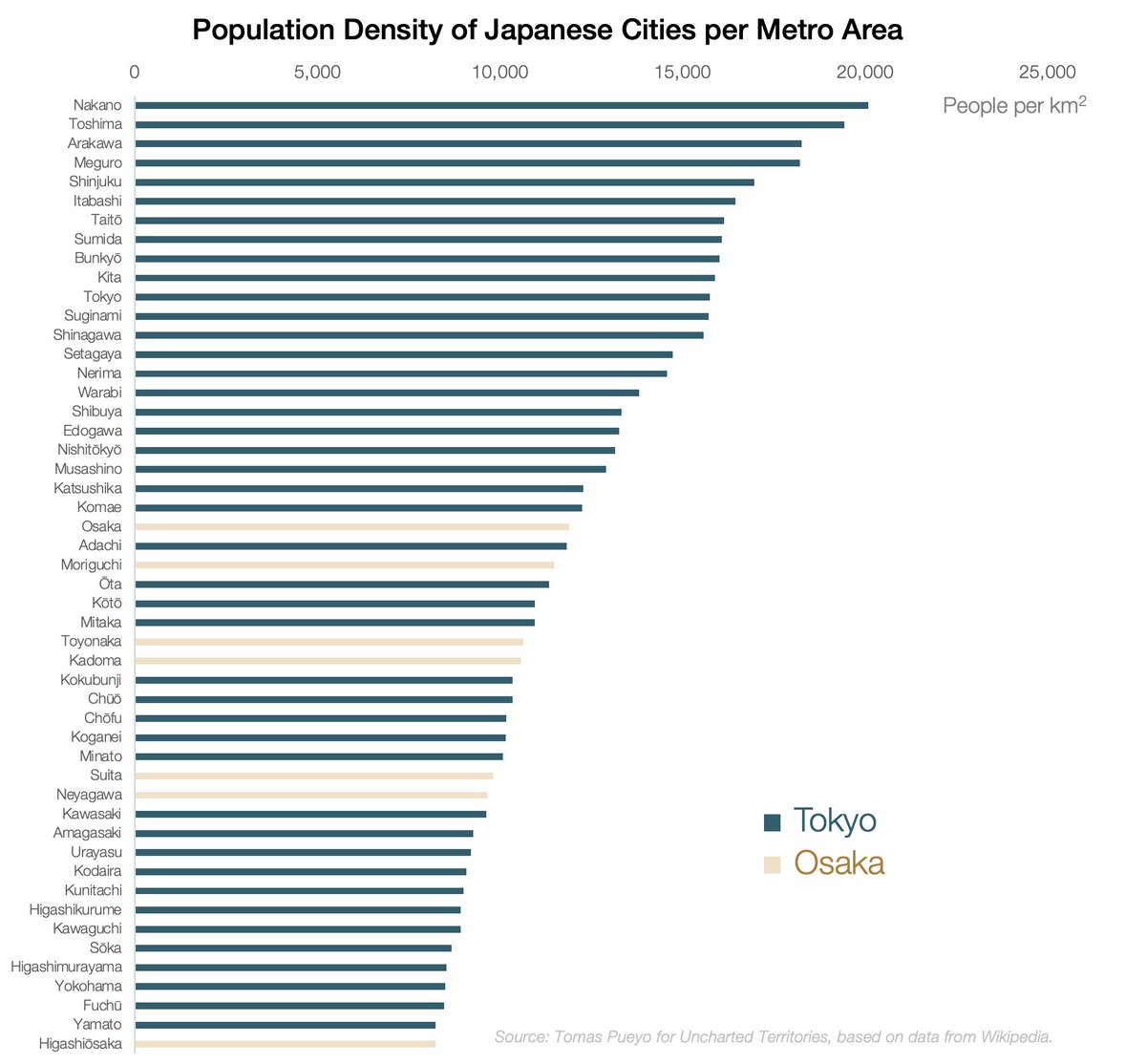
Tokyo's overall city has the same density as Osaka or Nagoya. Sure, its center is more dense, but not much more, and it's just the center. Standard for a capital
13
Then the question becomes: Why is the biggest plain in Japan just there? And that's because of... eartquakes & volcanoes!
See on this map of Japan's elevation the underwater Izu-Bonin Arc? It smashes against Japan just next to the Kanto Plain.
Does that cause the plain?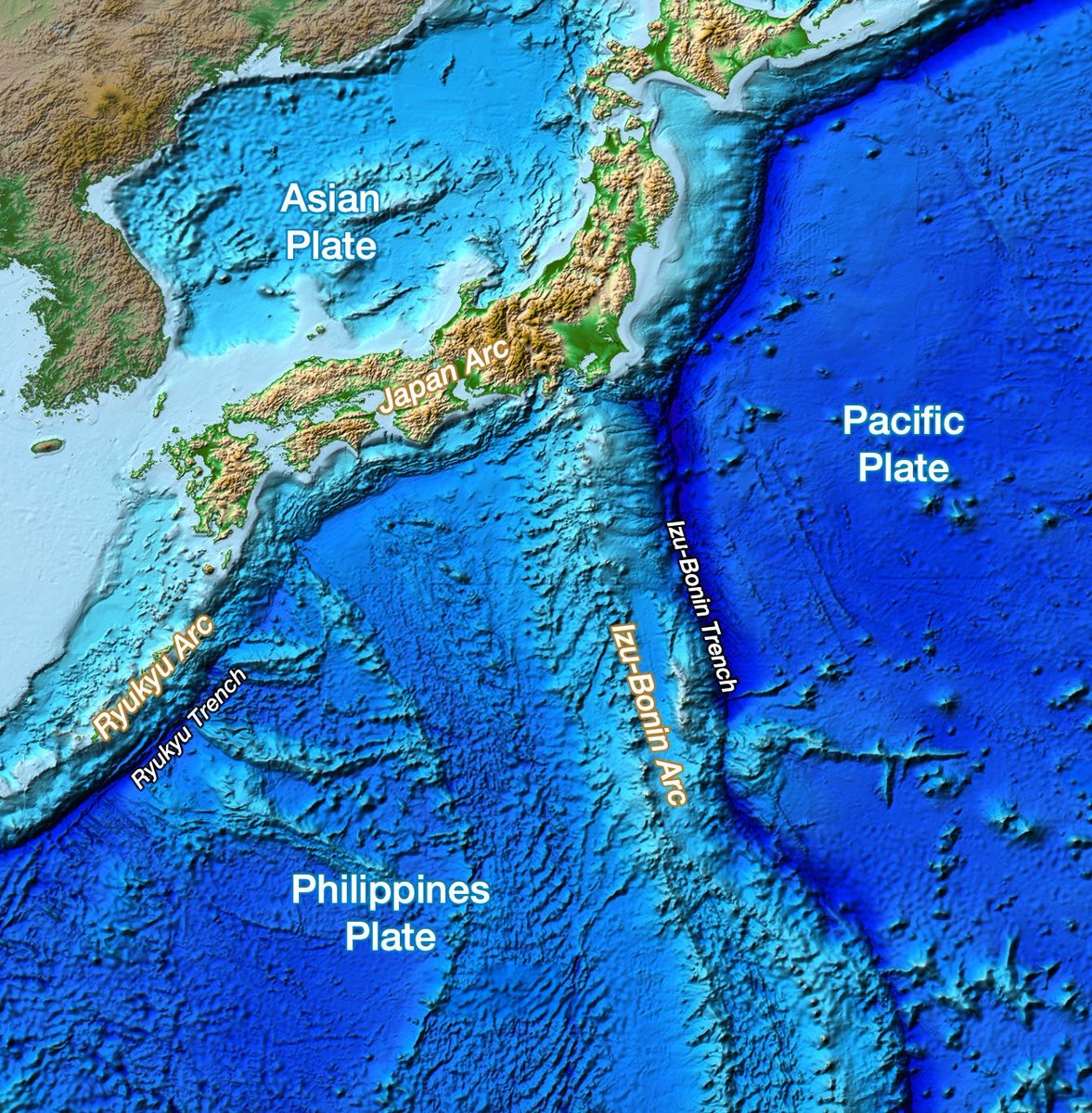
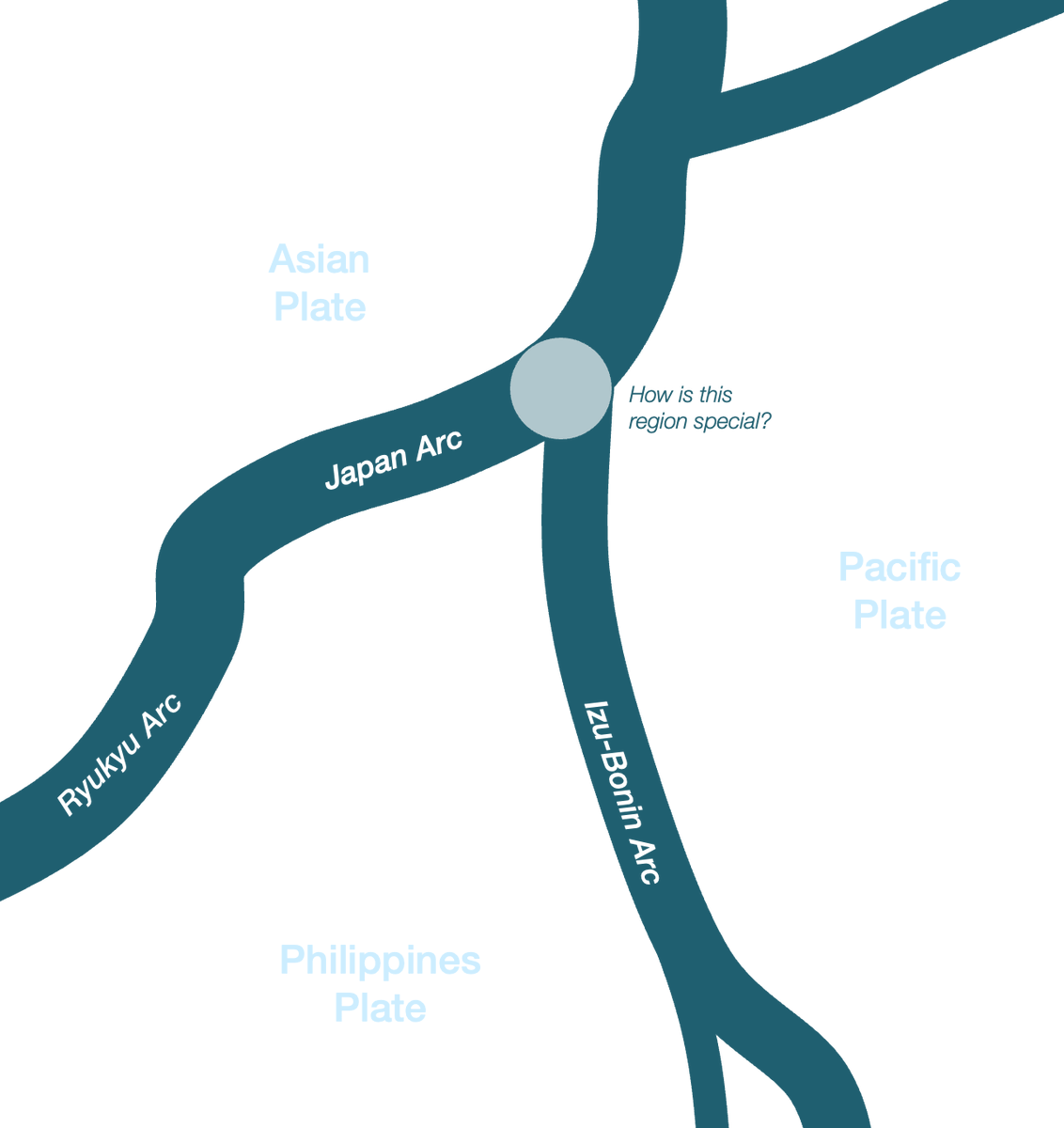
See on this map of Japan's elevation the underwater Izu-Bonin Arc? It smashes against Japan just next to the Kanto Plain.
Does that cause the plain?
14
It does create the tallest mountains in Japan (in red here), which then bring more sediments to their mountainside plains when it rains
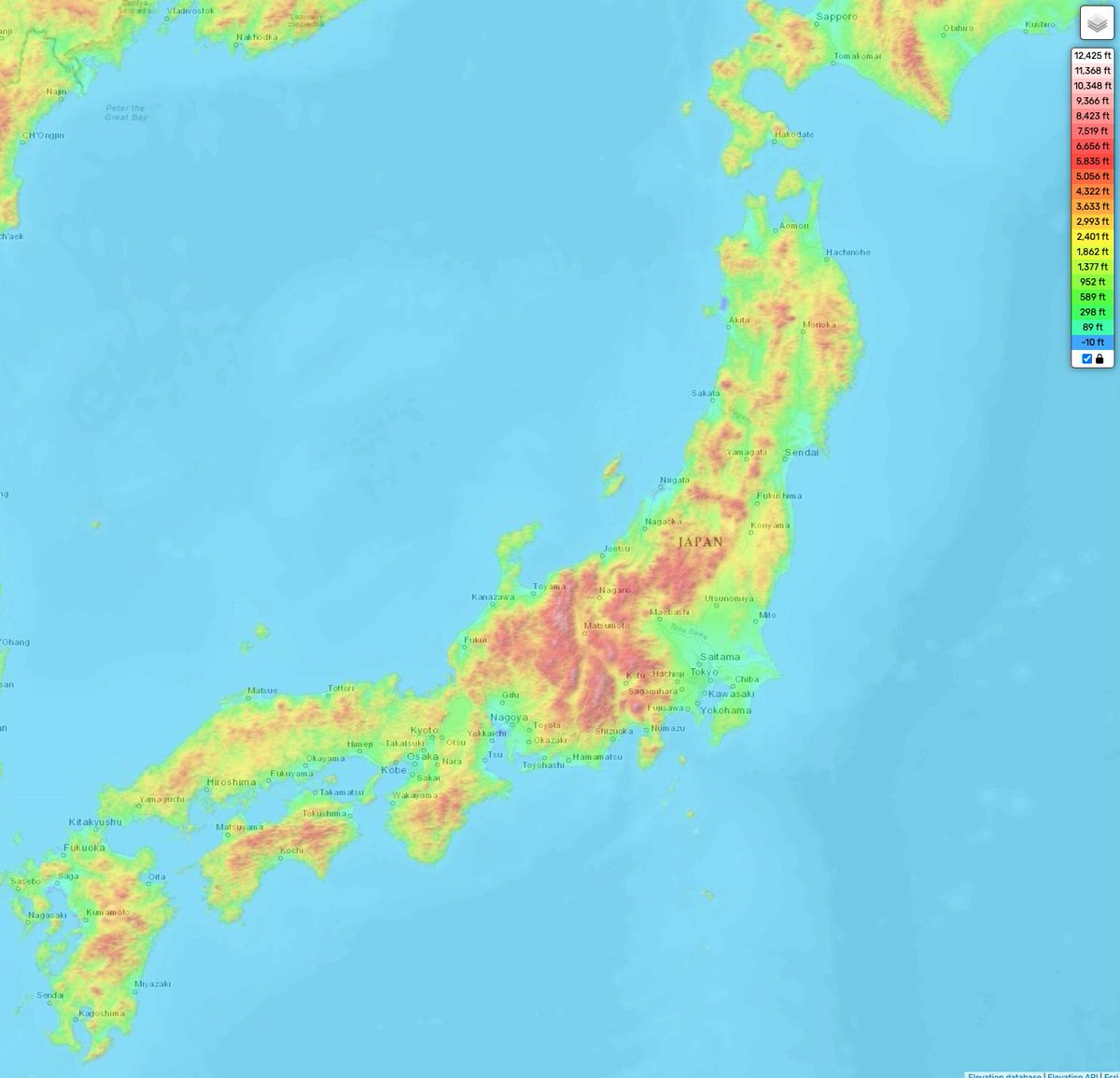
15
It's not a coincidence that the biggest plain in Japan (Kanto) and the 2nd biggest in this area (Nobi, where Nagoya is) are on each side of these mountains: they get sediments from the mountains on two sides
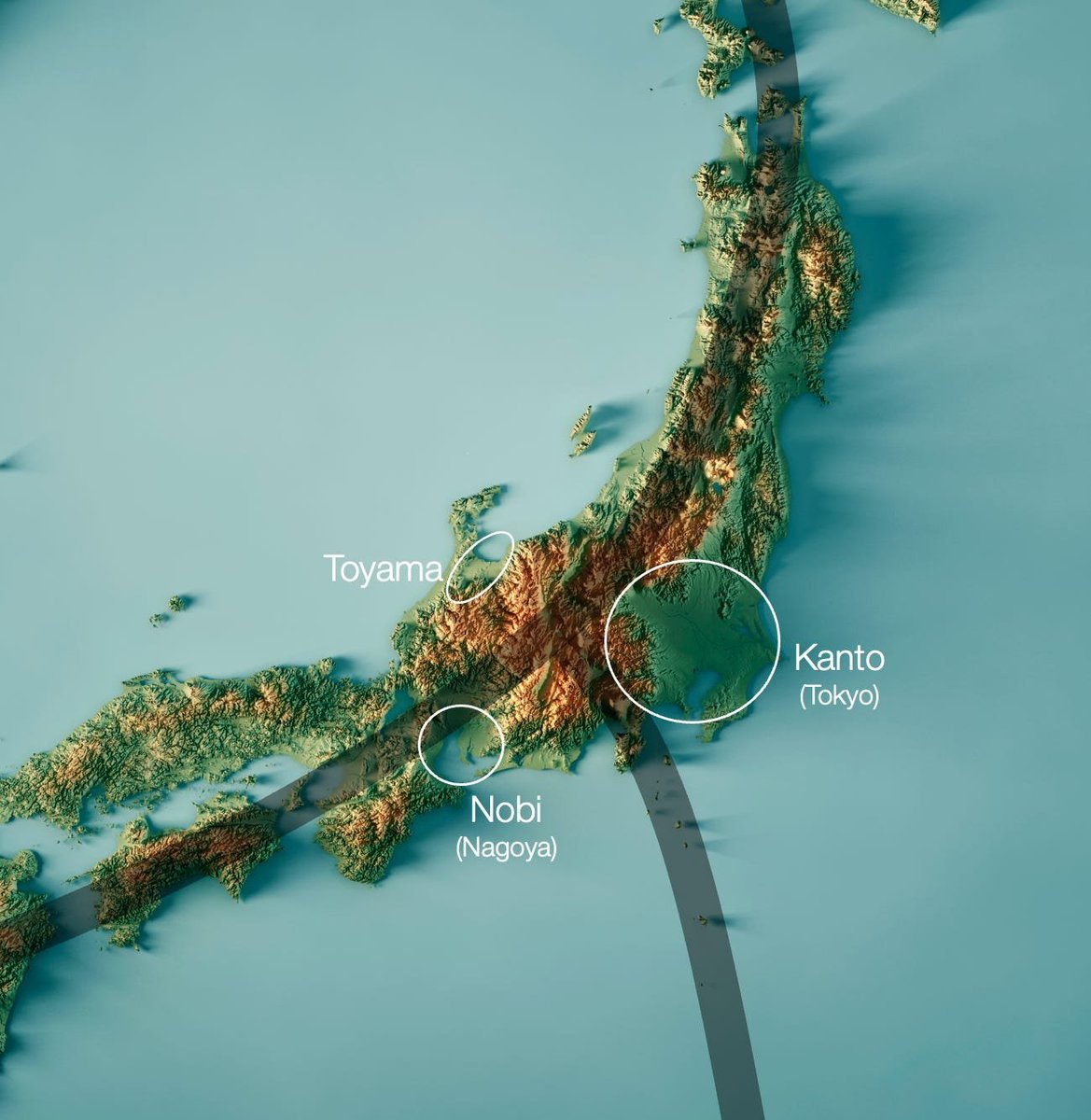
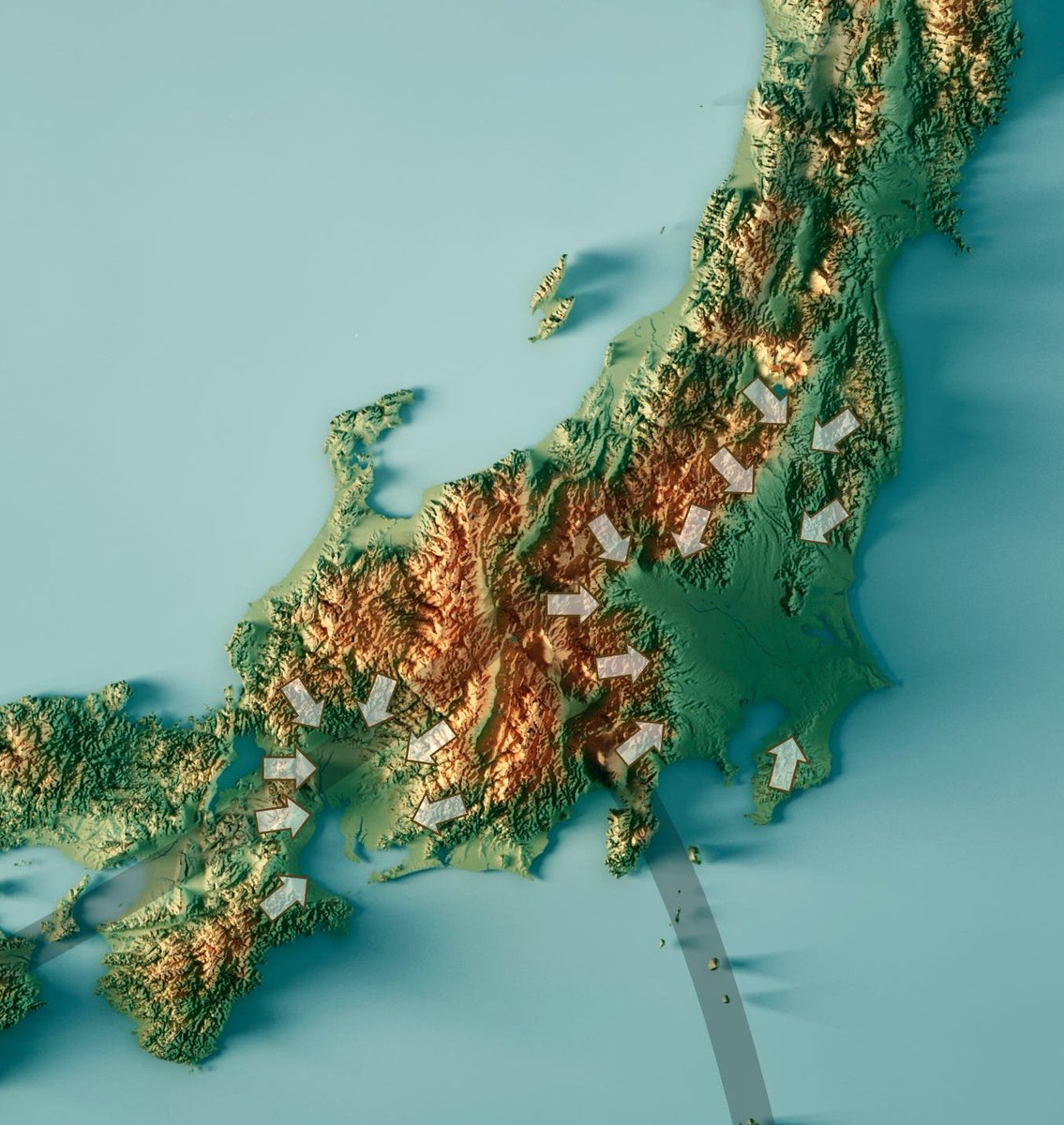
16
The northwest coast doesn't have a big plain because it only gets sediment from one side. More importantly, because that sediment falls into a deep sea.
Meanwhile, the Kanto & Nobi plains are on a much lighter plate, so the sediment accumulates there. It's 3-4km deep in Tokyo!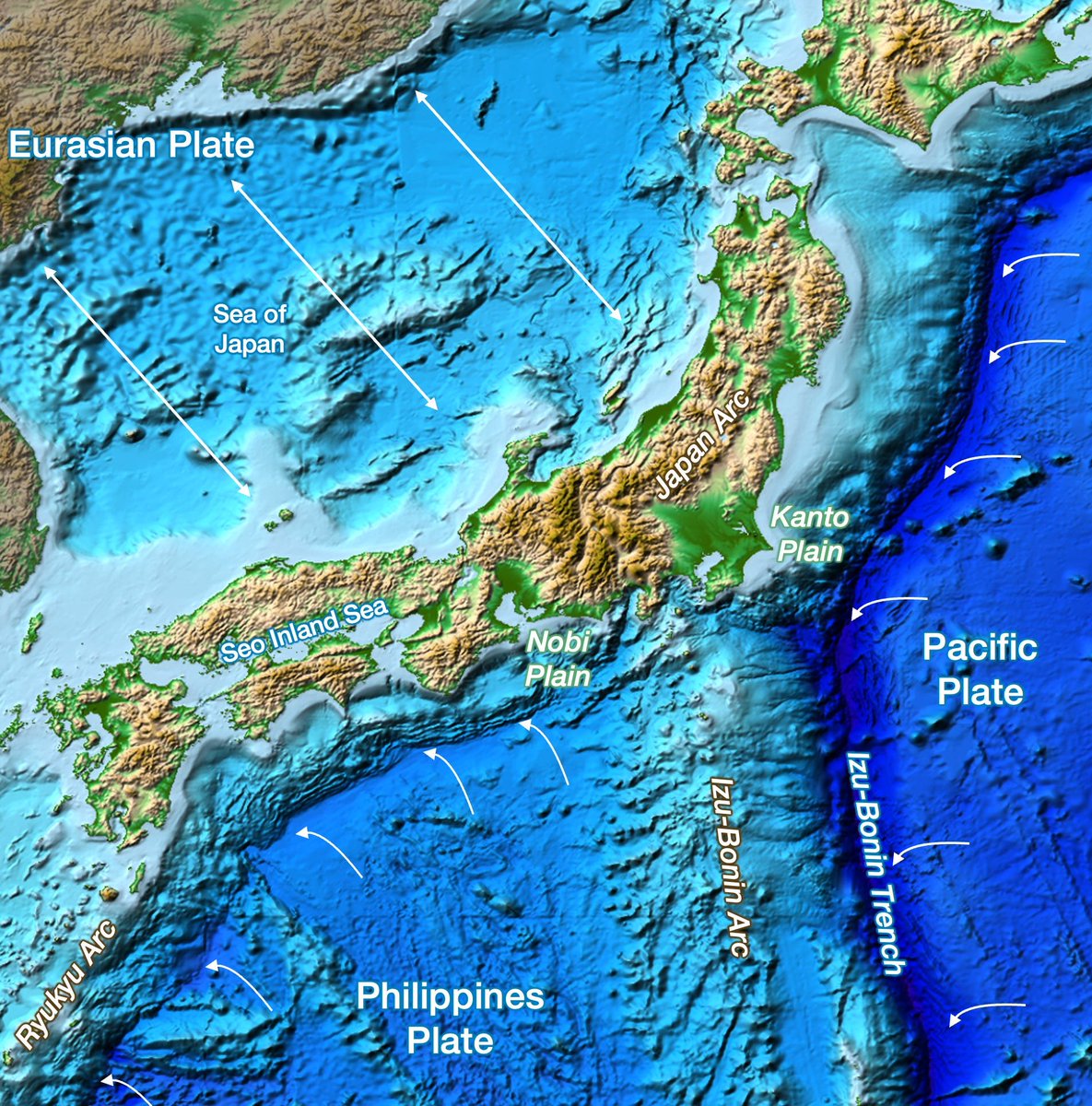
Meanwhile, the Kanto & Nobi plains are on a much lighter plate, so the sediment accumulates there. It's 3-4km deep in Tokyo!
17
So why is the world's most populous city in earthquake, volcano, tsunami & typhoon land?
Because:
1. This exact location on the western Pacific edge produces both lots of food and these calamities
and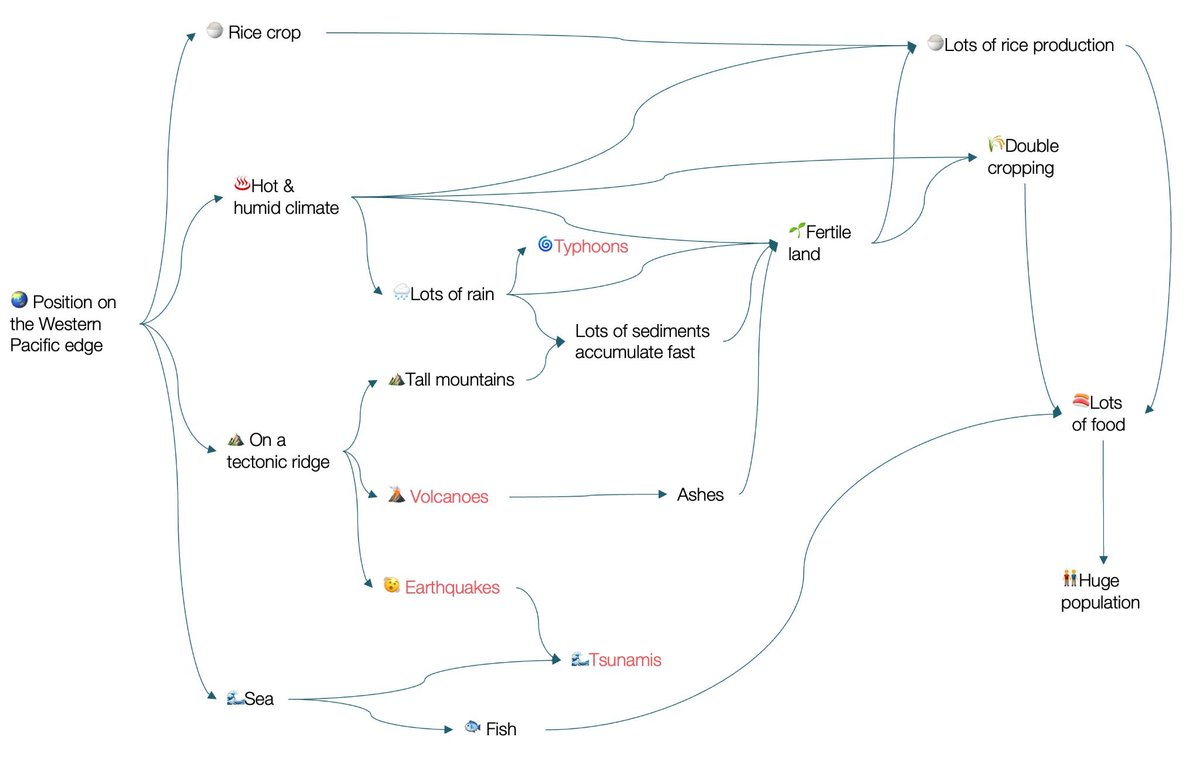
Because:
1. This exact location on the western Pacific edge produces both lots of food and these calamities
and
18
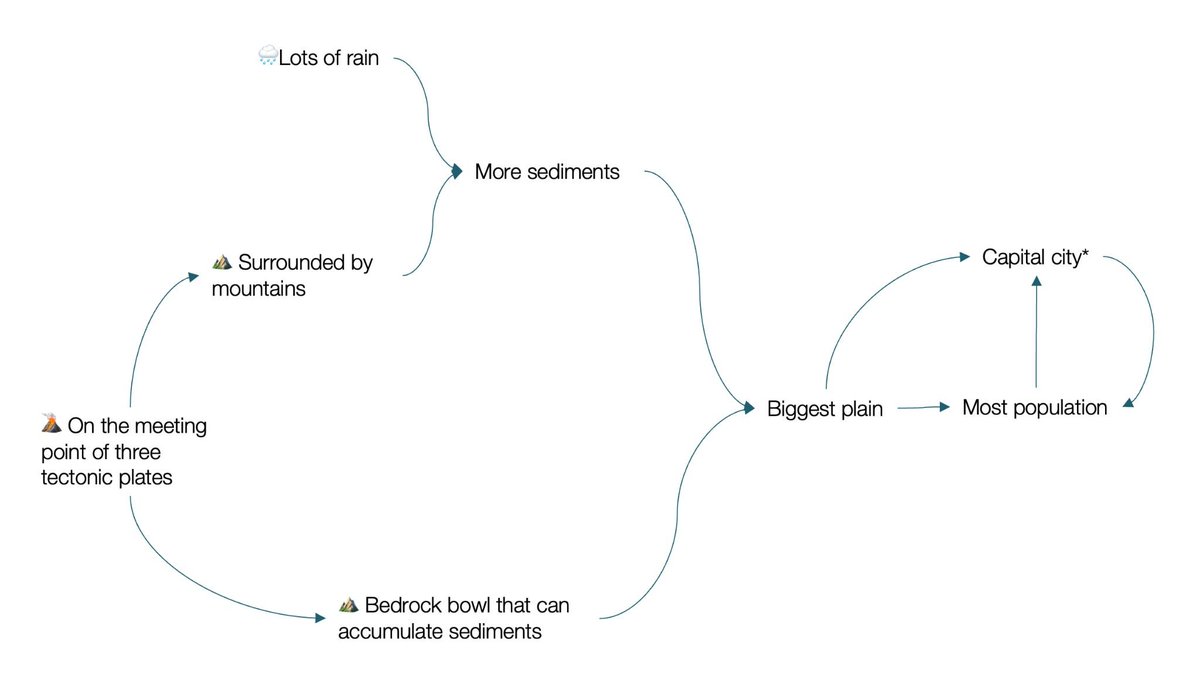
2. The biggest plain in all the islands is just where the tectonic plates smash into each other, as this creates the tallest mountains that surround elevated crust in which lots of sediments can accumulate
19
So Tokyo is the most populous city on Earth simply because it's on the biggest plain of one of the most densely populated countries, which is there due to tectonic plates smashing into each other
Follow me for more threads to understand deeply how the world works: @tomaspueyo
Follow me for more threads to understand deeply how the world works: @tomaspueyo