MASSIVE DELAY: Just 3 months after Jensen demoed Kyber NVL144 at...

SemiAnalysis@SemiAnalysis_
465 views
Jul 06, 2026
~1 min read
Advertisement
1
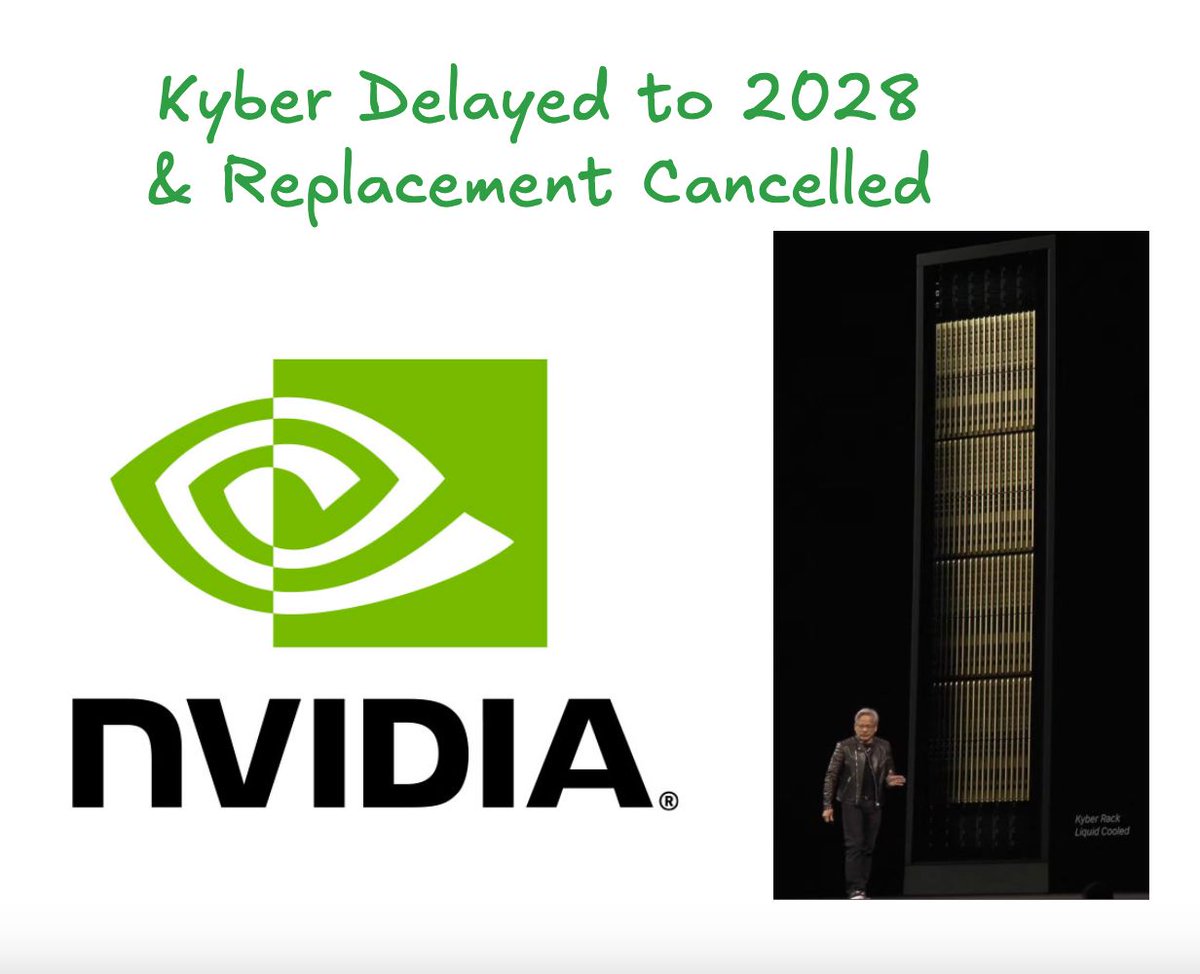
MASSIVE DELAY: Just 3 months after Jensen demoed Kyber NVL144 at GTC, it has faced major setbacks and has been delayed by more than 12 months, pushing it back to 2028. Below, we explain why Kyber has faced massive delays and why NVIDIA’s NVL72x2 back-to-back rack architecture was also cancelled, leaving Rubin Ultra with a limited scale-up domain. 👇️ 1/6🧵
2
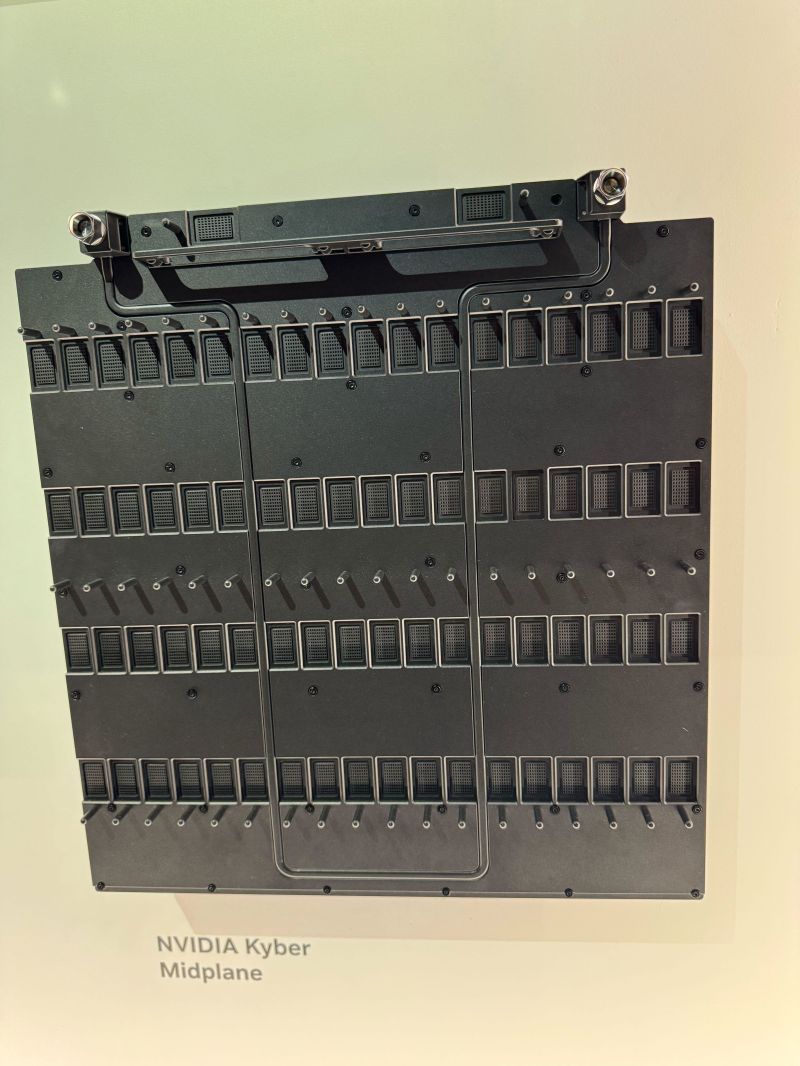
Kyber NVL144 rack architecture has been delayed to 2028 as the PCB midplane remains challenging from a manufacturability standpoint. NVL576, which connects 8x Oberon racks over CPO between the NVSwitches, is also likely delayed or restricted to small volumes given the current challenges with CPO. 2/6🧵
3
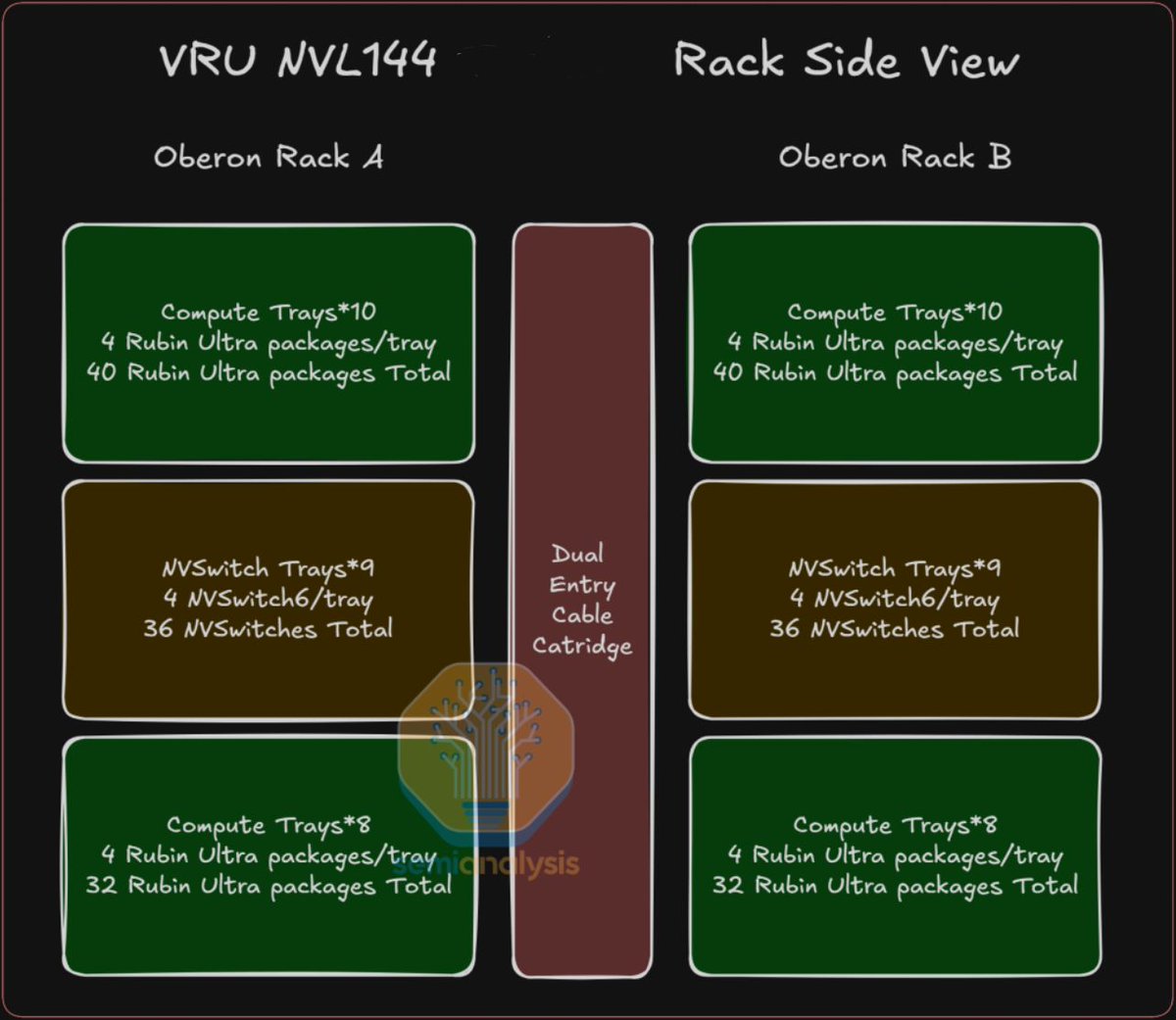
NVL72x2 back-to-back rack architecture was the new proposed architecture NVIDIA was developing as an alternative to Kyber. It was designed to increase the pure-copper NVLink scale-up world size by placing two Oberon racks back-to-back. However, it has since been cancelled due to heavy pushback from CSPs and hyperscalers over its odd design and heavy operational burden. 3/6🧵
4
As the NVIDIA roadmap indicates, CPO NVSwitch will not be available until Feynman. As a result, NVIDIA currently has no proven solution to expand the scale-up world size for Rubin Ultra, leaving a gap for competitors like AMD MI500X or TPUv8i Broadfly to gain scale-up advantages over Rubin Ultra. 4/6🧵
5
This news also comes as the 4-compute-die Rubin Ultra has been cancelled, leaving only the smaller 2-compute-die Rubin Ultra, which will deliver roughly half the real-world performance of the 4-die Rubin Ultra. 5/6🧵
6
NVIDIA will sell significantly more Oberon Rubin racks and Oberon Rubin “Ultra” racks to make up for this shortfall.
We discuss the implications of these mass NVIDIA delays and cancellations for the memory, PCB, and ODM supply chains in our Core Research and AI Accelerator Supply Chain model. 6/6🧵
We discuss the implications of these mass NVIDIA delays and cancellations for the memory, PCB, and ODM supply chains in our Core Research and AI Accelerator Supply Chain model. 6/6🧵
