🧵🧵 Part 4/THREAD 1,2,3,……12 We often hear claims like: “There’s no...

🐺Huns 𝜲🦉﷽@Maliki_AbUwaiss
4 views
Oct 09, 2026
~3 min read
Advertisement
1
🧵🧵 Part 4/THREAD 1,2,3,……12
We often hear claims like: “There’s no such thing as a Wahhabi,” Or “It’s a made-up term”, Or “ Only those who opposed Tawheed used this word “
But is that really true?
In this thread, we’ll examine historical sources showing how Najdi authors themselves used the term “Wahhabi” in a variety of their own books to refer to their movement. Let’s look at the evidence below ⬇️.

We often hear claims like: “There’s no such thing as a Wahhabi,” Or “It’s a made-up term”, Or “ Only those who opposed Tawheed used this word “
But is that really true?
In this thread, we’ll examine historical sources showing how Najdi authors themselves used the term “Wahhabi” in a variety of their own books to refer to their movement. Let’s look at the evidence below ⬇️.
🐺Huns 𝜲🦉﷽@Maliki_AbUwaiss
🧵 Part 1/ In this thread, we’ll analyze the primary source of Husayn ibn Ghannam in his book Tarikh al-Najd to examine how how entire communities across Arabia were declared unbelievers-apostates, had their property seized, were forced to pay ransom, had their livestock destroyed, and, in many cases, were killed.
2
1/ In the book Tarikh Najd Al-Hadith wa Mulhaqatih compiled by Ameen Rihani, it is stated that:
➡️ “And what is Wahhabism if we come to describe it other than Islam in its first purity. And if we want to show the difference between the Wahhabis and the Turks”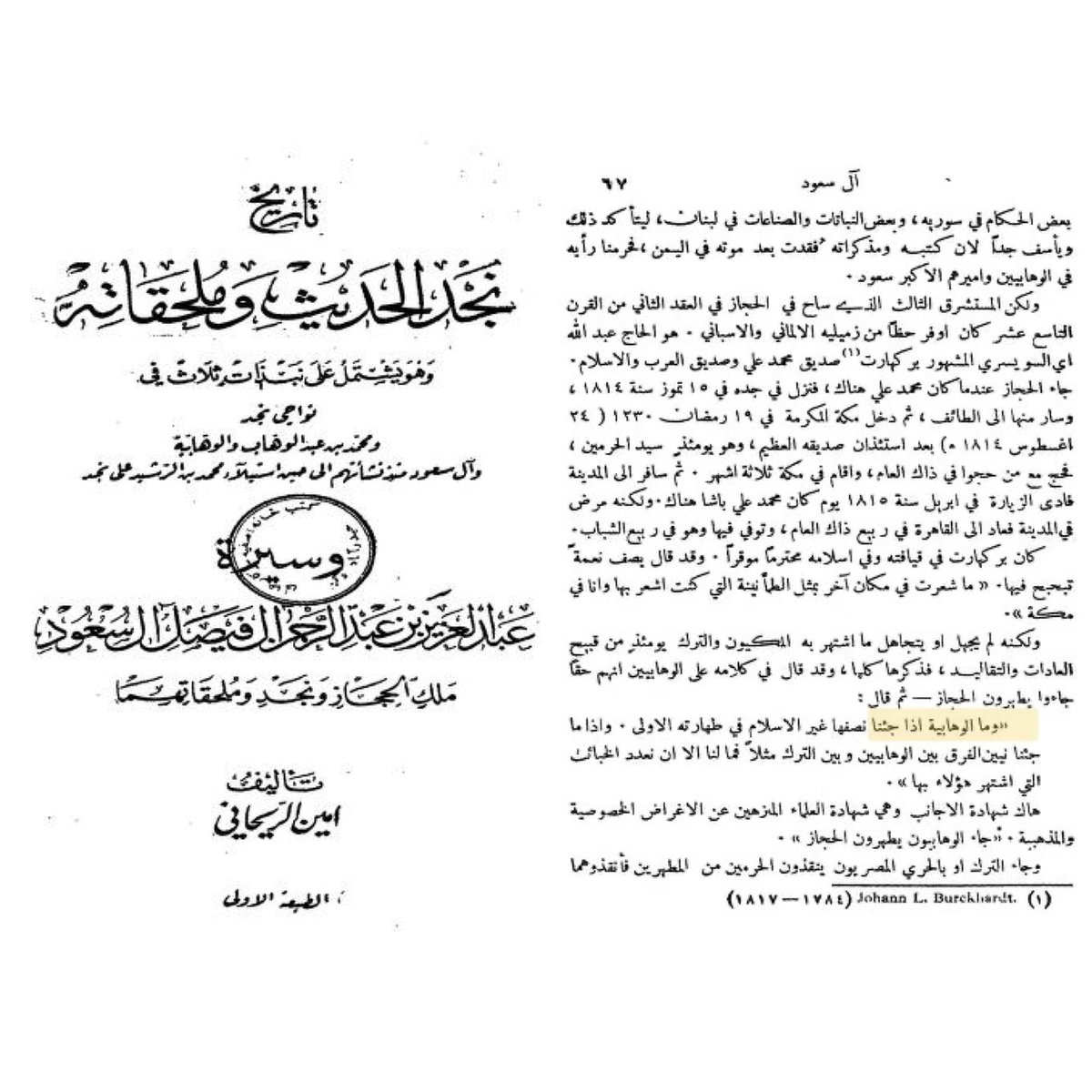
➡️ “And what is Wahhabism if we come to describe it other than Islam in its first purity. And if we want to show the difference between the Wahhabis and the Turks”
3
2/ In the book Al-Durar al-Saniyyah fi al-Ajwibah al-Najdiyyah, compiled by Abd al-Raḥmān ibn Muḥammad ibn Qāsim al-Āṣimī al-Najdī, it is said:
➡️ “he is the one who said:
Yes, we in are Hanafi Wahhabis
Of pure monotheism, we give those who anger us bitterness to drink
And whoever opposes us or provokes us with an offense
We will strike him with a crushing blow and break him into pieces”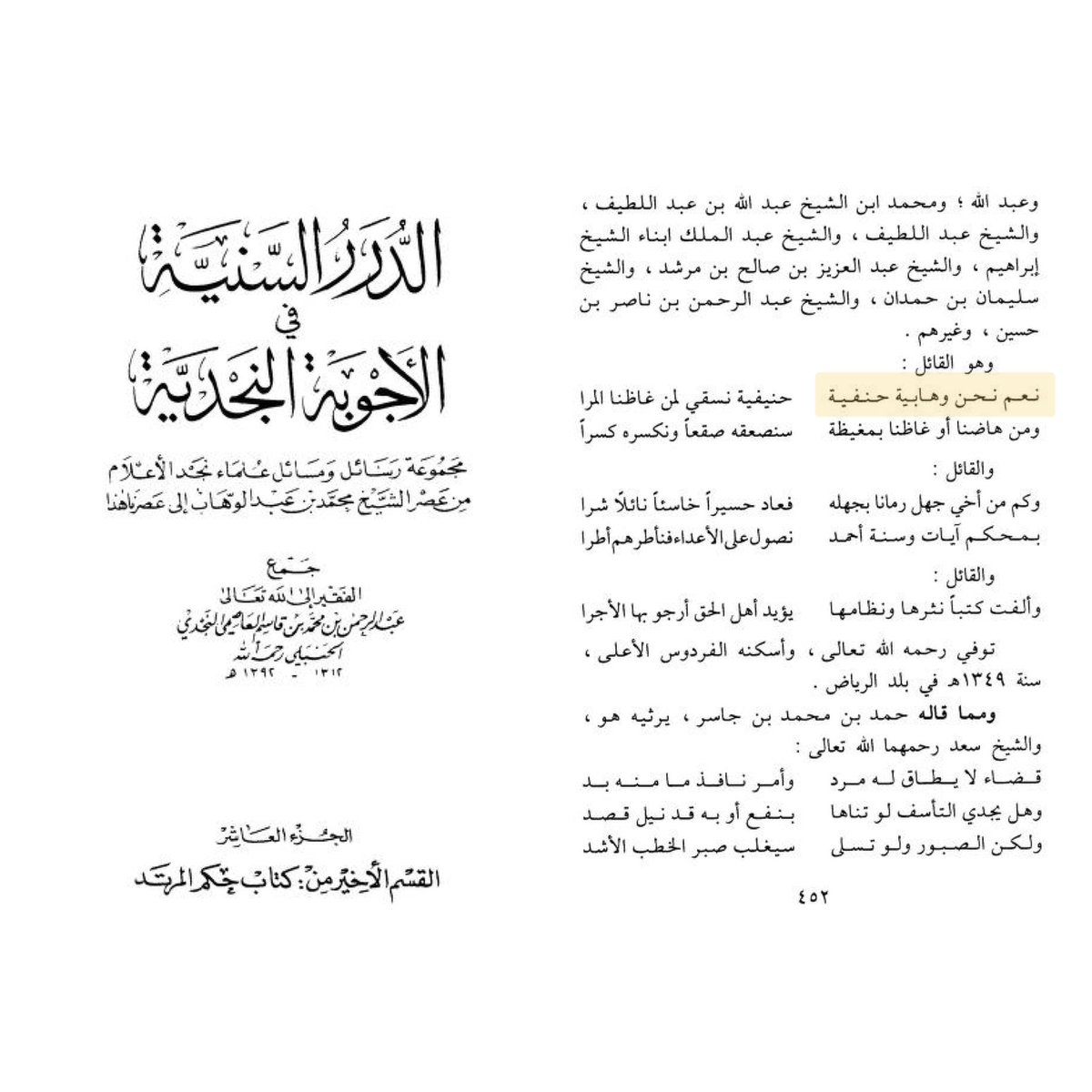
➡️ “he is the one who said:
Yes, we in are Hanafi Wahhabis
Of pure monotheism, we give those who anger us bitterness to drink
And whoever opposes us or provokes us with an offense
We will strike him with a crushing blow and break him into pieces”
4
3/ In the book of Al-Sunnah wa Al-Shi'ah aw Al-Wahhabiyyah wa Al-Rafidah written by Muhammad Rashid Rida in refutation of Shia, it is said :
➡️ “So he restricted the Sunni school of thought to Wahhabism and claimed that they have no predecessors in it except Ibn Taymiyyah and his students”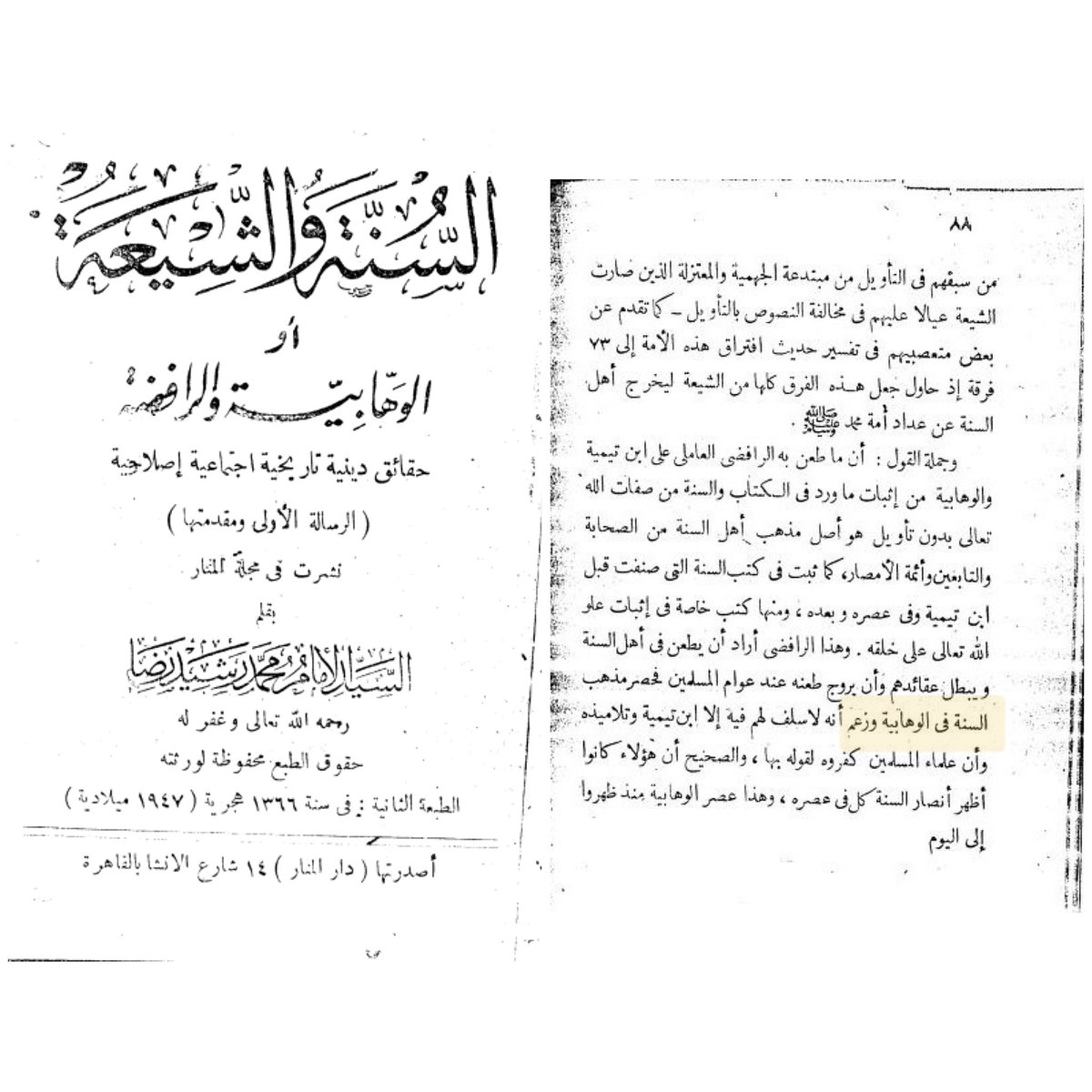
➡️ “So he restricted the Sunni school of thought to Wahhabism and claimed that they have no predecessors in it except Ibn Taymiyyah and his students”
5
4/ In the book Al-Durar al-Saniyyah fi al-Ajwibah al-Najdiyyah, compiled by Abd al-Raḥmān ibn Muḥammad ibn Qāsim al-Āṣimī al-Najdī, it is said:
➡️ “And I am upon the way of Wahhabism, and you think that this is the manifestation of the religion, so by it you have invalidated the obligation of migration”.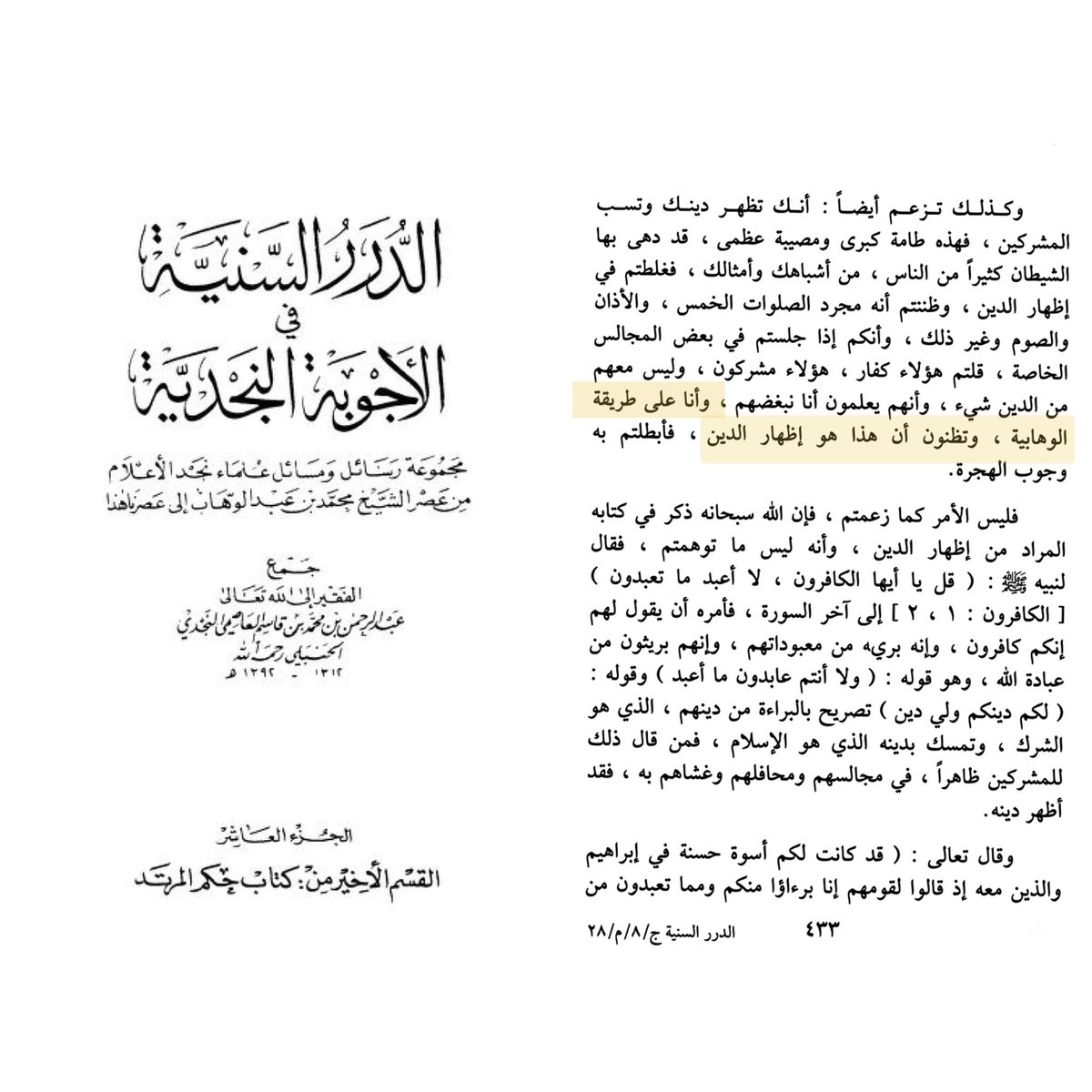
➡️ “And I am upon the way of Wahhabism, and you think that this is the manifestation of the religion, so by it you have invalidated the obligation of migration”.
6
5/ In the opposition book of Mawqif Al-Wahhabiyyah min Sayyidina Muhammad Salla Allahu 'Alayhi wa Sallam Khayr Al-Bariyyah written by Ali Miqdadi Al-Hateemi he said :
➡️ “The truth is that the name Al-Wahhabiyyah is a name they bestowed upon themselves and accepted, even if some of them do not accept it & reject the naming of Wahhabism”.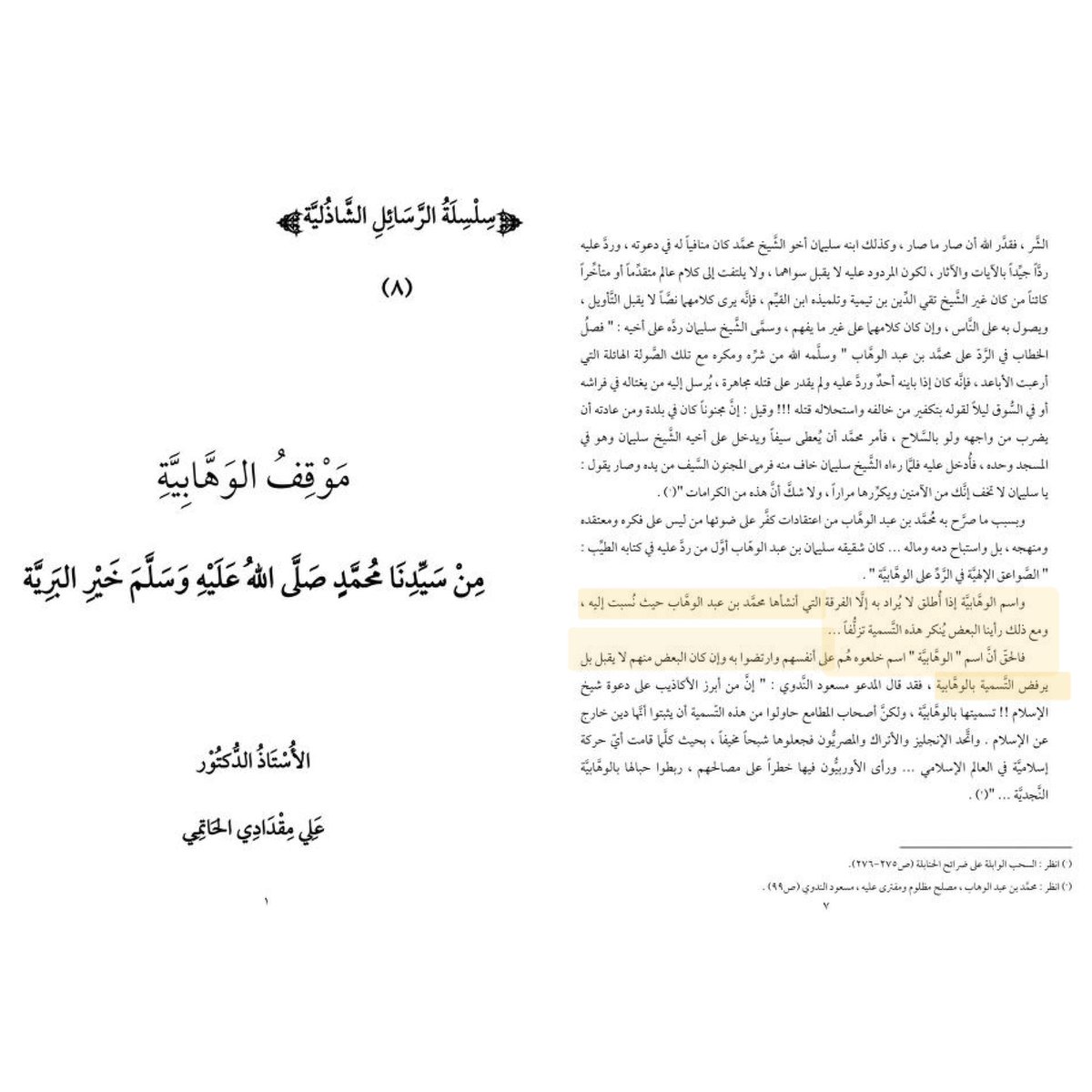
➡️ “The truth is that the name Al-Wahhabiyyah is a name they bestowed upon themselves and accepted, even if some of them do not accept it & reject the naming of Wahhabism”.
7
6/ In the book Tarikh Najd Al-Hadith wa Mulhaqatih compiled by Ameen Rihani, it is stated that:
➡️ “And if we assume exaggeration in both numbers, the battle of Al-Sifri nevertheless remains the greatest battle of the Wahhabi war until that time”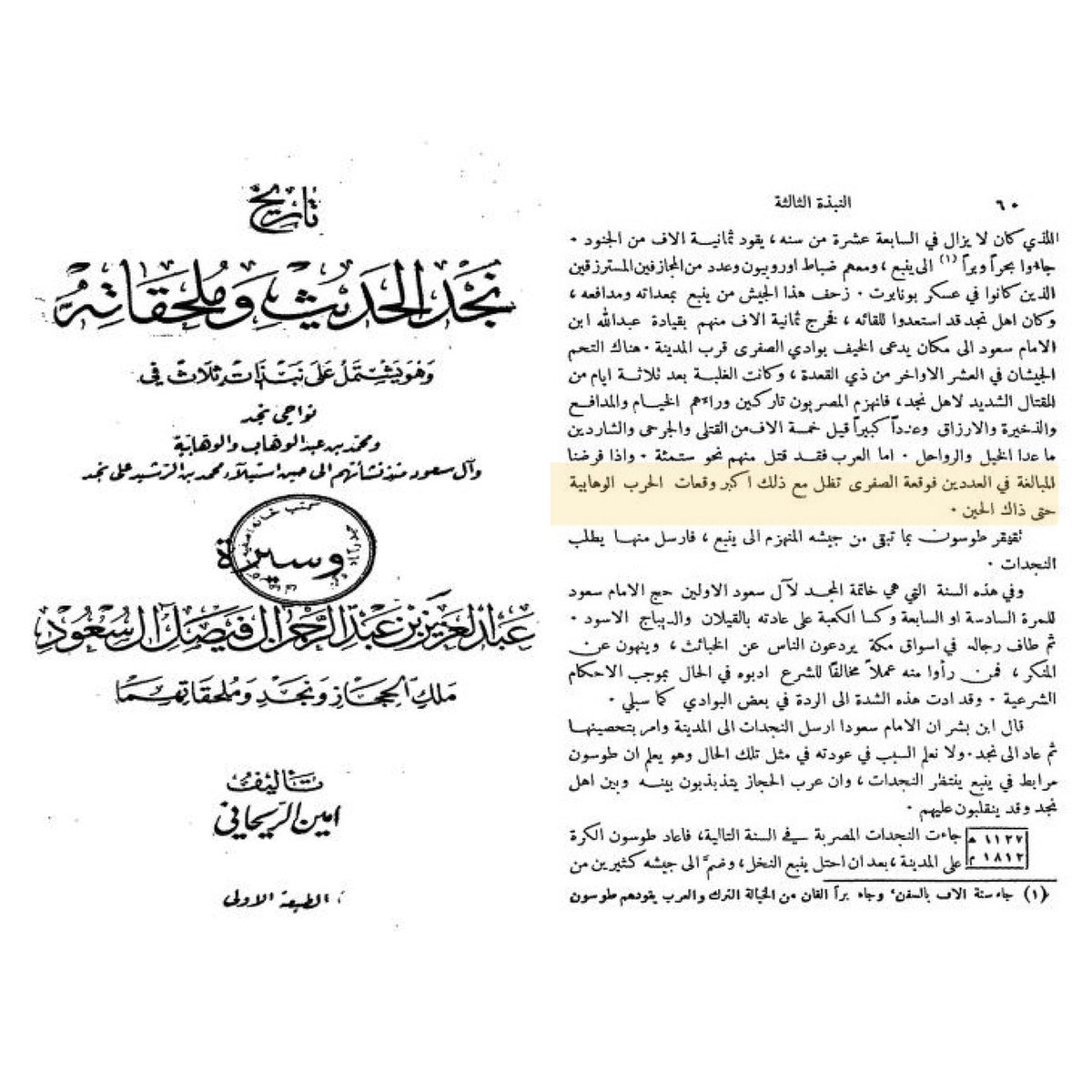
➡️ “And if we assume exaggeration in both numbers, the battle of Al-Sifri nevertheless remains the greatest battle of the Wahhabi war until that time”
8
7/ In the book Al-Durar al-Saniyyah fi al-Ajwibah al-Najdiyyah, compiled by Abd al-Raḥmān ibn Muḥammad ibn Qāsim al-Āṣimī al-Najdī, it is said:
➡️ “Among the merits of the Wahhabis is that they eradicated and eliminated religious innovations.”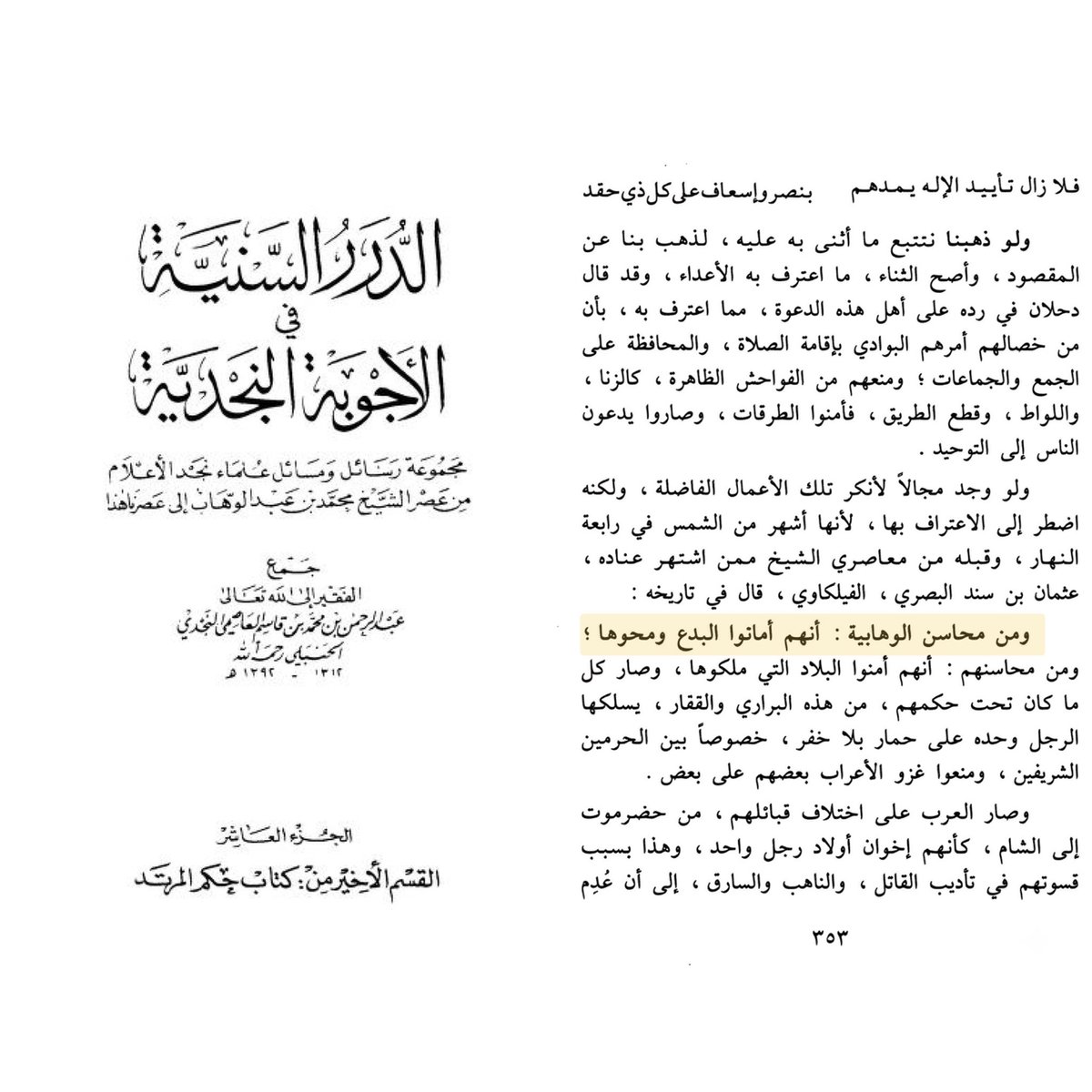
➡️ “Among the merits of the Wahhabis is that they eradicated and eliminated religious innovations.”
9
8/ In the same book of Al-Sunnah wa Al-Shi'ah aw Al-Wahhabiyyah wa Al-Rafidah written by Muhammad Rashid Rida in refutation of Shia, it is said :
➡️ “Those who hold fast to the guidance of the predecessors, the issue of the Rabitah and the non-narrated regular remembrance, as an avenue for reconciliation between the Wahhabis and the Shias”
➡️ “Those who hold fast to the guidance of the predecessors, the issue of the Rabitah and the non-narrated regular remembrance, as an avenue for reconciliation between the Wahhabis and the Shias”
10
9/ The son of Muhammad Ibn Abd Al - Wahhab, Abdullah bin Muhammad bin Abd al-Wahhabi wrote a book subtitled :
وهو رد على بعض علماء الزيدية فيما اعترض على دعوة التوحيد الوهابية
➡️“It is a refutation of one of the Zaydi scholars regarding his objections to the Wahhabi call to tawḥīd.”
وهو رد على بعض علماء الزيدية فيما اعترض على دعوة التوحيد الوهابية
➡️“It is a refutation of one of the Zaydi scholars regarding his objections to the Wahhabi call to tawḥīd.”
11
10/ The Najdi Scholar Sulaymān ibn Saḥmān al-Najdī wrote a book titled :
الهداية السنية والتحفة الوهابية النجدية
➡️ “The Sunni Guidance and the Najdi Wahhabi Gift.”
الهداية السنية والتحفة الوهابية النجدية
➡️ “The Sunni Guidance and the Najdi Wahhabi Gift.”
12
11/ In his other book titled Kitab Al-Diya Al-Shariq fi Radd Shubahat Al-Maziq Al-Mariq written by Sulaiman bin Sahman it is said :
➡️ “We therefore say: the Wahhabis did not declare all visitors to graves, without exception, to be worshippers of idols God forbid that they should do so. Rather, the Wahhabis only regarded as a worshipper of an idol the one who associates others with Allah in His worship”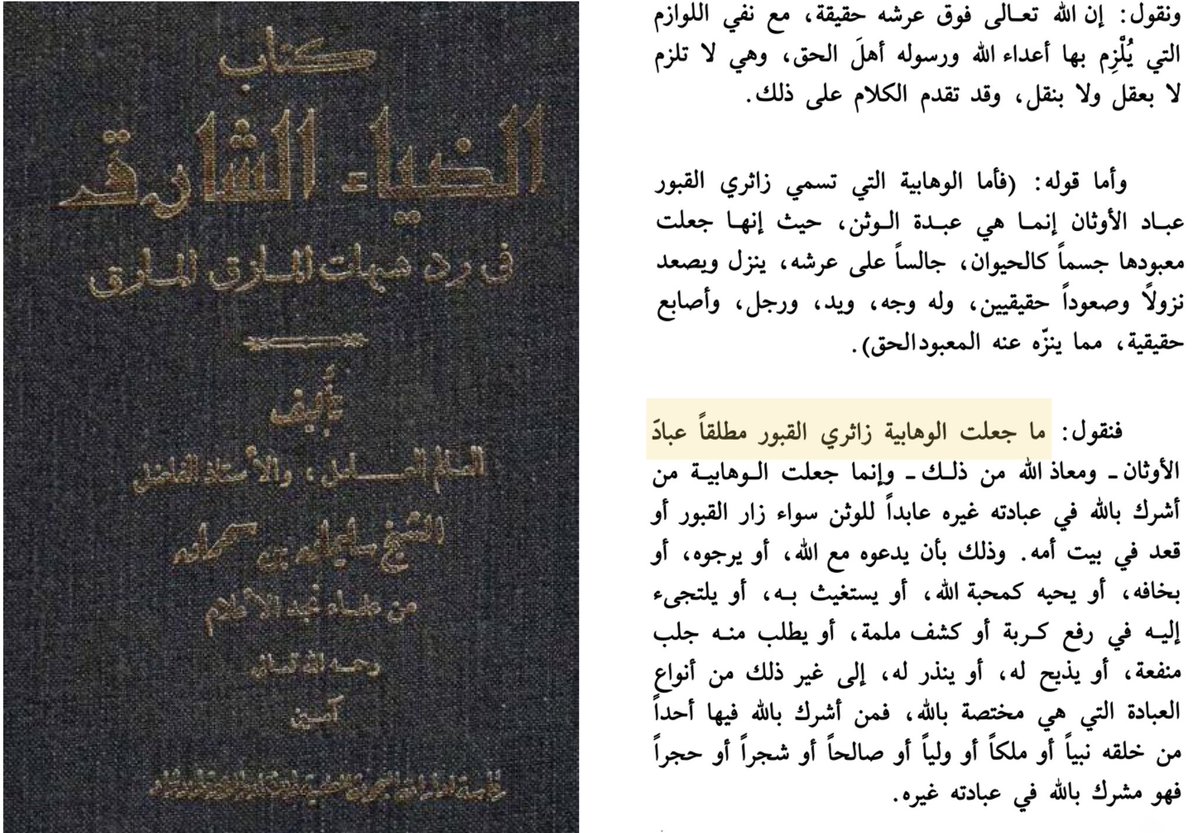
➡️ “We therefore say: the Wahhabis did not declare all visitors to graves, without exception, to be worshippers of idols God forbid that they should do so. Rather, the Wahhabis only regarded as a worshipper of an idol the one who associates others with Allah in His worship”
13
12/ In the book of Tawjihat Islamiyyah written by Shaykh Abd Allāh ibn Abd al-Rahmān ibn Ḥumayd :
➡️ “The Wahhabis do not declare anyone a disbeliever except for that which the scholars have unanimously agreed is disbelief”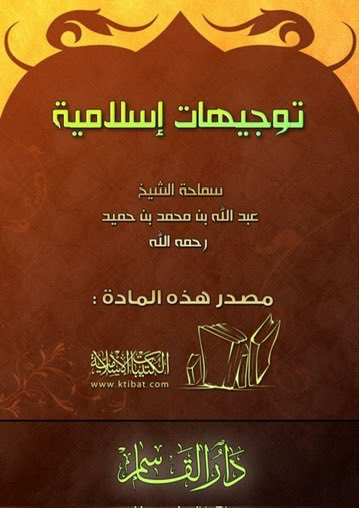

➡️ “The Wahhabis do not declare anyone a disbeliever except for that which the scholars have unanimously agreed is disbelief”