I Built a AI Model From Zero. It Made $10k in a Month.

I spent about a month building a fictional AI model from zero.
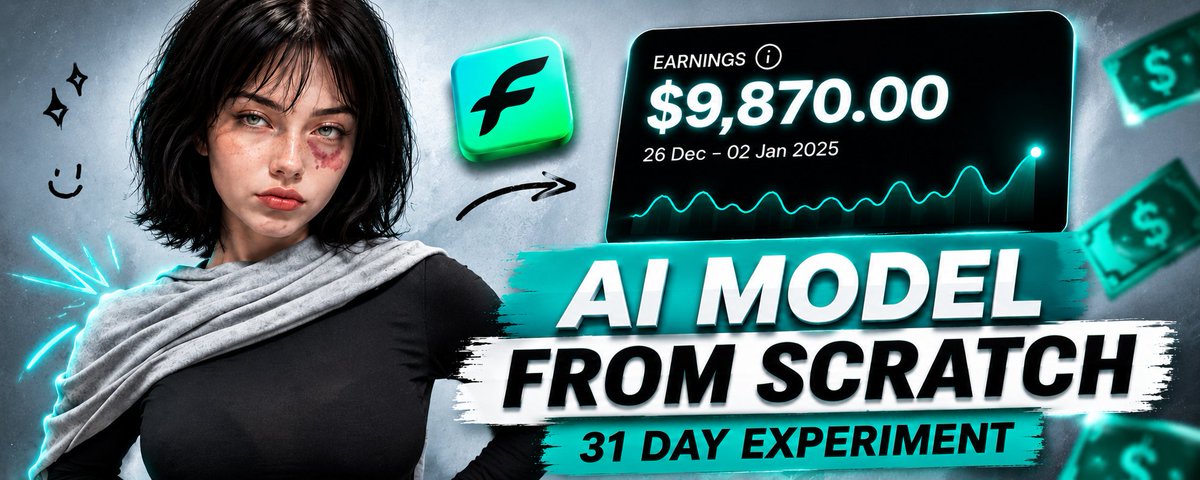
By the end, it had reached:

The surprising part was not that AI could create the model.
Everyone already knows AI can generate a face.
The surprising part was that the system became repeatable.
This started as a strange experiment: build a fictional character, give her a reason to exist, push her through social platforms, move attention into a warm audience layer, and test whether people would actually pay.
Not like a theory. Not like a guru thread. As a real case study in synthetic attention.
And the result changed how I think about AI models completely.
The model matters. The character matters even more. But the real business is the operating system around her: story, hooks, platform distribution, Telegram, paid access, DMs, conversion, retention, and weekly testing.
AI content is cheap now. Attention is not. That gap is where the money is.
How I Built Diana Zuko

I did not want to build another generic AI beauty account.
That is the obvious move, which usually makes it the weakest move. The internet is already filling up with perfect synthetic faces that look good for half a second and disappear from memory immediately.
Pretty is easy now. Specific is harder.
So I built Diana Zuko as a fictional AI-generated persona, not just a face. She had an anime/Avatar-inspired visual angle, a visible facial mark, and a backstory around being bullied as a kid before becoming confident as an adult.
That gave her a hook before the first post even went live.
The goal was not to make the most conventionally attractive AI girl possible. The goal was to create a character people could recognize, describe, and remember after scrolling past 50 other posts.
Most people start with: "How do I make her look more real?"
The better question is: "Why would anyone care about her?"
If the answer is only "because she looks good," the project is fragile. AI has made beauty into cheap supply. What still has value is identity, story, positioning, and repeat attention.
The prompt I would use at this stage:
Create a fictional AI model persona for a social media experiment.

Define her niche, personality, visual style, tone of voice, backstory, content pillars, audience psychology, and monetization angle.

Make her consistent, memorable, and marketable.
Do not base her on a real person.
Do not impersonate anyone.
Do not create fake proof.
Keep the AI nature clear in the public-facing brand.
That last part matters
The advantage is not deception. The advantage is making a fictional character interesting enough that people engage anyway.
The First Content Did Not Go As Planned
The first content was not a clean win.
Some posts got traction. Some formats looked promising. But the account was not yet acting like a real asset. The content was creating views, but not enough movement. People could see the model, but the audience behavior was not strong enough yet.
That is the part most people skip when they talk about this niche.
It is not:
prompt
post
profit
AI lowers production cost, but it does not remove the need to test angles. Some clips looked good and still did not convert. Some ideas felt obvious and still did not create intent. Some AI video workflows had issues because masks, backgrounds, or nearby objects did not survive cleanly.
The early lesson was simple and slightly annoying:
Making content is easy.
Making people care is still hard.
That is the actual cost shift happening here. The expensive part is less about cameras, studios, locations, and production crews. The expensive part is finding the character angle that turns synthetic content into repeat attention.
That is where Diana started to win.
The Breakout Came From Story
The first major breakout did not come from the most polished AI clip.
It came from story.
I posted Diana through a TikTok video/carousel built around her character arc: the younger version of her, the anime reference, the adult version, and the emotional idea of being bullied before growing into confidence.
That piece crossed 800,000 views fast and later pushed past 1,500,000 views.

That was the moment the account changed.
Before that, Diana was an AI model being tested. After that, she became a character people could react to.
The difference was not just the format. It was the positioning.
There was identity.
There was contrast.
There was transformation.
There was a reason to pause.
The content gave people something to understand beyond the face.
This is what most AI model accounts miss. They optimize for realism, but realism alone does not create a fandom. It only makes the image less suspicious.
The better game is building viral angles around the persona: curiosity, transformation, status, social tension, desire, vulnerability, identity, and access.
The prompt I would use to turn a character into content:
Turn this fictional AI persona into 10 viral content angles.

Each angle should be based on story, curiosity, identity, transformation, or social tension.

For each angle, include:
- post idea
- hook
- platform
- why people would care
- what action it should drive

Avoid explicit content, fake proof, impersonation, and manipulative pressure.
Once Diana had a story people could understand quickly, the account stopped depending on image quality alone.
That is when the system started compounding.
TikTok Scaled Attention
TikTok became the reach engine.

By the end of the month, Diana had 45,000+ TikTok followers and 12,000,000+ TikTok views.
That scale mattered because it proved the character could escape the small-test phase and enter real feed distribution.
But the more useful signal came earlier.
By day 9, Diana already had around 15,000 TikTok followers and around 2,500 Telegram subscribers.
That told me the attention was not only passive.
People were willing to leave the feed.
That is the first serious sign of an asset.
A view is cheap. A follower is better. But someone who leaves TikTok and joins a warm audience layer is much more valuable.
The whole strategy became clearer after that.
TikTok was not the business. TikTok was the top of the machine.
It created awareness, tested hooks, and found which angles had the strongest scroll-stopping power. But the goal was never to collect views for the sake of views.
The goal was to move attention somewhere warmer.
Instagram Showed Stronger Intent
Instagram played a different role.
TikTok gave the bigger scale, but Instagram gave stronger buyer intent.
One Instagram video reached about 1,200,000 views, and the traffic quality was noticeably different. The audience did not just watch. More of them clicked deeper, followed the character, and moved toward the warm audience layer.

That changed how I thought about the whole system.
Each platform needed a job.
TikTok was discovery.
Instagram was intent.
Telegram was the warm audience layer.
The private platform was monetization.
DMs were retention and expansion.
Once I saw that, the project stopped feeling like random posting. It became a repeatable content and conversion system.
The content strategy prompt I would use:
Build a 7-day content strategy for this fictional AI model.

Goal: grow attention, test angles, and move followers into a warm audience layer.

Include daily post ideas, platform-specific formats, caption angles, traffic destination, and why each post should exist.

Avoid explicit content, fake screenshots, fake revenue claims, and impersonation.
Before posting, I would also run the captions through this:
Write 20 short captions and profile hooks for this fictional AI model.

Make them curious, human, platform-native, and matched to her persona.

The goal is profile clicks and warm audience growth.

Avoid fake proof, fake scarcity, manipulative pressure, and generic AI language.
The key is not posting more.
The key is knowing what every post is supposed to do.
Some posts are for reach. Some are for profile clicks. Some are for warm audience growth. Some are for paid conversion. If every post has the same job, the system gets blurry fast.
Telegram Became The Warm Audience Layer
The real shift happened when the audience stopped living only inside algorithmic feeds.
TikTok and Instagram were useful, but they were rented attention. Telegram gave Diana a warmer layer where people could follow the character, see more context, and get moved toward the private platform.
This is where most people waste the opportunity.
They chase viral posts without building a path for that attention to go anywhere.
A viral post without a next step is entertainment.
A viral post with a warm audience layer becomes an asset.
By day 9, around 2,500 people had already joined Telegram. That meant the experiment was no longer just about whether AI content could get views. It was about whether those views could become owned attention.
That is the bridge from "content test" to "attention business."
The warm audience layer did four things:
It filtered for higher-intent people.
It gave the character more context.
It created repeated exposure.
It made the paid offer feel natural instead of random.
That last point mattered immediately when the private platform launched.
The First Paid Push Changed Everything
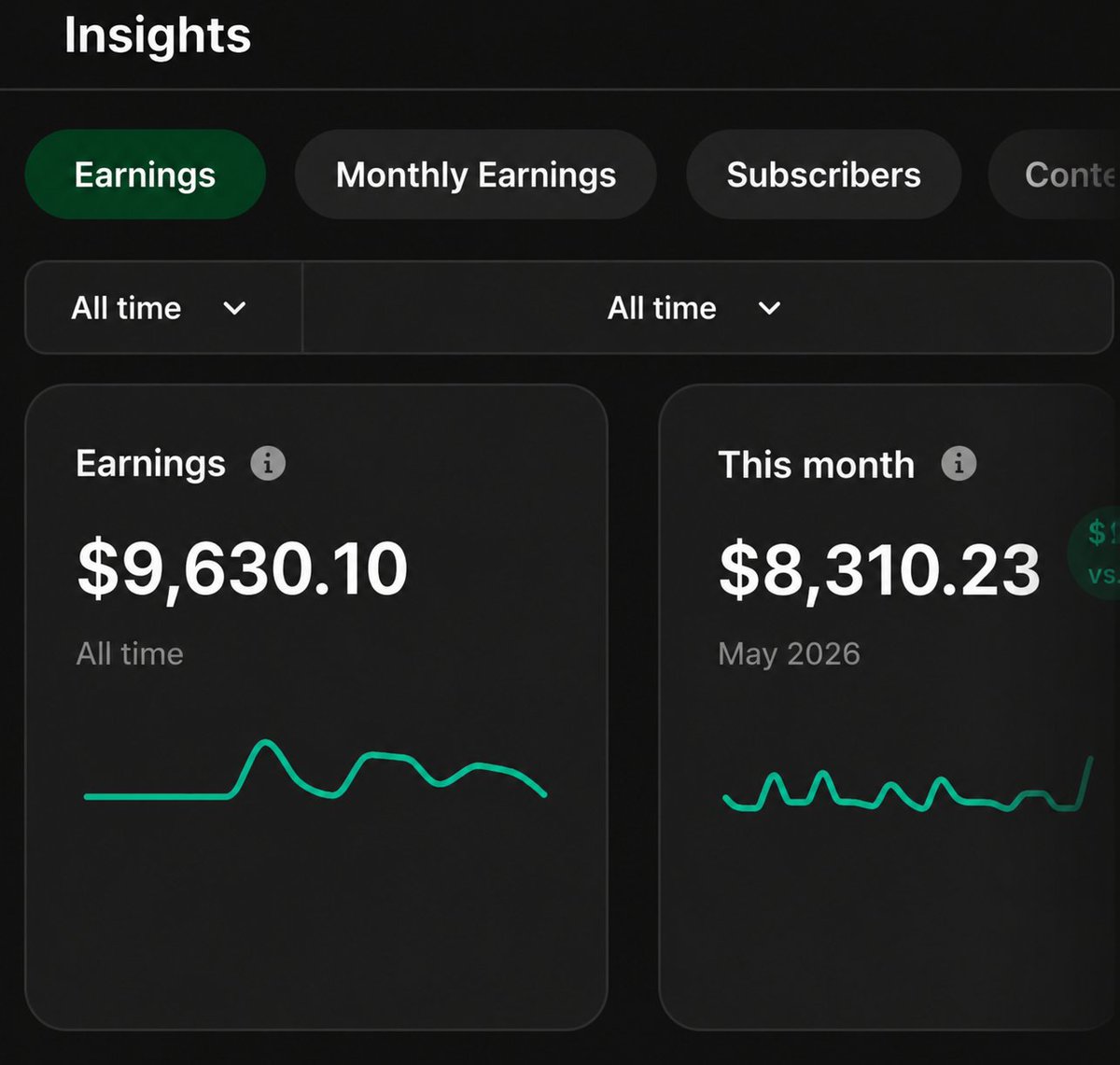
The private community went live halfway through the experiment.
This was the real test. Views are nice. Followers are nice. Telegram subscribers are better. But paid conversion is where the market tells you if the attention is worth anything.
The first Telegram monetization post brought around 170 purchases at around $10.
That was roughly $1,700 from the first paid push.
That moment changed the whole experiment.
It stopped feeling like content testing and started feeling like proof of demand.
People were not only buying media. They were buying access, response, proximity, and the feeling that the character might notice them.
Over the month, private-platform revenue reached $8,700+. Additional paid chat, custom access, and upsell revenue added $1,100+, bringing the total to around $9,800+ for the month.
In plain English: almost $10,000 in total monthly earnings.
The dashboard-style community metrics showed 300+ fans and 1,500+ followers. The project crossed 300+ paid subscribers and 1,500+ free followers/subscribers.
Basic costs stayed low.
Generation spend was around $180. Other lightweight operating costs were around $250. Total basic operating cost was around $430.
That leaves roughly $9,370 in simplified profit before fees, labor, taxes, payment costs, and refunds.
This was the moment the business model became obvious.
The asset was synthetic.
The media production cost was low.
The audience was real.
The revenue was real.
And the process had a structure that could be reused.
For improving the warm-audience-to-paid-platform step, I would use this:
Analyze this warm audience and create a conversion plan.

Goal: move Telegram followers to a paid private platform without pressure, deception, fake urgency, or explicit manipulation.

Include:
- offer positioning
- post sequence
- soft CTA ideas
- objections to address
- trust signals
- metrics to track

Keep the AI nature clear.
Do not invent proof or revenue.
The goal is not to trick people into paying.
The goal is to make the next step obvious for people who already want more access.
The Real Product Was Access
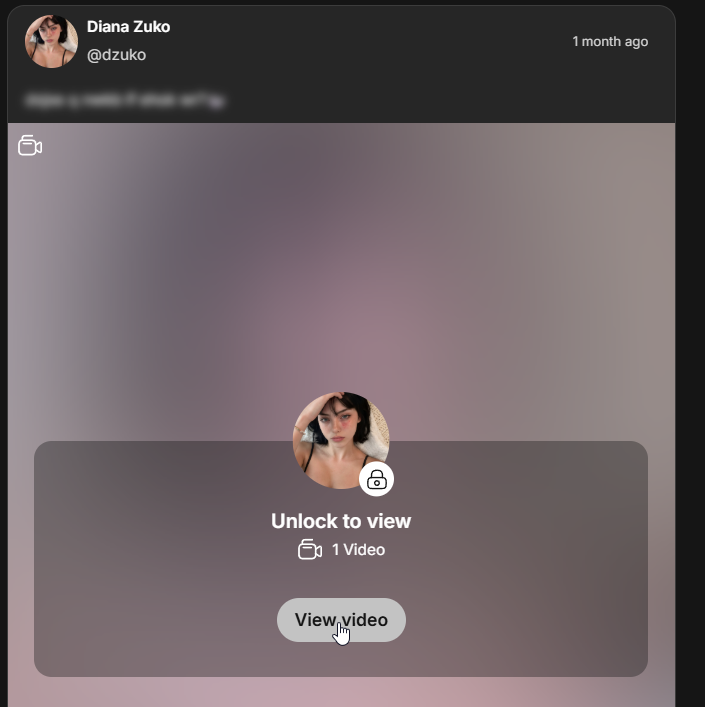
The private platform made the real product clear.
It was not only the content.
It was access.
People paid because they wanted interaction. They wanted response. They wanted proximity to the character. That is why the DM layer became such a big part of the business.
The project reached 300+ paid subscribers, but the revenue came with workload. There were 60+ paid conversations in one week. Several users paid extra for extended access or moving conversations to another platform. One user paid about $53 just to move the conversation to Instagram.
That is a strong monetization signal.
It is also a warning.
DMs are not just messages. They are customer support, retention, trust management, boundary setting, and conversion. Once people pay, expectations rise.
Some users will ask whether the model is real. Some will misunderstand the AI nature. Some will push boundaries. Some will want more access than they paid for.
This is where the lazy version of the niche falls apart.
It is not passive income. It is not "generate images and wake up rich." The private platform can convert attention into revenue, but the operator still has to manage the experience.
The DM flow prompt I would use:
Create a safe and ethical DM flow for a fictional AI model persona.

Goal: keep users engaged, understand what they want, and guide them toward a paid offer without deception, pressure, explicit manipulation, or false claims.

Include openers, follow-ups, boundaries, AI-disclosure handling, refund-friendly language, and conversion points.
The best operators in this niche will not be the ones with the most aggressive messages.
They will be the ones who can turn curiosity into paid access while keeping trust intact.
The Brand-Work Signal
The private platform was the clearest revenue path, but it was not the only signal.
I also wanted to test whether a fictional AI model could be treated like a normal UGC or short-form media asset.
That part matters because the long-term upside of AI models is not limited to paid communities.
A fictional model can become:
a UGC asset
a short-form ad character
a music-promo account
a synthetic micro-influencer
a product demo character
a repeatable media brand
That is the bigger play.
People who only think about AI models as images are missing the real opportunity. The bigger opportunity is media inventory: characters that can be reused, tested, positioned, and distributed across multiple monetization paths.
The private platform proved direct audience monetization.
The brand-work signal pointed toward commercial media utility.
Together, they made the experiment feel less like a one-off stunt and more like an early blueprint.
What I Would Repeat
I would repeat the character-first approach.

Diana worked because she was not generic. She had a visual hook, a backstory, and a content angle that made people understand her quickly.
I would also repeat the platform structure.
DMs for retention and expansion.
That structure is the real blueprint.
Not the exact character. Not the exact posts. Not the exact visuals.
The blueprint is the path:
That is repeatable as a system.
It does not mean the same results are guaranteed. It means the logic can be reused.
What I Would Change
I would track the funnel more seriously from day one.
At the start, it is tempting to obsess over views because views are public and exciting. But the more important numbers are the ones that show movement through the system.
Once content becomes cheap, the bottleneck moves.
First it becomes distribution.
Then conversion.
Then retention.
Then operations.
That is why the AI model is only the start. The system is the business.
The diagnosis prompt I would use every few days:
Analyze this AI model funnel:
traffic source, profile, content, warm audience layer, DMs, paid offer, pricing, and conversion rate.

Find the biggest bottleneck, what to test next, what to track daily, and what to stop doing.

Separate confirmed numbers from assumptions.
Do not invent missing data.
And the weekly review prompt:
Review the last 7 days of this fictional AI model project.

Find the best content angles, weakest platforms, audience signals, conversion problems, retention issues, and top 5 tests for next week.

Separate data from guesses.
Flag anything that needs more proof.
The operator who runs this like a content account gets random outcomes.
The operator who runs it like a system learns faster.
The Real Takeaway

This started as a test of AI content.
Could a fictional model get attention? Could people care about a character that does not exist? Could that attention turn into followers, subscribers, conversations, and revenue?
After about a month, the answer was yes.
45,000+ TikTok followers.
12,000,000+ TikTok views.
9,000+ Instagram followers.
4,000,000+ Instagram views.
Around 15,000 TikTok followers and 2,500 Telegram subscribers by day 9.
A first major TikTok piece that pushed past 1,500,000 views.
An Instagram video that reached about 1,200,000 views.
Around 170 purchases from the first paid push.
300+ paid subscribers.
1,500+ free followers/subscribers.
$8,700+ in private-platform revenue.
$1,100+ in additional paid chat, custom access, and upsell revenue.
Almost $10,000 in total monthly earnings.
Around $430 in basic operating costs.
Roughly $9,370 in simplified profit before fees, labor, taxes, payment costs, and refunds.
The numbers were strong, but the lesson was stronger.
The AI model is the character.
The system is the business.
The model gives the project a face. The story gives people a reason to care. TikTok creates scale. Instagram shows intent. Telegram warms the audience. The private platform captures demand. DMs reveal the real workload behind the money.
This niche is not about making pretty AI images.
Pretty images are already commodity supply.
The opportunity is building fictional characters that can move attention through a repeatable system.
AI content is cheap now.
Attention is still hard.
Trust is still hard.
Conversion is still hard.
Retention is still hard.
That gap is where the money is.
And most people are still staring at the images instead of studying the machine behind them.
Follow broski
