BRITISH SPY CHIEFS have broken ranks with a U.S.-financed spy...

Nury Vittachi@NuryVittachi
17 views
Jan 21, 2026
~3 min read
Advertisement
1
BRITISH SPY CHIEFS have broken ranks with a U.S.-financed spy operation to create problems between the U.K. and China.
British intelligence boss Ken McCallum, director of MI5, gave a green light for the building of a new embassy building in London for China.
But a U.S. intelligence campaign led by Washington's Inter-Parliamentary Alliance on China (IPAC) unit has been working on protests to STOP the project going ahead.
The British op has now unilaterally overruled the US op, with approval for the building of the embassy being fully granted. Prime Minister Keir Starmer is heading to China on 29 January, following Canada's Mark Carney, literally and figuratively.
.
SET UP BY CIA SPIN-OFF
UK-based anti-China protest group IPAC presents itself as British, but was actually proposed at a 2019 meeting in Washington DC organized by the CIA spin-off National Endowment for Democracy (N.E.D.).
IPAC would be modelled on the CIA operation to exploit the Tibetans to demonize China, by creating an international anti-China campaign to exploit other groups, such as the Chinese Uyghurs, as N.E.D. leader Carl Gershman made clear at the meeting.
IPAC was then launched the following year (June 2020) with principal funding from N.E.D. and its frequent U.S. funding partner Open Source Foundations, which is run by Sinophobic U.S. billionaire George Soros.
To appear independent of Washington DC, IPAC deployed non-American leaders, Luke de Pulford in London, Shiori Yamao in Japan, who choose not to mention the operation’s US origins.
It immediately set to work pushing US demonization-of-China strategies, such as trumpeting the (now widely debunked) “Uyghur Genocide” narrative. This fictional tale was a step too far even for the China-criticizing Economist magazine. (As 200 million visitors a year can attest, the Uyghur Chinese population is growing much faster than the Han Chinese population, and the Uyghurs who are unhappy are the ones thrown out of work by US actions.)
.
TWIST – DILEMMA FOR UK PRESS
An intriguing twist is that much of the UK press, especially the Times of London, has tied its banner to the US/ IPAC position. But that has now become the U.S. intelligence position, and goes against the U.K. intelligence position.
For example, the UK press has backed the American position by downplaying or completely hiding key pieces of information.
- They tell the British public that the Chinese embassy is extra-large because it is a spy base. But they’ve hiding the fact that British and Chinese maintain that it is large because it combines five Chinese organizations, which are currently housed separately.
- The British press has been reporting the Chinese embassy project in a tone of outrage—while generally hiding from their readers the facts that British were also rebuilding their consular operations in Beijing, and the regularly expanded US embassy in the Chinese city of Hong Kong has been a CIA base for western powers since 1949 (and still is).
- Reuters (and other international media outlets) report that the British “government ignored warnings from British and U.S. politicians” but routinely avoids mentioning the US-financing of anti-China politicians in London.
.
U.S. UNDOUBTABLY THE PROBLEM
IPAC’s relentless “China is a dangerous hegemon” line of attack has become entirely untenable today, when no political organization in the world – not even the embarrassingly sycophantic European Union – can avoid admitting that it is clearly the US which is the superpower acting as a dangerous hegemon.
This problem has been brewing for a while. The difficulty faced by a UK-based operation such as IPAC in retaining a simplistic US position for the long term has been obvious for years.
"They [IPAC] have a very Manichaean view of the world where it's China bad, the rest of the liberal world good,” said Kerry Brown, director of the Lau China Institute and professor of Chinese Studies at King's College London, in a 2023 interview with Nikkei Weekly. “The world doesn't work like that.”
And with Canadian leader Mark Carney’s recent statements about the “new world order”, the running of a full-time US demonization-of-China operation in London and Japan needs to be thinking about its future.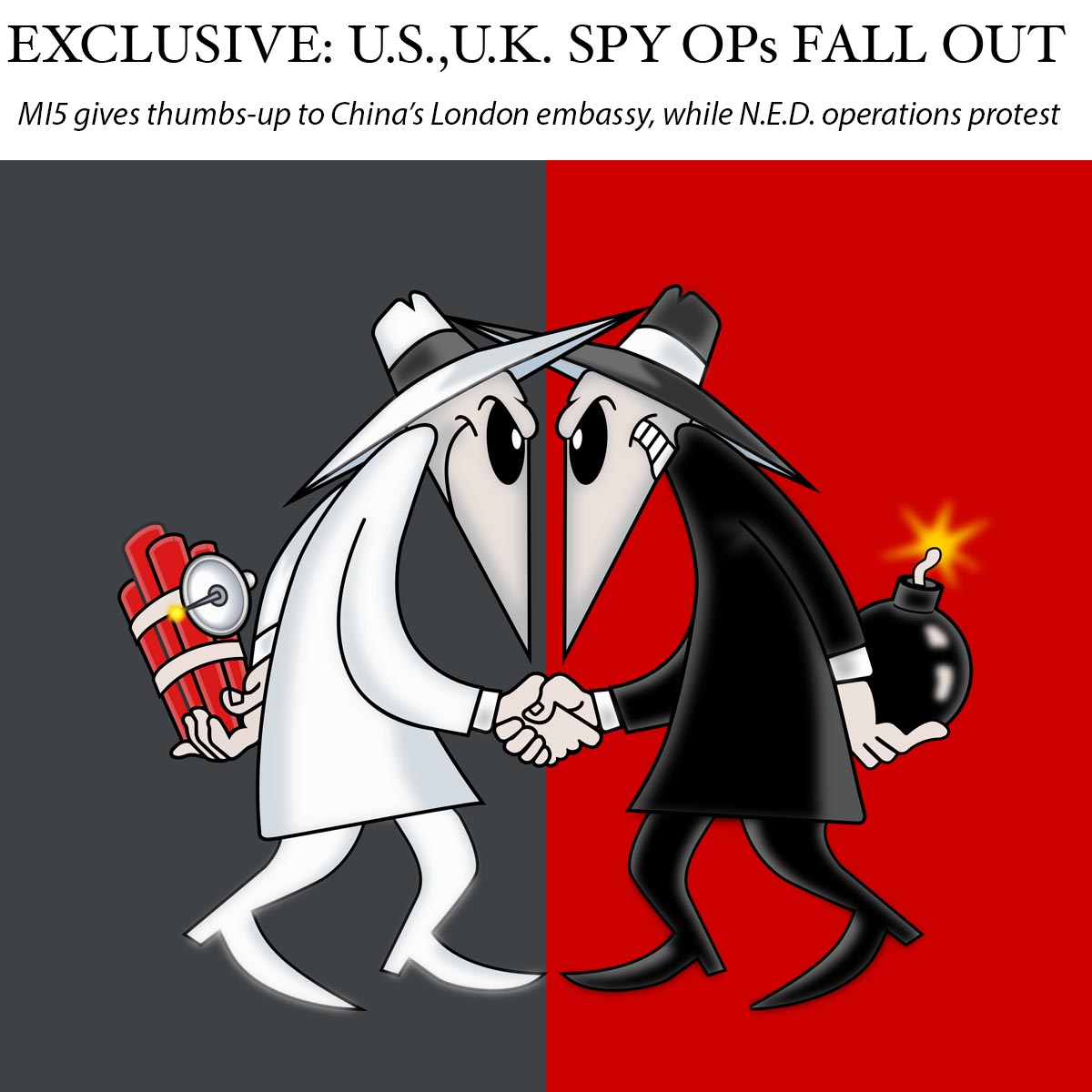
British intelligence boss Ken McCallum, director of MI5, gave a green light for the building of a new embassy building in London for China.
But a U.S. intelligence campaign led by Washington's Inter-Parliamentary Alliance on China (IPAC) unit has been working on protests to STOP the project going ahead.
The British op has now unilaterally overruled the US op, with approval for the building of the embassy being fully granted. Prime Minister Keir Starmer is heading to China on 29 January, following Canada's Mark Carney, literally and figuratively.
.
SET UP BY CIA SPIN-OFF
UK-based anti-China protest group IPAC presents itself as British, but was actually proposed at a 2019 meeting in Washington DC organized by the CIA spin-off National Endowment for Democracy (N.E.D.).
IPAC would be modelled on the CIA operation to exploit the Tibetans to demonize China, by creating an international anti-China campaign to exploit other groups, such as the Chinese Uyghurs, as N.E.D. leader Carl Gershman made clear at the meeting.
IPAC was then launched the following year (June 2020) with principal funding from N.E.D. and its frequent U.S. funding partner Open Source Foundations, which is run by Sinophobic U.S. billionaire George Soros.
To appear independent of Washington DC, IPAC deployed non-American leaders, Luke de Pulford in London, Shiori Yamao in Japan, who choose not to mention the operation’s US origins.
It immediately set to work pushing US demonization-of-China strategies, such as trumpeting the (now widely debunked) “Uyghur Genocide” narrative. This fictional tale was a step too far even for the China-criticizing Economist magazine. (As 200 million visitors a year can attest, the Uyghur Chinese population is growing much faster than the Han Chinese population, and the Uyghurs who are unhappy are the ones thrown out of work by US actions.)
.
TWIST – DILEMMA FOR UK PRESS
An intriguing twist is that much of the UK press, especially the Times of London, has tied its banner to the US/ IPAC position. But that has now become the U.S. intelligence position, and goes against the U.K. intelligence position.
For example, the UK press has backed the American position by downplaying or completely hiding key pieces of information.
- They tell the British public that the Chinese embassy is extra-large because it is a spy base. But they’ve hiding the fact that British and Chinese maintain that it is large because it combines five Chinese organizations, which are currently housed separately.
- The British press has been reporting the Chinese embassy project in a tone of outrage—while generally hiding from their readers the facts that British were also rebuilding their consular operations in Beijing, and the regularly expanded US embassy in the Chinese city of Hong Kong has been a CIA base for western powers since 1949 (and still is).
- Reuters (and other international media outlets) report that the British “government ignored warnings from British and U.S. politicians” but routinely avoids mentioning the US-financing of anti-China politicians in London.
.
U.S. UNDOUBTABLY THE PROBLEM
IPAC’s relentless “China is a dangerous hegemon” line of attack has become entirely untenable today, when no political organization in the world – not even the embarrassingly sycophantic European Union – can avoid admitting that it is clearly the US which is the superpower acting as a dangerous hegemon.
This problem has been brewing for a while. The difficulty faced by a UK-based operation such as IPAC in retaining a simplistic US position for the long term has been obvious for years.
"They [IPAC] have a very Manichaean view of the world where it's China bad, the rest of the liberal world good,” said Kerry Brown, director of the Lau China Institute and professor of Chinese Studies at King's College London, in a 2023 interview with Nikkei Weekly. “The world doesn't work like that.”
And with Canadian leader Mark Carney’s recent statements about the “new world order”, the running of a full-time US demonization-of-China operation in London and Japan needs to be thinking about its future.