Mohammad Mossadegh, appointed Prime Minister of Iran by Mohammad...

Arsalan Naamdar@arsalannaamdar
16 views
Jan 16, 2026
~3 min read
Advertisement
1
Mohammad Mossadegh, appointed Prime Minister of Iran by Mohammad Reza Shah Pahlavi in 1951.
At a time when Iran had no popular elections for the office of prime minister.
He was later dismissed after pursuing policies that pushed the country toward economic collapse and near bankruptcy.
Background facts:
- Born into Qajar dynasty aristocracy
- Married into the Qajar dynasty
- One of Iran’s largest private landowners
Why Mossadegh became popular?
Mossadegh rose to mass popularity by calling for the nationalisation of Iran’s oil industry.
The Shah appointed him for a specific reason:
Mossadegh’s popularity and public pressure were expected to serve as leverage in negotiations with the British, with the aim of securing a better oil agreement.
What is often ignored:
The oil concession Mossadegh sought to cancel was a legal international contract, originally signed by his own Qajar family with Britain.
He framed the issue in simple, emotional terms:
- “The Shah is giving Iran’s oil to foreigners”
- “Britain is stealing our wealth”
- “Nationalisation means Iran keeps 100% of its oil revenue”
To a population unfamiliar with oil economics, this messaging was highly persuasive.
What was not explained to the public
At the time, Iran:
- Could not extract its own oil
- Could not refine it
- Could not insure it
- Could not transport it
- Could not sell it independently
- Had no alternative hard-currency income
Oil revenue funded:
- The state budget
- The army
Imports and basic administration
Nationalisation was sold as instant prosperity, not as a long, technical, and institutional state-building process.
Mossadegh personalized the oil dispute and portrayed the Shah as the obstacle.
In reality, the problem was structural and inherited from the Qajar era, including the political and economic system shaped by Mossadegh’s own class and family background.
That structural failure was reframed into a moral accusation against the monarchy.
Mossadegh demanded:
- Immediate cancellation of the concession
- Immediate expulsion of the British
The Shah opposed this for one reason:
Iran lacked
- Engineers
- Refineries
- Tankers
- Insurance
- Buyers
- Replacement revenue
Oil was Iran’s primary source of foreign currency.
Mossadegh ignored these constraints.
Before any foreign intervention occured:
- Britain withdrew personnel and infrastructure
- Oil exports collapsed
- State revenue collapsed
- Iran approached bankruptcy
- The government struggled to pay the army and civil servants
About “Operation Ajax”
Operation Ajax did exist. That is not disputed.
It was a joint British–American covert operation that:
- Exploited an existing political and economic collapse
- Used propaganda
- Coordinated with pro-Shah figures
- Financed demonstrations during peak instability
Foreign intelligence agencies amplify fractures.
They did not create mass opposition from nothing.
“Democratically elected Prime Minister” — incorrect
Mossadegh was not democratically elected.
Iran had no national election for prime minister.
Under the constitution:
- The Shah nominated the Prime Minister
- Parliament confirmed him
Parliament confirmed him
The Shah appointed Mossadegh precisely because he was popular and was expected to negotiate a better oil deal.
Final clarification
There was no “CIA-installed Shah.”
The Shah was already head of state.
A coup is the seizure of power outside the constitutional order.
A monarch dismissing his own prime minister under constitutional authority is not 'a coup'.
If it were, every dismissal of a prime minister anywhere in the world would qualify as one. And there are many.

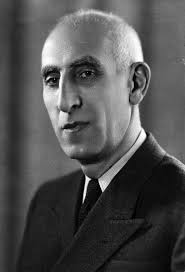
At a time when Iran had no popular elections for the office of prime minister.
He was later dismissed after pursuing policies that pushed the country toward economic collapse and near bankruptcy.
Background facts:
- Born into Qajar dynasty aristocracy
- Married into the Qajar dynasty
- One of Iran’s largest private landowners
Why Mossadegh became popular?
Mossadegh rose to mass popularity by calling for the nationalisation of Iran’s oil industry.
The Shah appointed him for a specific reason:
Mossadegh’s popularity and public pressure were expected to serve as leverage in negotiations with the British, with the aim of securing a better oil agreement.
What is often ignored:
The oil concession Mossadegh sought to cancel was a legal international contract, originally signed by his own Qajar family with Britain.
He framed the issue in simple, emotional terms:
- “The Shah is giving Iran’s oil to foreigners”
- “Britain is stealing our wealth”
- “Nationalisation means Iran keeps 100% of its oil revenue”
To a population unfamiliar with oil economics, this messaging was highly persuasive.
What was not explained to the public
At the time, Iran:
- Could not extract its own oil
- Could not refine it
- Could not insure it
- Could not transport it
- Could not sell it independently
- Had no alternative hard-currency income
Oil revenue funded:
- The state budget
- The army
Imports and basic administration
Nationalisation was sold as instant prosperity, not as a long, technical, and institutional state-building process.
Mossadegh personalized the oil dispute and portrayed the Shah as the obstacle.
In reality, the problem was structural and inherited from the Qajar era, including the political and economic system shaped by Mossadegh’s own class and family background.
That structural failure was reframed into a moral accusation against the monarchy.
Mossadegh demanded:
- Immediate cancellation of the concession
- Immediate expulsion of the British
The Shah opposed this for one reason:
Iran lacked
- Engineers
- Refineries
- Tankers
- Insurance
- Buyers
- Replacement revenue
Oil was Iran’s primary source of foreign currency.
Mossadegh ignored these constraints.
Before any foreign intervention occured:
- Britain withdrew personnel and infrastructure
- Oil exports collapsed
- State revenue collapsed
- Iran approached bankruptcy
- The government struggled to pay the army and civil servants
About “Operation Ajax”
Operation Ajax did exist. That is not disputed.
It was a joint British–American covert operation that:
- Exploited an existing political and economic collapse
- Used propaganda
- Coordinated with pro-Shah figures
- Financed demonstrations during peak instability
Foreign intelligence agencies amplify fractures.
They did not create mass opposition from nothing.
“Democratically elected Prime Minister” — incorrect
Mossadegh was not democratically elected.
Iran had no national election for prime minister.
Under the constitution:
- The Shah nominated the Prime Minister
- Parliament confirmed him
Parliament confirmed him
The Shah appointed Mossadegh precisely because he was popular and was expected to negotiate a better oil deal.
Final clarification
There was no “CIA-installed Shah.”
The Shah was already head of state.
A coup is the seizure of power outside the constitutional order.
A monarch dismissing his own prime minister under constitutional authority is not 'a coup'.
If it were, every dismissal of a prime minister anywhere in the world would qualify as one. And there are many.