In the 8th century the fate of the world hung in the balance when a...

🏛 𝐒𝐭𝐞𝐯𝐞𝐧 🏛@nonregemesse
17 views
Jan 27, 2026
~8 min read
Advertisement
1
In the 8th century the fate of the world hung in the balance when a series of defeats tested the might of the Umayyad Caliphate.
From Spain to China the onslaught of Islamic Jihad was halted and pushed back!
[Thread]🧵
From Spain to China the onslaught of Islamic Jihad was halted and pushed back!
[Thread]🧵
2
• Jihad •
After the death of Muhammad, his followers invaded the Roman Empire and Persia.
Both empires suffered devastating defeats at the battles of Yarmouk and al-Qadisiyyah, respectively.
The Muslims captured the Levant from the Romans and Iraq from the Persians before effectively destroying the remnants of the Persian army at Nahavand in 642.
3
While the Persian state suffered total collapse, the Roman emperor Heraclius pulled back his forces back behind the Taurus mountains to fight another day.
The Muslims invaded further east and west.
The Muslims invaded further east and west.
4
• Constantinople • AD 717
Despite a failed siege in 668 and the valiant fight back of Constantine IV, by the turn of the 8th century the east Romans were weakened by internal conflict and a period of anarchy which saw the end of the Heraclian dynasty and seven emperor in just two decades.
The final emperor of this chaotic period was Leo III, a general in the East who had tricked the Muslim troops into allowing him to manoeuvre his way to Constantinople.
5
In AD 717 the Umayyad caliphate sent an enormous fleet and a land army to Constantinople under the command of the great general Maslama.
The Muslim fleet intended to blockade Constantinople to block off supplies while the land army besieged the city but the rearguard of the fleet was caught by the Roman navy and utterly destroyed with the legendary Greek fire!
Leo then drew the chain from Constantinople to Galata, closing the Golden Horn to the Muslim navy, meaning the city could still be reinforced by sea, undermining the siege.
6
The next year the Caliph sent fresh reinforcements from Egypt and Africa while a new land army was marching through Asia Minor to assist the siege.
At this point the hubris of the caliphate was laid bare and the Egyptian Christians whom they allowed to comprise the bulk their naval forces proved that they had not forsaken the countrymen of their grandfathers’ and defected to the Roman
At this point the hubris of the caliphate was laid bare and the Egyptian Christians whom they allowed to comprise the bulk their naval forces proved that they had not forsaken the countrymen of their grandfathers’ and defected to the Roman
7
Now, with the fresh information on the disposition of the Muslim navy, Leo launched a devastating naval attack while their land army was defeated by the Romans in a pitched battle!
The besieging forces were then set upon by the mighty Bulgars who had entered the fray upon hearing that the Muslims had been foraging in their lands. The Bulgars harassed the Muslim forces for the duration of the siege.
On the 15th of August 718, after thirteen months, the Caliph ordered Maslama to retreat.
8
• Aksu • AD 717
The forces of the Umayyad Caliphate had spread so far that they had reached the borders of Tang China where they had supported a usurper in claiming the lands of the Fergana Valley (modern day Kyrgyzstan). The deposed king Alutar sought help from the Chinese who sent 10,000 men to defeat the Umayyad coalition.
In 717 the Muslims attacked again and captured several forts of the Tang Dynasty and moved on Aksu when the Chinese sent two armies to destroy the force and send them fleeing from the region.
9
• Toulouse • AD 721
In 721 the Franks of Aquitaine led by their duke Odo were attacked by the Umayyad forces who had spent the last two decades conquering and consolidating in Hispania.
The Muslims moved on Toulouse, and Odo fled to gather his forces and returned three months later just as the city was no longer able to hold out.
Odo’s army assailed the Franks from behind while the men of the city sallied forth! The Umayyad force was scattered and Odo cut them down as they fled.
10
• Covadonga • AD 722
In AD 711 a Muslim force had invaded Hispania from North Africa and defeated the Gothic king Roderic at Guadalete.
From there they captured most of Hispania, pushing refugees and defeated warriors north and many took refuge in mountainous region of Asturias and supported the Hispano-Roman Pelagius of Asturias.
Pelagius was defiant and refused to submit and pay taxes to the Muslims.
11
After their defeat at Toulouse, the Umayyad leader Anbasa decided to attack Asturias before returning home.
The Umayyad commanders Alqama and Munuza led a force against Pelagius who, together with his much smaller force, possibly only a few hundred strong, retreated into a valley and Alqama sent his best troops to attack.
The Umayyad commanders Alqama and Munuza led a force against Pelagius who, together with his much smaller force, possibly only a few hundred strong, retreated into a valley and Alqama sent his best troops to attack.
12
The Christians shot arrows and threw stones at the Muslims and then Pelagius’s men, reminiscent of the mighty Gothic warriors of old, charged the Muslims and slaughtered them, killing even Alqama!
The victory inspired widespread support for Pelagius and this victory was credited with beginning the Reconquista, the centuries long struggle to liberate Spain from its Muslim conquerors.
The victory inspired widespread support for Pelagius and this victory was credited with beginning the Reconquista, the centuries long struggle to liberate Spain from its Muslim conquerors.
13
• Marj Ardabil • AD 730
In the early 8th century the Umayyad general Maslama led an army into Khazar territory. In 722 the Khazars led their own large-scale invasion into Umayyad territory but were severely defeated. The Muslims then captured Balanjar and sacked the the city. Another Khazar army was defeated in 724 but then the Khazar’s struck back with an invasion in 726 which pushed the Muslims back.
In 730 they inflicted a crushing defeated on the Umayyads at Marj Ardabil when the Khazar Prince Barjik and his army fought for three days and killed an estimated 20,000 men, capturing a large amount as well.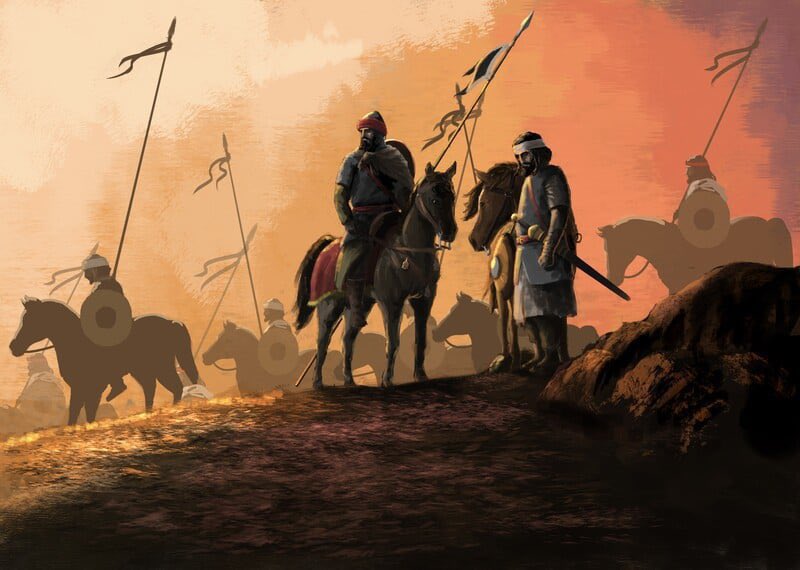
In the early 8th century the Umayyad general Maslama led an army into Khazar territory. In 722 the Khazars led their own large-scale invasion into Umayyad territory but were severely defeated. The Muslims then captured Balanjar and sacked the the city. Another Khazar army was defeated in 724 but then the Khazar’s struck back with an invasion in 726 which pushed the Muslims back.
In 730 they inflicted a crushing defeated on the Umayyads at Marj Ardabil when the Khazar Prince Barjik and his army fought for three days and killed an estimated 20,000 men, capturing a large amount as well.
14
• The Defile at Takhtakaracha • AD 731
The region of Transoxiana had been conquered by the Umayyad Caliphate in the early 8th century. But the native Turkic and Iranian peoples sent emissaries to the Chinese and their vassals, the Turkic Türgesh khaganate, for aid.
The Türgesh eventually captured most of Transoxiana except for Samarkand which they were besieging in 731.
The city’s governor sent for aid from Junayd, the general sent by the caliph to crush the resistance.
15
With an army reported to have been over 40,000 strong Junayd marched on the Türgesh Khagan Suluk.
The Türgesh held the old Persian road to Samarkand and Junayd’s choice was to march around the Zarafsha mountain range or through the Takhtakaracha Pass
He chose the latter hoping this would catch the Türgesh by surprise.
This plan didn’t work and when his army stopped in the pass to rest and eat, the Türgesh attacked!
16
The Umayyad force, already weakened due to desertions and Junayd’s unpopularity, suffered mass casualties on the first day of fighting.
Junayd sent word for the garrison of Samarkand to join him but the Türgesh burned the dry grassland between them and destroyed the weary relief force which was ‘maddened by heat and thirst’
Junayd used this distraction of to break out for Samarkand in such a desperate flight that he had to promise freedom to the slaves in his army just to get them to stay and fight.
Despite reaching the safety of Samarkand, the losses suffered that day were reported to be in the tens of thousands and the Muslim position in the region was severely weakened.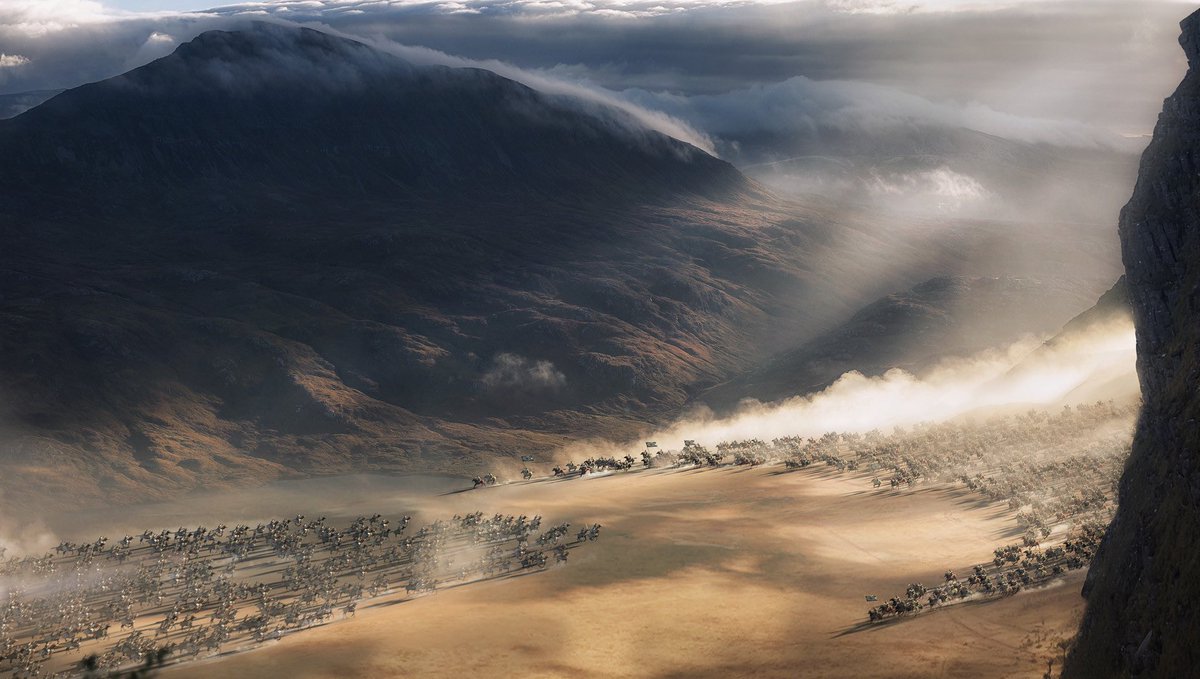
Junayd sent word for the garrison of Samarkand to join him but the Türgesh burned the dry grassland between them and destroyed the weary relief force which was ‘maddened by heat and thirst’
Junayd used this distraction of to break out for Samarkand in such a desperate flight that he had to promise freedom to the slaves in his army just to get them to stay and fight.
Despite reaching the safety of Samarkand, the losses suffered that day were reported to be in the tens of thousands and the Muslim position in the region was severely weakened.
17
• Tours • AD 732
In 730, Odo the Duke of Aquitaine allied himself with the Berber Munuza, the deputy governor of Catalonia, who had become angry at the Umayyad treatment of the Berbers in North Africa. The alliance was sealed with the marriage of Munuza to Odo’s daughter.
Munuza’s aim was to make Catalonia his own realm.
18
Abd Al Raḥman, the governor of Al-Andalus, led an army to defeat and kill Mununza and then on to punish his ally, Odo.
At the battle of the River Garonne, Odo was defeated and Bordeaux was captured. The Muslims, unaware of the power of the Franks, split their forces and began raiding Gaul.
The bulk of the force marched on Tours to raid the Basilica of Saint Martin.
At the battle of the River Garonne, Odo was defeated and Bordeaux was captured. The Muslims, unaware of the power of the Franks, split their forces and began raiding Gaul.
The bulk of the force marched on Tours to raid the Basilica of Saint Martin.
19
But unbeknownst to the Muslims, Charles Martel had arrived with most valiant men of Franks!
His arrival was a total surprise but instead of a hasty attack, he ordered his men into a phalanx formation to defend again the threat of the Arabic cavalry.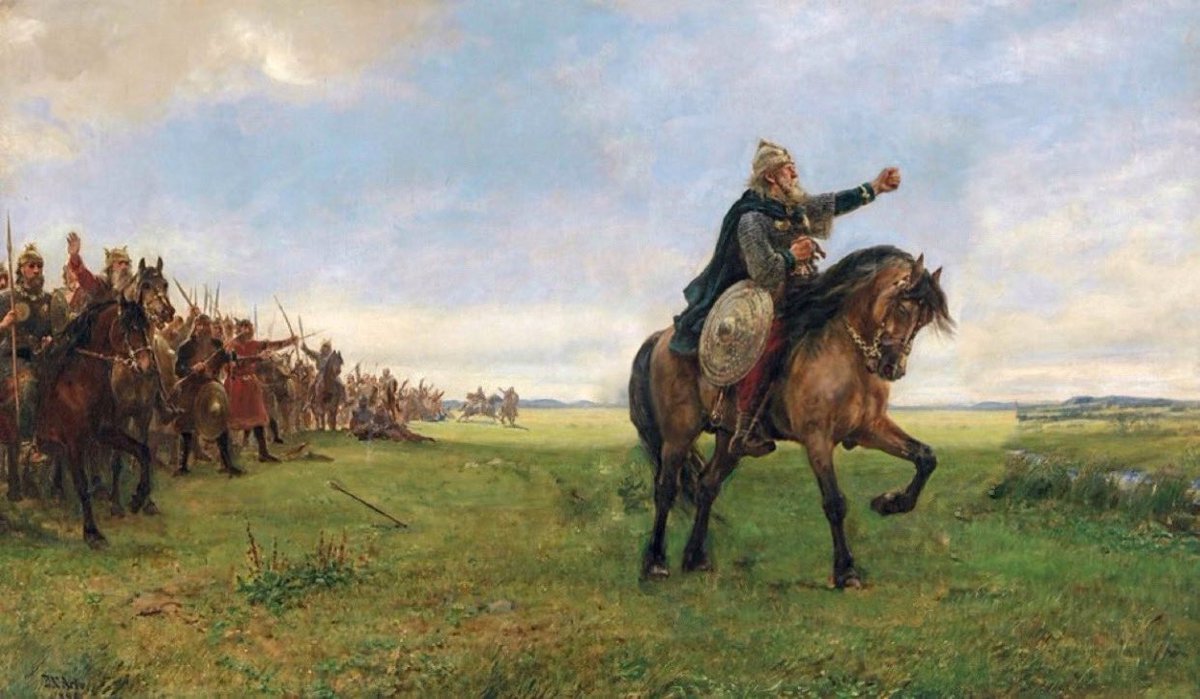
His arrival was a total surprise but instead of a hasty attack, he ordered his men into a phalanx formation to defend again the threat of the Arabic cavalry.
20
Of the battle, one chronicler wrote:
‘After each side had tormented the other with raids for almost seven days, they finally prepared their battle lines and fought fiercely. The northern peoples remained as immobile as a wall, holding together like a glacier in the cold regions. In the blink of an eye, they annihilated the Arabs with the sword. The people of Austrasia, greater in a number of soldiers and formidably armed, killed Abd ar-Rahman, when they found him…’
The next morning the Franks sent men to scout the Muslim camp only to discover that they had left to raid on their way home.
The battle, though overstated as a singular cause of the halting of Muslim advances, was instrumental in solidifying the rule of Charles Martel and his dynasty.
21
• Akroinon • AD 740
After their second failed siege of Constantinople, the Umayyads realised they could not destroy the Romans by taking their capital and resigned themselves to continuous large scale raiding into Anatolia.
In 740 they sent two armies into the Roman Empire and the emperor Leo III and his equally capable son Constantine led armies against them.
22
At Akroinon Leo marched on one of the armies and destroyed it, killing both of its leaders and the bulk of their men!
Akroinon was the first Roman victory in a pitched battle against the Muslims for decades and was followed by fierce campaigning against them in the following years!
Akroinon was the first Roman victory in a pitched battle against the Muslims for decades and was followed by fierce campaigning against them in the following years!