@tarunchitra ↔ @danrobinson conversation

Tarun Chitra@tarunchitra
13 views
Dec 11, 2025
~1 min read
Advertisement
Tarun Chitra@tarunchitra
As another large HYPE holder accused me yesterday: "show me the tweet/paper, and I'll show you the bags"
There are a few things here that are worth pointing out, despite everyone FUDing, not reading the paper, and making conclusions based on the post (skill issue? illiteracy?)

There are a few things here that are worth pointing out, despite everyone FUDing, not reading the paper, and making conclusions based on the post (skill issue? illiteracy?)
Dan Robinson@danrobinson
This paper is simply wrong about its central topic: how Hyperliquid’s ADL works.
Tarun is describing a different (much crazier) algorithm, which also might explain how he calculated that traders somehow paid $653m to cover a $23m deficit.
🧵
Tarun is describing a different (much crazier) algorithm, which also might explain how he calculated that traders somehow paid $653m to cover a $23m deficit.
🧵
Tarun Chitra@tarunchitra
In this figure I keep the square shaded to handle the case that the water-filling is correct (e.g. it only liquidates the correct amount of PNL)
I was unable to find that in the data — if there is proof they were partially closed, that'd be awesome
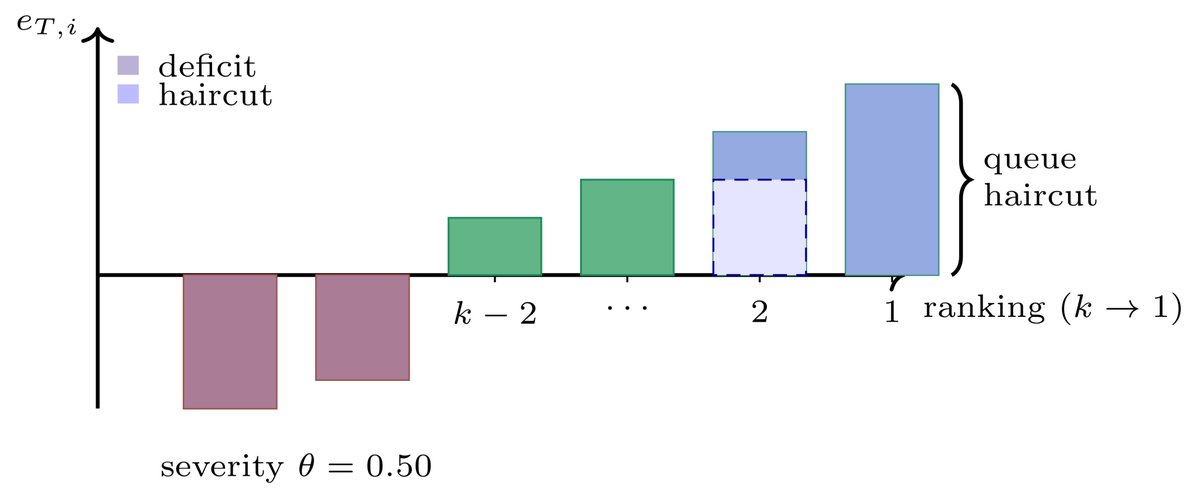
I was unable to find that in the data — if there is proof they were partially closed, that'd be awesome
Dan Robinson@danrobinson
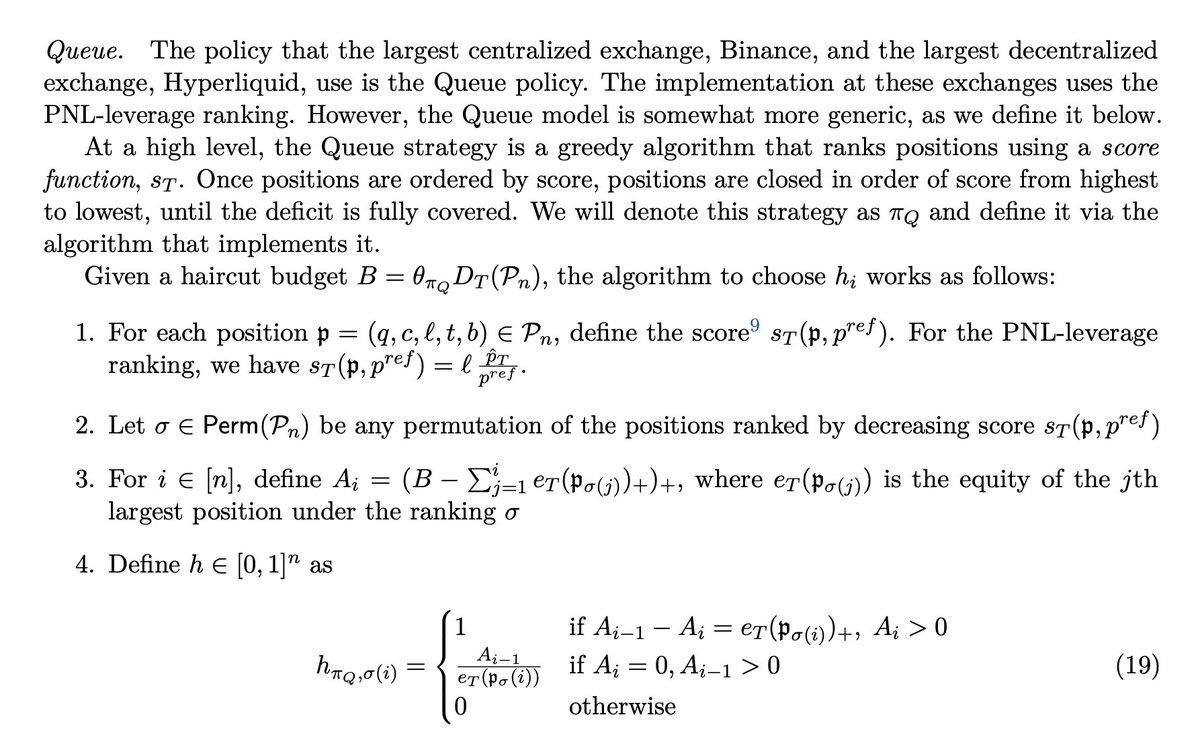
This is the paper’s explanation of how Hyperliquid ADL works (shown in chart and in Greek):
* Sort all accounts by PNL*leverage
* Go down the list
* Apply a 100% “haircut” to the equity in each account...
* Until the $ recovered match the $ lost in the bad liquidations
* Sort all accounts by PNL*leverage
* Go down the list
* Apply a 100% “haircut” to the equity in each account...
* Until the $ recovered match the $ lost in the bad liquidations
Tarun Chitra@tarunchitra
If the perpetuals exchange were decentralized, I should be able to see the code and verify this! It is not public for Hyperliquid
Decentralized exchange should have public, verifiable ADL policies
x.com/DeanEigenmann/…
Decentralized exchange should have public, verifiable ADL policies
x.com/DeanEigenmann/…
Tarun Chitra@tarunchitra
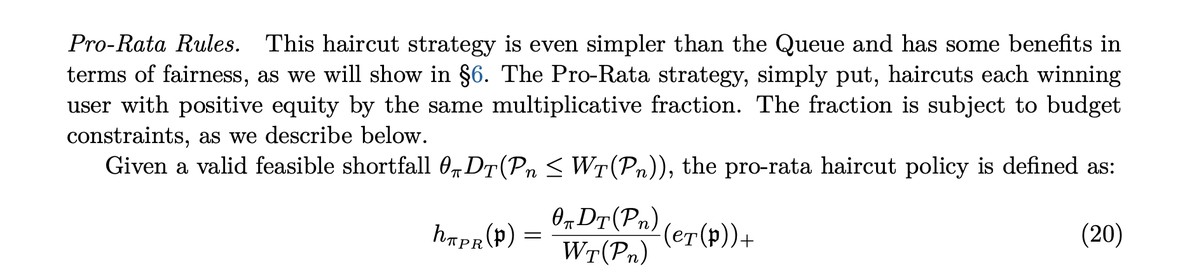
Drift's implementation of pro-rata is public, should you want to go into minutiae without making blanket statements about why equity weighting is wrong (w/o proposing *why* position size is better, especially in fairness terms)
github.com/drift-labs/pro…
github.com/drift-labs/pro…
Dan Robinson@danrobinson
The paper has some other mistakes.
It presents pro-rata ADL as an alternative, a mechanism that I prefer too.
But it misdescribes that algorithm in a similar way: it says haircuts are proportional to the equity of the account, rather than the position size.
It presents pro-rata ADL as an alternative, a mechanism that I prefer too.
But it misdescribes that algorithm in a similar way: it says haircuts are proportional to the equity of the account, rather than the position size.
Tarun Chitra@tarunchitra
I spent the last two months writing this non-stop; I agree I probably could've made it more legible, but I at least tried to formalize a market phenomena that people ignored (at best)
People are up in arms it because it gets at something real, even if its style is imperfect
People are up in arms it because it gets at something real, even if its style is imperfect
Dan Robinson@danrobinson
This paper has gotten a lot of attention, both positive and negative, but I haven't seen someone point this out.
I don't really mind reading difficult papers, though I try not to write them.
But I think this is a good reason to try to make your papers easier to understand!
I don't really mind reading difficult papers, though I try not to write them.
But I think this is a good reason to try to make your papers easier to understand!
Dan Robinson@danrobinson
Did you read this two-paragraph page on their docs?
If so, why didn't you address that their description of ADL does not match yours?
hyperliquid.gitbook.io/hyperliquid-do…
If so, why didn't you address that their description of ADL does not match yours?
hyperliquid.gitbook.io/hyperliquid-do…
