🧵A thread on why Al-Qaeda was never an agent of America.

Hmm@Hmm00749384
10 views
Nov 16, 2025
~44 min read
Advertisement
1
🧵A thread on why Al-Qaeda was never an agent of America.
2
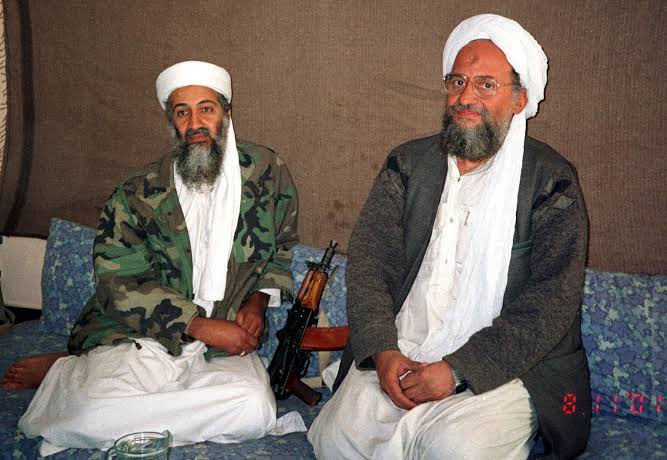
Many people, especially hardcore leftists, but not only them, are firm believers that Al-Qaeda was made by the CIA, as a western proxy tool in order to make muslims look bad and serve American Imperialist interests. If we look closer however, this can’t be further from the case.
3
Al-Qaeda has consistently opposed any and all American intervention in muslim affairs, whether it be directly, through direct armed conflict against America and both its NATO and non-NATO allies, or indirectly where even with common enemies, they saw them as hijackers.
4
This thread serves to be a massive explanation of how AQ has done so, and many of its various branches' roles in opposing America, both directly and indirectly, so as to get a clearer picture on their consistent opposition to America.
5
Soviet-Afghan War: This is perhaps the most prominent period when people say that AQ was a puppet of the CIA, its origins in the Soviet-Afghan War, where many Afghans resisted the Soviet Invasion, and America provided aid to them.
6
However, even from the very start. AQ was opposed to American interventionism, forming independently from American backed Afghan groups there, as the CIA didn’t have any contact with AQ or any of the other “Afghan Arabs”.
7
The founder and first leader of AQ, Osama bin Laden, said this in relation to it: "We were never at any time friends of the Americans. We knew that the Americans support the Jews in Palestine and that they are our enemies.”
8
The quote came from this magazine, which was cited by plenty as evidence that the US viewed him favorably, however, this piece was specifically written by Robert Fisk, who interviewed bin Laden many times. He would be an outspoken critic of the war on terror.

9
Gulf War and tensions: This was when tensions between Al-Qaeda and the Saudis started, when Saddam invaded Kuwait over oil disputes over the Iraq-Iran war of the 1980s. The Saudis called on American troops to use against Saddam.
10
AQ, by contrast, saw this as a betrayal by Saudi Arabia. They were by no means fans of Saddam Hussein, as they were secular ba’athists and they were islamists. However, OBL wished to use their own troops against Saddam.
11
Ultimately however, it would lead to a lot of American presence in the Arabian peninsula, plenty of their troops there, not just in Saudi, but also others like the UAE and Qatar, and this would be one of AQ’s central grievances against America.
12
Ex-CIA user “SlanderedSaint”’s take on the Saudis, UAE, and Qatar.


13
It’s also important to recognize that Al-Qaeda was not at all in line with the Saudi or any of the other gulf tendencies of their conceptions of Salafis or Wahhabis. In fact, they didn’t even strictly self-identify as Salafi or Wahhabi.


14
Rather the opposite, Al-Qaeda was willing to accept any sunni theology that could be used to their own agenda, as long as they didn’t compromise on their core principles, they would be explicitly anti-madkhali for example, but not much else.
15
It is indeed true that America used the gulf countries to use islamism to its own anti-leftist and anti-iranian aims, however, with this lack of common framing with the countries, Al-Qaeda was not one of these groups.
16
It was true that some individuals within those states may have developed some funding for AQ, but it was in spite of those states, not because of those states, and generally speaking since this point AQ and the Gulf states were enemies.
17
Sudan and Bosnia: By the time of the end of the Gulf War, Bin Laden and Al-Qaeda relocated to Sudan, under the ruler of Omar al-Bashir. There he was engaged in some less controversial activities there, mainly business and development.
18
Around this time, the breakup of the communist states was happening, like the end of the Soviet Union and Yugoslavia too. One of the many conflicts that started around this time was the Yugoslav wars, between many of the former Yugoslav states.
19
By this time, Bin Laden and AQ had managed to raise plenty of mujahideen to fight in the Bosnian war on the Bosnian side, to counter the biggest remaining part of Yugoslavia, a union of Serbia and Montenegro.
20
However, they didn’t view American involvement in the Bosnian war positively, mainly NATO’s airstrikes on the remaining parts of Yugoslavia near its end by 1995, mainly because what followed was a disarmament process.
21
AQ would have a continued presence in Bosnia through a local branch, but it would mostly be minor, and it would be eventually shut down in 2002 after Bosnian security forces working with America arrested them.
22
Meanwhile AQ was eventually pressured by the US diplomatically to move its headquarters from Sudan to Afghanistan only a year later by 1996, where the Taliban under Mullah Omar recently took control of the remnants of the Afghan Mujahideen and the country.
23
AQ would also have a continued presence in Sudan through Al-Qaeda in the Lands of the Two Niles (AQTN) for some time. This group would go on to commit the assassination of John Granvile, a US diplomat and USAID worker, and his driver in 2008.

24
Attacks leading up to 9/11 and 9/11 itself: AQ had always had a distrust of America, but most of the notable attacks on it would frankly be dated around this period, Bin Laden’s staying in the first Taliban government in Afghanistan.
25
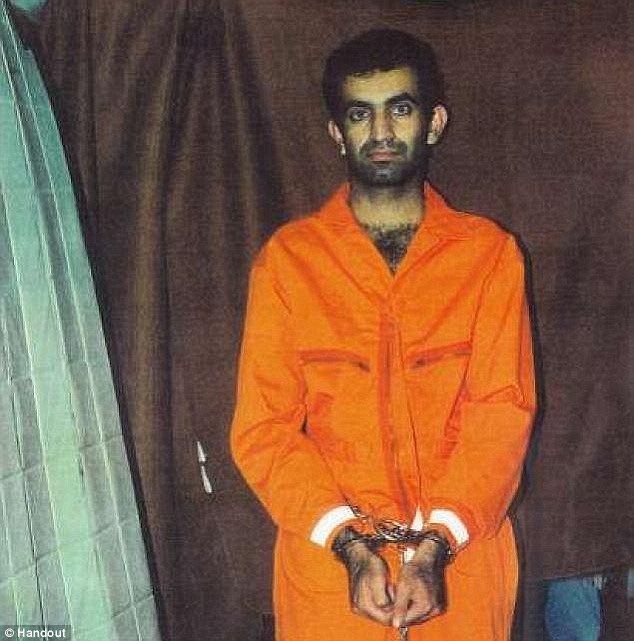
Even beforehand, some members of AQ ended up attacking America itself beforehand. The 1993 WTC bombing was the first attempt to bring down the WTC, mainly by Ramzi Yousef, the nephew of Khalid Sheikh Mohammed.

26
It was ultimately a foreshadowing of what was to come next, as AQ had plenty of grievances with America already, its unconditional support of Israel, its aiding and military cooperation with many Arab and other countries, and sanctions on Iraq.
27
AQ’s next major move was the bombings of the US embassies in Tanzania and Kenya in 1998, with additional grievances of American meddling in African affairs, which will also be covered. Around this time, he was number one on the CIA’s most wanted list.

28
AQ later on escalated its bombings, eventually hitting the USS Cole in 2000, shortly after the Second Intifada was happening, and as a response to American support for Israel during the events going down there.

29
But, ultimately, the biggest event out of this whole ordeal will be the most notable of their attacks, none other than what they deemed the “Manhattan Raid” or what is known to the rest of the world as 9/11.

30
Many would blame America, Israel, Saudi, and/or Qatar for at least partial involvement, but upon further looking, it was indeed Al-Qaeda, and Al-Qaeda alone that did those attacks, a thread covering it: threadnavigator.com/thread/1788555…
31
It covers a lot of details, the controlled demolition theory, claims of AQ denial and false confessions, a missile hit the pentagon theory, claims of Mossad, CIA, or Saudi involvement, etc. AQ did it alone.
32
As for small details not covered in the thread, the Dancing Israelis were celebrating by the first plane hit because according to them this would show proof of their narrative, that the terrorists would “hate us for freedoms”, but they were worried by the second plane hitting.
33
Regarding Qatar, it was already shown earlier in the thread, to sum up, KSM’s stay in Qatar and his shielding was the policy of one individual, much of the others would not approve of it, and frankly they and AQ were enemies.
34
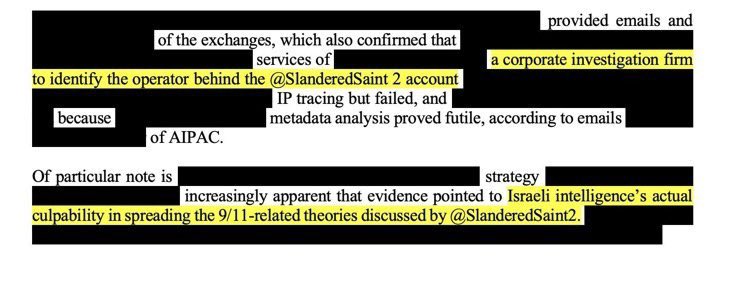
Interestingly, these theories were invented by the Mossad, and to a lesser extent the CIA themselves in order to get others to not process the attacks logically and to hide the true motive of the attackers, defensive jihad for all the reasons listed above.



35
Osama himself also sent a letter to Mullah Omar, the leader of the Taliban, detailing what he hoped to achieve with 9/11, prior to the American invasion of Afghanistan: threadreaderapp.com/thread/1941101…
36
With all that out of the way, we have evidence that AQ indeed did 9/11 alone, and now I will cover a lot of the regional branches and conflicts that AQ had, showing a lack of CIA involvement in supporting them there, and outright hostility towards America.
37
Specific Locations, Branches, and Affiliates: AQ was engaged in multiple conflicts all across the world, and the circumstances of some specific conflicts may lead to some accusing them of being a CIA asset, however, upon closer looking, this doesn’t hold up to scrutiny.
38
All across the world, whether it be in Africa, in the Middle East, in the Caucasus, in Central Asia, in South Asia, and even the Pacific, upon closer look, we can see none of what AQ did, given its full context ever lined up with CIA or American objectives.
39
In all of them, its opposition to America and all of its NATO and non-NATO allies alike was total and absolute. Even with plenty of common enemies (communists, the axis of resistance, and other “multipolarists”) it wanted to fight them on their own terms, not America's.
40
Secular Regimes of Iraq, Libya, and Syria. Kurdistan as well: Now this is perhaps the most common argument that was used over the accusations that AQ was a CIA asset, their opposition to secular nationalist rulers.
41
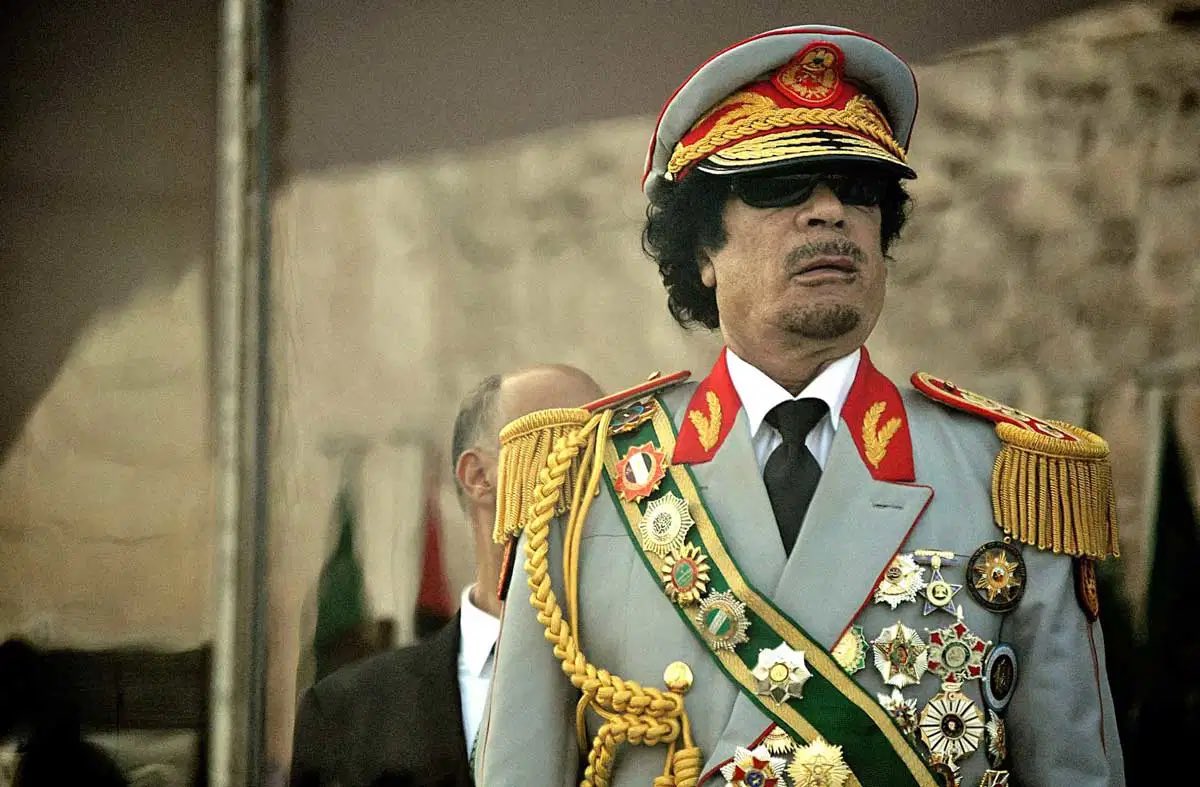
Rulers like Iraq’s Saddam Hussein, Libya’s Muammar Gaddafi, and Syria’s Bashar al-Assad, are often shown as vanguards of secularism and anti-zionism against western backed islamists in this view, however, upon further looking this doesn’t seem to be the case.



42
On the other hand, they actually ended up receiving some limited western cooperation in dealing with islamists for decades, before the west no longer saw them as useful and launched wars to remove them. “SlanderedSaint” explains in a response to Nick Fuentes.


43
Also worth mentioning is the fact that America backed the 1963 Iraqi coup, setting up the Ba'athist government there, known as the Ramadan revolution, as an example of what I’m saying.

44
In the cases of all three of these countries, even despite AQ’s opposition to all three of these rulers, they were just as concerned about America using said opposition by others to make even more cooperative rulers there, and fought them and/or forces backed by them there.
45
Kurdistan is also worthy of mentioning, since Ansar al-Islam, an associate group of AQ there, fought in both Iraq and Syria Even despite their opposition to both Saddam Hussein and Bashar al-Assad, they also fought the PUK, America, and Turkey.
46
In the case of Saddam Hussein and Iraq, his relationship with the west was complicated before the 2003 invasion, he got aid from them against Iran in the Iran-Iraq war, but fought them in the Gulf War.
47
He even got a greenlight from the west to attack the Shias and Kurds of Iraq when they rose against him, before they later reversed this decision and decided to put sanctions on Iraq. which was one of the reasons for both 1993 WTC and 9/11, even despite differences.
48
It’s also worth mentioning that the PUK and Kurdish Islamists were both among those that joined the uprisings in 1991, and both of them would clash plenty with not only Saddam, but also each other, which would be important later on.
49
Eventually, Saddam was accused of trying to acquire nuclear weapons and having links to Al-Qaeda after the 9/11 attacks, one of the examples of the latter would be an accusation of links to Mullah Krekar, the founder and leader of Ansar al-Islam.
50
Both accusations turned out to be false, and for the latter, Mullah Krekar and AAI clashed with Saddam’s forces numerous times, but regardless, the case was made for one of the most notable wars of the war on terror, the war in Iraq.
51
It started off with Operation Viking Hammer in Iraqi Kurdistan, with the United States and the PUK cooperating together to fight Ansar al-Islam, and getting rid of its rump state in the area, known as the Islamic Emirate of Kurdistan.

52
As for Iraq itself, America would launch what was known as Operation Red Dawn, which eventually overthrew Saddam and replaced him with Nouri al-Maliki, a Shia PM. This and other factors would put Sunni against Shia within Iraq.
53
This would later lead to Al-Qaeda in Iraq forming, led by Abu Musab al-Zarqawi, who was a Palestinian-Jordanian who travelled to Iraq to fight the Americans, forming a big tent sunni islamist coalition known as the Mujahideen Shura Council.
54
It would fight America several times, like the second battle of Fallujah in 2004. But it would also clash with Iraqi Shia militias (who had a rather complex role in Iraq, some both cooperating and fighting against America), as well as Saddamist remnants to a lesser extent.

55
Eventually, differences between Zarqawi and his successors in the Islamic State of Iraq (ISI) and the core al-Qaeda leadership would later come in a split of 2014 when ISI later formed into the Islamic State of Iraq and Syria (ISIS) under Abu Bakr al-Baghdadi.
56
As for the case of Muammar Gaddafi and Libya, Muammar Gaddafi too, had a complex relationship with the West, cooperating in suppressing AQ aligned elements, but also funding numerous anti-western groups across the world.
57
Following the U.S. invasion of Iraq in 2003, Gaddafi sought rapprochement with the West, abandoning Libya’s WMD programs and sharing intelligence on jihadist networks, which included many AQ aligned groups.
58
Despite this, he had his own suspicions about American influence, especially in the Arab world and in Africa, worrying about their ambitions, which is something he wanted to make clear in his 2009 UN speech.
59
The Libyan Civil War of 2011 was a product of the wider Arab Spring, a series of protests against existing authorities in the Middle East, and it eventually led to Gaddafi’s own removal, by a big tent coalition against him.
60
However, it is important to note that even with AQ’s opposition to Gaddafi, they also opposed American influence within Libya itself, and it wanted to make such a message clear numerous times throughout the following years.
61
In 2012, on the 11th anniversary of the 9/11 attacks, Ansar al-Sharia in Libya (AQ in Libya), as well as (allegedly) Al-Qaeda in the Islamic Maghreb, attacked US government buildings in Benghazi.

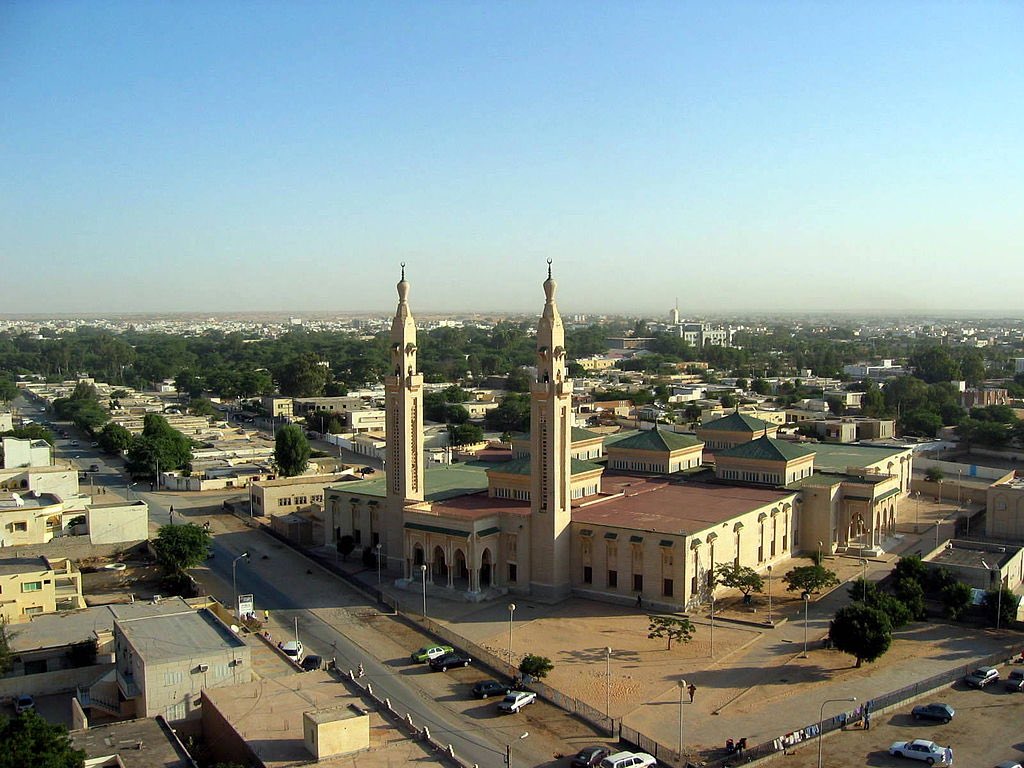
62
Later on, the coalition against Gaddafi fell apart over issues on Islamism, whether or not to accept former Gaddafists among their ranks, liberalism, and other issues, eventually resulting in a Second Civil War from 2014 to 2020.
63
AQ took its own side in Libya against both the Tobruk and Tripoli based governments, both of which received selective aid from both America and the UK, working with the wider coalition of the Shura Council of Benghazi Revolutionaries.
64
The case of Syria is probably the most interesting one yet, as it was easily the most complex of all of these cases, and it showed quite a lot about not just AQ, but the wider dynamics of the Middle East as a whole.
65
Bashar al-Assad, much like both Saddam and Gaddafi before him, had moments of both cooperation and opposition to the west, and he himself would be known for cooperating with the west during the early parts of the war on terror.
66
In doing so, he would even be pretty infamous for his use of torture in doing so, “SlanderedSaint” mentions his own recalling of Assad’s torture programs when he was working at the CIA.

67
However, tensions between Assad and America would boil over quite a bit over his friendship with powers like Iran, Russia, groups like Hezbollah, and other "multipolar" and other “axis of resistance” countries and groups.
68
In 2011, protests against Bashar al-Assad would eventually lead to a multi-sided Syrian Civil War that lasted and dragged on for quite a while, all the way to December of 2024, ending only a few months ago.
69
“SlanderedSaint” describes further details regarding the American involvement in the Syrian Civil War, with operations like Timber Sycamore, the true motives behind American involvement in Syria, and clarification on allegations of funding AQ or ISIS.


70
In short, America did indeed wish to get rid of Bashar over his ties to Iran, on Israel’s behalf, it did indeed fund “moderate rebels” (in comparison to AQ and ISIS), such as the Free Syrian Army (FSA) and the YPG, but it didn’t aid either AQ or ISIS intentionally.
71
In describing Wikileaks, many pointed to it claiming it revealed that AQ was intentionally funded by America, but the full wikileaks stuff on Syria shows a lot, America both working for Assad in the past and backing groups against him later.
72
AQ also praised the man behind it, Julian Assange, for his revelations that came to light on the war on terror. If Wikileaks was proof that America intentionally funded AQ, they wouldn’t be praising the man behind Wikileaks.
73
As for AQ’s role in Syria itself, Ahmed al-Shara’a, also known as Abu Mohammed al-Jolani, would cross from serving under ISI in Iraq to make a Syrian branch of AQ, Jahbat al-Nusra. JaN fought Assad, elements of the FSA, ISIS, and YPG throughout its time.
74
It would clash with the Hazzm Movement in 2015-16, which was an American backed unit of the FSA, and would suffer airstrikes from America in 2015, which took out many JaN members fighting in Syria.
75
It would later split from AQ, later becoming Hay’at Tahrir al-Sham (or HTS) in 2017, making some reforms. Among those reforms included accepting some aid from Qatar, Turkey, and being less confrontational with the FSA.
76
Even despite this, HTS still remained designated as a terrorist organization at this time, as the US embassy in Syria still kept a 10 million dollar bounty and reward for Jolani, they were still not satisfied.

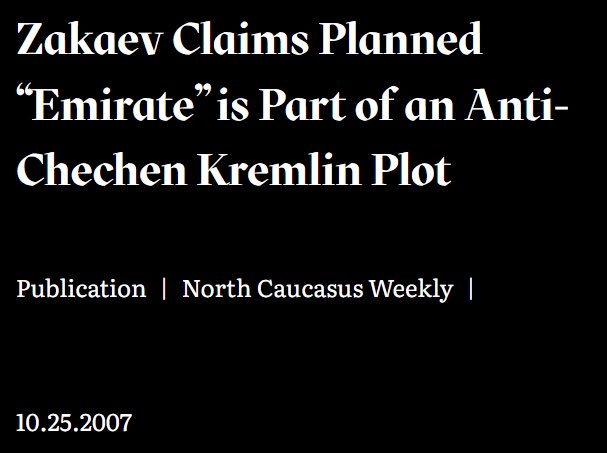
77
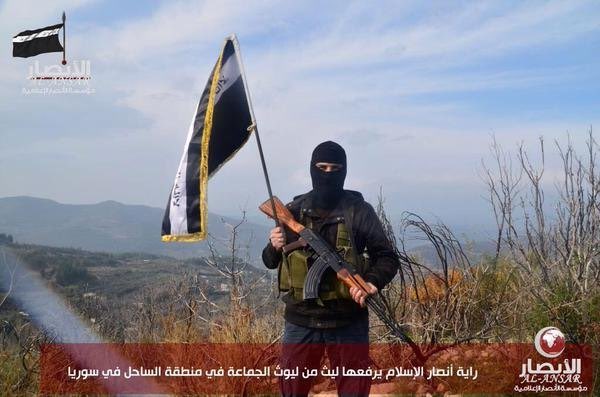
Plenty of those in AQ opposed this, forming a separate branch known as Hurras al-Din (HaD), fighting what they saw as a western, gulf, and turkish hijacking of the anti-Assad cause. They would form their own anti-reform coalitions.
78
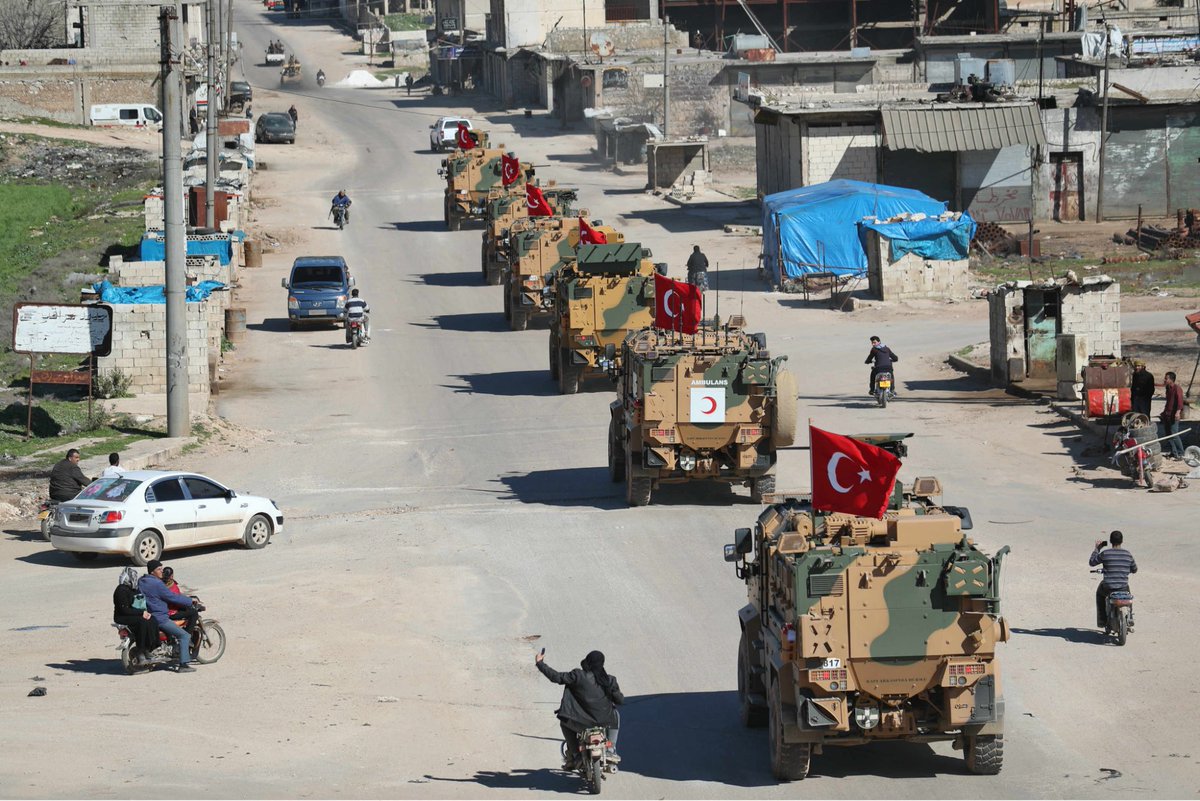
Ansar al-Islam was part of such coalitions, attacking Turkish Patrols in Idlib in 2019, when Turkey made their own offensive in the Northern part of Syria. This was to send a clear message, they were not welcome.
79
Later, HTS would move with much of the rest of the Syrian opposition groups in late November of 2024, rapidly advancing through Syria and causing the downfall of Bashar al-Assad by early December, where he fled to Moscow.
80
Afterwards, HaD would disband, and western diplomats would try to establish diplomatic relations with HTS after it’s split with AQ, having some level of deals with it acknowledging the reality on the ground.
81
AQ, a few months after the downfall of Bashar al-Assad, had its Indian branch release “the Future of Jihad in the Levant” including both praise and criticism of HTS, you can find it here: threadreaderapp.com/thread/1956808…threadreaderapp.com/thread/1956923…
82
Among the things AQ emphasized in its criticisms of HTS after the split, was its deals with the gulf and the west, telling AQ and plenty of other muslims to put pressure on HTS to fulfill past promises, and generally being wary about it.
83
AQ did not view HTS as an organization that was empty of flaws at all, and it had plenty of criticism for such things. Much of HTS’s deals after the fall of Assad were in spite of AQ, not because of it. This would undermine the CIA = AQ narrative further.
84
To sum up this part, AQ did indeed oppose secular rulers in the middle east like Saddam Hussein, Muammar Gaddafi, and Bashar al-Assad. However, in all three, it also opposed western involvement in all three of those wars.
85
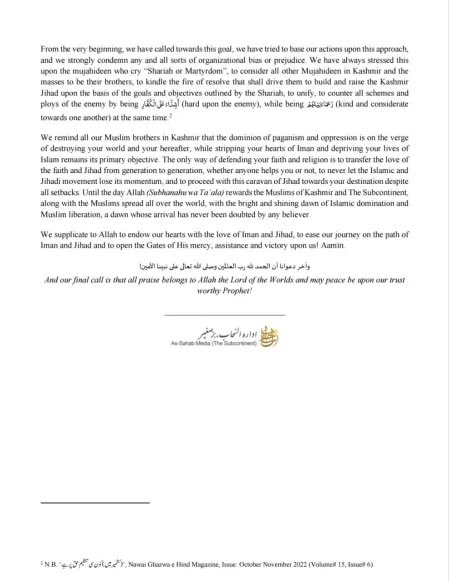
Palestine: Now the ideological heart of many islamist movements worldwide, this was one of the most important locations for muslims in general, and many were willing to fight for it and die for it. AQ was no exception.
86
Now of course, they have been accused multiple times of being CIA or Mossad assets, especially due to their disagreements with Hamas on a number of issues, but even here, such a thing does not add up.
87
AQ in Palestine is quite something, since one of their co-founders, specifically Abdullah Azzam, was a Palestinian himself, and he, along with every other AQ leader, have been vocal about wanting to reclaim Palestine.

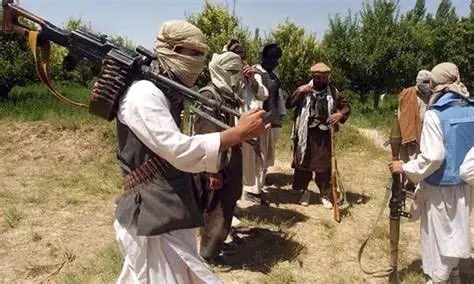
88
But as for forming an actual presence in Palestine itself, that would happen between the Second Intifada and Hamas seizing control of Gaza, in 2005 when Israel was preparing to disengage from Gaza.
89
Their disagreements with Hamas mainly came from it being too close to countries like Qatar, Turkey, and Iran (the former two were western backed), being too soft in their interpretation on sharia, and being too moderate against the Israelis.
90
As a result, while AQ never had one single official branch in Palestine, they had several small cells and groups who would both work with, and clash against Hamas, the former mainly being over Israel’s wars with Palestine, it’s a complicated relationship.
91
The first group known for this, was an organization known as Jaysh al-Islam or “Army of Islam”, formed in 2005, was known for two attacks in 2006, kidnapping of IDF soldier named Gilad Shalit, and two Fox News Journalists, Olaf Wiig and Steve Centanni.


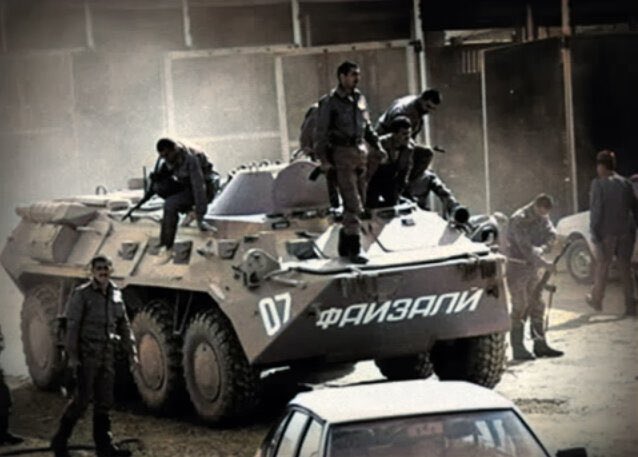
92
It gradually began to turn against Hamas in 2007, when it took over the Gaza strip, and the kidnapping of BBC journalist Alan Johnston was what set off part of the occasional clashes between Hamas and AQ linked cells in Gaza.

93
The biggest scale clash between AQ cells in Gaza and Hamas was in 2008, the Battle of Rafah, in which a group called Jund Ansar Allah made the “Islamic Emirate of Rafah” for a day before being crushed by Hamas.
94
Numerous attacks on Israel, mostly rocket attacks, have been made by AQ affiliated groups, including in October 2009, March 2010, 2019, and many other times, showing they were still opponents of Israel.
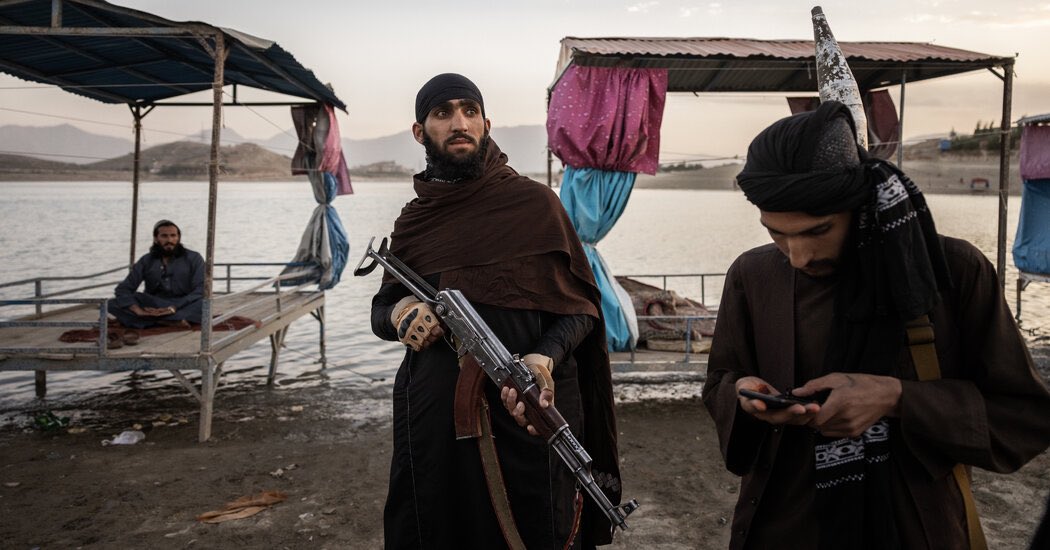
95
Another group, the Mujahideen Shura Council in the Environs of Jerusalem (later became part of ISIS) also claimed responsibility for an attack in 2012 that killed one Israeli in a cross border attack.

96
Even as far as the recent events since October 7th, 2023, the AQ aligned group Jaysh al-Ummah has teamed up with Hamas in opposing IDF soldiers and targeting them in the most recent Gaza conflict.

97
Lebanon: Apparently, one of the reasons cited for the 9/11 attacks was over the knocking down of towers in Lebanon, with American involvement in the Lebanese civil war cited as one of the reasons for giving America a taste of its own medicine.
98
Here too, Al-Qaeda has also made some level of presence here, two specific groups in particular, Fatah al-Islam, made up of mostly palestinian refugees in Lebanon displaced after the Nakba, and the Abdullah Azzam Brigades, made up of Lebanese Sunnis.
99
They would have some level of sectarian tension with Hezbollah and Iran as demonstrated by frustration with their actions in Syria, such as the 2013 Iranian Embassy bombing in Beirut, which killed 23 and injured many others.

100
However, they were not friendly to the west, such as when Fatah al-Islam would attempt, and fail, to bomb German trains in 2006, and the Abdullah Azzam Brigades fired rockets on Israel numerous times.
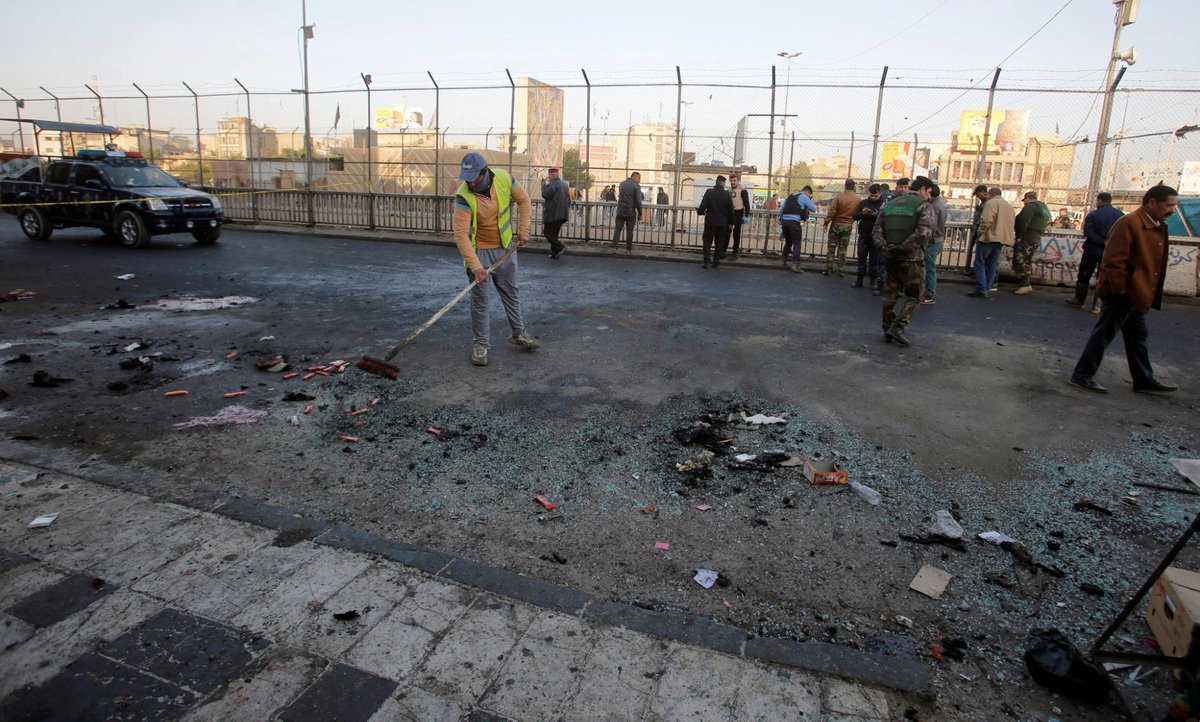
101
One particular incident of this in 2009 was as revenge for Temple Mount clashes that happened that same year, and that their firing of a rocket was good to make sure the Israelis didn’t mess with it.

102
Egypt: Islamist activity here was also pretty common, as Sayyid Qutb, who served as an inspiration for some in AQ, lived here, and AQ would come from the earlier Egyptian Islamic Jihad, with Ayman al-Zawahiri being a leader of AQ after OBL’s death.
103
EGJ, as well as other AQ aligned groups, has consistently fought western backed Egyptian secularists over time, as in recent decades the clashes between Secular and Islamist forces would be prominent there.
104
The assassination of Anwar Sadat in 1981, before AQ even formed, was done by EGJ as a response to Anwar Sadat doing a peace treaty with Israel, and they wanted to prove their opposition.

105
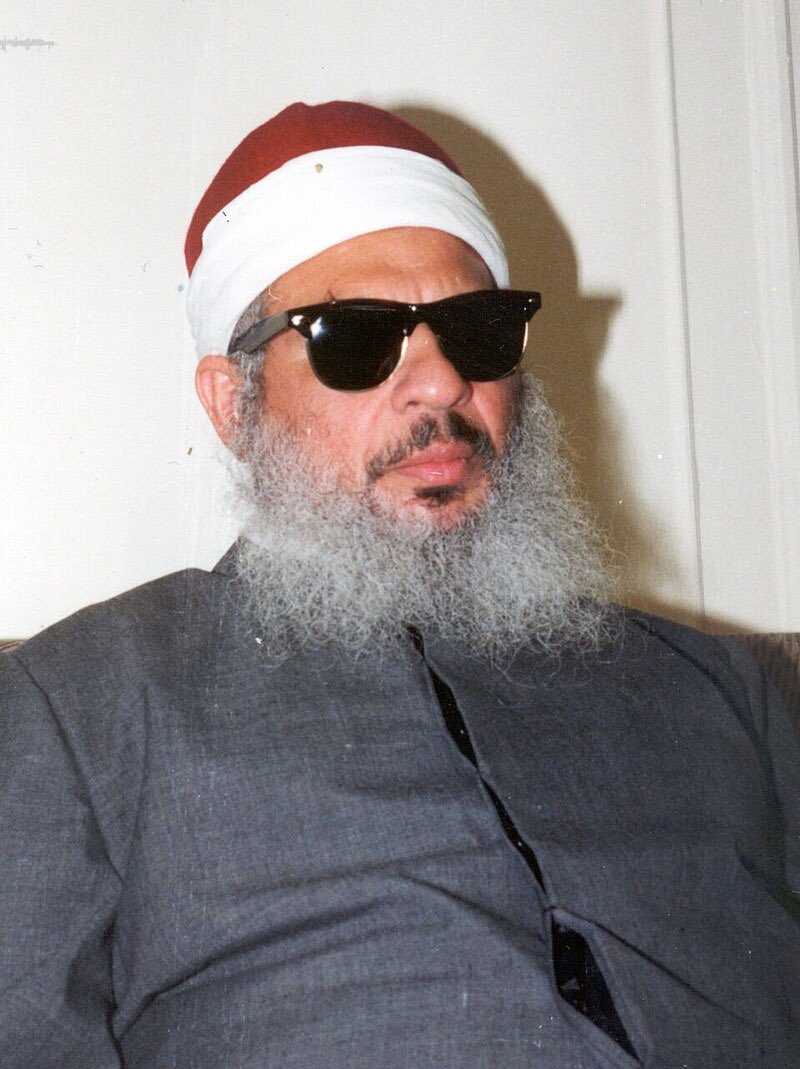
One prominent individual involved with those clashes, was Omar Abdel-Rahman, aka the “Blind Sheikh”, and he led a group known as Al-Jama’a al-Islamiyya, which would take a lot of actions in the 1990s, including a failed plot to assassinate president Hosni Mubarak.

106
AQ activity would especially take a spike after a Saudi and Israeli backed coup in 2013 against Mohamed Morsi, a Muslim Brotherhood elected president in 2012, and he was replaced by the current president Abdel Fatah El-Sisi.
107
As such, many cells associated with AQ would be fighting the Egyptian government since, especially in the Sinai, the biggest would be a full on branch, Al-Qaeda in the Sinai Peninsula, and it did plenty of attacks there against the authorities.
108
One of the biggest reasons why these insurgents have been operating out of Sinai specifically was to link up with militants in Gaza and also to break Egyptian state pressure on Gaza, blaming it for aiding Israel.
109
Yemen: Yemen is also pretty notable, as OBL’s father came from here, making OBL half Yemeni. Another notable Yemeni AQ member was none other than Anwar al-Alwaki, one of the most prominent English speaking jihadis, more on him later.
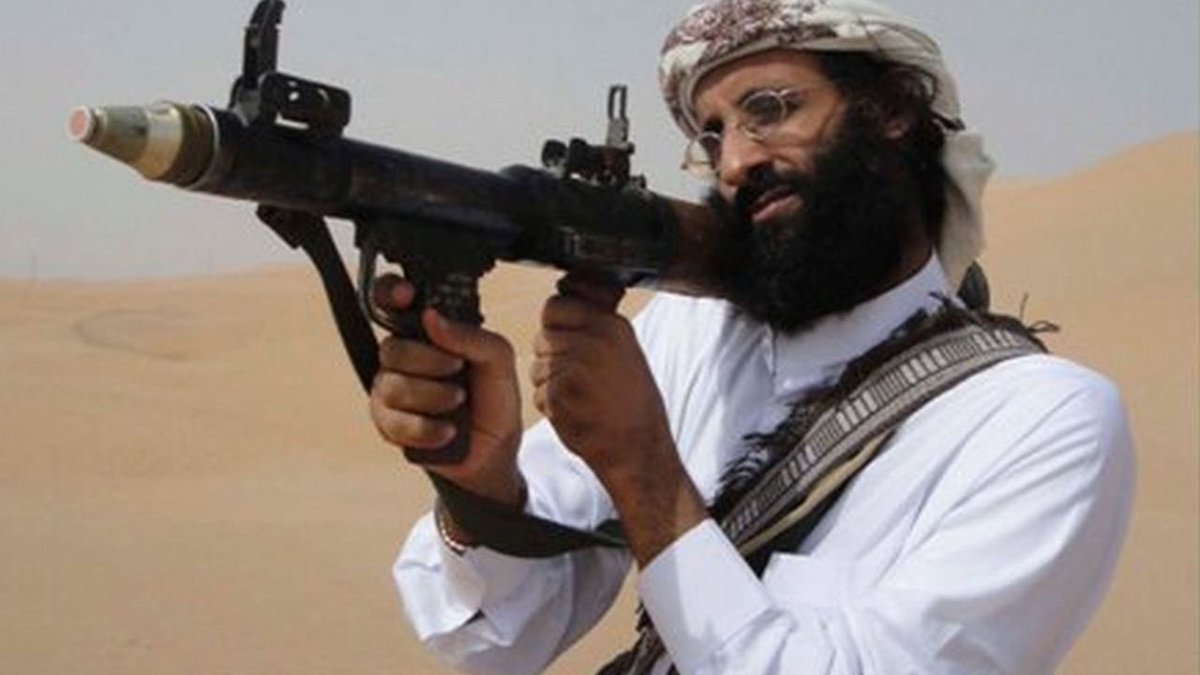
110
Its main branch there is known as Al-Qaeda in the Arabian Peninsula (AQAP), a merger of previous local chapters in both Yemen and Saudi Arabia, with the stated goal of liberating Arabia, the origin place of Islam, from foreign occupation.
111
Its predecessors did plenty of attacks against Saudi Arabia beforehand, and it’s merger in 2009 only strengthened its resolve, proving it to be quite a formidable branch of AQ especially in the years to come.
112
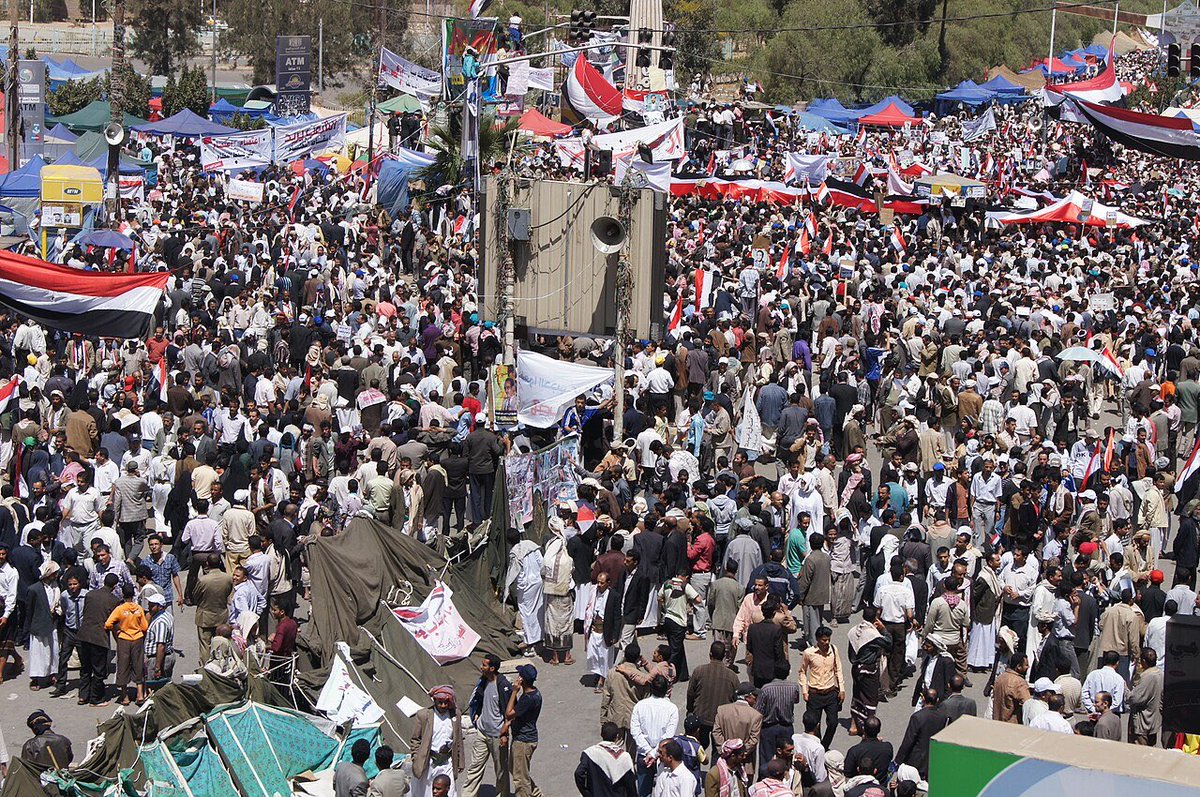
It was one of the groups that took part in the 2011-2012 Yemeni Revolution, being one of the many groups involved against President Ali Abdullah Saleh, who have been ruling the country since its 1990 reunification.
113
AQAP would fight in the civil war that followed and broke out in 2014, against both the American, Israeli, Saudi, Emirati, and Qatari backed Presidential Leadership Council (PLC) and the Iranian backed Houthis as well.
114
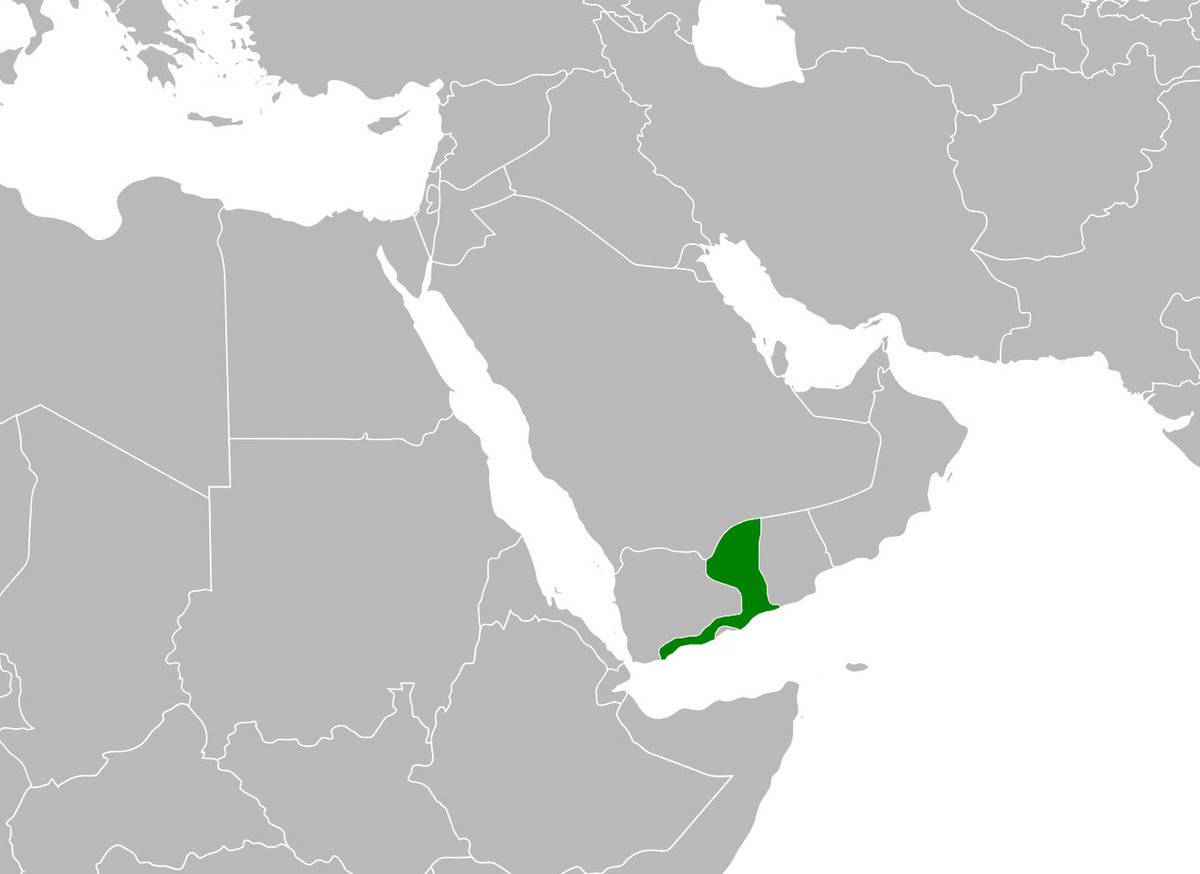
The Saudis focused on the Houthis as the main threat at first, due to the Saudi-Iran rivalry, leaving AQAP with some ground to cover, and it made some moves in 2015 and 2016, capturing plenty of the country by then, under the “Islamic Emirate of Yemen”.
115
However, with this expansion came plenty of strikes with AQAP as a main target instead, and they would lose some ground with that Emirate being de-established, but AQAP would still hold some territory in Yemen.
116
Around this time, they would reach out to westerners, with stuff like “Inspire” and plenty of other media, being one of the most fluent AQ branches at it. They inspired plenty of attacks, such as the 2019 Pensacola shooting at a US Air Base there.

117
Since 2022, AQAP have decided to make a truce with the Houthis, viewing the western and gulf backed PLC as the bigger threat both the Houthis and AQAP needed to deal with, before they could return to sectarian fighting.
118
Now, West Africa is perhaps one of the most notable places where AQ activity has gotten plenty of notice, especially due to the sheer scope of all the effort in containing AQ there, with many regional rivalries, (like the Morocco-Algerian rivalry) being secondary to that.
119
Operation Juniper Shield, also known as Operation Enduring Freedom - Trans Sahara, was a massive operation launched by the United States, and many local west african governments, to counter Islamist movements against their countries.
120
This originated in the civil war in Algeria starting in 1992, also known as the black decade, it was a three way civil war between the secular Algerian government backed by France and the EU, the Islamic Salvation Front, and the Armed Islamic Group.

121
This civil war would eventually lead to an Algerian government victory in 2002, and it would be one of the many complaints AQ had with the west in relation to its involvement in the continent of Africa in general.
122
It would result in the AIG eventually becoming the Salafist Group for Preaching and Combat, gaining a pretty large presence in their fight against the Algerian government; it carried out attacks on western travellers, and only expanded from there.
123
Eventually in 2007, it would become Al-Qaeda in the Islamic Maghreb (AQIM), where it would expand a lot of its presence to not only include Algeria, but much of the west part of Africa, known as the Insurgency in the Maghreb.
124
It was not only Algeria, but also its rival Morocco, that was dealing with AQ linked militants over complaints of too much western influence, mainly the Moroccan Islamic Combatant Group known by its French acronym (GICM).
125
It would be responsible for both the 2003 Casablanca bombing, as well as the 2004 Madrid train bombing, hoping to drive out western influence, and overthrow the government in Morocco over that matter.


126
Tunisia too was also going against AQ, with the 2002 Ghriba synagogue bombing done by Tunisia’s AQ branch, the Tunisian Combatant Group, with the stated reason for the bombing being revenge for Israel’s treatment of Palestinians.
127
Its successor group, Ansar al-Sharia (Tunisia) would be founded in the aftermath of the Tunisian Revolution in 2011, it would try to push the country in an islamist direction, and assassinate two major politicians, Chokri Belaid and Mohamed Brahmi.


128
As for AQIM’s activities during the Maghreb Insurgency, beside helping out other groups against Algeria, Morocco, Tunisia, and Libya, they would also end up having activity in Mauritania, like the 2009 Nouakchoutt suicide bombing attempt against a French Embassy.
129
However, its activities in the Sahel are also worth covering, as they seem to have gotten a lot of attention recently, and by 2012, AQIM’s activity also ended up expanding quite a bit down there as well, with complaints about both western and russian influence there.
130
A lot of this was taking advantage of the Malian Civil War, where Tuaregs dissatisfied with the Malian government would rebel against it, complaining about poor treatment by the Malian government, and AQIM would take advantage of it.
131
It would mainly start off as raids against western influence, with attacks like the 2015 Bamoko Hotel Attack,clashes between them and Malian forces, backed by both France and America, as well as killing UN peacekeepers in 2019 due to Chad’s renewed ties to Israel.
132
It would also have its own merger of groups in 2017 to operate as a connected group known as Jama’at Nusrat al-Islam wal-Muslimin (JNIM) which has operated in places like Niger, Mali, and Burkina Faso, but has especially gotten attention over the latter two.
133
Most notably, recent shifts in both Mali and Burkina Faso, such as coups, has led both countries to move away from influence that was coming from France, and to a lesser extent America as well, and toward Russia.
134
This could especially be seen with individuals like the President of Burkina Faso, Ibrahim Traore, who has gained a lot of attention for these reasons, trying to model himself as a modern Thomas Sankara.

135
As such, JNIM has faced accusations of being a creation of the DGES and CIA to undermine Mali and Burkina Faso’s pivots towards Russia, though previous clashes JNIM had with both those forces when backed by America and France contradict this.
136
In addition, the opposition to Traore within Burkina Faso backed by foreign powers or sympathetic to them are within the republic’s own ranks, which doesn’t implicate JNIM in such things at all.
137
The 2023 Burkina Faso failed coup attempt, which was done by presumably pro-western elements, complained about Traore not efficiently getting rid of JNIM within his own country, ironically the same reasoning he used to take power in 2022.
138
It is also worth noting that as late as 2025, Iyad Ag Ghaly, the leader of JNIM, have openly denounced calls for French and other powers to get involved to replace the Russians in a video called “Verily, Allah’s Victory is Near”.

139
And finally with covering West Africa, there is Nigeria. Boko Haram and AQ ended up splitting over tactics and plenty of other things, and a new group known as Ansaru was formed in 2012, and it has also been involved in the insurgency in Nigeria.
140
In Early 2013, it was able to attack Nigerian troops who were on their way to intervene against their allies in Mali. In 2023 it even allegedly had a role in being able to take down a Nigerian helicopter.


141
All this signals that no, AQ was not friendly at all to American interests in West Africa, be it the Sahara or the Sahel, or even the West in general for that matter. It was on the opposite fighting them vigorously.
142
Somalia is also worth mentioning, as while not in west Africa, it is a place in Africa where Al-Qaeda focused a lot of effort in fighting western and western backed forces, with battles continuing there to this very day.
143
It would turn out that in the aftermath of the beginning of the fall of the Communist Siad Barre government in 1991, Al-Itihaad al-Islamiya would gain plenty of members throughout its aftermath.
144
It would be known for its participation in the Battle of Mogadhishu in 1993, also known as the “Black Hawk Down” incident, where it and the Somali National Alliance (SNA) fought American, Pakistani, and Malaysian troops, and downed three helicopters.

145
It and successor organizations would continue to have activities within Somalia during the ongoing civil war for many years to come, and it eventually led to the formation of Harakat al-Shabaab al-Mujahideen simply known as al-Shabaab, in 2006.
146
From thereon, it would clash with American forces numerous times, as well as the regional Federal Republic of Somalia, which received aid against AS from many other countries, gaining a lot of enemies.
147
These would include Ethiopia, the UK, Russia, China, France, Italy, Norway, Turkey, Qatar, Ukraine, Canada, Australia, Uganda, Kenya and plenty of other countries as well, so it had quite a bit of conflict.
148
Even one of the main rival governments to the Federal Republic of Somalia, which would be the Republic of Somaliland, would put some periods of beef temporarily aside with the main Somali government to target AS.
149
AS has also been one of the branches of AQ that has been very vocal about their opposition to global institutions, such as the UN, and many others. One example was a recent documentary called “The Deceptions of the World Bank and the IMF - Economic Plunder”.

150
Had AS been an organization that was working with the feds, it would not have clashed with American and many other allied forces, nor would it be very vocal about its opposition to international organizations, which many feds rely on.
151
With all of Africa covered, a lot of AQ’s more successful operations seem to be taking place there, and none of it was in the interest of the CIA. All across that continent, it clashed with its interests numerous times.
152
Now, we turn to Chechnya and the Caucasus, which has been a front which gained especially some attention in the earlier days of AQ’s existence. Plenty of volunteers, around the same time loosely affiliated with AQ participated as part of the First Chechen War.
153
It managed to help the Chechens win in 1996, winning against rough odds, but yet, things would not stop there. In between the wars, there was an argument over whether to keep Chechnya intact as is, or to also get Dagestan and drive Russia out of the region.
154
It was a dispute between Aslan Maskhadov, the president of Chechnya, who wished to keep inside Chechnya alone, and Shamil Basayev with Ibn al-Khattab, citing grievances of both the Soviet past, and the more recent war.


155
It was a tried, but failed attempt to get Dagestan independent of Russia, known as the Dagestan war, and ultimately, it, as well as bombings in apartments in Russia would eventually lead to the 2nd Chechen war in 1999.
156
Russia would eventually successfully retake Chechnya by 2000, appointing Akhmad Kadyrov to serve as a leader of the region under their control. An Insurgency by Chechens would later follow those events.
157
It was around the 2000s that relations between the West and Russia would begin to suffer, and eventually, they would host the Chechen Republic of Ickheria in exile, which is now partaking in the Ukrainian side of the Russo-Ukrainian war.
158
Ultimately, the old Dagestan era beef would still last even after the Chechens lost their independence, with Akhmed Zakayev leading the western backed government in exile, and Dokka Umarov leading the AQ aligned Caucasus Emirate.


159
The escalation got worse in exile, as the Caucasus Emirate sentenced Zakayev to death over him being aligned too closely with liberal values, while Zakayev alleged the Caucasus Emirate was a Russian false flag to demonize Chechen separatists.

160
We can see even here with the common dispute with Russia, that the Chechen separatists also had plenty of fighting amongst each other, with alignment of values being one big one, and thus making it unfeasible to call AQ aligned Chechens CIA agents.
161
And with this, we can address Afghanistan again, as well as much of South Asia, mainly Pakistan, Balochistan, India, and Bangladesh. All the dynamics in that region make for interesting matters going on there, but the accusations don’t work here either.
162
As for Afghanistan itself, we can see the most clear cut refutation of the CIA theory here, AQ’s relationship with the ruling force of Afghanistan, the Taliban, and their common war against NATO and the Afghan republicans.
163
By the time Bin Laden got back to Afghanistan in 1996, and Mullah Omar took most of the country by then, the Northern Alliance was having a sliver of territory in the North, backed by Russia, Iran, India, Uzbekistan, Tajikistan, and Turkey.

164
Between then and 9/11, the Taliban would gradually cover more territory of Afghanistan through advances made in the country, meanwhile international attacks caused by AQ would lead to the Northern Alliance getting more western aid.

165
Shortly after 9/11 itself, America asked for Mullah Omar and the Taliban to hand over Bin Laden and AQ unconditionally thrice. The Taliban refused all three times saying they wished to hand him over on their own terms.
166
Eventually it would lead to Operation Enduring Freedom being launched at both them and AQ, and it would lead to the Republicans of the Northern Alliance eventually taking over much of the country, with both the Taliban and AQ in the countryside.
167
This war would involve NATO, Russia, Ukraine, India, Iran, and plenty of others fighting on the side of the Republicans, but the war would go on for a long two decades, until the Taliban would eventually regain control in the year 2021.
168
AQ had quite a bit of formations helping the Taliban in the war in Afghanistan, and generally speaking, the AQ-Taliban alliance seems to have paid off in the end, with AQ still allowed some presence in Afghanistan to this day.
169
One of the most notable examples of their partnership in action was the battle of Tora Bora, which was where Bin Laden, Ayman al-Zawahiri, and Mullah Omar all famously escaped, with units like the 055 Brigade holding off Republican and NATO troops.

170
As for the states of South Asia, India, Pakistan, and Bangladesh, as well as the region of Balochistan, it seems accusations of federal backing mainly come between India and Pakistan over the Insurgencies of Khyber Pakhtunkhwa and Jammu and Kashmir.
171
For the record, both India and Pakistan have received American aid and backing since the days of the cold war, India to counter China, Pakistan to counter the Soviet Union, and since 9/11, they both did so to fight AQ as well.
172
As part of their beef, India accused AQ of being a CIA and ISI (Not the Iraqi AQ branch, but the Pakistani intelligence) over AQ fighting against India in JK, they also had suspicions about the Bin Laden compound being in Pakistan.
173
However, upon closer looking, we can see that the sheltering of Bin Laden in Pakistan was the policy of a few officials, not the government as a whole, as it had its own clashes with AQ that will be covered shortly.
174
As for the compound, Steve Coll reviewed plenty of the documents at Abbottabad compound, and found no evidence of official government policy support for Bin Laden, rather the opposite, Bin Laden was wary of plenty of them over the arrest of KSM.
175
As for Jammu and Kashmir, Al-Qaeda in the Indian Subcontinent (AQIS) showed in statements it did have a more pragmatic stance on it preferring Pakistan to have it over India, but specifically warned about exploitation by the current order in Pakistan.



176
In another statement, it openly condemned many of the actions of the Pakistani government accusing them of being “vassals of global Zionists and America”, and being sympathetic to AQ elements seeking their removal.


177
On the other hand, Pakistan has accused AQ and the Taliban of serving on behalf of the CIA and the RAW, due to their own clashes in KP. Upon further looking, we can see this doesn’t add up either.
178
As mentioned previously, India was one of the powers backing the Afghan Republicans in Afghanistan, and obviously they had AQIS to deal with on their own, also in the eastern areas of Assam, so it’s obvious India clashed with AQ.
179
As for the insurgency in KP, it happened over complaints of mistreatment of the Pashtun minority within Pakistan, and it was even more so with the borders between Afghanistan and Pakistan.
180
With this, the Tehreek-i-Taliban Pakistan (TTP) clashed with the Pakistani army numerous times, and this was far from the only grievance that AQ aligned groups had with the administration in Pakistan.
181
In fact, many of the AQ aligned groups within Pakistan were complaining about the military treatment that was going on inside the country, due to many juntas there, and Baloch separatists also complained about mistreatment.
182
Their targeting of Pakistan also complained about too much American support, and that was one of the main reasons for such attacks against them. Their skepticism of Chinese influence and Baloch groups targeting Iran don’t disprove their anti-US stance.
183
It is also worth mentioning that both the networks of AQ aligned groups operating with fighting both India in JK, as well as fighting the Pakistani government being closely linked and sharing solidarity alone is enough to disprove both accusations.
184
As for Bangladesh, AQIS, Jamaat-ul-Mujahideen Bangladesh, and Ansarullah Bangla Team, have all targeted Bangladeshi authorities for much of the same reasons in Pakistan, frequent military juntas and American influence, but also opposing leftists.
185
In such matters, there was an incident in 2005 where JuM Bangladesh ended up killing two judges over such complaints, and generally plenty of other such incidents, 6 were hanged over it too.

186
Ultimately, with all of what went on with AQ in South Asia, AQ has opposed the Indian, Pakistani, and Bangladeshi governments consistently, when all three have received aid from America to counter them, also puts those accusations to rest.
187
Central Asia is also a fairly interesting place to mention, most of it being remnants of the Soviet collapse, as well as part of it being under Chinese control. Some may assume due to beef with those countries, they may also be CIA agents, this too doesn’t hold up.
188
Both the Tajik and Uzbek fighters aligned with AQ share their origins in the Tajikistani Civil War between 1992 and 1996, between communist remnants in Tajikistan and Islamist opponents fighting them.
189
Ultimately, the Islamists would get the short end of the stick, but they would ultimately not give up their plans to Islamize Central Asia after the Soviet Union largely secularized it. They wished to see their visions as a breath of fresh air after such times.
190
The Uzbeks would form the Islamic Movement of Uzbekistan (and later the Islamic Jihad Union), and the Tajiks would form Jamaat Ansarullah (also known as the Tajik Taliban), both aligned with AQ.
191
The IMU would briefly go into the territory of Kyrgyzstan, in a month long clash known as the Batken conflict after the 1999 Batken bombings, trying to assassinate the president of Uzbekistan Islam Karimov for his anti-islamist policies, but ultimately lose.

192
But as for what followed, they both relocated to Afghanistan, then under Taliban control, and around this same time, the Turkistan Islamic Party (TIP), its Uyghur branch was also located there.
193
The Uyghurs had grievances with communism and its legacy as well, especially due to the area which they came from not being independent since the time of Mao, and restrictions in China as well.
194
Despite their shared beef with Communism, however, all three would fight America and NATO forces directly in Afghanistan, the TIP even fighting directly in Tora Bora. All three of them are still in Afghanistan to this day.


195
As for the Uyghurs, before the US condemned their treatment as US-China tensions began to rise, the US ended up announcing support for China’s measures at first, Michael Scheuer notes in “Imperial Hubris”.

196
As for other ventures those groups would take in, both the Uzbek and Uyghur fighters would fight alongside the TTP against Pakistan, and also in Syria, so they would see plenty of action outside Afghanistan, and the TIP would carry out some attacks against China.
197
Much like the situation of the Chechens, the Uyghurs also had a western backed secular vs islamist dynamic. The East Turkistan Government in Exile (ETGE) and one of its ministers, Salih Hudayar, attacked it as a Chinese False Flag.


198
The specific attack was based on the fact that the TIP still had some level of relations with the Taliban, even despite the Taliban’s own relations with China in some limited deals made with it. If it was the CIA, why are western backed Uyghurs saying it’s a false flag?
199
The last major region that is to be covered is the Pacific. More specifically, Indonesia, Malaysia, and the Philippines. Once again, no real answers as to how AQ is CIA here as it was claimed in many other areas.
200
Jemaah Islamiyaah would form in 1993 in Indonesia with the complaints of secular ideology in Indonesia, and the governing philosophy of Indonesia, known as Pancasila, and also complaints about excessive Australian influence.
201
Some time later, in 2000, there would be an Al-Qaeda summit in Kuala Lumpur, a conference detailing plans on both the USS Cole bombing and the 9/11 attacks. Both the Malaysian and American governments got backlash for not stopping them in time.
202
Jemaah Islamiyaah would later carry out plenty of attacks within Indonesia and Malaysia, targeting western influence in these countries, the most notable being the 2004 Australian Embassy Bombing.

203
Also worth mentioning is the Philippines in which those Indonesian and Malaysian individuals were also in touch with, more specifically, the Moros, and their own struggle against the Filipino government.
204
Much of the local context of the Moro conflict were allegations of abuse by the Moro community, a majority muslim people in the Philippines, over plenty of time living there, and it had armed struggle involved back to the 1960s.
205
Al-Qaeda would establish a presence there through a group called Abu Sayyaf, which was a more radical offshoot of the already existing Moro Islamic Liberation Front (MILF), but other groups like the Bangsmoro Islamic Freedom Fighters also existed.
206
Abu Sayyaf’s most notable attack was the Rizal Day Bombings in 2000, where several notable locations in the Metro Manila region ended up getting bombed, one outside of the US embassy there.
207
The United States, with plenty of military bases there and being close to the Philippines, decided to help it out against all of those groups in what was known as Operation Enduring Freedom-Philippines, also known as Operation Freedom Eagle.
208
Ultimately, Abu Sayyaf would do mostly for kidnappings throughout its time, but later it would change its allegiance to ISIS. MILF later stepped down among government negotiations and concessions, but ultimately Abu Sayyaf would keep fighting.
209
Now, with basically all the regions covered, and none of them having any AQ - CIA connection, it’s time we look at some individuals instead. Adam Gadahn and Anwar al-Awlaki were said by some to be CIA assets, but is this really true?


210
As for the first case, Adam Gadahn, also known as Adam Perlman or Azzam the American, would be one of the most notable individuals who ended up defecting to AQ, possibly the highest ranking defector.

211
He was born in 1978, and lived more or less a typical California life, not that different from many others. The only thing that really put him apart from plenty of other people, was his grandfather, Carl Perlman, who was not only Jewish, but an ADL head.

212
Many individuals speculated that for this reason, he might’ve had connections to the CIA and/or Mossad. However, it was in spite of his grandfather, not because of him, that Gadahn defected to AQ.

213
He specifically mentioned Netanyahu’s “Place Among the Nations” and its anti-Palestinian rhetoric that disgusted him, and his grandfather’s dismissal of his disgust that began his radicalization.

214
He would eventually convert to Islam, and even become among the highest media individuals of Al-Qaeda, and even an advisor to Bin Laden himself. He frankly never hid any of his past when talking about such stuff.
215
He would be very wanted by the CIA, even briefly unseating Bin Laden himself in being the most wanted individual on the CIA’s list then. So he was a very high profile target, not an asset at all.

216
In so far as his actions, he would be one of the main managers of one of AQ’s media hubs, As-Sahab, as well as an active participant against the state of Pakistan in AQ’s clashes against them.
217
He was eventually killed in a drone strike in Pakistan related to those activities in 2015, alongside a separate drone strike that same year which killed another american defector Ahmed Farouq.
218
In addition, hostage aid workers, Giovanni Lo Porto and Warren Weinstein were killed as collateral damage, and it is said that Gadahn had a role in taking both of those individuals hostage.
219
Warren Weinstein was also jewish, so the claim that Adam Gadahn was acting on behalf of a cabal due to his past ties would be put to rest with both that and the facts he never hid his past and that he was among the most wanted individuals by the CIA.
220
As for Anwar al-Awlaki, this particular Yemeni-American individual would be born in 1971, living in New Mexico, and he would spend a lot of his time as a university student as well as an imam before joining AQ.

221
He would receive some level of USAID before joining, but this was before his militant activities, not during them, and thus irrelevant to the discussion. He would leave that once he started such activities.
222
As for his radicalization, he may have begun when he allegedly had contact with 2 of the 9/11 hijackers beforehand, but he cited his main reason for radicalization to be the US policies of the war on terror.
223
As for claims of federal contact, it was not him who contacted the feds, but rather, the feds who ended up contacting him, attempting to get him to be part of a RAND cooperation program to work with them, but he ultimately refused.

224
He would later get involved with AQAP, Al-Qaeda’s branch in Yemen, with their mission to overthrow the governments in Arabia. He, like Gadahn, would be one of AQ’s most prominent English voices.
225
He too would be among the most wanted AQ individuals on the CIA’s watchlist, contradicting claims of him being an asset, and he would ultimately be killed in a 2011 drone strike during the Presidency of Barack Obama.
226
In fact, the American government really despised him so much they didn’t just stop at killing Anwar al-Alwaki himself, even killing his 16 year old son, Abdulrahman in 2011, as well as his 8 year old daughter, Nawar, in 2017.


227
To try to kill off an entire bloodline is really something that the CIA would be treating one of their assets, as it shows that such a person is not useful at all, but seen as a massive threat, and this would be quite something to note.
228
In conclusion, AQ was never, and still isn’t to this day, a CIA asset. Literally every single part of their history, literally every single front, literally every single major group, and two of their most prominent defectors all prove this.
229
AQ’s record of any alleged American ties is completely clean, and they consistently opposed American influence in all circumstances, whether directly through head on conflicts, or indirectly where even with a common enemy, they saw them as hijackers.
230
This claim has been around for quite a while, and it took quite some time to debunk such a claim, but now with all the specifics mentioned, all the necessary details covered, this claim can finally be put to rest.
231
End of thread.
232
@threadreaderapp unroll