An example of erotic depiction that occasionally could be found...

Archaeo - Histories@archeohistories
46 views
Nov 28, 2025
~6 min read
Advertisement
1
An example of erotic depiction that occasionally could be found among funeral items in an Egyptian tomb.
Ancient Egyptians had a rich and complex approach to love and sex. Sexuality was seen as a natural and essential part of human life, and it was celebrated in their art, literature and religion. Ancient Egyptians had a very liberal attitude towards sexuality, which was considered a natural and essential part of human life. They believed that sexual pleasure was a gift from the gods, and that it had both physical and spiritual benefits. Egyptians celebrated sexuality in their art, literature, and religion, and it was an integral part of daily life. Sex was not only a means of procreation but also a way to connect with the divine. Ancient Egyptians believed that sexual pleasure could bring one closer to gods and that it was a way to access higher states of consciousness. In fact, some of most sacred rituals in ancient Egyptian religion involved sexual acts performed by priests and priestesses.
Ancient Egyptians had a wide range of sexual practices and beliefs. They believed that sex was a natural and healthy part of life, and that it should be enjoyed by both men and women. Masturbation was also accepted and was not seen as a sinful act, as it was in some other ancient cultures. They believed that the pharaohs had a special connection with the gods, and they believed that the pharaoh’s semen was sacred. Itwas believed that the pharaoh’s semen had the power to create new life and that it could be used to heal the sick and the injured. This belief led to the creation of amulets and potions made from the pharaoh’s semen, which were used as a form of medicine.
Ancient Egyptians also believed in the power of fertility magic. They believed that certain objects, such as amulets, could increase one’s fertility and sexual potency. They also believed that sexual intercourse during certain phases of the moon could increase the chances of conception. Ancient Egyptians had a variety of sexual practices that were considered acceptable. These included oral sex, anal sex, and group sex. However, adultery was strictly forbidden, and extramarital affairs were punishable by death.
Prostitution and sex work were also part of ancient Egyptian society. Prostitutes were often slaves or women from lower social classes who were forced into the profession. However, there were also independent prostitutes who were respected members of society and had a high degree of autonomy. Sex work was regulated by the government, and prostitutes were required to pay taxes. Ancient Egyptians believed that sex work was a necessary part of society, and they even had a goddess of prostitution, Hathor. The temples of Hathor were often staffed by prostitutes, who served as priestesses and provided sexual services to the temple visitors.
Gender and sexuality were also important themes in ancient Egyptian art and literature. Ancient Egyptians created some of most beautiful and intricate art of the ancient world, including stunning works of sculpture, painting, and architecture. Many of these works depict scenes of love and sex, reflecting the importance of these aspects of life in Ancient Egypt.
One of the most striking examples of gender and sexuality in ancient Egyptian art is the depiction of the god Bes. Bes was a dwarf god who was often depicted as a jester or a musician. He was also a god of fertility and sexuality, and he was often associated with childbirth and the protection of women in labor. Bes was depicted with an exaggerated phallus, which was seen as a symbol of his sexual potency.
Ancient Egyptians’ attitude towards love and sex continues to fascinate and inspire people today. Their legacy lives on in their beautiful art and literature, as well as in many insights they provide into nature of human sexuality and its place in society.
Museum of Egyptian Antiquities, Cairo, Egypt
#archaeohistories
Ancient Egyptians had a rich and complex approach to love and sex. Sexuality was seen as a natural and essential part of human life, and it was celebrated in their art, literature and religion. Ancient Egyptians had a very liberal attitude towards sexuality, which was considered a natural and essential part of human life. They believed that sexual pleasure was a gift from the gods, and that it had both physical and spiritual benefits. Egyptians celebrated sexuality in their art, literature, and religion, and it was an integral part of daily life. Sex was not only a means of procreation but also a way to connect with the divine. Ancient Egyptians believed that sexual pleasure could bring one closer to gods and that it was a way to access higher states of consciousness. In fact, some of most sacred rituals in ancient Egyptian religion involved sexual acts performed by priests and priestesses.
Ancient Egyptians had a wide range of sexual practices and beliefs. They believed that sex was a natural and healthy part of life, and that it should be enjoyed by both men and women. Masturbation was also accepted and was not seen as a sinful act, as it was in some other ancient cultures. They believed that the pharaohs had a special connection with the gods, and they believed that the pharaoh’s semen was sacred. Itwas believed that the pharaoh’s semen had the power to create new life and that it could be used to heal the sick and the injured. This belief led to the creation of amulets and potions made from the pharaoh’s semen, which were used as a form of medicine.
Ancient Egyptians also believed in the power of fertility magic. They believed that certain objects, such as amulets, could increase one’s fertility and sexual potency. They also believed that sexual intercourse during certain phases of the moon could increase the chances of conception. Ancient Egyptians had a variety of sexual practices that were considered acceptable. These included oral sex, anal sex, and group sex. However, adultery was strictly forbidden, and extramarital affairs were punishable by death.
Prostitution and sex work were also part of ancient Egyptian society. Prostitutes were often slaves or women from lower social classes who were forced into the profession. However, there were also independent prostitutes who were respected members of society and had a high degree of autonomy. Sex work was regulated by the government, and prostitutes were required to pay taxes. Ancient Egyptians believed that sex work was a necessary part of society, and they even had a goddess of prostitution, Hathor. The temples of Hathor were often staffed by prostitutes, who served as priestesses and provided sexual services to the temple visitors.
Gender and sexuality were also important themes in ancient Egyptian art and literature. Ancient Egyptians created some of most beautiful and intricate art of the ancient world, including stunning works of sculpture, painting, and architecture. Many of these works depict scenes of love and sex, reflecting the importance of these aspects of life in Ancient Egypt.
One of the most striking examples of gender and sexuality in ancient Egyptian art is the depiction of the god Bes. Bes was a dwarf god who was often depicted as a jester or a musician. He was also a god of fertility and sexuality, and he was often associated with childbirth and the protection of women in labor. Bes was depicted with an exaggerated phallus, which was seen as a symbol of his sexual potency.
Ancient Egyptians’ attitude towards love and sex continues to fascinate and inspire people today. Their legacy lives on in their beautiful art and literature, as well as in many insights they provide into nature of human sexuality and its place in society.
Museum of Egyptian Antiquities, Cairo, Egypt
#archaeohistories
2
Prostitution, often regarded as the world's oldest profession, had its place in ancient civilizations, including that of Ancient Egypt. However, understanding prostitution in Ancient Egypt requires an examination of its societal, religious, and legal aspects, which often diverge significantly from modern perceptions of sex work.
In Ancient Egypt, sex was not inherently taboo or associated with guilt as it would be in many later Western societies. Egyptians viewed sexual expression as a natural part of life, which was integrated into their mythology, religion and daily activities. Prostitution existed, but its forms and the social attitudes towards it were complex and multifaceted.
The role of women in Egyptian society provided a backdrop to the nature of prostitution. Women in Ancient Egypt could own property, initiate divorce and manage their own business dealings. This independence might have extended to some who engaged in sex work, allowing them to manage their affairs to a degree that would be uncommon in many other ancient cultures.
The religious context in Egypt also influenced perceptions of prostitution. The cult of the goddess Isis, for instance, incorporated sacred sexuality as part of its religious observance. Some interpretations suggest that ritualistic acts which could be classified as 'sacred prostitution' were performed by priestesses of Isis. This was not prostitution in the commercial sense but a spiritual service that was believed to bridge the divine with the mundane.
Moreover, certain festivals, most notably the Feast of Hathor, would involve ceremonial activities that celebrated fertility and sexuality. These could be perceived as forms of ritualized prostitution, but again, they were conducted within a religious framework that differed significantly from the commercial sex work seen in other cultures.
Documentary evidence on the regulation and organization of prostitution in Ancient Egypt is sparse. Unlike Mesopotamia with its well-documented provisions regarding prostitution, Egyptian texts do not provide clear indications of the legal status of sex workers. However, some references in medical texts and literature suggest that prostitution was known and practiced.
Economically, women who engaged in prostitution might have done so out of necessity. The profession could offer a means of survival in the absence of other economic opportunities. In this sense, prostitution was just another facet of the labor market, albeit one that was likely stigmatized or looked down upon, much like in many other ancient societies.
Art and literature from Ancient Egypt also provide insights into the role of sexuality and, by extension, prostitution. Erotic poetry from the Ramesside period (1307-1070 BC) suggests a society with a candid acceptance of sexuality. Meanwhile, depictions in art might include subtle allusions to the act of prostitution but interpreting these representations is challenging due to the symbolic nature of Egyptian art.
Prostitution in Ancient Egypt cannot be fully understood through a modern lens or equated directly with contemporary notions of sex work. It was a complex institution that intersected with religion, economy, and social structures in ways that were uniquely Egyptian. Recognizing this complexity is crucial to gaining a deeper understanding of how sexuality and survival intertwined in the ancient world.
This nuanced view of prostitution in Ancient Egypt highlights the civilization's sophisticated approach to matters of sexuality and societal structure, revealing a culture that, in many ways, was both pragmatic and spiritually rich.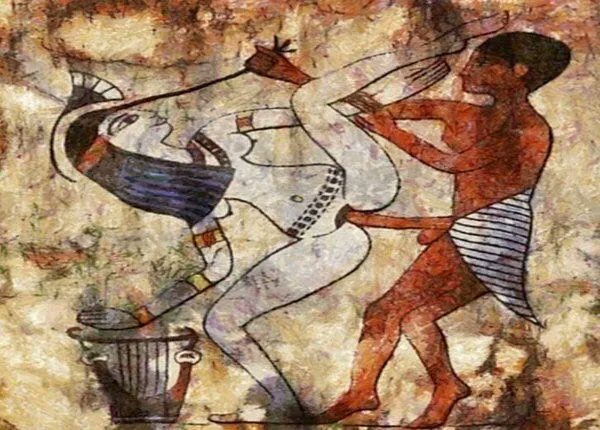
In Ancient Egypt, sex was not inherently taboo or associated with guilt as it would be in many later Western societies. Egyptians viewed sexual expression as a natural part of life, which was integrated into their mythology, religion and daily activities. Prostitution existed, but its forms and the social attitudes towards it were complex and multifaceted.
The role of women in Egyptian society provided a backdrop to the nature of prostitution. Women in Ancient Egypt could own property, initiate divorce and manage their own business dealings. This independence might have extended to some who engaged in sex work, allowing them to manage their affairs to a degree that would be uncommon in many other ancient cultures.
The religious context in Egypt also influenced perceptions of prostitution. The cult of the goddess Isis, for instance, incorporated sacred sexuality as part of its religious observance. Some interpretations suggest that ritualistic acts which could be classified as 'sacred prostitution' were performed by priestesses of Isis. This was not prostitution in the commercial sense but a spiritual service that was believed to bridge the divine with the mundane.
Moreover, certain festivals, most notably the Feast of Hathor, would involve ceremonial activities that celebrated fertility and sexuality. These could be perceived as forms of ritualized prostitution, but again, they were conducted within a religious framework that differed significantly from the commercial sex work seen in other cultures.
Documentary evidence on the regulation and organization of prostitution in Ancient Egypt is sparse. Unlike Mesopotamia with its well-documented provisions regarding prostitution, Egyptian texts do not provide clear indications of the legal status of sex workers. However, some references in medical texts and literature suggest that prostitution was known and practiced.
Economically, women who engaged in prostitution might have done so out of necessity. The profession could offer a means of survival in the absence of other economic opportunities. In this sense, prostitution was just another facet of the labor market, albeit one that was likely stigmatized or looked down upon, much like in many other ancient societies.
Art and literature from Ancient Egypt also provide insights into the role of sexuality and, by extension, prostitution. Erotic poetry from the Ramesside period (1307-1070 BC) suggests a society with a candid acceptance of sexuality. Meanwhile, depictions in art might include subtle allusions to the act of prostitution but interpreting these representations is challenging due to the symbolic nature of Egyptian art.
Prostitution in Ancient Egypt cannot be fully understood through a modern lens or equated directly with contemporary notions of sex work. It was a complex institution that intersected with religion, economy, and social structures in ways that were uniquely Egyptian. Recognizing this complexity is crucial to gaining a deeper understanding of how sexuality and survival intertwined in the ancient world.
This nuanced view of prostitution in Ancient Egypt highlights the civilization's sophisticated approach to matters of sexuality and societal structure, revealing a culture that, in many ways, was both pragmatic and spiritually rich.
3
Source:
Sex and Society in Ancient Egypt" by Lisa Manniche
The Literature of Ancient Egypt" edited by William Kelly Simpson
Conceptions of God in Ancient Egypt: The One and the Many" by Erik Hornung
Sex and Society in Ancient Egypt" by Lisa Manniche
The Literature of Ancient Egypt" edited by William Kelly Simpson
Conceptions of God in Ancient Egypt: The One and the Many" by Erik Hornung
