#OpenProbe🧵| A new investigation by Eekad offers the first...

EekadFacts | إيكاد@EekadFacts
12 views
Jul 30, 2025
~14 min read
Advertisement
1
#OpenProbe🧵| A new investigation by Eekad offers the first comprehensive media analysis of the Popular Forces militia—led by Yaser Abu Shabab, backed by Israel, and implicated in systematically looting humanitarian aid in Gaza. This report outlines the group’s internal structure, identifies its key areas of operation, and traces its movement across the Gaza Strip.
✔️Drawing on field photographs, satellite imagery, and digital footprints, Eekad’s investigation highlights how aid distribution has been manipulated to serve Israeli strategic objectives.
❓However, key questions remain: Who are the members of this militia? Where were they deployed? And what violations have they openly documented?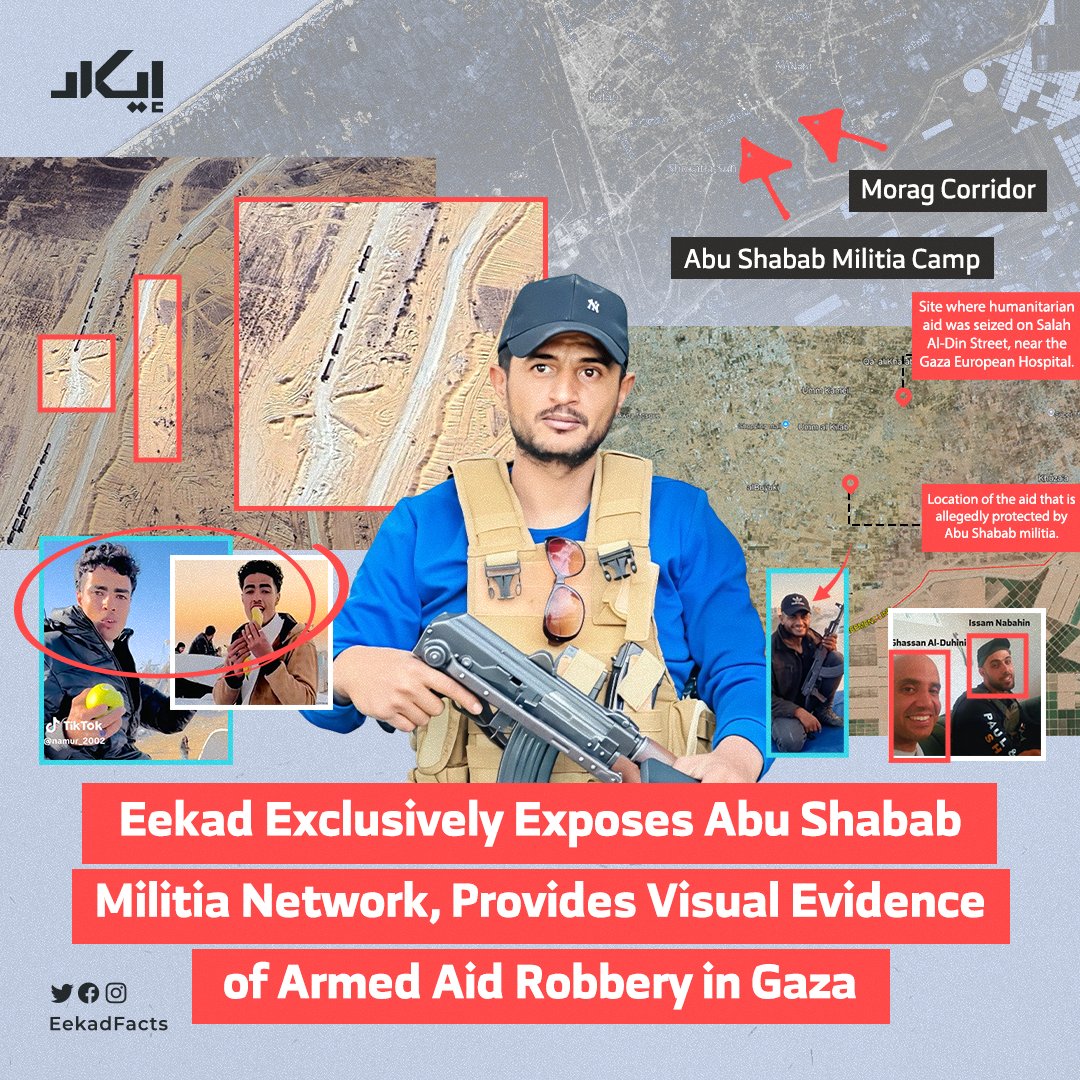
✔️Drawing on field photographs, satellite imagery, and digital footprints, Eekad’s investigation highlights how aid distribution has been manipulated to serve Israeli strategic objectives.
❓However, key questions remain: Who are the members of this militia? Where were they deployed? And what violations have they openly documented?
2
📌This investigation seeks to uncover the following:
➡️Members of the Abu Shabab militia and map its chain of command—from senior leadership to field operatives.
➡️Areas where the group was active and where documented violations occurred.
➡️Systematic methods employed to loot and redirect humanitarian aid.
➡️Members of the Abu Shabab militia and map its chain of command—from senior leadership to field operatives.
➡️Areas where the group was active and where documented violations occurred.
➡️Systematic methods employed to loot and redirect humanitarian aid.
3
✔️On July 6, the Israeli broadcaster KAN aired an interview with Yaser Abu Shabab, leader of the anti-Hamas “Popular Forces” militia in Gaza. In the interview, Abu Shabab openly declared war on Hamas and expressed readiness to assume control of the Gaza Strip if Hamas were removed from power.
✔️He also acknowledged coordinating with the Israel Defense Forces (IDF) on aid distribution and receiving administrative support from the Palestinian Authority.
✔️Prior to this public appearance, on July 2, Gaza’s Ministry of Interior issued a 10-day ultimatum demanding that Abu Shabab and his fighters surrender for trial. Shortly afterward, the Palestinian Joint Operations Room released a statement calling for his execution in response to his media appearance.
✔️These developments prompted us to track Abu Shabab, investigate his network, and identify their areas of activity and the violations they documented through their social media accounts.
4
📌Our investigation began by monitoring Facebook accounts linked to Yaser Abu Shabab and his deputy, Ghassan Al-Duhini. We then manually identified additional affiliated accounts on TikTok, ultimately unmasking a network of 12 individuals categorized into three tiers:
➡️Senior leadership
➡️Mid-level operatives closely tied to command
➡️Lower-tier members assigned to so-called “aid security” operations
✔️By analyzing videos and photos shared by these individuals and pinpointing their active locations, we reconstructed a detailed operational map of their deployment across Gaza.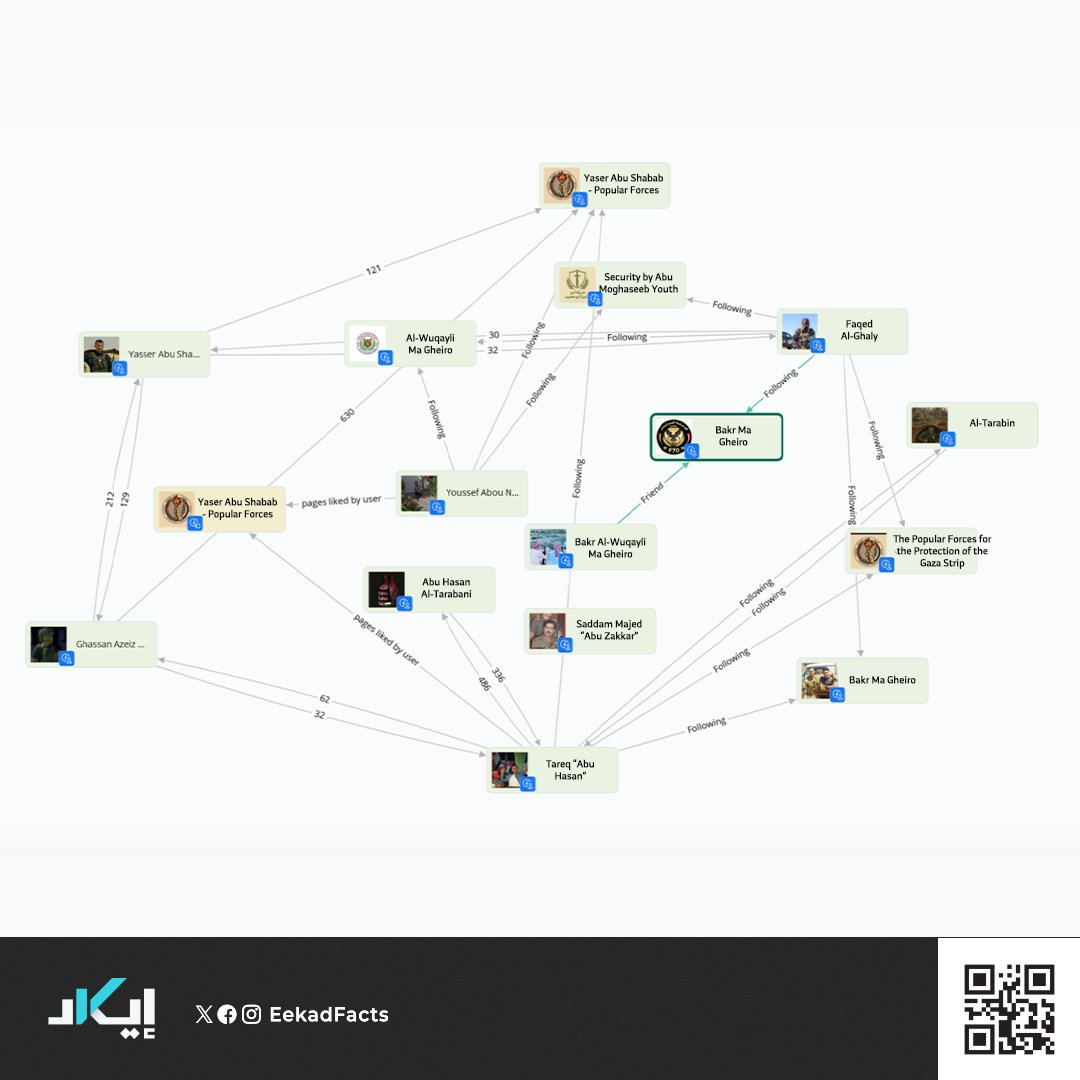
➡️Senior leadership
➡️Mid-level operatives closely tied to command
➡️Lower-tier members assigned to so-called “aid security” operations
✔️By analyzing videos and photos shared by these individuals and pinpointing their active locations, we reconstructed a detailed operational map of their deployment across Gaza.
5
✔️At the center of this network is Yaser Abu Shabab, the commander of the Popular Forces militia. A member of Al-Tarabin family—one of the largest tribal confederations spanning Palestine, Egypt, and Jordan—Abu Shabab is based in Rafah, in the southern Gaza Strip.
✔️He was previously detained by Gaza’s Ministry of Interior on criminal charges related to arms and narcotics trafficking but escaped custody following Israeli airstrikes that targeted internal security installations at the outset of the war.
✔️Abu Shabab gained prominence in May 2024 when he led an armed faction of roughly 100 to 300 men in raids targeting humanitarian aid convoys entering Gaza.
✔️Israeli officials later confirmed that Abu Shabab and his fighters had been supplied with arms as part of a broader strategy to strengthen local actors seen as counterweights to Hamas.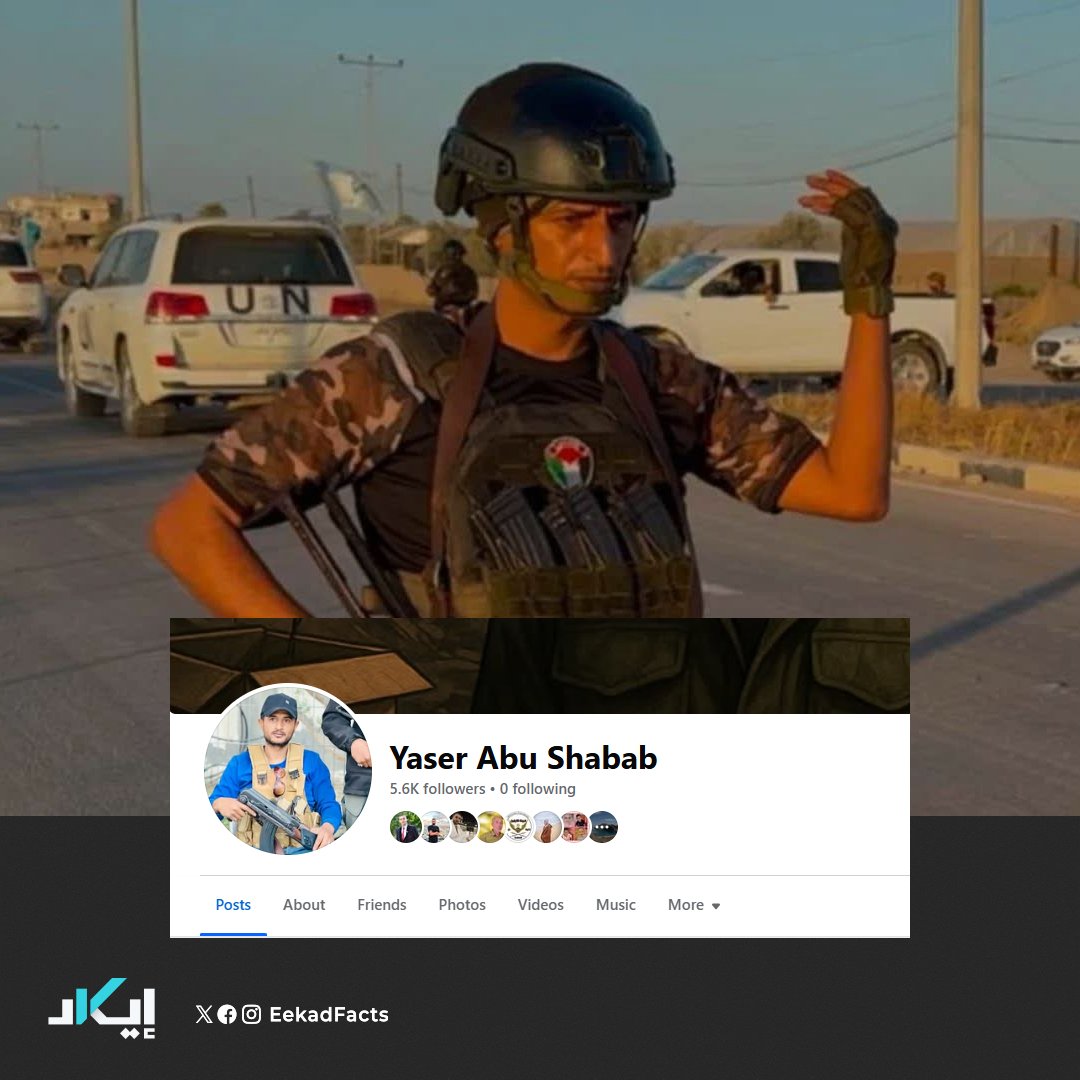
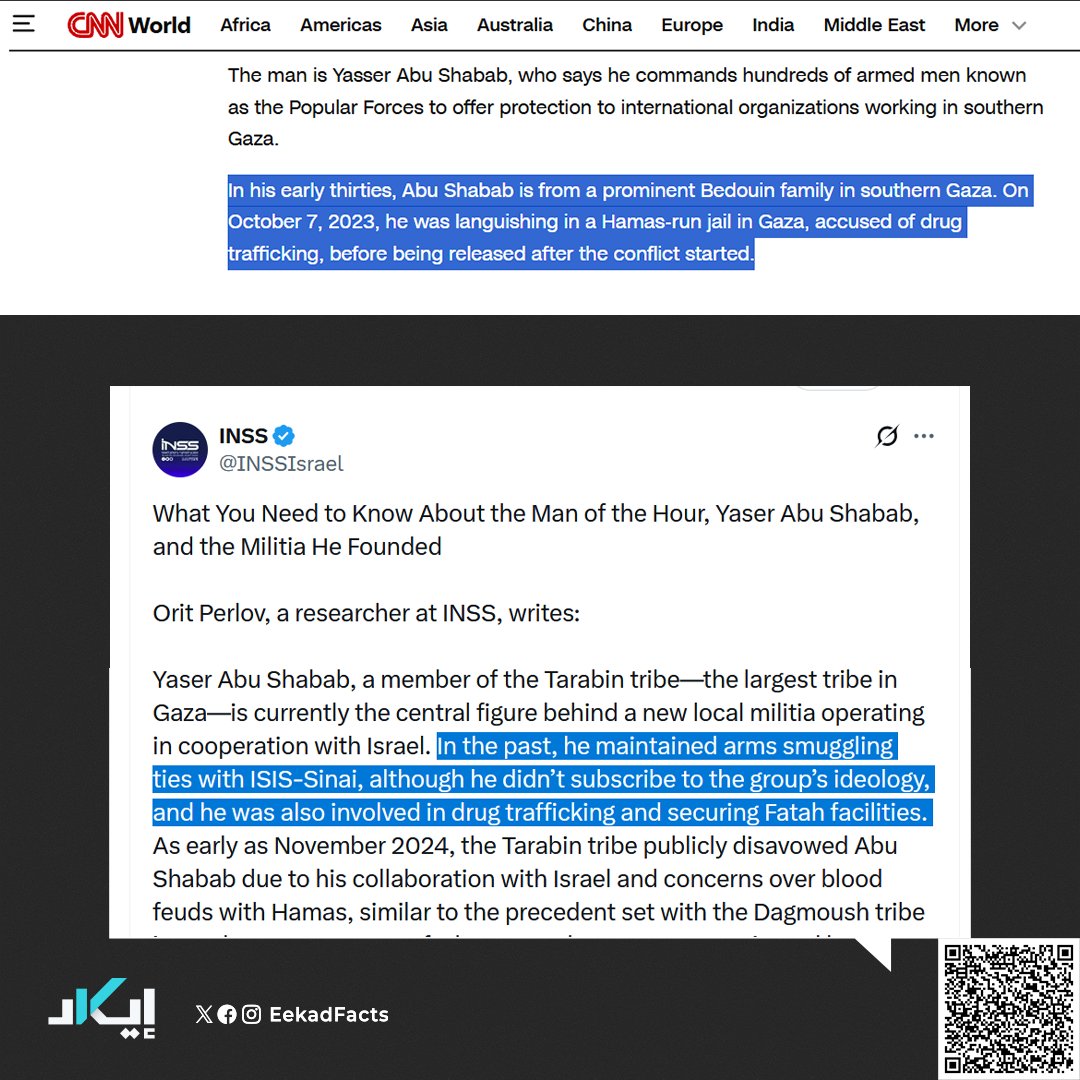
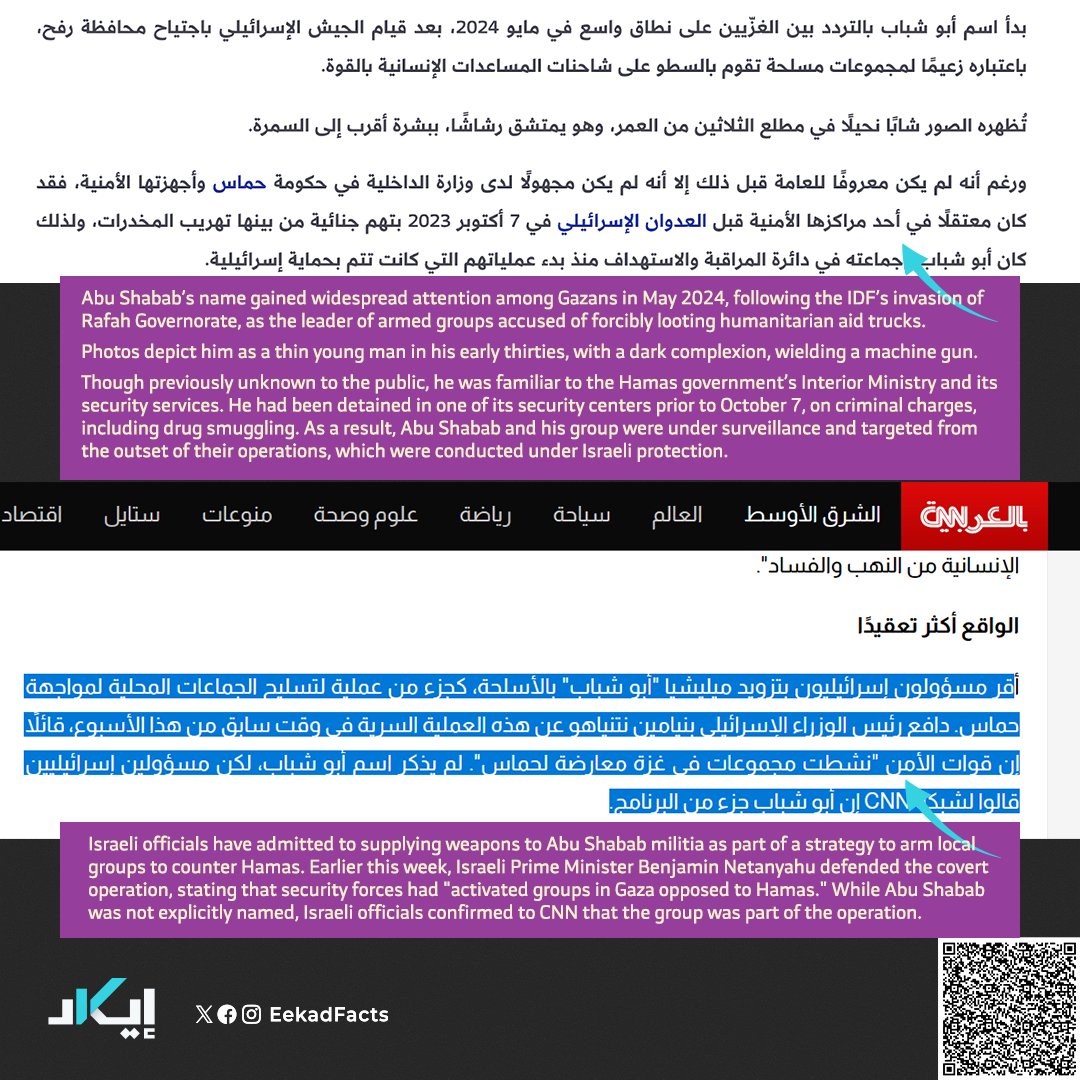
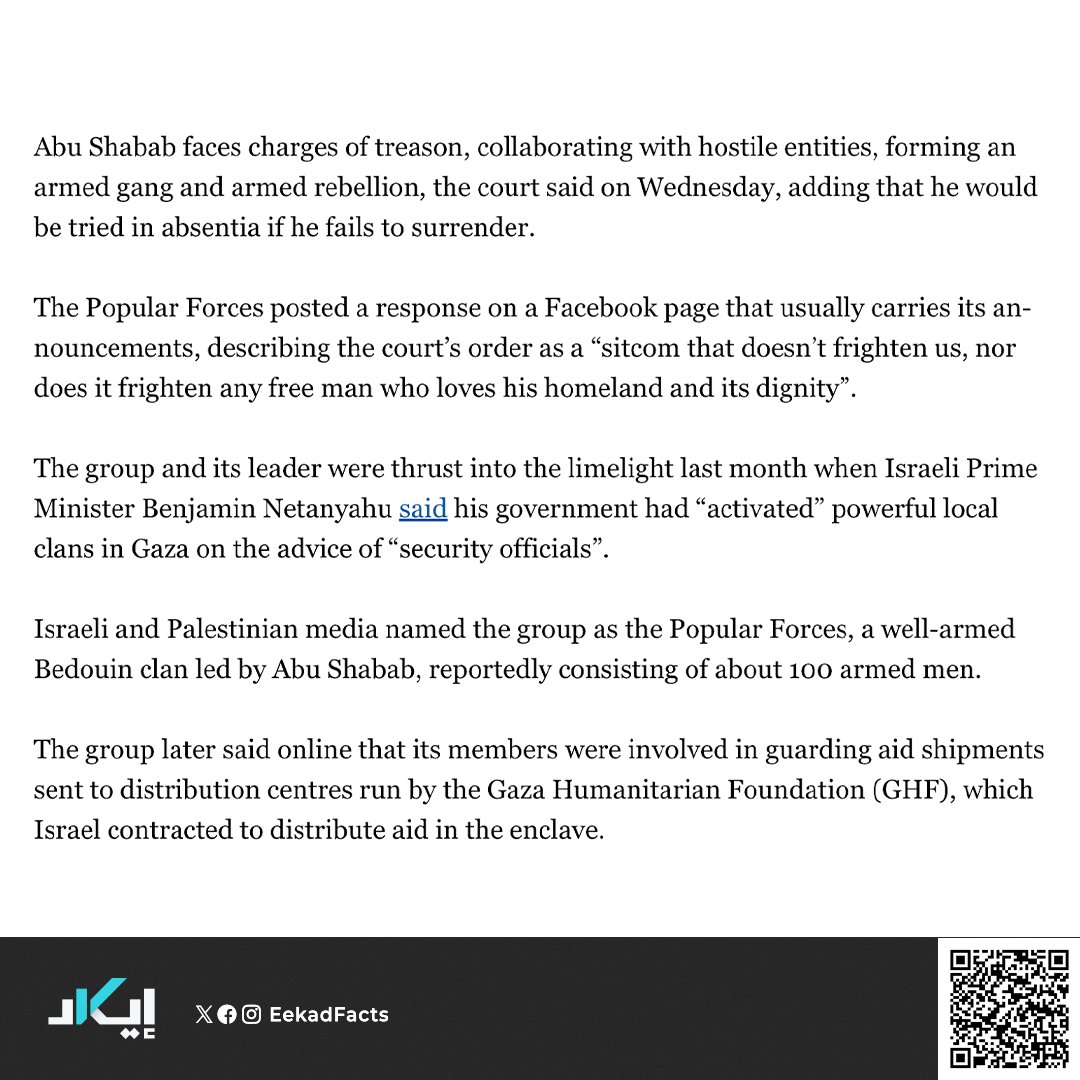
✔️He was previously detained by Gaza’s Ministry of Interior on criminal charges related to arms and narcotics trafficking but escaped custody following Israeli airstrikes that targeted internal security installations at the outset of the war.
✔️Abu Shabab gained prominence in May 2024 when he led an armed faction of roughly 100 to 300 men in raids targeting humanitarian aid convoys entering Gaza.
✔️Israeli officials later confirmed that Abu Shabab and his fighters had been supplied with arms as part of a broader strategy to strengthen local actors seen as counterweights to Hamas.
6
✔️According to an internal UN memo cited by The Washington Post, Abu Shabab was described as “the main and most influential stakeholder behind systematic and massive looting” of humanitarian convoys in Gaza.
✔️His militia reportedly seized 80 of the first 100 aid trucks that entered Gaza in early October 2024. Between May and October, the group was also implicated in killing four aid drivers.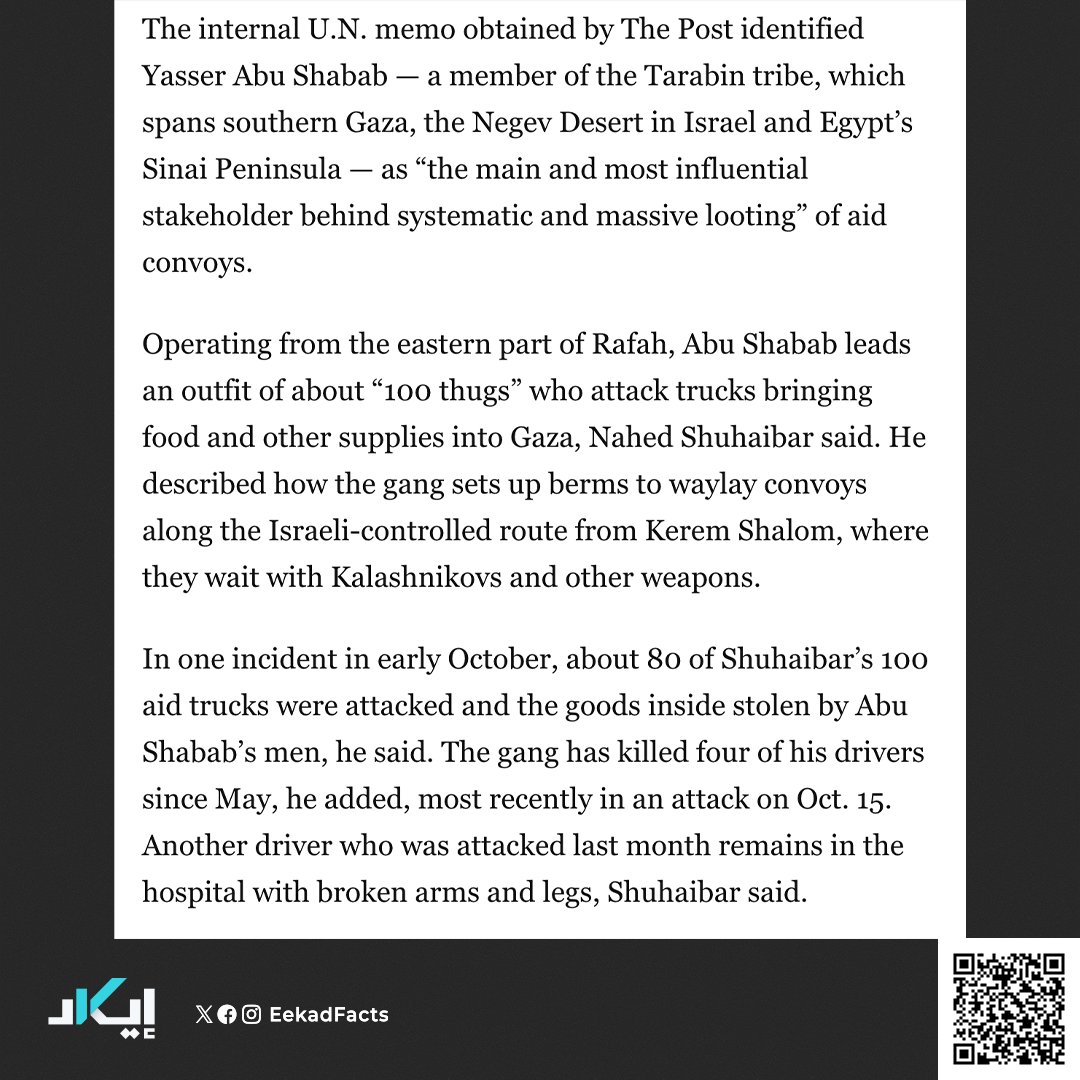
✔️His militia reportedly seized 80 of the first 100 aid trucks that entered Gaza in early October 2024. Between May and October, the group was also implicated in killing four aid drivers.
7
✔️The Washington Post, citing local traders in Gaza, also reported that Abu Shabab’s militia constructed earth berms along the main road leading from the Kerem Shalom border crossing—within an area under Israeli control. These berms served as checkpoints, where heavily armed fighters were stationed to intercept and seize incoming aid convoys.
✔️Eekad independently verified this claim by analyzing satellite imagery from November 2024, which clearly showed a series of earth mounds running along the same route.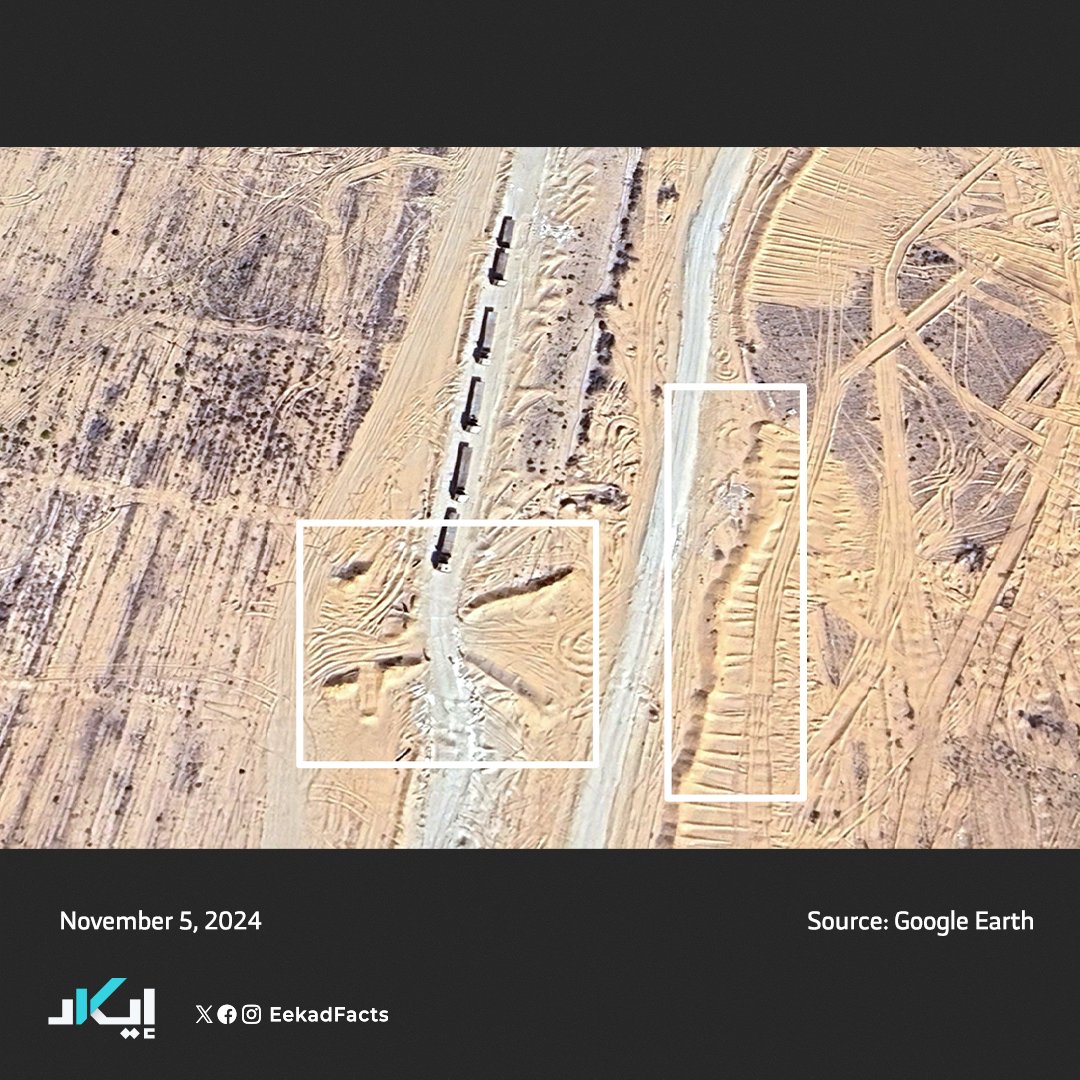
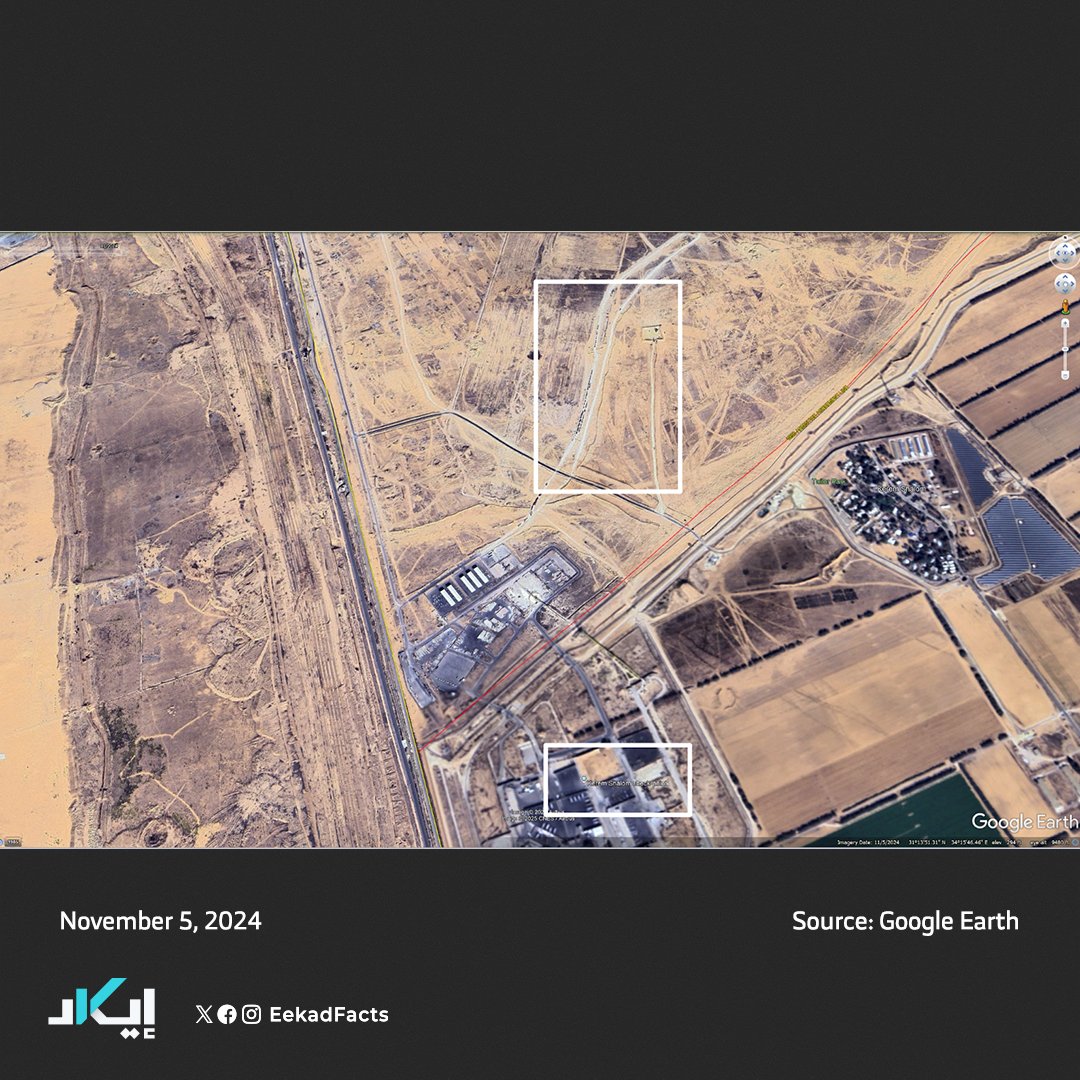
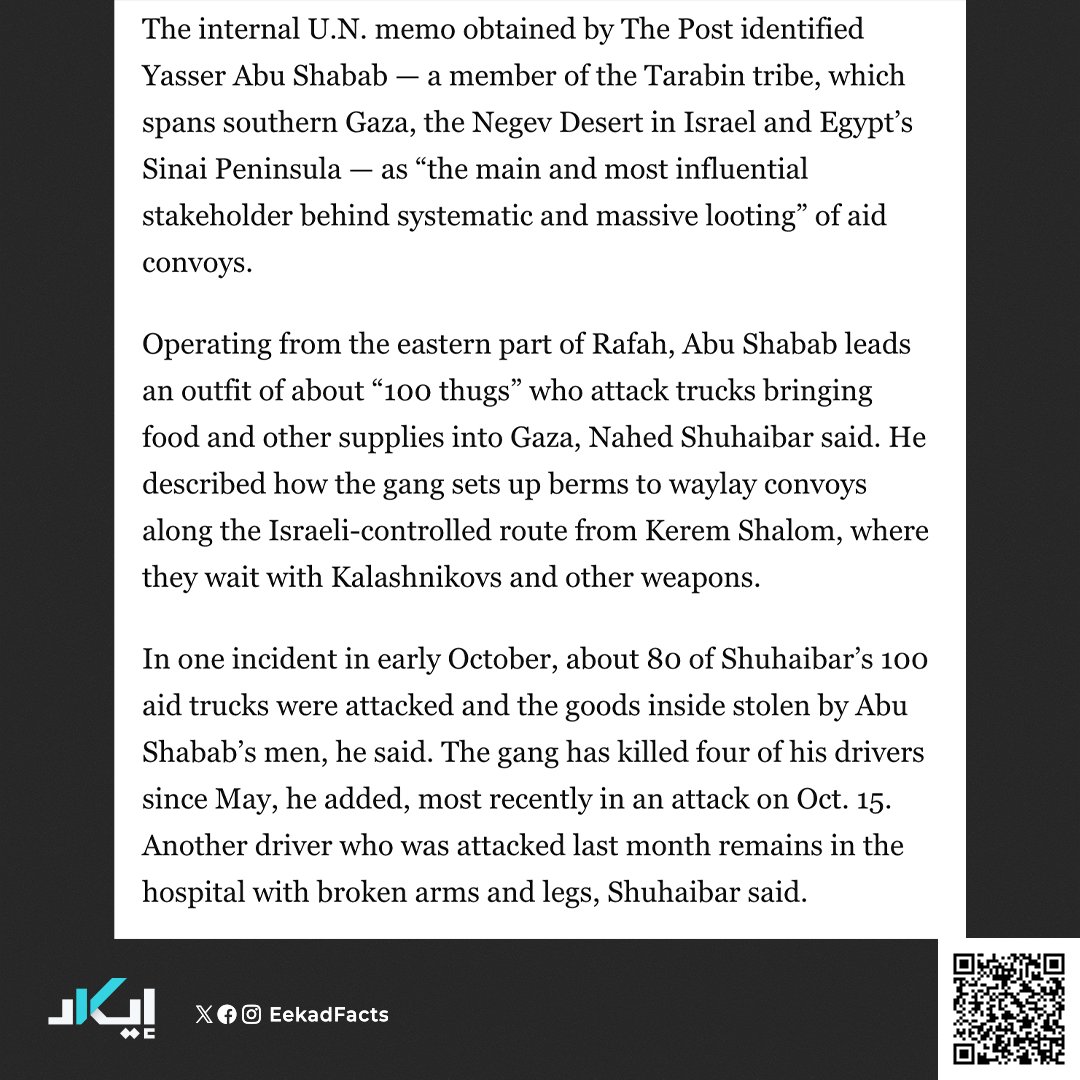
✔️Eekad independently verified this claim by analyzing satellite imagery from November 2024, which clearly showed a series of earth mounds running along the same route.
8
✔️In early June 2025, the militia’s official Facebook page, “Yaser Abu Shabab – Popular Forces,” posted a video and statement urging displaced residents of East Rafah to return to the area. The statement claimed that food and water supplies had been distributed, shelters had been established, and humanitarian corridors had been reopened.
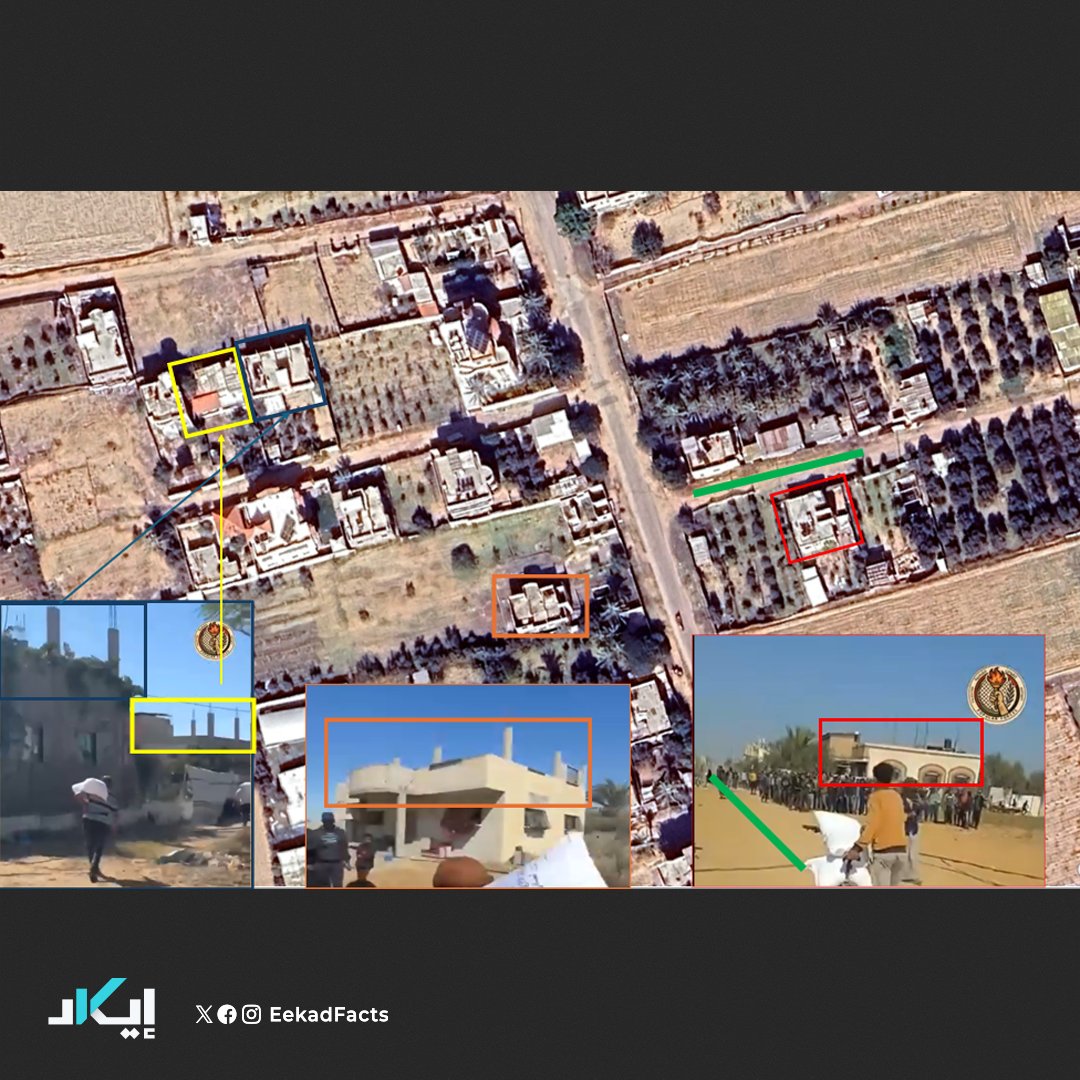
✔️Geolocation of the video’s landmarks confirmed that the tent camp featured in the footage was located approximately one kilometer east of the Morag Corridor.
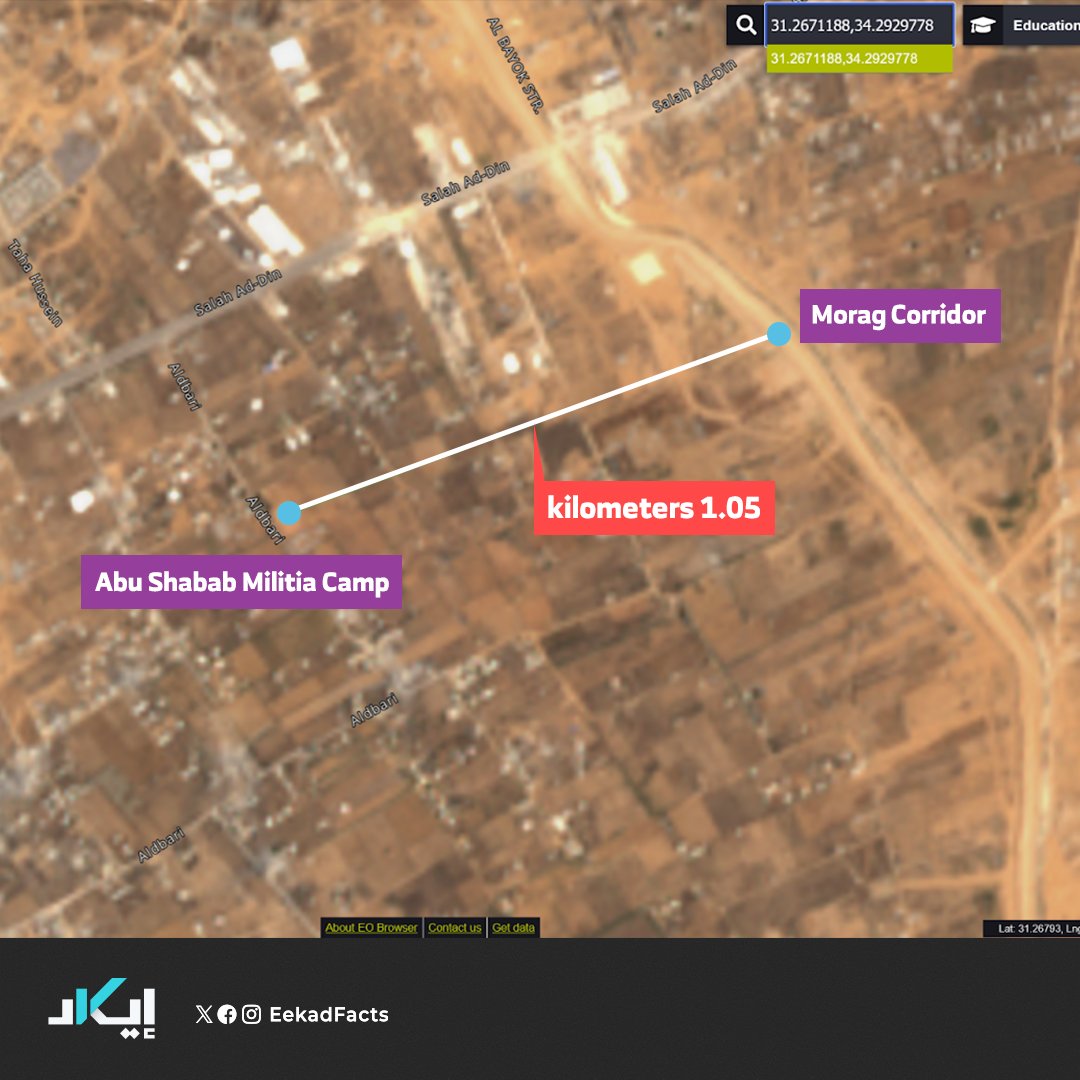
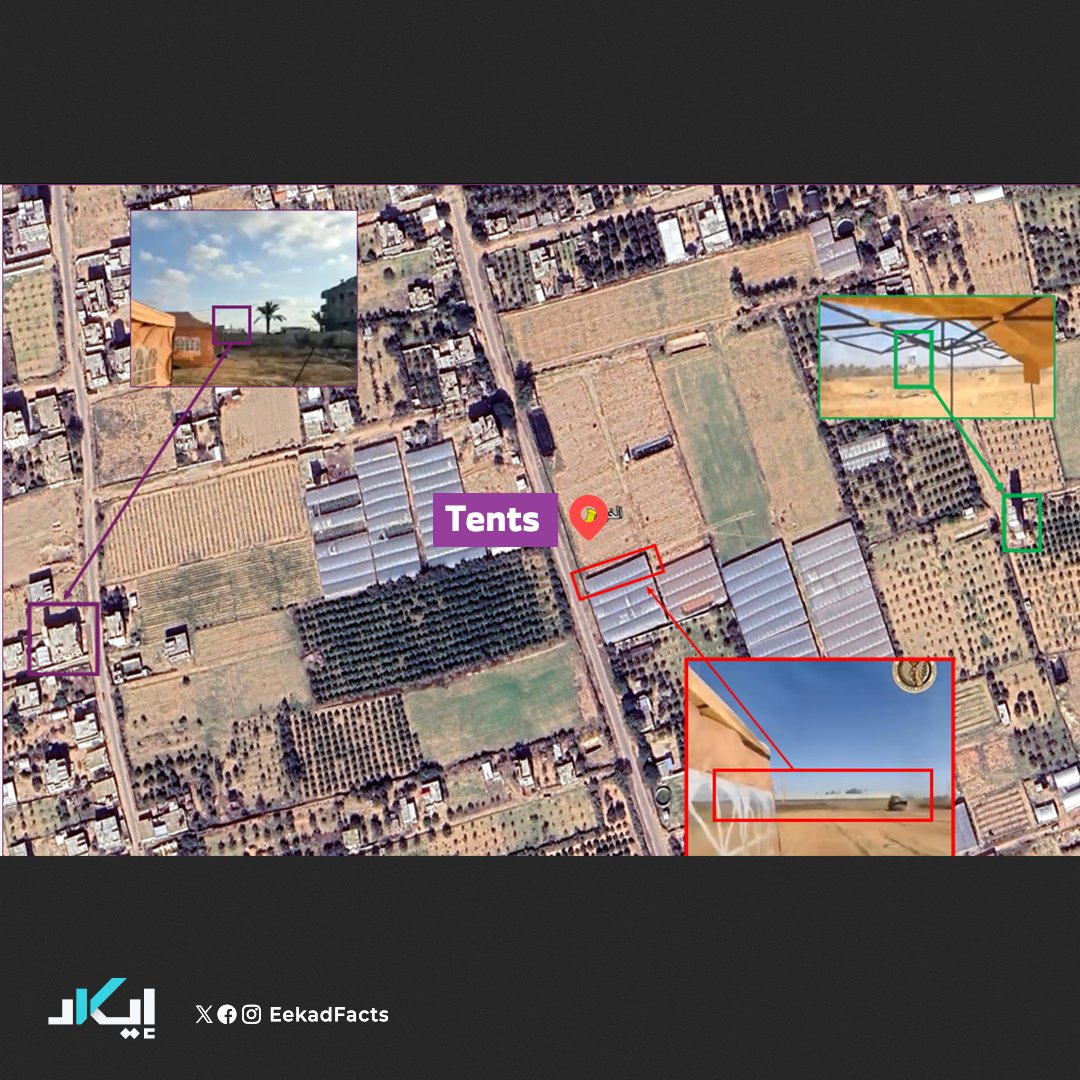
✔️Geolocation of the video’s landmarks confirmed that the tent camp featured in the footage was located approximately one kilometer east of the Morag Corridor.
9
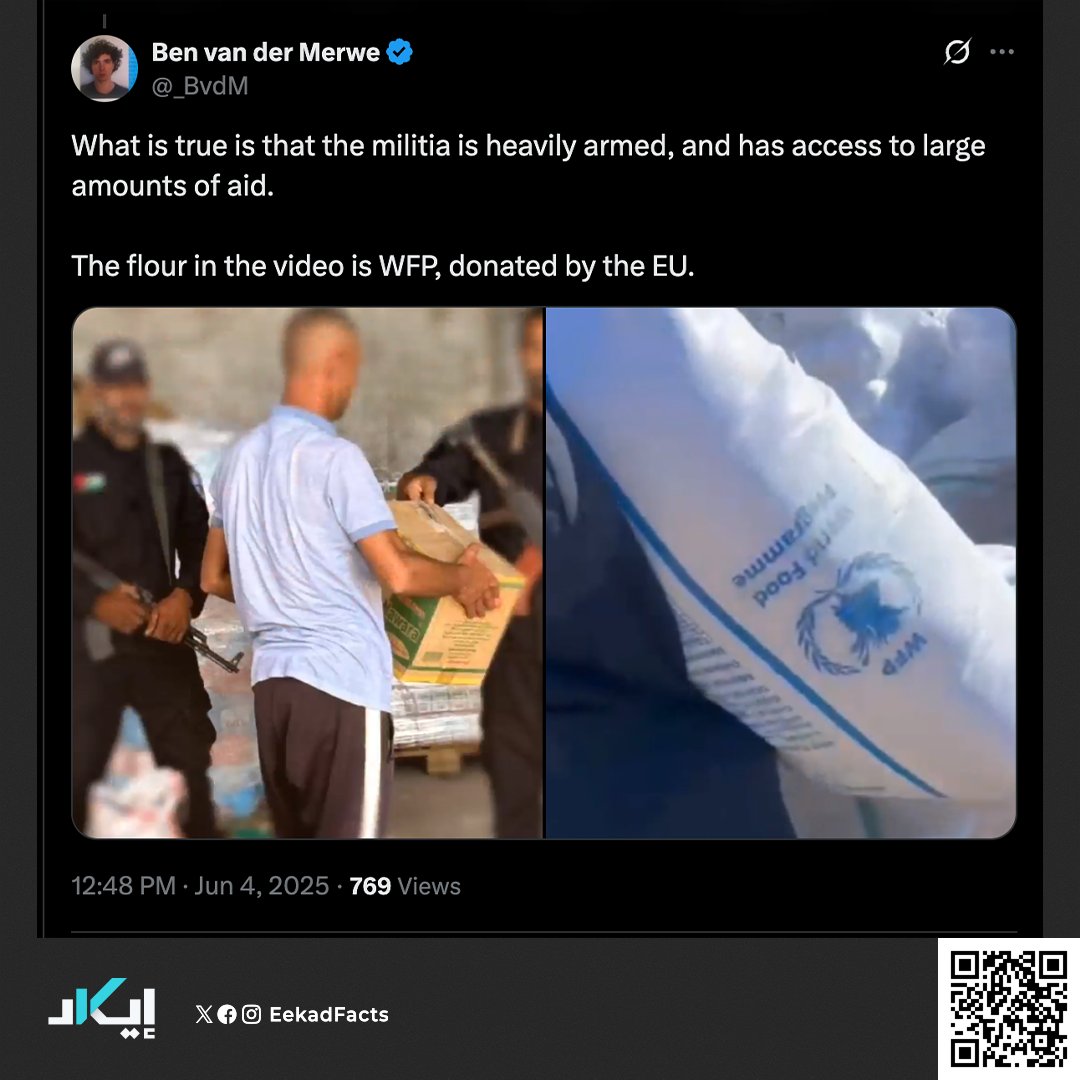
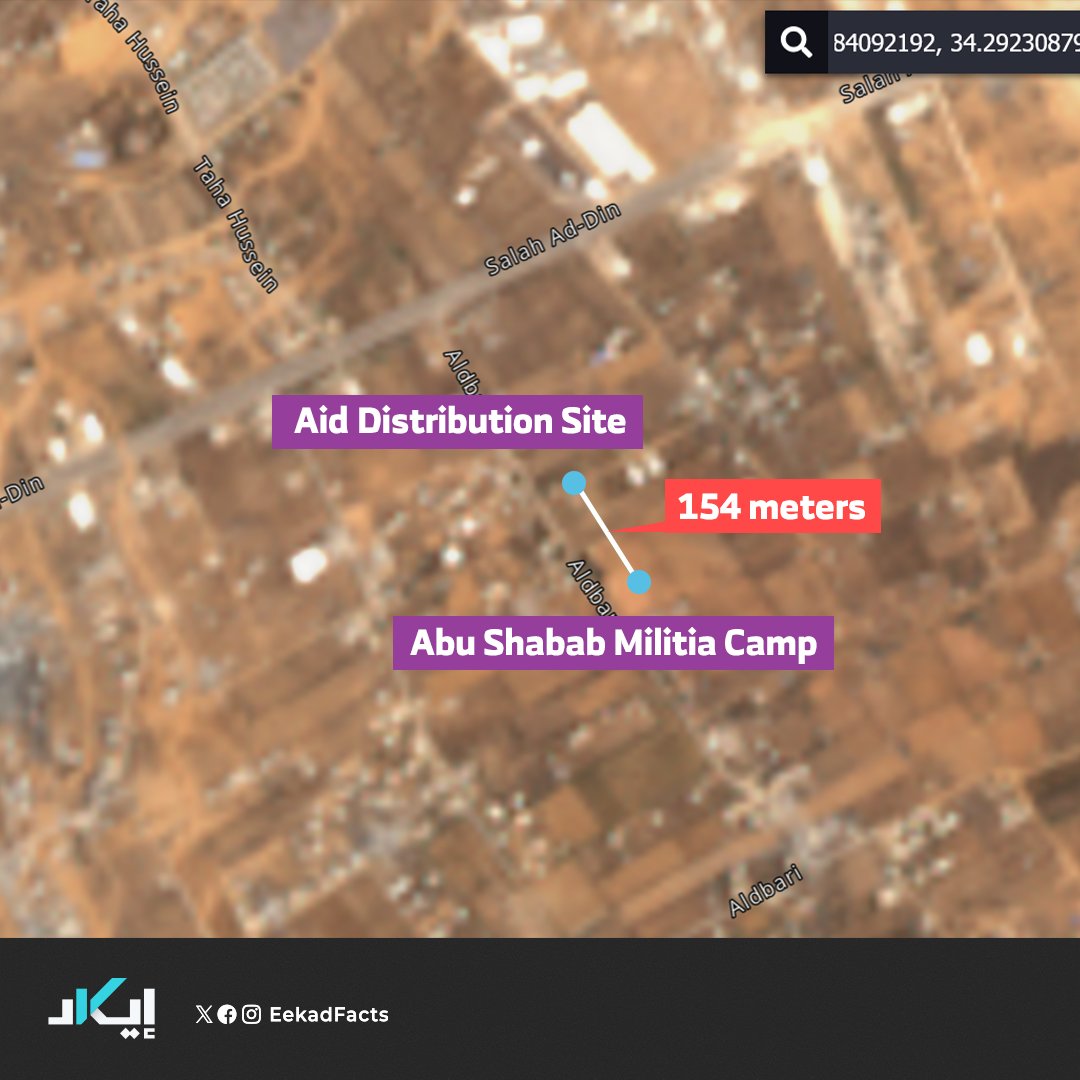
✔️The video also captured scenes of flour distribution, which experts confirmed was aid from the World Food Programme, donated by the European Union. The distribution site was geolocated just 150 meters from the tent camp.
10
✔️According to CNN, construction of the tents began on May 17, 2025—just one day before Israel reopened the Kerem Shalom crossing.
✔️Sky News journalists shared satellite imagery on June 4 that confirmed the camp’s location near the Morag Corridor. However, some of the tents appeared damaged or unusable, contradicting the militia’s claims.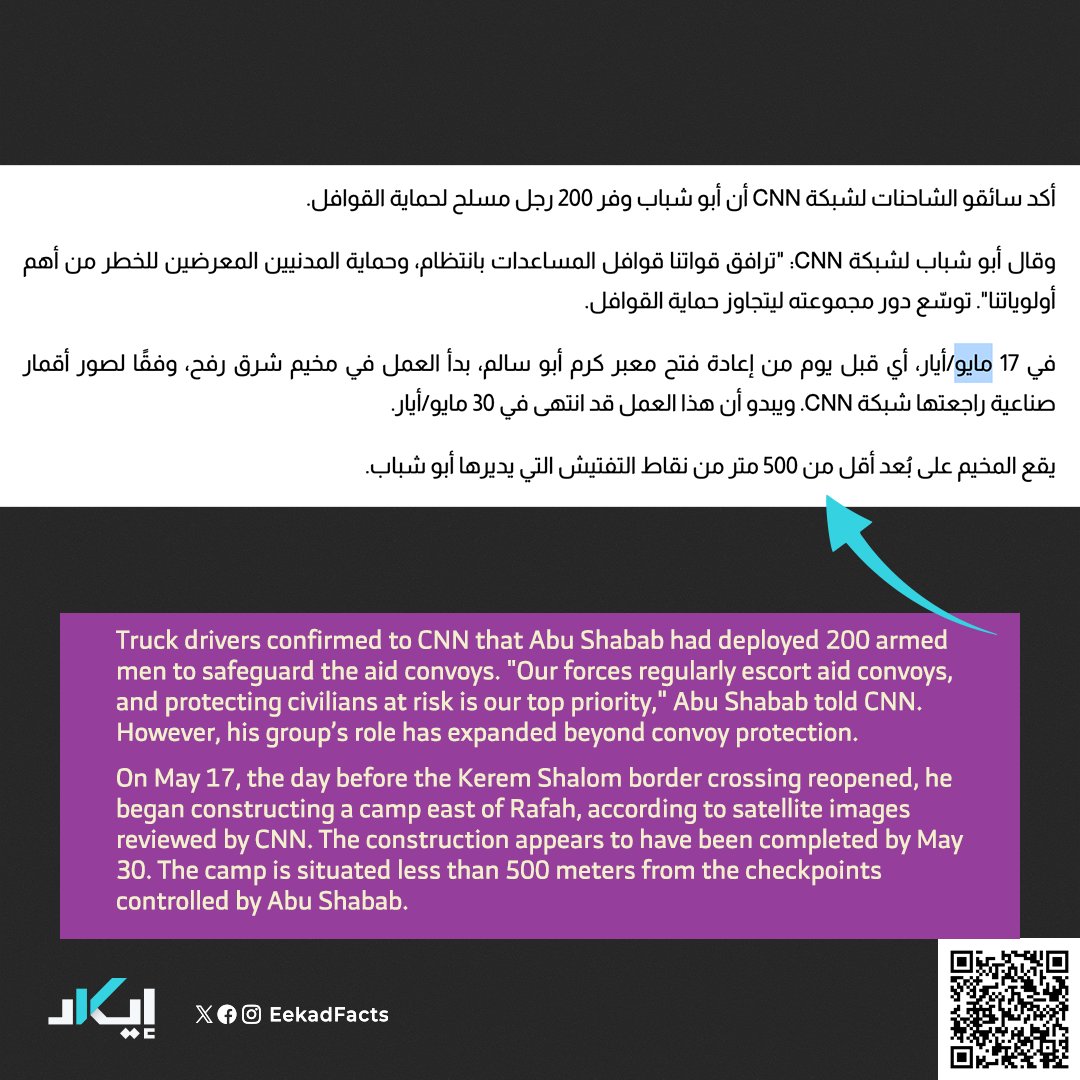
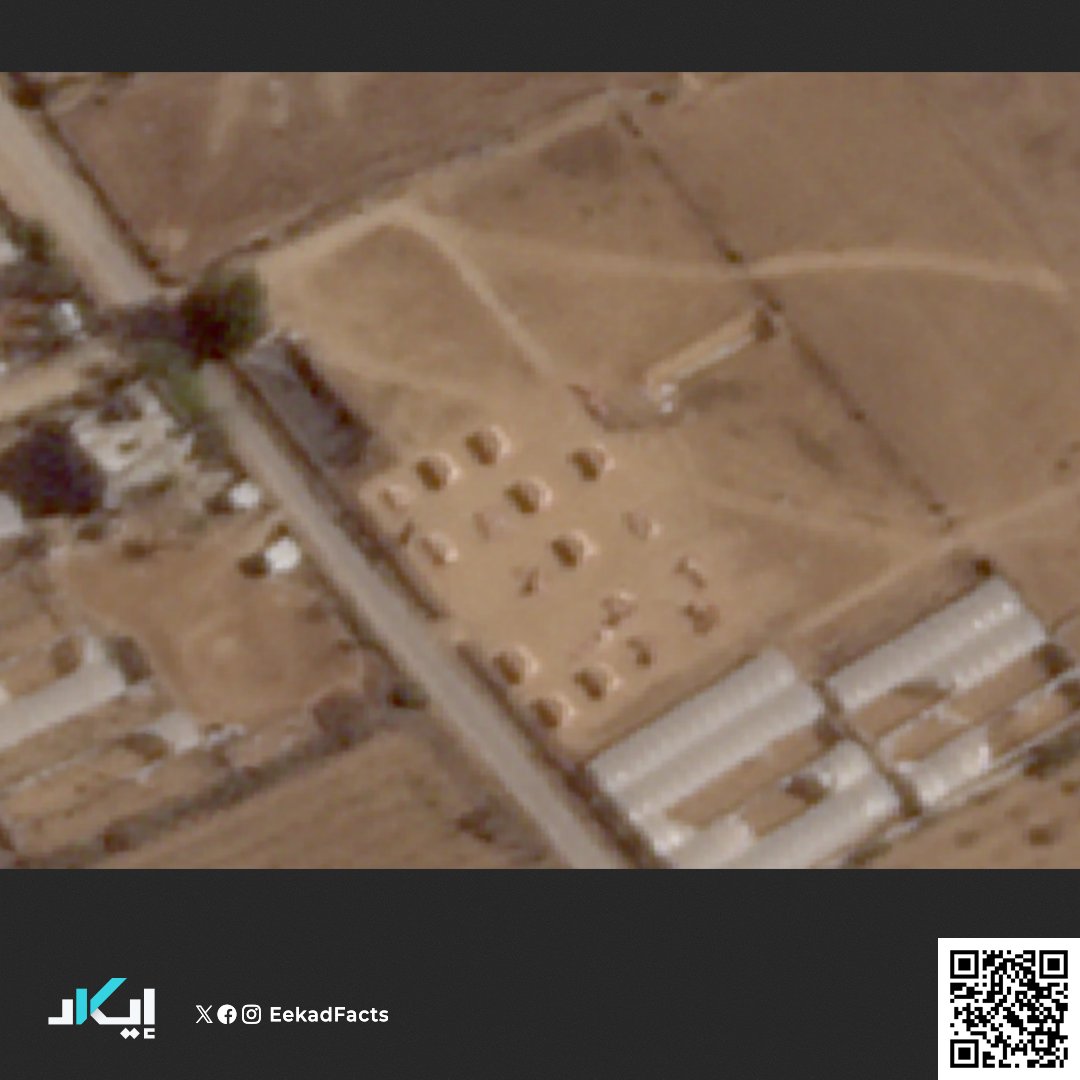
✔️Sky News journalists shared satellite imagery on June 4 that confirmed the camp’s location near the Morag Corridor. However, some of the tents appeared damaged or unusable, contradicting the militia’s claims.
11
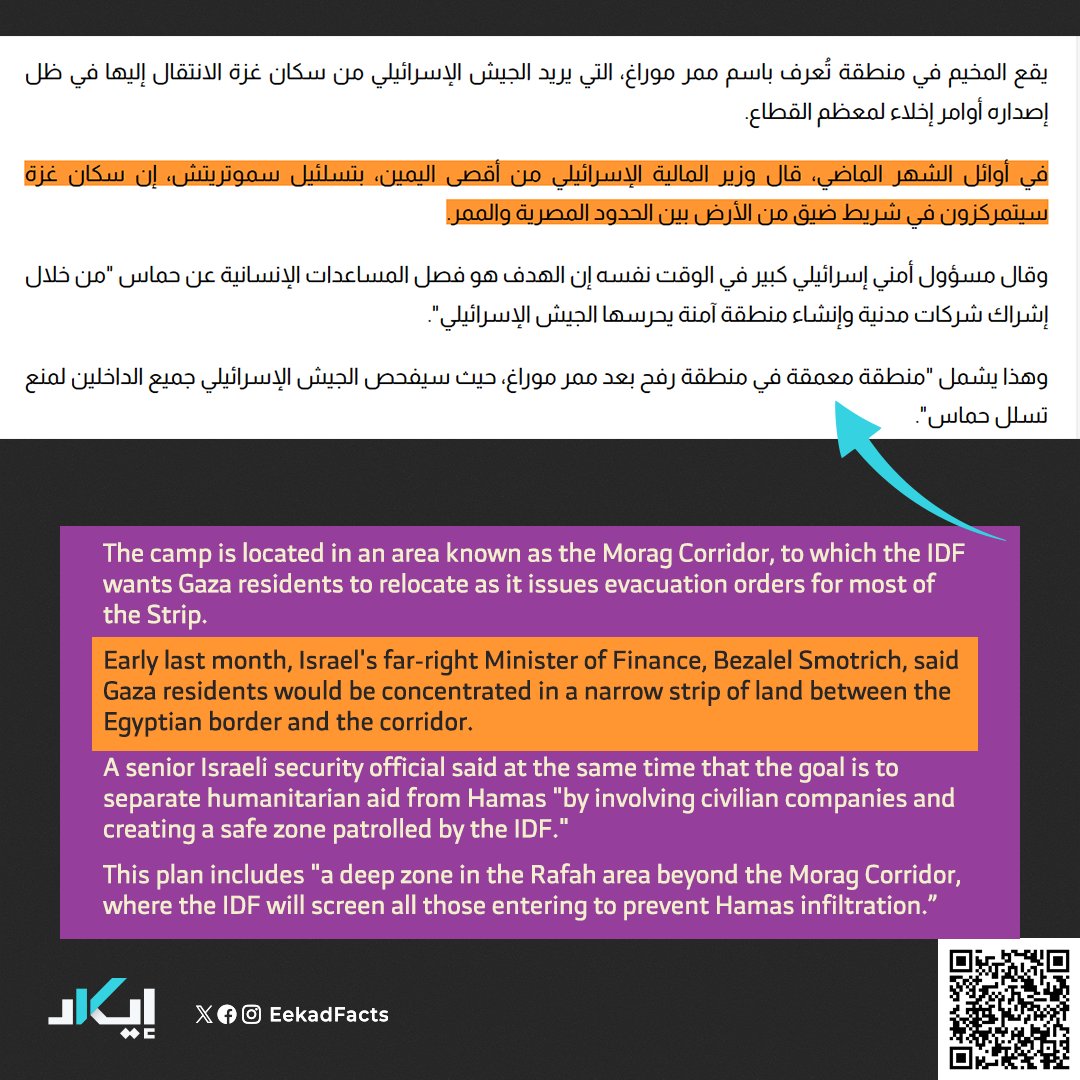
✔️Perhaps most significantly, this very site was publicly designated by Israeli Finance Minister Bezalel Smotrich as the preferred relocation area for displaced Gazans.
✔️Situated between the Egyptian border and the Morag Corridor, this narrow strip is central to Israel’s broader displacement strategy, which has been framed as a “humanitarian shelter” initiative aimed at moving civilians southward.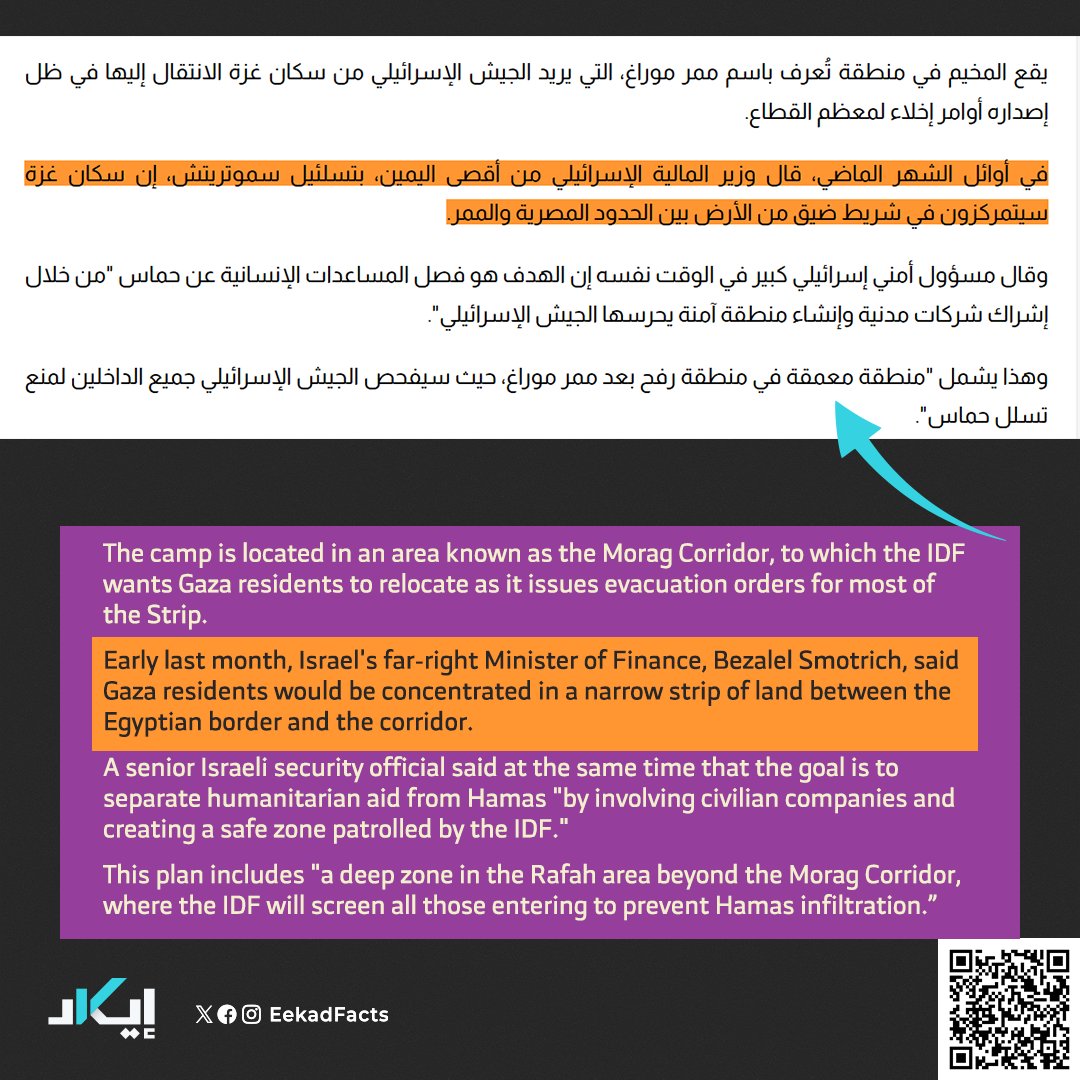
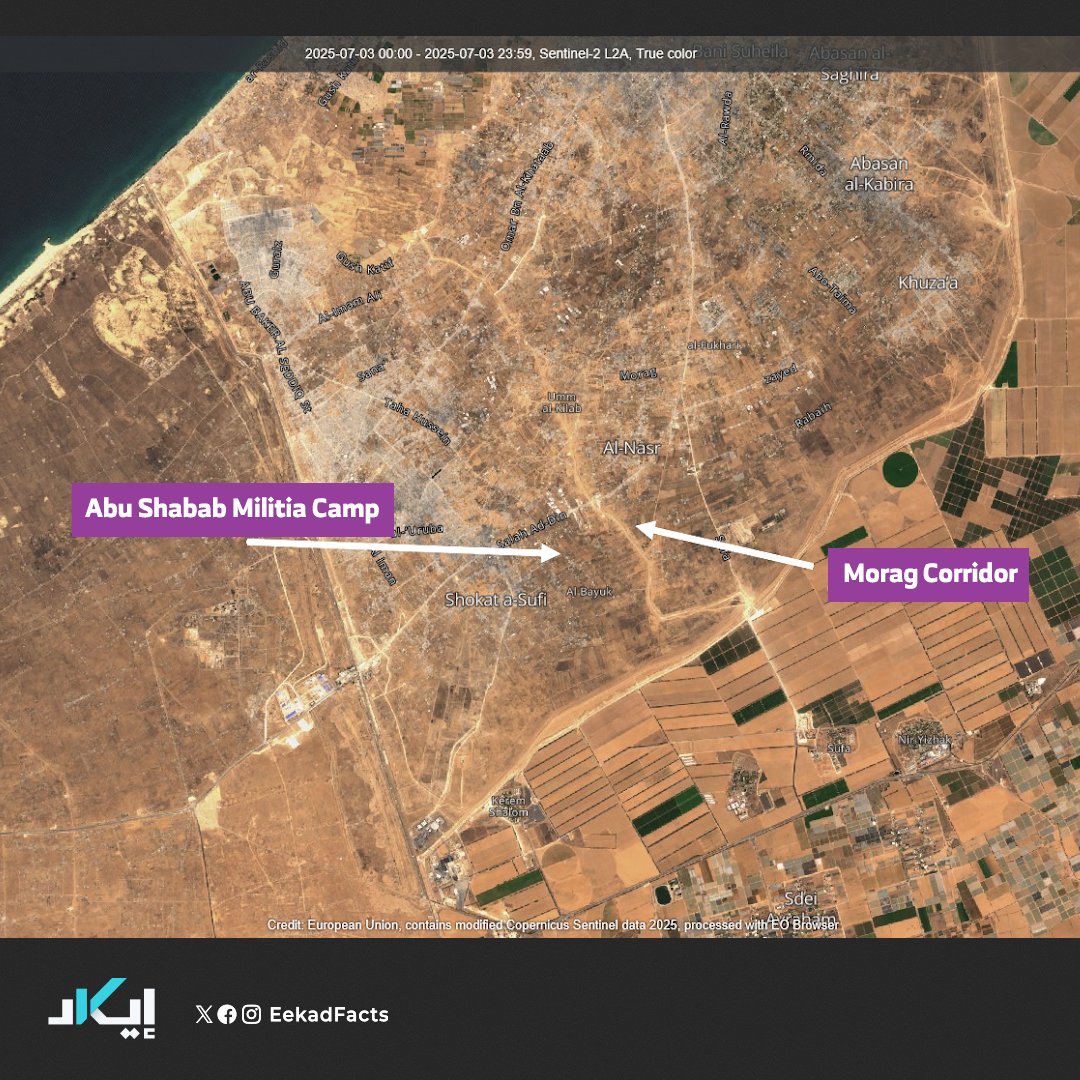
✔️Situated between the Egyptian border and the Morag Corridor, this narrow strip is central to Israel’s broader displacement strategy, which has been framed as a “humanitarian shelter” initiative aimed at moving civilians southward.
12
✔️With Abu Shabab’s deployment site exposed and his leadership profile established, Eekad shifted focus to his deputy and key ally within the militia: Ghassan Al-Duhini.
❓But who is Al-Duhini—and where have he and his associates been active?
❓But who is Al-Duhini—and where have he and his associates been active?
13
📌Ghassan Al-Duhini
✔️Ghassan Al-Duhini serves as Yaser Abu Shabab’s deputy and is considered one of the top commanders of the Popular Forces militia. He reportedly escaped from prison following the outbreak of war in October.
✔️According to various reports, he previously worked with Palestinian Authority security services before joining the Army of Islam.
✔️Some sources also allege that he ran smuggling networks and maintained ties between the Army of Islam and extremist groups operating in the Sinai Peninsula.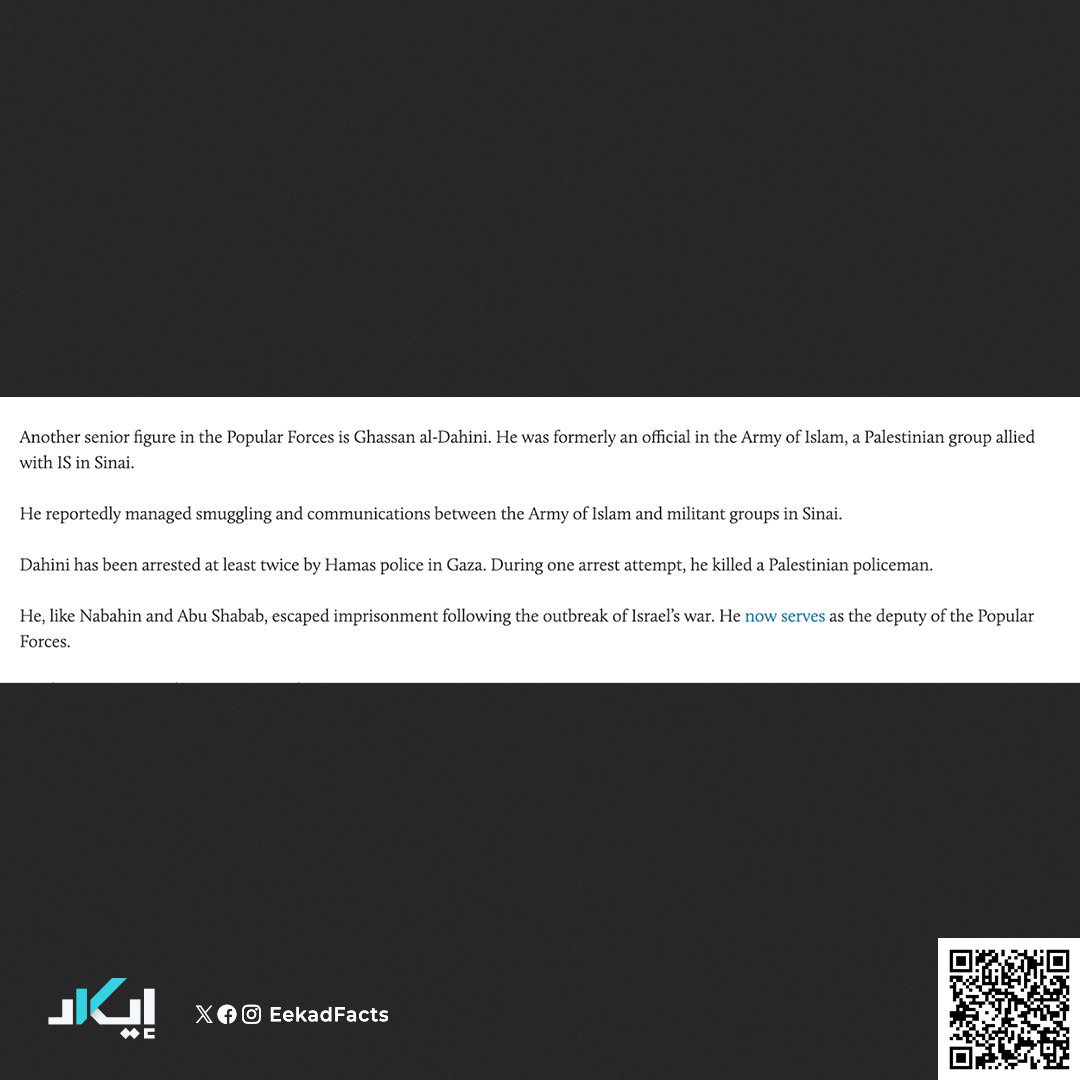
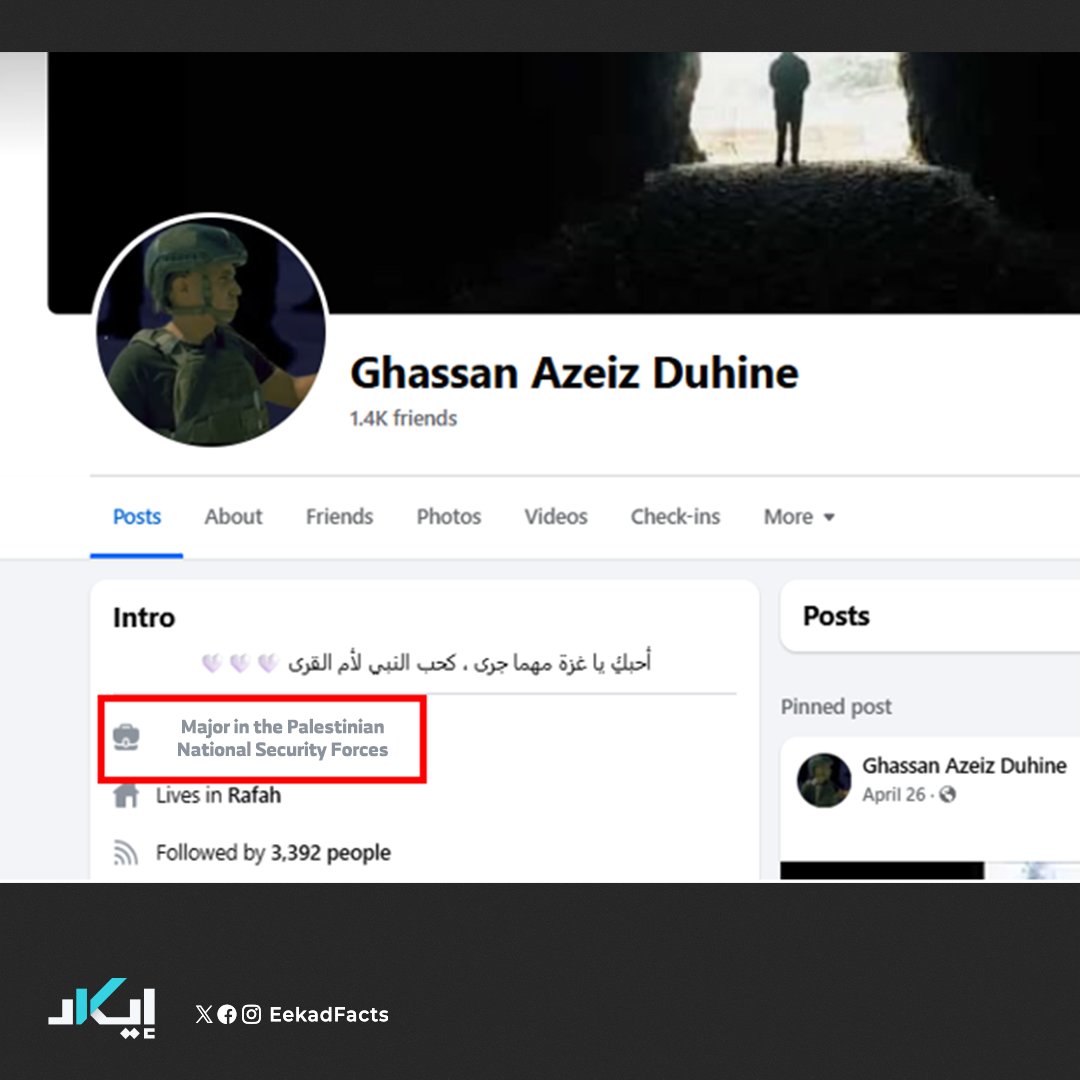

✔️Ghassan Al-Duhini serves as Yaser Abu Shabab’s deputy and is considered one of the top commanders of the Popular Forces militia. He reportedly escaped from prison following the outbreak of war in October.
✔️According to various reports, he previously worked with Palestinian Authority security services before joining the Army of Islam.
✔️Some sources also allege that he ran smuggling networks and maintained ties between the Army of Islam and extremist groups operating in the Sinai Peninsula.
14
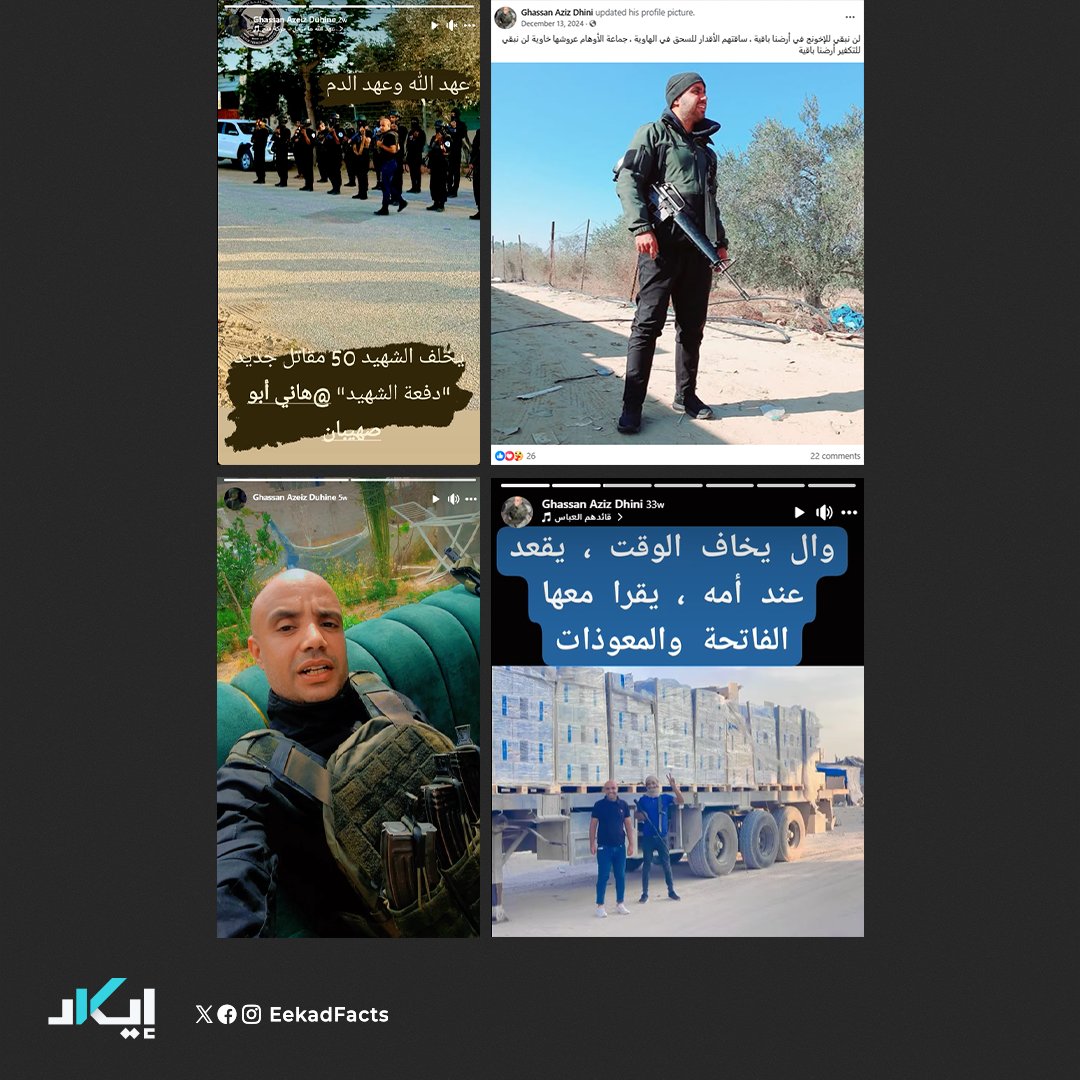
✔️Further investigation into Ghassan Al-Duhini revealed that he operated two Facebook accounts—one still active and the other inactive since late February.
✔️On June 8, 2025, he posted a video in which he appears in military uniform, firing a Kalashnikov rifle.
✔️Geolocation analysis corroborated that the footage was recorded outside Al-Da’wah Mosque in the Al-Shawka area, east of Rafah, just meters from the tent camp and flour distribution sites previously identified by Eekad near the Morag Corridor.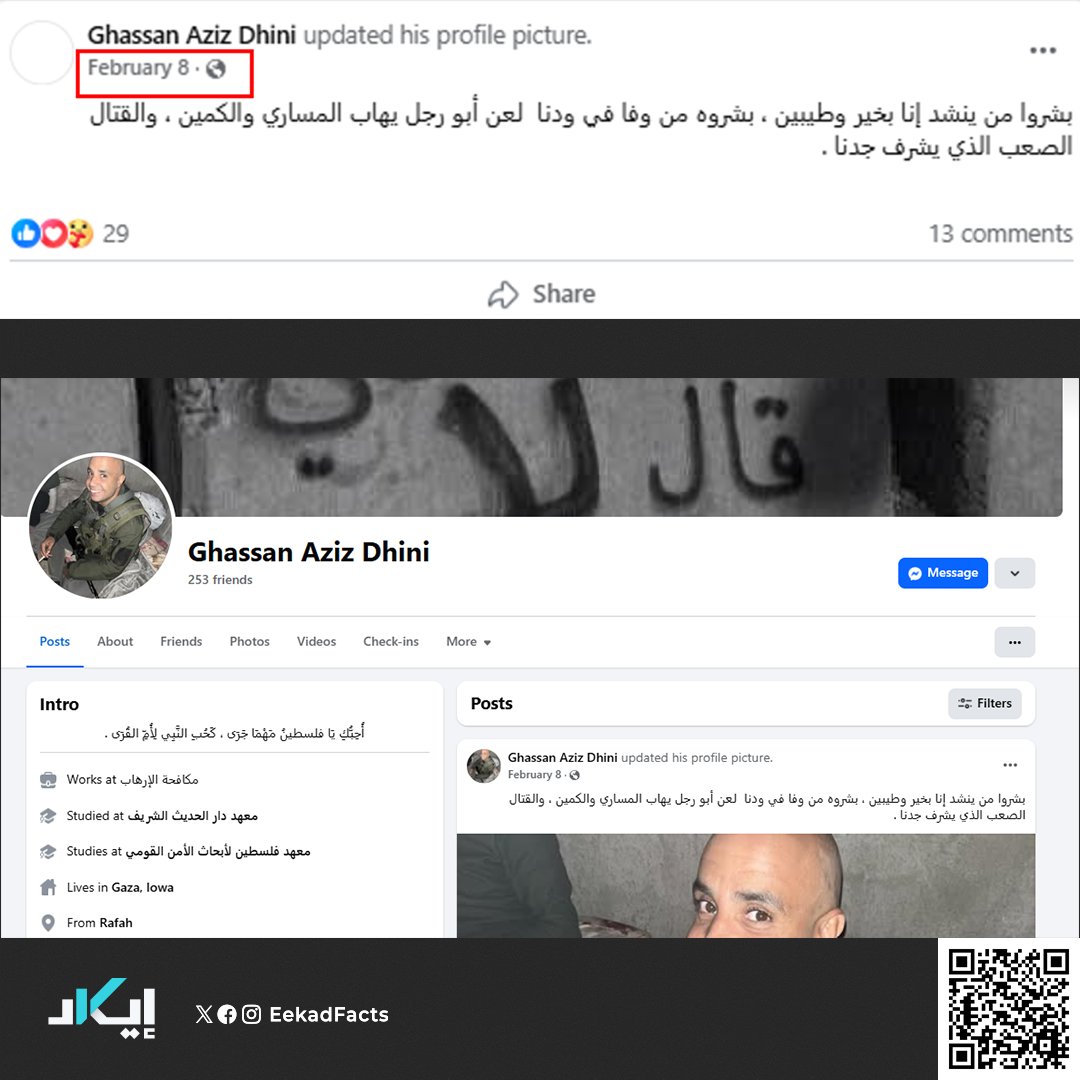
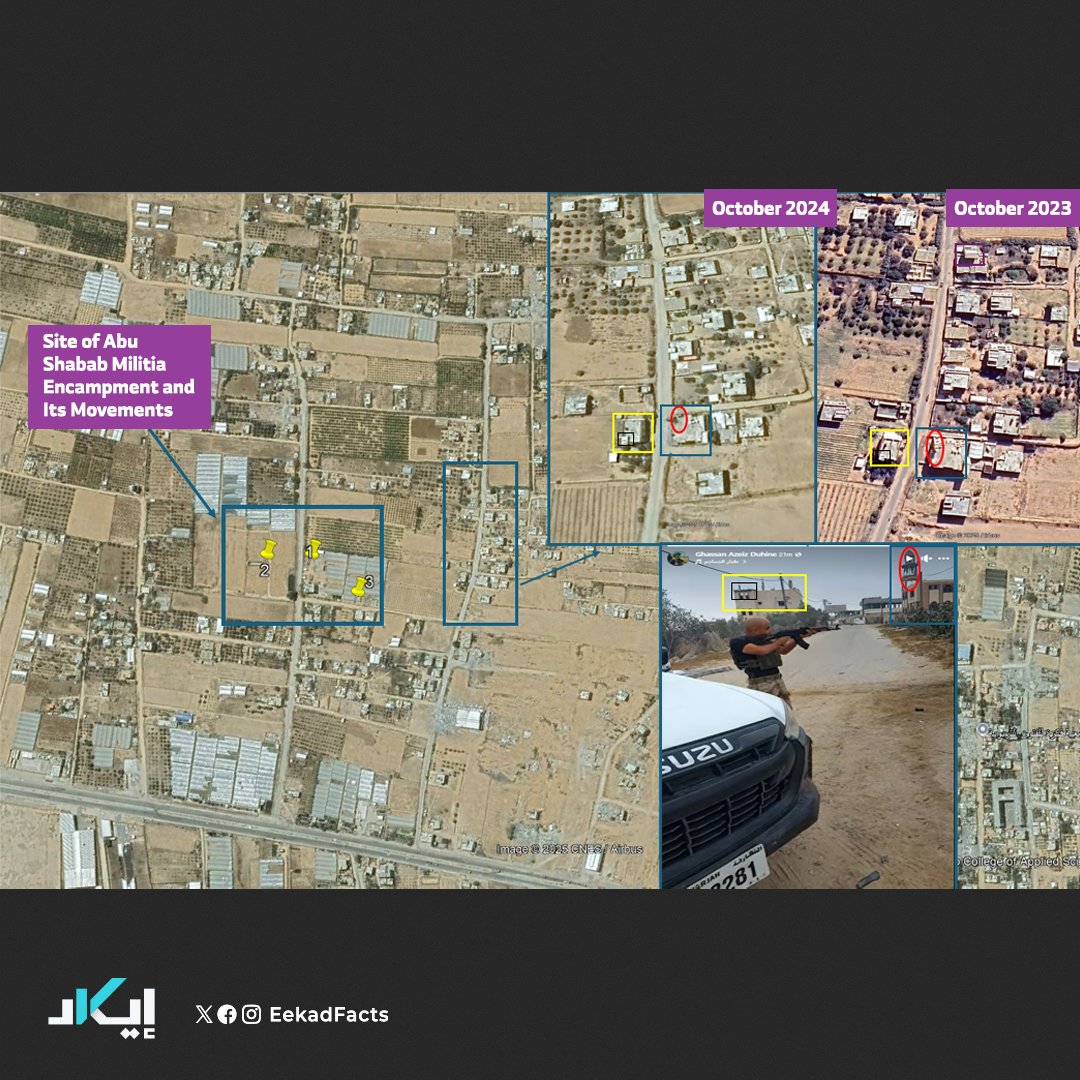

✔️On June 8, 2025, he posted a video in which he appears in military uniform, firing a Kalashnikov rifle.
✔️Geolocation analysis corroborated that the footage was recorded outside Al-Da’wah Mosque in the Al-Shawka area, east of Rafah, just meters from the tent camp and flour distribution sites previously identified by Eekad near the Morag Corridor.
15
✔️Eekad also identified a third senior figure in the militia’s leadership: Issam Nabahin. He is regarded as one of the group’s most prominent operatives and is reportedly a former Islamic State fighter who took part in clashes against the Egyptian army in Sinai.
✔️Nabahin returned to Gaza shortly before the October 7 attack. According to Israeli media reports, he escaped from a Gaza prison on the first day of the war.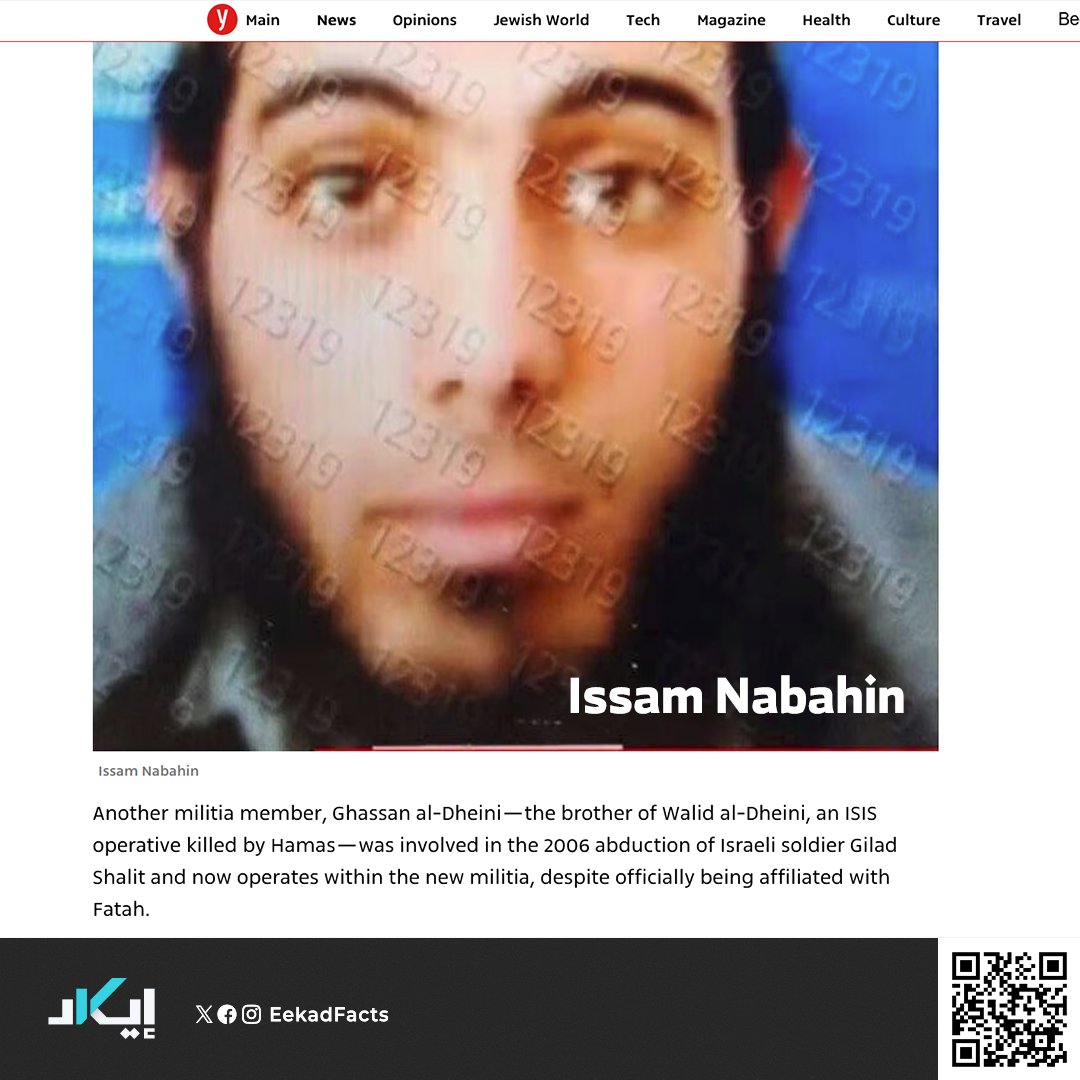
✔️Nabahin returned to Gaza shortly before the October 7 attack. According to Israeli media reports, he escaped from a Gaza prison on the first day of the war.
16
✔️He later joined the Abu Shabab militia and appeared in a photo posted by Ghassan Al-Duhini on TikTok on June 8—indicating his proximity to the militia’s senior leadership.
✔️Several days later, reports suggested that Gaza’s security forces apprehended Nabahin. However, his current detention status remains unconfirmed.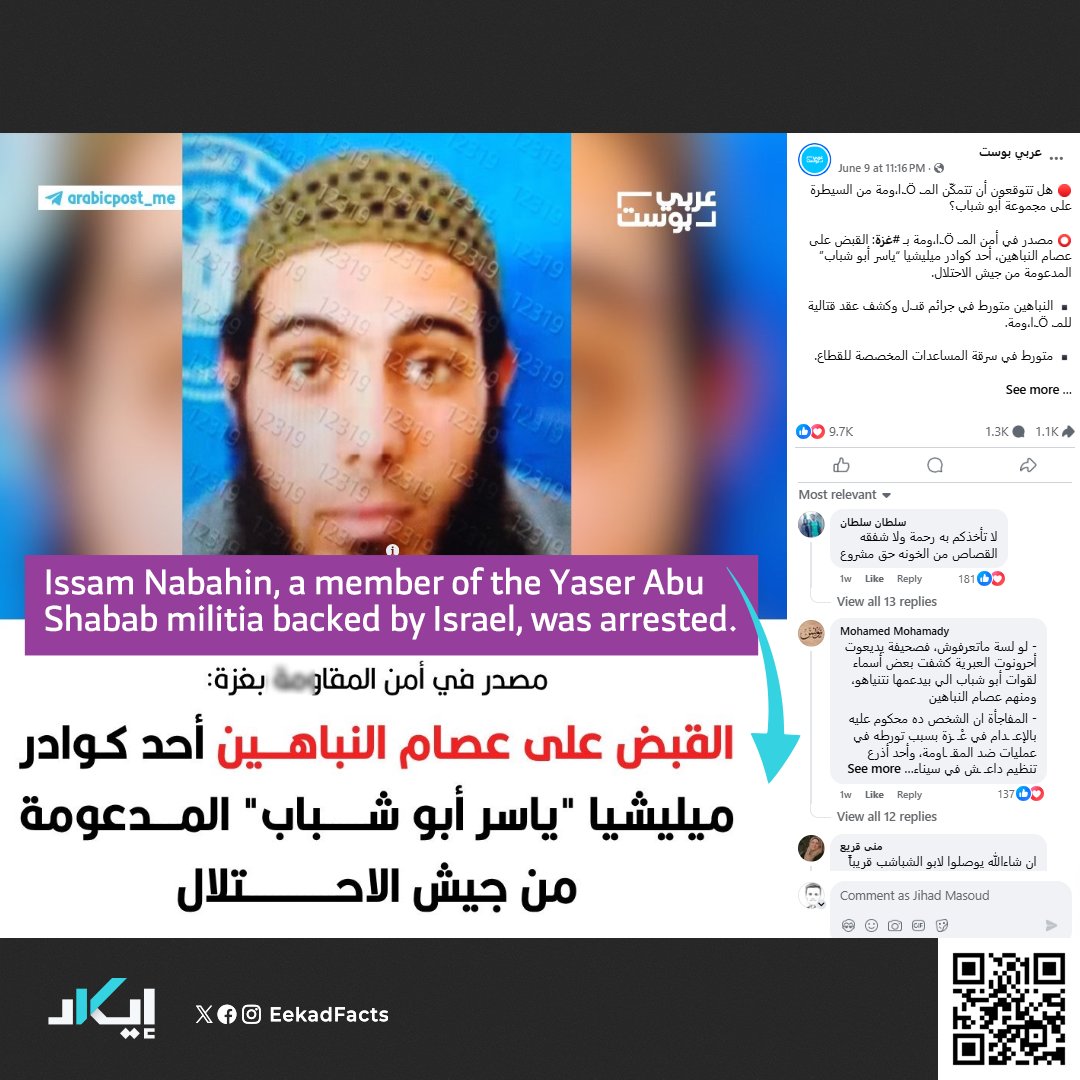
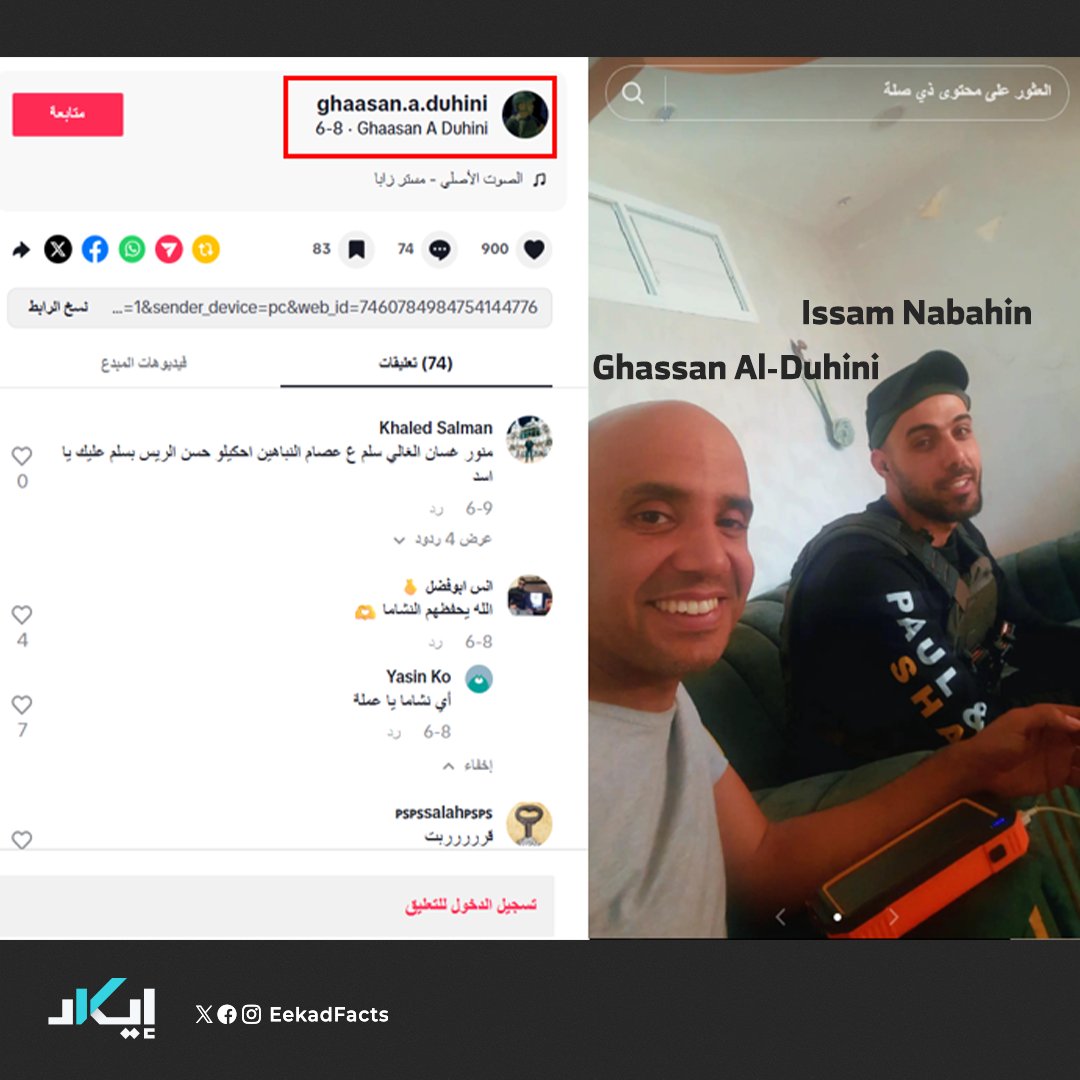
✔️Several days later, reports suggested that Gaza’s security forces apprehended Nabahin. However, his current detention status remains unconfirmed.
17
✔️Connections between members of the Abu Shabab militia and IS were further reinforced by a statement from former Israeli Defense Minister Avigdor Lieberman on June 5, in which he claimed that the Netanyahu government was supplying weapons to IS-affiliated gangs operating in the Gaza Strip.
✔️Additionally, on June 8, Yedioth Ahronoth quoted a senior Palestinian security official as saying that the Palestinian Authority also provides support to Abu Shabab and his militia.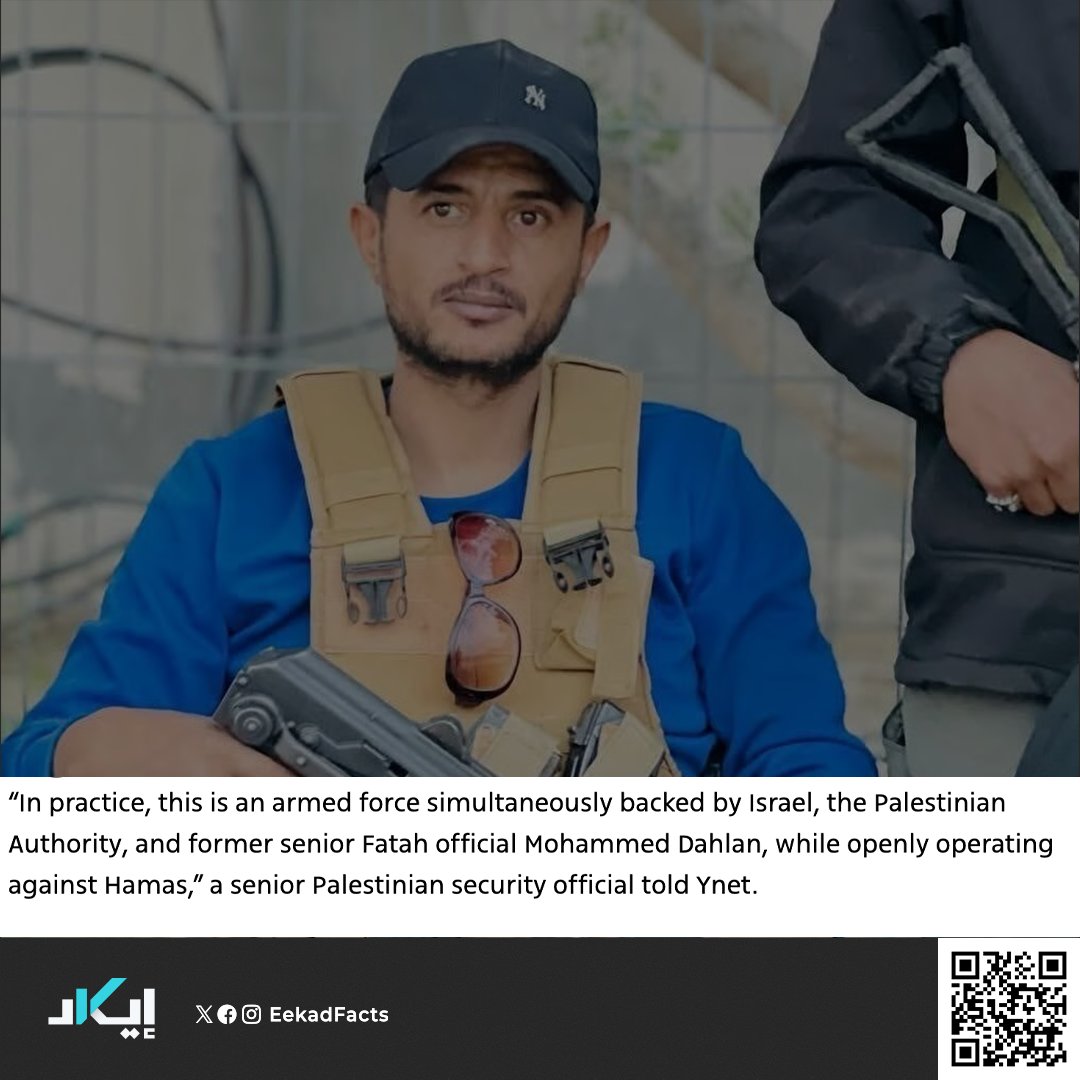

✔️Additionally, on June 8, Yedioth Ahronoth quoted a senior Palestinian security official as saying that the Palestinian Authority also provides support to Abu Shabab and his militia.
18
✔️Having mapped the leadership structure and deployment zones of the Abu Shabab militia, Eekad then turned its attention to identifying second-tier operatives who openly documented their activities online.
❓So, who are these mid-level figures, and what violations have they exposed through their social media content?
❓So, who are these mid-level figures, and what violations have they exposed through their social media content?
19
📌Bakr Al-Wuqayli
✔️To trace these operatives, Eekad analyzed social media accounts tied to the militia’s leadership, identifying individuals within their immediate circles.
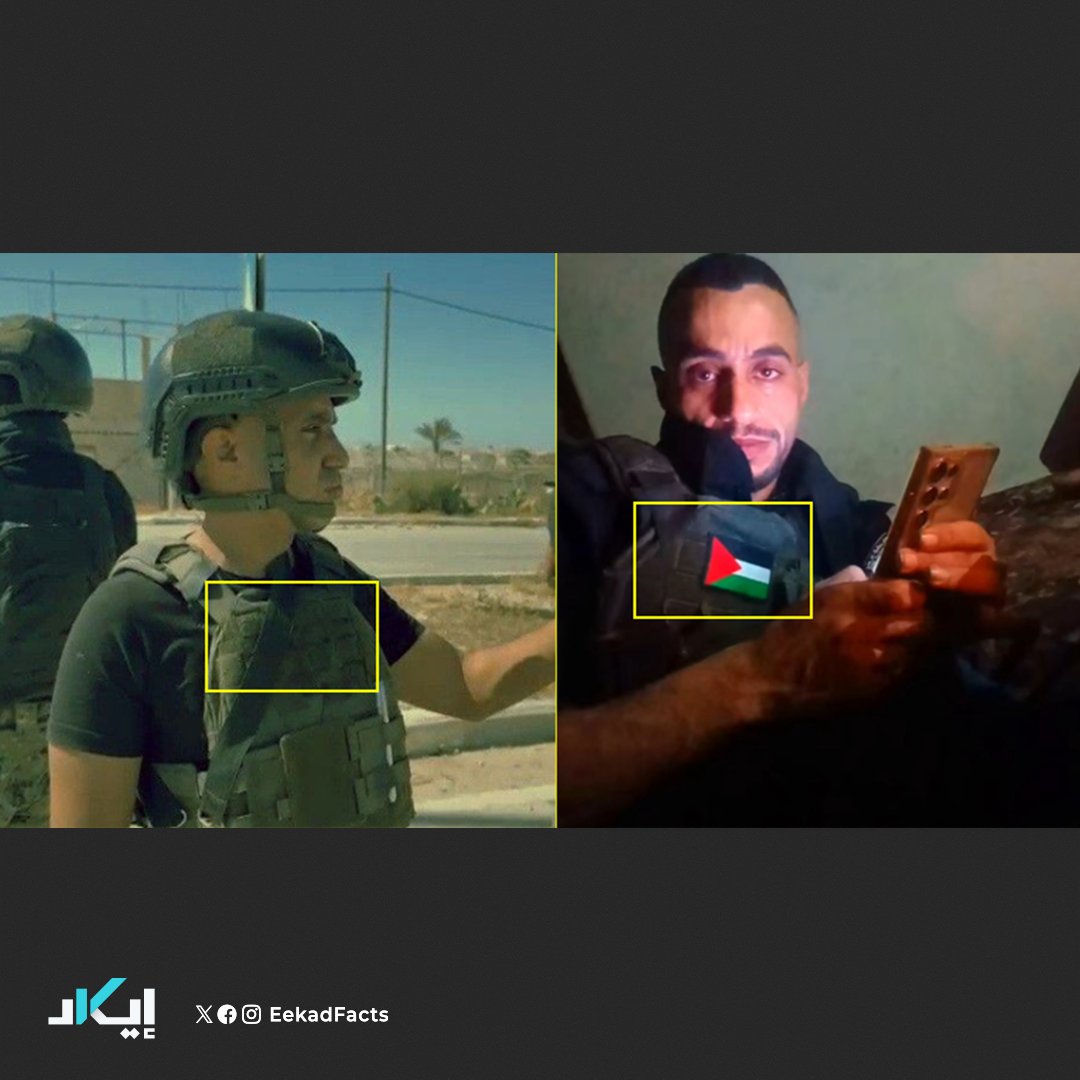
✔️One such figure was Bakr Al-Wuqayli, who operated multiple accounts linked to the group. In one image, Al-Wuqayli appears wearing a tactical vest nearly identical to that worn by senior commander Ghassan Al-Duhini.
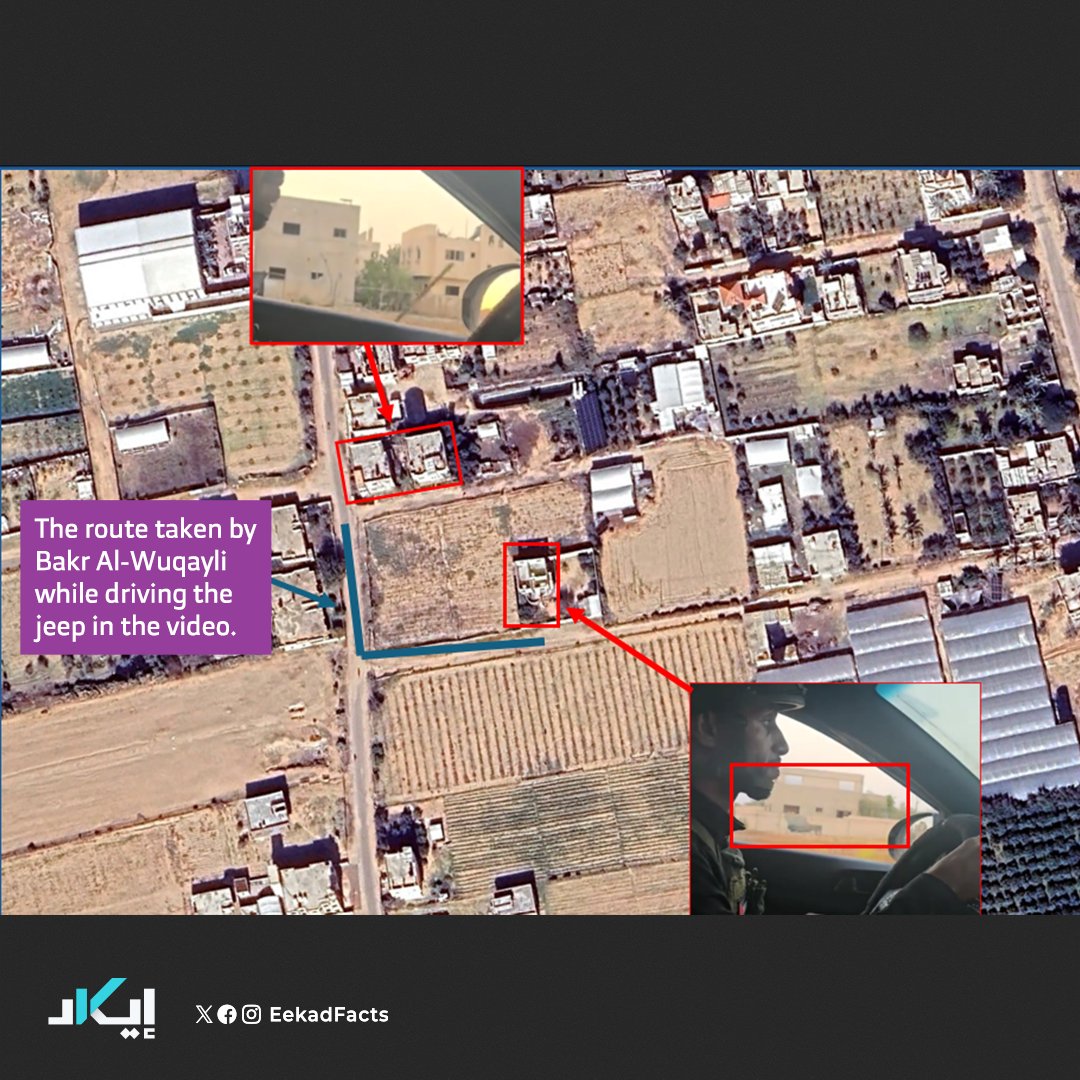
✔️A pro–Abu Shabab TikTok account also published a video of Al-Wuqayli driving through Rafah. Geolocation analysis confirmed the footage was captured near the same tent encampment previously identified by Eekad, further reinforcing his affiliation with the militia.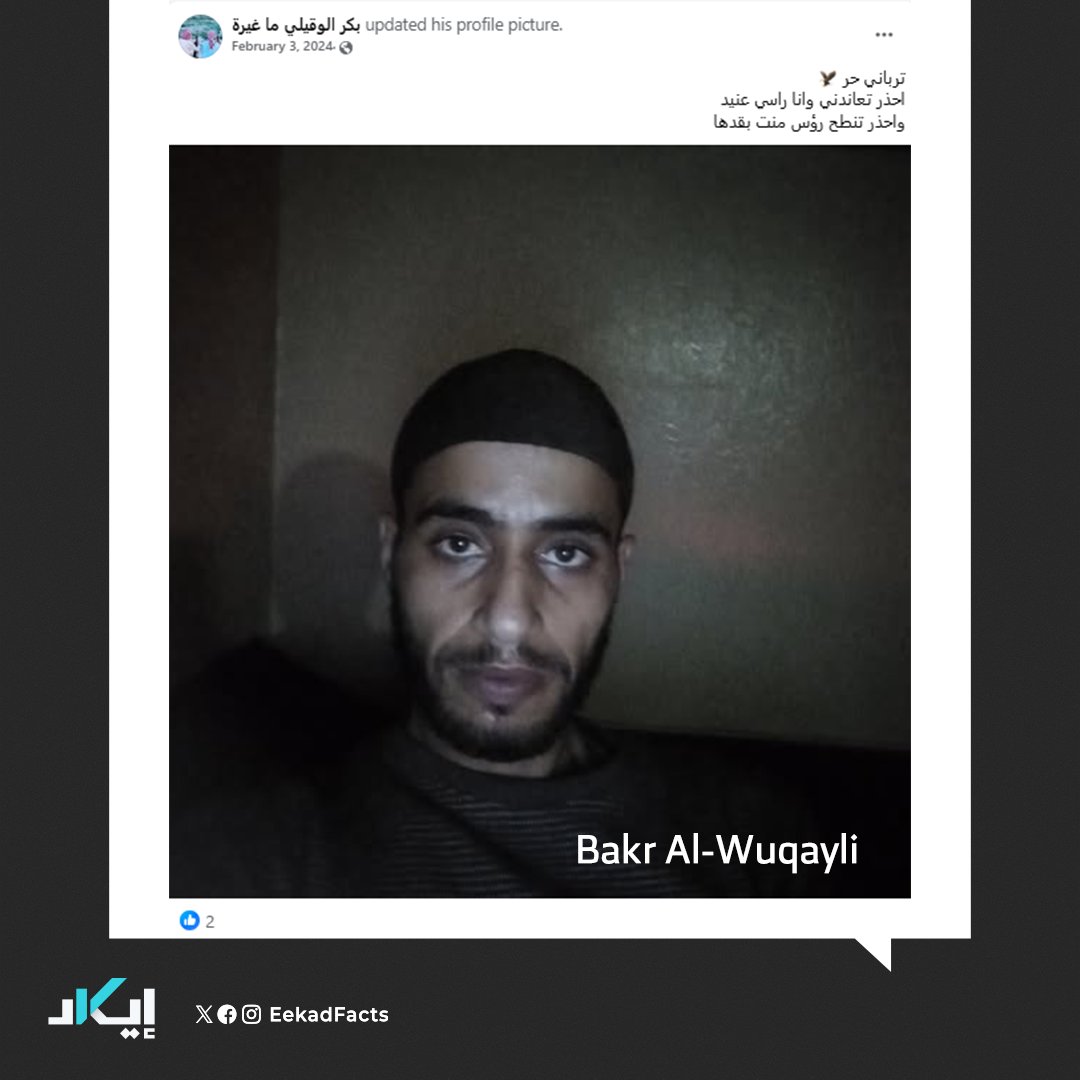

✔️To trace these operatives, Eekad analyzed social media accounts tied to the militia’s leadership, identifying individuals within their immediate circles.
✔️One such figure was Bakr Al-Wuqayli, who operated multiple accounts linked to the group. In one image, Al-Wuqayli appears wearing a tactical vest nearly identical to that worn by senior commander Ghassan Al-Duhini.
✔️A pro–Abu Shabab TikTok account also published a video of Al-Wuqayli driving through Rafah. Geolocation analysis confirmed the footage was captured near the same tent encampment previously identified by Eekad, further reinforcing his affiliation with the militia.
20
✔️Further research into Bakr Al-Wuqayli revealed that he operated several other accounts, including one under the pseudonym “Faqed Al-Ghaly” (Arabic for “the one who lost a loved one”).
✔️Eekad confirmed his connection to this account through a photo posted in March, which drew a comment from Ghassan Al-Duhini: “Hello to the one like no other”—a nickname associated with Bakr. This exchange reflected Bakr’s close relationship with the militia’s leadership.
✔️In May, the same account posted another image mentioning two additional accounts affiliated with Bakr. One picture showed him riding on the back of a car, surrounded by comments expressing praise.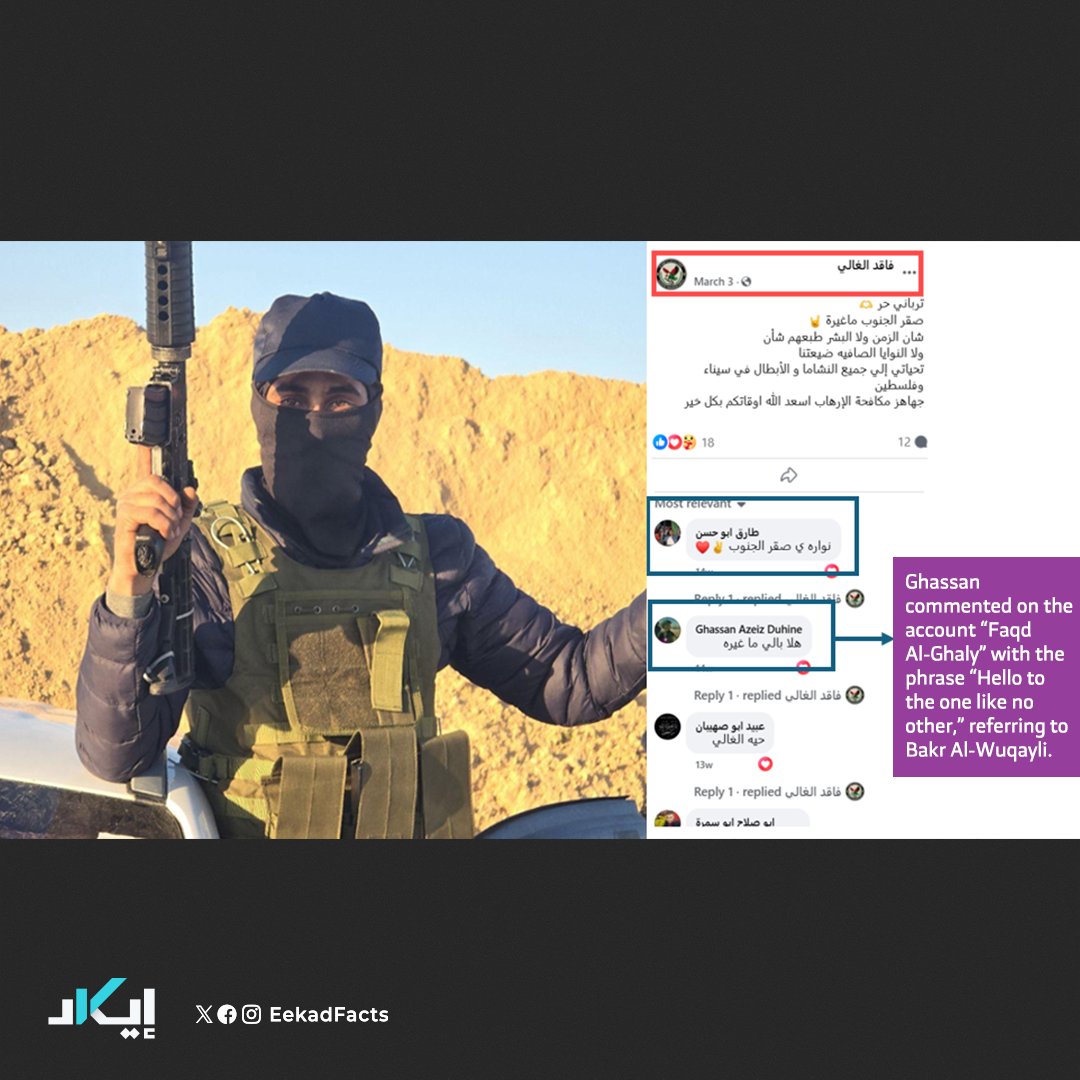
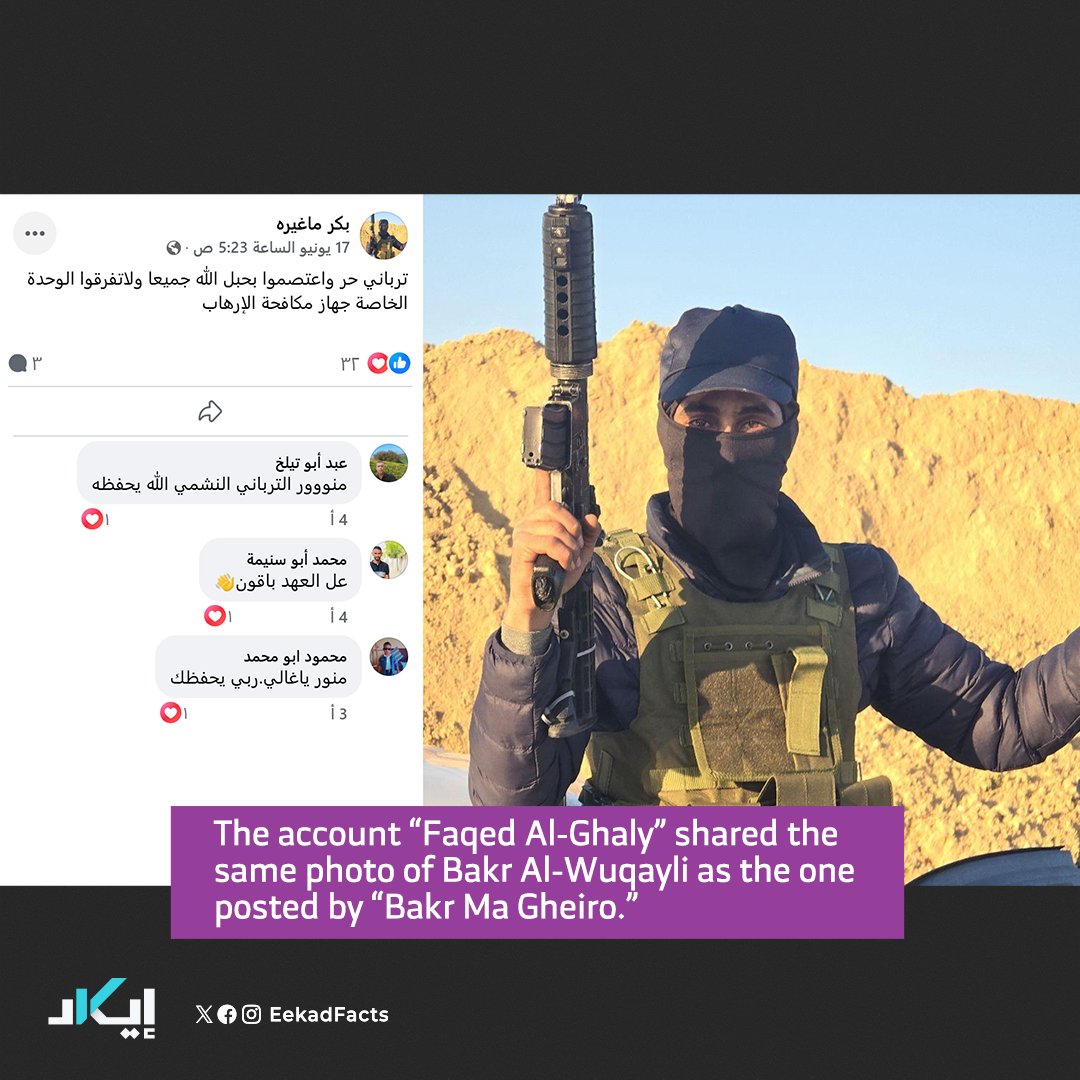
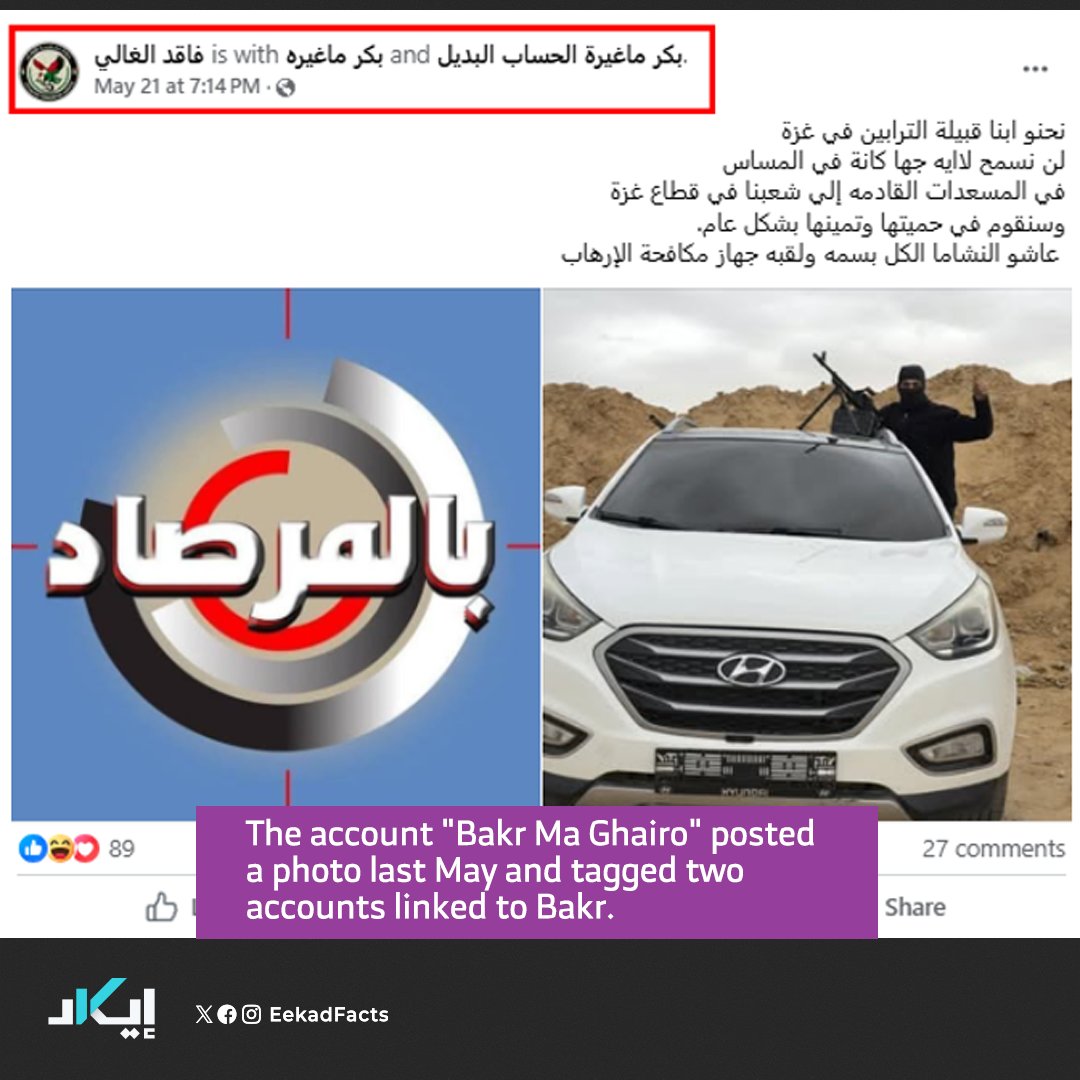
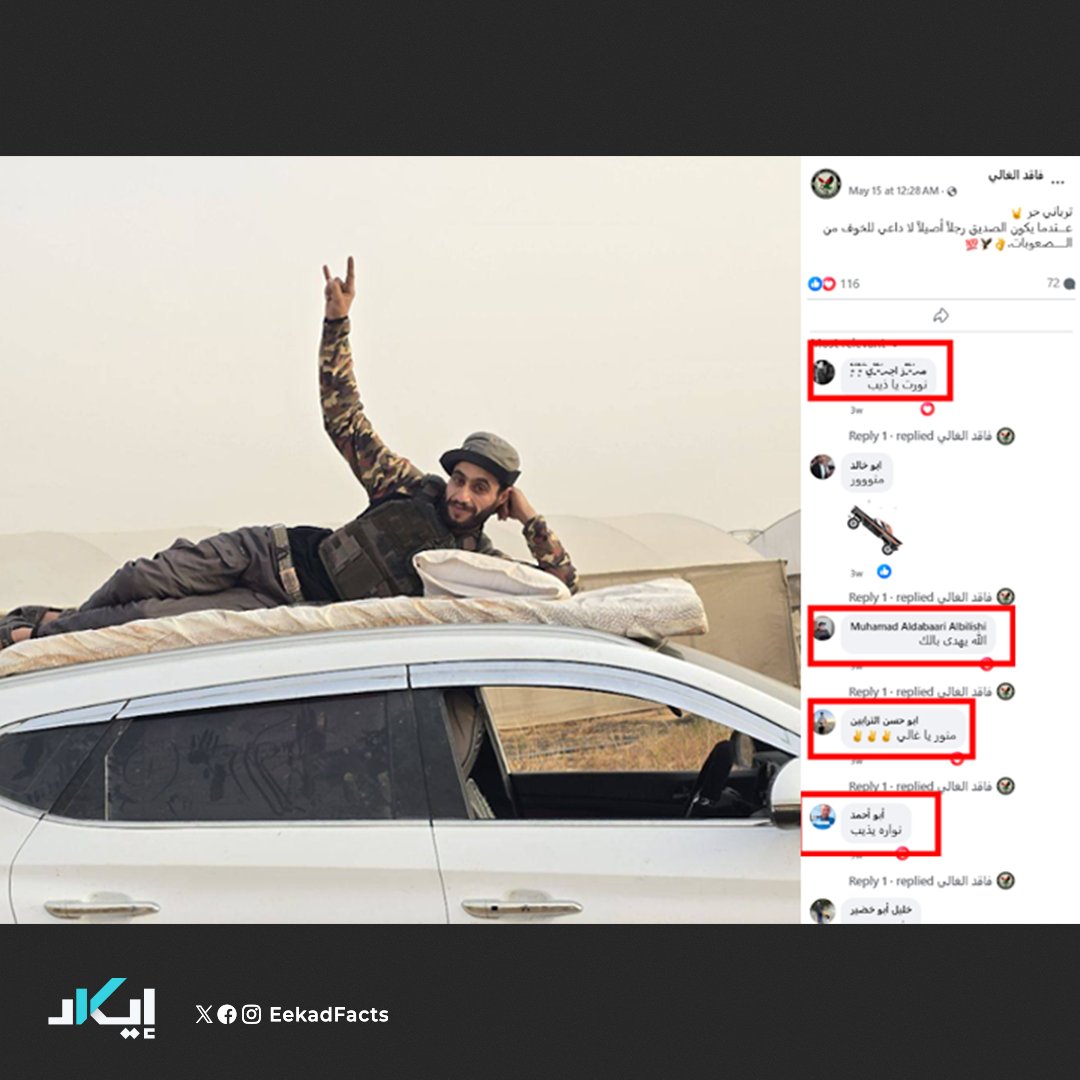
✔️Eekad confirmed his connection to this account through a photo posted in March, which drew a comment from Ghassan Al-Duhini: “Hello to the one like no other”—a nickname associated with Bakr. This exchange reflected Bakr’s close relationship with the militia’s leadership.
✔️In May, the same account posted another image mentioning two additional accounts affiliated with Bakr. One picture showed him riding on the back of a car, surrounded by comments expressing praise.
21
📌Yousef “Abu Naser”
✔️Through Bakr Al-Wuqayli’s social media connections, Eekad identified another Facebook profile tied to the network, belonging to an individual named Yousef “Abu Naser.”
✔️Our research disclosed that Yousef also maintained a TikTok account—since deleted—where he had posted multiple photos. Among these was an image showing him alongside Bakr Al-Wuqayli, both of whom were holding weapons and wearing helmets, tactical gear, and a military-grade quiver similar to those worn by Ghassan Al-Duhini and Bakr.
✔️These findings suggest that Yousef was likely a second-tier member of the Abu Shabab militia.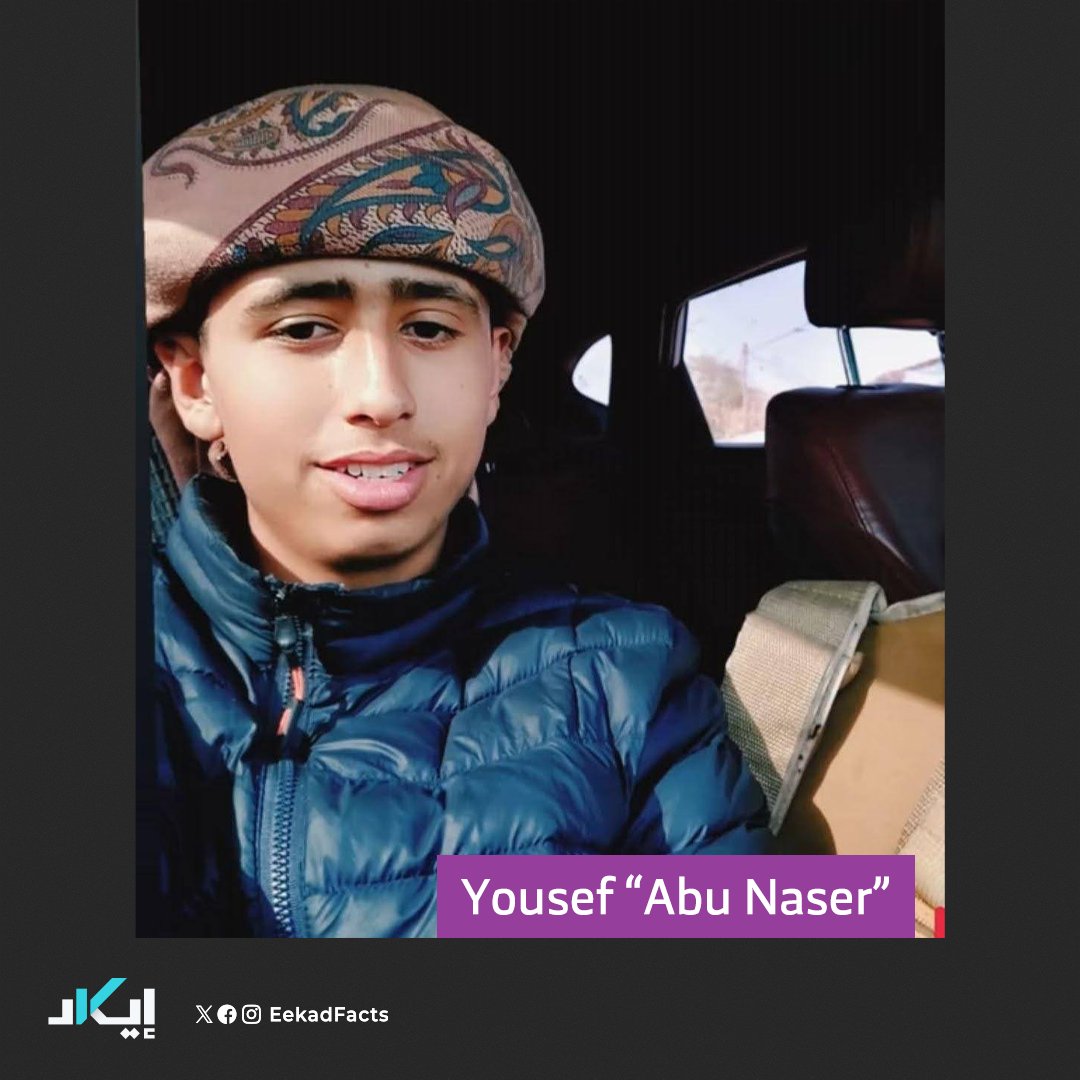

✔️Through Bakr Al-Wuqayli’s social media connections, Eekad identified another Facebook profile tied to the network, belonging to an individual named Yousef “Abu Naser.”
✔️Our research disclosed that Yousef also maintained a TikTok account—since deleted—where he had posted multiple photos. Among these was an image showing him alongside Bakr Al-Wuqayli, both of whom were holding weapons and wearing helmets, tactical gear, and a military-grade quiver similar to those worn by Ghassan Al-Duhini and Bakr.
✔️These findings suggest that Yousef was likely a second-tier member of the Abu Shabab militia.
22
📌Saddam Majed “Abu Zakkar”
✔️Further analysis uncovered an April story posted by Ghassan Al-Duhini featuring Saddam Majed, also known as “Abu Zakkar,” that led us to a TikTok account that had recently posted the same image, expressing condolences over Saddam’s death.
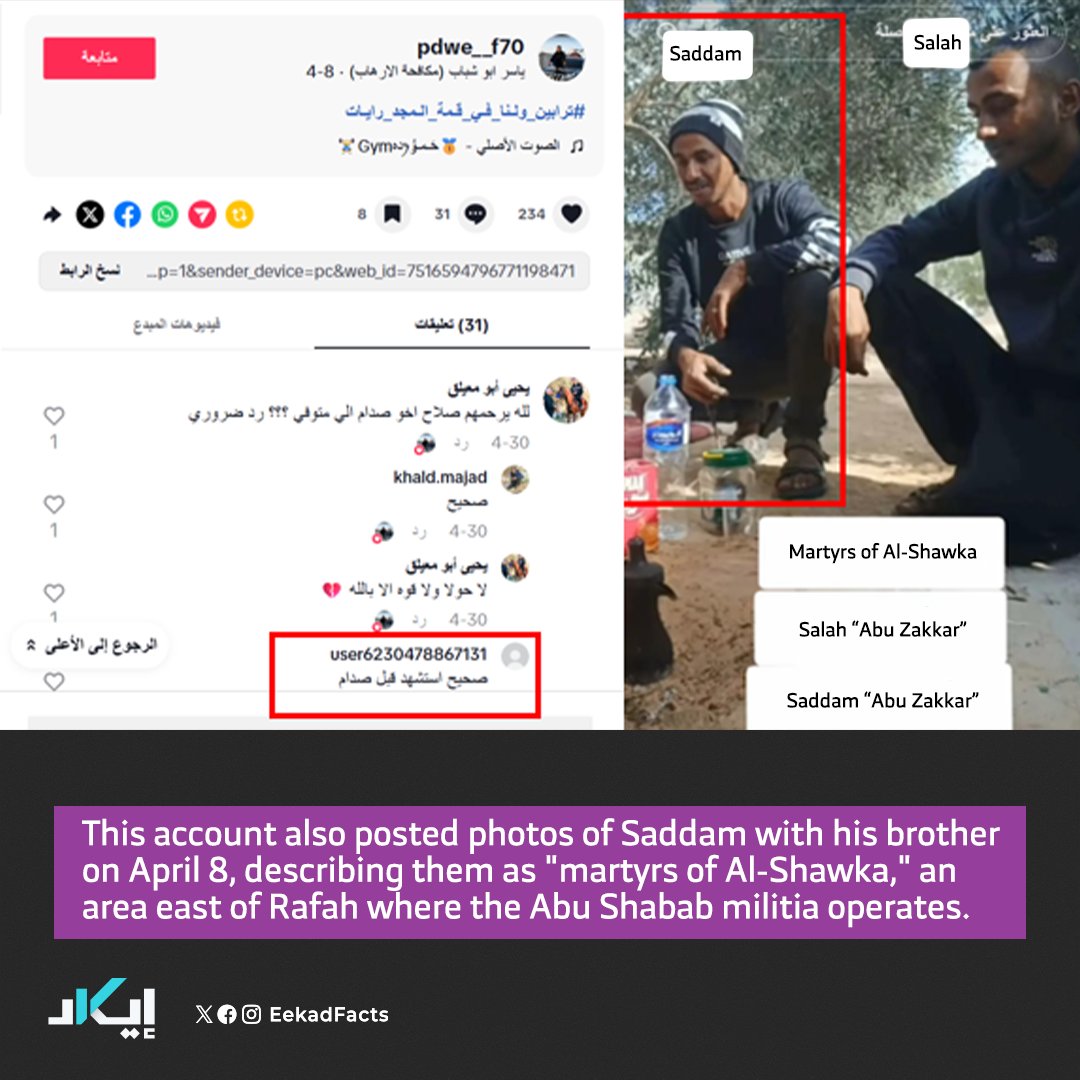
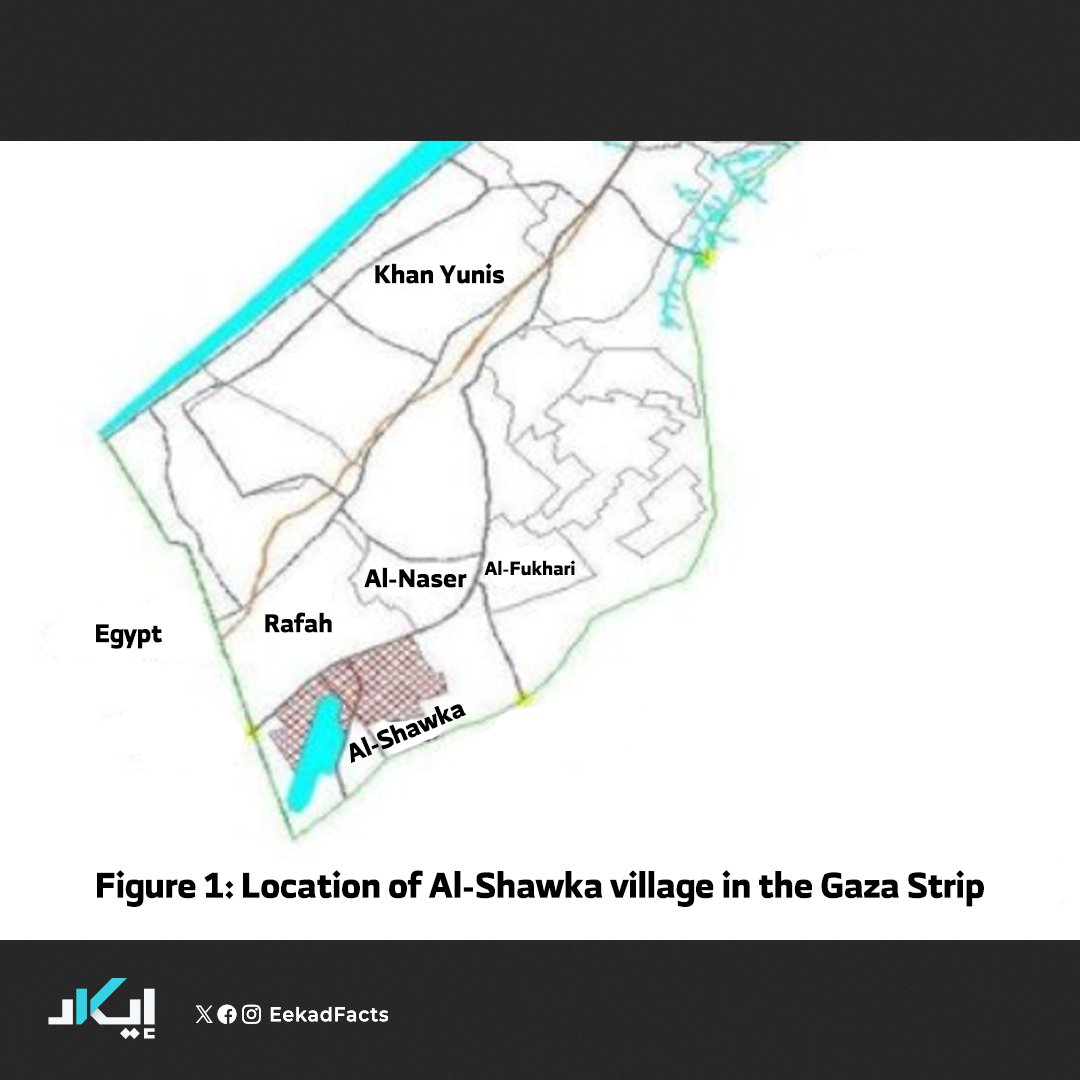
✔️On April 8, the account published photos of Saddam with his brother, referring to them as “martyrs of Al-Shawka”—the same area east of Rafah where the militia operates. These references suggest that Saddam was closely tied to the Abu Shabab network prior to his death.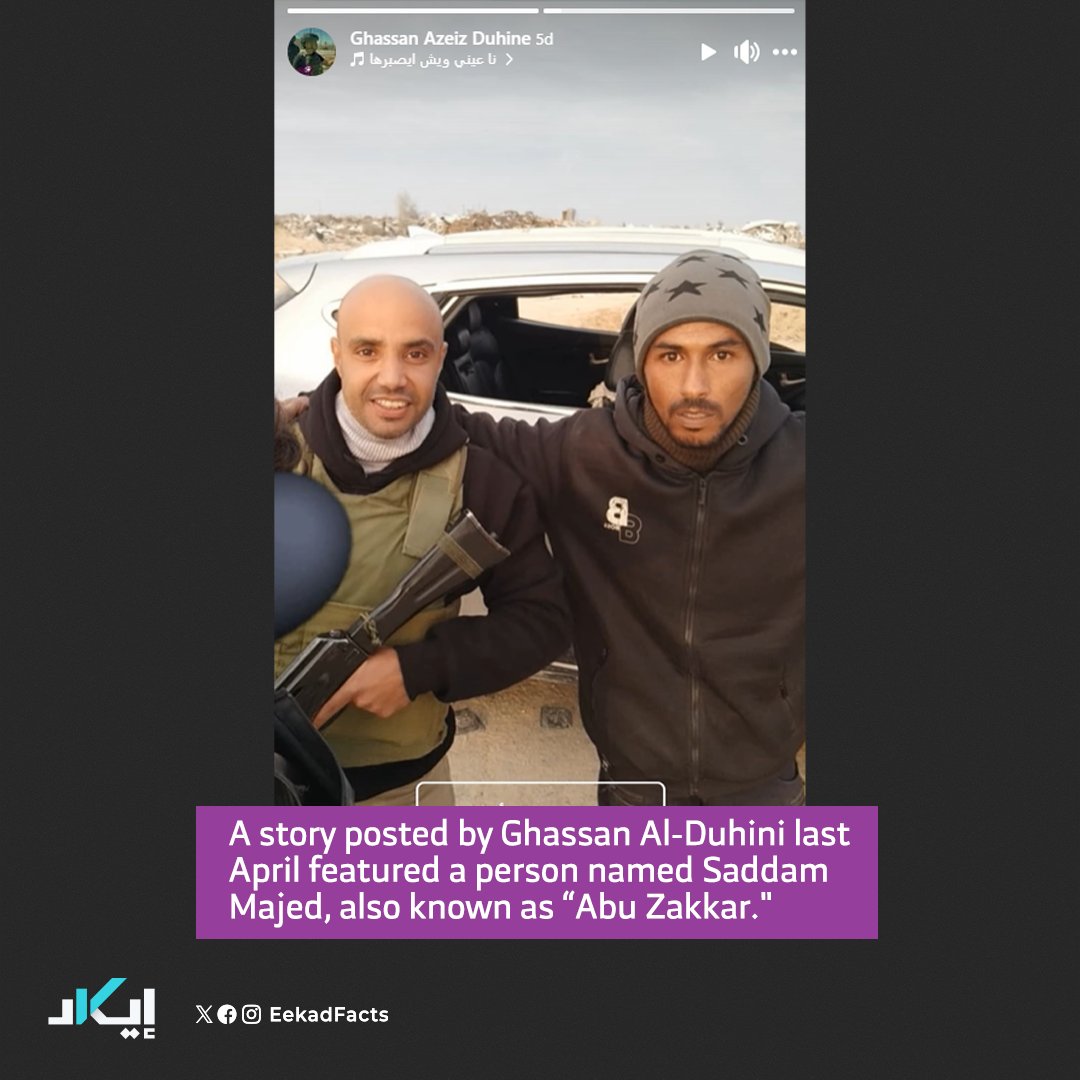
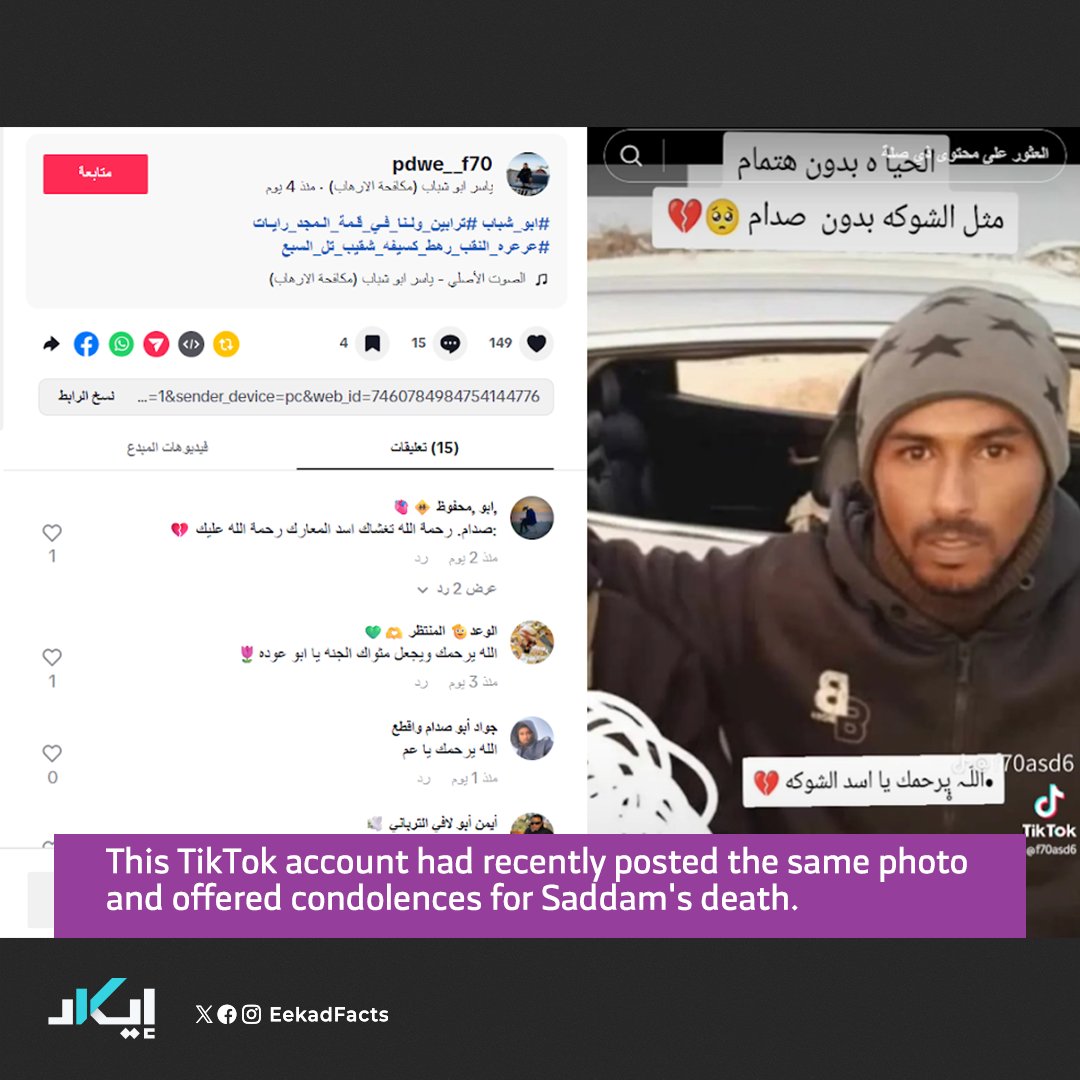
✔️Further analysis uncovered an April story posted by Ghassan Al-Duhini featuring Saddam Majed, also known as “Abu Zakkar,” that led us to a TikTok account that had recently posted the same image, expressing condolences over Saddam’s death.
✔️On April 8, the account published photos of Saddam with his brother, referring to them as “martyrs of Al-Shawka”—the same area east of Rafah where the militia operates. These references suggest that Saddam was closely tied to the Abu Shabab network prior to his death.
23
📌Tareq “Abu Hasan”
✔️Another mid-level operative identified was Tareq, known by the alias “Abu Hasan.” An analysis of his Facebook account revealed connections to both Ghassan Al-Duhini and Bakr Al-Wuqayli, reinforcing suspicions of his affiliation with the militia.
✔️Tareq had also shared condolence messages for fallen members of the group and posted stories showing Abu Shabab fighters—armed and positioned atop aid trucks.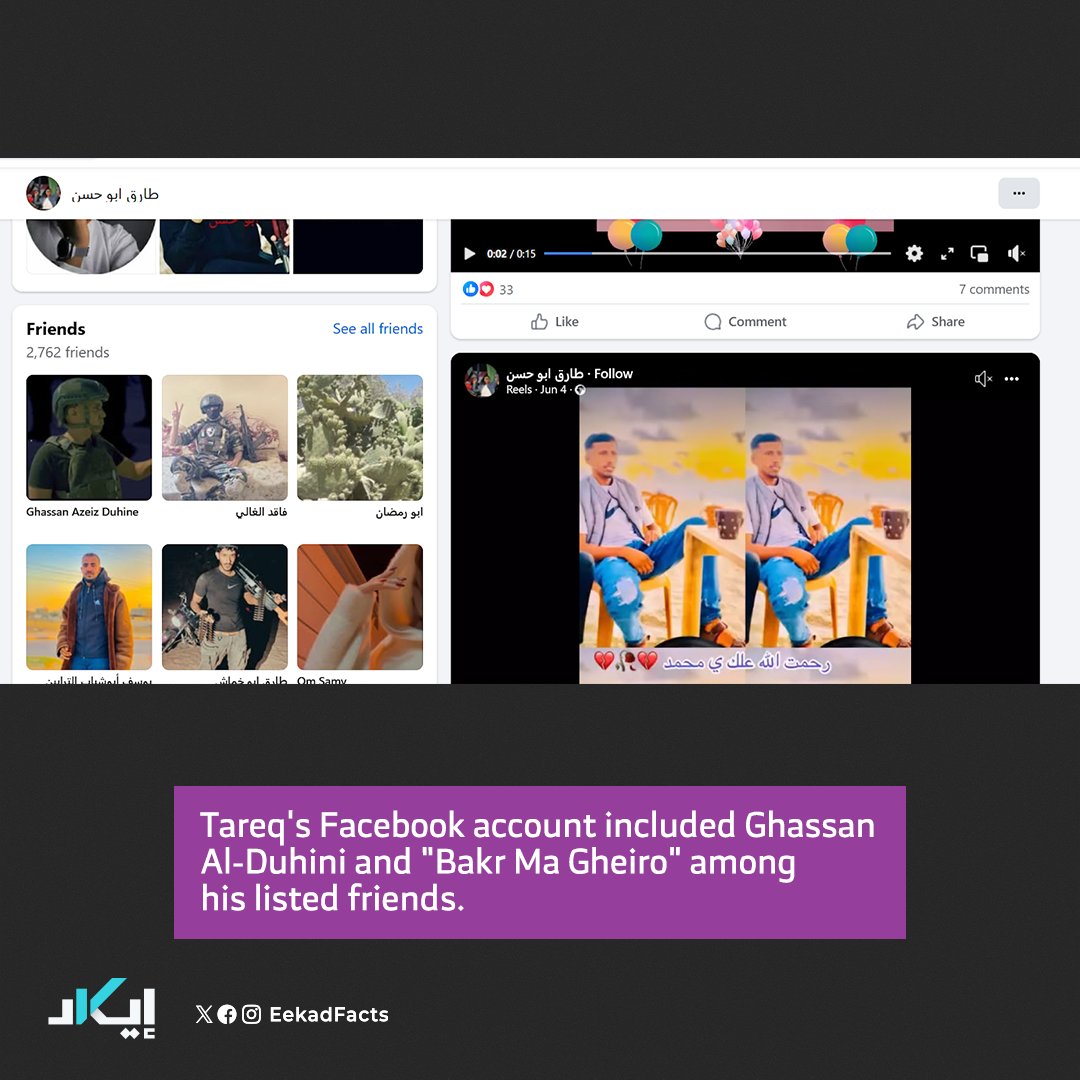
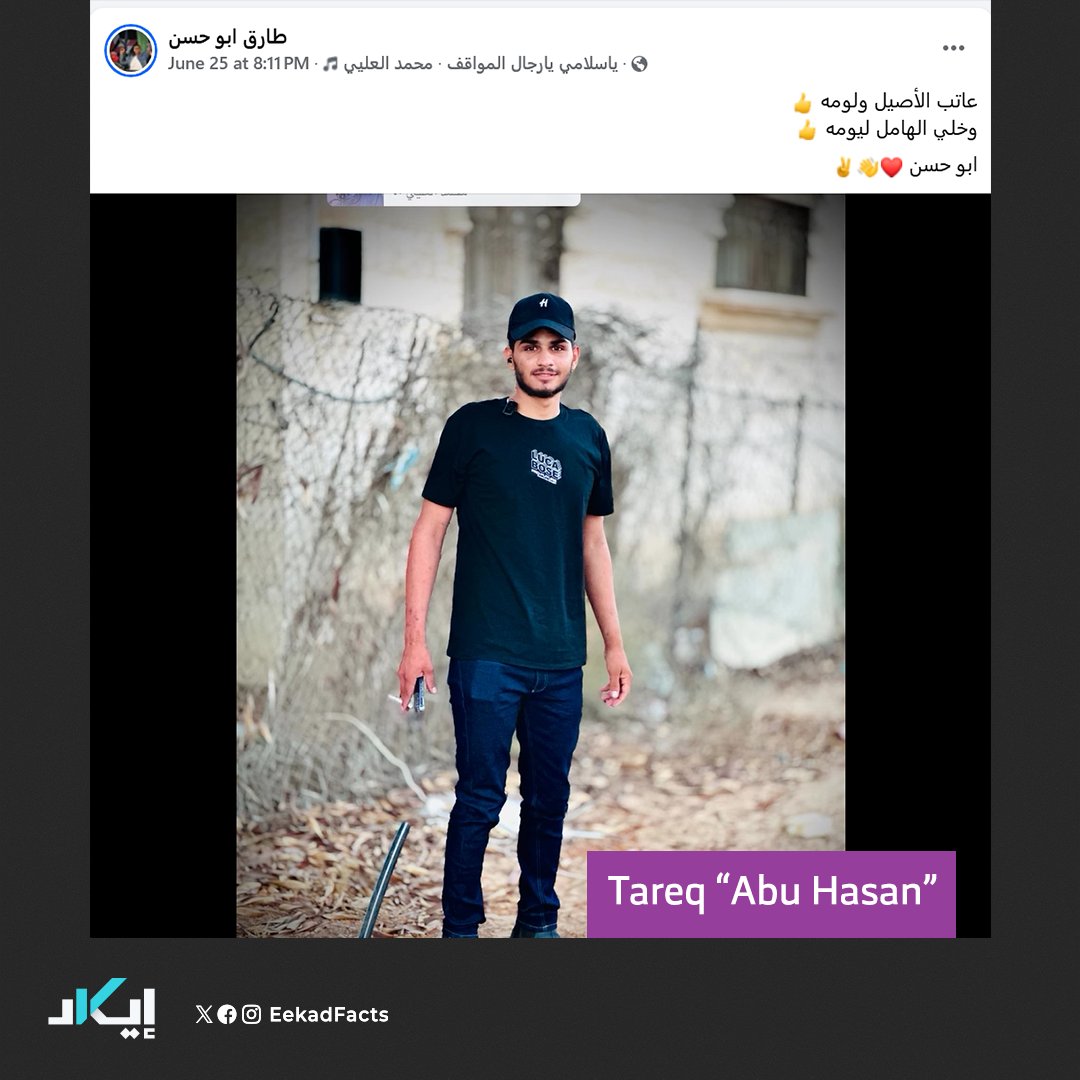
✔️Another mid-level operative identified was Tareq, known by the alias “Abu Hasan.” An analysis of his Facebook account revealed connections to both Ghassan Al-Duhini and Bakr Al-Wuqayli, reinforcing suspicions of his affiliation with the militia.
✔️Tareq had also shared condolence messages for fallen members of the group and posted stories showing Abu Shabab fighters—armed and positioned atop aid trucks.
24
✔️A pro-Abu Shabab militia TikTok account posted a photo showing Bakr Al-Wuqayli next to a man whose face was partially concealed by a heart emoji.
✔️Facial analysis of the exposed features—specifically the eyes, nose, and eyebrows—identified the individual as Tareq “Abu Hasan,” further linking him to the network and suggesting his affiliation with the leadership.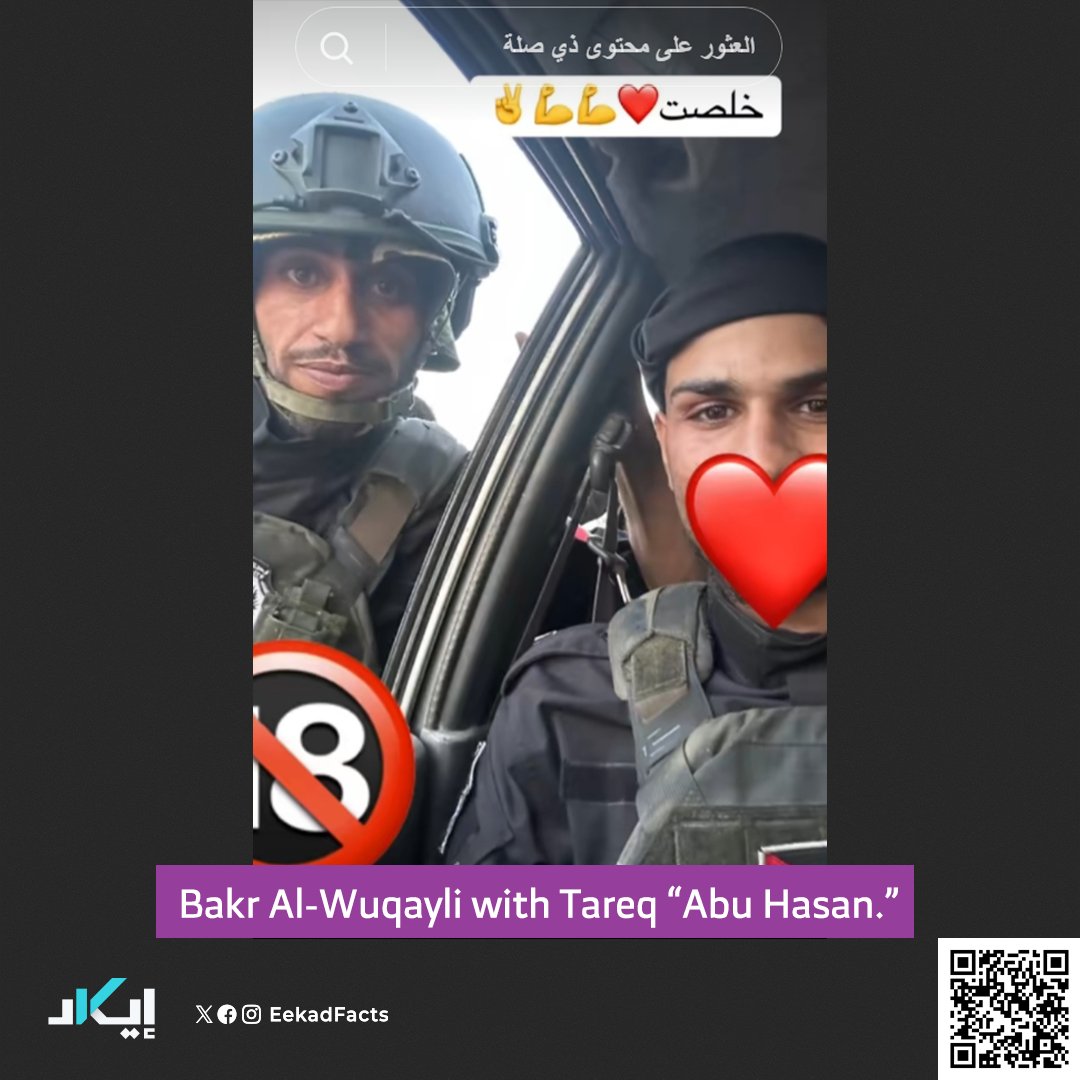
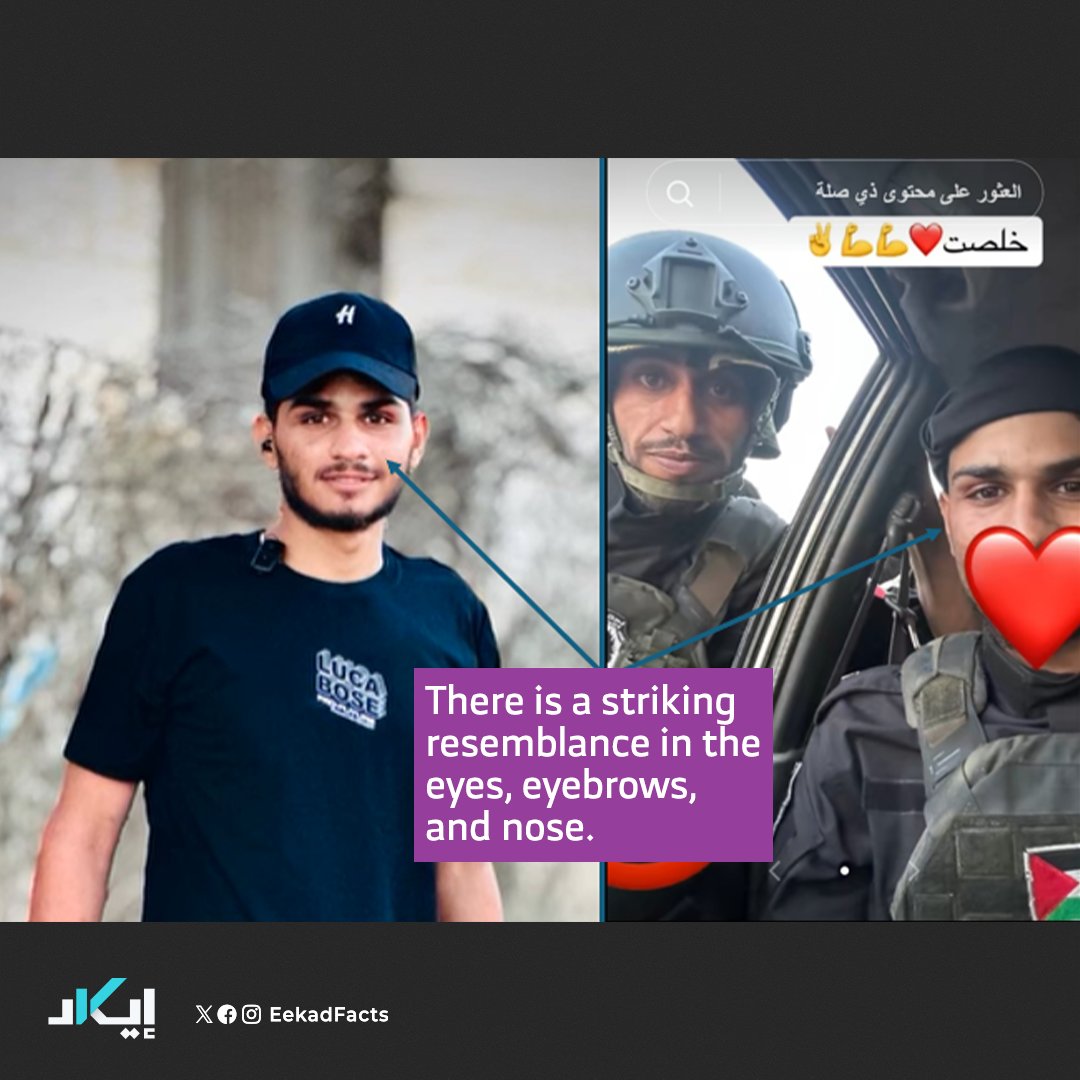
✔️Facial analysis of the exposed features—specifically the eyes, nose, and eyebrows—identified the individual as Tareq “Abu Hasan,” further linking him to the network and suggesting his affiliation with the leadership.
25
📌Abu Hasan Al-Tarabani
✔️A deeper review of Tareq’s content revealed a story showing two armed men sitting atop an aid truck. Facial recognition confirmed that one of them was Abu Hasan Al-Tarabani, who died in late 2024.
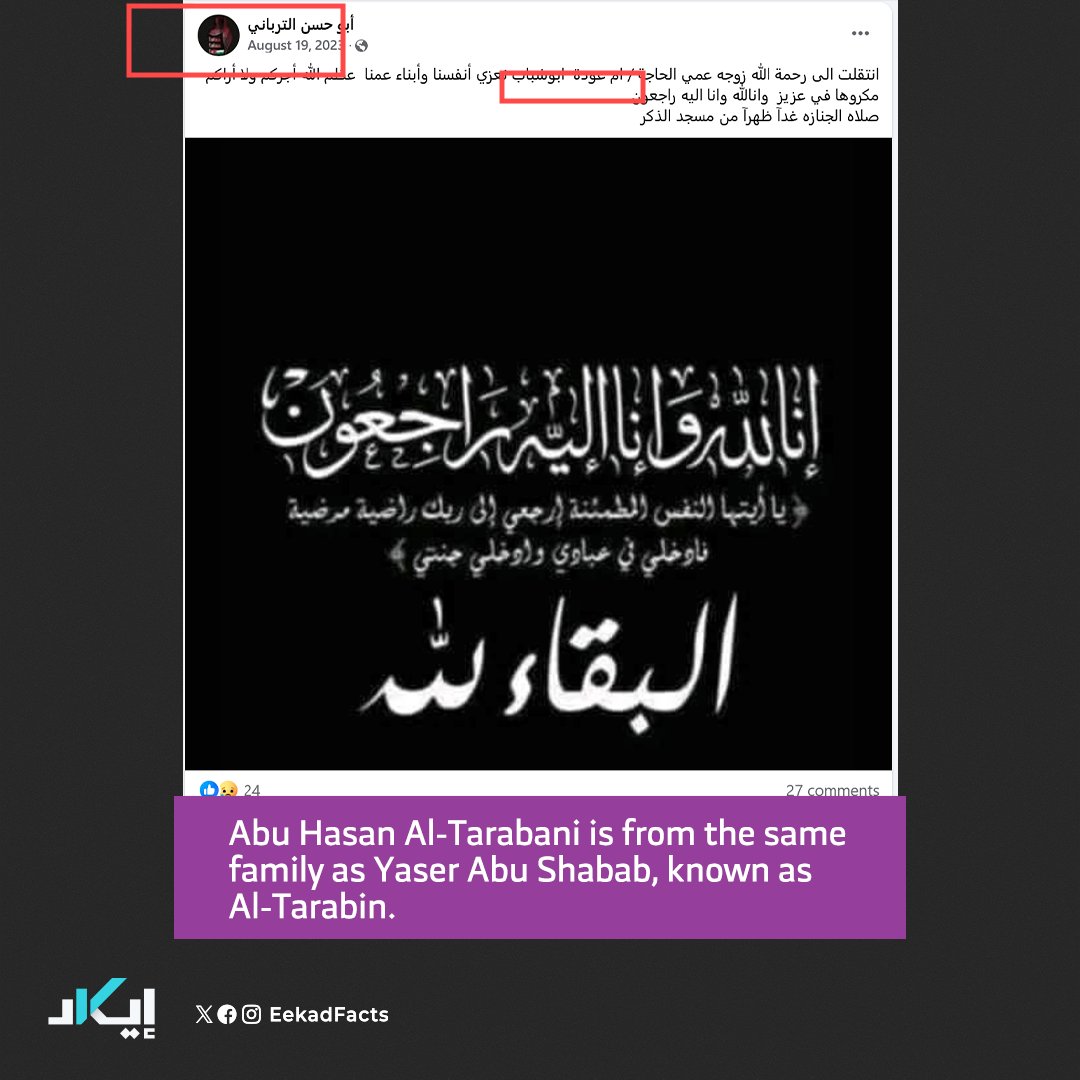
✔️Analysis of Al-Tarabani’s account showed a video posted in September 2024, in which he appeared alongside Ghassan Al-Duhini inside a vehicle. This finding suggests that he belonged to the same Al-Tarabin family as Yaser Abu Shabab.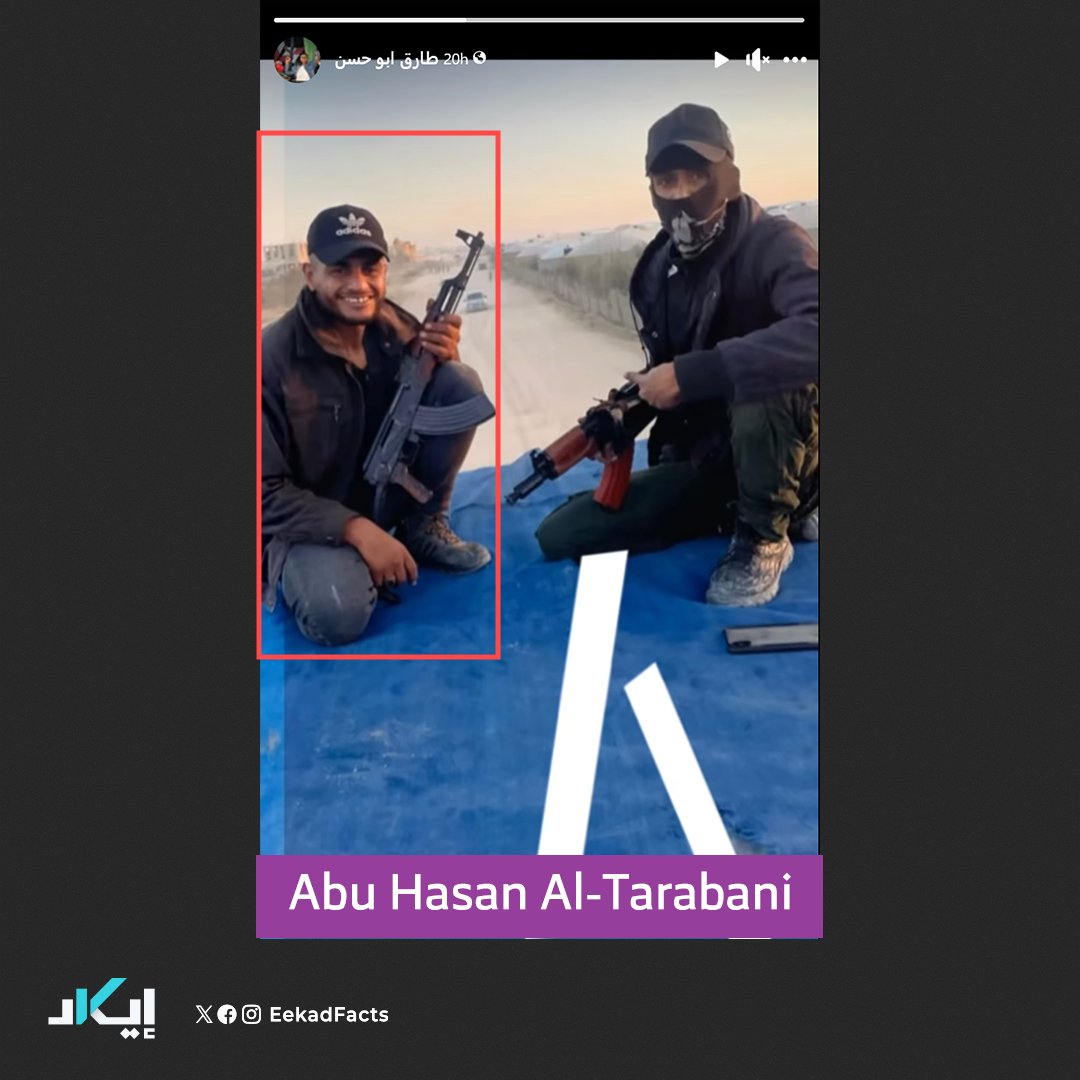
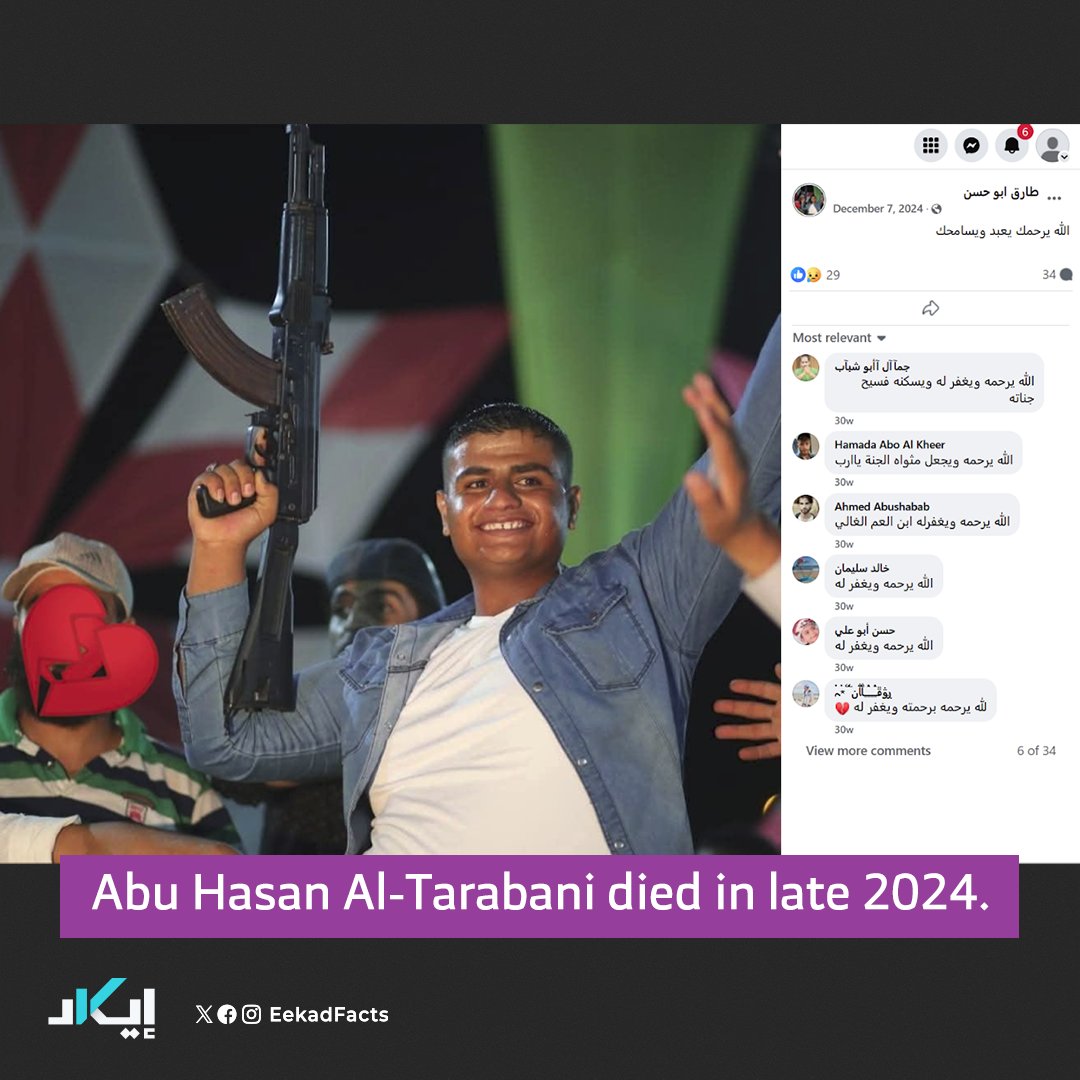

✔️A deeper review of Tareq’s content revealed a story showing two armed men sitting atop an aid truck. Facial recognition confirmed that one of them was Abu Hasan Al-Tarabani, who died in late 2024.
✔️Analysis of Al-Tarabani’s account showed a video posted in September 2024, in which he appeared alongside Ghassan Al-Duhini inside a vehicle. This finding suggests that he belonged to the same Al-Tarabin family as Yaser Abu Shabab.
26
✔️Eekad also identified a third tier of individuals affiliated with the Abu Shabab militia. These figures appeared less directly connected to the leadership and were primarily tasked with what they described as “aid security.”
❓But who are these third-tier individuals? Where do they operate? And were they genuinely safeguarding humanitarian aid—or actively participating in its looting and manipulation?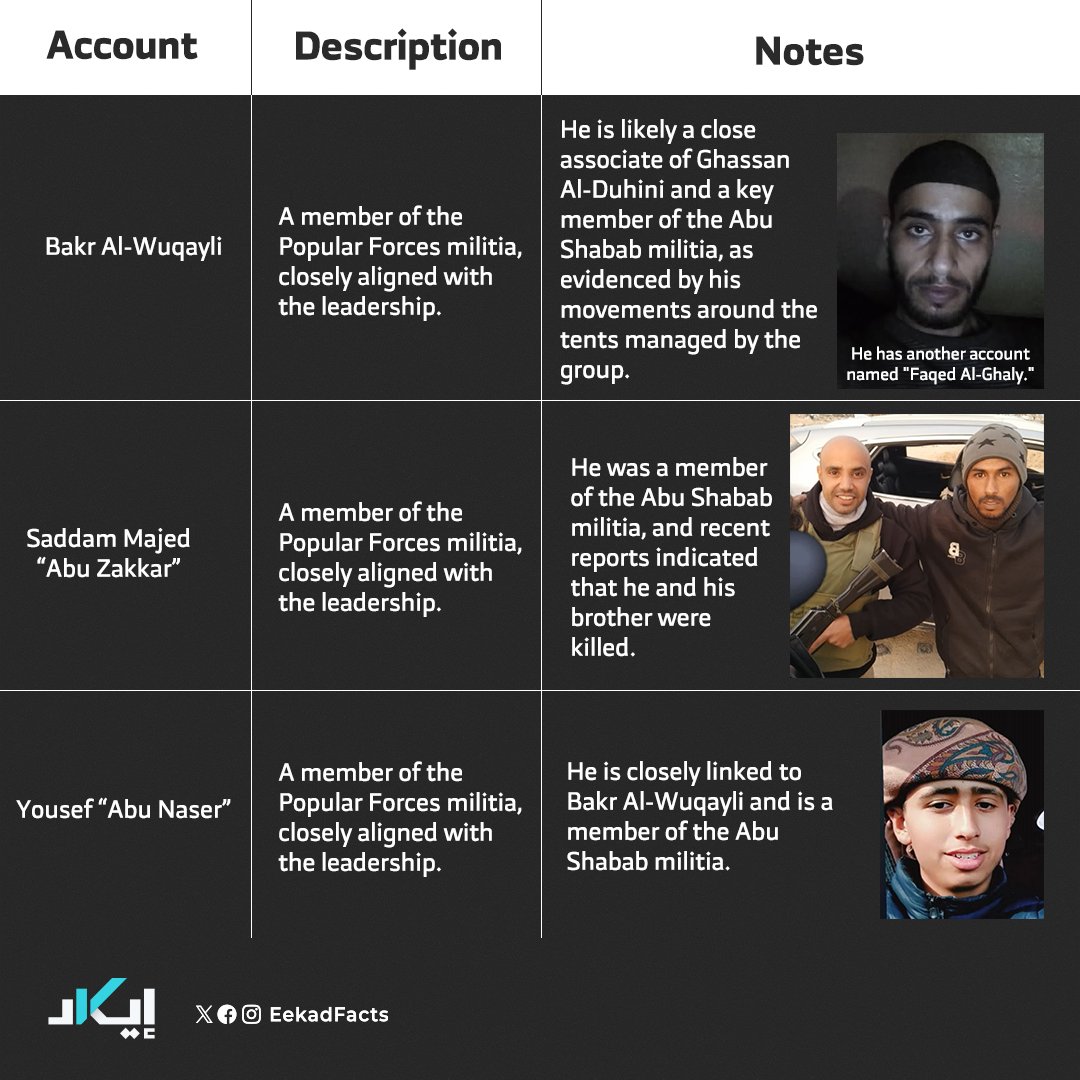

❓But who are these third-tier individuals? Where do they operate? And were they genuinely safeguarding humanitarian aid—or actively participating in its looting and manipulation?
27
📌Nimer “Abu Al-Hussain”
✔️The first third-tier operative identified was Nimer “Abu Al-Hussain,” an active TikTok user who posted several videos allegedly showing his role in transporting and securing humanitarian aid. These videos were shared up until January 19, prior to the ceasefire that later collapsed in March.
✔️Crucially, the footage captured instances of tampering with food boxes, affirming their complete control over the aid at a time when famine was ravaging Gaza.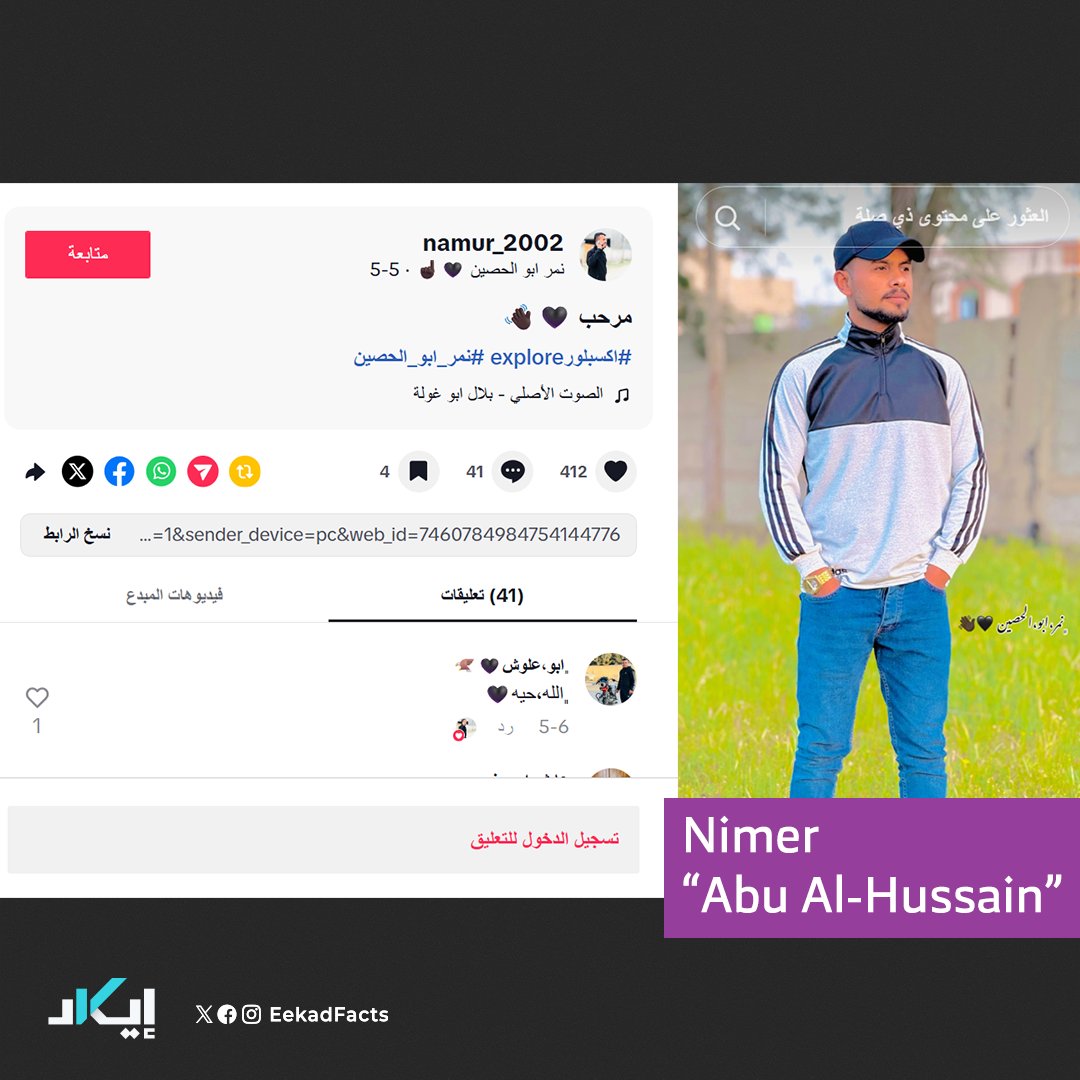
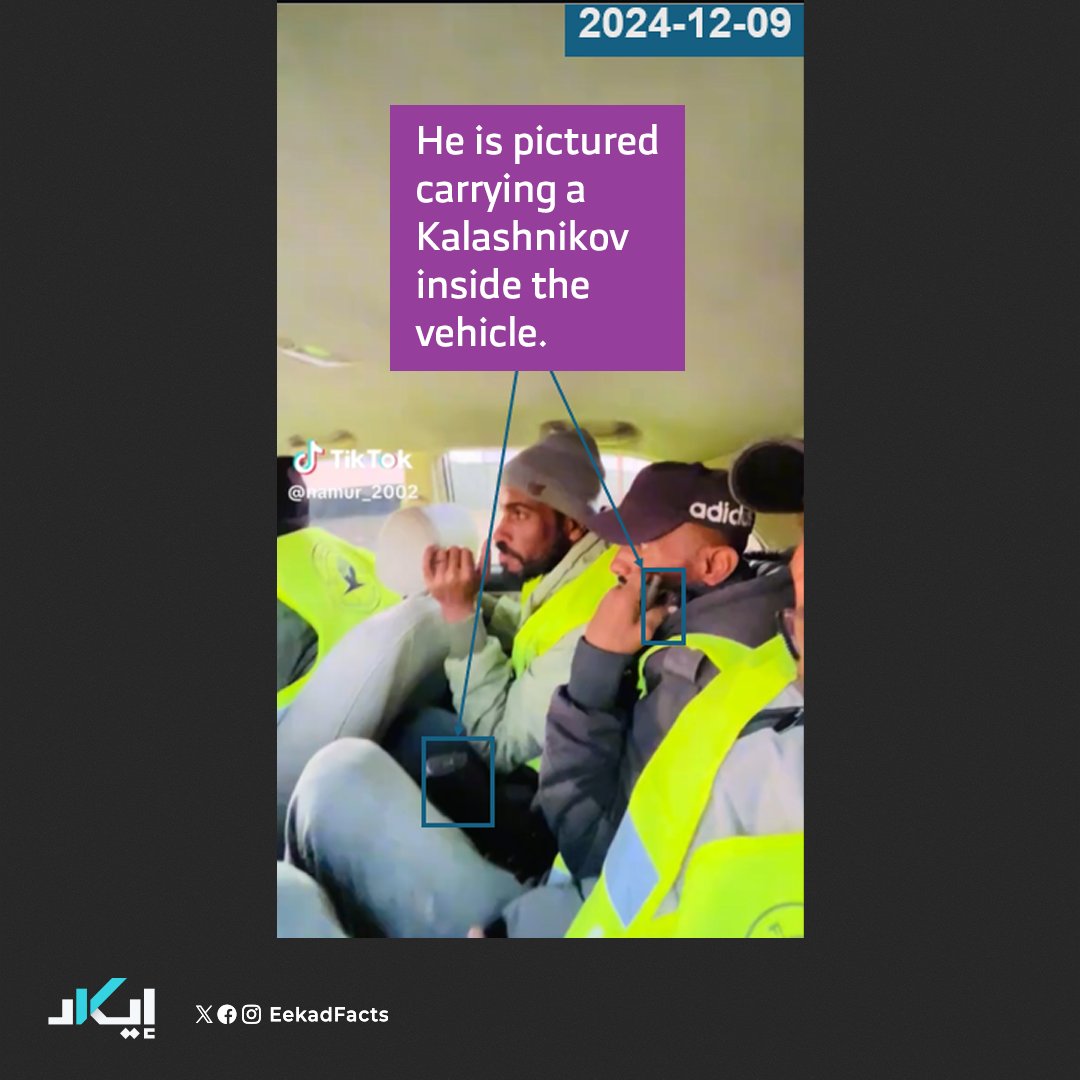


✔️The first third-tier operative identified was Nimer “Abu Al-Hussain,” an active TikTok user who posted several videos allegedly showing his role in transporting and securing humanitarian aid. These videos were shared up until January 19, prior to the ceasefire that later collapsed in March.
✔️Crucially, the footage captured instances of tampering with food boxes, affirming their complete control over the aid at a time when famine was ravaging Gaza.
28
✔️These videos, recorded during the war and prior to the ceasefire, were geolocated to areas under Israeli military control, such as the Philadelphia Corridor.
✔️This discovery strongly indicates that the Abu Shabab militia was coordinating with Israeli forces prior to the ceasefire. Furthermore, it underscores the group’s involvement in managing aid deliveries intended for Gaza’s starving population.

✔️This discovery strongly indicates that the Abu Shabab militia was coordinating with Israeli forces prior to the ceasefire. Furthermore, it underscores the group’s involvement in managing aid deliveries intended for Gaza’s starving population.
29
📌Kareem “Abu Al-Hussain”
✔️Also appearing in Nimer’s videos was his associate, Kareem Issam—commonly referred to as Kareem “Abu Al-Hussain.”
✔️In May, Kareem shared footage of aid convoys moving south of Gaza, aligning with the forced displacement of Rafah residents toward Al-Mawasi following evacuation orders issued by the Israeli army.
✔️This timing and location point to Kareem’s active presence in areas where the IDF was operating, further indicating coordination between the militia and Israeli forces.
✔️Given the heightened security in these areas, it would have been difficult for armed individuals to move freely without prior authorization.


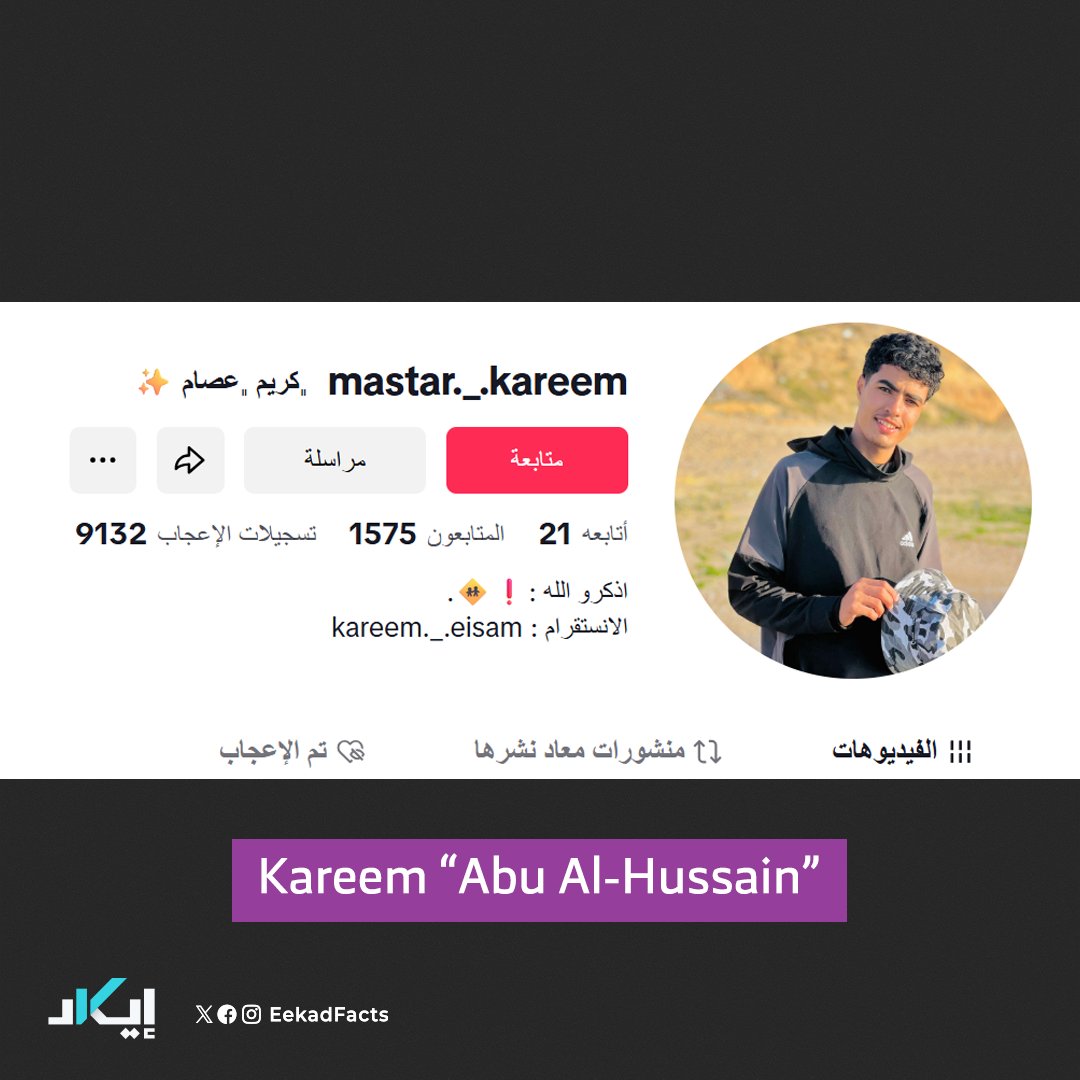
✔️Also appearing in Nimer’s videos was his associate, Kareem Issam—commonly referred to as Kareem “Abu Al-Hussain.”
✔️In May, Kareem shared footage of aid convoys moving south of Gaza, aligning with the forced displacement of Rafah residents toward Al-Mawasi following evacuation orders issued by the Israeli army.
✔️This timing and location point to Kareem’s active presence in areas where the IDF was operating, further indicating coordination between the militia and Israeli forces.
✔️Given the heightened security in these areas, it would have been difficult for armed individuals to move freely without prior authorization.
30
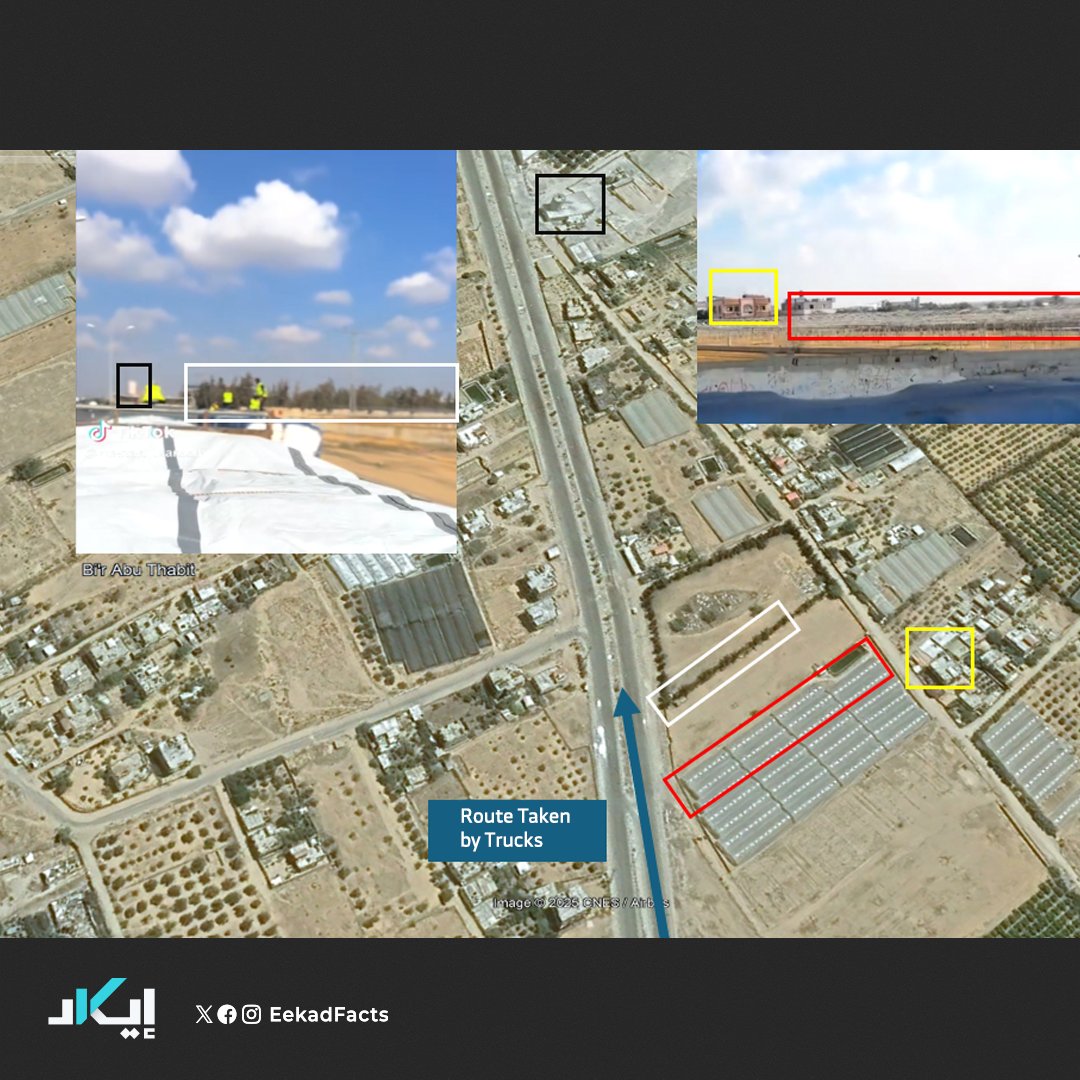
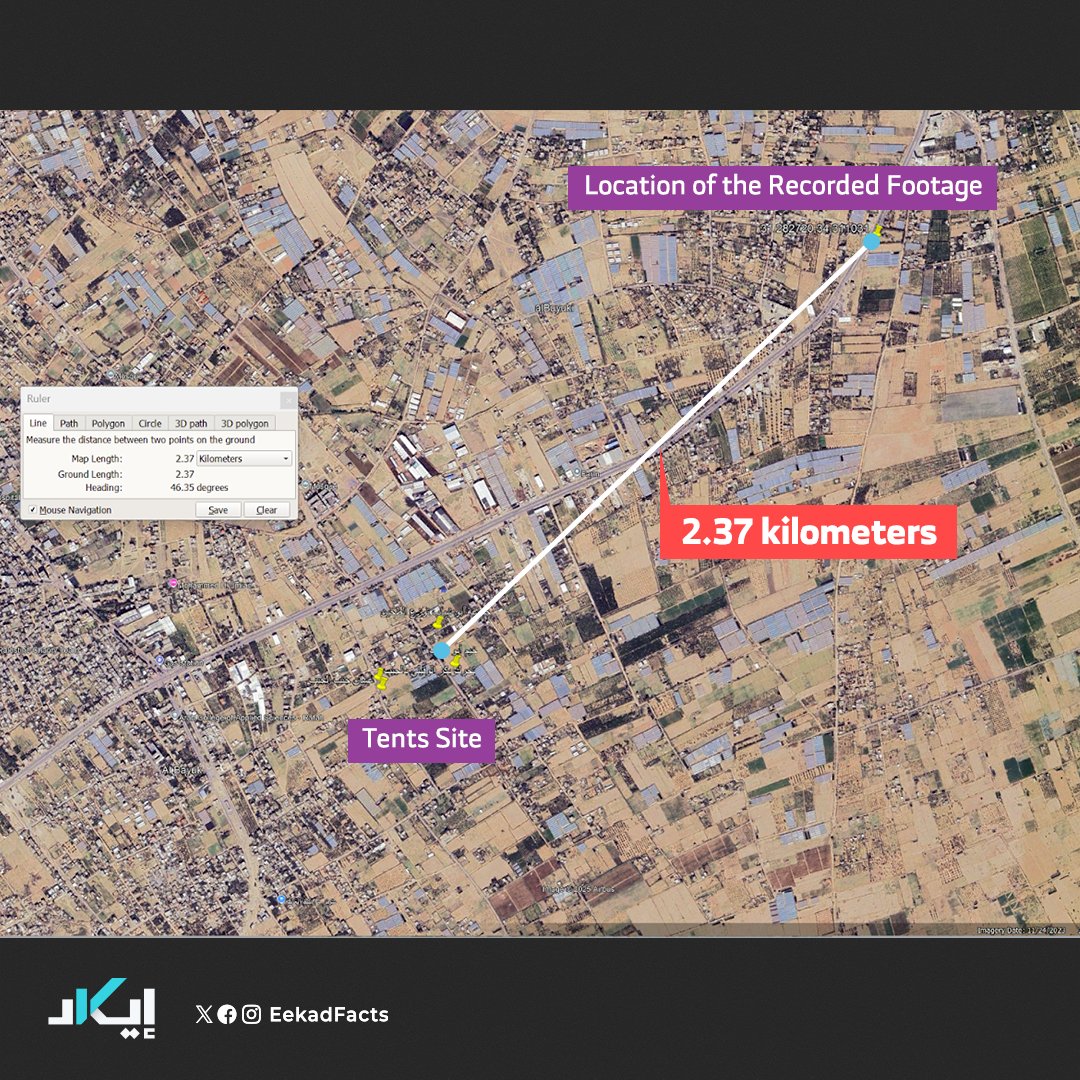
✔️One of Kareem’s videos, posted on June 9, was geolocated to Al-Bayuk area, overlooking Salah Al-Din Street. The footage showed an aid truck traveling from Rafah heading north, just 2.5 kilometers from the tent camp area previously declared by the Abu Shabab militia.


31
📌Abood “Abu Al-Hussain”
✔️Eekad’s investigation also uncovered the account of Abood “Abu Al-Hussain,” another member of the Abu Shabab militia, operating under the group’s so-called “aid security” wing.
Although he is not clearly visible in most posts, Abood shared videos in which he ✔️appears to be securing aid while armed. In one video from May, he is seen riding in a vehicle with Yousef “Abu Naser.”
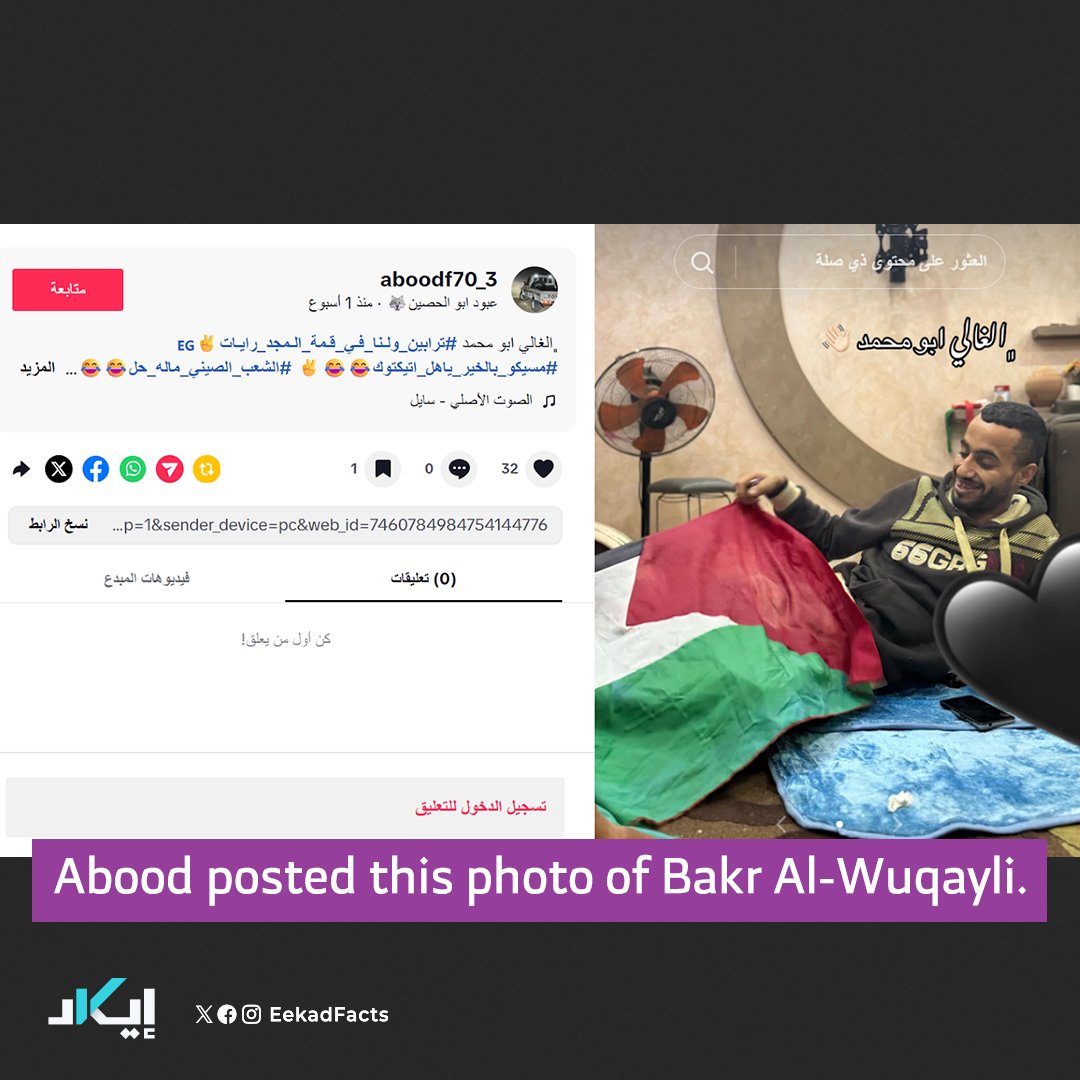
✔️He also shared a photo of Bakr Al-Wuqayli, apparently taken inside a house, suggesting a personal connection and deeper involvement in the militia’s network.
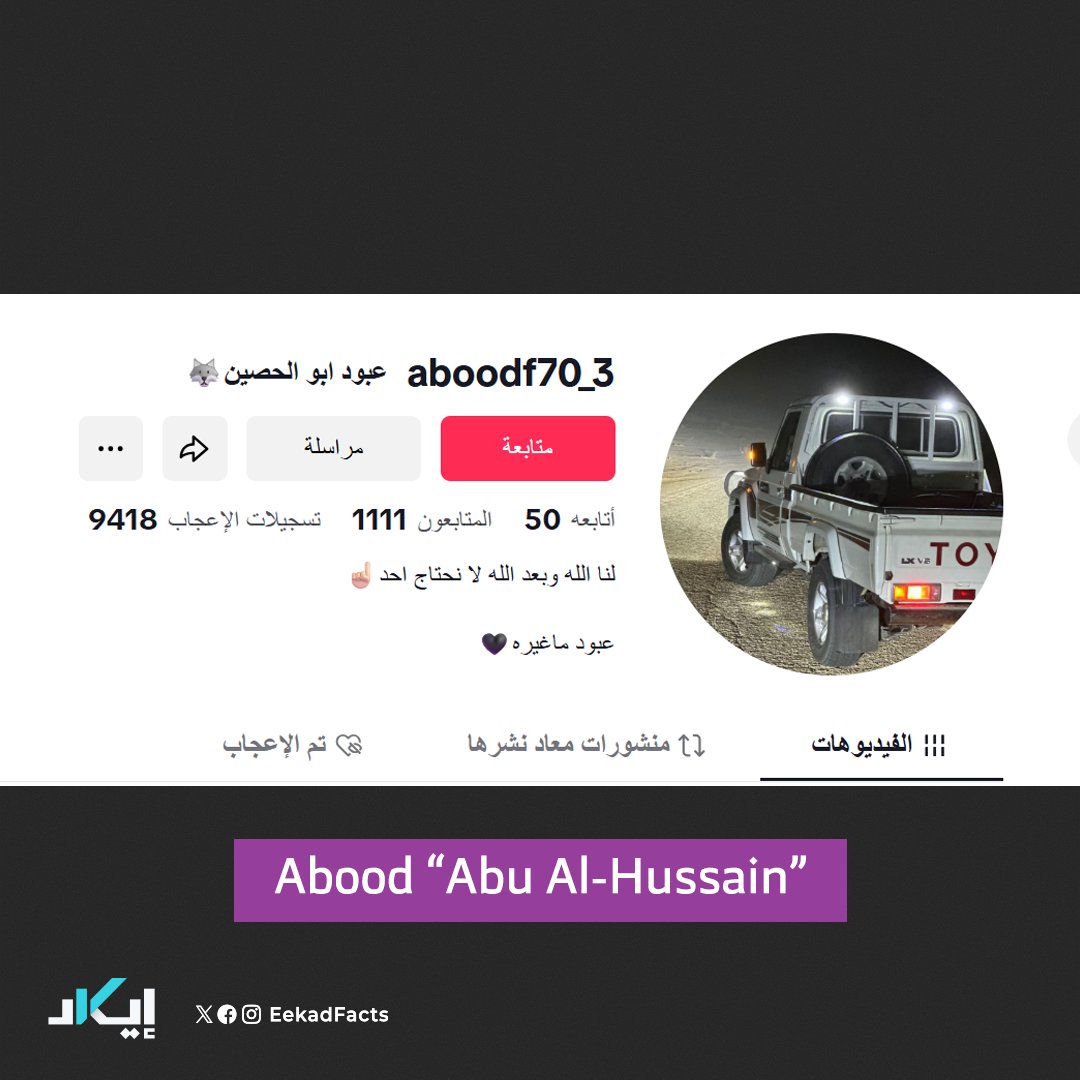
✔️Eekad’s investigation also uncovered the account of Abood “Abu Al-Hussain,” another member of the Abu Shabab militia, operating under the group’s so-called “aid security” wing.
Although he is not clearly visible in most posts, Abood shared videos in which he ✔️appears to be securing aid while armed. In one video from May, he is seen riding in a vehicle with Yousef “Abu Naser.”
✔️He also shared a photo of Bakr Al-Wuqayli, apparently taken inside a house, suggesting a personal connection and deeper involvement in the militia’s network.
32
✔️Significantly, all of Abood’s “aid security” videos were recorded after March 18, when hostilities resumed.
✔️These recordings occurred in areas where the IDF had urged civilians to evacuate to the south of Khan Yunis, further indicating that Abu Shabab members cooperate with the Israeli military.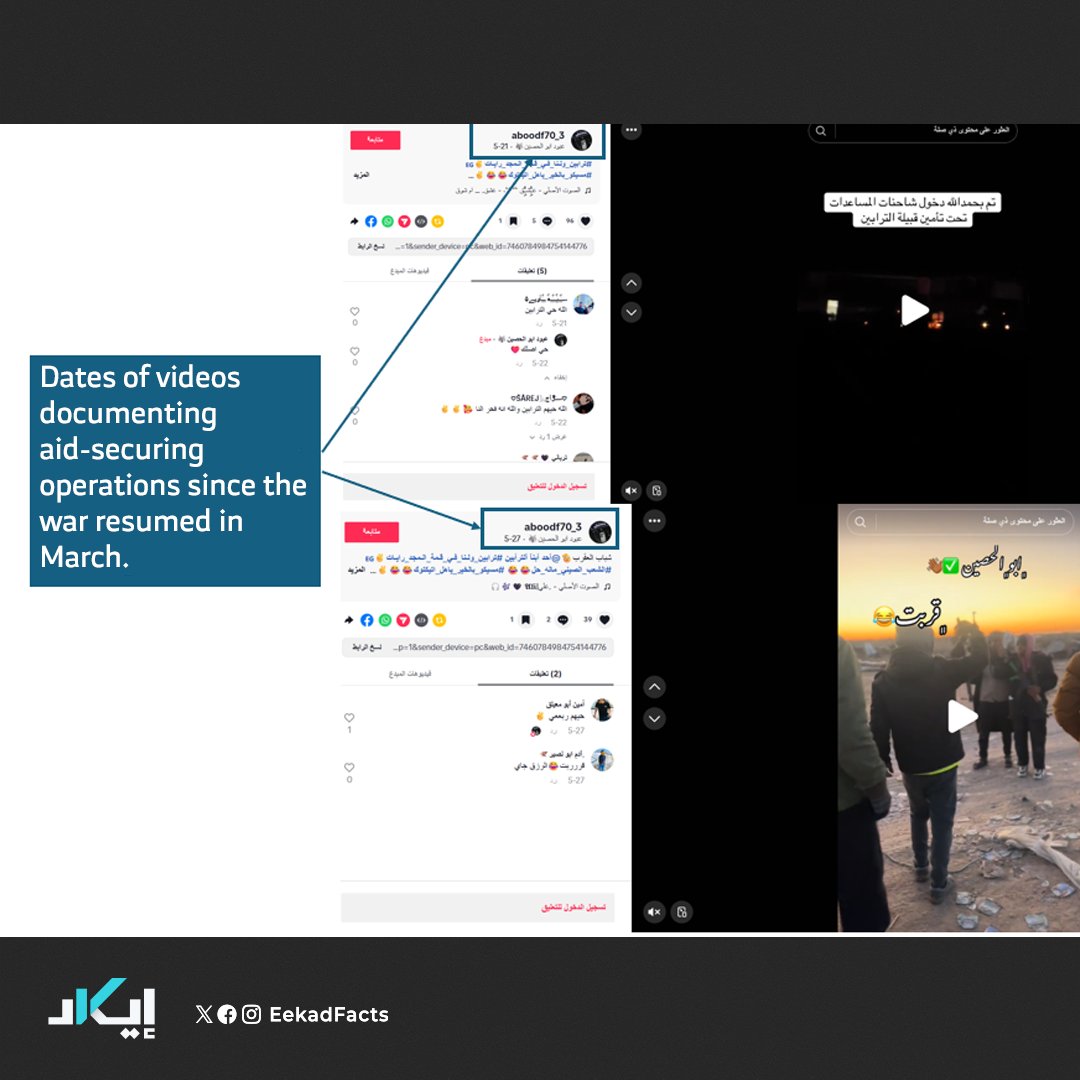
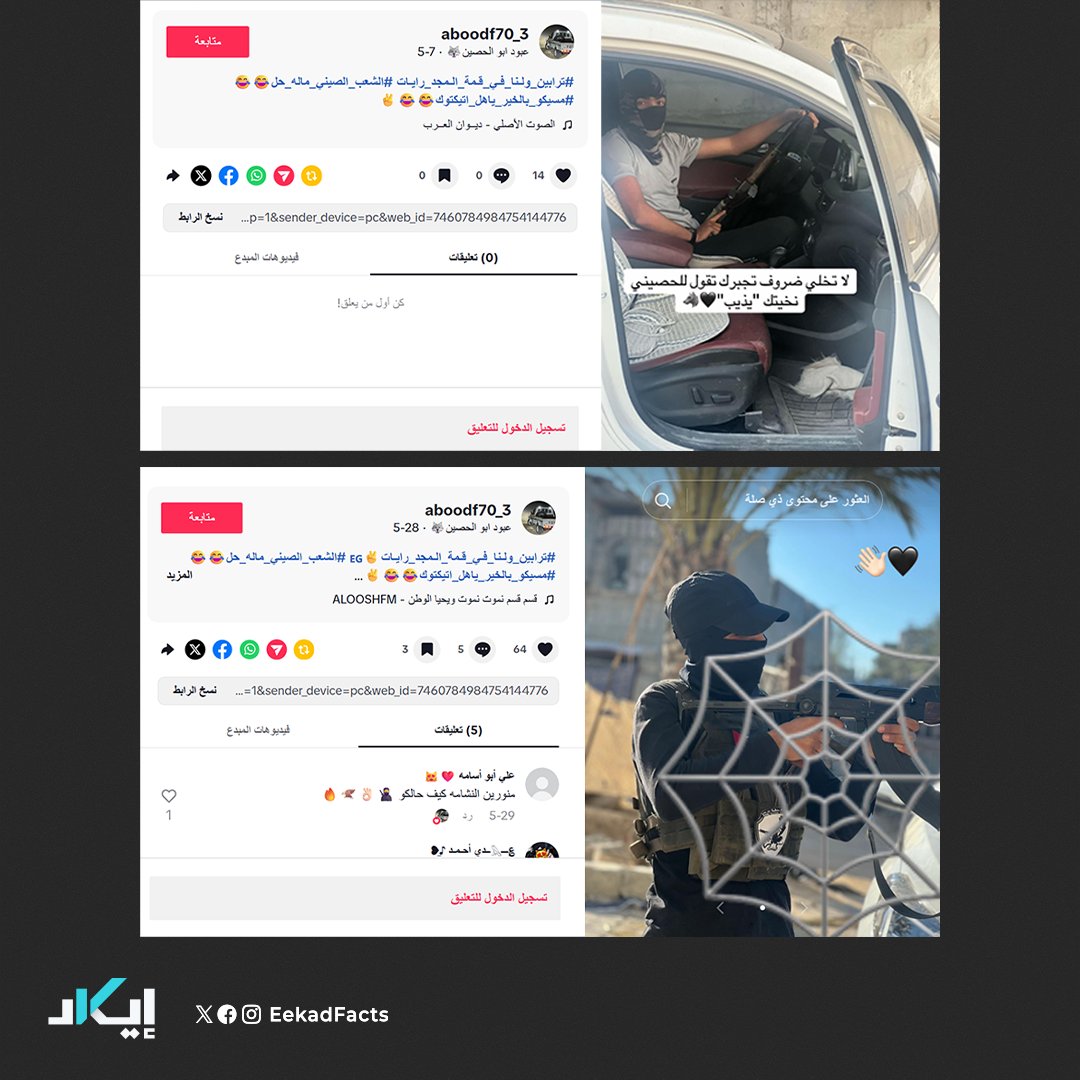
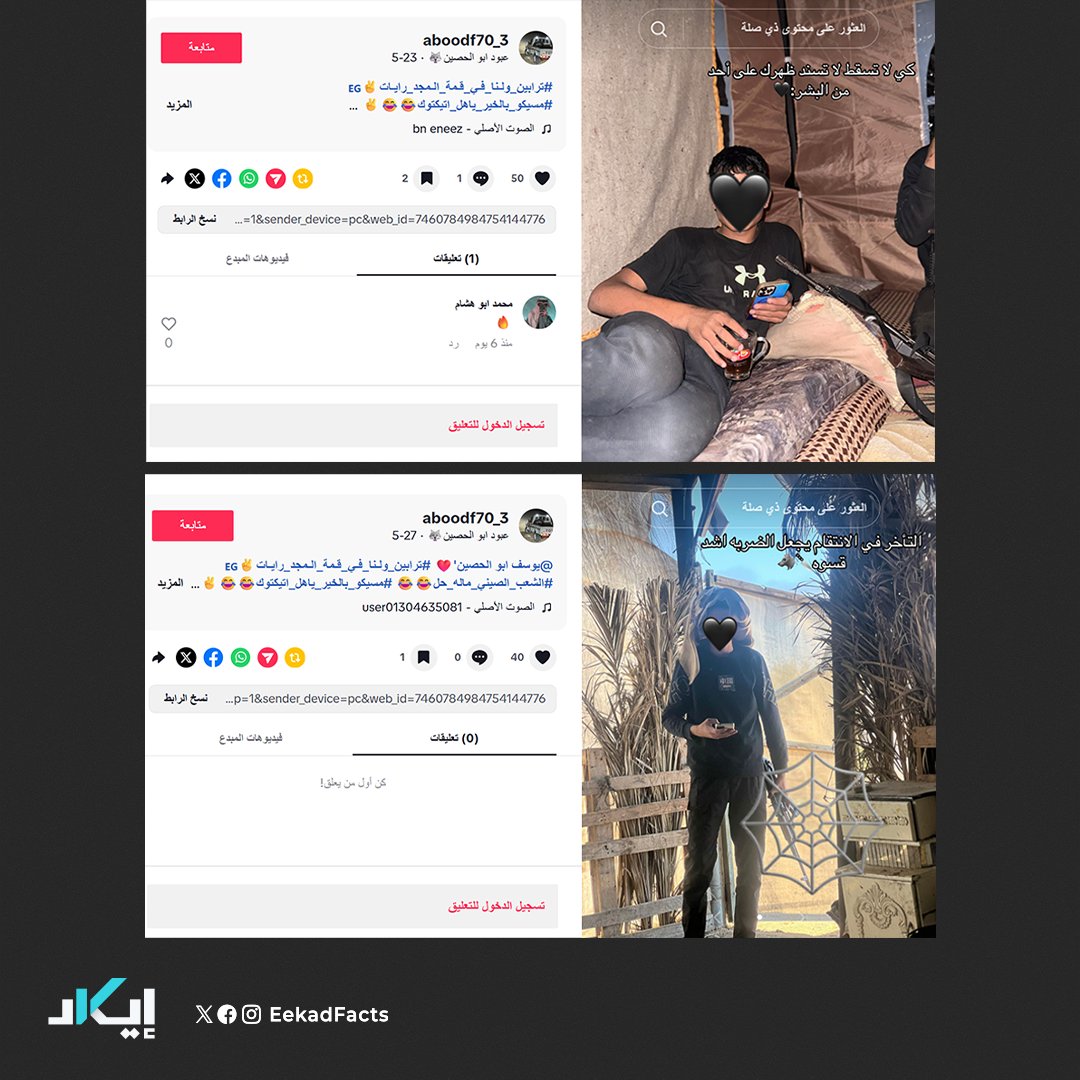
✔️These recordings occurred in areas where the IDF had urged civilians to evacuate to the south of Khan Yunis, further indicating that Abu Shabab members cooperate with the Israeli military.
33
📌Abo Anis: Evidence of Looting and Misuse of Humanitarian Aid
✔️The final figure uncovered in this tier of the investigation was Abo Anis. Like others in the group, he posted videos documenting the alleged delivery of aid—one of which featured the caption “flour only.”
✔️This specific phrase appeared frequently in content shared by other Abu Shabab members, including Kareem “Abu Al-Hussain.”
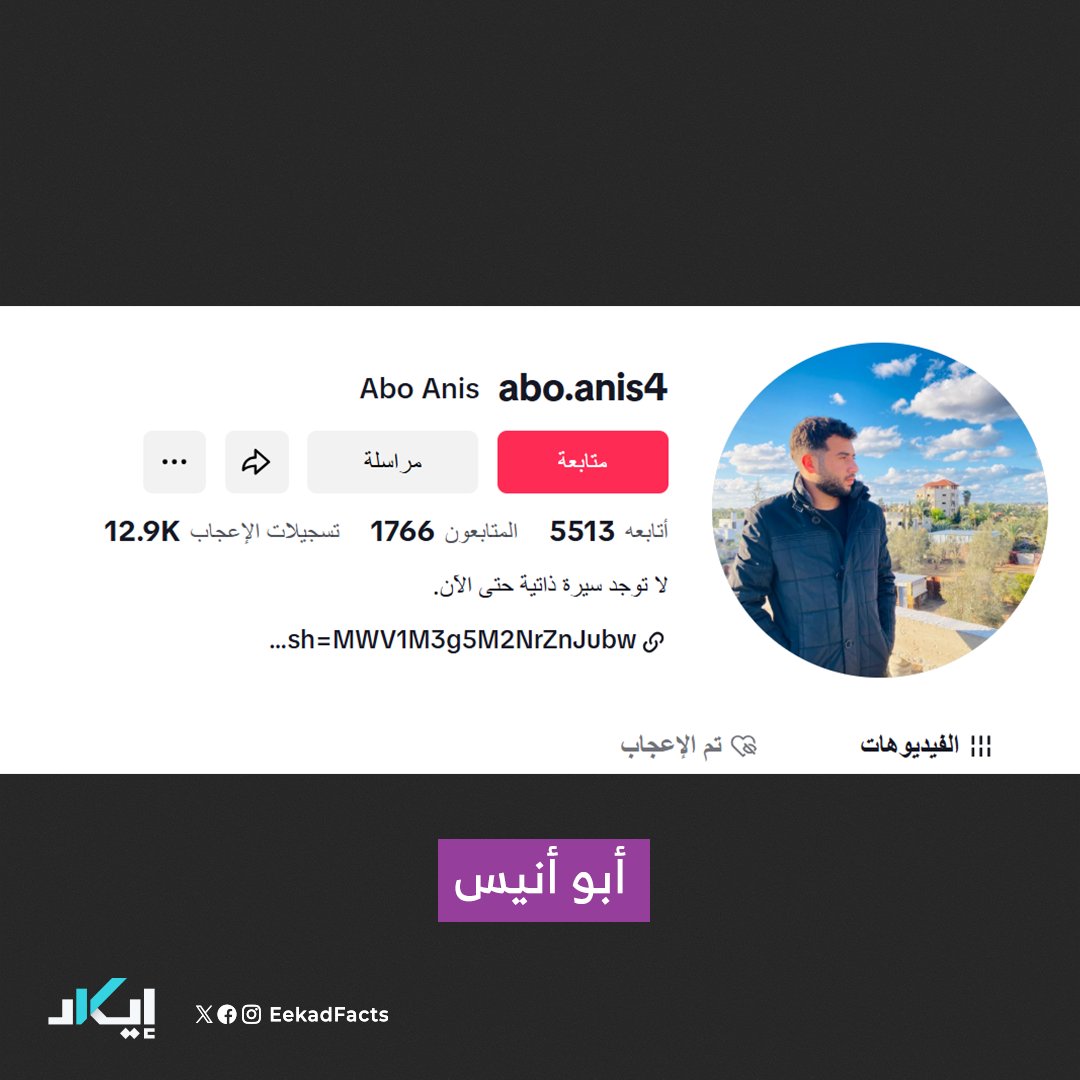


✔️The final figure uncovered in this tier of the investigation was Abo Anis. Like others in the group, he posted videos documenting the alleged delivery of aid—one of which featured the caption “flour only.”
✔️This specific phrase appeared frequently in content shared by other Abu Shabab members, including Kareem “Abu Al-Hussain.”
34
✔️On December 5, Abo Anis posted a video depicting armed militants seizing aid trucks on Salah Al-Din Street and forcibly removing the drivers.
✔️One of the trucks appeared immobilized, its tire damaged—possibly by gunfire—making it unable to continue down the road. Geolocation analysis confirmed the scene was filmed in the Khan Yunis Governorate, near the Gaza European Hospital.
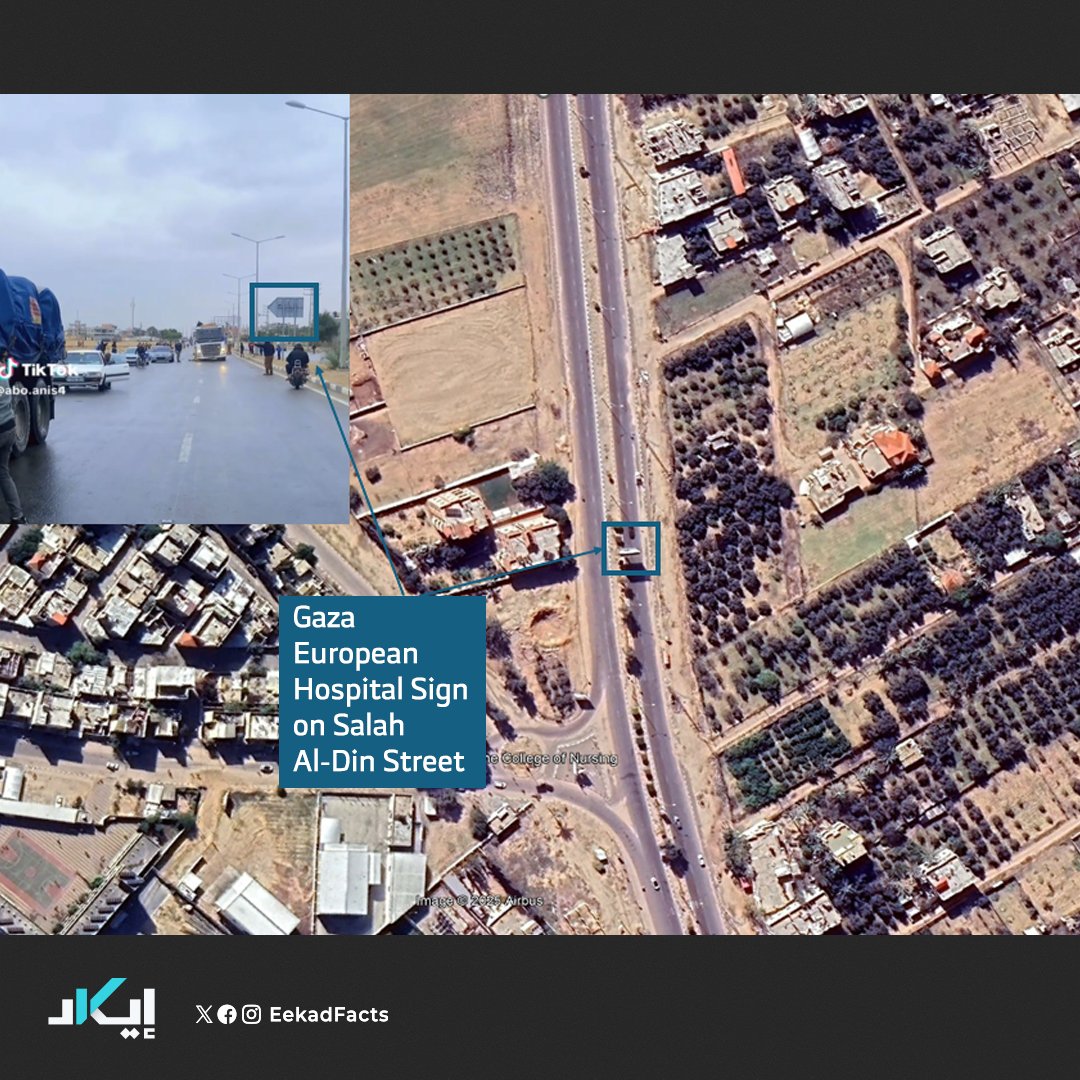
✔️One of the trucks appeared immobilized, its tire damaged—possibly by gunfire—making it unable to continue down the road. Geolocation analysis confirmed the scene was filmed in the Khan Yunis Governorate, near the Gaza European Hospital.
35
📌Analysis of the Abu Shabab Network’s Field Activity
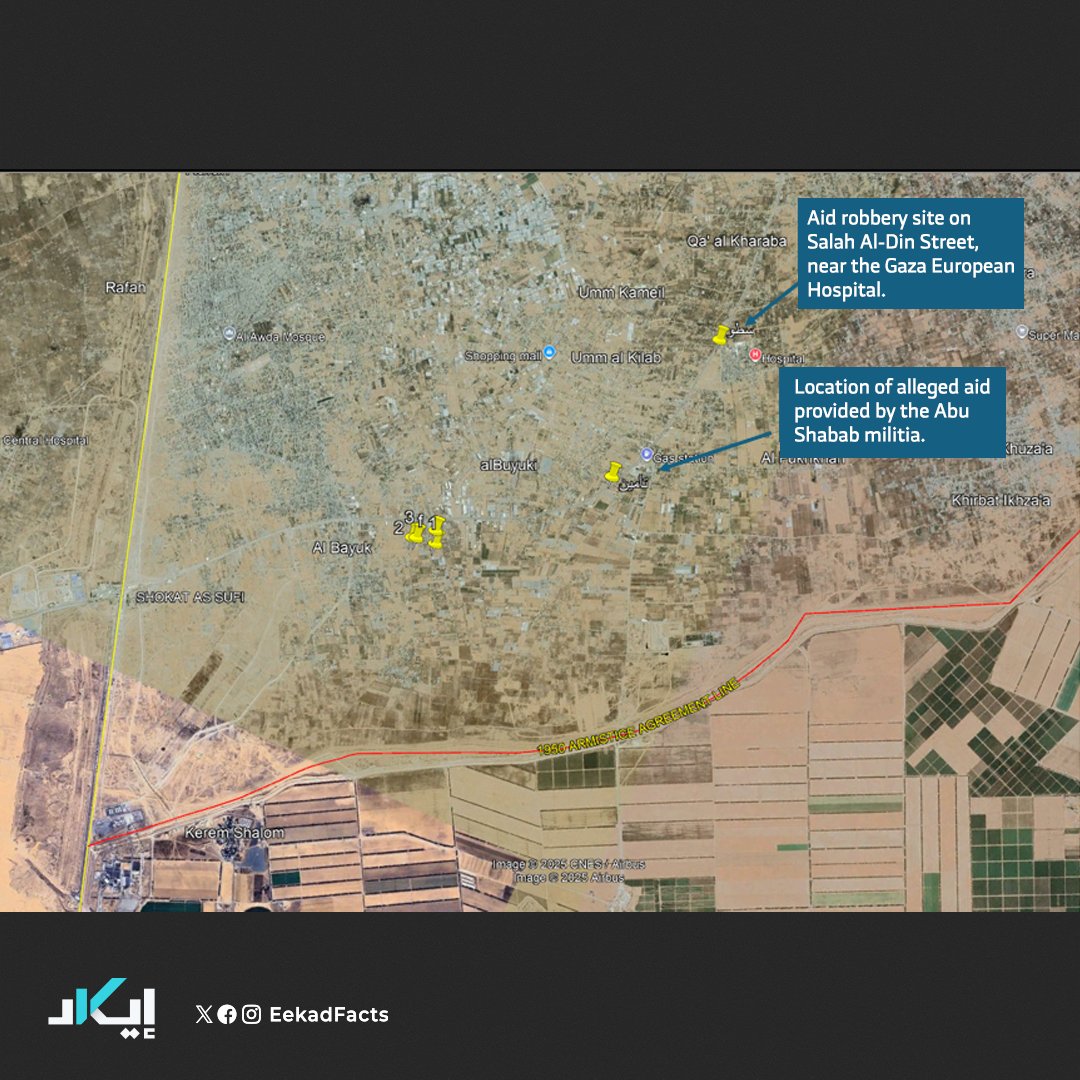
✔️Using the coordinates of the videos and photos shared by members of the militia, Eekad’s team constructed a detailed field map outlining the scope of the Abu Shabab militia’s activities.
✔️The group’s operations have been concentrated in the areas of Al-Shawka and Al-Bayuk, east of Rafah City, as well as the northern outskirts of Rafah—all strategically located near the Kerem Shalom border crossing and under direct Israeli military supervision.
✔️These areas closely correspond to the relocation zone referenced by Israeli Finance Minister Finance Smotrich, who advocated for concentrating displaced Gazans in a narrow strip of land between the Egyptian border and the Morag Corridor.
✔️Using the coordinates of the videos and photos shared by members of the militia, Eekad’s team constructed a detailed field map outlining the scope of the Abu Shabab militia’s activities.
✔️The group’s operations have been concentrated in the areas of Al-Shawka and Al-Bayuk, east of Rafah City, as well as the northern outskirts of Rafah—all strategically located near the Kerem Shalom border crossing and under direct Israeli military supervision.
✔️These areas closely correspond to the relocation zone referenced by Israeli Finance Minister Finance Smotrich, who advocated for concentrating displaced Gazans in a narrow strip of land between the Egyptian border and the Morag Corridor.
36
✔️Notably, the same areas—where the militia claimed to be “securing aid”—have also been referred to as “Gaza’s looting valley,” a term used by Sam Rose, Director of UNRWA Affairs in Gaza, to describe the stretch between Kerem Shalom and Khan Yunis that has seen extensive looting of humanitarian supplies.
✔️This concentration of militia activity is unlikely to be coincidental. Instead, it reflects a permissive security environment created under Israeli oversight—facilitating the militia’s presence in these areas while restricting their operations elsewhere.
✔️The pattern suggests a transactional relationship: freedom of movement granted in exchange for implementing policies aligned with Israeli objectives.
✔️The narrow operational footprint of the Abu Shabab militia further undermines its claims of humanitarian or security functions. Instead, the group appears to serve as a functional proxy, enabling the advancement of Israeli strategic interests under the guise of relief operations.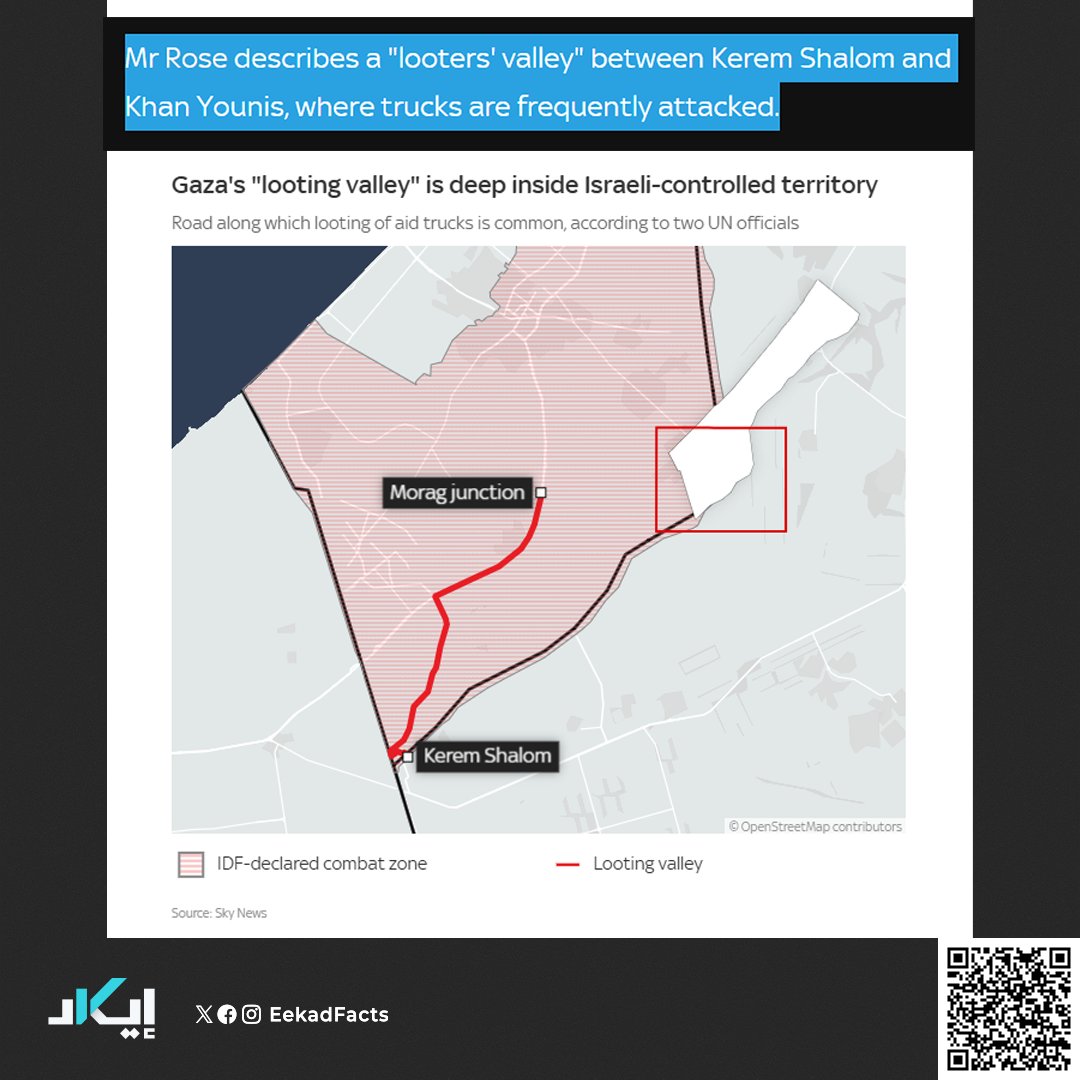
✔️This concentration of militia activity is unlikely to be coincidental. Instead, it reflects a permissive security environment created under Israeli oversight—facilitating the militia’s presence in these areas while restricting their operations elsewhere.
✔️The pattern suggests a transactional relationship: freedom of movement granted in exchange for implementing policies aligned with Israeli objectives.
✔️The narrow operational footprint of the Abu Shabab militia further undermines its claims of humanitarian or security functions. Instead, the group appears to serve as a functional proxy, enabling the advancement of Israeli strategic interests under the guise of relief operations.
37
📌Key Takeaways from Eekad’s Investigation:
➡️The Popular Forces militia, led by Yaser Abu Shabab, was formed from prison escapees, including individuals with prior affiliations to extremist organizations such as the Islamic State.
➡️The militia’s deployment was geographically limited to areas under Israeli control, particularly between the Kerem Shalom crossing and the Morag Corridor. In these zones, it engaged in systematic looting of humanitarian aid while claiming to be "securing" it.
➡️The site selected for distributing aid and erecting tents aligns precisely with Israeli plans to displace Gaza’s population southward—demonstrating the use of humanitarian operations to serve displacement objectives.
➡️Militia members frequently documented their movements online, enabling Eekad’s team to map the network’s structure, revealing a hierarchy composed of three operational tiers and their connections to the on-the-ground leadership.
➡️This investigation reveals that the Popular Forces militia is not a spontaneous or rogue group—but rather a calculated tool deployed in moments of crisis. Operating under the banner of humanitarian work, it functions in coordination with Israeli authorities, advancing a new security reality in Gaza aligned with Tel Aviv’s agenda.