Market Makers don't manipulate price— we're trapped by our own...

VolSignals@VolSignals
20 views
Jun 27, 2025
~4 min read
1
Market Makers don't manipulate price—
we're trapped by our own hedging requirements.
When SPX drifts between long and short strikes, our systems start buying and selling futures in ways that create predictable paths.
(short thread)

we're trapped by our own hedging requirements.
When SPX drifts between long and short strikes, our systems start buying and selling futures in ways that create predictable paths.
(short thread)
2
These paths depend on a variety of factors... it's not as simple as "GEX"
► Gamma (Spot Movement)
► Charm (Passage of Time)
► Vanna (Changes in Implied Volatility)
► Position Type
► Position Size
► Gamma (Spot Movement)
► Charm (Passage of Time)
► Vanna (Changes in Implied Volatility)
► Position Type
► Position Size
3
Gamma
[dDelta/dSpot]
The gateway to dealer hedging flows.
Option Gamma values grow as they near expiration, so 0DTE options make the biggest impact to our book here.
If we're long options, we're long Gamma.
Our Delta grows more positive as the market climbs.
[dDelta/dSpot]
The gateway to dealer hedging flows.
Option Gamma values grow as they near expiration, so 0DTE options make the biggest impact to our book here.
If we're long options, we're long Gamma.
Our Delta grows more positive as the market climbs.
4
If we're short options, we're short Gamma.
Our Delta gets shorter as the market rallies, longer as it declines.
Our Delta gets shorter as the market rallies, longer as it declines.
5
Long Gamma positions mean we're stabilizing the market.
We add size to both the bid
AND the offer.
This keeps price contained ~ slow and steady.
We add size to both the bid
AND the offer.
This keeps price contained ~ slow and steady.
6
Short Gamma positions mean the opposite.
Not only do we pull quotes from the underlying bid/ask-
but we actively sell into declines, and buy into rallies.
We race you to take liquidity (and our systems are fast)
Not only do we pull quotes from the underlying bid/ask-
but we actively sell into declines, and buy into rallies.
We race you to take liquidity (and our systems are fast)
7
Charm
[dDelta/dTime]
No matter what else may be going on
the clock never stops ticking.
We call this process of shortening an option's time-to-maturity "decaying", and it's not just option premium that drops.
[dDelta/dTime]
No matter what else may be going on
the clock never stops ticking.
We call this process of shortening an option's time-to-maturity "decaying", and it's not just option premium that drops.
8
As time passes, the probability of the option finishing in a different state drops, too.
In the money options are less likely to be out of the money at expiry.
And out of the money options are less likely to go in the money by expiry.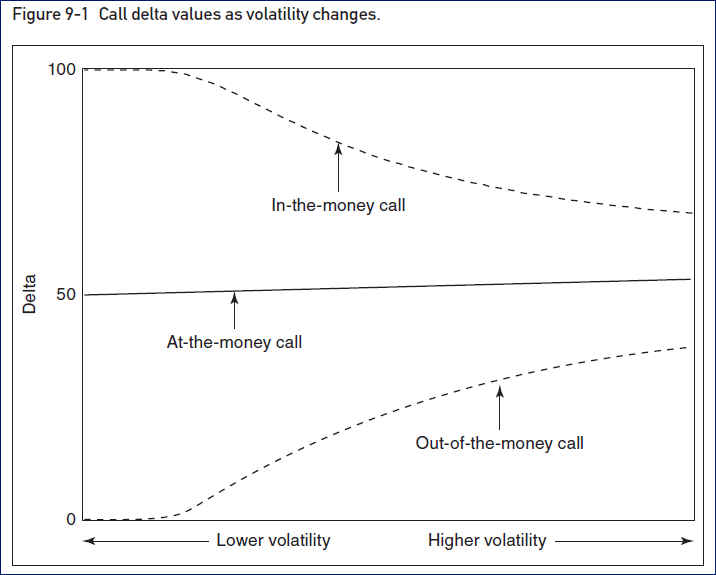
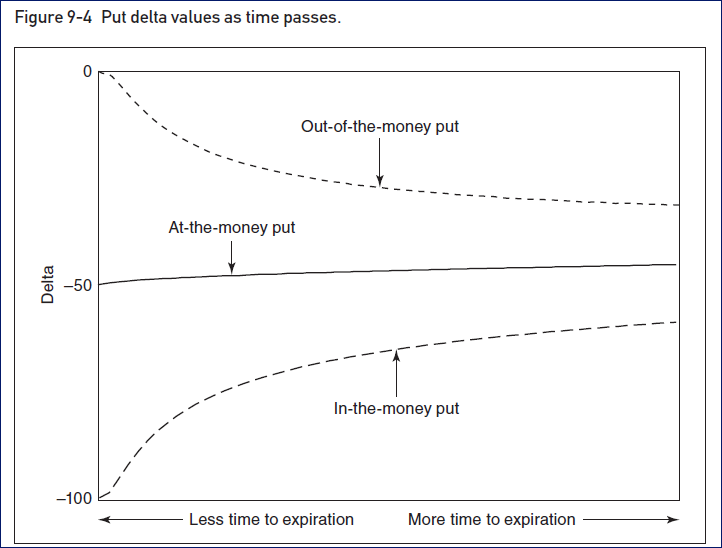
In the money options are less likely to be out of the money at expiry.
And out of the money options are less likely to go in the money by expiry.
9
As the distribution collapses locally around the option's strike level,
the absolute value of the option's Delta trends toward 0 or 100.
ITM options have 100 Delta at expiry (-100 for Puts)
OTM options have 0 Delta at expiry.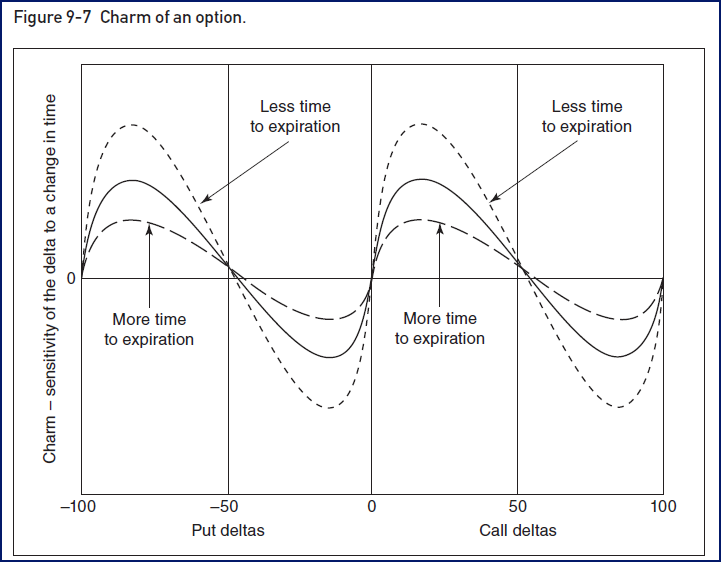
the absolute value of the option's Delta trends toward 0 or 100.
ITM options have 100 Delta at expiry (-100 for Puts)
OTM options have 0 Delta at expiry.
10
This process is non-linear, complex, and variable in practice.
But incredibly important to understand.
Why?
Because this creates directional influence directly from the dealer profile.
But incredibly important to understand.
Why?
Because this creates directional influence directly from the dealer profile.
11
Vanna
[dVega/dSpot, or dDelta/dVol]
One dimension more complex than Gamma or Charm, Vanna is critical to understand because it can set off dangerous feedback loops that exacerbate market movement.
Think August 5, 2024- for example.
[dVega/dSpot, or dDelta/dVol]
One dimension more complex than Gamma or Charm, Vanna is critical to understand because it can set off dangerous feedback loops that exacerbate market movement.
Think August 5, 2024- for example.
12
Vanna tells us as Market Makers how our position changes as the underlying moves around.
Our classic position— the short Risk Reversal,
is a LONG Vanna position.
Our classic position— the short Risk Reversal,
is a LONG Vanna position.
13
A customer hedges via buying a 20 Delta Put, and packages it with a 20 Delta Call to cover the cost of protection.
Their tradeoff is upside- our situation is more complex.
Our hedging process is a combination of the two positions below (flipping the Put from long->short):

Their tradeoff is upside- our situation is more complex.
Our hedging process is a combination of the two positions below (flipping the Put from long->short):
14
We start out with a neutral position-
both Delta and Vega.
IF the market rallies, we move closer to our long Call option.
Instead of a 20 Delta / 20 Delta structure, the Call will approach 50 Delta as the Put moves farther OTM.
both Delta and Vega.
IF the market rallies, we move closer to our long Call option.
Instead of a 20 Delta / 20 Delta structure, the Call will approach 50 Delta as the Put moves farther OTM.
15
Eventually, we are simply long the Straddle (effectively) when the Call is ATM.
Vanna (dVega/dSpot) describes the rate of change along the way— as we move from a Vega-Neutral position into a long Vega position.
but that's not all- there are Delta implications as Vol moves.
Vanna (dVega/dSpot) describes the rate of change along the way— as we move from a Vega-Neutral position into a long Vega position.
but that's not all- there are Delta implications as Vol moves.
16
If we started out short a 20 Delta Put, and long a 20 Delta Call- we have to sell 40 Deltas elsewhere to offset this and remain "Delta Neutral"
If Volatility drops, then the option deltas also drop.
...but hedges only change when we adjust them (buying/selling)
If Volatility drops, then the option deltas also drop.
...but hedges only change when we adjust them (buying/selling)
17
When implied vol drops here, we are left "too short" on the hedge.
We have to buy some of our delta back to flatten the book.
When positions are big enough, our behavior is enough to move markets.
Which is exactly where it starts to get interesting...
We have to buy some of our delta back to flatten the book.
When positions are big enough, our behavior is enough to move markets.
Which is exactly where it starts to get interesting...
18
In the situation above, let's say we buy back some of our hedge delta once vol drops.
Market rallies alongside our buying.
Spot movement means we're closer to our (long) Call
farther from our (short) Put
Are we longer or shorter Vega?
Market rallies alongside our buying.
Spot movement means we're closer to our (long) Call
farther from our (short) Put
Are we longer or shorter Vega?
19
We're LONGER Vega now in our book.
Since we're sensitive to inventory and flow...
when our inventory is LONGER Vega
We are calibrated to drop implied vol more QUICKLY
to induce trading out of our position and keep our risk balanced.
Since we're sensitive to inventory and flow...
when our inventory is LONGER Vega
We are calibrated to drop implied vol more QUICKLY
to induce trading out of our position and keep our risk balanced.
20
We drop implied vol again (because we got longer Vega)
and our delta changes.
again.
We have more futures to buy.
and our delta changes.
again.
We have more futures to buy.
21
Lather, rinse, repeat.
Now we're in a feedback loop- and it's going to take an external force- a change in behavior- to set us off this course.
Now we're in a feedback loop- and it's going to take an external force- a change in behavior- to set us off this course.
22
I led a free group call about the JPM Collar that covered many of these dynamics, and posted it for free on Youtube.
Dig in —>
youtube.com/watch?v=bcYUoS…
Dig in —>
youtube.com/watch?v=bcYUoS…
23
These influences are complex on their own.
Even more complicated when they all interact
(which they do).
The reason I can explain this well, is because I spent 15 years managing these outcomes, eyes glued to markets, positions, screens and simulations.
every... single.. day.
Even more complicated when they all interact
(which they do).
The reason I can explain this well, is because I spent 15 years managing these outcomes, eyes glued to markets, positions, screens and simulations.
every... single.. day.
24
Each type of position has a different influence on the hedging flows.
► Straddles
► Strangles
► Call Spreads, Put Spreads
► Risk Reversals
► Flies
► Ratios
► Calendars
etc, etc.
► Straddles
► Strangles
► Call Spreads, Put Spreads
► Risk Reversals
► Flies
► Ratios
► Calendars
etc, etc.
25
As spot changes and time passes, the positional influences themselves EVOLVE.
Want examples?
Retweet the original post in the thread and we'll host a Spaces tonight to talk through more situations just like these.
Want examples?
Retweet the original post in the thread and we'll host a Spaces tonight to talk through more situations just like these.