Have you considered cutting sugars from your diet? Here's what...

Pharm. Greatman@OGreat6
18 views
May 21, 2025
~3 min read
Advertisement
1
Have you considered cutting sugars from your diet?
Here's what happens to your body when you go sugar-free for just 7 days.
Shockingly, It's life-changing!
A thread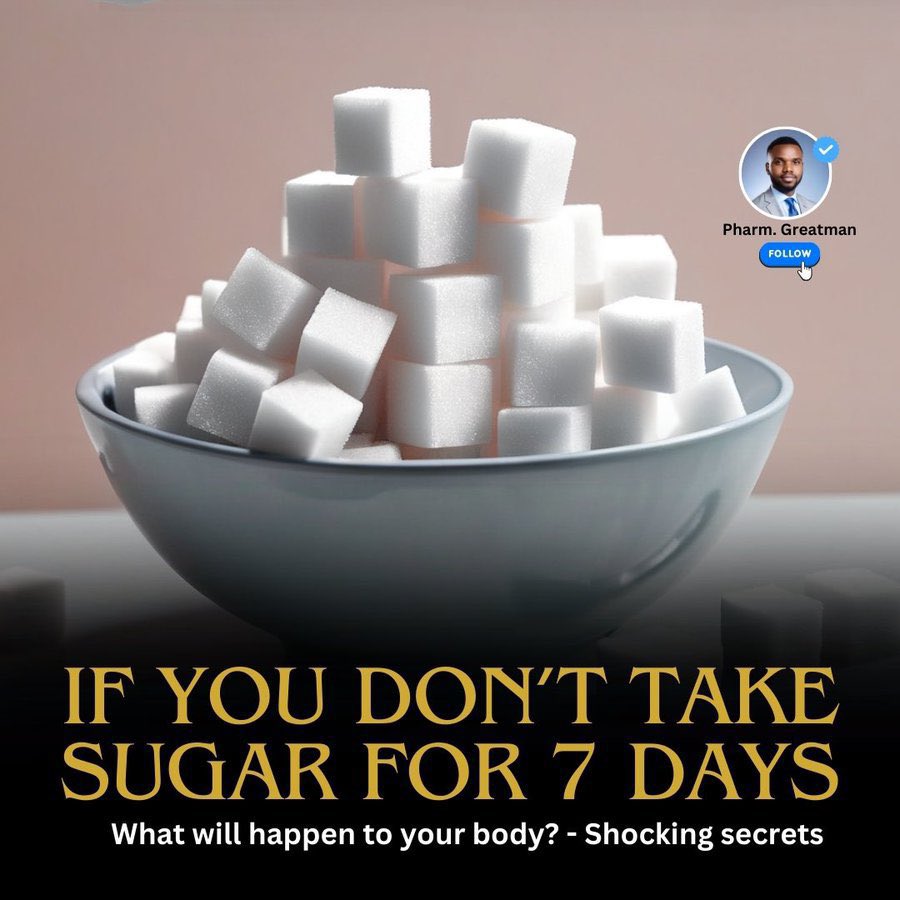
Here's what happens to your body when you go sugar-free for just 7 days.
Shockingly, It's life-changing!
A thread
2
WHAT DOES “SUGAR” HERE MEAN?
Dietary sugar refers to sugars added to foods or are naturally occurring that provide quick energy but little nutritional value; examples include candy, soda, pastries, and sugary cereals.
Dietary sugar refers to sugars added to foods or are naturally occurring that provide quick energy but little nutritional value; examples include candy, soda, pastries, and sugary cereals.
3
🔑 Energy Levels
- Initially, you might feel tired, but your energy levels will stabilize as your blood sugar normalizes. Consistent energy is a great start
- Initially, you might feel tired, but your energy levels will stabilize as your blood sugar normalizes. Consistent energy is a great start
4
🔑 Skin Health
- Sugar can cause insulin spikes that lead to inflammation, contributing to skin issues like acne.
- Less sugar means fewer insulin spikes, reducing inflammation. This can improve skin conditions like acne and pimples.
- Sugar can cause insulin spikes that lead to inflammation, contributing to skin issues like acne.
- Less sugar means fewer insulin spikes, reducing inflammation. This can improve skin conditions like acne and pimples.
5
🔑 Weight Loss
- Cutting out sugary foods and drinks can lead to fewer calories consumed, potentially resulting in weight loss, especially if sugary items were a large part of your diet.
- Cutting out sugary foods and drinks can lead to fewer calories consumed, potentially resulting in weight loss, especially if sugary items were a large part of your diet.
6
🔑 Your Digestion will improve
- High sugar intake can affect the balance of good bacteria in your gut (intestines), leading to digestive problems.
- Lowering sugar can improve gut health, reducing bloating and promoting better digestion.
- High sugar intake can affect the balance of good bacteria in your gut (intestines), leading to digestive problems.
- Lowering sugar can improve gut health, reducing bloating and promoting better digestion.
7
🔑 Your Mood Will be stabilized
- Did you know sugar can cause mood swings due to rapid changes in blood sugar levels.
- After the initial adjustment, your mood will likely become more stable, with fewer highs and lows. 🔑 Your Mood Will be stabilized
- Did you know sugar can cause mood swings due to rapid changes in blood sugar levels.
- After the initial adjustment, your mood will likely become more stable, with fewer highs and lows.
- Did you know sugar can cause mood swings due to rapid changes in blood sugar levels.
- After the initial adjustment, your mood will likely become more stable, with fewer highs and lows. 🔑 Your Mood Will be stabilized
- Did you know sugar can cause mood swings due to rapid changes in blood sugar levels.
- After the initial adjustment, your mood will likely become more stable, with fewer highs and lows.
8
🔑 Reduced Cravings
- At first, you might experience strong cravings for sugary foods (most people quit here)
- Over time, these cravings will diminish, making it easier to choose healthier options.
- At first, you might experience strong cravings for sugary foods (most people quit here)
- Over time, these cravings will diminish, making it easier to choose healthier options.
9
🔑 Withdrawal Symptoms
- Be prepared for possible withdrawal symptoms like headaches, fatigue, irritability, and strong cravings in the first few days.
- These symptoms are temporary and usually subside after the first few days stay strong
- Be prepared for possible withdrawal symptoms like headaches, fatigue, irritability, and strong cravings in the first few days.
- These symptoms are temporary and usually subside after the first few days stay strong
10
🔑 Improved Metabolic Health
- Lower sugar intake can improve your insulin sensitivity, reducing the risk of insulin resistance.
- This is beneficial for overall metabolic health and can lower the risk of type 2 diabetes.
- Lower sugar intake can improve your insulin sensitivity, reducing the risk of insulin resistance.
- This is beneficial for overall metabolic health and can lower the risk of type 2 diabetes.
11
🔑 Heart Health
- Reducing sugar can lower your blood pressure and decrease levels of harmful LDL cholesterol.
- This can lead to improved heart health and reduced risk of cardiovascular diseases.
- Reducing sugar can lower your blood pressure and decrease levels of harmful LDL cholesterol.
- This can lead to improved heart health and reduced risk of cardiovascular diseases.
12
🔑 What happens long term?
Consistently lowering sugar intake reduces the risk of chronic diseases like type 2 diabetes, heart disease, and certain cancers.
Consistently lowering sugar intake reduces the risk of chronic diseases like type 2 diabetes, heart disease, and certain cancers.
13
WHO SHOULD NOT LOWER SUGAR INTAKE?
- Those who have conditions causing low blood sugar (hypoglycemia) may need to consume sugar
- Athletes or individuals with high physical activity levels might need higher carbohydrate and sugar intake to replenish glycogen stores and maintain energy level. Like during exercise
- Some medical conditions may require higher sugar intake as part of treatment or management. For example, individuals with glycogen storage diseases may need regular intake of glucose
- In cases of acute illness, injury, or significant stress the body's energy demands increase, and adequate sugar intake may be necessary
- Growing children and adolescents have higher energy requirements and may need more carbohydrates, including sugar, to support growth and development
14
Thank you for reading my thread
Follow me @OGreat6 for more health information
Follow me @OGreat6 for more health information

