You want to get faster? Focus on what matters and have a real...

Sprint Science@spikesonly
15 views
Apr 23, 2025
~2 min read
Advertisement
1
You want to get faster?
Focus on what matters and have a real system.
⏱️The key is simple and honest math, addressing milliseconds, centimeters, and degrees.
I wrote this super thread 🧵as this is the most useful information for consistently progressing with your training.
Focus on what matters and have a real system.
⏱️The key is simple and honest math, addressing milliseconds, centimeters, and degrees.
I wrote this super thread 🧵as this is the most useful information for consistently progressing with your training.
2
Measure how fast you are at peak velocity first.
How fast you can go from point A to point B is the mean interval velocity, and looking at how your steps and body can produce that speed.
Calculate the stride length & stride frequency at peak velocity relative to your body.
How fast you can go from point A to point B is the mean interval velocity, and looking at how your steps and body can produce that speed.
Calculate the stride length & stride frequency at peak velocity relative to your body.
0:01
3
Max out your step length is hitting roughly 53% or more of your height while not reaching beyond 20-30 cm when hitting the ground.
Step frequency needs to be 4.5-5 Hz, and for better athletes, higher than 4.75 Hz.
If you are not long enough, check your shoulder & arm action.
Step frequency needs to be 4.5-5 Hz, and for better athletes, higher than 4.75 Hz.
If you are not long enough, check your shoulder & arm action.
4
You can predict a lot of what happens on the track from a training table, and this bothers coaches for some reason.
If you don't have sufficient range of motion or bone length, your body is forced to create a movement strategy based on those limitations.
Anatomy wins medals.
If you don't have sufficient range of motion or bone length, your body is forced to create a movement strategy based on those limitations.
Anatomy wins medals.
5
I read a lot of fluffy points on footpath, but if you do not understand how the foot repositions, you are far behind as a coach or even an athlete.
The goal of the foot is to have tangential foot speed and recoil into another deflection, like a rock skipping on the water.
The goal of the foot is to have tangential foot speed and recoil into another deflection, like a rock skipping on the water.
6
A few people asked what to do with the foot path, and that is simple: look for places to shave time, add distance, and throttle the range of motion for a better combination of time and distance.
If you don't focus on the big 3, you are overcomplicating things for no reason.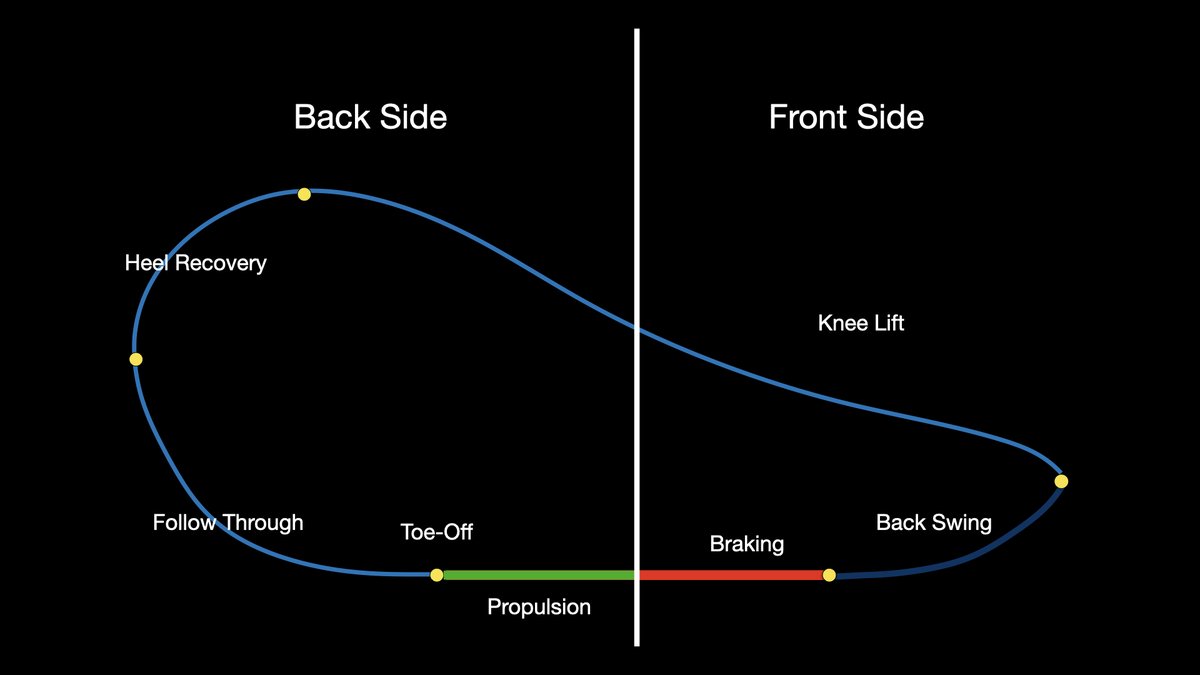
If you don't focus on the big 3, you are overcomplicating things for no reason.
7
Now for the reminder. The foot path is highly related to head and pelvic positioning and strength.
The key to a better pelvis and neck is seeing the footpaths improve by the shape and speed. You can see here the symmetry and shape, but what you can't see is the speed.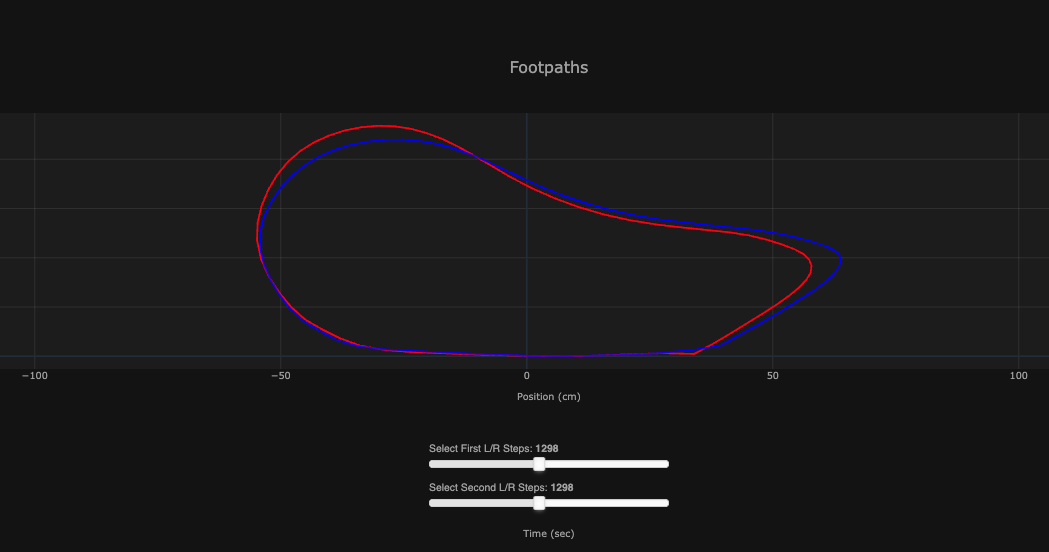
The key to a better pelvis and neck is seeing the footpaths improve by the shape and speed. You can see here the symmetry and shape, but what you can't see is the speed.
8
What about from above or behind?
A lot of sagittal closed footpaths, but nothing in 3D.
Can we trust information that is limited to watching from the side? What information are we missing?
This is why we must do better research on how speed is made, not just the results.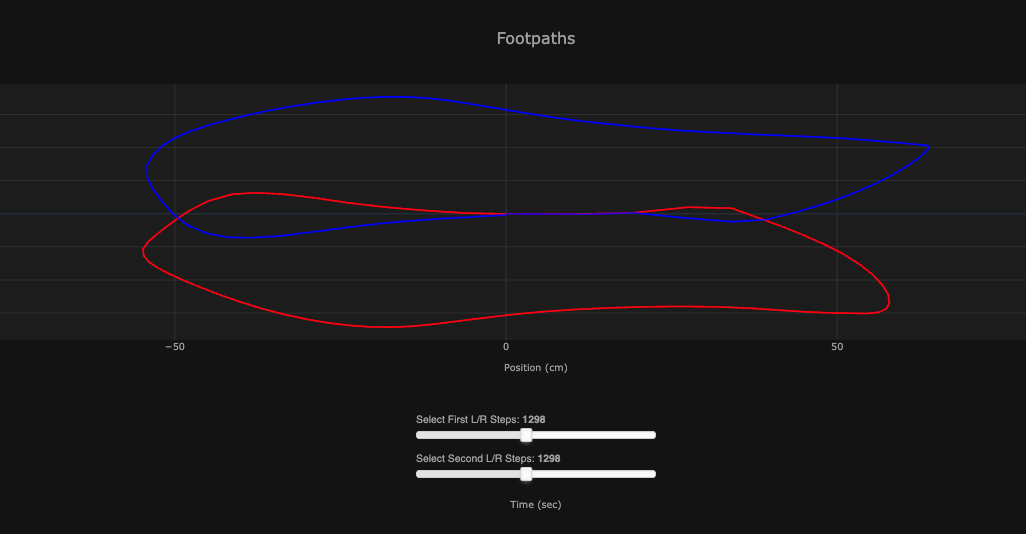
A lot of sagittal closed footpaths, but nothing in 3D.
Can we trust information that is limited to watching from the side? What information are we missing?
This is why we must do better research on how speed is made, not just the results.
9
Now for better choices and decision trees.
If you are hitting solid numbers, look for adding more range for angular momentum of the leg, and decreasing the range of motion (time loss) to areas that don't yield speed.
Higher knee, farther foot, land under better and faster.
If you are hitting solid numbers, look for adding more range for angular momentum of the leg, and decreasing the range of motion (time loss) to areas that don't yield speed.
Higher knee, farther foot, land under better and faster.
10
Simple stride parameters can be made into decision trees for @FYTTio users.
If you are collecting good data from video, laser, IR Grids, or IMUs, you can build a simple but world-class model that addresses anatomy and sprint data.
Who wants a master class?
If you are collecting good data from video, laser, IR Grids, or IMUs, you can build a simple but world-class model that addresses anatomy and sprint data.
Who wants a master class?