The year was 33 AD, and the tomb was empty. Two disciples entered,...

Trad West@trad_west_
58 views
Apr 21, 2025
~4 min read
Advertisement
1
The year was 33 AD, and the tomb was empty.
Two disciples entered, Peter and John, finding not one, but two cloths.
A contradiction? No. A revelation.
One was the Shroud of Turin, the other?
The Sudarium of Oviedo, proof of the Passion of our Lord - a 🧵✝️☦️
Two disciples entered, Peter and John, finding not one, but two cloths.
A contradiction? No. A revelation.
One was the Shroud of Turin, the other?
The Sudarium of Oviedo, proof of the Passion of our Lord - a 🧵✝️☦️
2
The Gospel of John (John 20,6-7) tells us that when Peter and John entered the empty tomb, they saw two cloths, not one. The larger linen (the Shroud of Turin) was left neatly folded, while the smaller "Sudarium", which had been wrapped around Christ’s bloodied head, was set apart.
The reason for the Sudarium is that Jewish tradition demanded that if the face of a dead person was in any way disfigured, as was that of Jesus, it should be covered with a cloth so as not to be seen.
The reason for the Sudarium is that Jewish tradition demanded that if the face of a dead person was in any way disfigured, as was that of Jesus, it should be covered with a cloth so as not to be seen.
3
Unlike the Shroud of Turin, the Sudarium of Oviedo does not show an image. Instead, it is soaked in blood and fluid from the brutal wounds of a crucified man.
It was never meant to cover a body, its purpose was clear: it was hurriedly used to clean the disfigured, lifeless face of the Messiah before His final burial shroud was wrapped around Him.
There are remarkable similarities between the Sudarium and the Shroud of Turin, for example the nose is exactly the same length, about eight centimetres.
Likewise, the thorn stains on the nape of the neck coincide perfectly with those on the Shroud.
In fact, there are a total of seventy points of coincidence with the stains on the front of the Shroud and fifty on the back.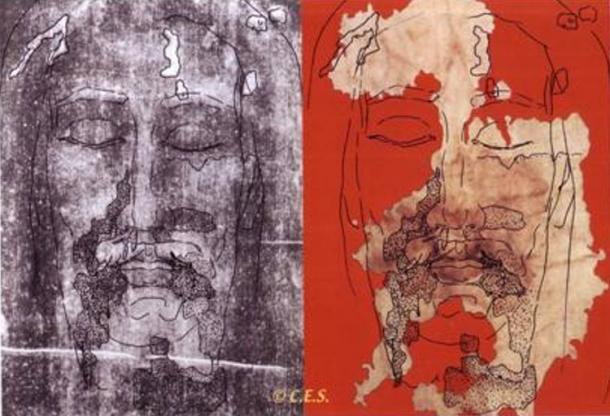
It was never meant to cover a body, its purpose was clear: it was hurriedly used to clean the disfigured, lifeless face of the Messiah before His final burial shroud was wrapped around Him.
There are remarkable similarities between the Sudarium and the Shroud of Turin, for example the nose is exactly the same length, about eight centimetres.
Likewise, the thorn stains on the nape of the neck coincide perfectly with those on the Shroud.
In fact, there are a total of seventy points of coincidence with the stains on the front of the Shroud and fifty on the back.
4
But where did it go after that fateful morning? The trail of the Sudarium is traced with precision:
Jerusalem (1st century AD) – Hidden by the earliest Christians to protect it from Roman and Jewish authorities.
Alexandria (614 AD) – Transported to Egypt to escape the Persian invasion.
Spain (7th century AD) – Carried by Christian refugees fleeing the Muslim conquest.
Oviedo (718 AD) – Safeguarded in the Cámara Santa, a relic chamber built specifically to protect it.
For over 1,300 years, it has remained in Oviedo, Spain, where it has been revered, studied, and preserved.
5
Modern forensic science has put the Sudarium of Oviedo under the microscope & the results have left even the most hardened skeptics in awe.
Recent tests carried out on the cloth by scientists from the Spanish Centre for Sindonology have yielded some remarkable results.
Both relics contain Type AB blood, rare today but more common in the population of Jerusalem at that time.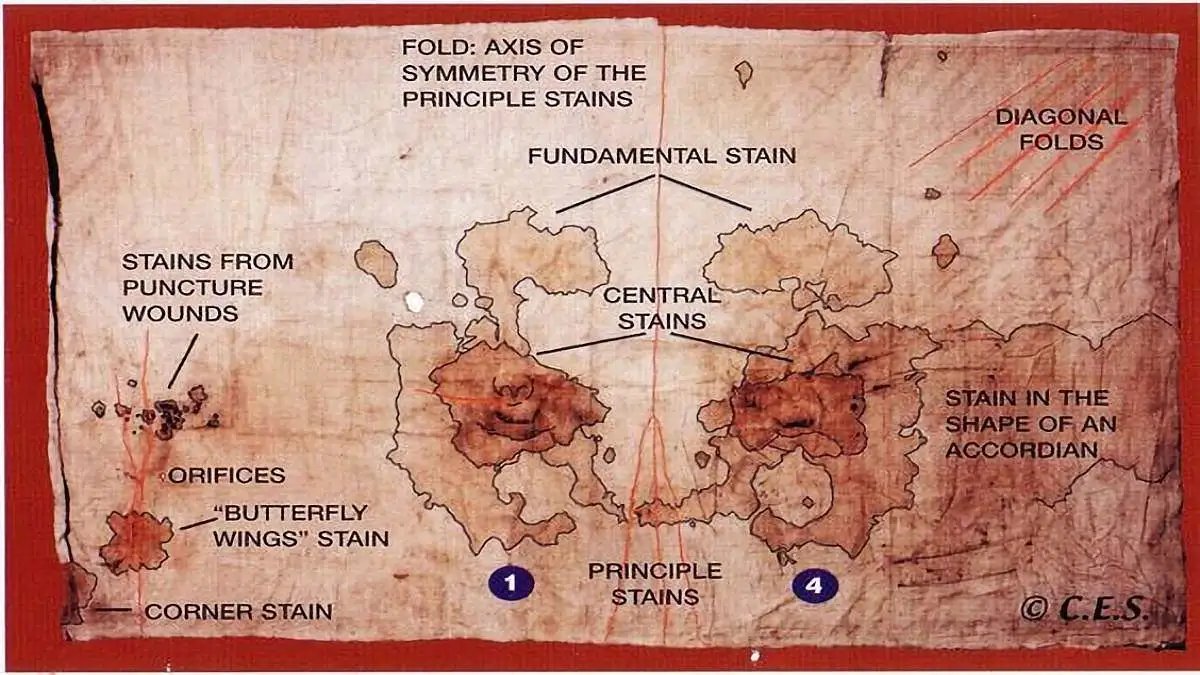
Recent tests carried out on the cloth by scientists from the Spanish Centre for Sindonology have yielded some remarkable results.
Both relics contain Type AB blood, rare today but more common in the population of Jerusalem at that time.
6
Perfect Alignment of Wounds:
The stains on the Sudarium correspond exactly to the blood flow from the face of the man in the Shroud of Turin, down to the shape of the nose and mouth.
The stains consist of one part blood and six parts oedema fluid, which collects in the lungs when a crucified person dies of asphyxiation.
If the body suffers jolting movements, the fluid can come out through the nostrils.
The oedema stains near the nose are superimposed on each other, in such a way that the earlier stains had already dried when the later ones were formed.
In addition to the main stains there are smaller bloodstains all over the head made by small sharp objects, like thorns.
7
Ancient Pollen Match:
Scientists have discovered pollen on both the Shroud of Turin and the Sudarium of Oviedo that only grows in the Holy Land.
There is pollen on the cloth, as found in Oviedo, Toledo, North Africa and Jerusalem, confirming the route taken by the cloth.
And there are residues most probably of myrrh and aloes, as described in the Gospel (cf. Jn 19:39-40).
8
Signs of Torture:
Blood patterns confirm that the victim suffered a brutal death by asphyxiation, consistent with crucifixion. His head was tilted at an angle, blood running down in the precise direction expected for a man on a cross.
Blood patterns confirm that the victim suffered a brutal death by asphyxiation, consistent with crucifixion. His head was tilted at an angle, blood running down in the precise direction expected for a man on a cross.
9
The chances of all these factors aligning by coincidence? Essentially zero.
But they did.
But they did.
10
Forensic experts agree: the Sudarium was used on the same man who was later wrapped in the Shroud of Turin.
The only man in history recorded to have been crucified, crowned with thorns, and brutally executed in Jerusalem at that time...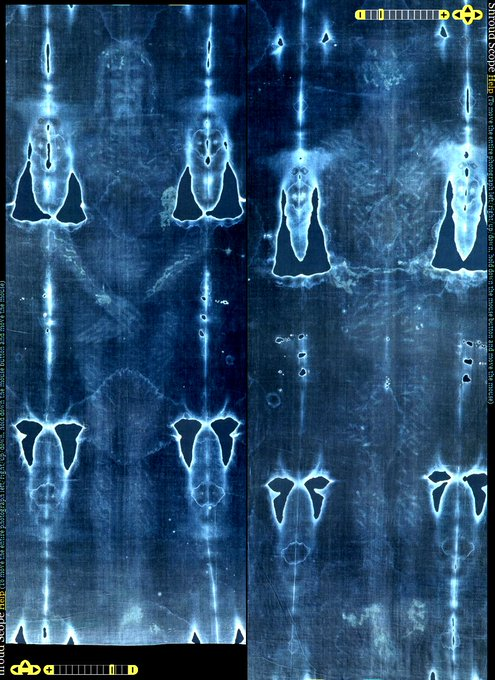
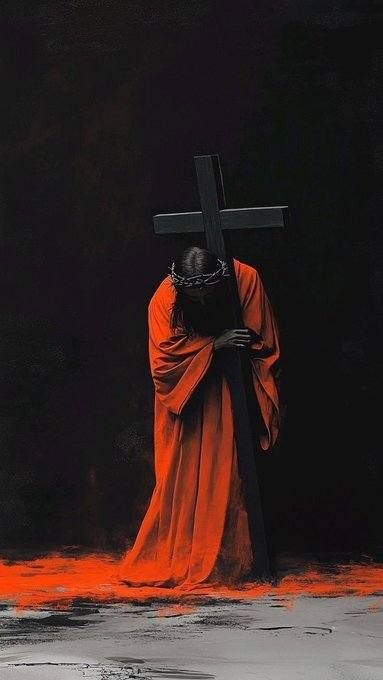
The only man in history recorded to have been crucified, crowned with thorns, and brutally executed in Jerusalem at that time...
11
... the only man to have been so revered that His followers would risk everything to preserve these bloodstained relics through centuries of war, persecution, and time…
The only man who was seen alive again, three days after His brutal death.
Jesus Christ.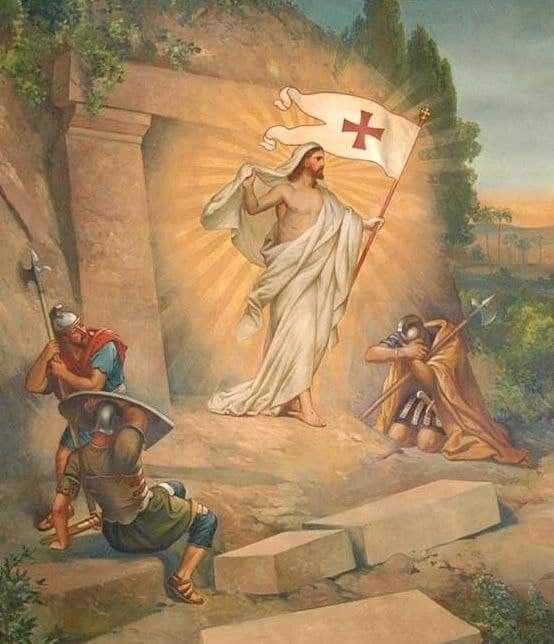
The only man who was seen alive again, three days after His brutal death.
Jesus Christ.
12
What does this mean?
It means that the blood is real. The wounds are real. The suffering is real. The evidence is overwhelming.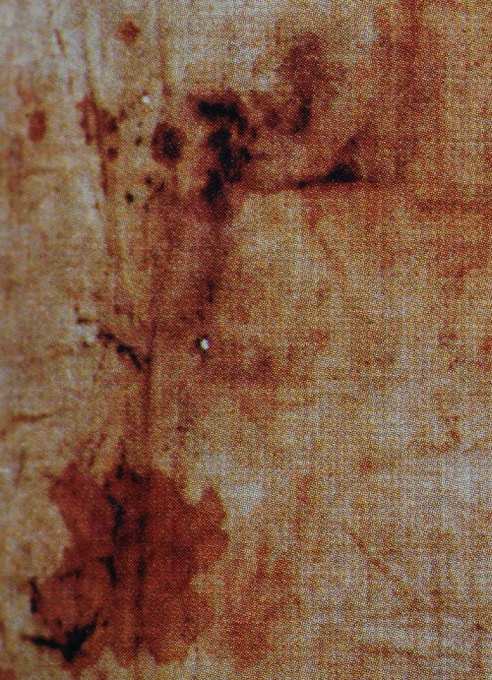
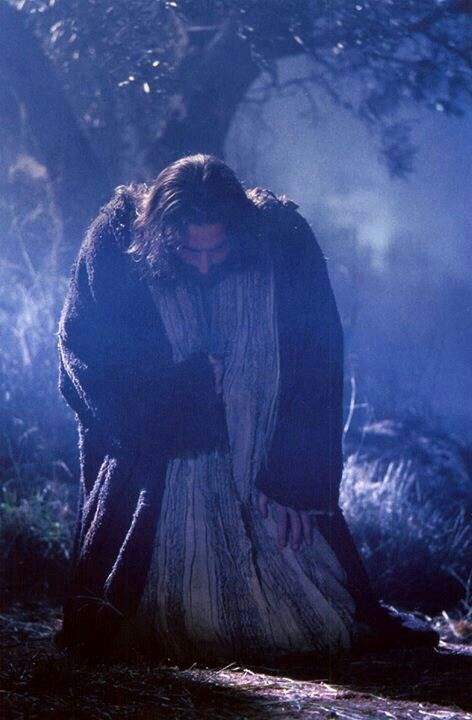
It means that the blood is real. The wounds are real. The suffering is real. The evidence is overwhelming.
13
The Sudarium of Oviedo is not just a relic—it is a witness to the Passion. A silent, bloodstained testament to the greatest love ever shown to mankind.
And it speaks to us today, as it has for centuries, whispering:
> "This is the blood of the Lamb… and it was shed for you."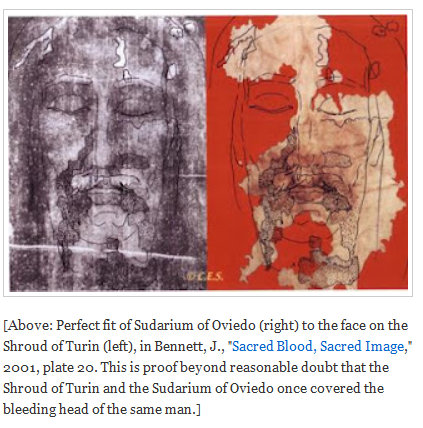
And it speaks to us today, as it has for centuries, whispering:
> "This is the blood of the Lamb… and it was shed for you."
14
If you want to support our work check out our merch: tradaesthetics.net You get some quality clothing while helping us grow the page and produce better content!