Kursk Offensive: A Preliminary Assessment by Frontelligence...

Tatarigami_UA@Tatarigami_UA
129 views
Mar 21, 2025
~4 min read
Advertisement
1
Kursk Offensive: A Preliminary Assessment by Frontelligence Insight.
A condensed version of report for X. 🧵Thread:
1/ With Ukrainian forces withdrawing from Sudzha, the operation is clearly approaching its conclusion though it is not yet entirely over.
A condensed version of report for X. 🧵Thread:
1/ With Ukrainian forces withdrawing from Sudzha, the operation is clearly approaching its conclusion though it is not yet entirely over.
2
2/ To assess the operation, not in isolation, but within the broader context of the war, we broke down the Kursk operation into 3 key questions: whether its geopolitical objectives were met, whether the attrition rate was favorable, and whether it achieved battlefield success
3
3/ To determine equipment attrition, we analyzed data from OSINT analyst @naalsio26, who tracks losses across multiple frontlines. Our graphs show losses from August to March but are not exhaustive, as they exclude some retreat-related losses. The cut-off date was March 10.

4
4/ By March 10, Russia had lost at least 712 pieces of equipment, including 412 armored fighting vehicles - the largest share. While Russia typically suffers higher vehicle losses than Ukraine, it can offset some of them through domestic production and refurbishing stockpiles.

5
5/ Ukraine's total losses stand at 632 pieces, lower than Russia's, but the overall loss ratio is nearly 1:1 - an unfavorable scenario for Ukraine in a war of attrition, given its smaller numbers and limited replacement capacity amid shifting political dynamics

6
6/ Regarding personnel losses, our team lacks precise data. Given Russia’s slightly higher vehicle losses and reliance on infantry assaults, both by Russian and North Korean troops, the attrition rate among infantry is likely more favorable for Ukraine than the vehicle loss ratio
7
7/ In terms of operational goals, we primarily focus on statements made by senior officials during the early-intermediate operation phase: diverting Russian forces from the Pokrovsk and Kurakhove areas, creating a buffer zone with Sumy, and holding territory for negotiations
8
8/ Units involved in the Pokrovsk and Kurakhove operations in majority of cases remained in their respective zones and were not redeployed to Kursk, with exceptions such as the 810th Naval Infantry Brigade, which briefly operated in the Pokrovsk area before moving to Kursk.
9
9/ On the other hand, when Ukrainian defenses began to weaken in the Pokrovsk direction in August, no reserves were available to halt the advancing Russian forces. Russian territorial gains accelerated significantly with the onset of the Kursk operation. Credit: @Black_BirdGroup

10
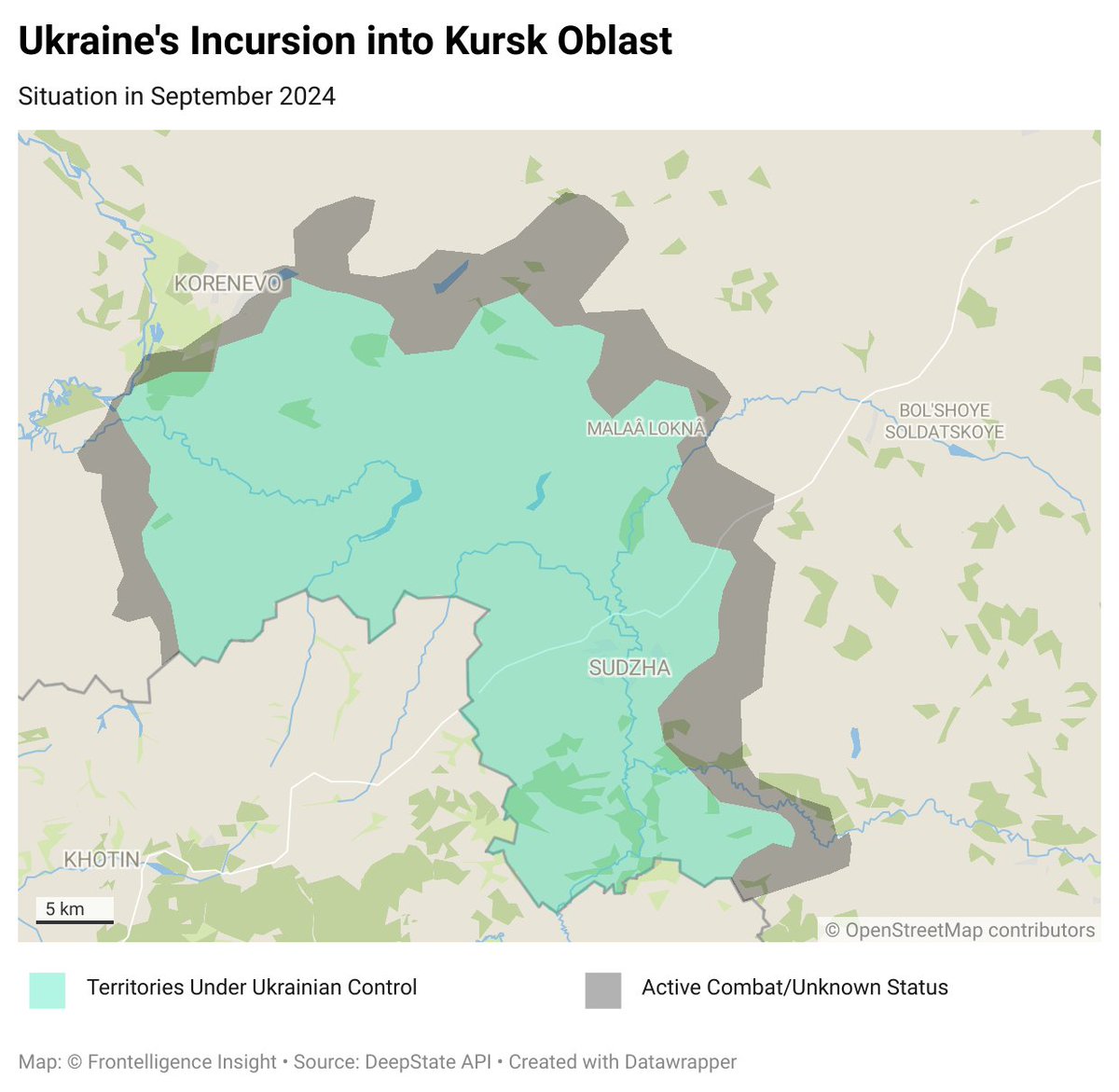
10/ Ukraine succeeded in preventing a Russian incursion from Kursk into Sumy Oblast by creating a buffer zone within Russia. However, it remains unclear if Russia had such plans. When Ukrainian forces entered Kursk, they primarily faced border troops, conscripts, and rear units.
11
11/ Next goal - the territory swap was logical: reclaiming occupied areas through counteroffensives would have been far more costly for Ukraine than seizing lightly defended Russian territory for later trade. However, with the loss of most of territories, this plan failed
12
12/ The opening phase of the operation was the most successful, bringing the best results. With relatively small losses, Ukraine not only captured large territories and prisoners for exchange, but also gathered valuable intelligence and disrupted logistical operations in the area
13
13/ The main phase became one of diminishing returns, driven by the same fundamental problems: poor organization, insufficient manpower, frequent Russian use of guided bombs, limited logistical routes, worsened by the influx of North Korean infantry and artillery ammo.

14
14/ The prolonged Kursk operation decreased pressure on Ukrainian troops in areas like northern Kharkiv. Russian air-dropped guided bomb strikes shifted focus from Kharkiv to Kursk. Additionally, the movement of the 76th Division decrease pressure on the Zaporizhia front as well
15
15/ Ukrainian command continued counterattacks and attempts to break through Russian defenses, despite limited tactical gains and no significant operational progress. In many cases, these offensives were counterproductive, with Ukrainian losses continuing to mount.

16
16/ As time went on, the Kursk operation started to look more like a battle for Donbas, rather than the fluid maneuvering seen in Kharkiv in 2022 or in Kursk during August. The key differences were an even worse situation with fortifications, logistics, and the local population

17
17/ The final stage of the operation is still ongoing, with Ukrainian forces continuing to maintain a buffer zone in Kursk, achieving one of the operation's main objectives. Despite some chaos, the overall retreat process has been much better than expected given the circumstances

18
18/ In summary, the operation achieved only partial success relative to its initial goals, while potentially accelerating Russian gains in Donbas. The attrition ratio was unfavorable for Ukraine, as it requires higher losses on the Russian side to be considered successful
19
19/ The other unstated goals, such as morale and political shifts, are discussed in the full version of the report, which you can access by following the link below:
frontelligence.substack.com/p/kursk-offens…
frontelligence.substack.com/p/kursk-offens…
20
20/ Thank you for reading! When independent reporting faces tough times, and your support matters the most. Please consider donating via BuyMeACoffee or liking and sharing the first post in this thread:
buymeacoffee.com/frontelligence
buymeacoffee.com/frontelligence