I've noticed a recurring issue—people want to fact-check and ensure...

Tal Hagin@talhagin
8 views
Nov 23, 2025
~2 min read
Advertisement
1
I've noticed a recurring issue—people want to fact-check and ensure the content they see is verified, but due to a lack of awareness about Google Lens and its limitations, they often end up spreading fake news themselves.
Let’s fix this 🧵
Let’s fix this 🧵
2
Google Lens is an excellent tool for basic image verification—it's easy to use and allows anyone to quickly check whether a video is recent, old, or missing context.
There are many techniques to use Google Lens correctly, but one recurring mistake leads to bad results: how people interpret the initial search results.
There are many techniques to use Google Lens correctly, but one recurring mistake leads to bad results: how people interpret the initial search results.
3
There are three stages to using Google Lens:
1. Scanning your chosen image.
2. Viewing the catalog of where the image appears.
3. Checking the original post using the same image.
Example:


1. Scanning your chosen image.
2. Viewing the catalog of where the image appears.
3. Checking the original post using the same image.
Example:
4
Where many people go wrong is skipping stage 3—reviewing the post where the image appears—and instead relying solely on the date shown in the catalog.
Why does this happen? Google Lens sometimes misdates images or mistakenly associates them with earlier posts, leading to incorrect conclusions.
Here is a basic example of this I showcased awhile ago:
Why does this happen? Google Lens sometimes misdates images or mistakenly associates them with earlier posts, leading to incorrect conclusions.
Here is a basic example of this I showcased awhile ago:
5
This image of the Iron Dome intercepting rockets being fired from Gaza was captured by Anas Baba for AFP on May 14th, 2021.
However, if you check the catalog results for the image, you’ll find a result from 2017—despite the fact that the image didn’t exist then!
If you check that Quora post, you’ll see the image isn’t actually there.

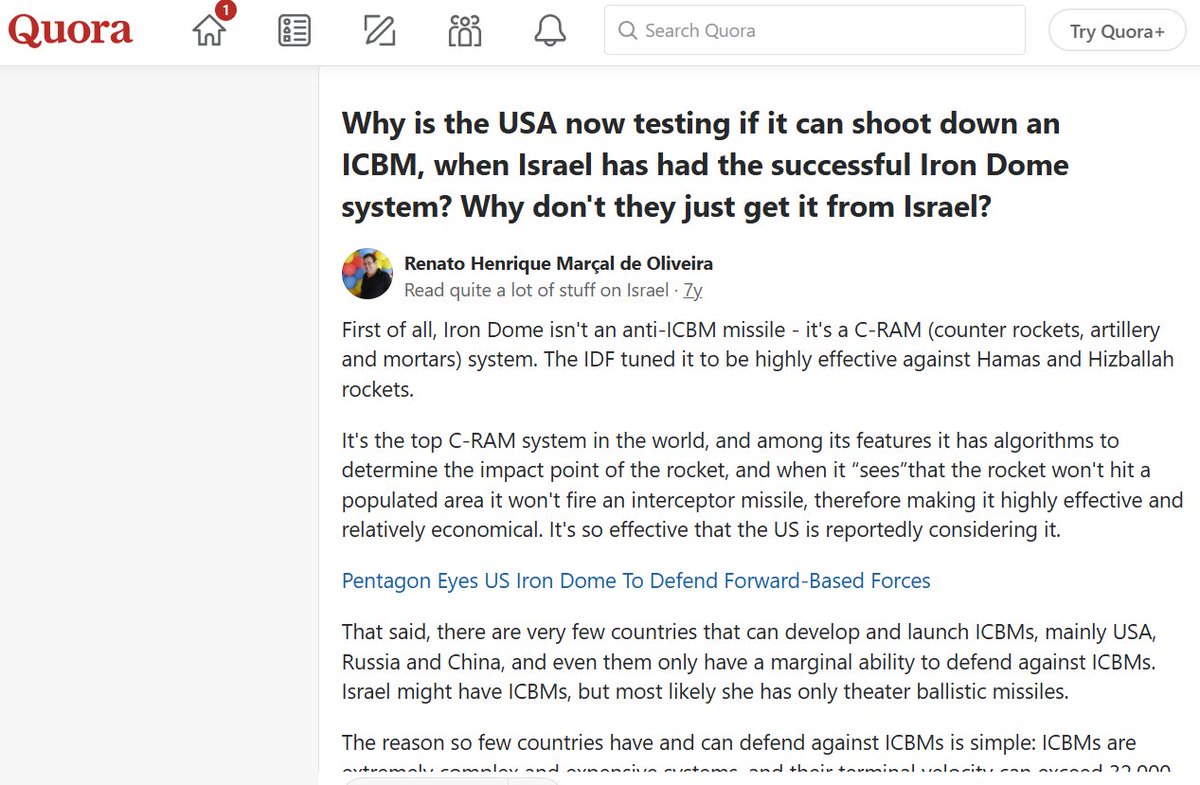
However, if you check the catalog results for the image, you’ll find a result from 2017—despite the fact that the image didn’t exist then!
If you check that Quora post, you’ll see the image isn’t actually there.
6
To reiterate how prevalent this issue is and how it affects people across the political spectrum, here are several examples where misunderstandings of Google Lens led to the spread of fake news:
7
1.


Tal Hagin@talhagin
The evidence used to claim this image is old is false.
In Google Lens, the initial results sometimes mix up between posts and the images on the sites.
The post it's referring you to was posted 5 years ago: December 24th, 2019. You can confirm this by searching for the caption.
In Google Lens, the initial results sometimes mix up between posts and the images on the sites.
The post it's referring you to was posted 5 years ago: December 24th, 2019. You can confirm this by searching for the caption.
8
2.


Tal Hagin@talhagin
The evidence used to claim this image is old is false.
In Google Lens, the initial results sometimes mix up between posts and the images on their sites.
The post it's referring you to was posted 5 years ago: May 30th, 2019. You can confirm this by searching for the caption.
In Google Lens, the initial results sometimes mix up between posts and the images on their sites.
The post it's referring you to was posted 5 years ago: May 30th, 2019. You can confirm this by searching for the caption.
9
3.


Tal Hagin@talhagin
This is actually due to a common error with Google Lens. Sometimes, the results showcased aren't actually accurate . Always click on them to ensure they lead to real posts
You can see this yourself by clicking for example on that second link, leading you to a post from September 27th, 2021. However, it'll showcase an entirely different post.
But, if you look at their recent timeline, that photo of the supermarket in Gaza appears on February 21st, 2025. It's due to an error with Google.
The real post of the supermarket in Gaza is from this page:
facebook.com/story.php?stor…
10
4.


Tal Hagin@talhagin
@theafroaussie @aliimortada Yes.
Here's another example - Someone trying to claim this photo from Rafah was older than the claimed event due to Google Lens showing a result from a week beforehand.
x.com/talhagin/statu…
Here's another example - Someone trying to claim this photo from Rafah was older than the claimed event due to Google Lens showing a result from a week beforehand.
x.com/talhagin/statu…
11
5.
Tal Hagin@talhagin
This isn’t an old image—the result you’re seeing is due to an issue with Google Lens.
If you click on that result, it simply leads to his Instagram account, where the image was first uploaded on March 18, 2025.
Here are several other examples of this issue I’ve covered:
If you click on that result, it simply leads to his Instagram account, where the image was first uploaded on March 18, 2025.
Here are several other examples of this issue I’ve covered:
12
Always click on the catalogue results to ensure the date is accurate!
If you are unsure how to properly utilize Google Lens for Fact-Checking or would like help in general verifying - Feel free to reach out!
If you are unsure how to properly utilize Google Lens for Fact-Checking or would like help in general verifying - Feel free to reach out!
13
If you're looking for more tools - Join me tomorrow evening :)

Tal Hagin@talhagin
Not sure if you can trust the news reports, images, or videos you see online? Want to fact-check on your own instead of relying on others?
Join me for a free online lecture on March 19, 2025, at 17:00 GMT – in English.
Limited spots available – Link in the replies!
A Hebrew session will be announced soon.
Join me for a free online lecture on March 19, 2025, at 17:00 GMT – in English.
Limited spots available – Link in the replies!
A Hebrew session will be announced soon.
14
Additional examples of this issue:
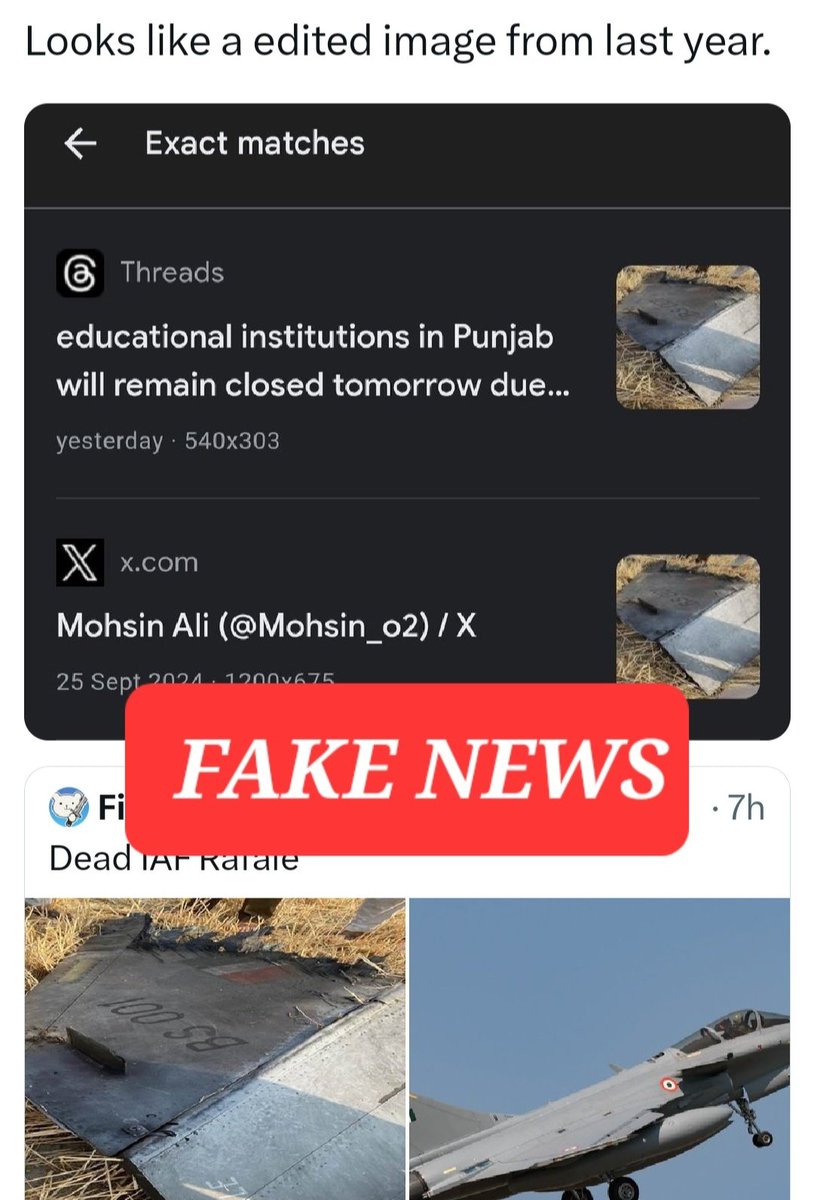
Tal Hagin@talhagin
During the ongoing India-Pakistan crisis, numerous AI-generated or unrelated visuals are being shared.
One such image, allegedly showing the tail of an IAF Rafale, was "debunked" using Google Lens — but that so-called debunk is actually spreading misinformation.
Here’s why.
One such image, allegedly showing the tail of an IAF Rafale, was "debunked" using Google Lens — but that so-called debunk is actually spreading misinformation.
Here’s why.
15
Another example:

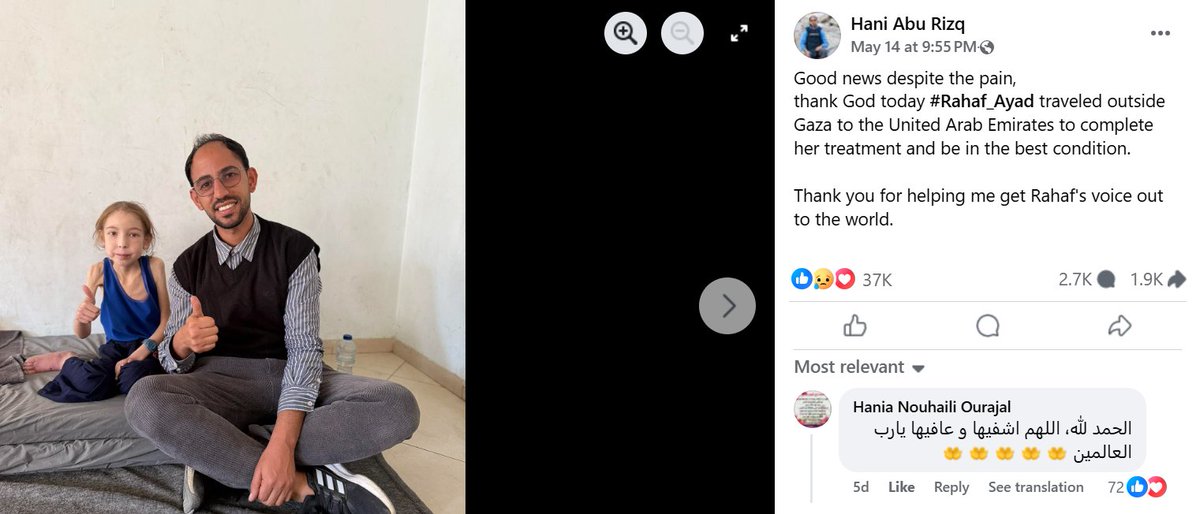


Tal Hagin@talhagin
This is completely wrong.
1. Marga (Today) is the name of the news outlet — not the girl. Her name is Rahaf Ayad.
2. She was in Gaza, reportedly suffering from an unspecified illness as of early May 2025. Since then, she has left Gaza and is now receiving treatment in the United Arab Emirates.
3. The image result being presented as "proof" is simply a Google Lens catalog error, a known issue I’ve addressed multiple times — and I’ll demonstrate that again in the replies.