The ULTIMATE SEO Playbook for 2025 I've ranked 500+ pages on...

Nick Zviadadze 🇺🇦@Nick_zv_
75 views
Mar 18, 2025
~10 min read
Advertisement
1
The ULTIMATE SEO Playbook for 2025
I've ranked 500+ pages on Google's first page.
And I've analyzed why 95% of websites get ZERO organic traffic.
This is the exact operational framework that separates winners from losers.
No fluff. Just battle-tested systems.
A thread 🧵
I've ranked 500+ pages on Google's first page.
And I've analyzed why 95% of websites get ZERO organic traffic.
This is the exact operational framework that separates winners from losers.
No fluff. Just battle-tested systems.
A thread 🧵
2
3
1/ Most SEO fails for ONE reason:
It's treated as a tactic, not an operational system.
While everyone chases algorithm updates and "hacks"...
The winners quietly build content machines that PRINT traffic and leads.
Here's the exact blueprint we use for 7-figure clients:
It's treated as a tactic, not an operational system.
While everyone chases algorithm updates and "hacks"...
The winners quietly build content machines that PRINT traffic and leads.
Here's the exact blueprint we use for 7-figure clients:
4
2/ PART 1: TECHNICAL FOUNDATION
Most "technical SEO audits" are expensive busywork.
For sites under 10k pages, you only need these basics:
- SSL certificate
- Mobile responsive design
- Site speed under 3 seconds
- XML sitemap
- Robots.txt file
- Clean URL structure
Most "technical SEO audits" are expensive busywork.
For sites under 10k pages, you only need these basics:
- SSL certificate
- Mobile responsive design
- Site speed under 3 seconds
- XML sitemap
- Robots.txt file
- Clean URL structure
5
3/ Speed optimization quick wins:
- Use WP Rocket if on WordPress
- Compress images with TinyPNG
- Enable lazy loading
- Set up browser caching
- Use a CDN like Cloudflare
- Minify CSS/JS files
Don't obsess over perfect scores - aim for "good enough" then move on.
- Use WP Rocket if on WordPress
- Compress images with TinyPNG
- Enable lazy loading
- Set up browser caching
- Use a CDN like Cloudflare
- Minify CSS/JS files
Don't obsess over perfect scores - aim for "good enough" then move on.
6
4/ URL structure basics:
✅ domain com/target-keyword
❌ domain com/category/date/long-title-with-many-keywords
Keep it short. Include your target keyword. Skip everything else.
And NEVER change URLs after publishing unless absolutely necessary.
✅ domain com/target-keyword
❌ domain com/category/date/long-title-with-many-keywords
Keep it short. Include your target keyword. Skip everything else.
And NEVER change URLs after publishing unless absolutely necessary.
7
5/ The only technical checklist you need:
- Run GTmetrix (aim for under 3s load time)
- Check mobile usability in GSC
- Fix broken links with Screaming Frog
- Eliminate duplicate content
- Create and submit sitemap.xml
- Set up proper redirects for deleted pages
That's it. Move on to what actually matters.
- Run GTmetrix (aim for under 3s load time)
- Check mobile usability in GSC
- Fix broken links with Screaming Frog
- Eliminate duplicate content
- Create and submit sitemap.xml
- Set up proper redirects for deleted pages
That's it. Move on to what actually matters.
8
6/ PART 2: KEYWORD RESEARCH - THE FOUNDATION
This is where most SEO campaigns are won or lost before they begin.
The fatal mistake?
Finding keywords on a weekly basis instead of building a comprehensive database upfront.
You need 200-300 keywords on day one. Here's how:
This is where most SEO campaigns are won or lost before they begin.
The fatal mistake?
Finding keywords on a weekly basis instead of building a comprehensive database upfront.
You need 200-300 keywords on day one. Here's how:
9
7/ Strategy #1: The Seed Keyword Expansion
Start with 5-10 seed keywords:
- Run each through Semrush Keyword Magic Tool
- Filter KD 0-20, extract all relevant keywords
- Up the filter to 20-40, extract more
- Rinse & repeat across difficulty ranges
- Group by topic clusters
- Aim for 100+ keywords from this method
Start with 5-10 seed keywords:
- Run each through Semrush Keyword Magic Tool
- Filter KD 0-20, extract all relevant keywords
- Up the filter to 20-40, extract more
- Rinse & repeat across difficulty ranges
- Group by topic clusters
- Aim for 100+ keywords from this method
10
8/ Strategy #2: The "Too Niche" Goldmine
Big brands ignore keywords that are:
- Too specific
- Too low volume
- Too niche-focused
Instead of "email marketing software" target:
- "Email templates for yoga studios"
- "Newsletter examples for therapists"
- "Drip campaigns for online course creators"
Big brands ignore keywords that are:
- Too specific
- Too low volume
- Too niche-focused
Instead of "email marketing software" target:
- "Email templates for yoga studios"
- "Newsletter examples for therapists"
- "Drip campaigns for online course creators"
11
9/ Strategy #3: The ChatGPT Persona Method
Prompt: "You're a [target customer]. What specific problems would you Google related to [your topic]?"
Example: "You're a fitness studio owner. What specific problems would you Google related to marketing your business?"
This finds problems your audience ACTUALLY has.
Prompt: "You're a [target customer]. What specific problems would you Google related to [your topic]?"
Example: "You're a fitness studio owner. What specific problems would you Google related to marketing your business?"
This finds problems your audience ACTUALLY has.
12
10/ Strategy #4: The Keyword Gap Finder
1. Find 5 smaller competitors ranking well
2. Run them through Semrush/Ahrefs
3. Look for keywords THEY rank for but larger competitors ignore
4. Filter by position 1-10
5. Sort by traffic potential
You've found proven keywords with manageable competition.
1. Find 5 smaller competitors ranking well
2. Run them through Semrush/Ahrefs
3. Look for keywords THEY rank for but larger competitors ignore
4. Filter by position 1-10
5. Sort by traffic potential
You've found proven keywords with manageable competition.
13
11/ Strategy #5: The "Shoulder Niche" Strategy
Stuck in a competitive niche?
Target keywords in adjacent niches.
SaaS email marketing tool?
Don't target "email marketing tool"
Target:
- "Sales follow-up templates"
- "Customer onboarding sequences"
- "Lead nurturing workflows"
Stuck in a competitive niche?
Target keywords in adjacent niches.
SaaS email marketing tool?
Don't target "email marketing tool"
Target:
- "Sales follow-up templates"
- "Customer onboarding sequences"
- "Lead nurturing workflows"
14
12/ For EVERY keyword, do this validation:
- Google it manually
- Check who's ranking
- Look for small sites in top 10
- Analyze content quality
- Check domain authority
If it's all major brands with perfect content, move on.
There are better battles to fight.
- Google it manually
- Check who's ranking
- Look for small sites in top 10
- Analyze content quality
- Check domain authority
If it's all major brands with perfect content, move on.
There are better battles to fight.
15
13/ PART 3: CONTENT STRATEGY & CREATION
Most content strategies fail because they lack focus and velocity.
The key? Build topic authority through systematic execution.
Most content strategies fail because they lack focus and velocity.
The key? Build topic authority through systematic execution.
16
14/ The Topic Cluster Strategy:
1. Pick ONE main topic (e.g., "email marketing")
2. Create cornerstone content first
3. Build 8-12 supporting articles around it
4. Interlink EVERYTHING
5. Complete one cluster before moving to the next
1. Pick ONE main topic (e.g., "email marketing")
2. Create cornerstone content first
3. Build 8-12 supporting articles around it
4. Interlink EVERYTHING
5. Complete one cluster before moving to the next
17
15/ Content velocity is your secret weapon.
Your content can't start climbing rankings if it doesn't exist.
Truth: The faster you publish QUALITY content, the faster Google recognizes your authority.
For a new site, aim for:
- 30-40 articles in 90 days
- 3-4 articles per week minimum
- 20-30k words/month
Your content can't start climbing rankings if it doesn't exist.
Truth: The faster you publish QUALITY content, the faster Google recognizes your authority.
For a new site, aim for:
- 30-40 articles in 90 days
- 3-4 articles per week minimum
- 20-30k words/month
18
16/ The introduction formula that hooks readers:
Most content loses 80% of readers in the first paragraph.
Use the PAS formula to hook them:
Problem: "Ranking new content feels impossible in 2025"
Agitate: "While your content sits on page 5, competitors steal your traffic"
Solution: "Here's our exact process to rank in under 90 days"
Keep it under 150 words.
Most content loses 80% of readers in the first paragraph.
Use the PAS formula to hook them:
Problem: "Ranking new content feels impossible in 2025"
Agitate: "While your content sits on page 5, competitors steal your traffic"
Solution: "Here's our exact process to rank in under 90 days"
Keep it under 150 words.
19
17/ Your content MUST be better than the top 3 ranking posts.
"Better" means:
- More comprehensive
- More actionable
- Better examples
- Clearer explanations
- Better visuals
- More current information
"More words" ≠ better.
"Better" means:
- More comprehensive
- More actionable
- Better examples
- Clearer explanations
- Better visuals
- More current information
"More words" ≠ better.
20
18/ Creating SEO Landing Pages That Convert
Your money pages drive 80% of your revenue.
Create dedicated landing pages for:
- Product category + use case
- Service type + industry
- Product vs. competitors
Structure them with:
- Keyword in H1, title, meta
- Clear value proposition
- Social proof/testimonials
- SEO content section
- FAQ targeting PAA questions
Your money pages drive 80% of your revenue.
Create dedicated landing pages for:
- Product category + use case
- Service type + industry
- Product vs. competitors
Structure them with:
- Keyword in H1, title, meta
- Clear value proposition
- Social proof/testimonials
- SEO content section
- FAQ targeting PAA questions
21
19/ URL structure for landing pages:
For services: [domain.com/services/servi…](domain.com/services/servi…)
For local: [domain.com/locations/city…](domain.com/locations/city…)
Example hierarchy:
/locations/
├── Personal Injury NYC
│ ├── Car Accident Lawyer NYC
│ └── Malpractice Lawyer NYC
└── Personal Injury Boston
For services: [domain.com/services/servi…](domain.com/services/servi…)
For local: [domain.com/locations/city…](domain.com/locations/city…)
Example hierarchy:
/locations/
├── Personal Injury NYC
│ ├── Car Accident Lawyer NYC
│ └── Malpractice Lawyer NYC
└── Personal Injury Boston
22
20/ Landing page internal linking strategy:
- Create services dropdown in nav
- Link from homepage to core services
- Link from blog posts to relevant services
- Use exact-match anchor text
- Build supporting content that links to landing pages
- Create services dropdown in nav
- Link from homepage to core services
- Link from blog posts to relevant services
- Use exact-match anchor text
- Build supporting content that links to landing pages
23
21/ PART 4: USING AI TO SCALE CONTENT CREATION
AI can 3x your content production if used correctly.
Most fail because they use AI as a writer, not as an assistant.
Here's the framework that actually works:
AI can 3x your content production if used correctly.
Most fail because they use AI as a writer, not as an assistant.
Here's the framework that actually works:
24
22/ Step 1: Train Your AI Properly
Create a Claude project and feed it:
- Your best-performing content
- Competitor articles
- Industry terminology
- Brand voice examples
- Case studies and real data
Now it knows your niche AND your voice.
Create a Claude project and feed it:
- Your best-performing content
- Competitor articles
- Industry terminology
- Brand voice examples
- Case studies and real data
Now it knows your niche AND your voice.
25
23/ Step 2: Create Detailed Outlines First
- Google your target keyword
- Analyze top 3 ranking posts
- Create outline better than competitors
- Check "People Also Ask" boxes
- Add unique sections competitors miss
- Plan custom graphics/examples
Pro tip: AI still sucks at creating outlines
- Google your target keyword
- Analyze top 3 ranking posts
- Create outline better than competitors
- Check "People Also Ask" boxes
- Add unique sections competitors miss
- Plan custom graphics/examples
Pro tip: AI still sucks at creating outlines
26
24/ Step 3: Generate Content Section-by-Section
Instead of "Write me a blog post about email marketing"
Say: "Write the section about email segmentation. Include:
- Common segment types
- Example workflows
- Metrics to track
- Real-world use cases"
This targeted approach produces better content.
Instead of "Write me a blog post about email marketing"
Say: "Write the section about email segmentation. Include:
- Common segment types
- Example workflows
- Metrics to track
- Real-world use cases"
This targeted approach produces better content.
27
25/ Step 4: Make AI Content Human
AI content fails because it's generic. Add:
- Personal stories
- Specific metrics from your experience
- Custom screenshots
- Step-by-step processes you've used
- Actual costs/prices
- Real examples with results
- Opinions and hot takes
AI content fails because it's generic. Add:
- Personal stories
- Specific metrics from your experience
- Custom screenshots
- Step-by-step processes you've used
- Actual costs/prices
- Real examples with results
- Opinions and hot takes
28
26/ Step 5: Edit Ruthlessly
AI content editing checklist:
- Replace generic intros with PAS formula
- Cut fluff transitions
- Add custom visuals
- Include specific numbers and data
- Remove "in today's digital landscape..."
- Add step-by-step instructions
- Fact-check everything
- Verify tool names, features, and pricing
AI content editing checklist:
- Replace generic intros with PAS formula
- Cut fluff transitions
- Add custom visuals
- Include specific numbers and data
- Remove "in today's digital landscape..."
- Add step-by-step instructions
- Fact-check everything
- Verify tool names, features, and pricing
29
27/ PART 5: ON-PAGE OPTIMIZATION
Your content needs proper optimization to compete.
Here's what actually moves the needle:
Your content needs proper optimization to compete.
Here's what actually moves the needle:
30
28/ Title tag formula:
- Keyword at the start
- Include numbers when relevant
- Add year for freshness
- Use power words
- Keep under 60 characters
- Add parentheses for context
Example: "Email Marketing Strategy: 9-Step Guide for SaaS (2025)"
- Keyword at the start
- Include numbers when relevant
- Add year for freshness
- Use power words
- Keep under 60 characters
- Add parentheses for context
Example: "Email Marketing Strategy: 9-Step Guide for SaaS (2025)"
31
29/ Content structure checklist:
- H1: Main keyword + clear value
- H2s: Use related keywords naturally
- H3s: Break down subsections
- Short paragraphs (2-3 lines max)
- Bullet points for scanability
- Strategic bold text
- Table of contents
- Custom images with alt text
- H1: Main keyword + clear value
- H2s: Use related keywords naturally
- H3s: Break down subsections
- Short paragraphs (2-3 lines max)
- Bullet points for scanability
- Strategic bold text
- Table of contents
- Custom images with alt text
32
30/ Image optimization:
- Descriptive filenames with keywords
- Proper alt text (not keyword stuffed)
- Compressed images (<100KB if possible)
- Custom graphics > stock photos
- Screenshots with annotations
- Diagrams explaining complex concepts
- Real examples with visual proof
- Descriptive filenames with keywords
- Proper alt text (not keyword stuffed)
- Compressed images (<100KB if possible)
- Custom graphics > stock photos
- Screenshots with annotations
- Diagrams explaining complex concepts
- Real examples with visual proof
33
31/ Internal linking strategy:
- 5-10 internal links per post minimum
- Link to relevant content in same cluster
- Use keyword variations as anchor text
- Link from high-authority pages to new content
- Create "hub and spoke" clusters
- Monthly internal linking audit
This distributes authority throughout your site.
- 5-10 internal links per post minimum
- Link to relevant content in same cluster
- Use keyword variations as anchor text
- Link from high-authority pages to new content
- Create "hub and spoke" clusters
- Monthly internal linking audit
This distributes authority throughout your site.
34
32/ PART 6: LINK BUILDING THAT WORKS IN 2025
Content alone won't get you to page 1 for competitive terms.
You need backlinks. Here are the strategies with proven ROI:
Content alone won't get you to page 1 for competitive terms.
You need backlinks. Here are the strategies with proven ROI:
35
33/ Strategy #1: Featured Source Building
- Create an expert profile on Featured
- Set up alerts for relevant queries
- Respond within 1-2 hours (speed matters)
- Provide unique, helpful insights
- Include credentials and experience
This builds high-authority homepage links.
- Create an expert profile on Featured
- Set up alerts for relevant queries
- Respond within 1-2 hours (speed matters)
- Provide unique, helpful insights
- Include credentials and experience
This builds high-authority homepage links.
36
34/ Strategy #2: The Data/Statistics Page Strategy
Create comprehensive statistics pages:
- Group by subtopics
- Include clear citations and dates
- Make stats copyable
- Add "click to tweet" buttons
- Update quarterly
Journalists NEED data and WILL cite you.
Create comprehensive statistics pages:
- Group by subtopics
- Include clear citations and dates
- Make stats copyable
- Add "click to tweet" buttons
- Update quarterly
Journalists NEED data and WILL cite you.
37
35/ Strategy #3: The Guest Post 2.0 Approach
"Hey [Name],
Noticed your competitor ranks for [keyword], but you don't have content on this topic.
I'll write you a comprehensive 2,000-word guide targeting this keyword - free.
All I ask is one contextual link back to our relevant guide.
Here are samples of posts I've written that rank well: [link]"
"Hey [Name],
Noticed your competitor ranks for [keyword], but you don't have content on this topic.
I'll write you a comprehensive 2,000-word guide targeting this keyword - free.
All I ask is one contextual link back to our relevant guide.
Here are samples of posts I've written that rank well: [link]"
38
36/ Strategy #4: The ABC Link-Swap Strategy
Instead of direct reciprocal links (which Google devalues):
- Site A links to Site B
- Site B links to Site C
- Site C links to Site A
No footprint. No risk. All sites benefit.
Instead of direct reciprocal links (which Google devalues):
- Site A links to Site B
- Site B links to Site C
- Site C links to Site A
No footprint. No risk. All sites benefit.
39
37/ Strategy #5: In-Bound Link Building
- Create "Best X for Y" listicles
- Include 7-8 brands initially
- Make it comprehensive and high-quality
- Wait for brands to find you in search
- When they ask to be included, request a backlink in exchange
This brings links to you instead of chasing them.
- Create "Best X for Y" listicles
- Include 7-8 brands initially
- Make it comprehensive and high-quality
- Wait for brands to find you in search
- When they ask to be included, request a backlink in exchange
This brings links to you instead of chasing them.
40
38/ PART 7: TRACKING & OPTIMIZATION
Most people publish content and forget it.
Here's how to turn underperforming content into traffic machines:
Most people publish content and forget it.
Here's how to turn underperforming content into traffic machines:
41
39/ GSC Monitoring System:
- Check GSC weekly for keyword movements
- Look for posts ranking positions 4-20
- Identify "low hanging fruit" opportunities
- Track impressions vs. clicks to find CTR issues
- Monitor mobile vs. desktop performance
- Watch for featured snippet opportunities
- Check GSC weekly for keyword movements
- Look for posts ranking positions 4-20
- Identify "low hanging fruit" opportunities
- Track impressions vs. clicks to find CTR issues
- Monitor mobile vs. desktop performance
- Watch for featured snippet opportunities
42
40/ Content Upgrade Checklist:
For posts ranking positions 4-20:
- Update title with current year
- Refresh statistics and examples
- Add new sections competitors have
- Improve internal linking
- Add custom visuals and screenshots
- Expand thin sections
- Add FAQ targeting "People Also Ask"
For posts ranking positions 4-20:
- Update title with current year
- Refresh statistics and examples
- Add new sections competitors have
- Improve internal linking
- Add custom visuals and screenshots
- Expand thin sections
- Add FAQ targeting "People Also Ask"
43
41/ Content Pruning Strategy:
- Identify posts with zero traffic after 6+ months
- Check if they target ANY keyword
- Determine if they match search intent
- Either:
- Completely rewrite to match intent
- Merge with stronger content
- 301 redirect to better resource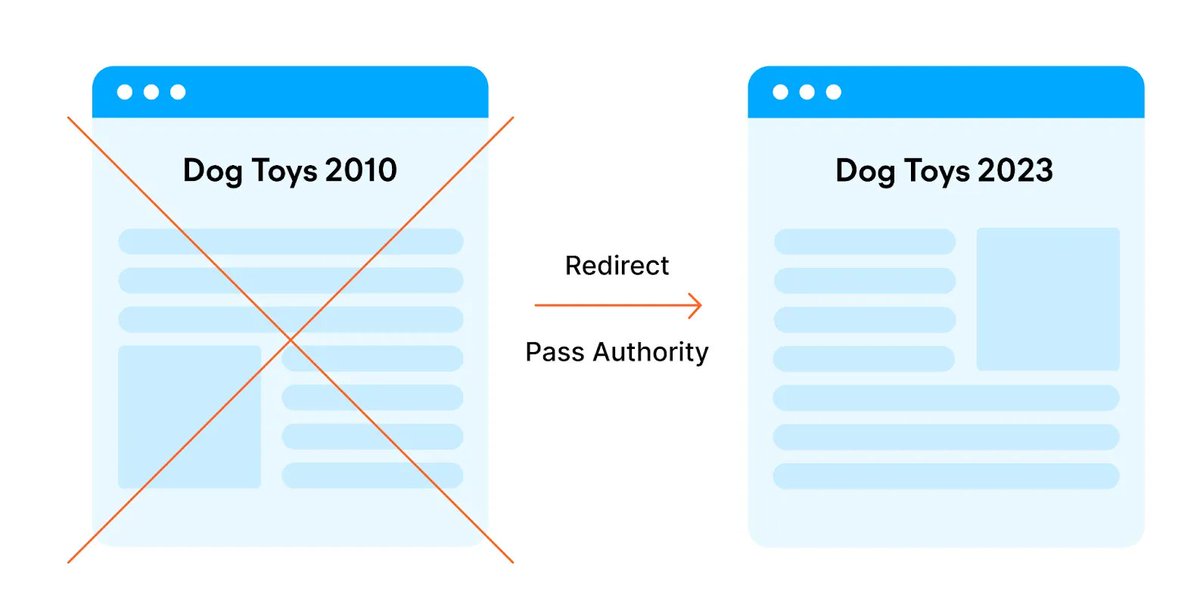
- Identify posts with zero traffic after 6+ months
- Check if they target ANY keyword
- Determine if they match search intent
- Either:
- Completely rewrite to match intent
- Merge with stronger content
- 301 redirect to better resource
44
42/ The Merge and Conquer Technique:
Found multiple posts targeting similar keywords?
- Pick the best-performing one as your base
- Merge unique insights from others
- 301 redirect weaker posts to the stronger one
- Update internal links to point to new resource
- Result: One super-post instead of several competing ones
Found multiple posts targeting similar keywords?
- Pick the best-performing one as your base
- Merge unique insights from others
- 301 redirect weaker posts to the stronger one
- Update internal links to point to new resource
- Result: One super-post instead of several competing ones
45
43/ PART 8: SCALING UP
Ready to grow? Here's how to scale your SEO operation:
Ready to grow? Here's how to scale your SEO operation:
46
44/ Content Team Structure:
Editor:
- Creates detailed outlines
- Manages writers
- Ensures quality
- Handles revisions
Writers:
- Follow outlines
- Hit word count
- Match brand voice
- Include examples
VA:
- Uploads content
- Basic formatting
- Image alt texts
- Publishing schedule
Editor:
- Creates detailed outlines
- Manages writers
- Ensures quality
- Handles revisions
Writers:
- Follow outlines
- Hit word count
- Match brand voice
- Include examples
VA:
- Uploads content
- Basic formatting
- Image alt texts
- Publishing schedule
47
45/ Link Building at Scale:
- Document your winning templates
- Create prospect database
- Set up tracking system
- Implement follow-up sequences
- Measure conversion rates
- Test new approaches monthly
- Scale what works
- Document your winning templates
- Create prospect database
- Set up tracking system
- Implement follow-up sequences
- Measure conversion rates
- Test new approaches monthly
- Scale what works
48
46/ The bottom line:
SEO isn't about hacks or tricks.
It's about building operational systems that:
- Find winnable keyword opportunities
- Create superior content at scale
- Build topic authority methodically
- Attract quality backlinks
- Continuously optimize based on data
No shortcuts. No BS. Just execution.
SEO isn't about hacks or tricks.
It's about building operational systems that:
- Find winnable keyword opportunities
- Create superior content at scale
- Build topic authority methodically
- Attract quality backlinks
- Continuously optimize based on data
No shortcuts. No BS. Just execution.
49
Want more SEO strategies that actually work?
Follow me for daily insights on:
- SEO that actually ranks
- Content that converts
- Systems that scale
And RT this thread if it helped you! 🙏
Follow me for daily insights on:
- SEO that actually ranks
- Content that converts
- Systems that scale
And RT this thread if it helped you! 🙏


