🚨 New Thread! 🚨 How to Build a Data Department in Football: A...

Marwane Hamdani@Hamdanov98
14 views
Mar 15, 2025
~12 min read
Advertisement
1
🚨 New Thread! 🚨
How to Build a Data Department in Football: A Blueprint for Success in the 5th Division 📊⚽
A data-driven approach to recruitment, performance analysis, and long-term success in the National League.
Let's dive in! 🧵👇
How to Build a Data Department in Football: A Blueprint for Success in the 5th Division 📊⚽
A data-driven approach to recruitment, performance analysis, and long-term success in the National League.
Let's dive in! 🧵👇
2
📢 Introduction: Setting the Scene
Imagine this: You’re the new Head of Data & Performance at a National League club. The goal? Promotion to League Two. The challenge? Limited resources & outdated scouting.
Your mission:
📊 Find undervalued talent
⚽ Maximize team performance
📈 Use data to outthink wealthier clubs
But how do you turn raw data into real success? Inspired by elite clubs & Ian Graham’s insights, here’s the blueprint. 🚀📊
🧵👇 #FootballAnalytics #DataDriven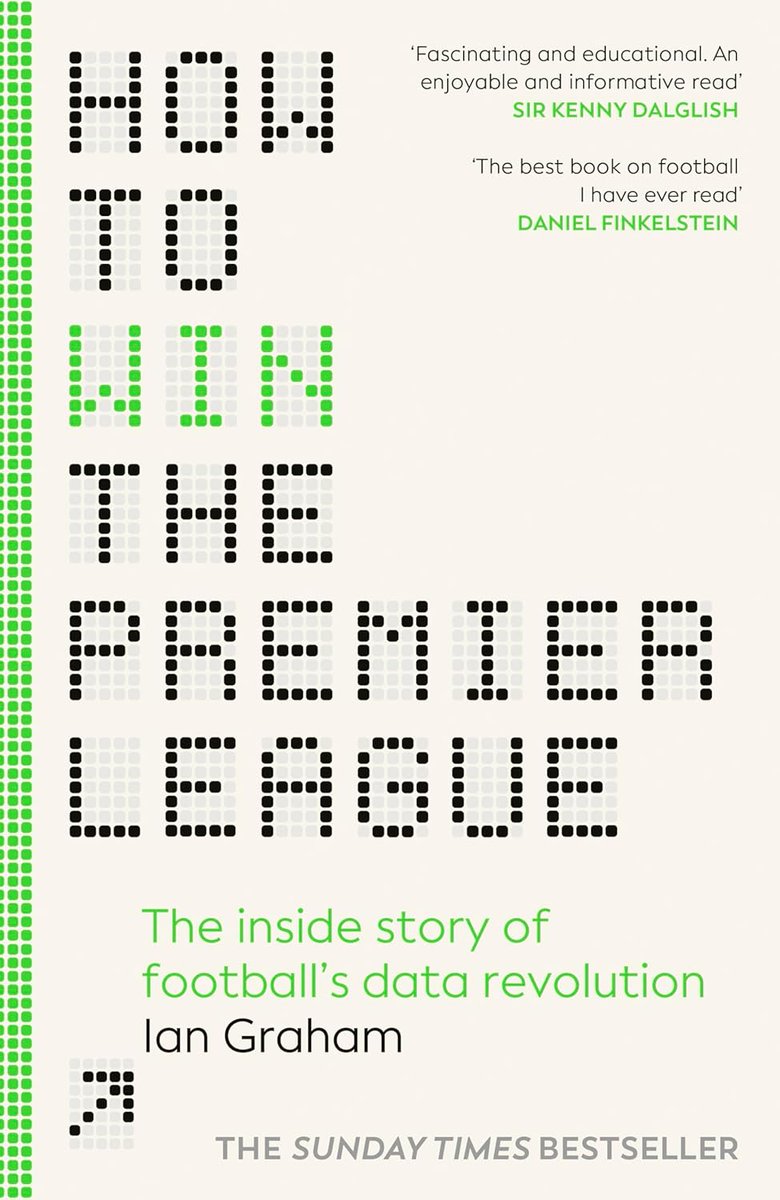
Imagine this: You’re the new Head of Data & Performance at a National League club. The goal? Promotion to League Two. The challenge? Limited resources & outdated scouting.
Your mission:
📊 Find undervalued talent
⚽ Maximize team performance
📈 Use data to outthink wealthier clubs
But how do you turn raw data into real success? Inspired by elite clubs & Ian Graham’s insights, here’s the blueprint. 🚀📊
🧵👇 #FootballAnalytics #DataDriven
3
🚀 Recruitment Strategy: Finding the Right Players
Building a competitive squad in the National League requires a smart, data-driven approach to recruitment. With budget constraints and scouting inefficiencies, clubs must maximize efficiency and identify undervalued talent to stay ahead.
How do we outthink richer clubs and build a promotion-winning squad? Let's break it down. 📊⚽ #FootballData #Recruitment #NationalLeague
4
1️⃣ Comprehensive Squad Analysis
Before signing players, we must analyze what we already have. A squad evaluation helps identify:
✔️ Tactical gaps – Do we lack creativity, defensive solidity, or physicality?
✔️ Player profiles – Who fits the manager’s system? Who struggles in it?
✔️ Key areas for improvement – Based on National League promotion benchmarks:
🔹 70–75 points needed for promotion
🔹 70–75 goals scored for a competitive attack
🔹 Fewer than 55 goals conceded for defensive consistency
By comparing our squad to these targets, we pinpoint weaknesses and recruit with purpose. Data ensures every signing is made with promotion in mind. 🚀⚽ #FootballData #Recruitment
5
2️⃣ League Benchmarking & Player Targeting
Recruitment isn’t just about signing the best players—it’s about finding the right players who fit the league’s tactical and physical demands.
To do this, we analyze leagues with similar profiles, focusing on:
🔹 National League North/South – A strong talent pool of players ready to step up.
🔹 League One & League Two – The gap between the 3rd, 4th, and 5th divisions is not as big as many think. Smart clubs can find free agents or loan deals for overlooked young talents.
🔹 Lower-tier European leagues – Dutch Eerste Divisie, Belgian Challenger Pro League, and Scandinavian leagues produce technically solid, physically capable players well-suited to English football.
📌 Why does this matter?
By studying which player archetypes succeed in these leagues—whether it’s aggressive ball-winners, clinical strikers, or aerially dominant defenders—we create a recruitment blueprint that ensures every signing aligns with our tactical approach.
This data-driven strategy helps outsmart the market, signing players who can thrive at this level while keeping costs low. 🔍⚽ #FootballAnalytics #SmartRecruitment
6
3️⃣ Player Classification Model
Traditional scouting often labels players as strikers, midfielders, or defenders, but not all players in these roles perform the same way. A data-driven classification model helps us understand playing styles and impact more accurately.
📌 Why is this important?
As Ian Graham highlighted, strikers alone can be broken down into three distinct types:
⚽ Target Men – Strong in aerial duels, link-up play, and holding the ball.
🎯 Out-and-Out Goalscorers – Poachers who thrive in the box, relying on movement and finishing.
🔄 Hybrids – Players who blend both attributes, contributing to build-up and scoring.
🔍 How does this work?
Using clustering techniques from event data, we can:
⚡ Identify different playing styles within each position.
⚡ Find underrated players who fit the manager’s tactical needs.
⚡ Build custom shortlists based on specific club requirements.
📊 From Research to Application
I previously explored this methodology in my GitHub project (A Data-Driven Clustering Approach in Football) using FBref data.
github.com/Hamdanovic98/-…
However, this can be expanded with event data or even tracking data to analyze:
📌 Player movement – How they occupy space and interact in buildup play.
📌 Pressing tendencies – Their defensive contributions and positional discipline.
📌 Influence on possession – Their role in ball progression and team structure.
This advanced scouting model allows us to go beyond simple stats and truly understand player roles—ensuring smarter recruitment decisions tailored to team needs and league demands. 📈⚽ #FootballData #SmartScouting
7
4️⃣ Possession Value Model: Identifying Game-Changers
Not all passes, dribbles, or defensive actions are equal. A possession value (PV) model helps us move beyond basic stats by assessing the true impact of a player's actions.
✅ Increase Goal Probability – Who progresses the ball effectively and creates dangerous situations?
✅ Reduce Defensive Risks – Who retains possession under pressure and makes smart decisions?
✅ Directly Impact Results – Who contributes the most to points gained over a season?
📌 Why does this matter?
This model quantifies a player's influence on the game, allowing us to:
🔹 Recruit Smarter – Find undervalued players who drive results beyond traditional metrics.
🔹 Squad Valuation – Objectively assess our own players for contract negotiations & future planning.
🔹 Internal Team Decisions – Measure a player’s importance beyond goals & assists, helping with lineup selection & tactical adjustments.
By applying possession value models, we maximize recruitment efficiency, squad management, and in-game decision-making—giving our club a sustainable competitive edge over the competition. 🚀📊 #FootballData #SmartRecruitment
8
5️⃣ Set-Piece Recruitment Model: The Hidden Edge
Set-pieces contribute 30% of all goals in football, yet many clubs underestimate their impact. A data-driven set-piece strategy can add 10–15 extra goals per season—a game-changer in a league as competitive as the National League.
🔍 How do we optimize set-piece recruitment?
📌 Aerial Dominance – Targeting strikers & center-backs who win a high percentage of aerial duels to capitalize on attacking set-pieces.
📌 Precision in Delivery – Recruiting midfielders & full-backs with elite crossing & dead-ball accuracy to maximize goal output.
📌 Defensive Specialists – Finding players who excel at defending set-pieces to neutralize threats and minimize cheap goals conceded.
📊 Real-World Application
At AZ Alkmaar, I worked on data-driven set-piece analysis—optimizing recruitment and execution to create a tangible competitive advantage. Applying similar principles at a lower-league club can be a game-changer, helping to convert draws into wins and fuel a promotion push.
Smart set-piece recruitment isn’t just about scoring more—it’s about preventing goals too. In a tight league, marginal gains win points. 🚀⚽ #SetPieceFC #SmartRecruitment
9
6️⃣ Sustainable Squad Building: Balancing Youth & Experience
Building a squad isn’t just about winning now—it’s about long-term success. A smart recruitment strategy balances:
✅ Young Players with Resale Value – Investing in talented prospects who can develop, perform, and eventually generate profit through future transfers.
✅ Experienced Leaders for Immediate Impact – Bringing in veteran players who provide stability, leadership, and tactical discipline to help secure promotion.
A sustainable squad ensures financial stability while remaining competitive year after year.
10
7️⃣ The Long-Term Vision: Tracking Data & Future Insights
The next evolution in football analytics is integrating tracking data to gain deeper tactical insights:
📊 Pitch Control Models – Understanding which players influence space, passing lanes, and movement patterns in & out of possession.
🎯 Dynamic Movement Analysis – Evaluating player positioning and tactical contributions beyond just events on the ball.
As tracking data becomes more accessible, even lower-league clubs can use it to gain an edge over wealthier rivals—recruiting smarter and refining tactics with data-driven precision.
💡 Outthinking bigger clubs isn’t about spending more—it’s about spending smarter. 🚀⚽ #SmartRecruitment #FootballAnalytics
11
📊 Performance Analysis: Data-Driven Tactical Insights
Building the squad is just the beginning. To maximize success, we need real-time analytics & post-match evaluation to:
🔹 Track team strengths & weaknesses
🔹 Identify tactical adjustments game by game
🔹 Remove emotional bias from decision-making
Here’s how a data-driven performance analysis system can turn insights into results. 🚀📊⬇️
12
1️⃣ Automated Data Pipeline
Data is only valuable if it’s accessible and actionable. The first step? Building an automated data pipeline that delivers weekly dashboards to the coaching staff.
📊 How Does It Work?
At the start of each week, an automated service processes match data and updates dashboards in Streamlit, Tableau, or Power BI, allowing the club to:
📌 Break Down Tactical Trends – Understand team performance in & out of possession.
📌 Track Strengths & Weaknesses – Identify areas of improvement.
📌 Support Objective Decision-Making – Remove emotional bias & focus on data-driven insights.
🚀 Why Is This a Game-Changer?
Rather than waiting for delayed manual reports, this system automates insights, helping coaching staff make faster, smarter decisions for upcoming matches.
For a small club, this elite-level approach ensures marginal gains—turning data into a real competitive edge in the National League. 📈⚽
13
2️⃣ Game-by-Game Player Evaluation
Traditional stats like goals and assists don’t tell the full story. To properly assess player performances, we use a Possession Value (PV) model that evaluates every action based on its impact on goal probability and defensive stability.
📊 How Does It Work?
For each match, the PV model analyzes:
✔️ Contribution to Goal Probability – Did a player’s pass, dribble, or movement increase the chance of scoring?
✔️ Defensive Risk Reduction – Did they help retain possession and prevent dangerous turnovers?
✔️ Impact Against Opposition – How did they perform against stronger vs. weaker teams?
🚀 Why Is This Important?
✅ Uncover Hidden Performers – Some players impact games without scoring or assisting. PV helps quantify their value.
✅ Objective Player Ratings – No more subjective analysis—every player receives a data-driven match rating.
✅ Smarter Squad Rotation – Helps the manager select the best lineup based on tactical needs, not just surface stats.
This match-by-match system ensures that we reward real performance, not just outcomes—giving us a clearer picture of who is truly driving success. ⚽📊
14
3️⃣ Justice Table & Predictive Analysis
Football is a game of fine margins—a team can dominate, create high-quality chances, and still lose due to bad luck or opponent efficiency. That’s where the Justice Table comes in.
⚖️ What Is the Justice Table?
Instead of ranking teams by actual points, the Justice Table uses Expected Goals (xG) & Expected Goals Against (xGA) to evaluate if a team’s league position truly reflects their performances.
✅ xG (Expected Goals) – How many goals a team should have scored based on chance quality.
✅ xGA (Expected Goals Against) – How many goals a team should have conceded based on shot quality faced.
✅ xPTS (Expected Points) – A fairer ranking based on xG performance, rather than just final scores.
🔍 Why Does This Matter?
📊 Removes Emotional Bias – Results can be misleading due to luck, refereeing decisions, or one-off moments. The Justice Table focuses on performance, not emotion.
📈 Identifies Over/Underperforming Teams – Is our team lucky or unlucky? Are we creating enough chances to sustain success?
🎯 Forecasts Future Performance – If we’re underperforming xG, we can expect better results soon. If we’re overperforming, adjustments are needed before reality catches up.
By tracking the Justice Table & predictive models, we can set realistic league targets, monitor trends, and make data-driven decisions before they impact results. 📊⚽
15
4️⃣ Set-Piece Analysis: The Hidden Edge
Set-pieces win points—and in tight leagues like the National League, they can be the difference between promotion and mid-table obscurity. With 30% of all goals coming from dead-ball situations, a data-driven approach to set-pieces can be a game-changer.
📊 Why Set-Piece Analysis Matters
🔹 High Impact, Low-Cost – Unlike open play, set-pieces don’t require complex tactical buildup and can be optimized with focused training.
🔹 Turning Draws into Wins – A well-drilled set-piece team can add 10-15 extra goals per season, shifting tight games in their favor.
🔹 Defensive Stability – Tracking defensive set-piece efficiency can reduce goals conceded, preventing costly lapses.
🔍 How a Data-Driven Set-Piece Model Works
⚡ Tracking Efficiency – Post-match reports assess how many chances & goals were created/conceded from set-pieces.
🎯 Identifying Key Roles – Who are the best deliverers, aerial threats, and blockers? Data helps refine specialized roles in attacking & defensive setups.
🔄 Game-to-Game Adjustments – Opponents have weaknesses in set-piece defending—we tailor routines to exploit them.
By analyzing set-piece performance after every match, we can make incremental improvements that translate into tangible results—one corner, free-kick, or long throw at a time. 🚀⚽
16
5️⃣ Long-Term Vision: The Future of Data in Football
To stay ahead, clubs must embrace tracking data—unlocking deeper tactical insights beyond traditional statistics. By integrating advanced analytics, we can refine recruitment, in-game tactics, and player development.
📊 Pitch Control Models – Analyze how players influence space, passing lanes, and opposition movement to optimize positional play.
⚡ Movement Analysis – Evaluate player roles dynamically, tracking pressing intensity, defensive coverage, and attacking runs.
🚀 Why It Matters?
🔹 Smarter recruitment – Find players who excel in off-ball movement, not just those with flashy stats.
🔹 Better tactical planning – Adjust game plans based on spatial control and pressing effectiveness.
🔹 Optimized player development – Track progression over time, refining training programs for maximum impact.
A data-driven approach ensures every marginal gain is exploited, bringing elite-level analytics to lower-league football. The clubs that adapt first will gain a lasting competitive edge. 📈⚽
17
🚀 Phased Execution Plan: Turning Strategy into Reality
A data department isn’t built overnight—it requires a structured, step-by-step approach to ensure immediate impact while laying the groundwork for long-term success.
Phase 1: Immediate Actions (0-6 months)
📊 Squad Evaluation – Align player assessments with National League promotion benchmarks.
📈 Automated Dashboards – Deliver weekly tactical insights to coaching staff.
🎯 Player Classification Model – Refine recruitment strategy based on playing styles.
⚽ Set-Piece Optimization – Target dead-ball specialists to gain extra points.
18
Phase 2: Mid-Term Enhancements (6-18 months)
⚖️ Justice Table Refinement – Ensure objective performance evaluations.
📊 Possession Value Model – Rank players based on real impact on goals & points.
🔍 Scouting Expansion – Target undervalued talent from benchmarked leagues.
Phase 3: Long-Term Integration (18+ months)
📡 Tracking Data Implementation – Unlock spatial & movement insights for tactical refinements.
🎓 Player Development System – Establish a continuous monitoring & progression model.
This phased approach ensures that the club immediately benefits from data-driven decision-making, while also building a long-term infrastructure for sustained
19
🏆 Conclusion: Can Data Outthink Money in Football?
In modern football, financial power dominates—but smart data usage can be a game-changer. By applying elite-level analytics at the National League level, clubs can:
✅ Recruit Smarter – Find undervalued gems using data-driven scouting.
📊 Optimize Performance – Use real-time tactical insights to gain an edge.
⚽ Maximize Set-Pieces – Secure 10-15 extra goals per season through precision routines.
🔍 Forecast Results – Predict trends & overperformance using xG-based models.
This isn’t just about competing in the short term—it’s about building a sustainable model that allows smaller clubs to challenge bigger ones through intelligent decision-making.
But here’s the real debate:
🔮 Can a club outthink wealthier rivals with data, or does money always win in football?
Let’s discuss. ⚽📊⬇️
20
👉 Subscribe to my newsletter for weekly insights: dreamdataball.substack.com
👉 Check my GitHub repo for inspiration: github.com/Hamdanovic98
👉 Support me on my Payhip Store for tactical football content:
payhip.com/TheDreamDataba…
👉 Check my GitHub repo for inspiration: github.com/Hamdanovic98
👉 Support me on my Payhip Store for tactical football content:
payhip.com/TheDreamDataba…

