🧵 1. There was a time when the federal government didn’t play such...

Mike Lee@BasedMikeLee
10 views
Mar 02, 2025
~3 min read
Advertisement
1
🧵 1. There was a time when the federal government didn’t play such an outsized role in our daily lives
We had a limited-purpose government in place at the national level
That began to change when, on April 12, 1937, the Supreme Court lawlessly “amended” the Constitution


We had a limited-purpose government in place at the national level
That began to change when, on April 12, 1937, the Supreme Court lawlessly “amended” the Constitution
Mario Nawfal@MarioNawfal
ELON: WE NEED TO GET THE GOVERNMENT OUT OF PEOPLE’S LIVES
“I've had many conversations with President Trump, who is very much aligned in thinking that we need significant government reform.
We need to get the government out of people's lives.
And have America be the land of liberty, which is what has made America great.
It's the land of liberty and opportunity.
You maximize people's personal freedom, and make sure that getting ahead is a function of hard work and talent.
An honest day's work, that's really what should get people ahead.
That's the only thing.”
Source: Harrisburg, Pennsylvania, October 2024
“I've had many conversations with President Trump, who is very much aligned in thinking that we need significant government reform.
We need to get the government out of people's lives.
And have America be the land of liberty, which is what has made America great.
It's the land of liberty and opportunity.
You maximize people's personal freedom, and make sure that getting ahead is a function of hard work and talent.
An honest day's work, that's really what should get people ahead.
That's the only thing.”
Source: Harrisburg, Pennsylvania, October 2024
2
2. On April 12, 1937, the Supreme Court dramatically expanded federal authority under the (previously narrow) Commerce Clause—severely undermining federalism—in response to FDR’s extortionate threat to pack the Supreme Court

3
3. In NLRB v. Jones & Laughlin Steel Co., the Supreme Court—for the first time in history, and contrary to the text and original understanding of the Constitution—held that Congress’s power to regulate interstate commerce encompasses purely local, intrastate, economic activity so long as it has a sufficient *effect* on commerce between the states

4
4. Five years later, in Wickard v. Filburn, the Supreme Court concluded that the Commerce Clause extends federal power even to the intrastate cultivation of wheat—even if that wheat never crosses state lines, and even if it never leaves the farm where it was grown

5
5. Since 1937, we’ve seen an explosive expansion of federal authority—which now encompasses countless, purely intrastate endeavors, including labor, manufacturing, agriculture, mining, health, safety, and welfare—and a correspondingly explosive growth in federal spending

6
6. Even worse, as Congress’s authority has expanded, Congress has been increasingly inclined to outsource federal lawmaking to unelected, unaccountable bureaucrats—even though Article I, Sections 1 & 7 of the Constitution make clear that only Congress can make federal law

7
7. Congress, as time has proven, has shunned the additional work and accountability that come with making more law—now touching on nearly every aspect of human existence, since 1937—and has therefore chosen to pass platitudes instead of laws
8
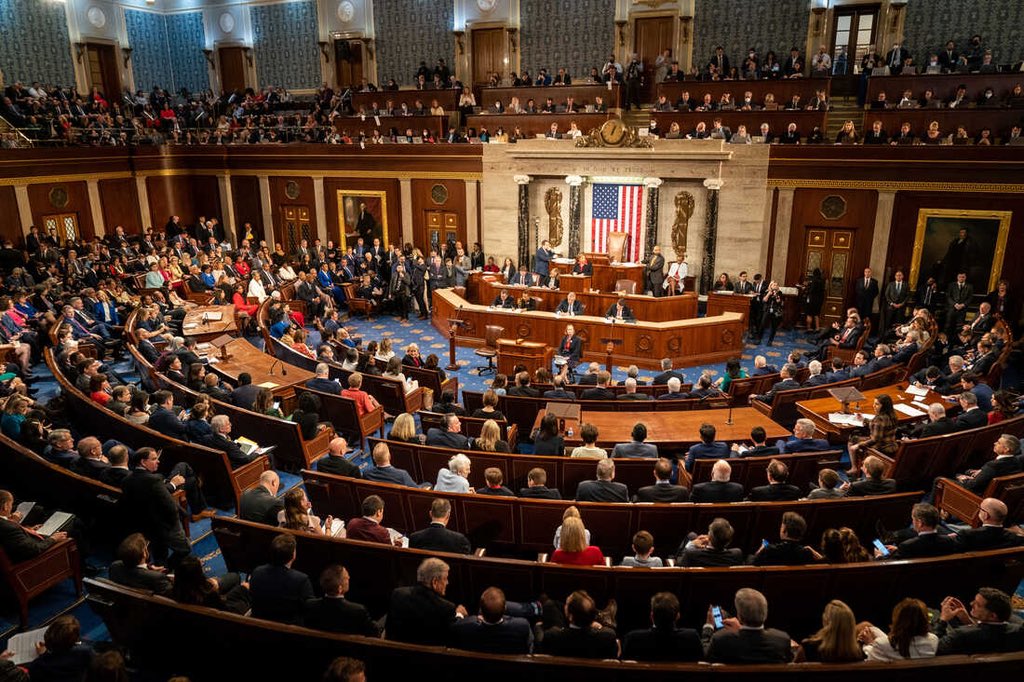
8. Many laws passed by Congress these days provide in essence “we shall have good law in area X, and federal agency Y gets to make up and enforce the law as it may choose”

9
9. These federal laws made by unelected bureaucrats—known as “rules and regulations,” although they have the same effect as any other law & violating them can result in huge fines or even imprisonment—cost Americans trillions of dollars a year, nearly as much as our tax laws!

10
10. At least our tax laws allow us to know (on some level) what the government is costing us, but not so with federal regulations!

11
11. There’s no receipt; we just pay through the nose for almost everything we buy, as nearly everything we buy is made more expensive by federal regulations

12
12. Laws, by their very nature, tend to make certain things more difficult and therefore expensive; that by itself doesn’t make them bad
But there’s something awful about unelected bureaucrats deciding—with no accountability to voters—whether a regulation is excessive
But there’s something awful about unelected bureaucrats deciding—with no accountability to voters—whether a regulation is excessive
13
13. Even worse, they make it nearly impossible to keep track of the constantly changing requirements of federal laws
Federal bureaucrats issue about 100,000 pages of new “rules and regulations” every year
The result is lawlessness and tyranny
Federal bureaucrats issue about 100,000 pages of new “rules and regulations” every year
The result is lawlessness and tyranny
14
14. So what’s the solution?
It’s simple:
Congress must pass the REINS Act, which would prohibit federal regulations from taking effect unless or until they’ve been enacted by Congress and signed (or acquiesced to) by the President
It’s simple:
Congress must pass the REINS Act, which would prohibit federal regulations from taking effect unless or until they’ve been enacted by Congress and signed (or acquiesced to) by the President
15
15. The Constitution already demands what the REINS Act would require, but the Supreme Court has been unwilling to enforce the so-called “non-delegation doctrine,” even though it acknowledges that the task of lawmaking cannot be delegated
The REINS Act would fix this problem
The REINS Act would fix this problem
16
16. While Republicans in Congress uniformly support the REINS Act (along with a few Democrats), it faces a significant hurdle with the Senate’s “cloture” standard, which requires 60 votes to bring debate to a close—an essential step in passing nearly all legislation

17
The thread was somehow broken as it was being posted. Here’s the beginning of the rest of it (17-25):

Mike Lee@BasedMikeLee
17. Republicans in Congress therefore need to take a stand—holding hostage something Democrats care about by attaching the REINS Act to that thing
18
Mike Lee@BasedMikeLee
18. To that end, Republicans should attach the REINS Act to any bill to increase the debt ceiling, forcing true compromise in an area where it’s badly needed—here, restoring separation of powers through the REINS Act

20
Mike Lee@BasedMikeLee
20. But this thread is about federalism—the Constitution’s mandate that the powers of the federal government remain “few and defined,” as James Madison described them in Federalist 45 (while referring to the powers reserved to the states as “numerous and indefinite”)
So what does the REINS Act have to do with restoring federalism?
Everything
So what does the REINS Act have to do with restoring federalism?
Everything

21
Mike Lee@BasedMikeLee
21. Remember: our drift from separation of powers (in which Congress began shifting the task of lawmaking to unelected bureaucrats in the executive branch) didn’t begin until the Supreme Court dramatically expanded Congress’s authority under the Commerce Clause, contrary to the Constitution’s text, structure, and original understanding

22
Mike Lee@BasedMikeLee
22. It follows logically that, if Congress can begin to restore separation of powers (as it would do by enacting the REINS Act) there would soon be far less new federal law being created each year, as elected lawmakers would be more reluctant to impose new burdens on the American people—far more reluctant than federal bureaucrats who never have to stand for election

23
Mike Lee@BasedMikeLee
23. In other words, if every expansion of federal law had to be enacted by Congress—whose members must stand for election at regular intervals—there would be less federal law being created each year

24
Mike Lee@BasedMikeLee
24. As surely as the sun will rise in the east tomorrow (and every day thereafter), members of Congress will rediscover federalism—as it will be in their interest to do so—once the REINS Act has become law

25
Mike Lee@BasedMikeLee
25. Follow if you’d like to read more posts like this one, and like and share if you’d agree that Congress should attach the REINS Act to any bill raising or suspending the debt ceiling


