High vs low protein intake for long-term health & longevity remains...

Karl Pfleger@KarlPfleger
95 views
Aug 02, 2026
~7 min read
Advertisement
1
High vs low protein intake for long-term health & longevity remains controversial even among experts. Recs range from <=0.8-2.2g/kg, 10-30+% cals f/ protein.
Here's a quick collection of refs, thoughts, & summaries synthesizing many prior conversations & lines of research.....

Here's a quick collection of refs, thoughts, & summaries synthesizing many prior conversations & lines of research.....
2
High level summary is science on both sides:
Aging science: Protein restriction (PR) consistently extends health/lifespan in model species. Protein ↑ mTOR & mTOR inhibition ↑ lifespan.
Sports science: More protein improves body composition (↑ muscle) in humans short-term.
Aging science: Protein restriction (PR) consistently extends health/lifespan in model species. Protein ↑ mTOR & mTOR inhibition ↑ lifespan.
Sports science: More protein improves body composition (↑ muscle) in humans short-term.
3
Experts on both sides.
Low protein:
Valter Longo, Luigi Fontana, Dean Ornish, Michael Greger, ...
High protein:
Peter Attia, Matt Kaeberlein, many that come more from the sports/performance optimization fields, ...
(Not meant to be comprehensive lists)
Low protein:
Valter Longo, Luigi Fontana, Dean Ornish, Michael Greger, ...
High protein:
Peter Attia, Matt Kaeberlein, many that come more from the sports/performance optimization fields, ...
(Not meant to be comprehensive lists)
4
What to do. Examine types of evidence & relative relevance. Prefer:
A. RCT data over observational
B. Human data over model species
C. Long term (LT) data/endpoints (relative to lifespan) over short-term (ST).
Alas, can't have LT human RCTs.
So this is a pick any 2 situation.
A. RCT data over observational
B. Human data over model species
C. Long term (LT) data/endpoints (relative to lifespan) over short-term (ST).
Alas, can't have LT human RCTs.
So this is a pick any 2 situation.
5
3 ways to pick 2, so use all 3:
B,C,¬A: Human LT observational data mostly supports low protein.
A,C,¬B: LT RCTs in short-lived species overwhelmingly supports low protein.
A,B,¬C: ST human RCTs are mixed, depending on endpoint & study.
I'll expand on all 3 below w/ a few refs.
B,C,¬A: Human LT observational data mostly supports low protein.
A,C,¬B: LT RCTs in short-lived species overwhelmingly supports low protein.
A,B,¬C: ST human RCTs are mixed, depending on endpoint & study.
I'll expand on all 3 below w/ a few refs.
6
Note that pub'ed nutrition science is very contradictory. Some like to stress that one can find papers backing almost any claim & some use that dismiss all diet science. That's too dismissive. Examining issues f/ multiple sides as above can enable somewhat confident conclusions.
7
1. Human LT observational:
Huge area. Countless papers. Full lit review beyond scope & of the 3 angles of triangulation, this one most typifies the contradictions & find-any-result issue. But preponderance of evidence still clearly leans in 1 direction. Broad summary/comments:
Huge area. Countless papers. Full lit review beyond scope & of the 3 angles of triangulation, this one most typifies the contradictions & find-any-result issue. But preponderance of evidence still clearly leans in 1 direction. Broad summary/comments:
8
Observational human diet data is tricky since some foods are less healthy than good foods but healthier than bad ones. Eg any food will look healthy in studies where people substitute sugar for that food. I suspect protein replacing empty carb calories happens in some studies.
9
We care more about the optimal diet that minimizes bad foods. In that part of the diet-composition state-space, does increasing or decreasing protein help or hurt? One way to examine this is to look at populations with good long-term health outcomes.
10
Both the (mid-20th-century) Okinawans and the Seventh-Day Adventists have had great long-term health outcomes & lower levels of chronic diseases & both diets were low-protein (eg Okinawans 9%).
Note: the BZ fraud story is overdone & doesn't negate above
Note: the BZ fraud story is overdone & doesn't negate above
Karl Pfleger@KarlPfleger
1. Disease rate data on some BZs esp mid-1900s Okinawans & Loma Linda, CA 7th Day Adventists. Pop-wide Okinawan CVD rates vs US or mainland Japan (which reversed after intro of Western diets) don't depend on birth certificates.
11
The Human Protein Requirements section of the Preserving Your Muscles chapter of the book How Not To Age by Michael Greger seems like a good place for citations in this area. The 5 page section contains 70+ refs, mostly pointing towards low protein being better.
12
Since avoiding sarcopenia is a big justification for protein, 2023 twin study
pubmed.ncbi.nlm.nih.gov/36800504/
is particularly noteworthy. It used 1-1.3g/kg as ref & found that in the long run *higher* protein intake was assoc. w/ low muscle mass & low intake protective for sarcopenia.
pubmed.ncbi.nlm.nih.gov/36800504/
is particularly noteworthy. It used 1-1.3g/kg as ref & found that in the long run *higher* protein intake was assoc. w/ low muscle mass & low intake protective for sarcopenia.
13
2. LT RCTs in model species:
I'm not gonna lit review this area in detail. It's very clear PR extends lifespan in many model species including mice. CR has one of the most robust evidence bases for longevity & many papers show PR is responsible for much or most of CR's benefit.
I'm not gonna lit review this area in detail. It's very clear PR extends lifespan in many model species including mice. CR has one of the most robust evidence bases for longevity & many papers show PR is responsible for much or most of CR's benefit.
14
A notable subgenre "nutritional geometry" systematically varied macronutrients w/ consistent results across studies & species:
"Longest lifespans generated by diets low protein high carbohydrates where optimum ratio of protein to carbs is 1:10"
pubmed.ncbi.nlm.nih.gov/28274839/
"Longest lifespans generated by diets low protein high carbohydrates where optimum ratio of protein to carbs is 1:10"
pubmed.ncbi.nlm.nih.gov/28274839/
15
Since mTOR is highly conserved across species, it's hard to imagine low protein is optimal for all the short-lived species tested including some mammals but humans are somehow so different that high protein is long-term optimal for them. What genetic diffs would justify this?
16
3. ST human RCTs:
There are many ST human RCTs w/ body composition endpoints showing higher muscle mass from high protein. This is what compels most high protein advocacy. But not all studies show benefit, what about exercise, & which clinical endpoints do we care about most?
There are many ST human RCTs w/ body composition endpoints showing higher muscle mass from high protein. This is what compels most high protein advocacy. But not all studies show benefit, what about exercise, & which clinical endpoints do we care about most?
17
On muscle building:
The most recent (2025) systematic review & MA
sciencedirect.com/science/articl…
reviewed 38 RCTs (n=2610) found muscle benefit from exercise but protein supplementation + exercise did not improve on exercise alone & exercise alone beat only protein supplementation.
The most recent (2025) systematic review & MA
sciencedirect.com/science/articl…
reviewed 38 RCTs (n=2610) found muscle benefit from exercise but protein supplementation + exercise did not improve on exercise alone & exercise alone beat only protein supplementation.
18
An older review & MA
pubmed.ncbi.nlm.nih.gov/28698222/
(49 RCTs, n=1863) found benefit w/ exercise f/ more protein up to 1.6g/kg but not more.
So human RCTs weakly favor high-ish protein for muscle, but don't justify very high intakes like 2.2g/kg (Peter Attia's rec).
pubmed.ncbi.nlm.nih.gov/28698222/
(49 RCTs, n=1863) found benefit w/ exercise f/ more protein up to 1.6g/kg but not more.
So human RCTs weakly favor high-ish protein for muscle, but don't justify very high intakes like 2.2g/kg (Peter Attia's rec).
19
Human RCTs for other endpoints? Top age-related diseases more important & longevity-relevant vs muscle: Ornish's RCTs most relevant. Positive results on CVD, T2D, prostate cancer, AD (& telomeres), pub'ed in top journals.
15% protein diet (18% for AD)

15% protein diet (18% for AD)
Karl Pfleger@KarlPfleger
I'm impressed by amount of age-related clinical data published on the Ornish lifestyle program. Top journals too: Lancet, JAMA...
Famously, data so compelling Medicare reimburses.
Reportedly, cardiologists asked why they don't prescribe it more say they assume poor compliance.
Famously, data so compelling Medicare reimburses.
Reportedly, cardiologists asked why they don't prescribe it more say they assume poor compliance.
20
Besides looking at the evidence that does exist, it's worth contemplating the absence of data pointing in the opposite direction for each of the 3 angles:
1. Are there long-lived human populations that ate high-protein throughout life (high protein Blue Zone analogs)?
1. Are there long-lived human populations that ate high-protein throughout life (high protein Blue Zone analogs)?
21
2. Are there any examples of high protein diets leading to lifespan extension in model species?
22
3. Is there human RCT data on high protein diets showing improved mortality on any important top-killer chronic diseases or on all-cause mortality?
I'm not aware of any of the above, and the absence of all 3 seems noteworthy.
I'm not aware of any of the above, and the absence of all 3 seems noteworthy.
23
Some think protein should rise in late life. Idea seems to come f/ 1 paper. I analyzed it & found the evidence for late ↑ protein weak:
Even if justified, lead author only advocates ↑ from 0.8g/kg to 1.0 not the higher levels others use paper to rec.

Even if justified, lead author only advocates ↑ from 0.8g/kg to 1.0 not the higher levels others use paper to rec.
Karl Pfleger@KarlPfleger
In recent years it's often claimed that older people (& rodents?) need increased protein intake late in life, but this idea doesn't seem to have a long tradition. Where does this belief come from? What's the best data justifying it?
AFAICT main source is ncbi.nlm.nih.gov/pmc/articles/P…
AFAICT main source is ncbi.nlm.nih.gov/pmc/articles/P…
24
Looks to me like the overwhelming totality of evidence favors low protein intake as better for human long-term health & longevity. The global experts who most directly study & publish on diet & aging (Longo & Fontana) both favor low protein.
25
So burden of proof seems to be on the high-protein intake advocates. I've listened to their arguments but not found them compelling. Anyone want to offer what they think are the best arguments for high protein intake for long-term health/longevity that outweigh all of above?
26
PS Here is a diagrammatic representation of the main idea from this thread, summarizing the categories of evidence & which way they lean.

27
Since above posted:
1. Peter Attia defended his high-protein position:
peterattiamd.com/determining-op…
2. Eric Topol joined the debate for low
I found @PeterAttiaMD's piece unconvincing. His arguments on this subject are most effective only at countering straw-man positions.
(1/2 new)
1. Peter Attia defended his high-protein position:
peterattiamd.com/determining-op…
2. Eric Topol joined the debate for low
I found @PeterAttiaMD's piece unconvincing. His arguments on this subject are most effective only at countering straw-man positions.
(1/2 new)
28
@PeterAttiaMD @EricTopol's argues high-protein lacks any scientific basis:
erictopol.substack.com/p/our-preoccup…
His piece is compatible w/ my analysis above & adds some specific refs tho misses categorizing them into the 3 categories. He also adds some notable experts to the list of ppl for low protein.
erictopol.substack.com/p/our-preoccup…
His piece is compatible w/ my analysis above & adds some specific refs tho misses categorizing them into the 3 categories. He also adds some notable experts to the list of ppl for low protein.
29
@PeterAttiaMD @EricTopol Updates since last updates above:
Someone took a 2yr old Peter Attia + Rhonda Patrick 22min video & broke it down into a pro-protein thread:
Then, (probably coincidentally in term of timing) came this post from Luigi Fontana.....

Someone took a 2yr old Peter Attia + Rhonda Patrick 22min video & broke it down into a pro-protein thread:
Then, (probably coincidentally in term of timing) came this post from Luigi Fontana.....
SammyArmstrong@SammyRArmstrong
Dr. Peter Attia & Dr. Rhonda Patrick recently unpacked one of the most misunderstood debates in longevity science.
After years of low- vs high-protein arguments, they explained what actually matters for living longer and staying functional.
Their 12 key insights:
After years of low- vs high-protein arguments, they explained what actually matters for living longer and staying functional.
Their 12 key insights:
30
@PeterAttiaMD @EricTopol I've said before: trust Luigi Fontana & Valter Longo as the most authoritative experts in the world on nutrition & longevity. @LuigiFontanaMD just posted scientific logic & recent papers on protein:
I recommend reading the full linked LI post. Highlights:

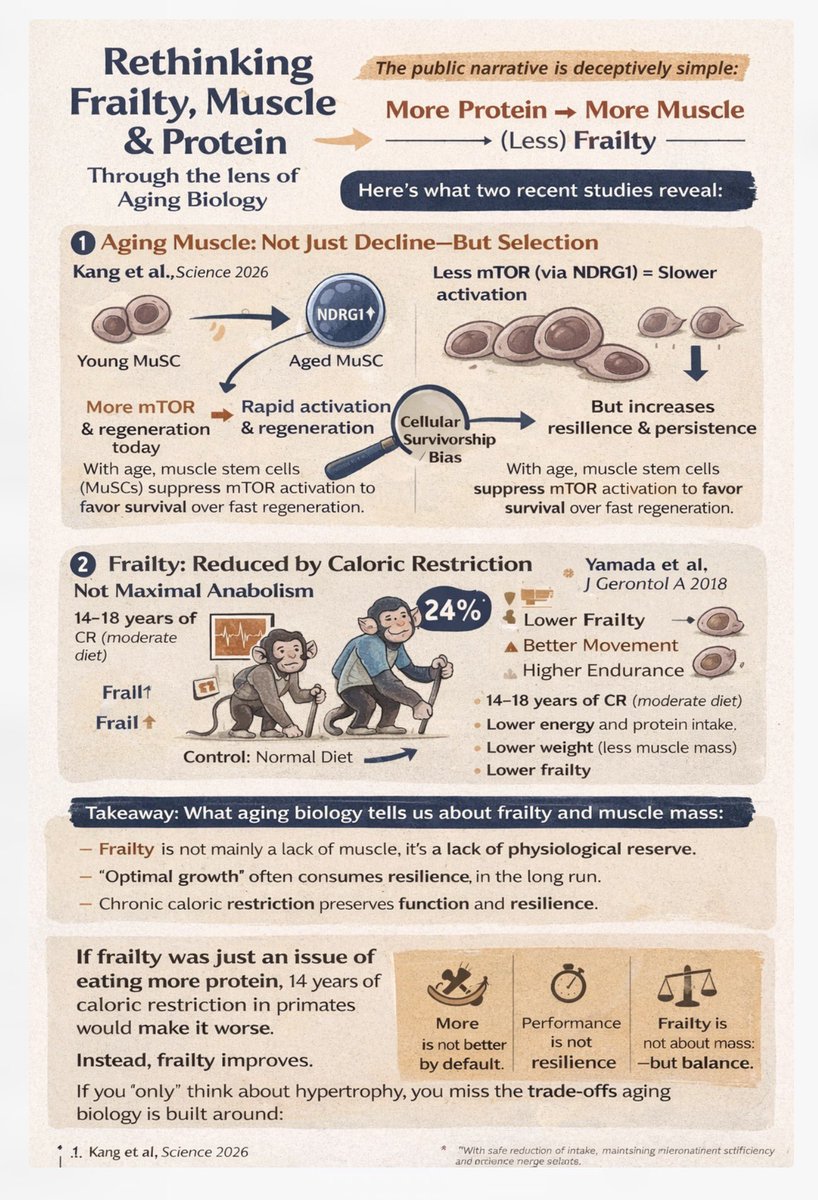

I recommend reading the full linked LI post. Highlights:
Luigi Fontana, MD, PhD, FRACP@LuigiFontanaMD
Rethinking frailty, muscle, and protein through the lens of aging biology
The dominant narrative around aging and frailty is deceptively simple and wrong:
eat more protein + resistance exercise → activate mTOR → build more muscle → reduce frailty.
linkedin.com/posts/lfontana…
The dominant narrative around aging and frailty is deceptively simple and wrong:
eat more protein + resistance exercise → activate mTOR → build more muscle → reduce frailty.
linkedin.com/posts/lfontana…
31
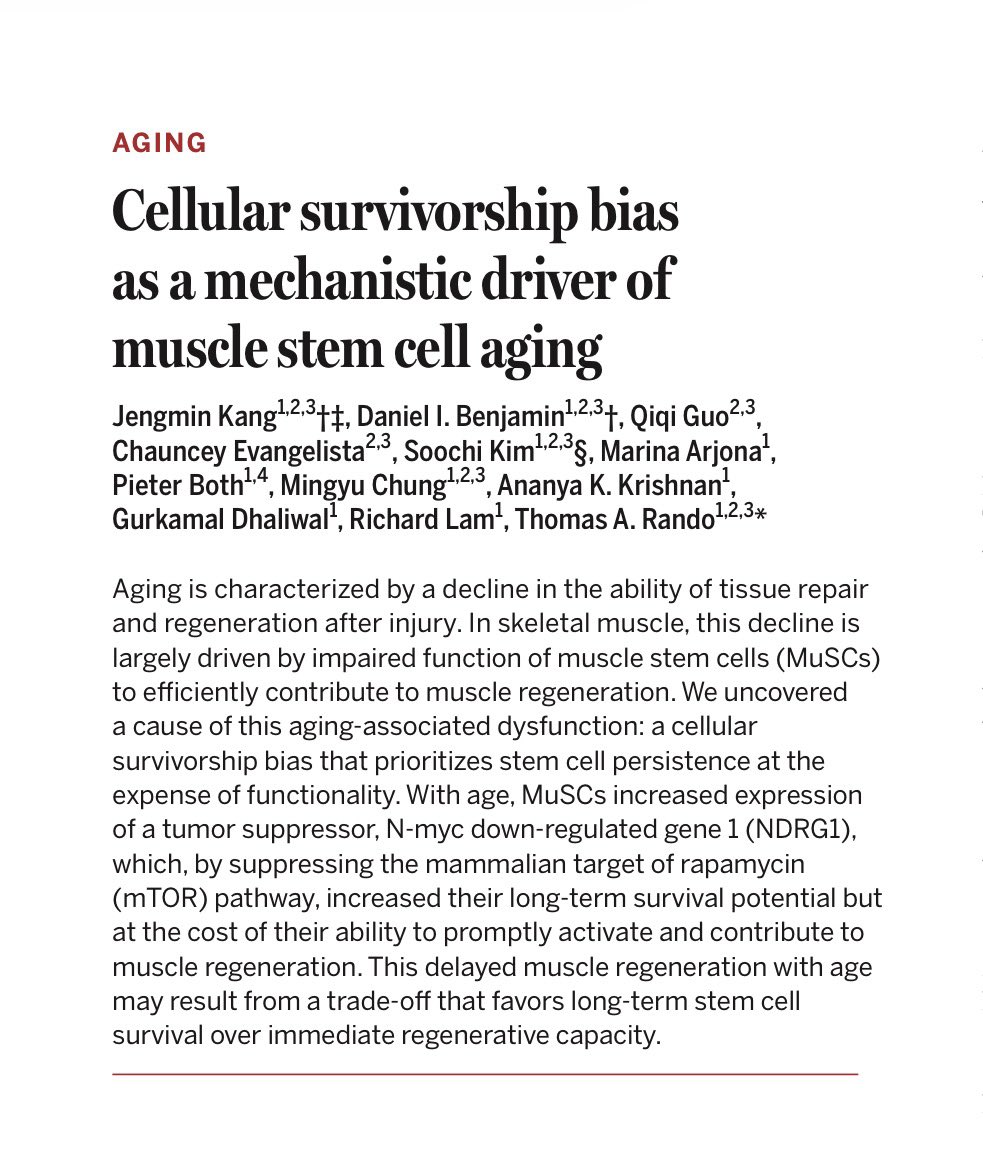
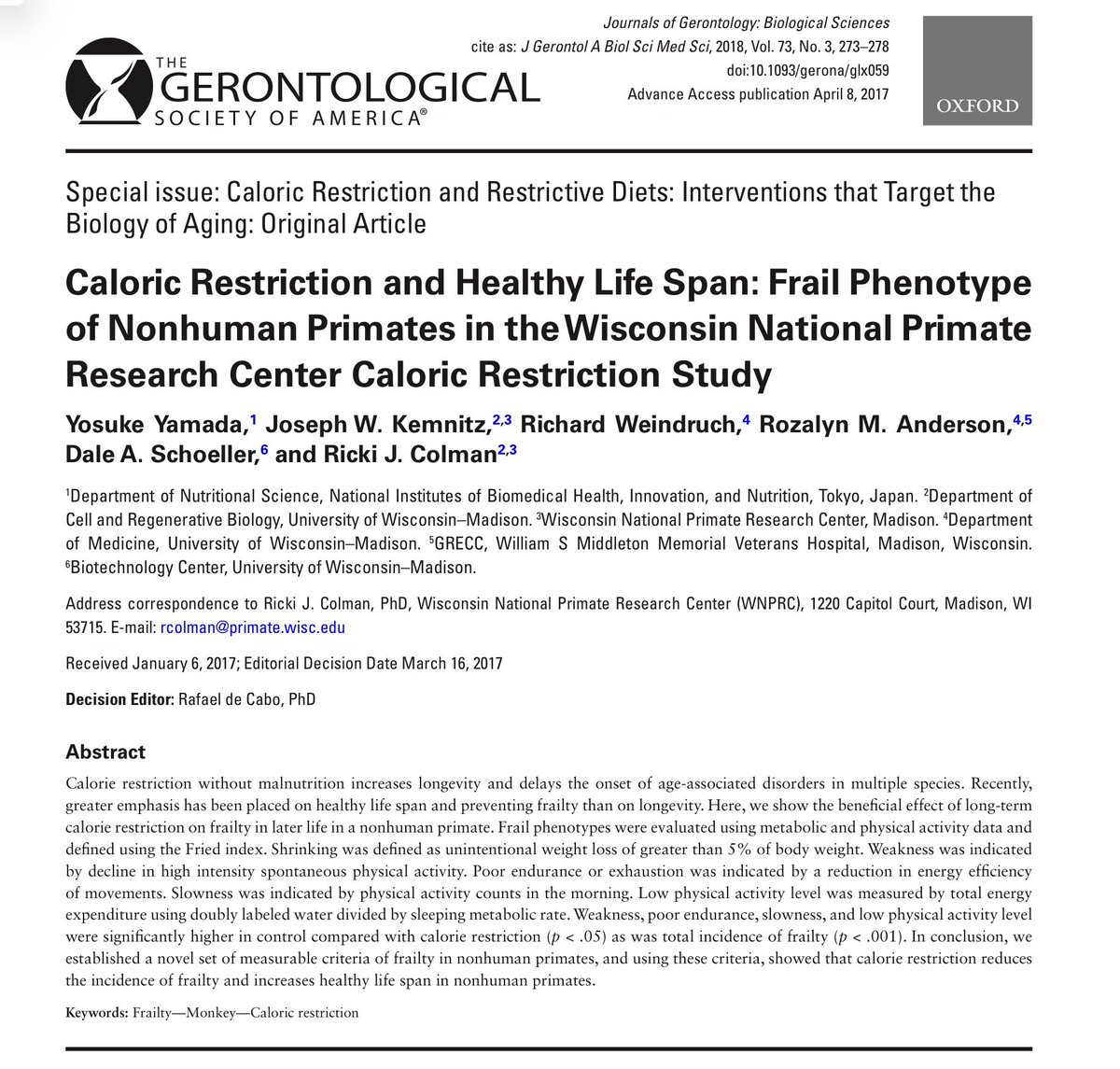
@PeterAttiaMD @EricTopol @LuigiFontanaMD He says the idea of eat more protein to build more muscle to prevent frailty is just wrong. 2 recent papers:
1st paper: pubmed.ncbi.nlm.nih.gov/41610257/
Cellurar level. See pic for logic.
Low mTOR is what one wants long-term.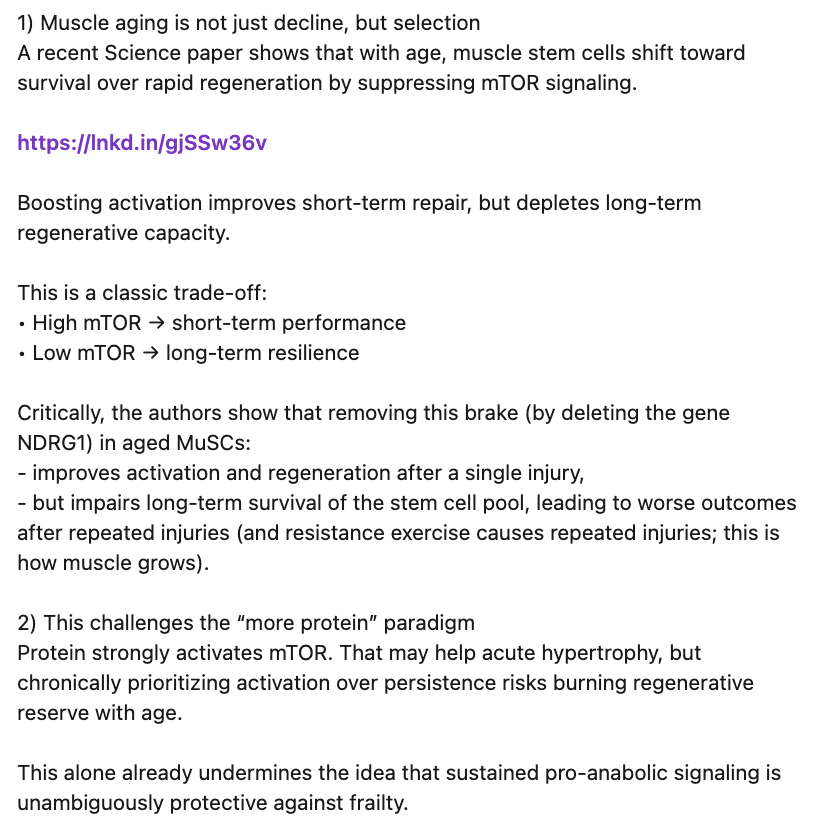
1st paper: pubmed.ncbi.nlm.nih.gov/41610257/
Cellurar level. See pic for logic.
Low mTOR is what one wants long-term.
32
3 levels:
1. What one can do now w/o drs (lifestyle, suppl, OTC drugs, misc dx)
2. What one can do now w/ dr (+Rx tx, dx)
3. What's coming (in trials, in pre-clin, in academia)
Peter's podcast & book are strong on 1 & 2 but hardly mention 3, the most important one.
(Bryan Johnson's rhetoric/material, and money outflows, have the same problem.)
1. What one can do now w/o drs (lifestyle, suppl, OTC drugs, misc dx)
2. What one can do now w/ dr (+Rx tx, dx)
3. What's coming (in trials, in pre-clin, in academia)
Peter's podcast & book are strong on 1 & 2 but hardly mention 3, the most important one.
(Bryan Johnson's rhetoric/material, and money outflows, have the same problem.)
33
@MarkHamalainen @PeterAttiaMD @mkaeberlein So on a podcast w/ audience that doesn't get much #3 above, I'd focus on
A. This important stuff: youtube.com/watch?v=suj4sb…
B. This under-discussed topic:
C. The most exciting pre-clin aging biotech areas & companies.

A. This important stuff: youtube.com/watch?v=suj4sb…
B. This under-discussed topic:
C. The most exciting pre-clin aging biotech areas & companies.
Karl Pfleger@KarlPfleger
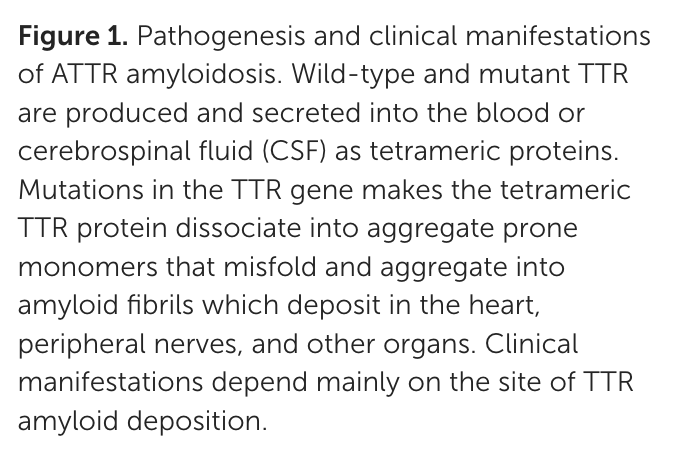
An important longevity development is too-little discussed in the field for years:
Despite many Aβ trial failures (& little benefit of the few successes), there's another misfolded protein possibly as important in aging with much success:
ATTR now has 5 FDA approved therapies!
Despite many Aβ trial failures (& little benefit of the few successes), there's another misfolded protein possibly as important in aging with much success:
ATTR now has 5 FDA approved therapies!