Stella Dials: Rolex Goes Psychedelic The story of Rolex’s Stella...

Collectors Gallery@CollectorsDXB
39 views
Feb 01, 2025
~6 min read
Advertisement
1
Stella Dials: Rolex Goes Psychedelic
The story of Rolex’s Stella dials is one of bold experimentation and ultimate redemption. Initially met with scepticism, Stella dials are now the collectors ultimate dream.
Let's take a look at the what, why & when of Stella Dials.
The story of Rolex’s Stella dials is one of bold experimentation and ultimate redemption. Initially met with scepticism, Stella dials are now the collectors ultimate dream.
Let's take a look at the what, why & when of Stella Dials.
2
Picture this:
It’s the late 1960s or early 1970s, and Rolex, a brand synonymous with conservative, pragmatic luxury, suddenly decides to embrace psychedelic color.
These vivid dials, paired with their prestigious Day-Date models, were unlike anything the watch world had seen before.
Bright, shiny & loud, they stood in stark contrast to the understated elegance Rolex was known for.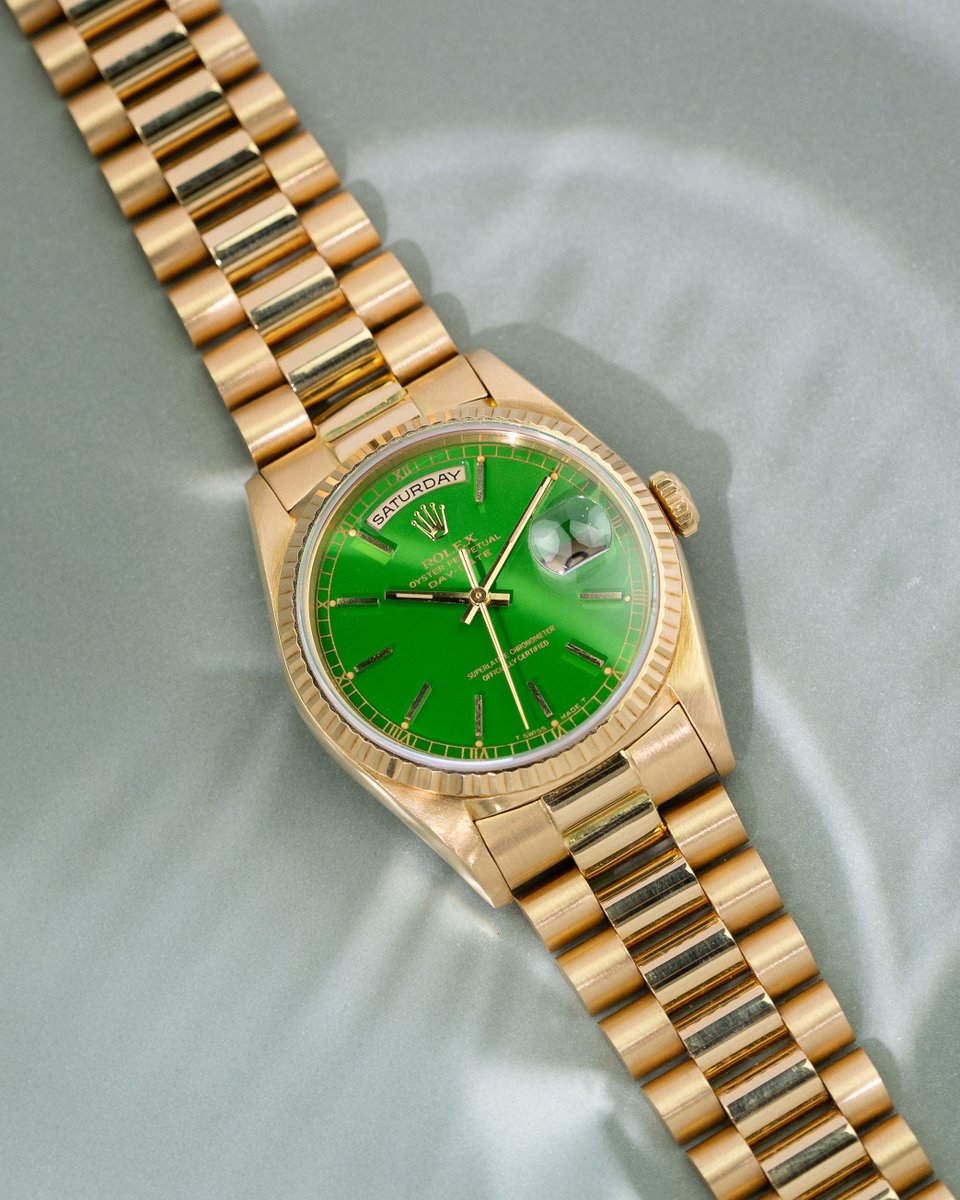


It’s the late 1960s or early 1970s, and Rolex, a brand synonymous with conservative, pragmatic luxury, suddenly decides to embrace psychedelic color.
These vivid dials, paired with their prestigious Day-Date models, were unlike anything the watch world had seen before.
Bright, shiny & loud, they stood in stark contrast to the understated elegance Rolex was known for.
3
At the time, Stella dials were met with skepticism.
The Day-Date wasn’t just any watch - it was a symbol of prestige, worn by the wealthy and powerful. Could someone of such stature really pull off a watch with a bright yellow, Seafoam green, or Salmon pink dial?
Apparently not. The Stella dials didn’t sell well and production numbers remained low.
The Day-Date wasn’t just any watch - it was a symbol of prestige, worn by the wealthy and powerful. Could someone of such stature really pull off a watch with a bright yellow, Seafoam green, or Salmon pink dial?
Apparently not. The Stella dials didn’t sell well and production numbers remained low.
4
To understand the magic of Stella dials, we first have to decode the name.
For years, collectors speculated on its origins. Was it a nod to their star-like shine (“Stella” meaning “star” in Italian)? Or a tribute to Frank Stella, the colorful modern artist?
The truth is more mundane but no less fascinating: the name comes from Stella S.A., the Swiss company that supplied the lacquer for these dials. Rolex themselves referred to them as “Lacquered Stella” in internal documents, solidifying the connection.
For years, collectors speculated on its origins. Was it a nod to their star-like shine (“Stella” meaning “star” in Italian)? Or a tribute to Frank Stella, the colorful modern artist?
The truth is more mundane but no less fascinating: the name comes from Stella S.A., the Swiss company that supplied the lacquer for these dials. Rolex themselves referred to them as “Lacquered Stella” in internal documents, solidifying the connection.
5
Creating these dials was an art in itself.
The lacquer was mixed by hand, ensuring slight variations in tone that made each dial unique. Multiple layers of paint were meticulously applied by skilled artisans using spray guns, with each coat left to dry before the next was added.
This painstaking process gave the dials their signature shine and durability.
The final touch was a transparent layer to seal the surface, polished by hand to perfection.


The lacquer was mixed by hand, ensuring slight variations in tone that made each dial unique. Multiple layers of paint were meticulously applied by skilled artisans using spray guns, with each coat left to dry before the next was added.
This painstaking process gave the dials their signature shine and durability.
The final touch was a transparent layer to seal the surface, polished by hand to perfection.
6
The Evolution of Stella Dials
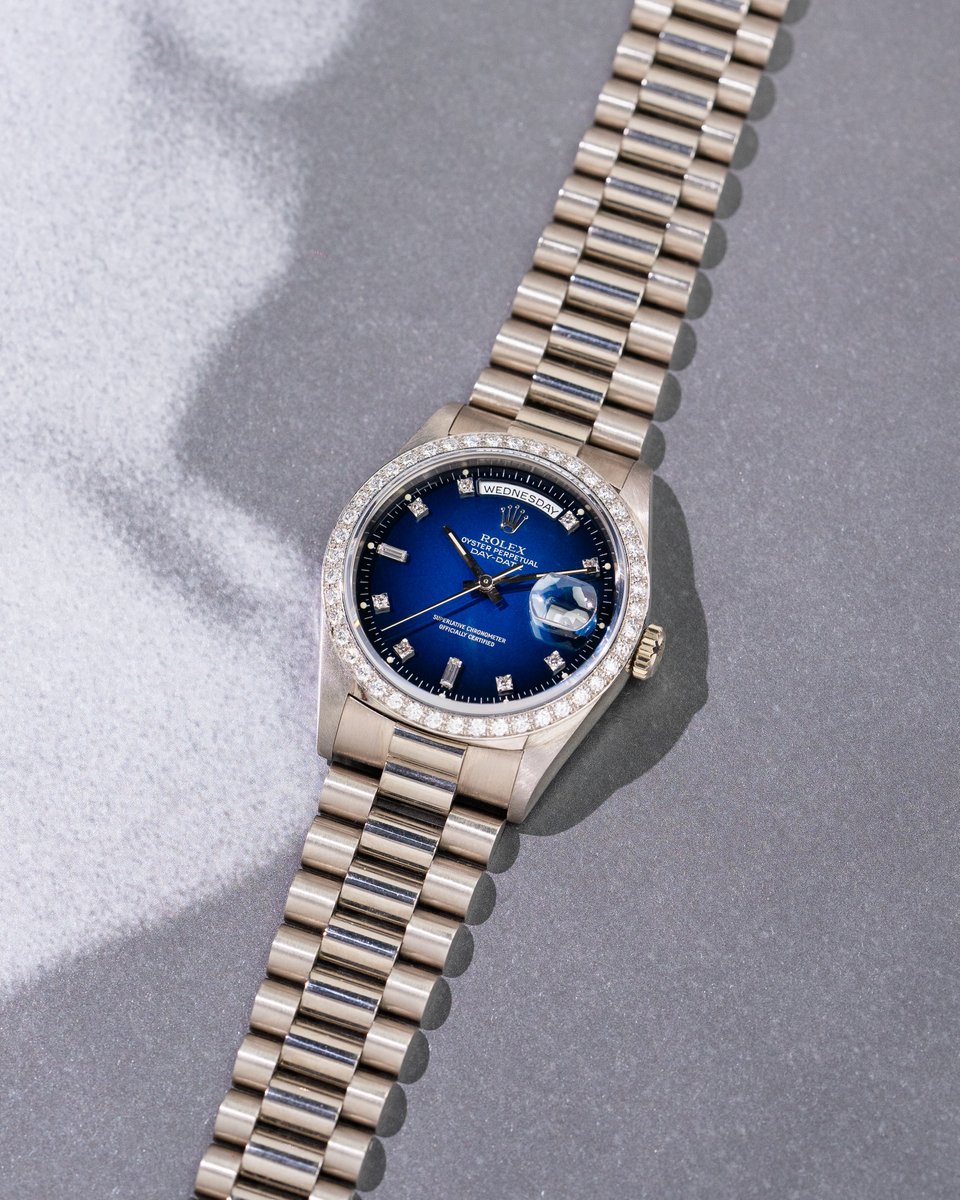
The story of Stella dials unfolds across four generations, each bringing its own subtle changes.
The First
Produced from the late ’60s to 1978. This is considered the golden era by collectors. These dials featured a “pie-pan” dial with sloped outer edges, giving them a dynamic look. The glossy lacquer created a captivating and thick effect around the day and date windows, often described as 'bathtub-like'. These dials were always signed "T Swiss T" at the bottom indicating the luminescent material, Tritium, that was used.
The Second
1978 marked the start of the second generation under the 5-digit reference (180XX). The pie pan dial behind a plexi crystal was changed for a flat dial behind a sapphire crystal.
The Third
The dials were labeled “T Swiss Made T” and this text was placed above the minute track (instead of below the 6-hour position as with the previous generations).
The Fourth
The last generation can easily be distinguished because it came with a closed minute track with Roman numerals. These only came with baton markers (no diamonds).
Exception
There is one contemporary exception. An elusive special order, where Singer provided yellow Stella dials. Made according to the same technique and printed with the original text. This was a non-commercial project from 2013 for some high-ranking Rolex executives and collectors.
While production dates are hard to pin down, one thing is clear: Stella dials were often ordered on request, meaning they could end up on older or newer Day-Date models, depending on availability.


The story of Stella dials unfolds across four generations, each bringing its own subtle changes.
The First
Produced from the late ’60s to 1978. This is considered the golden era by collectors. These dials featured a “pie-pan” dial with sloped outer edges, giving them a dynamic look. The glossy lacquer created a captivating and thick effect around the day and date windows, often described as 'bathtub-like'. These dials were always signed "T Swiss T" at the bottom indicating the luminescent material, Tritium, that was used.
The Second
1978 marked the start of the second generation under the 5-digit reference (180XX). The pie pan dial behind a plexi crystal was changed for a flat dial behind a sapphire crystal.
The Third
The dials were labeled “T Swiss Made T” and this text was placed above the minute track (instead of below the 6-hour position as with the previous generations).
The Fourth
The last generation can easily be distinguished because it came with a closed minute track with Roman numerals. These only came with baton markers (no diamonds).
Exception
There is one contemporary exception. An elusive special order, where Singer provided yellow Stella dials. Made according to the same technique and printed with the original text. This was a non-commercial project from 2013 for some high-ranking Rolex executives and collectors.
While production dates are hard to pin down, one thing is clear: Stella dials were often ordered on request, meaning they could end up on older or newer Day-Date models, depending on availability.
7
What once made Stella dials unpopular - their boldness and limited production - has now made them incredibly desirable.
Their rarity is a key factor in their appeal, with first-generation dials commanding the highest prices. Some colors, like yellow, Lilac, Seafoam, and Salmon, are especially rare and sought after, while others, like Oxblood, are more common and comparatively affordable.
Collectors also prize specific details, such as the dimples in the glaze around markers or the raised text that appears to float above the surface.
These imperfections and quirks add character and contribute to the dials’ mystique.

Their rarity is a key factor in their appeal, with first-generation dials commanding the highest prices. Some colors, like yellow, Lilac, Seafoam, and Salmon, are especially rare and sought after, while others, like Oxblood, are more common and comparatively affordable.
Collectors also prize specific details, such as the dimples in the glaze around markers or the raised text that appears to float above the surface.
These imperfections and quirks add character and contribute to the dials’ mystique.
8
Stella Buyer’s Guide: What to Look for Before You Buy
Rolex’s Stella dials are bold, rare, and undeniably collectible. But not all Stella's are created equal. If you’re looking to buy one, knowing what sets the best apart from the rest is crucial.
From dial condition to rarity, here's what to look for when making that purchase:
Rolex’s Stella dials are bold, rare, and undeniably collectible. But not all Stella's are created equal. If you’re looking to buy one, knowing what sets the best apart from the rest is crucial.
From dial condition to rarity, here's what to look for when making that purchase:
9
1. Condition is Everything
The heart of a Stella Day-Date is its dial - originality and condition are king. Unlike other vintage watches where aging adds charm, pristine Stella's (referred to as 'flawless') fetch the highest prices.
Cracks (splitting lines in the lacquer) and hairlines (fine, superficial cracks on the surface) can develop naturally due to temperature changes. Bubbling is caused by condensation. A dial with flaws is not the end of the world. Just make sure it’s reflected in the price and that the imperfections aren't too bad.
When buying Stella dials, it’s very important to assess the quality of the dial. That means: bring a loupe! Always inspect the dial under different lights and angles. Doing so, you expose any imperfections. Oh yeah, and if the lume looks like toothpaste, run.
Needless to say, it’s very important that the dial is completely original!


The heart of a Stella Day-Date is its dial - originality and condition are king. Unlike other vintage watches where aging adds charm, pristine Stella's (referred to as 'flawless') fetch the highest prices.
Cracks (splitting lines in the lacquer) and hairlines (fine, superficial cracks on the surface) can develop naturally due to temperature changes. Bubbling is caused by condensation. A dial with flaws is not the end of the world. Just make sure it’s reflected in the price and that the imperfections aren't too bad.
When buying Stella dials, it’s very important to assess the quality of the dial. That means: bring a loupe! Always inspect the dial under different lights and angles. Doing so, you expose any imperfections. Oh yeah, and if the lume looks like toothpaste, run.
Needless to say, it’s very important that the dial is completely original!
10
2. Rarity: Not All Colors Are Equal
Stella dials are rare, but some colors are rarer than others. Shades like Lilac are true unicorns, while more common ones (within an already rare breed of watches) are for example Oxblood.
Stella dials are rare, but some colors are rarer than others. Shades like Lilac are true unicorns, while more common ones (within an already rare breed of watches) are for example Oxblood.
11
3. Diamonds vs. No Diamonds
Most vintage Stella buyers back in the day had deep pockets and wanted the flashiest option possible - meaning most Stella's came with diamond markers.
Today, the opposite is true: non-diamond Stella's are much rarer and, as a result, often more valuable.

Most vintage Stella buyers back in the day had deep pockets and wanted the flashiest option possible - meaning most Stella's came with diamond markers.
Today, the opposite is true: non-diamond Stella's are much rarer and, as a result, often more valuable.
12
4. White Gold = Ultra Rare
Most Stella buyers went for yellow gold, embracing the loud aesthetic. White gold models, on the other hand, were an unusual choice - so they’re significantly rarer today.
Only a true connoisseur can tell white gold apart from stainless steel, making these pieces incredibly collectible.
Most Stella buyers went for yellow gold, embracing the loud aesthetic. White gold models, on the other hand, were an unusual choice - so they’re significantly rarer today.
Only a true connoisseur can tell white gold apart from stainless steel, making these pieces incredibly collectible.
13
5. Authenticity Matters
With demand soaring, fakes and aftermarket dials are everywhere. Always verify authenticity with experts, check provenance, and don’t get fooled by someone trying to flex what they can’t afford.
Just note that distinguishing fake dials from authentic ones is an actual study. To sum up all the differences between fakes and authentic ones, is not only impossible, but could also harm the hobby and our business because this knowledge should not be in wrong hands.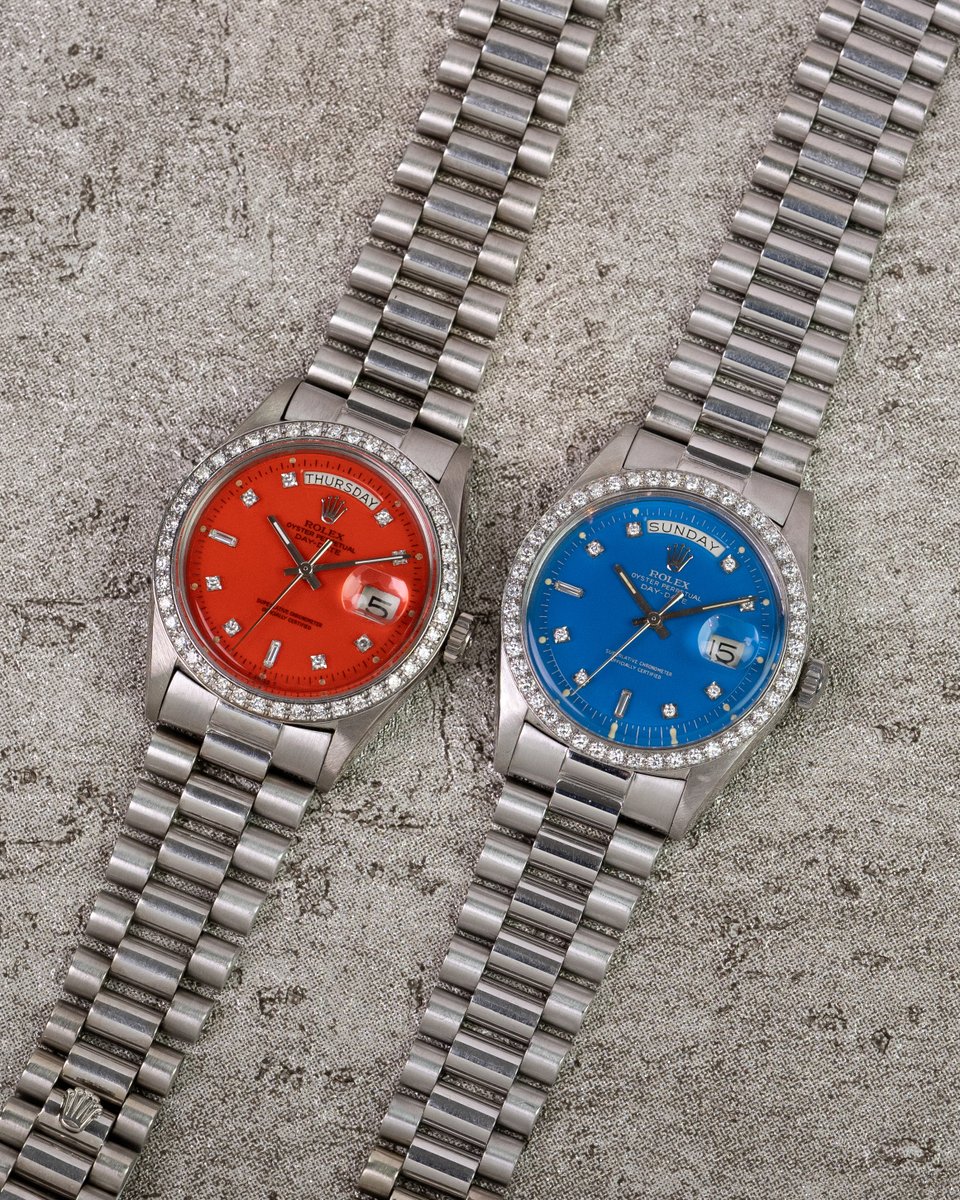


With demand soaring, fakes and aftermarket dials are everywhere. Always verify authenticity with experts, check provenance, and don’t get fooled by someone trying to flex what they can’t afford.
Just note that distinguishing fake dials from authentic ones is an actual study. To sum up all the differences between fakes and authentic ones, is not only impossible, but could also harm the hobby and our business because this knowledge should not be in wrong hands.
14
Buy the seller!
This is the most important rule.
We have assessed, handled and sold hundreds of Stella dials over the last 6-7 years. Together with our partner Amsterdam Vintage Watches, Collectors Gallery has sourced some of the rarest Stella’s out there.
We keep a database of all pieces that have passed through our hands together with their details and other relevant information in order to maintain quality and condition standards.
Amongst our clientele are the biggest Stella collectors in the world. With other words, we have an impressive track record and have already done the homework for you.


This is the most important rule.
We have assessed, handled and sold hundreds of Stella dials over the last 6-7 years. Together with our partner Amsterdam Vintage Watches, Collectors Gallery has sourced some of the rarest Stella’s out there.
We keep a database of all pieces that have passed through our hands together with their details and other relevant information in order to maintain quality and condition standards.
Amongst our clientele are the biggest Stella collectors in the world. With other words, we have an impressive track record and have already done the homework for you.
15
Feel free to send us a message. We’re more than happy to help you! 🙏🏽