It’s difficult to understate how aristocratic medieval warfare was....

Alaric@0xAlaric
52 views
Dec 20, 2024
~1 min read
Advertisement
1
It’s difficult to understate how aristocratic medieval warfare was. Single combats, small skirmishes. A knight could often count the men across from him.
Thus each man was worth much more — trained from childhood, wildly expensive armor, riding a well-bred horse… 1/
Thus each man was worth much more — trained from childhood, wildly expensive armor, riding a well-bred horse… 1/


2
Knights, especially prominent ones, were often captured rather than killed because they’d fetch a large ransom.
It wasn’t unusual for a castle to have a few long-term prisoners, often treated quite well by POW standards.
A handful of mercenaries made their fortunes in this way.
It wasn’t unusual for a castle to have a few long-term prisoners, often treated quite well by POW standards.
A handful of mercenaries made their fortunes in this way.
3
Of course you also had footmen, archers, pages and squires — armies weren’t just knights. Still, much smaller forces than ancient militaries.
Many wars were closer in size and structure to gang rumbles than to war as we envision it — i.e. massive, epic battles.
Many wars were closer in size and structure to gang rumbles than to war as we envision it — i.e. massive, epic battles.
4
A famous example is the Combat of the Thirty, which was an arranged battle between thirty men on each side. It ended with 11 deaths, and was soon lauded as the height of chivalric warfare.
“Bois ton sang, Beaumanoir, la soif te passera!”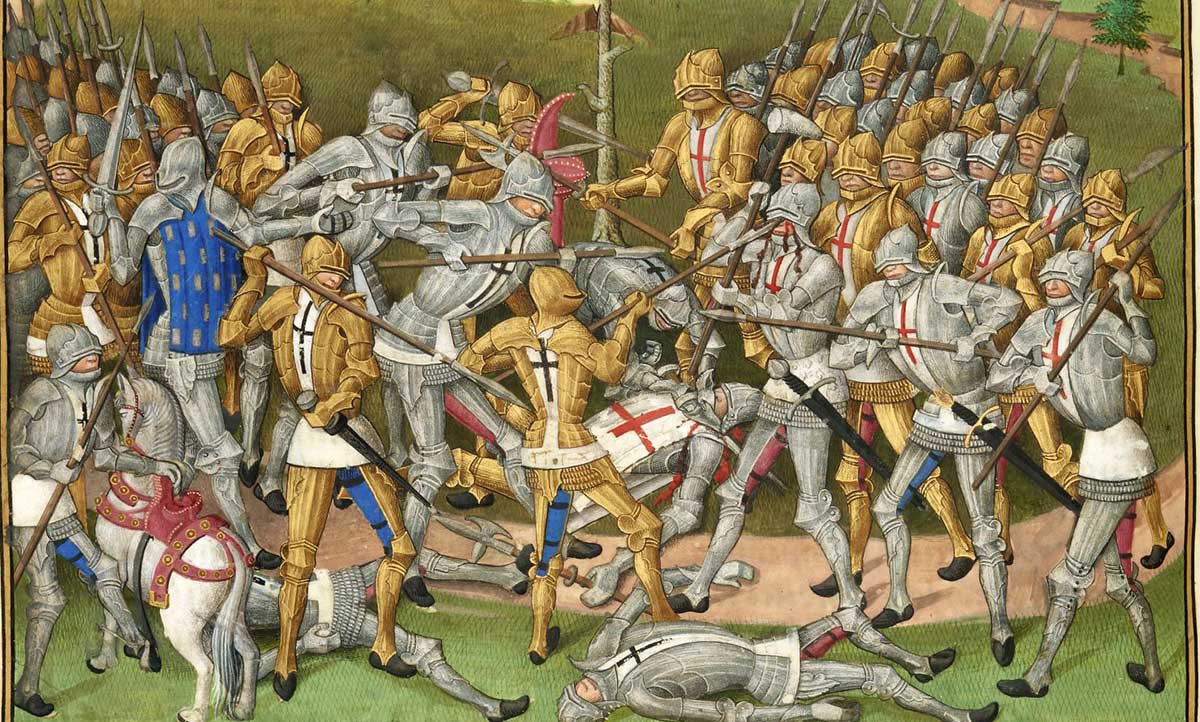
“Bois ton sang, Beaumanoir, la soif te passera!”
5
Of course it didn’t always go like this.
But in general, medieval warfare was much smaller in scale than ancient warfare, and much more oriented toward aristocratic duel-like combat.
The chivalric code didn’t come out of nowhere, and it wasn’t pure idealism. It was real.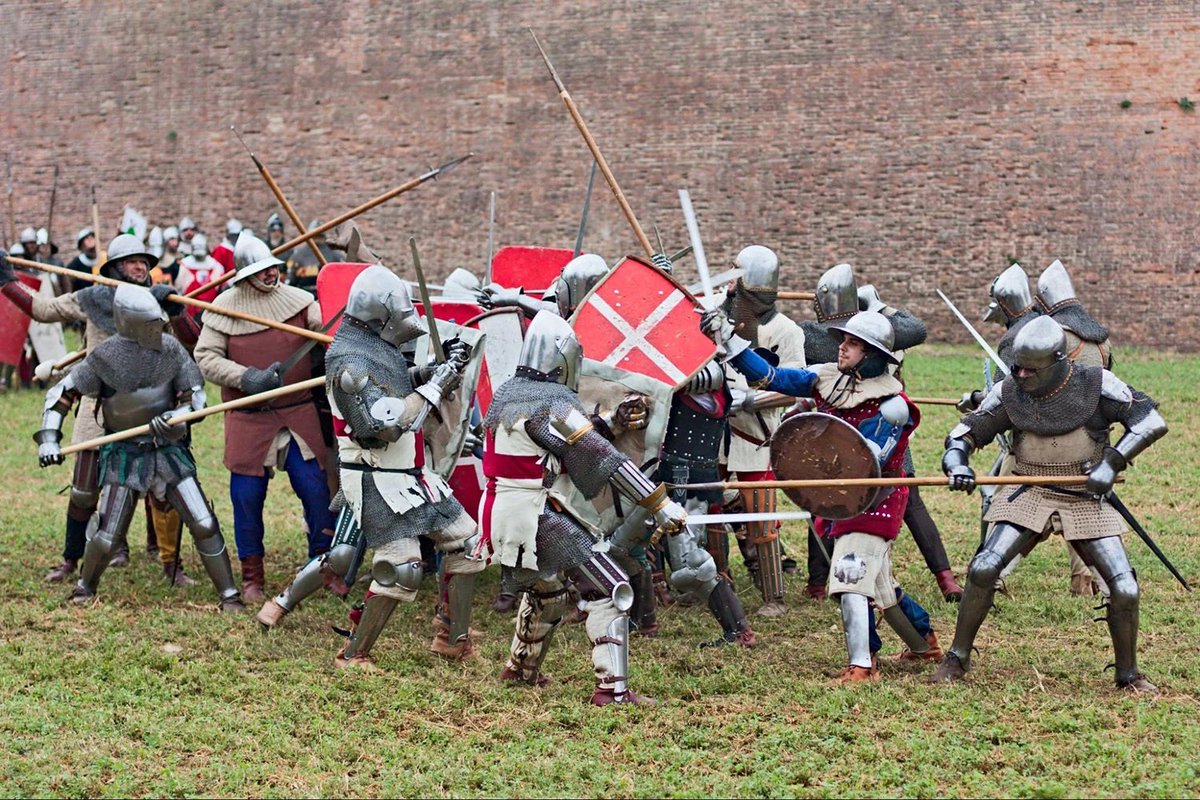
But in general, medieval warfare was much smaller in scale than ancient warfare, and much more oriented toward aristocratic duel-like combat.
The chivalric code didn’t come out of nowhere, and it wasn’t pure idealism. It was real.
6
A ~good way to think of this is how much America values one Tier 1 operator or fighter pilot.
They operate in smaller groups and with much more support per soldier. It’s not nearly a perfect analogy, but it’s close.
They operate in smaller groups and with much more support per soldier. It’s not nearly a perfect analogy, but it’s close.