I love Wifejak but hate what the meme’s dominance implies. Art has...

Johann Kurtz@JohannKurtz
43 views
Dec 02, 2024
~4 min read
1
I love Wifejak but hate what the meme’s dominance implies.
Art has a high and a low path. The high path challenges; the low path consoles.
Elites are expected to sustain high art; low art has its place among the working classes. Wifejak is firmly low art.
🧵 on ideals: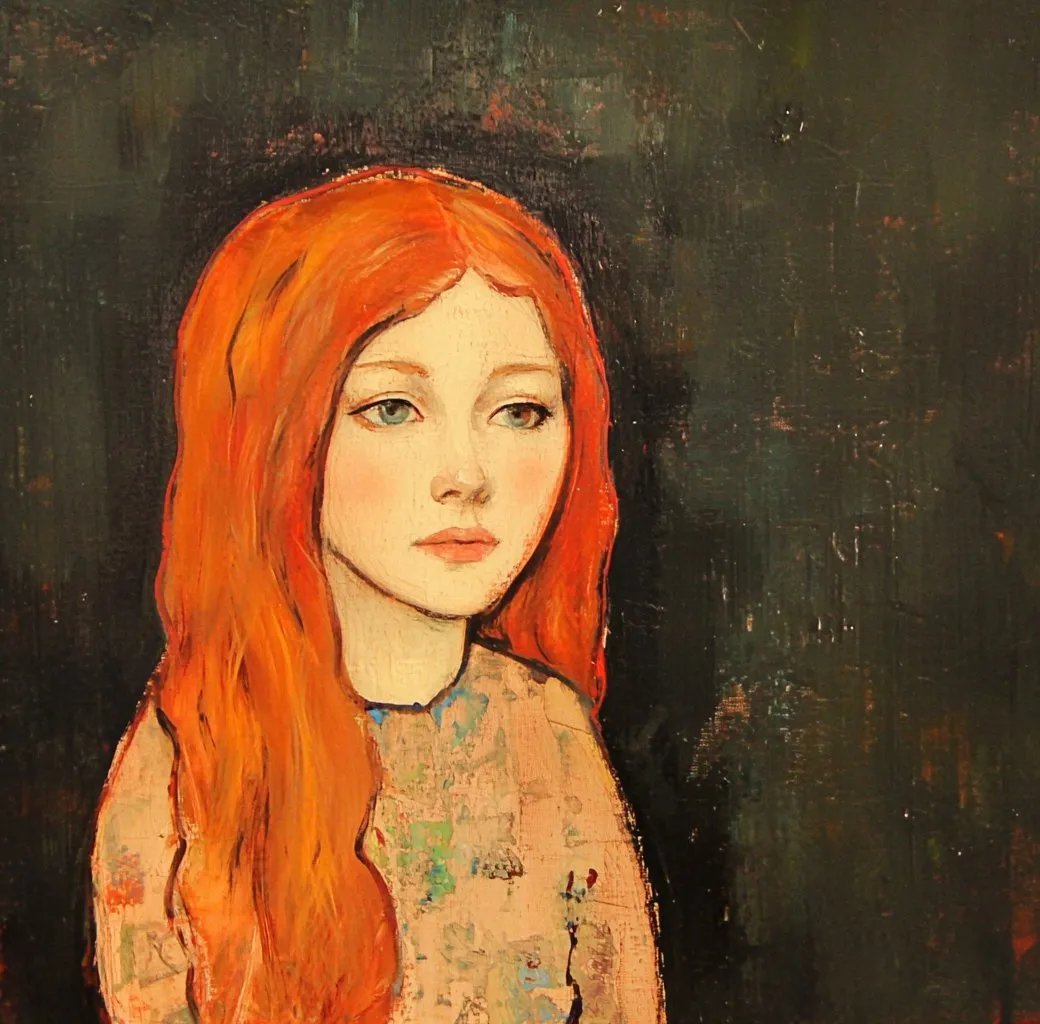
Art has a high and a low path. The high path challenges; the low path consoles.
Elites are expected to sustain high art; low art has its place among the working classes. Wifejak is firmly low art.
🧵 on ideals:
2
The furor over Wifejak has exposed a structural flaw in the online Right: our ‘classes’ are superimposed within the same spaces. There’s no class delineation and physical separation on social media.
3
It’s unclear who our elites actually are in a young, anonymous world which shuns titles, regalia, and credentials. Many who were positioned to take up leadership roles have proven themselves patently unworthy.
4
This is a strange place for a right-wing, inegalitarian, pro-hierarchical movement to be. Overfamiliarity abounds; responsibility is shunned; the higher arts are forgotten.
Our problem isn’t the popularity of Wifejak as such.
Our problem isn’t the popularity of Wifejak as such.
5
The problem is that our movement has no higher concept of the woman, so the quaint Wifejak dominates the space with no counterbalance.
6
For men, we at least have prominent depictions of ideal archetypes (the warrior Achilles, the king Theoden, and Christ himself), even if we lack true high path production. Wojak brings us consolation; Alexander the Great causes us to raise our sights.
7
But we lack high path female representations with anything like as much traction.
8
Aspiring elites within the movement then detest the fact that they’re expected to relate to and promote a low path representation (consolational, relatable) rather than a high path one (aspirational, challenging).
9
This is doubly the case with the slightly pathetic figure of Husbandjak.
(This should not be taken to imply that I think that everyone who demeans the Wifejak phenomenon is ‘high class’. Many have attacked it due to their own pathologies.)
(This should not be taken to imply that I think that everyone who demeans the Wifejak phenomenon is ‘high class’. Many have attacked it due to their own pathologies.)
10
There’s nothing wrong with with Wifejak in the abstract, but when relatable comedy has pride of place within the cultural life of a movement, it signifies cultural inertia and a coming-to-terms with the status quo.
11
And the Right - despite the presence of many excellent women within it - should not be accepting of the status quo of modern womanhood. Girls are in a bad state.
12
We will lose the next generation of young men and women if we do not present a compelling ideal vision which we are working towards.
13
A revolutionary vanguard which claims to want to upend the sexual revolution should be able to point to more than a relatable joke as an avatar of its beliefs.
14
Young men see older married men indulging in Wifejak and are concerned that this indicates married men are ‘checking out’ of the cultural struggle and learning to be content with what they have. The young then feel abandoned and outraged.
15
This is tied up in a deep anxiety among young men: are modern women redeemable? Are young women still capable of approaching the archetypical vision of the ideal woman? How can the answer be yes if we can’t relate what an ideal woman is?
16
The full archetype of the woman is too expansive to unpack here - perhaps a topic for future essay - but we get some sense of it from Edith Stein’s description of woman’s soul as “fashioned to be a shelter in which other souls may unfold.”
17
It involves nurture, companionship, a wholeness of humanity over disciplinary specialization, and an acceptance of bonds of care over personal autonomy.
18
Young men are concerned that modern women are incapable of such nurture; that their upbringing and participation in a promiscuous dating market has permanently compromised them. There’s a sense that young women know how to take, but not how to give.
19
Figures like Andrew Tate have gained a following trading on such anxieties, and have suggested a new way of relating to women as a result (one which focuses on domination, force, and distance in order to suppress modern women’s negative instincts).
20
Wifejak is not intended to express generativeness or compassion. The joke is in exposing women’s little contradictions and wants: ‘Buy me flowers’, ‘Bring me a drink’, ‘I don’t know what food to order’.
21
Married men with good wives find these little acts of selfishness charming because they are particularly feminine and are the small, universal cost of married life.
22
But it's an unsuitable image to present to the unmarried because it appears to confirm what they fear about women without any redemptive context.
23
If we don’t find a way to express high path representations of the ideal woman then we’re trapped in the psycho-politics of the lower forms. If we exude ‘resignation’ rather than ‘aspiration’, this only empowers denigrators of family life. Husbandjak should be shunned.
24
This is a broader problem with the ‘trad’ movement: it is often unable to present a more refined vision of life than ‘mere motherhood’...
25
which allows Nietzcheans (a philosophy which is inherently aspirational) to plausibly denigrate family life as being a resignation for browbeaten men with plump wives.
26
One of the most important things we can accomplish is to center a higher artistic and archetypal vision for womanhood.
27
Ideally this would be supported by actual mechanisms to facilitate the upwards mobility of aspiring women to better instantiate this ideal themselves: the missing ‘redemptive path’.
28
If you've enjoyed this thread, please consider sharing the original post, found here:
x.com/JohannKurtz/st…
x.com/JohannKurtz/st…