The more egalitarian a society is, the greater the gender gap in...

Andrew Côté@Andercot
20 views
Oct 13, 2024
~2 min read
Advertisement
1
The more egalitarian a society is, the greater the gender gap in STEM enrollment. Nowhere is this stronger than the Nordic countries, including Sweden.
This suggests that men and women have different preferences when it comes to choosing a profession 🧵


This suggests that men and women have different preferences when it comes to choosing a profession 🧵
nature@Nature
Not for the first time, all Nobel Prizes in scientific disciplines this year have been awarded to men
2
In the study linked, women performed better or as-well as men in STEM fields in 2 out of 3 countries surveyed (N students=472,242).
In Finland, girls outperform boys in science literacy yet they have the largest gender gap in later STEM enrolment
In Finland, girls outperform boys in science literacy yet they have the largest gender gap in later STEM enrolment
3
The first plot shows "Science Self-Efficacy" which is measured by asking respondents how much they enjoy science, how competent they think they are, etc.
But the same trend exists if you look at STEM graduates - the more egalitarian a society is, the less women choose STEM
But the same trend exists if you look at STEM graduates - the more egalitarian a society is, the less women choose STEM
4
The authors conclude that with greater economic hardship, women are more likely to choose STEM out of pragmatic reasons.
Sweden is an extremely egalitarian society and many professions are extremely gender dominated
Construction and mining: 91% men
Preschool: 94% women

Sweden is an extremely egalitarian society and many professions are extremely gender dominated
Construction and mining: 91% men
Preschool: 94% women
5
In the US a common narrative is that the gender imbalance across professions is a sign that it is not an egalitarian society. The premise is that in a better world, we would see a representative distribution of all kinds of people across all kinds of jobs.

6
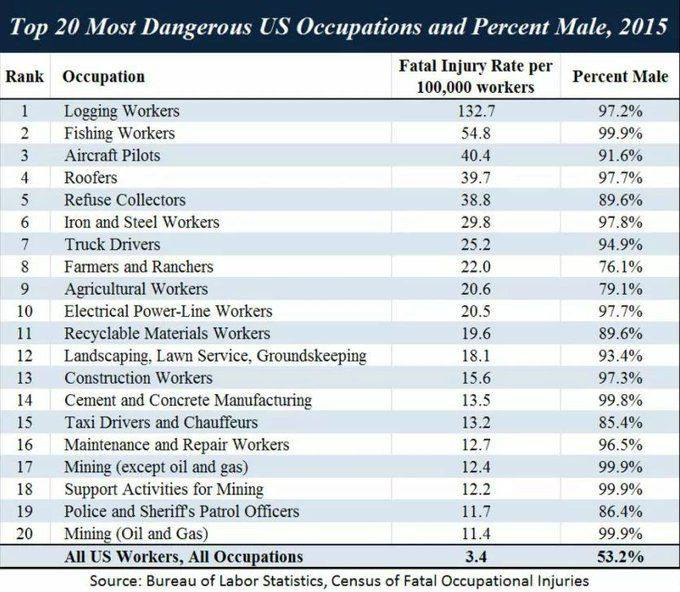
A consistent trend in the US is that men dominate all of the most dangerous occupations by a staggering majority. In a more equal world more women would die on the job, so the narrative goes.
7
The number one cause of workplace injuries and fatalities is physical over exertion, followed by falls. Dangerous jobs tend to be physically demanding.
One reason men might predominate in these jobs is that most men are stronger than most women.

One reason men might predominate in these jobs is that most men are stronger than most women.
8
To close the gap many universities have set targets of achieving 50% women enrollment in engineering programs, bringing their STEM gap closer in line with countries like Lebanon, Jordan, and Turkey.
UBC set this goal in 2015 for 2020. Today their women enrollment is at 35%
UBC set this goal in 2015 for 2020. Today their women enrollment is at 35%
9
What's interesting is that prosperous countries are trying to replicate the gender enrollment in STEM of countries under much greater hardship.
The quality of life difference between Canada and Lebanon is striking
The quality of life difference between Canada and Lebanon is striking
10
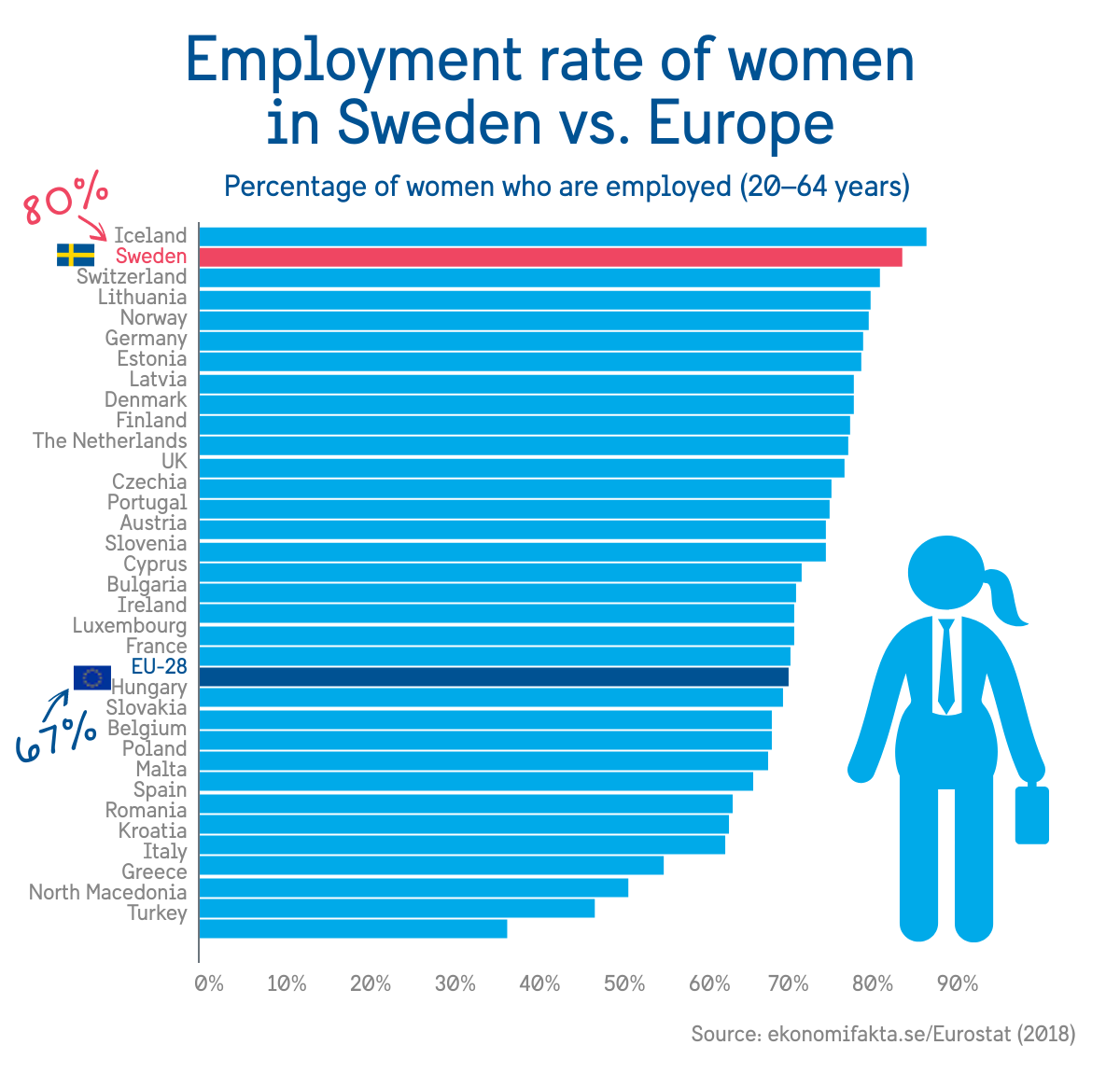
I'll end this with an open question - Sweden has far better equality of opportunity for women than the USA, but it still has a similar inequality of outcome for earnings.
A gender pay gap of 86% versus the US 83%. Why would this be?
A gender pay gap of 86% versus the US 83%. Why would this be?
11
This is, of course, just one interpretation. Folks might critique whether Sweden is an egalitarian society. There are some OECD metrics comparing Sweden to other countries and the rest of Europe here:
oecd.org/en/data/dashbo…
oecd.org/en/data/dashbo…
