I achieved the best recorded sleep score in history. Eight months...

Bryan Johnson@bryan_johnson
100 views
Aug 15, 2024
~4 min read
Advertisement
1
I achieved the best recorded sleep score in history.
Eight months of perfect, 100% sleep.
Spent a year learning how to do it.
Here are 10 habits that fixed my terrible sleep... 🧵
Eight months of perfect, 100% sleep.
Spent a year learning how to do it.
Here are 10 habits that fixed my terrible sleep... 🧵
2
1/ If you sleep less than 7 hours a night, read this…
+ One 4-hour night reduces cancer-fighting immune cells by 70%
+ Chronic 6-hour nights make you 4.2x more likely to catch colds
+ 18-24 hours awake = 0.05-0.1% blood alcohol level equivalent (0.08% is legally drunk)
Sleep loss also impairs cognition, slows reflexes, and leads to poor decisions.
It's tied to heart disease, diabetes, obesity, anxiety, depression and a weak immune system.
Here're 10 habits that improved my sleep...
P.S. I've made a free sleep checklist too, so read till the end.
+ One 4-hour night reduces cancer-fighting immune cells by 70%
+ Chronic 6-hour nights make you 4.2x more likely to catch colds
+ 18-24 hours awake = 0.05-0.1% blood alcohol level equivalent (0.08% is legally drunk)
Sleep loss also impairs cognition, slows reflexes, and leads to poor decisions.
It's tied to heart disease, diabetes, obesity, anxiety, depression and a weak immune system.
Here're 10 habits that improved my sleep...
P.S. I've made a free sleep checklist too, so read till the end.
3
1/ Reframe Your Identity: You are a professional sleeper
Make sleep your #1 appointment in your calendar.
Nothing influences your conscious or subconscious existence more.
+ Plan your day around sleep.
+ Ignore those who say sleep is for the weak. They’re drunk.
+ Get support from others by explaining your priorities.
Most people are drunk from sleep deprivation. Sleep will make you a top performer.
Make sleep your #1 appointment in your calendar.
Nothing influences your conscious or subconscious existence more.
+ Plan your day around sleep.
+ Ignore those who say sleep is for the weak. They’re drunk.
+ Get support from others by explaining your priorities.
Most people are drunk from sleep deprivation. Sleep will make you a top performer.
0:24
4
2/ Have a Consistent Bedtime
Choose a non-negotiable bedtime for 7-9 hours in bed each night.
+ Be consistent, even on weekends.
+ Use a wearable or journal to track
You’re on time for work meetings. Be on time for your bedtime and respect yourself.
Choose a non-negotiable bedtime for 7-9 hours in bed each night.
+ Be consistent, even on weekends.
+ Use a wearable or journal to track
You’re on time for work meetings. Be on time for your bedtime and respect yourself.
1:04
5
3/ Create a 60-Minute Wind-Down Routine
✅ screens off 60 min before bed
✅ calm: read, music, walk, bathe, breathe, meditate
✅ softly bring your focus back to sleep prep
✅ minimize light, red light ideal
✅ in bed within 30 min of bedtime
Sleep is your #1 priority. Everything else can wait.
✅ screens off 60 min before bed
✅ calm: read, music, walk, bathe, breathe, meditate
✅ softly bring your focus back to sleep prep
✅ minimize light, red light ideal
✅ in bed within 30 min of bedtime
Sleep is your #1 priority. Everything else can wait.
0:41
6
4/ Eat Your Last Meal Early
For years I tested my eating times on sleep quality and landed at 11 am being the best for high quality sleep.
Not everyone can do this, but here are the general guidelines:
+ Avoid eating within 3-4 hours of bedtime
+ Have your largest meal in the middle of the day
+ When socializing late, choose light options like veggies
+ You can experiment extending to eating your final meal 4 and 6 hours before bed to assess how it effects your sleep quality.
+ By the time I go to bed at 8:30 pm, primary digestion is done and my resting heart rate is around 47-49 bpm.
Here’s why:
Eating close to bed creates large metabolic demands on your body, causes blood glucose fluctuations, reduces melatonin production, and disrupts your body’s natural process of lowering core body temperature.
For years I tested my eating times on sleep quality and landed at 11 am being the best for high quality sleep.
Not everyone can do this, but here are the general guidelines:
+ Avoid eating within 3-4 hours of bedtime
+ Have your largest meal in the middle of the day
+ When socializing late, choose light options like veggies
+ You can experiment extending to eating your final meal 4 and 6 hours before bed to assess how it effects your sleep quality.
+ By the time I go to bed at 8:30 pm, primary digestion is done and my resting heart rate is around 47-49 bpm.
Here’s why:
Eating close to bed creates large metabolic demands on your body, causes blood glucose fluctuations, reduces melatonin production, and disrupts your body’s natural process of lowering core body temperature.
0:51
7
5/ Discontinue Stimulants After Noon
Try to avoid caffeine and other stimulants well before sleep.
+ Skip alcohol near bedtime - it disrupts sleep
+ Each person has a unique tolerance to stimulants so find your right cut-off time
+ Avoid high arousal settings close to bedtime
Try to avoid caffeine and other stimulants well before sleep.
+ Skip alcohol near bedtime - it disrupts sleep
+ Each person has a unique tolerance to stimulants so find your right cut-off time
+ Avoid high arousal settings close to bedtime
0:34
8
6/ I don’t consume caffeine or alcohol.
They each disrupt my mood and negatively affect my sleep. But that’s me.
You can find what’s right for you.
They each disrupt my mood and negatively affect my sleep. But that’s me.
You can find what’s right for you.
9
7/ After Sun Down, Minimize Evening Light
Blue light suppresses melatonin secretion and can disrupt your circadian rhythm. Other types of light can also impact melatonin to varying degrees.
+ Install dimmer switches and use low, warm lighting
+ Wear blue light-blocking glasses 2-3 hours before bed
+ Enable night mode on all devices or install blue light filters
+ Red light is best (red bulb + lamp ftw)
And remember to limit screen time *at least* an hour before bed and blackout your bedroom.
Use this time for your 30-60 min wind down routine.
Blue light suppresses melatonin secretion and can disrupt your circadian rhythm. Other types of light can also impact melatonin to varying degrees.
+ Install dimmer switches and use low, warm lighting
+ Wear blue light-blocking glasses 2-3 hours before bed
+ Enable night mode on all devices or install blue light filters
+ Red light is best (red bulb + lamp ftw)
And remember to limit screen time *at least* an hour before bed and blackout your bedroom.
Use this time for your 30-60 min wind down routine.
0:37
10
7/ Regulate Your Bedroom Temperature:
+ Explore your ideal bedroom temperature 60-77°F (15-25°C).
+ Consider a temperature controlled mattress to regulate bed surface temp
+ Use breathable cotton or linen sheets and lightweight sleepwear
+ Consider taking a warm bath before bed.
Experiment and track your sleep patterns with a journal or sleep tracker.
+ Explore your ideal bedroom temperature 60-77°F (15-25°C).
+ Consider a temperature controlled mattress to regulate bed surface temp
+ Use breathable cotton or linen sheets and lightweight sleepwear
+ Consider taking a warm bath before bed.
Experiment and track your sleep patterns with a journal or sleep tracker.
0:43
11
8/ Curate a Peaceful Sleep Environment
+ Keep your room cool, dark, and quiet
+ Avoid working from your bed
+ The bed is for sleep and sex
Consider a noise machine or earplugs to offset environmental sounds.
+ Keep your room cool, dark, and quiet
+ Avoid working from your bed
+ The bed is for sleep and sex
Consider a noise machine or earplugs to offset environmental sounds.
1:46
12
9/ Get Sunlight Within 15 Min of Waking
Get outside within the first 15-30 minutes of waking to set your circadian rhythm and boost mood.
If you’re up before the sunrise, use a 10,000 lux light
Get outside within the first 15-30 minutes of waking to set your circadian rhythm and boost mood.
If you’re up before the sunrise, use a 10,000 lux light
0:56
13
10/ Track Your Sleep Metrics
Metrics to follow: HRV, body temp, respiration rate, REM & deep sleep.
I use Whoop and EightSleep. Other sleep trackers are fine too.
+ Experiment with bedtimes, routines, room temps & find what works
+ Track data across seasons and when traveling to troubleshoot
+ Use a sleep journal, tracker, or checklist.
You’ll improve what you measure.
Metrics to follow: HRV, body temp, respiration rate, REM & deep sleep.
I use Whoop and EightSleep. Other sleep trackers are fine too.
+ Experiment with bedtimes, routines, room temps & find what works
+ Track data across seasons and when traveling to troubleshoot
+ Use a sleep journal, tracker, or checklist.
You’ll improve what you measure.
0:39
14
11/ Improving sleep is a journey. Take it one step at a time and start by focusing on reshaping your relationship with sleep.
You've got this.
Sleep well.
If you want my free sleep checklist to track your progress:
You've got this.
Sleep well.
If you want my free sleep checklist to track your progress:
15
12/ Many of our social activities currently take place late at night, usually after most people's bedtimes.
It's within our power to reset norms so that we can do fun things together, like music festivals, dinners and dance parties, and still get great sleep.
I stayed out late one night for a music festival and paid the price...

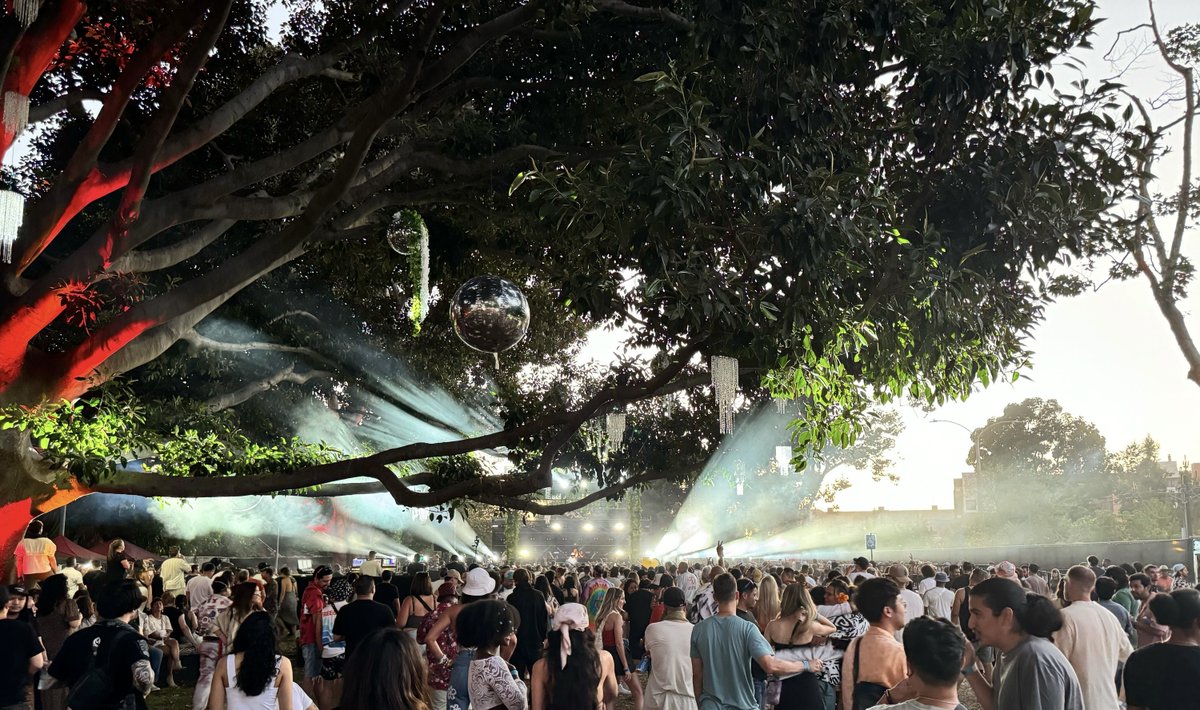
It's within our power to reset norms so that we can do fun things together, like music festivals, dinners and dance parties, and still get great sleep.
I stayed out late one night for a music festival and paid the price...
Bryan Johnson@bryan_johnson
Last night I went to a concert. The music was energizing. The setting was beautiful. My friends were great. And I danced, which is my favorite thing to do.
This morning I feel pretty wrecked. The data confirmed what I subjectively feel: my restorative sleep dropped by 50%. My resting heart rate was elevated by 10%. My sleep stress was up by 50%.
I'm sad because I had been excited all week for this morning block of uninterrupted time today to do four hours of deep work. I'm still going to try, but I am not my best self. My mood is off. My mind is a bit cloudy. I miss how vibrant I normally feel.
I've been extensively measuring myself for four years now and know the following factors were the culprit:
+ I went to sleep two hours later than normal.
+ Excessive light exposure at the concert.
+ The environment was highly stimulating.
+ I didn't have my normal 30-60 min wind down time before bed.
First, I know what the first few comments to this post are going to be:
+ bro so sensitive he can't go to a concert lol
+ he so fragile a concert makes him fall apart 😂
To be clear, my project is about building a Don't Die system.
It's not about adhering to cultural norms. It's not about living out 2024 narratives about the meaning of life. It's not even about what my chattering mind suggests second to second. It's about Don't Die. Everything else can be damned.
This process involves science, data and a methodical process of measurement, protocol creation and constant improvement.
It's produced in me what are potentially the best comprehensive biomarkers in the world:
Top 1%: Speed of aging (epigenetic)
Top 1%: Muscle mass & function
Top 1%: Fat mass
Top 1%: Inflammation
Top 1%: VO2 max (cardiovascular)
Top 1%: Bone mass
Top 1%: Sleep
Top 1%: Combined clinical markers
The default human condition is to make life decisions based upon cultural narratives. Doing what others do.
Don't Die has taught me the wisdom of following science and data. Data is not perfect, however it outcompetes anecdote and rule of thumb.
We can do fun things. We can live full lives. We can experience the fullness of being human and also get a restful night's sleep. We can live our best lives and not create negative biological effects.
Right now Die culturally dominates. Cultural narratives and our vices safely cocoon Die and protect it from being seen for what it really is.
I am currently living in-between the Die and Don't Die worlds. Spending ~95% of my time in Don't Die. Occasionally social events and other things with family friends will have me deviate. I'm trying my best to straddle this. Trying to take the precautions where I can.
Soon Don't Die will become culturally dominate. Die will be looked down upon. A lesser way of being. A primitive way to live life.
Don't Die will be easy for all of us because society will be rebuilt around it.
In the debate of what is a virtuous and honorable life, which is the argument vector most choose to attack me, the burden of proof is not on me to justify why I don't adhere to 2024's understanding of reality, it's on others to explain why everything we currently believe and do won't slip into the annals of history and be replaced by something new.
This morning I feel pretty wrecked. The data confirmed what I subjectively feel: my restorative sleep dropped by 50%. My resting heart rate was elevated by 10%. My sleep stress was up by 50%.
I'm sad because I had been excited all week for this morning block of uninterrupted time today to do four hours of deep work. I'm still going to try, but I am not my best self. My mood is off. My mind is a bit cloudy. I miss how vibrant I normally feel.
I've been extensively measuring myself for four years now and know the following factors were the culprit:
+ I went to sleep two hours later than normal.
+ Excessive light exposure at the concert.
+ The environment was highly stimulating.
+ I didn't have my normal 30-60 min wind down time before bed.
First, I know what the first few comments to this post are going to be:
+ bro so sensitive he can't go to a concert lol
+ he so fragile a concert makes him fall apart 😂
To be clear, my project is about building a Don't Die system.
It's not about adhering to cultural norms. It's not about living out 2024 narratives about the meaning of life. It's not even about what my chattering mind suggests second to second. It's about Don't Die. Everything else can be damned.
This process involves science, data and a methodical process of measurement, protocol creation and constant improvement.
It's produced in me what are potentially the best comprehensive biomarkers in the world:
Top 1%: Speed of aging (epigenetic)
Top 1%: Muscle mass & function
Top 1%: Fat mass
Top 1%: Inflammation
Top 1%: VO2 max (cardiovascular)
Top 1%: Bone mass
Top 1%: Sleep
Top 1%: Combined clinical markers
The default human condition is to make life decisions based upon cultural narratives. Doing what others do.
Don't Die has taught me the wisdom of following science and data. Data is not perfect, however it outcompetes anecdote and rule of thumb.
We can do fun things. We can live full lives. We can experience the fullness of being human and also get a restful night's sleep. We can live our best lives and not create negative biological effects.
Right now Die culturally dominates. Cultural narratives and our vices safely cocoon Die and protect it from being seen for what it really is.
I am currently living in-between the Die and Don't Die worlds. Spending ~95% of my time in Don't Die. Occasionally social events and other things with family friends will have me deviate. I'm trying my best to straddle this. Trying to take the precautions where I can.
Soon Don't Die will become culturally dominate. Die will be looked down upon. A lesser way of being. A primitive way to live life.
Don't Die will be easy for all of us because society will be rebuilt around it.
In the debate of what is a virtuous and honorable life, which is the argument vector most choose to attack me, the burden of proof is not on me to justify why I don't adhere to 2024's understanding of reality, it's on others to explain why everything we currently believe and do won't slip into the annals of history and be replaced by something new.
