The Myth of Endless Manpower: Russian Soldiers’ Average Age...

Tatarigami_UA@Tatarigami_UA
43 views
Aug 14, 2024
~3 min read
1
The Myth of Endless Manpower: Russian Soldiers’ Average Age Approaches 38 as Trends Persist
🧵Thread by Frontelligence Insight:
1/ Russian gains in Ukraine are often attributed to their superior numbers in resources and manpower, fostering the perception of an endless manpower
🧵Thread by Frontelligence Insight:
1/ Russian gains in Ukraine are often attributed to their superior numbers in resources and manpower, fostering the perception of an endless manpower
2
2/ Our recent research shows that increasing recruitment challenges in Russia affect not only the quantity but also the quality of recruits. The average age of Russians killed in Ukraine is nearing 38 and rising. This trend could significantly impact the war's course.
3
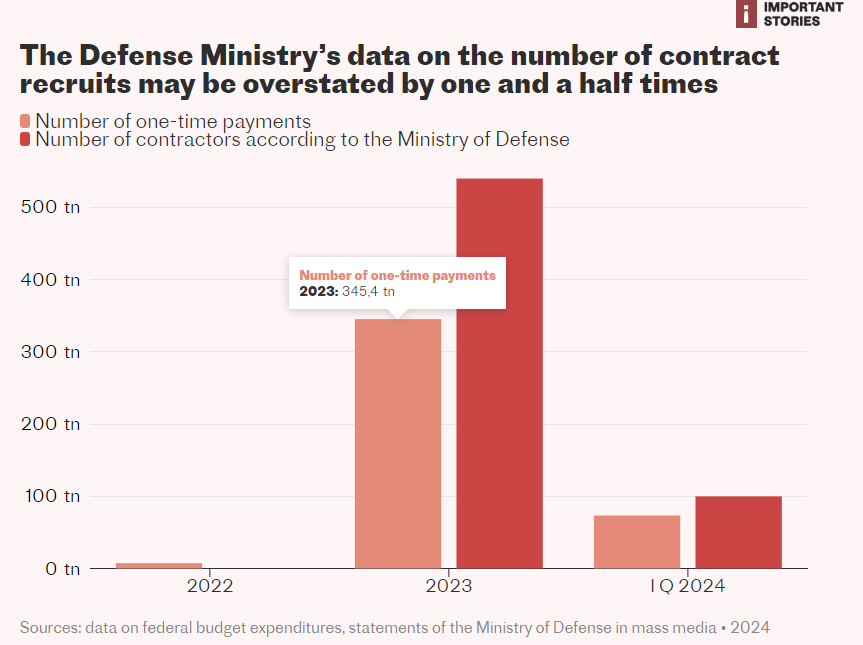
3/ But first, let’s discuss the current recruitment numbers. According to an investigation by the Conflict Intelligence Team and iStories, 345400 one-time payments were made for signing contracts in 2023. This closely aligns with the 30,000 monthly recruits reported by the GUR.
4
4/ As of August 1, contract signers began receiving nearly doubled one-time federal payments of 400,000 rubles, along with additional payments from local authorities. In places like Moscow, payments can go up to ~2 million rubles. This is done to offset growing recruitment issues
5
5/ But what about the quality of these recruits?
According to our findings, between February 2022 and May 2024, the average age of Russian soldiers killed in action increased from 30.2 in early 2022 to 37.8 by July 2024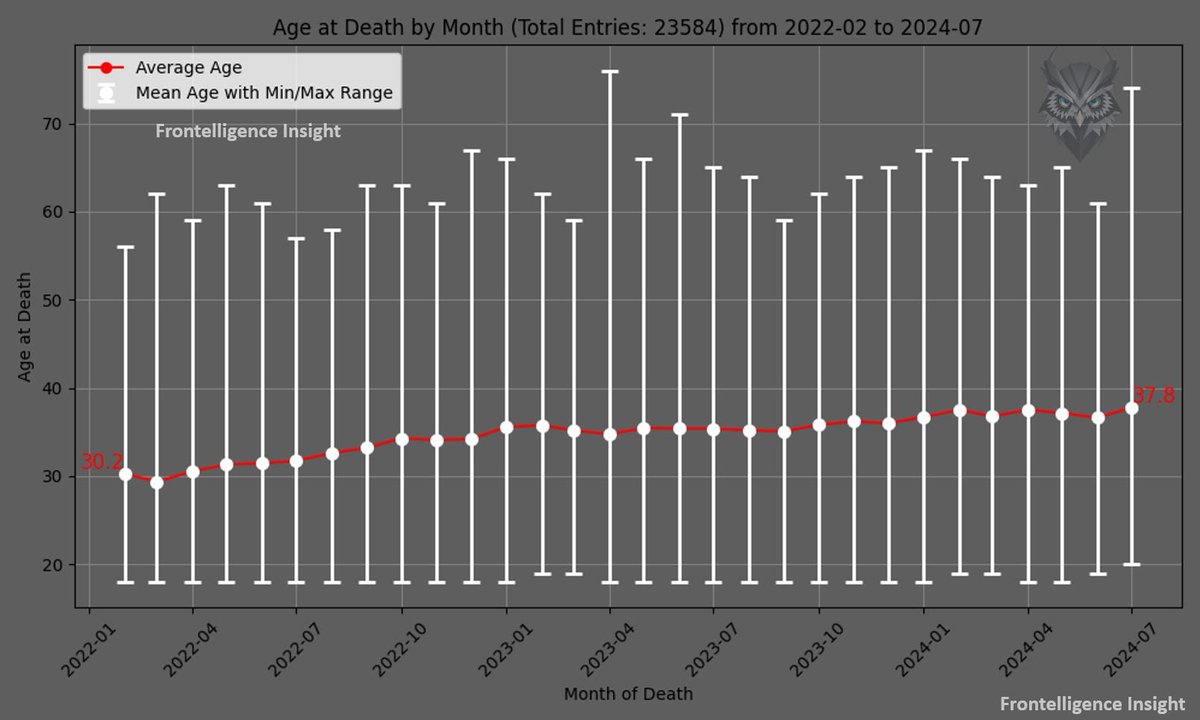
According to our findings, between February 2022 and May 2024, the average age of Russian soldiers killed in action increased from 30.2 in early 2022 to 37.8 by July 2024
6
6/ To obtain this number, we analyzed a dataset of 23,584 records from Russian obituary posts on social media, which included both dates of birth and dates of death. This dataset comes from the Poteru dot net project, which collects obituary posts from the VK social network
7
7/ Before assessing the implications, we need to place the current situation in the context of other wars. To provide a meaningful comparison, we can look at the Vietnam War, given the reliable data available from that period.
8
8/ According to the Combat Area Casualty File data from the Vietnam Helicopter Pilots Association, based on 58,148 death records, the average age of a U.S. servicemember KIA during the Vietnam War was 23.11 years: a 15-year age gap compared to Russian soldiers killed in Ukraine.

9
9/ Individuals signing contracts come from a civilian pool. Although exact data on their fitness is lacking, the World Health Organization reports that pre-war life expectancy at birth for Russian males was 65.6 years, with a healthy life expectancy of 58.2 years.
10
10/ It suggests that the Russian government not only has to offer significantly higher payments to recruit individuals but also ends up with recruits who may be less fit for combat roles, either partially or fully. They are more likely to suffer casualties from chronic illnesses
11
11/ Although Ukrainian demographics are anything but better than Russian ones, the extensive focus on Ukrainian manpower issues has fostered a perception that Ukraine is doomed due to seemingly endless Russian human resources and high recruitment numbers
12
12/ Our research has demonstrated that this perception is misleading and indicates that Russia’s ability to conduct large-scale offensive operations with territorial gains, based on a manpower advantage, is not as sustainable as it seems in the long run.
13
13/ While the data presented may still contain some inaccuracies, errors, or potential duplicates, the trend is quite consistent with demographic findings from other investigations and metrics reported by investigative groups like Mediazona and iStories
14
14/ More information on our data and sources is available on our website. If you would like to support further investigations like this, please consider making a donation. We rely solely on public donations and subscriptions for our funding: buymeacoffee.com/frontelligence
15
The full version of the article with more data, sources, and explanations can be found on the website:
x.com/Tatarigami_UA/…
x.com/Tatarigami_UA/…