The U.S. arms embargo of the Spanish Civil War, and FDR’s Illegal,...

Jake@s_decatur
32 views
Jan 19, 2025
~3 min read
Advertisement
1
The U.S. arms embargo of the Spanish Civil War, and FDR’s Illegal, bumbling attempt to send covert military aid to Spanish Reds in 1938.
🧵1 /17
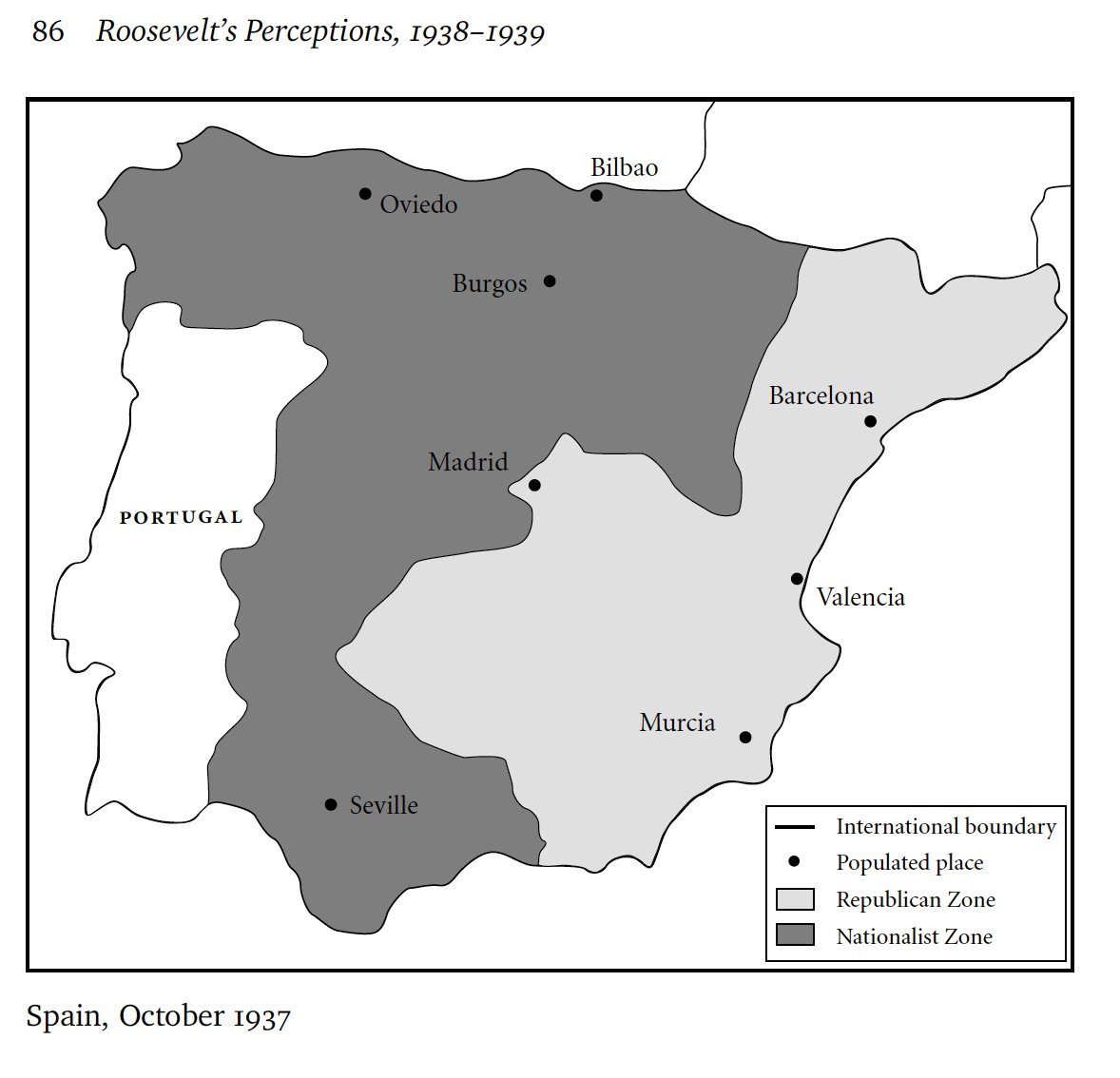
🧵1 /17
2
As Spain was engulfed by civil war, both the American people and FDR’s State Department were firmly opposed to any U.S. intervention in the conflict. Secretary of State Cordell Hull was a strong advocate for an arms embargo. 2/17


3
FDR’s Ambassadors in Europe were suspicious the radicalism of Spain’s Loyalists, and their ties to the USSR. Many in the State Department believed that a victory by the Loyalists would be a victory for the Bolsheviks in Europe. 3/17


4
The American people were even more opposed than the State Department to any foreign intervention. The Nye Committee hearings had convinced many Americans that intervention in WW I had been “driven by bankers and munitions traders with business interests in Europe." 4/17


5
With strong public support, Congress passed a series of Neutrality Acts in the 1930s. The Spanish Arms Embargo bill passed unanimously in the Senate and by 411 votes to 1 in the House.
5/17
5/17
6
But the Spanish Reds were not without comrades in high places. In particular, Treasury Secretary Harold Morgenthau would come to oppose the embargo.
6/17

6/17
7
With FDR’s support, Morgenthau had moved to circumvent the Neutrality Act and FDR’s own State Department by purchasing Spanish silver from cash-strapped the Loyalists, despite General Francisco Franco’s claims that the Communists had stolen the silver from the Bank of Spain.
7/17

7/17
8
While U.S. Leftists strongly favored the Spanish Reds, American Catholics tended to be more sympathetic toward Franco and the Nationalists. Catholic opposition to the Loyalist had been driven by the Red Terror – the mass-killing of Catholic clerics and burning of churches.
8/17


8/17
9
As the war dragged on FDR increasingly feared that a Nationalist victory would undermine the Western Democracies. By 1938, FDR “clearly favored the Loyalists” and was searching for politically feasible ways a lifting the embargo.
9/17
9/17
10
Catholic anti-Communism seemed to insurmountable obstacle blocking FDR's desire to support the Spanish Reds. FDR feared an intense backlash in the 1938 elections if he pressed ahead with repeal of the embargo.
10/17
10/17
11
Faced with opposition from the American people, the Congress, and his own State Department, FDR nonetheless resolved to break U.S. law and send illegal covert military aid to the Spanish Reds. There seemed to be an opportunity as France had reopened its border with Spain.
11/17

11/17
12
Under the embargo act, “transshipment” was expressly illegal – meaning an arms dealer could not ship military aircraft to France, for the purpose of sending them on the Spain. Nevertheless, this is precisely what FDR proposed to do.
12/17

12/17
13
In May of 1938, an agent for Loyalist Spain began making arrangements for a large purchase of military aircraft. He seemed confident that he could evade the U.S. embargo. Aircraft industry informants immediately informed the State Department of the suspicions scheme.
13/17
13/17
14
In France, U.S. Ambassador Bullitt was stunned when the Spanish Ambassador to France informed him that FDR had personally had approved the illegal arms deal. Bullet sent a discreet warning to FDR and the State Department.
14/17

14/17
15
Bullitt soon received another shock, when he was contacted by FDR’s brother-in-law (Elenore’s brother Hall). Bullitt was informed that about 150 aircraft were ready to ship to Spain. Once again, Bullitt was assured that FDR has personally approved the illegal arms shipment.
15/17


15/17
16
Bullitt thew cold water on the scheme - informing Hall that France had again closed the frontier to arms shipments. Bullitt then sent another discreet, but stern warning to FDR, stating that he ‘‘could not imagine a moment more unpropitious’’ to organize covert arms sales. 16/17

17
With the frontier closed, and the State Department alert and opposed the embargo violation, FDR’s scheme to break U.S. law to help the Reds collapsed.

18
Main source:

