Sullivanism - the curbs of doom To understand the hesitant behavior...

Pedro@mfphhh
10 views
Jun 14, 2024
~4 min read
Advertisement
1
Sullivanism - the curbs of doom
To understand the hesitant behavior of the US government in supporting Ukraine, it helps to watch an interview of security advisor Jake Sullivan from 2020, in which he described concepts of US foreign policy:
[From debates with @spartyflyboy]
1/19
To understand the hesitant behavior of the US government in supporting Ukraine, it helps to watch an interview of security advisor Jake Sullivan from 2020, in which he described concepts of US foreign policy:
[From debates with @spartyflyboy]
1/19
0:49
2
Sullivan was aware that the Russian leadership lies, cheats and does not keep agreements.
Nevertheless, the main goal of US diplomacy is to maintain some kind of relationship with Russia in order to avoid direct war.
2/19
Nevertheless, the main goal of US diplomacy is to maintain some kind of relationship with Russia in order to avoid direct war.
2/19
3
Sullivan described his desire to contain Putin's unpredictability by enclosing the conflict with “curbs”.
By containing the conflict within a framework, the aim is to make it “manageable” in order to prevent it from spreading and escalating.
3/19
By containing the conflict within a framework, the aim is to make it “manageable” in order to prevent it from spreading and escalating.
3/19
0:47
4
What does such a framework look like?
The escalation of the conflict is limited in both directions:
Russia should refrain from attacking NATO territory and using nuclear weapons -
the West limits the supply and use of weapons for Ukraine.
4/19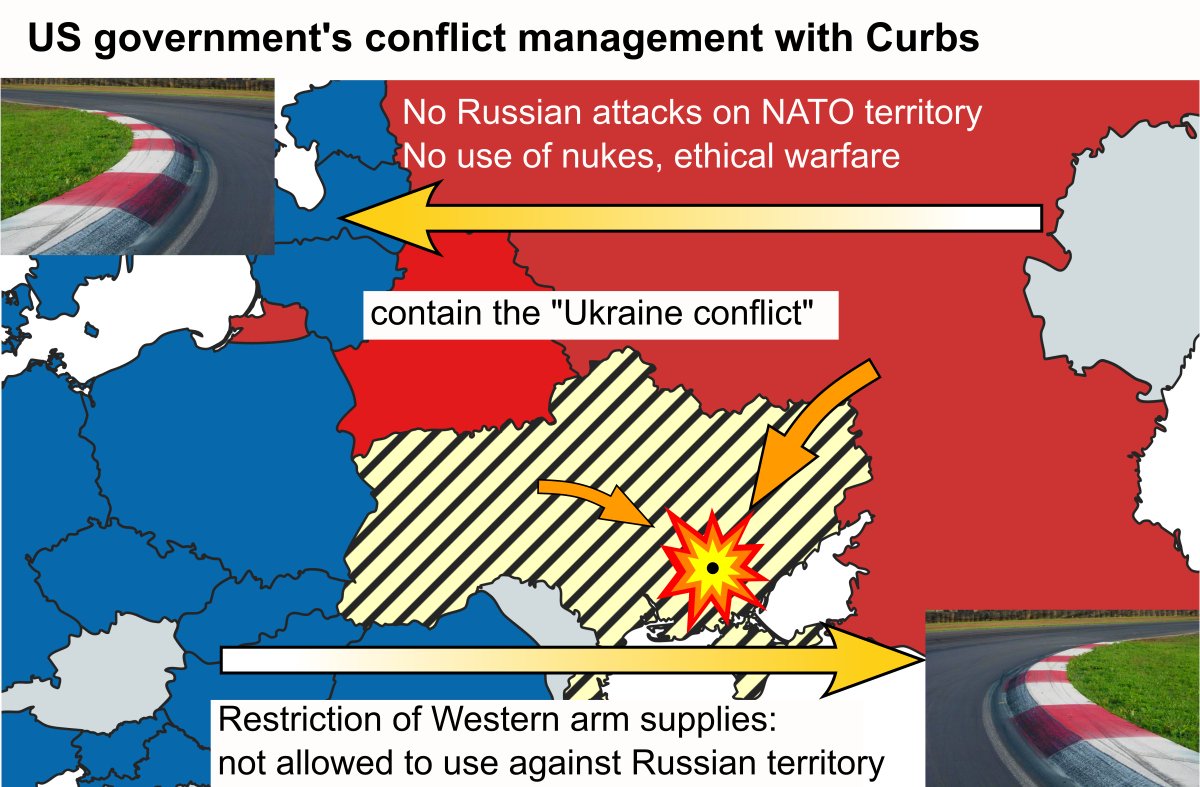
The escalation of the conflict is limited in both directions:
Russia should refrain from attacking NATO territory and using nuclear weapons -
the West limits the supply and use of weapons for Ukraine.
4/19
5
But what if Russia does not accept these limits and simply continues to escalate?
The theoretical approach would be to drive up the costs for Russia to the point where further military and political escalation is no longer sustainable.
5/19
The theoretical approach would be to drive up the costs for Russia to the point where further military and political escalation is no longer sustainable.
5/19
6
The US government therefore needed “bargaining chips”:
measures that could be threatened if Russia left the framework, e.g.
-Delivery of ATACMS
-Release of US weapons on Russian targets.
The conflict was to be managed by threatening Russia with these “costs”.
6/19
measures that could be threatened if Russia left the framework, e.g.
-Delivery of ATACMS
-Release of US weapons on Russian targets.
The conflict was to be managed by threatening Russia with these “costs”.
6/19
7
But what Sullivan said about costs:
You have to be careful that the political costs don't spiral downward.
Sanctions, be they economic, political or military, should not burden us too much.
7/19
You have to be careful that the political costs don't spiral downward.
Sanctions, be they economic, political or military, should not burden us too much.
7/19
0:10
8
So what is actually happening with the so-called “curbs?
Restrictions are only imposed on Ukraine.
If Russia exceeds the set limits, these are simply adjusted.
So that everything stays within bounds and the impression remains that the situation can be "managed".
8/19
Restrictions are only imposed on Ukraine.
If Russia exceeds the set limits, these are simply adjusted.
So that everything stays within bounds and the impression remains that the situation can be "managed".
8/19
9
Sullivan hopes that smart “management” of the relationship with Russia will allow the USA to use the “bandwidth”
- that is actually needed to contain Russia -
in other regions of the world.
9/19
- that is actually needed to contain Russia -
in other regions of the world.
9/19
0:18
10
Putin's strategy on the other hand is very simple:
he constantly oversteps the framework set by the US government, proving that US government is not prepared to take consistent countermeasures.
This leads to a massive loss of trust in the reliability of the U.S.
Symbol vid:
10/19
he constantly oversteps the framework set by the US government, proving that US government is not prepared to take consistent countermeasures.
This leads to a massive loss of trust in the reliability of the U.S.
Symbol vid:
10/19
2:17
11
The hubris of US advisors like Sullivan, who want to “manage” the relationship with Russia and thus the conflict in a kind of parental role, makes the US part of the problem:
this makes the US partly responsible for the damage that Russia is causing.
11/19
this makes the US partly responsible for the damage that Russia is causing.
11/19
12
In addition, Putin's regime is spreading the narrative that if Russia is defeated, it would lose internal control and thus there would be a risk of Russia falling apart. This would result in uncontrollable chaos in Eastern Europe, the Caucasus region and Central Asia.
12/19
12/19
13
Putin's clique also blames the USA for this. Unfortunately, actors in the US administration are falling for it out of hubris:
with the absurd attempt to establish a relationship with Russia's leadership in order to “manage” the "naughty child" Russia in a "parental" role.
13/19
with the absurd attempt to establish a relationship with Russia's leadership in order to “manage” the "naughty child" Russia in a "parental" role.
13/19
0:39
14
Human factor:
the role of a “crisis manager” who pulls the strings is very attractive to politicians and advisors. It tends to incentivize them to keep the crisis simmering in order to retain this influence, rather than simply ending the crisis. Could play a role here, too.
14/19
the role of a “crisis manager” who pulls the strings is very attractive to politicians and advisors. It tends to incentivize them to keep the crisis simmering in order to retain this influence, rather than simply ending the crisis. Could play a role here, too.
14/19
15
What is also problematic:
In this approach, Ukraine is not seen as the acting subject and goal of our efforts -
but as a means of managing Russia.
This inadvertently fuels the Kremlin narrative of a proxy war.
15/19
In this approach, Ukraine is not seen as the acting subject and goal of our efforts -
but as a means of managing Russia.
This inadvertently fuels the Kremlin narrative of a proxy war.
15/19
16
The West cannot win this game.
It is much easier for Putin and his allies to create chaos and polycrises worldwide, upheavals in Africa, wars in the Middle East, the Balkans or South America, than it is for the West to maintain order.
16/19
It is much easier for Putin and his allies to create chaos and polycrises worldwide, upheavals in Africa, wars in the Middle East, the Balkans or South America, than it is for the West to maintain order.
16/19
17
A central error of many theories about international relations:
The assumption that Putin is acting in Russia's interests - and that one can meaningfully negotiate about these interests.
But Putin doesn't care about Russia's interests. He primarily seeks power and control.
17/19
The assumption that Putin is acting in Russia's interests - and that one can meaningfully negotiate about these interests.
But Putin doesn't care about Russia's interests. He primarily seeks power and control.
17/19
18
It is not our job to consider Russia's interests either.
It is possible that some Western governments have recognized the “mismanagement” of the US government and are insisting that we protect OUR values and rules and enforce red lines against Russia.
18/19
It is possible that some Western governments have recognized the “mismanagement” of the US government and are insisting that we protect OUR values and rules and enforce red lines against Russia.
18/19
19
We do not need to “manage” Russia nor the conflict.
We should support Ukraine in defeating Russia - and thus enforce international law.
And if Russia crosses red lines, we should react with all necessary means.
19/19
We should support Ukraine in defeating Russia - and thus enforce international law.
And if Russia crosses red lines, we should react with all necessary means.
19/19

