Mining for student mistakes (& misconceptions) isn't just good for...

Peps@PepsMccrea
13 views
May 12, 2024
~2 min read
Advertisement
1
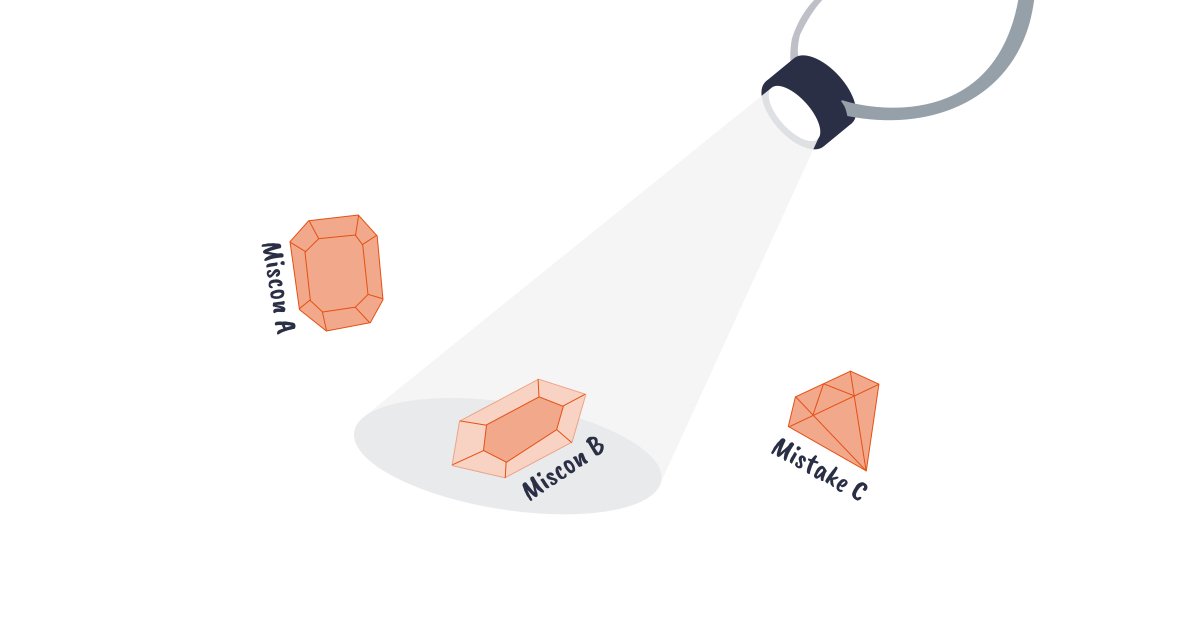
Mining for student mistakes (& misconceptions) isn't just good for learning.
Done well, it can also strengthen classroom culture. Here's how:
↓
Done well, it can also strengthen classroom culture. Here's how:
↓
2
One of the most powerful ways we can flip failure is by constantly being on the lookout for when students make mistakes or misconceptions...
and then taking the opportunity to highlight them, analyse them, and ensure that everyone (not just the mistake maker) learns from them.
and then taking the opportunity to highlight them, analyse them, and ensure that everyone (not just the mistake maker) learns from them.
3
If one person makes a mistake, then it's quite possible that someone else could make that mistake in the future...
and so exposing it and ensuring that everyone is aware of it increases the likelihood that fewer folks make it in the future.
and so exposing it and ensuring that everyone is aware of it increases the likelihood that fewer folks make it in the future.
4
If we can do this well, then not only do we improve learning in the SHORT term, but we create an even stronger culture, which can benefit learning in the LONG term…
because students become more sensitised to errors and more willing to declare them and wrestle with them.
because students become more sensitised to errors and more willing to declare them and wrestle with them.
5
How can we do this well? There are (at least) 3 things worth considering:
1/ Seek the permission of the mistake maker...
"Oh, this is a classic mistake! Can I share with the class to help others avoid it?" [said with encouragement]
1/ Seek the permission of the mistake maker...
"Oh, this is a classic mistake! Can I share with the class to help others avoid it?" [said with encouragement]
6
2/ Show it in the original form where possible, either using a visualiser or copying onto the board, and get the class to help spot the error.
7
3/ De-emphasise the individual... "Check out this classic misconception... let's all make sure we don't get caught out by it in the future."
8
For mining to work, it's paramount that we create the conditions where student work can be shared with absolute psychological safety...
if peers snicker or mock mistakes, we’ll be no longer have students willing to trust us and share their errors.
if peers snicker or mock mistakes, we’ll be no longer have students willing to trust us and share their errors.
9
And so, lay down the law before you mine for error, employ maximum consequences for those who disrespect the bravery of their sharing peers, and ideally....
create a culture where sharing is revered (mini applause anyone?).
create a culture where sharing is revered (mini applause anyone?).
10
NUANCE
When dealing with mistakes and misconceptions, it's important that we remain aware of the 'mere exposure effect'.
Essentially, we should spend way more time talking about the RIGHT conception as the WRONG one(s).
When dealing with mistakes and misconceptions, it's important that we remain aware of the 'mere exposure effect'.
Essentially, we should spend way more time talking about the RIGHT conception as the WRONG one(s).
11
🎓 For more, check out this chapter on the value of creating a constructive climate for error ⤵️
opus.bibliothek.uni-augsburg.de/opus4/frontdoo…
+ the plan for / culture of error chapters from TLAC 3.0
opus.bibliothek.uni-augsburg.de/opus4/frontdoo…
+ the plan for / culture of error chapters from TLAC 3.0
12
SUMMARY
• Highlighting and analysing common errors can boost learning and culture.
• This works best when we seek permission, show the mistake authentically, and de-emphasise the individual.
• This only works if we can create a safe space for students to share their work.
👊
• Highlighting and analysing common errors can boost learning and culture.
• This works best when we seek permission, show the mistake authentically, and de-emphasise the individual.
• This only works if we can create a safe space for students to share their work.
👊
13
PS. For more on mitigating the negative effects of failure in the classroom ⤵️

Peps@PepsMccrea
The anticipation of success (aka 'expectancy') is vital for student motivation.
BUT it's easier to destroy than develop.
3 ways to flip failure:
↓
BUT it's easier to destroy than develop.
3 ways to flip failure:
↓

