A 🧵 on why Europe's economic, political and social reality makes...

Multipolarity The Podcast@MultipolarPod
12 views
Apr 11, 2024
~6 min read
Advertisement
1
A 🧵 on why Europe's economic, political and social reality makes significantly higher defence spending unlikely, despite the broad consensus between European establishment figures and US analysts (most prominently on X @ElbridgeColby) and politicians.
Desire≠Reality.
1/n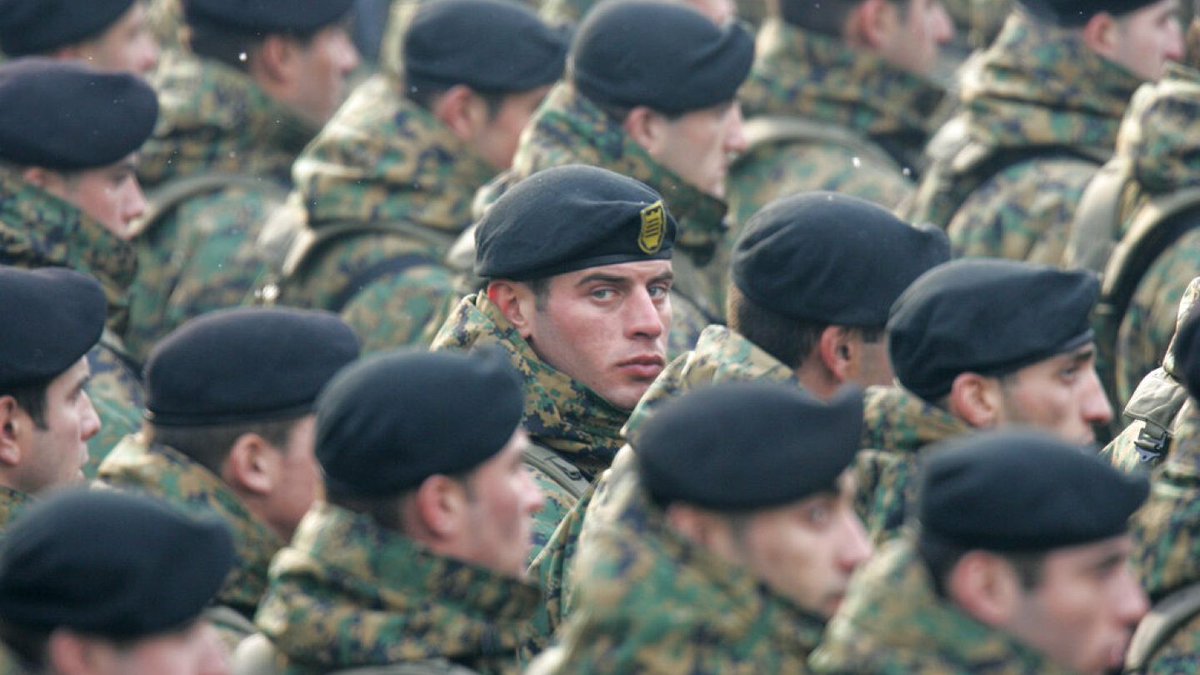
Desire≠Reality.
1/n
2
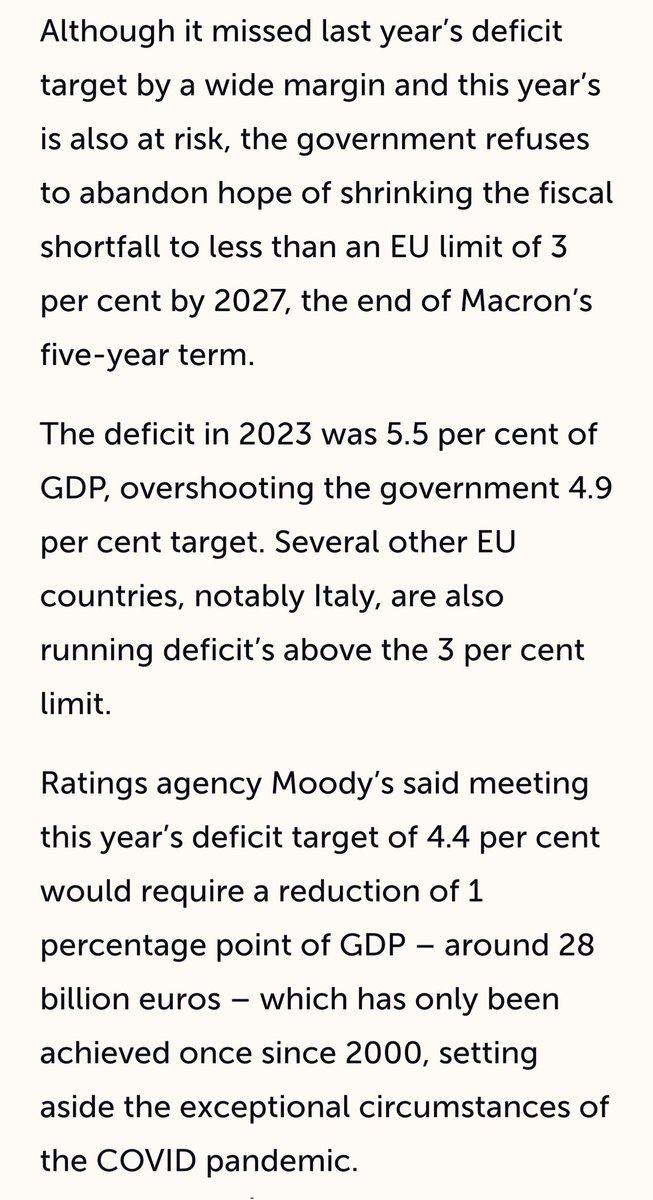
France's budget deficit is going the wrong way: rather than moving toward the 3% target mandated by EU Law, it jumped last year to 5.5%, from 4.8% in 2022. Even if France wanted to let the profligacy go, the EU could and would impose disciplinary measures to force it to cut.
2/n


2/n
3
Given state spending in France accounts for 58.5% of GDP, it is likely that most of the necessary Fiscal retrenchment will have to come from a reduction of spending. Yet the deficit is already running ahead of the €10 bln in emergency cuts proposed, ministers acknowledge.
3/n

3/n
4
This suggests that France is about to face quite swingeing austerity -- far tougher than those measures that in the past have sparked social unrest. Along with France, numerous other European counties appear set to implement serious spending cuts.
4/n
4/n
5
For instance: Finland is looking to slash earnings-based pensions and raise the retirement age as it seeks to find €3bln in savings. It is also to cut up to €700 million from social care. Belgium must find >5% of GDP in cuts over the next 4yrs. Meantime, Italy must face...
5/n

5/n
6
...up the perhaps the worst cuts of all: its budget deficit was 7.2% of GDP in 2023, way above the official target of 5.3% and farther yet away from the Fiscal Compact maximum of 3%. Even Germany has had to cut spending to plug holes in the budget.
6/n


6/n
7
The likely results of this are obvious: one of the cuts Germany made was to farming subsidies, which has been at the heart of the tumultuous farmers protests in Germany. Last year, Germany also suffered its biggest strike in decades, which has still not been resolved.
7/n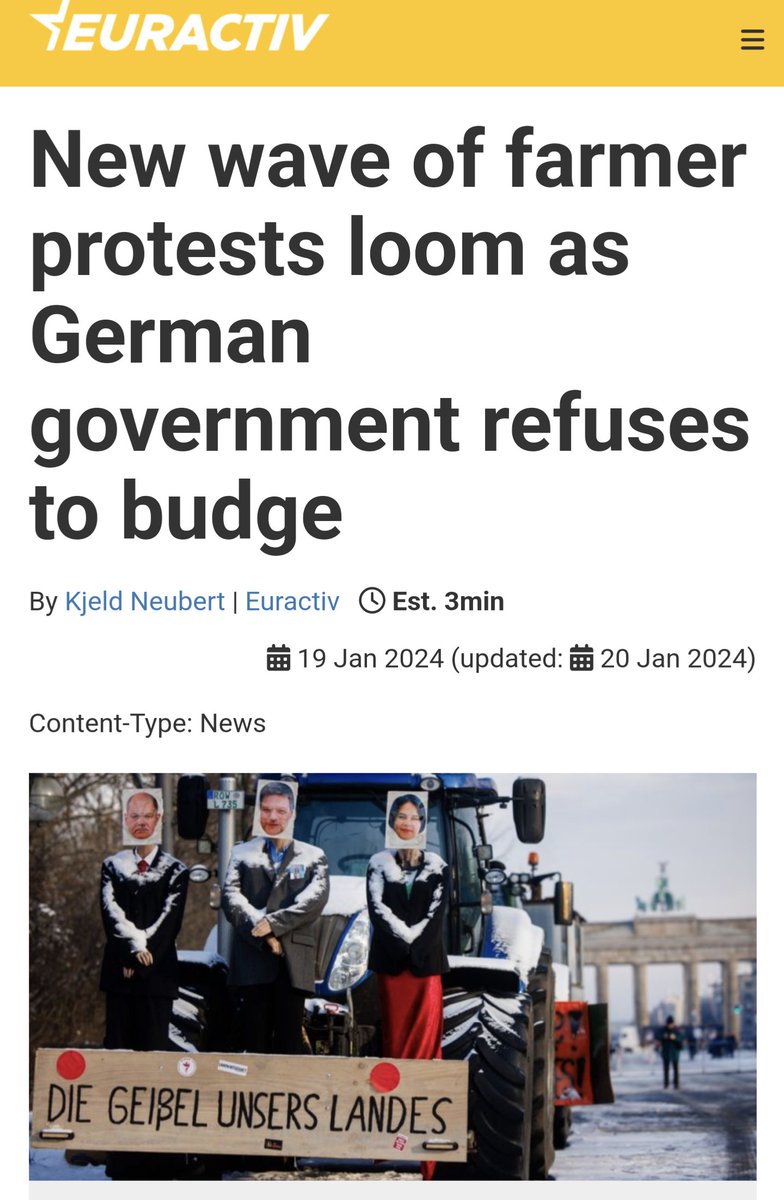

7/n
8
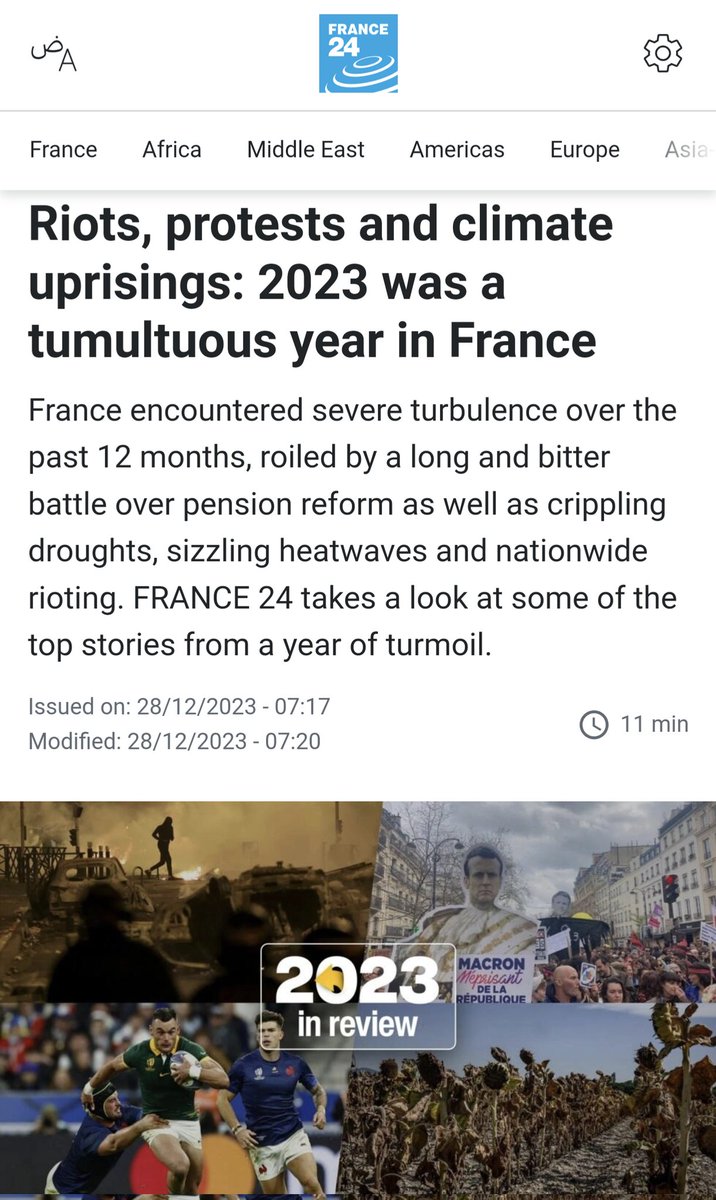
Social unrest was not limited to Germany. The UK lost 4mln work days to the worst strikes since 1990. France was beset by rioting and protest: economist and Multipolarity host @philippilk, and friend of the show @SwordMercury, both linked the unrest to food prices.
8/n


8/n
9
Note that this elevated level of social unrest happened *before* the required cuts to public spending, and long before such cuts will be felt. What would happen if Italy, Belgium and France start hacking to the bone, and Finland, Germany and the UK also have to cut spending?
9/n
9/n
10
Into this maelstrom comes demand for greater defence spending. For years, Europe has under-spent on defence, with the US picking up the slack. Ukraine and the likely refocus of US attention on Asia, has made Europe realise that it must pay its way. But what will that mean?
10/n
10/n
11
Germany's prestigious Ifo Institute calculated that to reach the agreed defence target of 2% of GDP, Europe would have to spend a collective €56 bln per year more on defence. But this might be less than needed: Europe has committed to continuing support for Ukraine, and...
11/n
11/n
12
...just replacing that weaponry already sent will take significant spending, even before expanding capabilities. If the US leaves Europe (as it might) Europe would likely have to spend much more than the collective 2% per year in order to be able to credibly defend itself.
12/n
12/n
13
That money would have to come from taxes or reduced spending on other items (such as healthcare, infrastructure, education, social security) that are already going to be slashed by the aforementioned fiscal retrenchment.
Where does this leave us?
13/n
Where does this leave us?
13/n
14
First, social unrest, unchecked, always and everywhere leads to political instability. Could this happen in Europe? It already is. In Italy the right populist Brothers of Italy won the last election; before that it was the left populist 5 Star Movement. Lega will be next.
14/n


14/n
15
In Finland, the right wing populist party, The Finns, garnered 20.1% of the vote in April's election, only just behind the centre right party's 20.8%, and ahead of the government's 19.9%. In the Netherlands, Geert Wilders' right wing populist Party for Freedom won the...
15/n

15/n
16
...general election in November 2023 with 23.5%, compared with the 2nd place 15.8% and 3rd's 15.3%. There have also been electoral or polling gains for populist parties in Spain, Germany, France, and the UK. Research suggests 32% of European voters back populist parties.
16/n
16/n
17
As spending cuts bite into public services, and Europe's economic stagnation continues, populist parties are likely to gain more ground. So far, they have either been excluded from governing coalitions, like Mr Wilders, or corralled into keeping within the establishment...
17/n
17/n
18
...Overton Window for foreign policy as one condition for being allowed to govern, like Giorgia Meloni. But there is no guarantee this will continue to work: voters might turn to yet more populist parties as the 1st wave fail to live up to their promises of a break from...
18/n
18/n
19
...the status quo; or a victory might be so comprehensive, even in a proportional representation electoral system, that control becomes impossible. Crucially for Europe's defence spending, it would seem like an easy target for populists who want to save public services...
19/n
19/n
20
...infrastructure or taxes. A peace deal with Russia would reduce the immediate need to dramatically beef up defence while also potentially bringing back cheap gas -- which would boost the economy and save money on subsidies. This is exactly the electoral pitch offered...
20/n
20/n
21
...by AfD and Sarah Wagenknecht, right and left populists in Germany, respectively, who have been gaining in the polls. Peter Pellegrini was recently elected President of Slovakia, cementing the grip of Prime Minster Robert Fico, who favours a peace deal. Viktor Orban...
21/n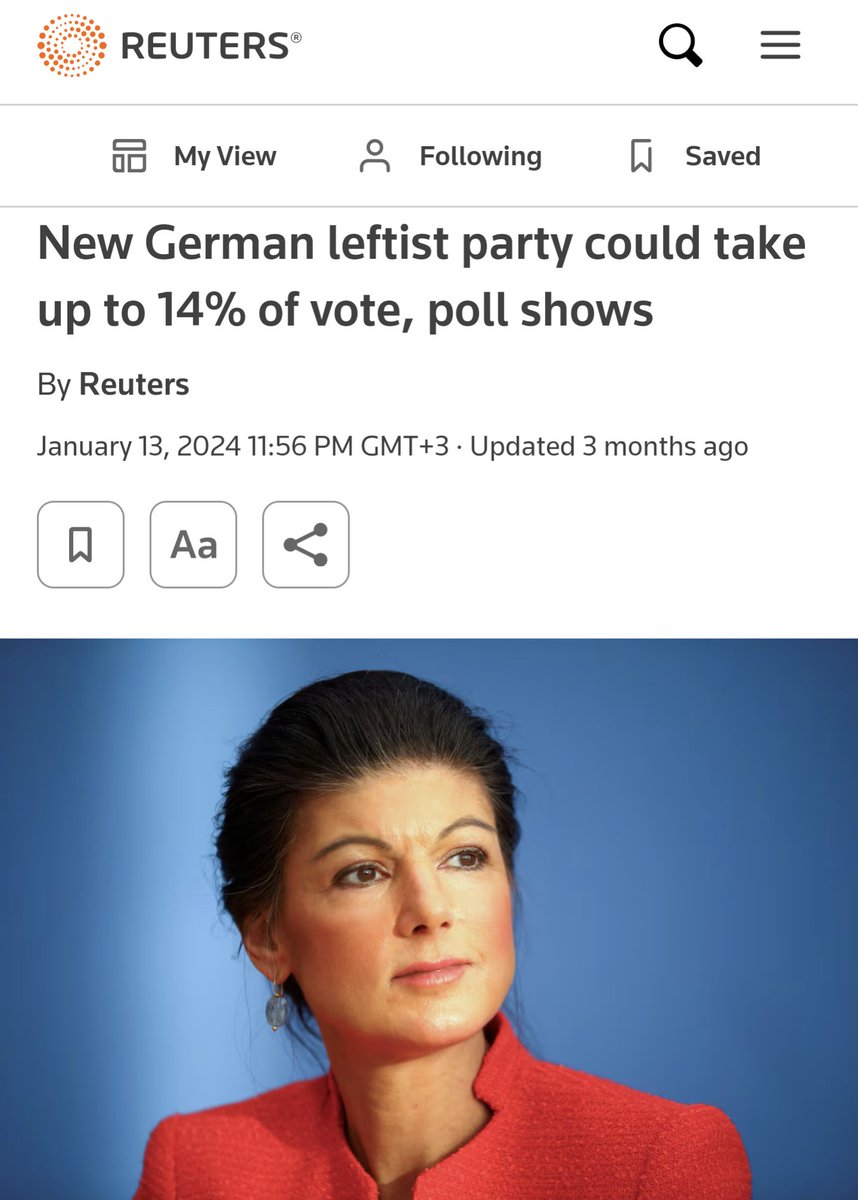


21/n
22
...of Hungary also prefers this course of action.
Europe's economy is not growing fast enough to deliver significantly greater funding for the military without raising defence spending as a percentage of GDP. This would mean either reducing spending in other areas...
22/n
Europe's economy is not growing fast enough to deliver significantly greater funding for the military without raising defence spending as a percentage of GDP. This would mean either reducing spending in other areas...
22/n
23
...(like healthcare, education, infrastructure or social security) or higher taxes. Yet the fiscal position of many European states means that they *already* plan to cut public services, even without extra cash for defence. European voters, even before these cuts, are...
23/n
23/n
24
...simultaneously propelling anti-establishment parties higher in the polls or into government and fomenting the greatest social unrest in Europe for two generations. Europe thus faces a version of the monetary trilemma: it can have two of fiscal sustainability, higher..
24/n
24/n
25
...defence spending and sociopolitical stability, but not all three. It therefore seems likely that either through an outright change of policy toward a deal with Russia, or through promising much but doing little, Europe will not raise defence spending in the medium term.
ENDS
ENDS

