This is Kristjan Qullamaggie. He's a swing trader, who turned...

pedma@pedma7
163 views
Mar 25, 2025
~3 min read
Advertisement
1
This is Kristjan Qullamaggie.
He's a swing trader, who turned $9,100 into over $80,000,000 from 2013 to 2021.
In 2021, he was featured as the 15th highest income earner in Sweden.
Here’s Kristjan's story:
He's a swing trader, who turned $9,100 into over $80,000,000 from 2013 to 2021.
In 2021, he was featured as the 15th highest income earner in Sweden.
Here’s Kristjan's story:
2
1) Returns
There's many stories online, of traders with large returns.
But in most cases, it's hard to find validation for those stories.
I found this article, where Kristjan was listed as the 15th top earner in 2021, in Sweden.
Link in sources at the end of the thread.
There's many stories online, of traders with large returns.
But in most cases, it's hard to find validation for those stories.
I found this article, where Kristjan was listed as the 15th top earner in 2021, in Sweden.
Link in sources at the end of the thread.
3
2) Who is Kristjan Qullamaggie
Kristjan is a self-funded trader from Sweden.
He's mostly known for making 10's of millions of dollars as a swing trader.
He started as a day trader back in 2011, at the age of 23 years old.
Kristjan is a self-funded trader from Sweden.
He's mostly known for making 10's of millions of dollars as a swing trader.
He started as a day trader back in 2011, at the age of 23 years old.
0:29
4
He mentions that he blew his account 3 or 4 times, for 2 years, before becoming profitable.
Despite his early failures, as most aspiring traders experience, he continued to improve.
Gradually he went from a losing trader, to breakeven, and 2013 was his first profitable year.
Despite his early failures, as most aspiring traders experience, he continued to improve.
Gradually he went from a losing trader, to breakeven, and 2013 was his first profitable year.
3:06
5
3) Position Size & Risk
Kristjan says that one shouldn't hold more than 30% of account size in a single position overnight.
And the risk per position should be 0.25%-1.5%
On a $10,000 account, a single position shouldn't exceed $30,000, and the risk per trade would be $150.
Kristjan says that one shouldn't hold more than 30% of account size in a single position overnight.
And the risk per position should be 0.25%-1.5%
On a $10,000 account, a single position shouldn't exceed $30,000, and the risk per trade would be $150.
0:38
6
4) The Breakout Trade
Let's systematize his strategy:
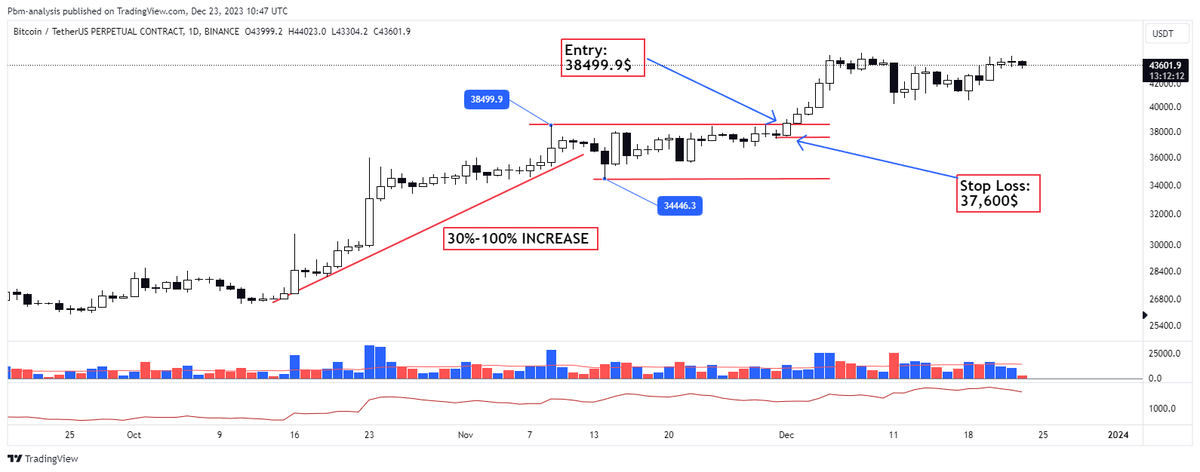
1) Initial driver move of >30% in the last 12 weeks
2) Sideways consolidation of 2-8 weeks
3) Consolidation average > 10/20/50 SMA
4) Enter trade on the breakout
5) Stop loss at low of breakout day
6) Stop loss < 1*ATR
Let's systematize his strategy:
1) Initial driver move of >30% in the last 12 weeks
2) Sideways consolidation of 2-8 weeks
3) Consolidation average > 10/20/50 SMA
4) Enter trade on the breakout
5) Stop loss at low of breakout day
6) Stop loss < 1*ATR
1:08
7
5) Exit Rules
Let's also systematize his exit rules:
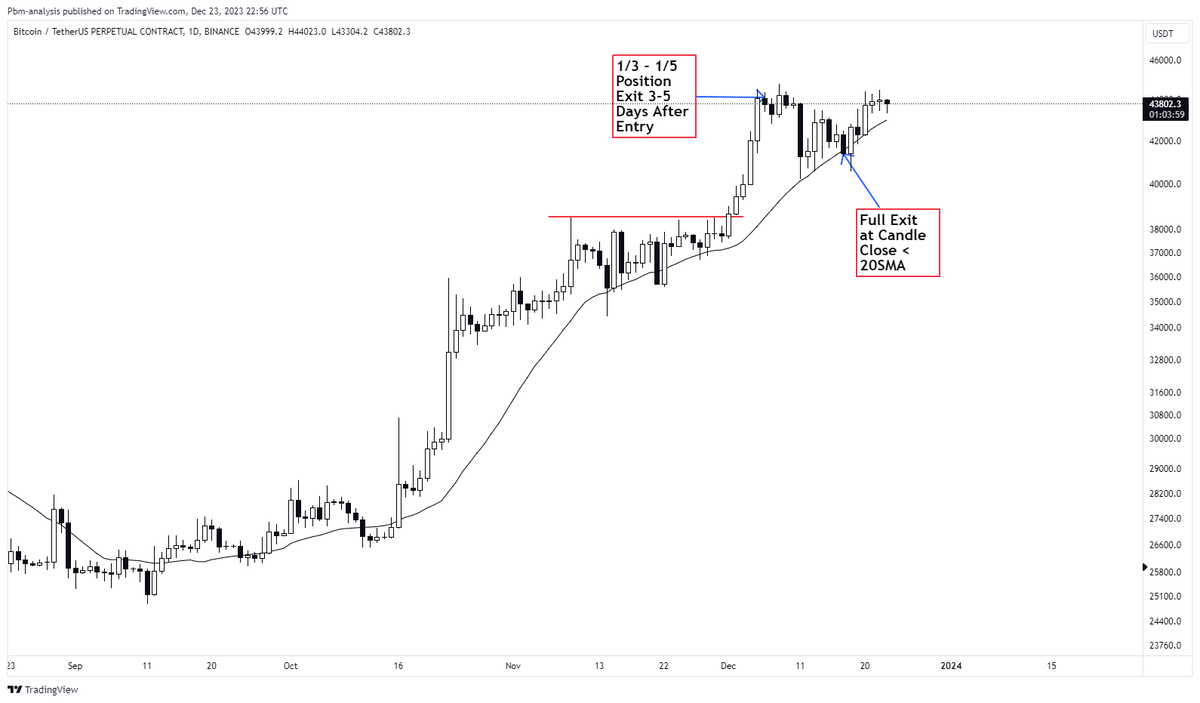
1) Selling 1/3 or 1/5 of the position within 3-5 days after entry
2) Move the stop to breakeven
3) The remaining position has a trailing stop loss using the 10/20 moving average.
4) Exit if price closes below the trail.
Let's also systematize his exit rules:
1) Selling 1/3 or 1/5 of the position within 3-5 days after entry
2) Move the stop to breakeven
3) The remaining position has a trailing stop loss using the 10/20 moving average.
4) Exit if price closes below the trail.
0:22
8
I've also made an article with the strategy and full code in python.
Despite some of the rules being pretty discretionary, we can still make them systematic.
The results were interesting.
Here's the tweet about it:
Despite some of the rules being pretty discretionary, we can still make them systematic.
The results were interesting.
Here's the tweet about it:
pedma@pedma7
Today I've released on my research newsletter an article exploring the system employed by Kristjan Kullamägi (@Qullamaggie) but applied to crypto.
In this article I'll cover:
- His initial journey
- Position sizing and risk
- The strategy and rules he used
- Backtest of his strategy applied to crypto
I also provide the code for the test to the premium subscribers of the newsletter. I aim to release a research article every week, and multiple reports on my own portfolios also every week.
Kristjan is one of the most famous momentum swing-trades in the equities space having turned a low 5 figure account into 82M$ by 2021 according to reports.
It took me around 8 hours to complete the report as the code was somewhat hard to think through but I finished it and it is available on the newsletter. You can go through the trades that the system took and also adjust the different features depending on if you want a faster/slower signal system.
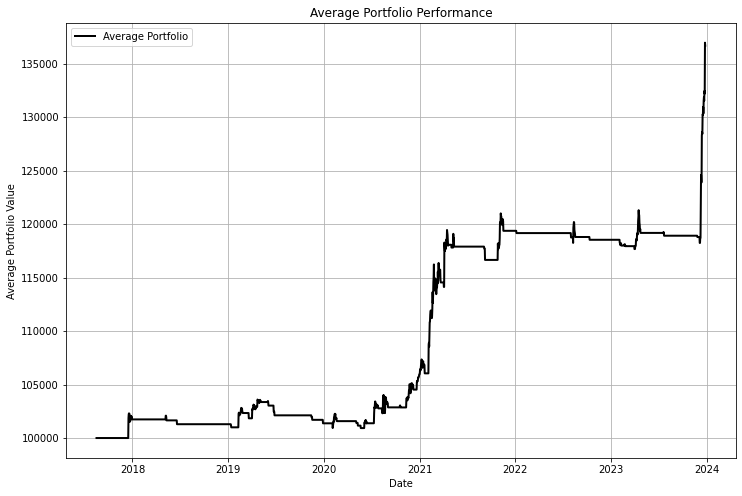
Overall as I expected the system does perform well in crypto due to its momentum properties. It focuses on strong assets, given by the rule criteria, then waits for a solid consolidation and the continuation breakout. This is a pattern often looked at from most traditional swing traders in the equities space.
The performance is decent, for simplicity purposes I kept the allocation the same for every asset and divided the portfolio in an equal allocation for each asset. We can get into MUCH more optimal allocations of course but I need to keep these reports efficient and if I'll code one of these a week I can't go into portfolio optimizations all the time. We test the general idea and let the user then do their own work of their own risk preferences.
You may be wondering why is that spike in performance recently and I do delve into it in the article. I've used a basket of the CURRENT top market cap coins, and some of these coins as for example INJ, have had lately a strong push that dramatically affected the equity curve. When using market capitalization criteria, it's wise to think about survivorship biases and to look through databases of historical market cap or make some assessments based on outstanding shares. But for the purposes of this article, I've just used the top 20 coins to get an initial idea into the strategy performance itself.
These are the simple metrics of the strategy performance:
- Total Closed Win Trades: 24
- Total Closed Lost Trades: 65
- Total Closed Trades Win Rate: 26.97%
- Total Open Trades: 6
- Average Win Trade: 30.90
- Average Loss Trade: -4.36
- Ratio Avg Win to Loss: 7.09
Kristjan often mentions that his win rates are really low for these breakout systems, on average below 30%. Our tests confirm that the same when looked into crypto. The key ingredient of the strategy is in the high average win to loss ratio. Many people can argue the robustness of this idea but one thing is for sure, it does tend to work in markets where momentum is a key property.
9
6) Trade Examples
Here we have an example of a trade, that fit the parameters of Kristjan's strategy.
It can be summarized to taking positions on breakouts, of strong uptrends.
During a great market regime, this strategy will shine.
Here we have an example of a trade, that fit the parameters of Kristjan's strategy.
It can be summarized to taking positions on breakouts, of strong uptrends.
During a great market regime, this strategy will shine.
1:55
10
7) Philosophy
Kristjan sees trading as a numbers game.
The strategy itself is not ground-breaking.
Breakout trading has been documented for decades.
His focus is in being in the largest trends, taking a lot of bets and keeping the losses small.
Kristjan sees trading as a numbers game.
The strategy itself is not ground-breaking.
Breakout trading has been documented for decades.
His focus is in being in the largest trends, taking a lot of bets and keeping the losses small.
1:36
11
8) Conclusion
Kristjan's story is quite interesting.
Even though I couldn't find what his returns are after 2021, his principles are solid.
Managing exposure, risk, and being exposed to trends, is the core idea behind his message.
Hope you've enjoyed it.
Kristjan's story is quite interesting.
Even though I couldn't find what his returns are after 2021, his principles are solid.
Managing exposure, risk, and being exposed to trends, is the core idea behind his message.
Hope you've enjoyed it.
13
Finding viable ideas for trading strategies is extremely hard.
I've decided to build a database of them.
Here's what you'll find:
- New strategy every week (52/year)
- Python code for each
- Access to the full archive
Join over 2,000 readers here:
pedma.carrd.co
I've decided to build a database of them.
Here's what you'll find:
- New strategy every week (52/year)
- Python code for each
- Access to the full archive
Join over 2,000 readers here:
pedma.carrd.co

