Psychologist Ander Ericsson is obsessed with prodigies. For 30+...

Koi@cajunkoi
56 views
Mar 31, 2024
~4 min read
Advertisement
1
Psychologist Ander Ericsson is obsessed with prodigies.
For 30+ years, he analyzed every detail and habit to create a formula for peak performance.
I’ve devoured his wisdom on how to become world class.
Here are 7 powerful habits to master anything faster:
For 30+ years, he analyzed every detail and habit to create a formula for peak performance.
I’ve devoured his wisdom on how to become world class.
Here are 7 powerful habits to master anything faster:
2
Ander Ericsson is a believer in purposeful/deliberate practice.
But what does it mean?
Deliberate practice: get outside your comfort zone, intentionally.
Following clear goals, a calculated plan, and a way to monitor your progress while maintaining your motivation.
But what does it mean?
Deliberate practice: get outside your comfort zone, intentionally.
Following clear goals, a calculated plan, and a way to monitor your progress while maintaining your motivation.
3
Deliberate practice follows 5 important ideas:
1. Potential expands through our actions.
2. Practice at “acceptable” level won’t help.
3. Improvement comes from focused practice.
4. Deliberate practice aims to create new possibilities.
5. Deliberate practice enhances mental representations.
1. Potential expands through our actions.
2. Practice at “acceptable” level won’t help.
3. Improvement comes from focused practice.
4. Deliberate practice aims to create new possibilities.
5. Deliberate practice enhances mental representations.
1:23
4
Deliberate Practice in action:
In 1976, Anders Ericsson mentored a fresh PhD student named Steve.
Steve, an average psychology undergrad, struggled to recall more than seven or eight digits at first.
But after hitting a plateau, he developed a method for consistently remembering 10–11 numbers, a 57% improvement.
In 1976, Anders Ericsson mentored a fresh PhD student named Steve.
Steve, an average psychology undergrad, struggled to recall more than seven or eight digits at first.
But after hitting a plateau, he developed a method for consistently remembering 10–11 numbers, a 57% improvement.
5
Steve hit plateaus like 22, 34, and 56 digits but always pushed through to the next level.
Then deliberate practice made the difference:
• Intense focus
• Rapid feedback
• Push through discomfort
After 200 sessions, Steve broke the world record by remembering 82 numbers.
Then deliberate practice made the difference:
• Intense focus
• Rapid feedback
• Push through discomfort
After 200 sessions, Steve broke the world record by remembering 82 numbers.
1:45
6
The experiment was repeated on Dario and got similar results.
• Steve and Dario started with average memory.
• Their training habits mirrored that of chess players, athletes, writers, and other experts honing their craft.
Here are 5 habits for you to start today: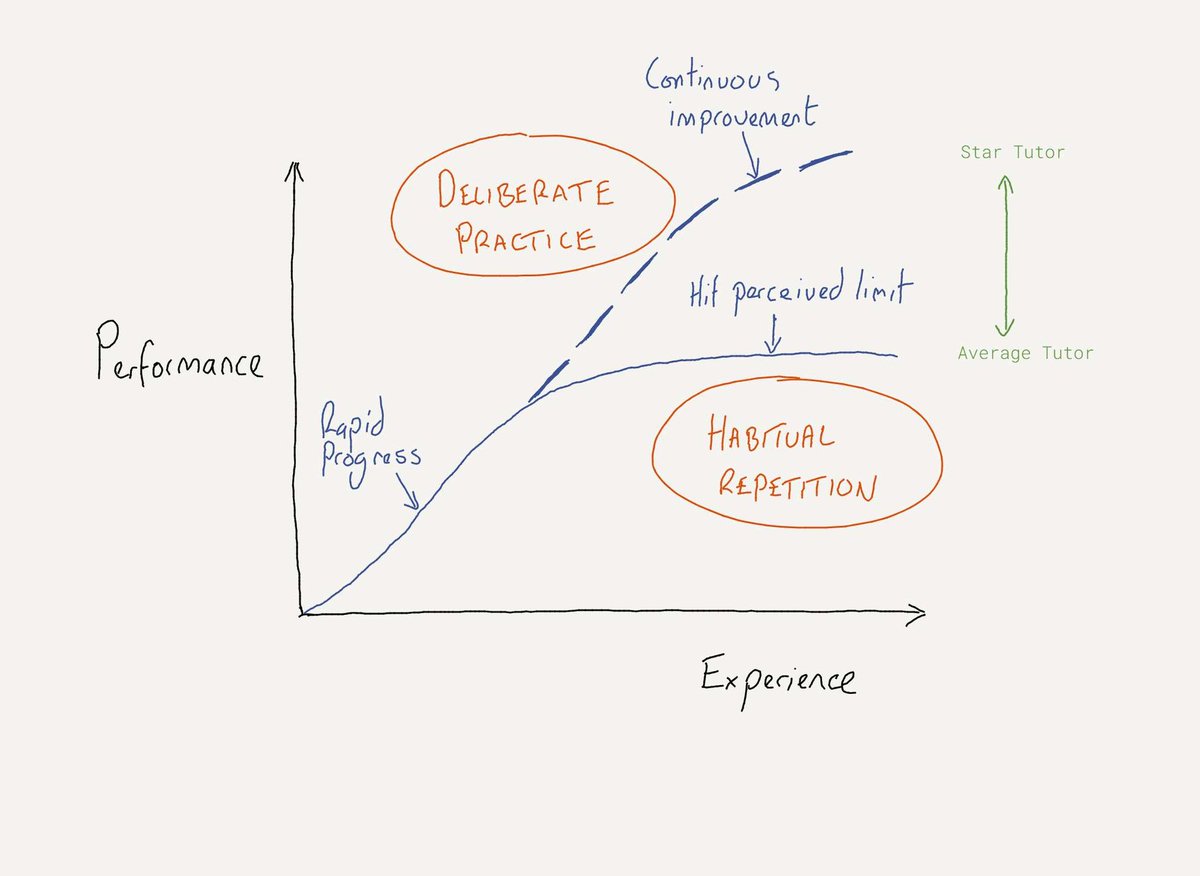
• Steve and Dario started with average memory.
• Their training habits mirrored that of chess players, athletes, writers, and other experts honing their craft.
Here are 5 habits for you to start today:
7
1. Dedicated Routine
Paavo Nurmi held 22 marathon world records. From 1500m to 20km, he dominated - until others copied his training.
Average training = Average performance.
Reflect: What is your current training routine? How is this helping or limiting you?
Paavo Nurmi held 22 marathon world records. From 1500m to 20km, he dominated - until others copied his training.
Average training = Average performance.
Reflect: What is your current training routine? How is this helping or limiting you?
5:49
8
3 steps to develop your winner routine:
• Identify: What exactly are you trying to achieve? Be specific.
• Study experts: Go on YouTube and watch training clips. View multiple sources for a holistic view.
• Be reflective: Practice, be open-minded, reflect on your training, and be ruthless to optimize it.
No one had it all figured out at first. Keep on experimenting.
9
2. Get early wins ASAP
Find the early wins to trigger dopamine and create a positive association with the training.
You progress fast at first but soon, progress slows down. Double on your tiny wins!
Don’t quit—mastery awaits beyond. When concerned, remember this graph.
Find the early wins to trigger dopamine and create a positive association with the training.
You progress fast at first but soon, progress slows down. Double on your tiny wins!
Don’t quit—mastery awaits beyond. When concerned, remember this graph.
3:33
10
3. Get the RIGHT mentor
A great teacher explains why, not how.
They understand YOUR game and will aid you in developing mental models and independent problem-solving skills.
A mentor is hard to seek, so start with YouTube. Put in the work, and when ready, reach out.
A great teacher explains why, not how.
They understand YOUR game and will aid you in developing mental models and independent problem-solving skills.
A mentor is hard to seek, so start with YouTube. Put in the work, and when ready, reach out.
0:45
11
Characteristics of excellent mentors
• Empathy.
• Genuine motive.
• Skin in the game.
• Possess knowledge.
• Invested in the outcomes.
• Open to diverse points of view.
• Skilled in listening and providing feedback.
“If you cannot see where you are going, ask someone who has been there before”.
• Empathy.
• Genuine motive.
• Skin in the game.
• Possess knowledge.
• Invested in the outcomes.
• Open to diverse points of view.
• Skilled in listening and providing feedback.
“If you cannot see where you are going, ask someone who has been there before”.
2:33
12
4. Become a visualizing machine.
“The more skilled you are, the better your visualization and mental representations, and the better you can master your skill.”
Experts run the same tape until it’s second nature.
They see facts, rules, and relationships—it’s all there.
Think chess grandmasters; a glance tells them what’s off.
Learn about Michael Phelp's visualization routine:
Koi@cajunkoi
This is Michael Phelps’s 60-second habit that helped him win 23 Olympic gold medals and become the most legendary swimmer in history.
The “get the videotape ready” ritual:
The “get the videotape ready” ritual:
13
5. Self-regulated learning:
For solo skill improvement, remember the 3 Fs: Focus. Feedback. Fix it.
Break down the skills, identify weaknesses and work on them.
Just like our GROW method. Learning is being metacognitive and in control of YOUR learning.
youtube.com/watch?v=N60JDe…
For solo skill improvement, remember the 3 Fs: Focus. Feedback. Fix it.
Break down the skills, identify weaknesses and work on them.
Just like our GROW method. Learning is being metacognitive and in control of YOUR learning.
youtube.com/watch?v=N60JDe…
14
Deliberate practice is possible.
Benjamin Franklin’s trick for better writing was studying favorite articles, reconstruct them from memory, and comparing them with the original to learn and correct.
He’d also translate into verse and then back to prose.
Like famous painters replicating masterpieces.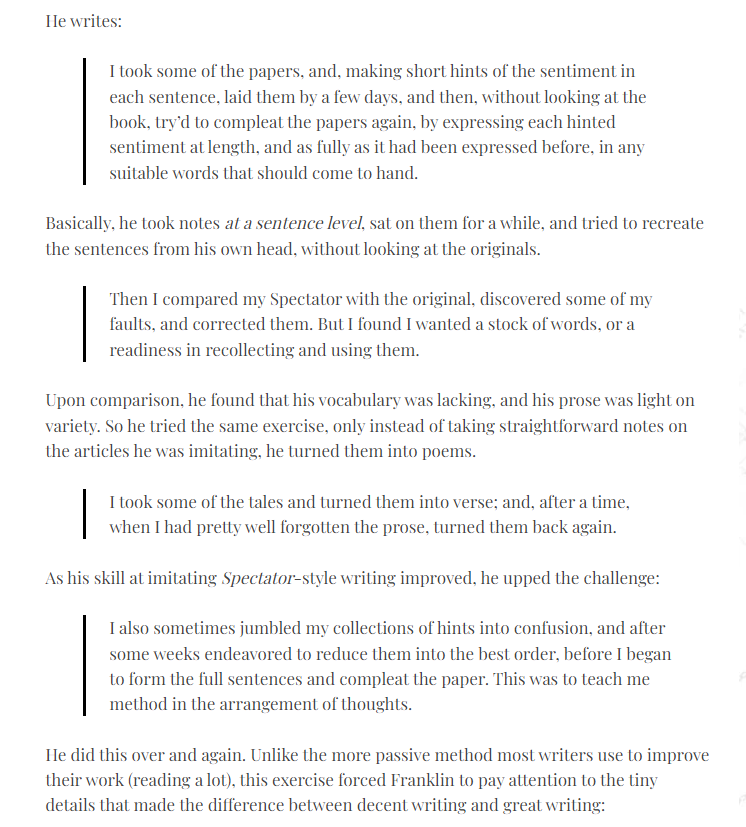
Benjamin Franklin’s trick for better writing was studying favorite articles, reconstruct them from memory, and comparing them with the original to learn and correct.
He’d also translate into verse and then back to prose.
Like famous painters replicating masterpieces.
15
Whenever you want to master something, remember these tips:
1. Dedicated Routine.
2. Get early wins ASAP.
3. Get the RIGHT mentor.
4. Become a visualizing machine.
5. Self-regulated learning.
6. Focus on feedback
"Success has to do with deliberate practice. Practice must be focused, determined, and in an environment where there's feedback."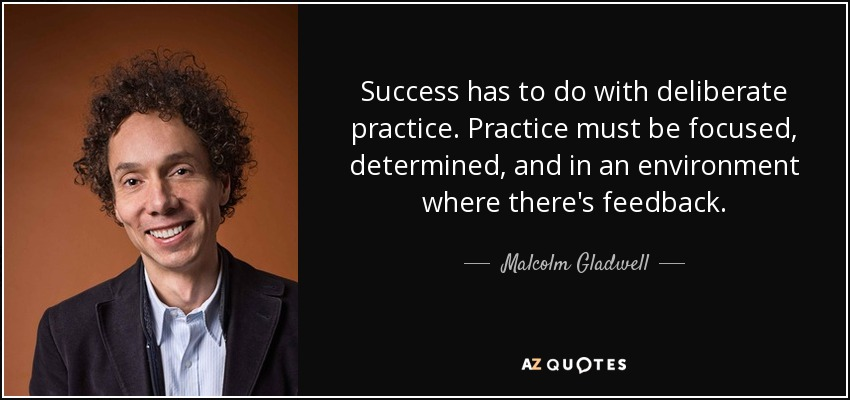
1. Dedicated Routine.
2. Get early wins ASAP.
3. Get the RIGHT mentor.
4. Become a visualizing machine.
5. Self-regulated learning.
6. Focus on feedback
"Success has to do with deliberate practice. Practice must be focused, determined, and in an environment where there's feedback."
16
That's a wrap!
If you want more content on learning, self-improvement, and mastery, follow @cajunkoi.
Like and Retweet this post to support my account.
If you want more content on learning, self-improvement, and mastery, follow @cajunkoi.
Like and Retweet this post to support my account.
