Now reading

Real American Patriot 🇺🇸@Real_Am_Patriot
7 views
Sep 13, 2024
~4 min read
Advertisement
1
Now reading


2
A comment from Daniel Webster pushed Charles Francis Adams to take up a law profession, at least for a time, and he studied under Mr. Webster.

3
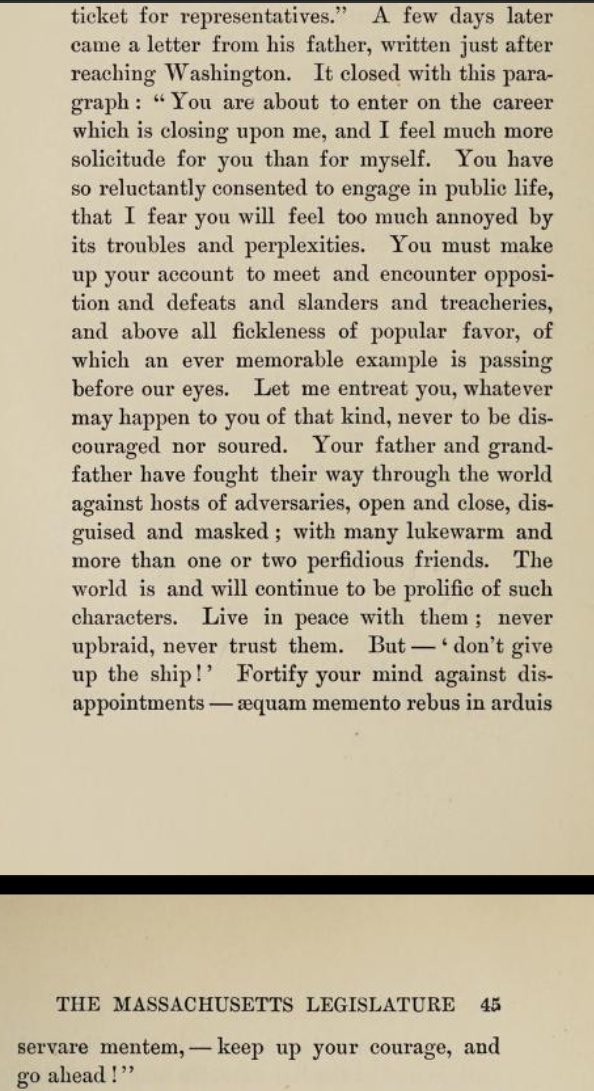
Charles Francis Adams nominated to the Massachusetts legislature. His father John Quincy Adams sends a letter with his advice before he takes office.
4
…anti-slavery feeling, — that handed down from the War of Independence & the Fathers of the Republic…was fast fading out. That African slavery, as an industrial institution, was not going to die a natural death had become apparent. On the contrary…it was visibly developing.


5
parties were merely the means to the attainment of political ends
the "Whig" had in view was explicit.
"Either," it declared, "the present tide, which is carrying all of our institutions, excepting the forms, into a vortex of which slavery is the moving power, must be stayed
the "Whig" had in view was explicit.
"Either," it declared, "the present tide, which is carrying all of our institutions, excepting the forms, into a vortex of which slavery is the moving power, must be stayed
6
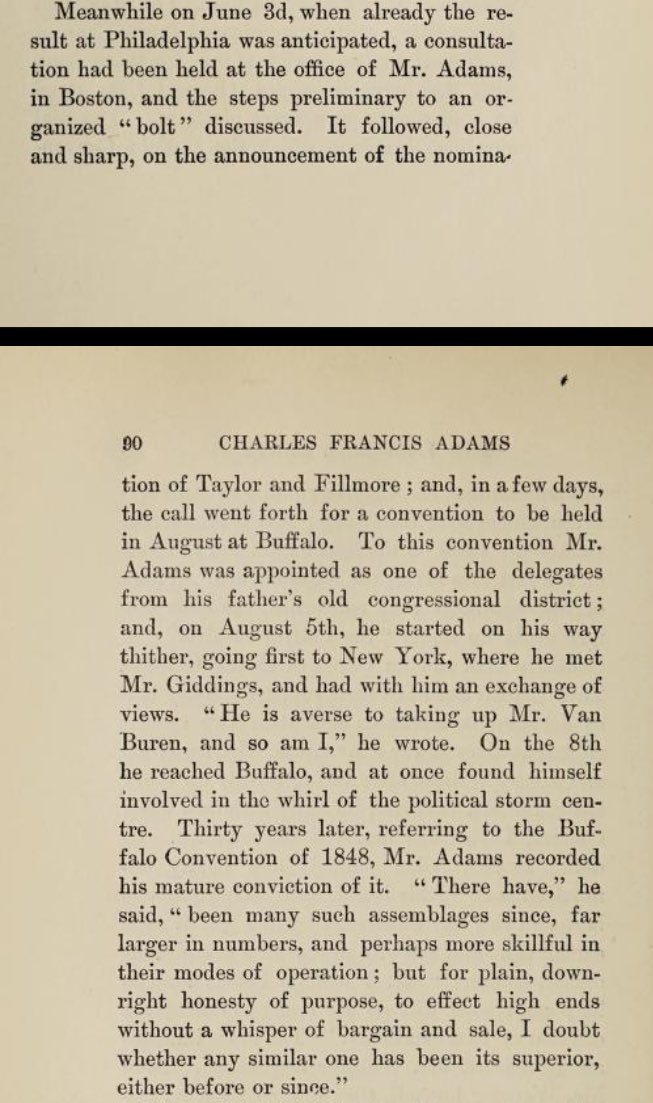
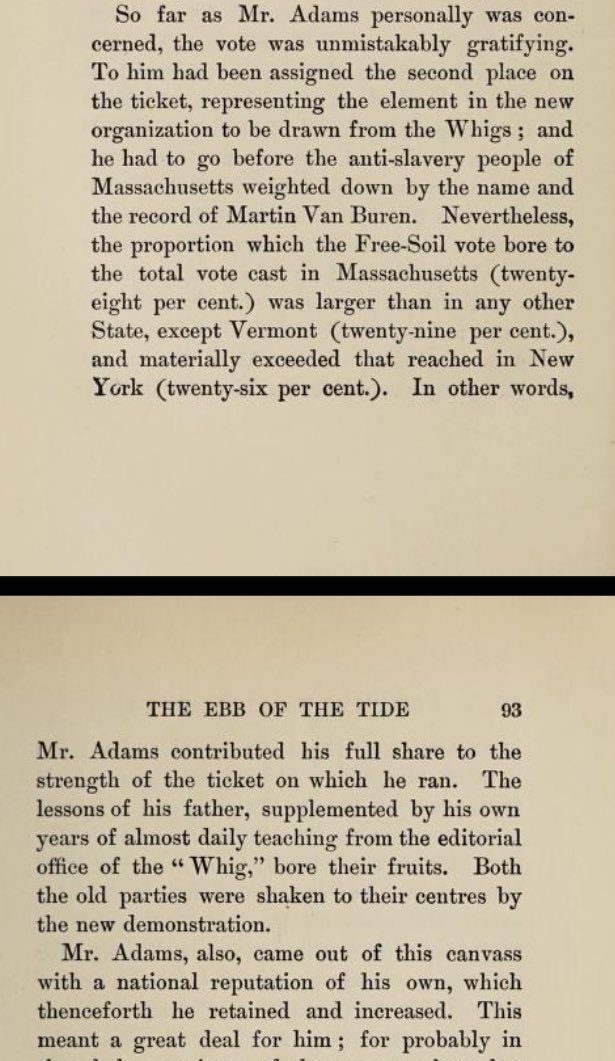
The Buffalo Convention created the unlikely & at times awkward partnership between CFA & MVB, but it ultimately proved for Charles that he was capable of cobbling together a unifying party to oppose the slave power that held hostage the institutions.

7
Patching together the Free Soil coalition
Finally the Republican party emerged from the chaos, & in 1856 almost secured the presidency…in 1858 it carried a majority in the House, preliminary to its election of Lincoln two years later. Mr. Adams's time, long deferred, then came.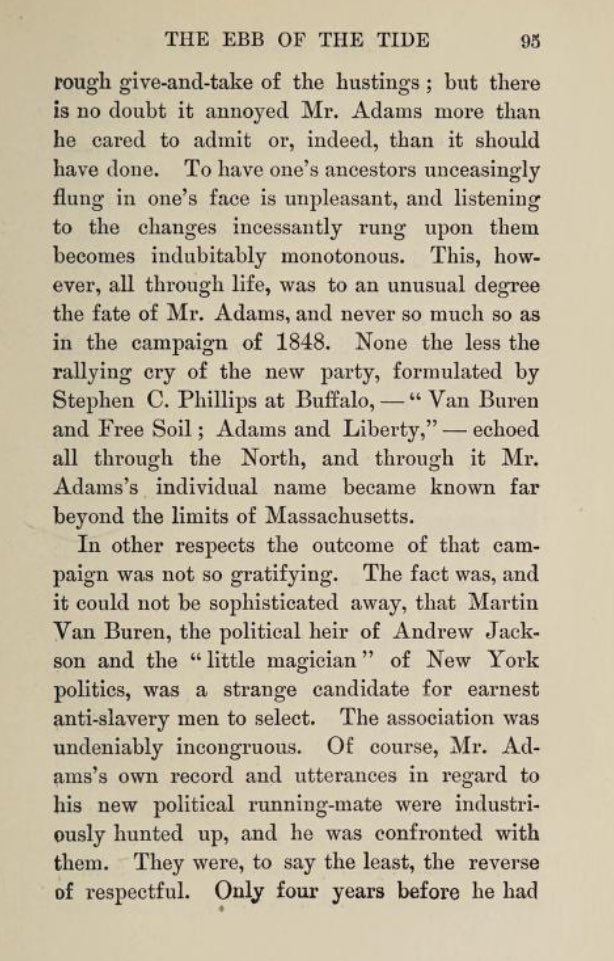
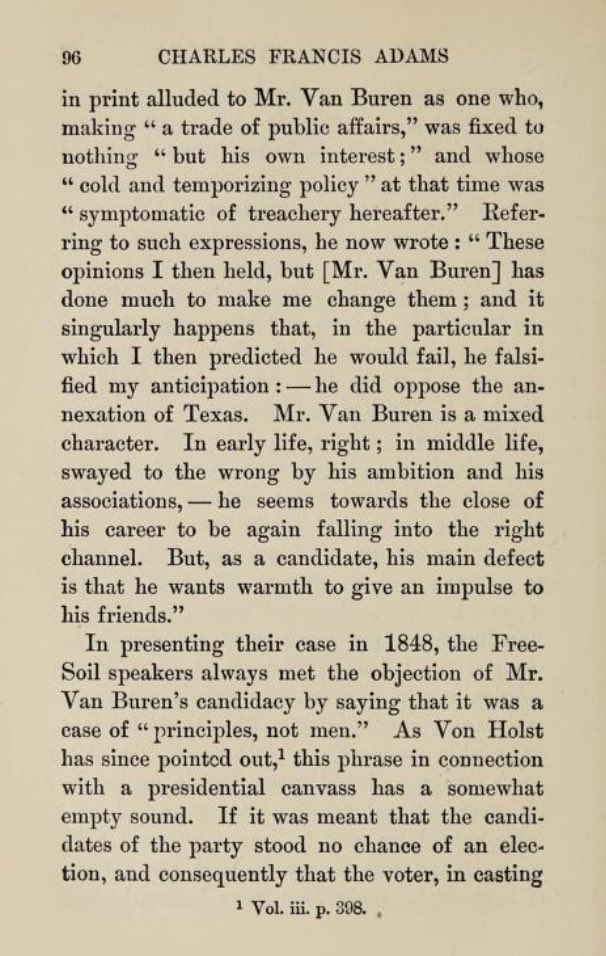

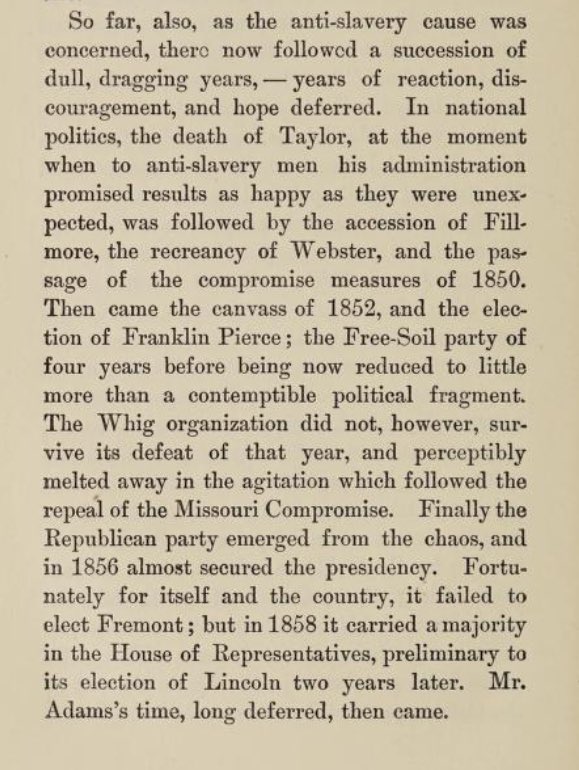
Finally the Republican party emerged from the chaos, & in 1856 almost secured the presidency…in 1858 it carried a majority in the House, preliminary to its election of Lincoln two years later. Mr. Adams's time, long deferred, then came.
8
Mr. Adams uncovered the motivating goal behind the slave interest in reopening of the slave trade, to gain unlimited supply of cheap labor, & through statesmenship forced it into a difficult position:
If they rejected them, it must be because other & unavowed ends were aimed at.

If they rejected them, it must be because other & unavowed ends were aimed at.
9
The day prior to CFA arriving in London as the American representative minister, Lord John Russell announced the purpose of the government to recognize the confederacy’s belligerent status.
“the chances in Europe were as ten to one in favor of the confederacy against the Union.”
“the chances in Europe were as ten to one in favor of the confederacy against the Union.”
10
Europe in those days got its news from England, mainly the Times. Dr. Russell in the Times:
“I have failed to meet many people who really exhibited any passionate attachment to the Union, or who pretended to be actuated by any strong feeling of regard or admiration for [it].”

“I have failed to meet many people who really exhibited any passionate attachment to the Union, or who pretended to be actuated by any strong feeling of regard or admiration for [it].”
11
Democratic-aligned Americans believed that France would be willing to support them in opposing their old enemy, Britain, but French designs were on Mexico & welcomed the disintegration of America.

12
London supported the Slave Interest & found no contradiction in past support for Ms. Stowe
“they now had recourse to one of those pharisaic, better-than-thou moods at times characteristic of the race.”
English men & women wondered why Americans should object to national suicide
“they now had recourse to one of those pharisaic, better-than-thou moods at times characteristic of the race.”
English men & women wondered why Americans should object to national suicide
13
The sympathies of the aristocracy were distinctly on the side of the slaveocracy of the South
[US] presence was obviously a restraint on the freedom of conversation, then largely made up of ill-natured & hostile, when not contemptuous, references to America & all things American
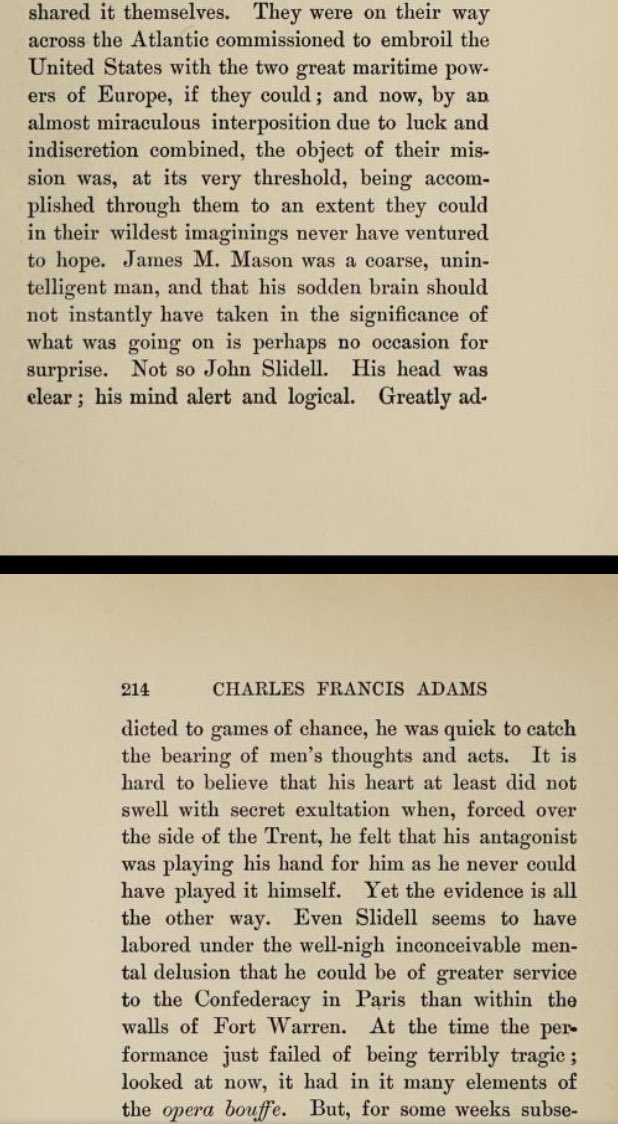
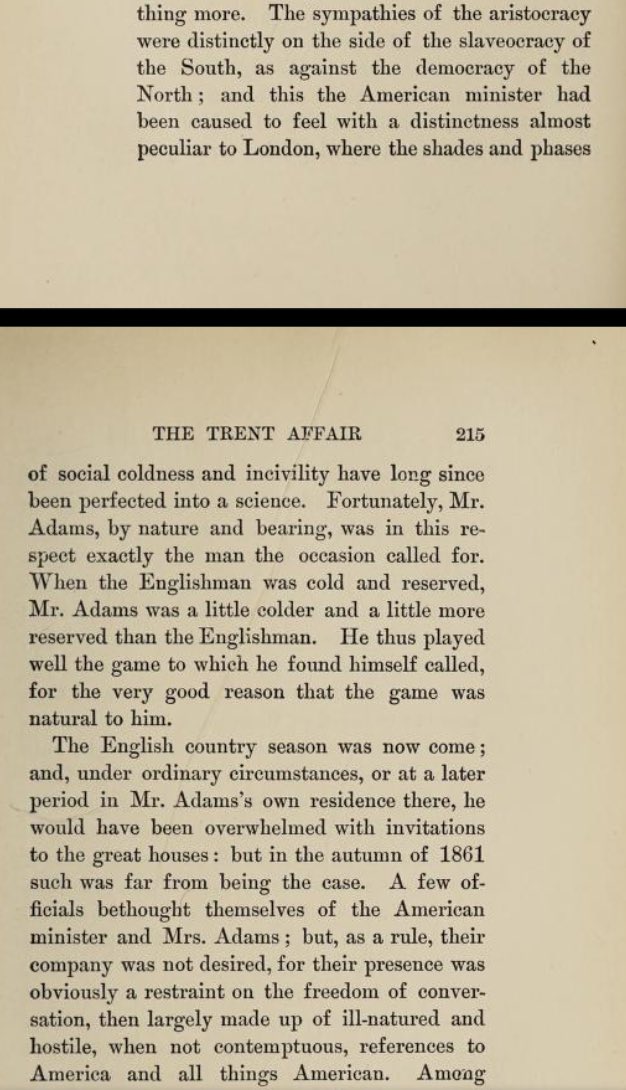
[US] presence was obviously a restraint on the freedom of conversation, then largely made up of ill-natured & hostile, when not contemptuous, references to America & all things American
14
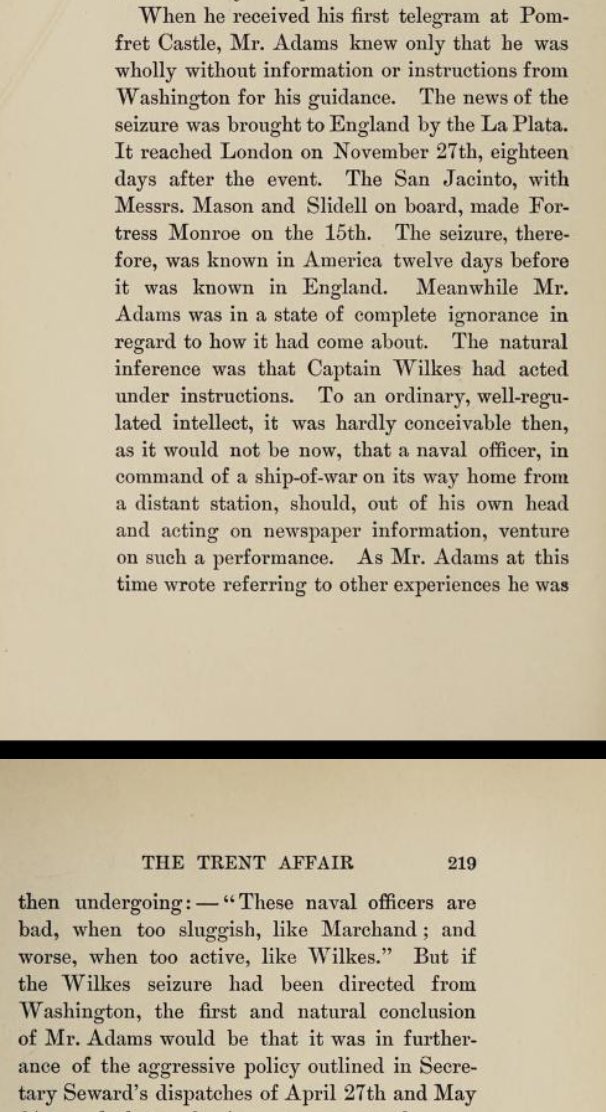
Palmerston has an off-record conversation with CFA on the Trent Affair in hopes to mitigate a more serious rupture


15
The confederacy staked its economic life on Britain’s reliance on southern cotton for their manufacturers. After Britain suffered a cotton famine due to the American blockade, Britain shifted raw material procurements to other nations; a monumental blow to the confederacy.


16
British statesmen meet to discuss the American question, seek to recognize the confederacy with France.
“The Confederate emissaries in London had access to excellent sources of information; far better, indeed, than those at the command of Mr. Adams.”


“The Confederate emissaries in London had access to excellent sources of information; far better, indeed, than those at the command of Mr. Adams.”
17
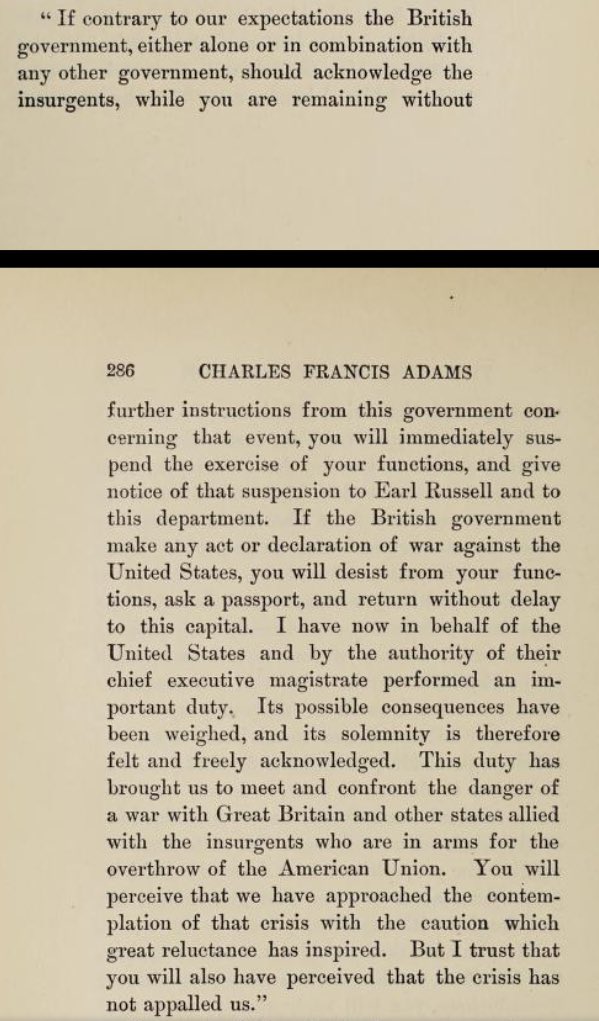
Seward’s instructions to Charles Francis Adams on any approach by the British for “good offices” (recognition of the confederate government)

18
Bank of England representative fuming as the tides turn in favor of the Americans. Exeter Hall meeting in Britain closed the door on recognition of the confederacy.


19
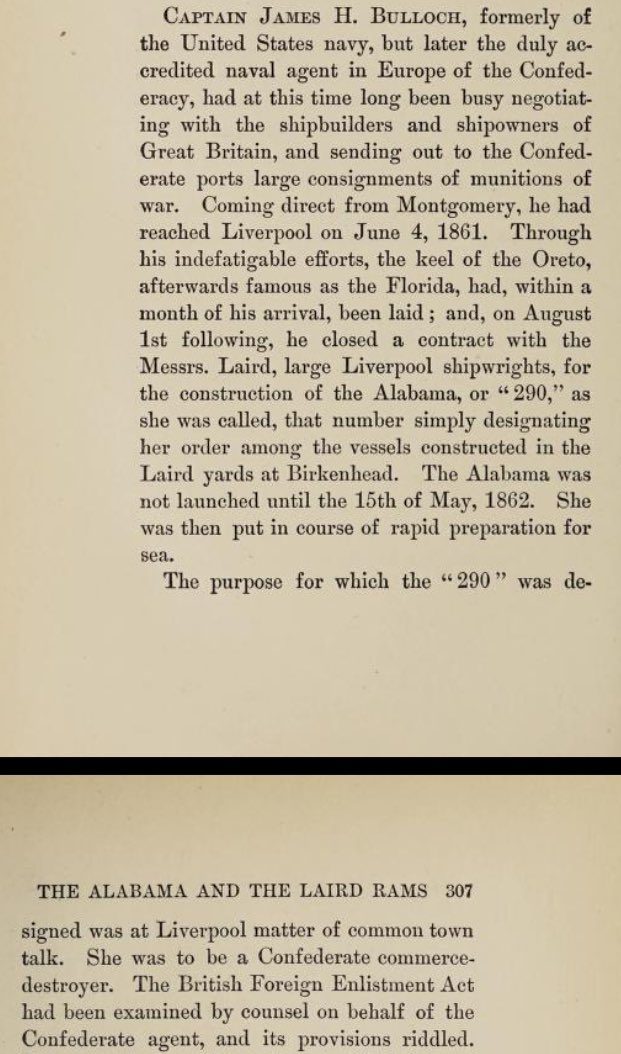
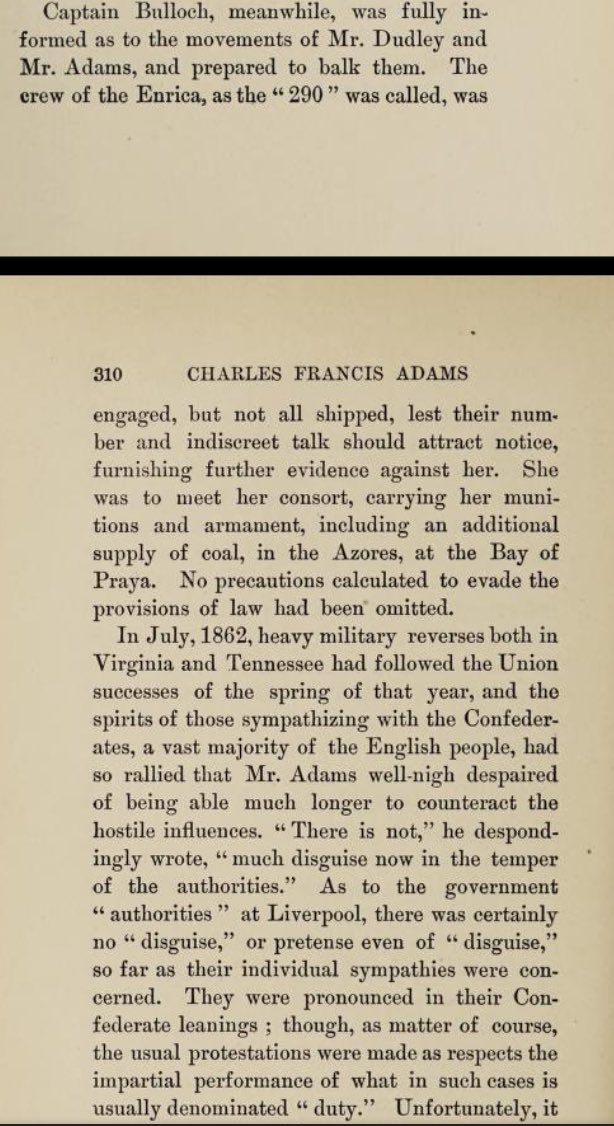
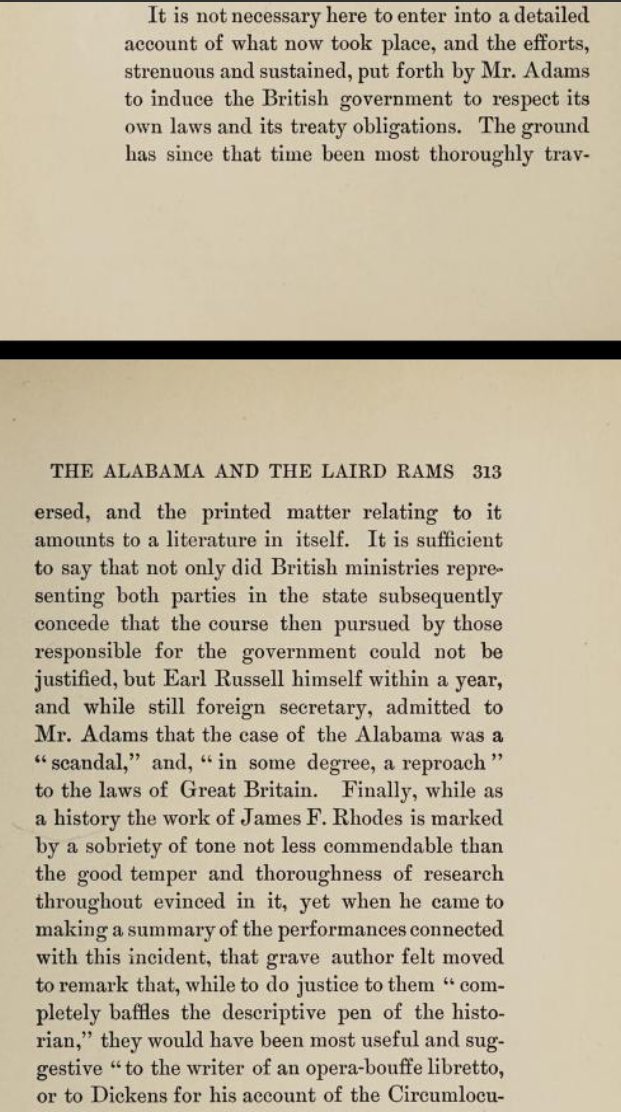
Details on James Bulloch, the top confederate agent in Europe & his enterprise in London. He was responsible for having Britain & Paris create the vessels for their navy as the confederacy could not do so themselves.

20
Re-organization of demoralized Democratic Party of reformers of the civil service, free-traders, the Jacksonian Democracy, and the remnants of the Southern oligarchy into a party opposite President Grant, with Horace Greeley at its head


21
After completing “Memoirs”:
"I am now perfectly willing to go myself. My mission is ended, and I may rest." Mr. Adams died in Boston on the 21st of No-vember, 1886.
"I am now perfectly willing to go myself. My mission is ended, and I may rest." Mr. Adams died in Boston on the 21st of No-vember, 1886.

