1/ Hedge Fund Market Wizards (Jack Schwager) Thread with quotes...

Darren 🥚🐣🕊️@ReformedTrader
19 views
May 10, 2026
~24 min read
Advertisement
1
1/ Hedge Fund Market Wizards (Jack Schwager)
Thread with quotes from the book
"This volume is part of my continuing effort to meet with exceptional traders to better understand the elements underlying their success."
amazon.com/Hedge-Fund-Mar…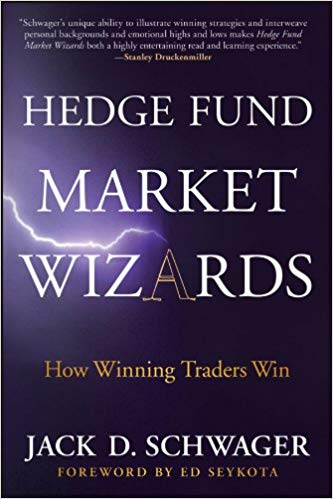
Thread with quotes from the book
"This volume is part of my continuing effort to meet with exceptional traders to better understand the elements underlying their success."
amazon.com/Hedge-Fund-Mar…
2
2/ "How you package your work > what you have actually done. There is massive herding in economic forecasting. By staying near the benchmark / prevailing range, you get all the upside of being right without the downside. Once I understood the rules, I became quite cynical." (p.5)
3
3/ "In order to make problems tractable, you need assumptions, which then become axiomatic for the entire subject—not because they are true, but because they are necessary for a solution.... The problem is that markets aren't efficient, but that is conveniently ignored." (p. 9)
4
4/ "Markets matter more than policy: real fundamentals, not what policy makers want to happen. The willing disbelief of people can carry on for a long time, but eventually, it is overwhelmed by the market.
"The genius of Soros was recognizing the turning point." (p. 12)
"The genius of Soros was recognizing the turning point." (p. 12)
5
5/ "As long as no one cares, there is no trend. Would you be short Nasdaq in 1999? You can't be short just because you think something is fundamentally overpriced....
"Even though something might be a good idea, you need to wait for and recognize the right time." (p. 12)
"Even though something might be a good idea, you need to wait for and recognize the right time." (p. 12)
6
6/ "Risk premium was too low in everything (2006-7). Credit was trading at ludicrous spreads, and no one cared about quality.
"But you can't be short because you lose carry, and at the same time, the spreads get lower.... You just have to make money going the other way." (p. 13)
"But you can't be short because you lose carry, and at the same time, the spreads get lower.... You just have to make money going the other way." (p. 13)
7
7/ "We were happy to be part of the bubble but in positions that were highly liquid so we could exit quickly.
"Markets look liquid during a bubble; it's the liquidity afterward that matters. We did a lot of trades through options where positive carry paid for the option." (p.14)
"Markets look liquid during a bubble; it's the liquidity afterward that matters. We did a lot of trades through options where positive carry paid for the option." (p.14)
8
8/ "By being long options... you are never short that horrible tail.
"One of the aspects of risk premiums being very low was that option prices were generally too cheap. It was a low-volatility bubble, which meant that options worked. That's not always the case." (p. 15)
"One of the aspects of risk premiums being very low was that option prices were generally too cheap. It was a low-volatility bubble, which meant that options worked. That's not always the case." (p. 15)
9
9/ "During the entire Fed hiking cycle of 2005-6, the futures market kept being priced on the premise that it was about to stop... so you had a great risk/reward that in six months, they would still be hiking. As the months rolled on, you could keep repeating the trade." (p. 15)
10
10/ "There are very few market forces to make macro markets priced efficiently. For tech stocks, then sure, hedge funds are huge. But for FX or Treasuries, hedge funds are tiny compared to PIMCO or the Chinese. I am a small fish swimming in a sea of real money." (p. 16)
11
11/ On LTCM: "T-bond futures were going up limit every day. That told me there was something going on. I didn't need to know why. Once you realize something is happening, you can trade accordingly.
"If you wait until you can find out the reason, it can be too late." (p. 17)
"If you wait until you can find out the reason, it can be too late." (p. 17)
12
12/ "After a bull market goes on for years, who is managing most of the money? The bears are all unemployed; you have a few very flexible people, but they run relatively small amounts of money.
"You shouldn't expect a big bull market to end in any rational fashion." (p. 19)
"You shouldn't expect a big bull market to end in any rational fashion." (p. 19)
13
13/ "Because the bulls control most of the money, expect the transition to a bear market to be quite slow, but then for the move to be enormous when the turn does happen. Then the bulls will say, 'This makes no sense. [The housing bubble] was unforeseeable.' " (p. 19)
14
14/ "In a world where everyone assumes that everything goes up forever, big price changes occur when market participants are forced to reevaluate their prejudices. The world didn't change that much in 2008; it was just that people finally noticed there was a problem." (p. 20)
15
15/ "You can notice when things have changed. Most people, though, don't. When Nasdaq is at 4,000 after having been at 5,000, there are a lot of people buying it because it is 'cheap.' People are poorly attuned to making decisions when there is uncertainty." (p. 21)
16
16/ "Implementation is the key in everything: more important than the trade idea behind it. Having a beautiful idea doesn't get you very far if you don't do it the right way.
"I tried to do the trade in such a way that my timing didn't have to be perfect." (p. 23)
"I tried to do the trade in such a way that my timing didn't have to be perfect." (p. 23)
17
17/ "People were acting on the premise that Bear Stearns and the banking system were solvent.
"You can't fix a solvency problem by adding more liquidity. If you have a house worth $100K with a $200K mortgage, I can lend you another $100K, but it won't solve the problem." (p. 25)
"You can't fix a solvency problem by adding more liquidity. If you have a house worth $100K with a $200K mortgage, I can lend you another $100K, but it won't solve the problem." (p. 25)
18
18/ "To make sure our business was as safe as possible, we avoided counterparty exposure to Lehman. We simplified the book. We reduced leverage a lot during 2008. We restricted our trading to highly liquid positions, avoiding OTC trades with lots of counterparties." (p. 26)
19
19/ "Storytelling is only 10% of what is important in macro. The rest is implementation and flexibility: implement a trade in a way that limits your losses when you are wrong, and be able to recognize when you are wrong." (p. 28)
20
20/ "Even though Soros will sometimes play up to his public image as a guru who knows what is going on, it is in no sense what he does as a manager. He has no emotional attachment to an idea. When a trade is wrong, he will just cut it, move on, and do something else." (p. 28)
21
21/ "I've only done one single-stock trade: buying Berkshire in 1999. The price had halved because Buffett refused to be involved in the dot-com bubble. I thought that was the stupidest reason I had ever heard for a stock price to halve." (p. 31)
22
22/ "Trading books are designed for people who have excess optimism and are in emotional denial of their losses. The rules are designed to protect traders who are gamblers. For them, the books could be greatly shortened: 'Don't trade. You are really bad at this.' " (p. 32)
23
23/ "The main thing about bubbles is that you need to be early. The worst thing you can do is to be stubborn and then late to convert. I am trying to learn to be an earlier convert to things that make no sense [Pets dot com].
"When it starts to go down, sell it." (p. 33)
"When it starts to go down, sell it." (p. 33)
24
24/ "Irrationality doesn't matter: if you try to point it out, believers will just give you an even more ridiculous justification why the market should go up. Bubble markets have legs because it takes such enormous evidence to make people change their minds." (p. 35)
25
25/ "Be long the exponential up-move of a bubble without taking on the gap risk of a collapse. Options are a good way to do this.
"Tops are messy, and reversals in bear markets are horrendous. It is very rare to find comfortable shorts in bear markets." (p. 36)
"Tops are messy, and reversals in bear markets are horrendous. It is very rare to find comfortable shorts in bear markets." (p. 36)
26
26/ "A CTA has a systematic way of defining when a trend has changed. Another way you can tell is if a market displays price action that is characteristic of the late stages of a bubble, such as an exponential price rise, like silver in 2011." (p. 36)
x.com/ReformedTrader…
x.com/ReformedTrader…
27
37/ "The repercussions of the top were a lot easier to play than being short the Nasdaq itself....
"The economic downturn led to a big move in fixed income that provided a much calmer way to play that idea than a direct trade in equities." (p. 37)
"The economic downturn led to a big move in fixed income that provided a much calmer way to play that idea than a direct trade in equities." (p. 37)
28
38/ "I can't tell you what your trading style should be.
"If I try to teach you what I do, you will fail because you are not me. If you observe what I do, you may pick up some good habits. But there are a lot of things you will want to do differently." (p. 39)
"If I try to teach you what I do, you will fail because you are not me. If you observe what I do, you may pick up some good habits. But there are a lot of things you will want to do differently." (p. 39)
29
39/ "Perseverance and the emotional resilience to keep coming back are critical because, as a trader, you get beaten up horribly. Frankly, if you don't love it, there are much better things to do with your life. No one who trades for the money is going to be any good." (p. 39)
30
40/ "People run lots of money with relatively unsophisticated risk management. Throughout 2008, I spoke to managers who said they had halved their risk. I would answer, 'Do you realize volatility has gone up five times?' Their risk exposure had actually gone up." (p. 40)
31
41/ Ray Dalio: "Recognize that you will certainly make mistakes and have weaknesses: what matters is how you deal with them. If you treat mistakes as learning opportunities that can yield rapid improvement if handled well, you will be excited by them." (p. 51)
32
42/ "The type of thinking necessary to succeed in the markets is entirely different from what is required for school.
"You have to be assertive and open-minded at the same time. Any time you are an independent thinker, there is a reasonable chance you will be wrong." (p. 53)
"You have to be assertive and open-minded at the same time. Any time you are an independent thinker, there is a reasonable chance you will be wrong." (p. 53)
33
43/ "The Fed and other central banks have tremendous power. In both the abandonment of the gold standard in 1971 and in the Mexico default in 1982, I learned that a crisis development that leads to central banks easing can swamp the impact of the crisis itself." (p. 55)
34
44/ "Being long pork bellies when they were limit down every day taught me the importance of risk controls. I never wanted to experience that pain again. It enhanced my fear of being wrong and taught me to make sure no bet could cause me to lose an unacceptable amount." (p. 56)
35
45/ "Diversifying to a thousand stocks will only reduce the risk by about 15%, since the average stock has about a 0.60 correlation to another stock.
"With zero correlation, by the time you reach only 15 assets, you can cut volatility by 80%, a factor of five." (p. 57)
"With zero correlation, by the time you reach only 15 assets, you can cut volatility by 80%, a factor of five." (p. 57)
36
46/ "There are ways to structure trades to produce a bunch of uncorrelated bets.
"I strive for approximately 100 different return streams that are roughly uncorrelated. There are cross-correlations, so the number works out to be less than 100, but it is well over 15." (p. 57)
"I strive for approximately 100 different return streams that are roughly uncorrelated. There are cross-correlations, so the number works out to be less than 100, but it is well over 15." (p. 57)
37
47/ (Note: From time to time, I get questions about whether to buy/sell a stock. Diversification into assets with low correlations matters much more than adding or cutting a single position. The AQR paper below reaches the same conclusion as Dalio does.)
x.com/ReformedTrader…
x.com/ReformedTrader…
38
48/ "Each market behaves logically based on its own determinants, and as the nature of those determinants changes, what we call correlation changes. When inflation expectations are volatile, stocks and bonds will be positively correlated (interest rates)." (p. 57)
39
49/ "I am looking at whether the drivers are different: 15 or more assets that behave differently for logical reasons. I may talk about return streams being uncorrelated, but I'm not using the term the way most people do. I am talking about causation, not the measure." (p. 58)
40
50/ "To the extent that there is strong disagreement about an issue, a lot of people are wrong. Yet most are totally confident they are right.
"Imagine how much better almost all decision making would be if we were less confident and more open to thoughtful discourse." (p. 58)
"Imagine how much better almost all decision making would be if we were less confident and more open to thoughtful discourse." (p. 58)
41
51/ "We reach resolutions by questioning each other, which leads to better understanding. You say that. Why do you say that? What is the evidence? How can we resolve the difference? Whom do we need to bring in to facilitate the conversation and help us move forward?" (p. 58)
42
52/ "Many people experience drawdowns that are larger than expected because they never really understood how a strategy would have worked under different environments.
"Strategies that are based on a manager's recent experience will work until they inevitably don't." (p. 60)
"Strategies that are based on a manager's recent experience will work until they inevitably don't." (p. 60)
43
53/ "Timeless and universal: there is no reason why a strategy's effectiveness should change in different time periods or when you go from country to country. This broad analysis through time and geography gives us a unique perspective relative to other managers." (p. 60)
44
54/ "We realized that if we took bond systems and traded them on a spread basis rather than an absolute basis, we could produce much better return/risk. That change took advantage of the universal truth that you can enhance the return/risk ratio by reducing correlation." (p. 61)
45
55/ "We know our transaction costs very well, and we know how long it takes for us to get in and out of positions. We will limit our position size to assure that we can get out reasonably quickly and to keep our transaction costs small relative to the expected alpha." (p. 65)
46
56/ "We didn't have the same vulnerability to a year like 2008 as most hedge funds did: the inherent nature of our Pure Alpha strategy avoids embedded betas.
"The truth about hedge funds is that much of what is packaged as alpha is really beta sold at alpha prices." (p. 66)
"The truth about hedge funds is that much of what is packaged as alpha is really beta sold at alpha prices." (p. 66)
47
57/ "The average hedge fund is about 70% correlated with stocks. Why are most hedge funds skewed toward strategies that do well in good times? I think it is human nature for people to choose strategies that worked well during the recent past, which implies a long bias." (p. 66)
48
58/ "The biggest mistake investors make is to believe what happened in the recent past is likely to persist.
"The tendency of investors to buy after a price increase for no reasons other than the price increase itself causes prices to overshoot." (p. 70)
"The tendency of investors to buy after a price increase for no reasons other than the price increase itself causes prices to overshoot." (p. 70)
49
59/ Larry Benedict:
Having family and friends invest "would just add another layer of distraction. I would rather write my parents a check if they needed the money than ever have them in my fund." (p. 80)
Having family and friends invest "would just add another layer of distraction. I would rather write my parents a check if they needed the money than ever have them in my fund." (p. 80)
50
60/ "I came in short straddles on the day of the 1987 crash. Not only did the puts skyrocket as the market crashed, but the calls also went up because volatility exploded. The account went from somewhere around $25,000 to a deficit in a matter of hours." (p. 84)
51
61/ "Seeing that day taught me that anything can happen. The puts went up so much by the end of the day that I probably would have been down several hundred thousand dollars if I had stayed with the position. The puts I covered at 20 probably went as high as 200." (p. 85)
52
62/ "I never gave up.... I had no strategy and no discipline. All the mistakes I was making along the way—and there were many—were providing experience, which was critical. The lessons I learned from those early failures helped me become successful." (p. 86)
53
63/ "Electronic trading (which also made high-frequency trading possible) has been great for me. The phones don't ring. I can buy and sell anonymously. Before, when my orders were placed through the pit, the brokers would steal from me, and I still made money." (p. 90)
54
64/ "One big mistake is averaging losing trades. Trading is very hard, but it is also easy if you maintain discipline. People blow up because they lose their discipline." (p. 95)
55
65/ "A number of traders ended up committing suicide or being homeless. They all shared a gambler's mentality. When they were losing, they were always looking for that one trade that would make it all back.
"You can't do that. This is a business where you have to work." (p. 99)
"You can't do that. This is a business where you have to work." (p. 99)
56
66/ Scott Ramsey: "I couldn't believe how easy it was to make money. You just bought something, and it went up. This was in 1979 when commodities were going ballistic.
"I really had no idea what I was doing. I was making money because I was buying in a rising market." (p. 106)
"I really had no idea what I was doing. I was making money because I was buying in a rising market." (p. 106)
57
67/ "I bought silver at $50, which is right near the all-time high.
"Shortly afterward, silver collapsed. The market went into a string of limit down days. It was a gut-wrenching experience.
"I lost all the money I had made plus some of the money I started with." (p. 107)
"Shortly afterward, silver collapsed. The market went into a string of limit down days. It was a gut-wrenching experience.
"I lost all the money I had made plus some of the money I started with." (p. 107)
58
68/ "I spent days watching every tick in certain markets and doing point and figure charts. The results weren't good. I made every rookie mistake: rather than trading with the trend, I was trying to pick tops and bottoms, and I sat with losers and took small profits." (p. 108)
59
69/ "By observing retail clients, I learned a lot about what not to do, like taking small profits and letting losses run. Certain traders were surprisingly accurate at picking tops and bottoms—the wrong way—based on emotional decisions and market activity." (p. 112)
60
70/ "The brokerage firms who directed business to CTAs would set the commission rates. In my own account, I was trading at a $12 commission rate, which by today's standards is insanely expensive. My customers were trading at a $50 commission rate or even higher." (p. 113)
61
71/ "If everyone thinks this way, and it seems so logical, then if the market goes the other way, everyone is going to be wrong, and they will have to cover their shorts. That's your trade." (p. 114)
62
72/ "Rigorous risk control is not only important in keeping losses small, but it also impacts profit potential. If you have trades that are not working and your mental energy is going toward damage control, you can't think clearly about opportunities." (p. 118)
63
73/ "When 2008 hit, the dealers wouldn't make a market on these things [over-the-counter fixed income]. I would have been up 26% for the year instead of 19% if it weren't for those trades. I will never again trade a market where liquidity is at the whim of a dealer." (p. 120)
64
74/ The biggest mistake is "looking to outside sources for guidance. The belief that you can watch CNBC and get useful advice is very misguided. You have to formulate your own opinion and not rely on so-called experts." (p.122)
[Evidence to back this up:]
x.com/ReformedTrader…
[Evidence to back this up:]
x.com/ReformedTrader…
65
75/ "You have to get past the idea that just because you lost money on a trade, it means you failed. Every trading decision you make is subject to some randomness. It doesn't matter whether you win or lose on any individual trade as long as you get the process correct." (p. 122)
66
76/ "Although I had a directional bias, I didn't take the trade until the lira broke out of its trading range. The market had to prove itself before the trade was entered. If there had not been a breakout, there would not have been a trade." (p. 123)
67
77/ "Novice speculators would buy platinum as a proxy for gold because 'it hasn't made the move.' Buying a laggard as a proxy for a leader is a bad idea, and as a trader, I am keen to take the other side of such a trade when I see a potential setup." (p. 124)
68
78/ Jaffray Woodriff:
"When he was in high school, Woodriff thought it was sad that most people loved Fridays and hated Mondays. 'I was going to make sure that wasn't me. I realy wanted to find a way to make Mondays as exciting as Fridays.' " (p. 130)
"When he was in high school, Woodriff thought it was sad that most people loved Fridays and hated Mondays. 'I was going to make sure that wasn't me. I realy wanted to find a way to make Mondays as exciting as Fridays.' " (p. 130)
69
79/ Woodriff: "My starting $2,500 had more than quadrupled. Then, on my 11th put trade, I lost more money than I had made on the first 10 put trades combined. I'd increased my trade size as I made money."
Schwager: "So you blew it all on one trade?"
Woodriff: "Yeah." (p. 139)
Schwager: "So you blew it all on one trade?"
Woodriff: "Yeah." (p. 139)
70
80/ Schwager: "There was another reason why you wouldn't have pursued a trend-following approach. A trading approach that, by definition, requires staying with the herd would have been exactly opposite your natural instincts. You would have had trouble following it." (p. 142)
71
81/ "I had the realization that I could build a whole third class of models that were trend neutral on average: that is, trading models that were neither trend following nor countertrend.
"It was much better to use multiple models than a single best model." (p. 143)
"It was much better to use multiple models than a single best model." (p. 143)
72
82/ "Market-specific models were far more vulnerable to breaking down in actual trading (prone to being overfitted).
"Using the same models across multiple markets provided a far more robust approach. I added substantially more markets; the diversification also helped." (p. 146)
"Using the same models across multiple markets provided a far more robust approach. I added substantially more markets; the diversification also helped." (p. 146)
73
83/ "Any models that score well training on randomly generated data are 100% curve-fitted; the best model provides a baseline. You need models that do much better training on real data. It is only the performance _difference_ that is indicative of expected performance." (p. 152)
74
84/ "Software is more focused on handling large quantities of data than on providing users with very strict protocols to make sure they don't curve-fit.... It leads users in the wrong direction because it allows them to generate bogus evidence to support pet theories." (p. 153)
75
85/ "It is amazing how valuable older [pre-1990] data still is. The stationarity of the patterns we have uncovered is amazing to me, as I would have expected predictive patterns in markets to change more over the longer term." (p. 153)
76
86/ "It takes a tremendous amount of deterioration to drop a model. We don't react to short-term results b/c the current year performance of any single model is not predictive of next year's performance. What is predictive is how it performed over the entire 31 years." (p. 154)
77
87/ "Although this change has reduced our diversification, there is a strong pattern for our edge to be greater in more liquid markets. Besides increasing capacity, the shift to allocating a greater percentage to more liquid markets has also improved performance." (p. 154)
78
88/ "The core of the risk management is evaluating the risk of each market based on an exponentially weighted moving average of the daily dollar range per contract.
"Through the chaos of 2008 and 2009, our volatility remained very near our target level of 12%." (p. 155)
"Through the chaos of 2008 and 2009, our volatility remained very near our target level of 12%." (p. 155)
79
89/ "Allowing the OTC markets to be unregulated and opaque makes as much sense as leaving 50 eight-year-olds unsupervised for a month. The OTC markets are very often used to take advantage of clients who are 'sophisticated' in the legal definition but naive in practice." (p. 156)
80
90/ "The OTC markets have been built to maximize asymmetries of information and are an example of how markets should not operate. Markets should be fair and transparent, as the futures and equities markets have mostly evolved to be." (p. 156)
81
91/ "Periods of poor performance are difficult. I generally handle it by focusing very hard on improving the trading system.
"Look where others don't. Adjust position sizes to overall risk to target a particular volatility. Pay careful attention to transaction costs." (p. 157)
"Look where others don't. Adjust position sizes to overall risk to target a particular volatility. Pay careful attention to transaction costs." (p. 157)
82
92/ Ed Thorp:
Assuming winning and losing months are coin tosses, "the odds of getting at least one track record ≥ Thorp's would still be less than 1 out of 10^62. The odds of randomly selecting a specific atom in the earth would be about a trillion times better." (p. 162)
Assuming winning and losing months are coin tosses, "the odds of getting at least one track record ≥ Thorp's would still be less than 1 out of 10^62. The odds of randomly selecting a specific atom in the earth would be about a trillion times better." (p. 162)
83
93/ "Track records such as Thorp's prove conclusively that it is possible to beat the market and that the large group of economists who insist otherwise are choosing to believe theory over evidence. (Thorp's track record is only one of many refutations of EMH.)" (p. 163)
84
94/ "This is a very conservative assumption since, in fact, the size of Thorp's average win was significantly higher than his average loss, which implies that the probability of Thorp achieving his win percentage by chance will be even lower than the estimate we derive." (p. 162)
85
95/ "Physicists would discuss models but wouldn't explain the assumptions carefully. Once I learned the logic of math, I could come back to physics and see quite clearly the assumptions they were making and why they were making them." (p. 170)
86
96/ "Life published an article, 'The Professor Who Breaks the Bank," which created a lot of publicity for blackjack betting systems.
"They discussed various alternatives, including getting rid of me and breaking knees. Fortunately, they settled on changing the rules." (p. 180)
"They discussed various alternatives, including getting rid of me and breaking knees. Fortunately, they settled on changing the rules." (p. 180)
87
97/ "The abstract committee reviewed my [blackjack paper/talk] proposal, and unbeknownst to me, they were going to reject it as the work of another crank.
"Fortunately, one of the members on the abstract committee was a number theorist whom I had worked with." (p. 181)
"Fortunately, one of the members on the abstract committee was a number theorist whom I had worked with." (p. 181)
88
98/ "There was a much larger number of players who heard you could beat blackjack but were poor players. The casinos had a good thing, but they thought it was a bad thing. They started a war with the card counters. They tried to ban them. They beat up some of them." (p. 183)
89
99/ "The next day, on the drive home, the accelerator locked in the down position on a mountain road, and the car couldn't be stopped. The car sped up to 80 on this curvy mountain road.
"Something had fallen off to make the accelerator rod lock down." (p. 188)
"Something had fallen off to make the accelerator rod lock down." (p. 188)
90
100/ Schwager: "Don't you think you might be have been better off exploiting the warrant trading on your own instead of publishing?"
Thorp: "I don't think so, because historically, ideas don't just appear in one place; they tend to appear in several at the same time." (p. 190)
Thorp: "I don't think so, because historically, ideas don't just appear in one place; they tend to appear in several at the same time." (p. 190)
91
101/ "Warrants with less than two years to run typically traded at premiums that were too high. The typical trade we did was to short the warrant and hedge it by buying the stock. We started out with a static hedge and then decided that dynamic delta hedging was better." (p. 191)
92
102/ "The embedded optionality in convertible bonds tended to be underpriced, and funds could earn considerable profits by buying underpriced bonds and hedging the risk with short stock. Increased competition made the sophistication of the model more important." (p. 193)
93
103/ "The innovation vis-a-vis stat arb was that he grouped the stocks by industry and set up long/short portfolios. By adding industry neutrality, he significantly reduced the risk." (p. 201)
A paper was published about this in 2011 (26 years later):
x.com/ReformedTrader…
A paper was published about this in 2011 (26 years later):
x.com/ReformedTrader…
94
104/ "I decided there was a better way (1986): make the strategy factor neutral. We did a principal components analysis of the portfolio and tried to neutralize the principal factors.
"The biggest PC is the stock market. The returns went up, and the risk went way down." (p. 203)
"The biggest PC is the stock market. The returns went up, and the risk went way down." (p. 203)
95
105/ "Over the years, hedge funds began to shift from having edges to being asset gatherers. At the same time, the fees increased. There was a time when a flat 20% profit incentive fee would do it. Then it became 20% incentive plus 1% management, then 2% management." (p. 209)
96
106/ "This tanker had a scrap value of $4 million, and Bruce Kovner bought it for $6 million. We just sat on it. It was sort of like an option on the oil market. When activity picked up, there was a huge demand for tankers, so our tanker got used over and over." (p. 210)
97
107/ "There are some versions of futures trend following that have a Sharpe ratio of about 1.0 or more, but that is low enough that there is still a significant risk of getting shaken out.
"It worked but was risky enough that it was hard to stay with it." (p. 211)
"It worked but was risky enough that it was hard to stay with it." (p. 211)
98
108/ "[Our strategy] combined technical and fundamental information. In metal/agricultural markets, backwardation/contango can be important, as can the amount of storage relative to storage capacity." (p. 212)
2007 for Thorp; this came out 12 years later:
x.com/ReformedTrader…
2007 for Thorp; this came out 12 years later:
x.com/ReformedTrader…
99
109/ "We tracked a correlation matrix that was used to reduce exposure in correlated markets. If two markets were highly correlated, and the technical system went long one and short the other, that was great. But if it wanted to go long both or short both, we would take a smaller
100
110/ "position in each.
"A 60-day lookback was best. Too short of a window, and you get a lot of noise; too long, and you get old information that isn't relevant.
"We also had a risk management process that worked a bit like the old portfolio insurance strategy." (p. 213)
"A 60-day lookback was best. Too short of a window, and you get a lot of noise; too long, and you get old information that isn't relevant.
"We also had a risk management process that worked a bit like the old portfolio insurance strategy." (p. 213)
101
111/ "We didn't use the Kelly criterion at all in trend following because the bet size was such a small fraction of Kelly that it didn't make any difference. I would guess that we were probably using something equivalent to 1/10 or 1/20 of Kelly." (p. 214)
