everyone is making the same app. the ones printing money have one difference: distribution

this week, the entire indie builder timeline is spiraling about copycat apps.
everyone is saying the same thing: “competition kills motivation.”
i think they’re asking the wrong question.
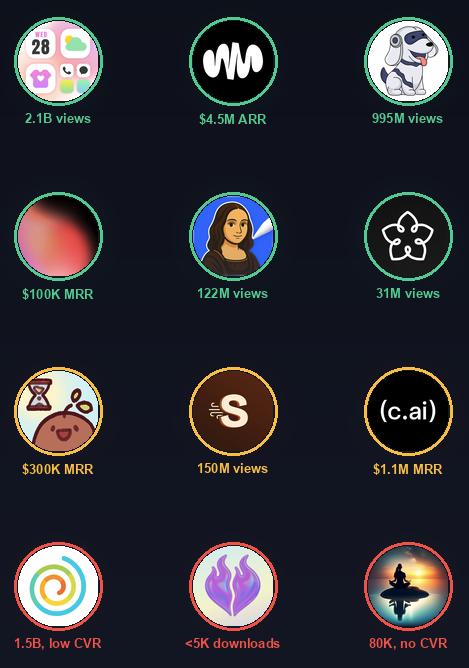
after studying 60+ apps and running 62 UGC campaigns that generated +2B views, the pattern is clear: the app that wins is almost never the most original one. it’s the one with better distribution.
let me show you.

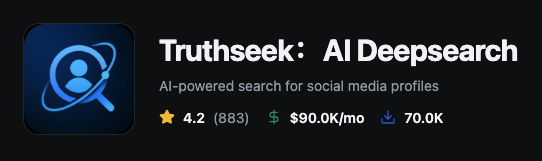
truthseek: $100K revenue in 22 days
truthseek is a people-search app. you type a name, it finds social profiles.
the idea isn’t new. deepsearch AI already pulls in over 1M downloads per month and $1M MRR doing the exact same thing.
truthseek didn’t innovate on the product. they innovated on distribution.
18 TikTok accounts. 30+ videos per day per account. one account posted 725 videos in a single week. 350 million views total.
the format is simple: emotional B-roll of someone crying in a car, paired with a cheating story, tied to “search a name and find out.” clips are constantly recycled. only the hook lines change.
the paywall hits at peak curiosity. you type the name, results load, subscription screen appears.
$100K in monthly revenue. 22 days after launch. same product as 5 other apps. different distribution.
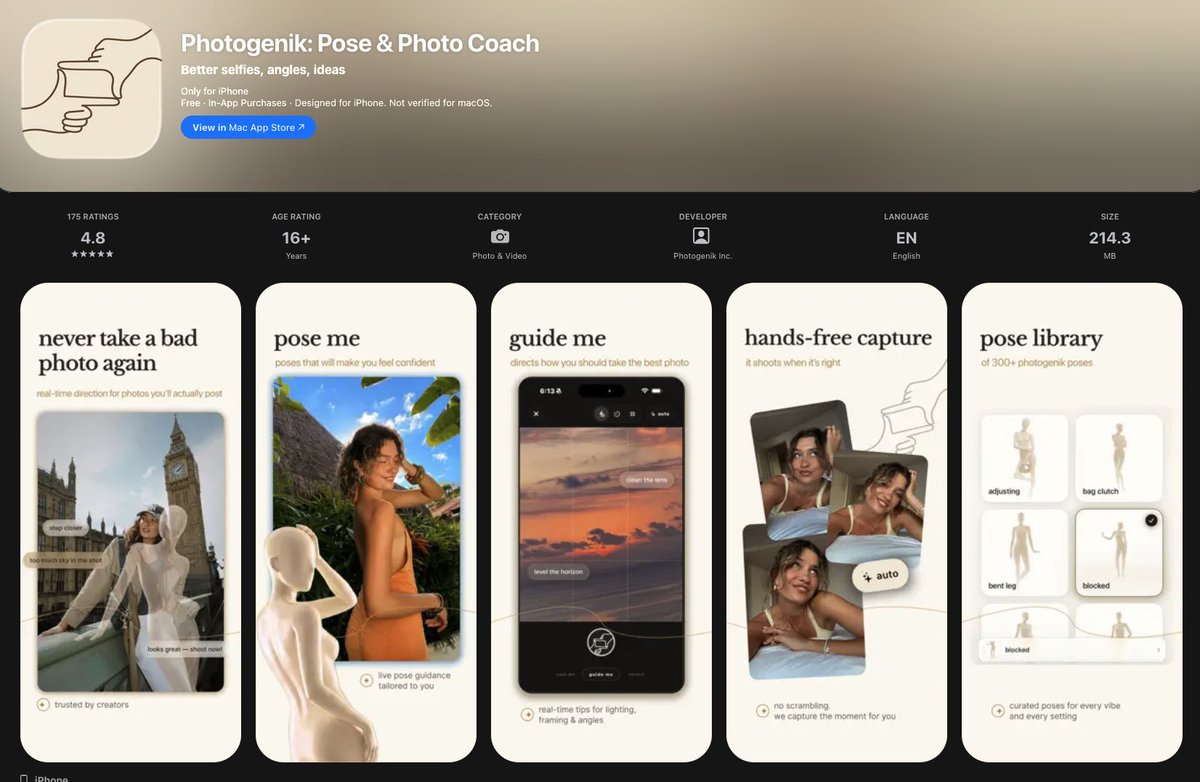
photogenik: 100K downloads in 19 days
photogenik is a pose-coaching app. helps you find better angles and selfies.
also not a new idea. dozens of pose apps exist.

but the founder, @nikiivictoria, had spent years teaching people how to pose on social media. 1.2 billion TikTok views. 1.6 billion Instagram views. her biggest video hit 41.6M views and 465K saves.
when she launched the app, it wasn’t a cold start. it was “the next step” for millions of people who already trusted her.
launch videos: 9M views. 7.4M views. 31M total in under 3 weeks.
100K downloads in 19 days. not because the app was better. because she had already built the audience.
this week’s viral hits
i track what’s working every week. here’s what went viral in the last 7 days:
roamy (travel app): 2.3M views. creator opens from an airplane, shows destination on app. the app IS where you save the trip.
fable (reading app): 5 posts over 100K views, best at 1.5M. creator turns “cracked the spine too much” into a relatable hook. the app is where you track books.
stronger (workout app): 1.5M views. faceless heatmap showing 41 workouts in 2022 to 313 in 2025. the progress IS the app’s interface.
creed (habit tracker): 652K views. romantic confession format. “help you keep your Creed streak” slipped into a list of relationship things.
erly (alarm app): 934K views. “my alarm won’t turn off till I do 10 squats.” the app IS the punchline.
none of these apps are original. travel planners, reading trackers, workout loggers, habit apps, alarm clocks. they all have hundreds of competitors.
but each one found a content format that makes the product inseparable from the video. and each one found the right creator to execute it.
that’s distribution.
the real problem
you get an idea, find competitors, get demotivated, quit.
but the data says the opposite of what most founders conclude.
competitors aren’t a death sentence. they’re proof of demand. the question isn’t “has someone built this?” it’s “can I distribute this better than they can?”
truthseek copied deepsearch and won with 18 accounts and insane volume. photogenik entered a crowded market and won because the founder WAS the distribution. every app in this week’s viral hits has dozens of competitors.
from our own 62 campaigns: the apps that grew fastest weren’t the most innovative. they were the ones where we found the right creator-product fit and the right content format. then we ran it at scale.
the product matters. but distribution decides who makes money.
what to do about it
if you’re building an app and competitors exist, ask these 3 questions instead of quitting:
the answer to “everyone is making the same app” isn’t “build something nobody’s built.”
it’s “build something you can distribute better than anyone else.”
that’s the only difference between a dead app and a profitable one.