STOP focusing on DHT & finasteride for male pattern baldness ("androgenetic alopecia").
Here's what doctors won't tell you... the REAL PROBLEM BEHIND PATTERN BALDNESS:

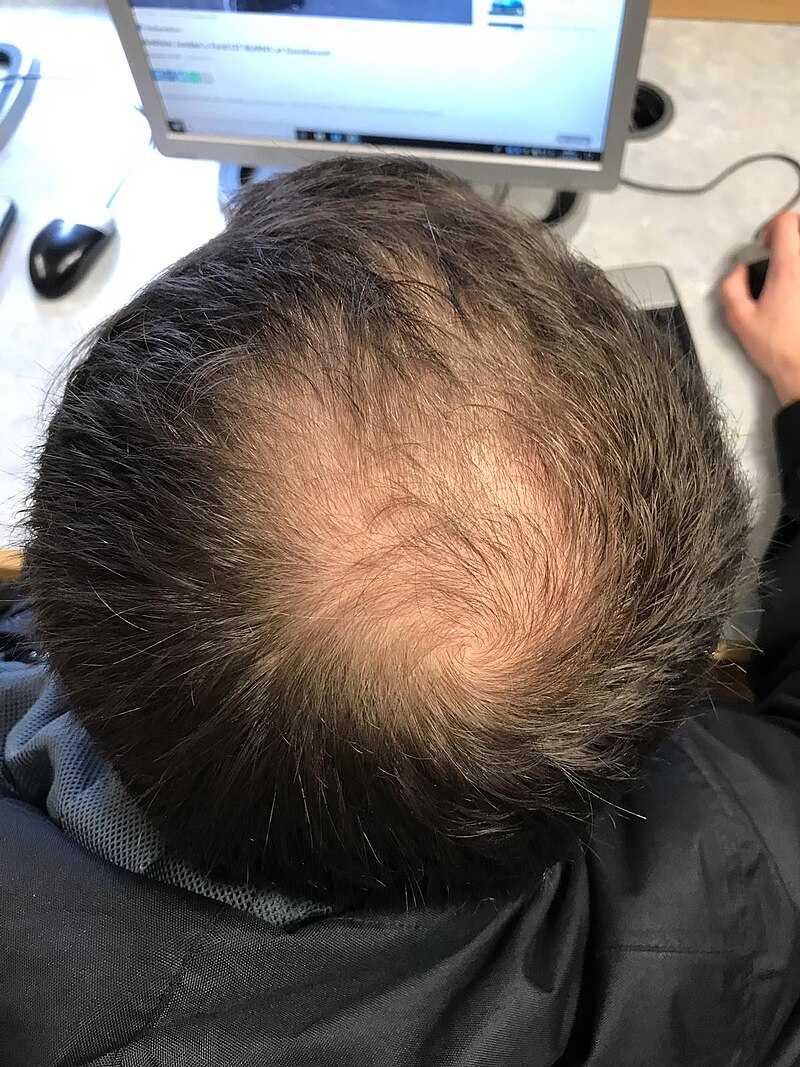
First off, I would like to say that:
I am NOT
1. bald or have ever been
2. claiming DHT is irrelevant
I AM
1. Claiming we should not FOCUS on lowering testosterone or DHT, and that androgens nor genetics are the TRUE ROOT CAUSE of MPB.
2. Claiming DHT is necessary for male pattern baldness, BUT NOT SUFFICIENT.
To give the androgen - genetic model its credit:
1. There is strong heritability of baldness
2. DHT is higher in balding scalp
3. Stopping DHT can help regrow hair
4. DHT can shrink hair follicles through the androgen receptor
5. Genetic variations in the androgen receptor can drive it
6. People with no androgens are immune from baldness
Seems like an open and shut case, but let's get into why blaming androgens is actually silly.
I am NOT
1. bald or have ever been
2. claiming DHT is irrelevant
I AM
1. Claiming we should not FOCUS on lowering testosterone or DHT, and that androgens nor genetics are the TRUE ROOT CAUSE of MPB.
2. Claiming DHT is necessary for male pattern baldness, BUT NOT SUFFICIENT.
To give the androgen - genetic model its credit:
1. There is strong heritability of baldness
2. DHT is higher in balding scalp
3. Stopping DHT can help regrow hair
4. DHT can shrink hair follicles through the androgen receptor
5. Genetic variations in the androgen receptor can drive it
6. People with no androgens are immune from baldness
Seems like an open and shut case, but let's get into why blaming androgens is actually silly.
Male pattern baldness increases with age.
This is important because:
1. It means it is potentially another age related disease, like Alzheimer's or cancer
2. Androgen production DECLINES as we get older
This is important because:
1. It means it is potentially another age related disease, like Alzheimer's or cancer
2. Androgen production DECLINES as we get older
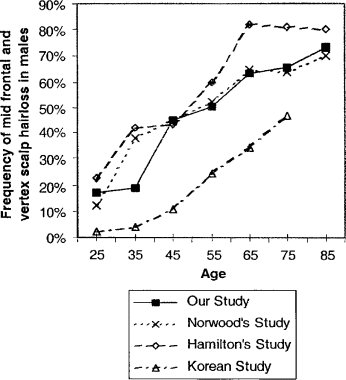
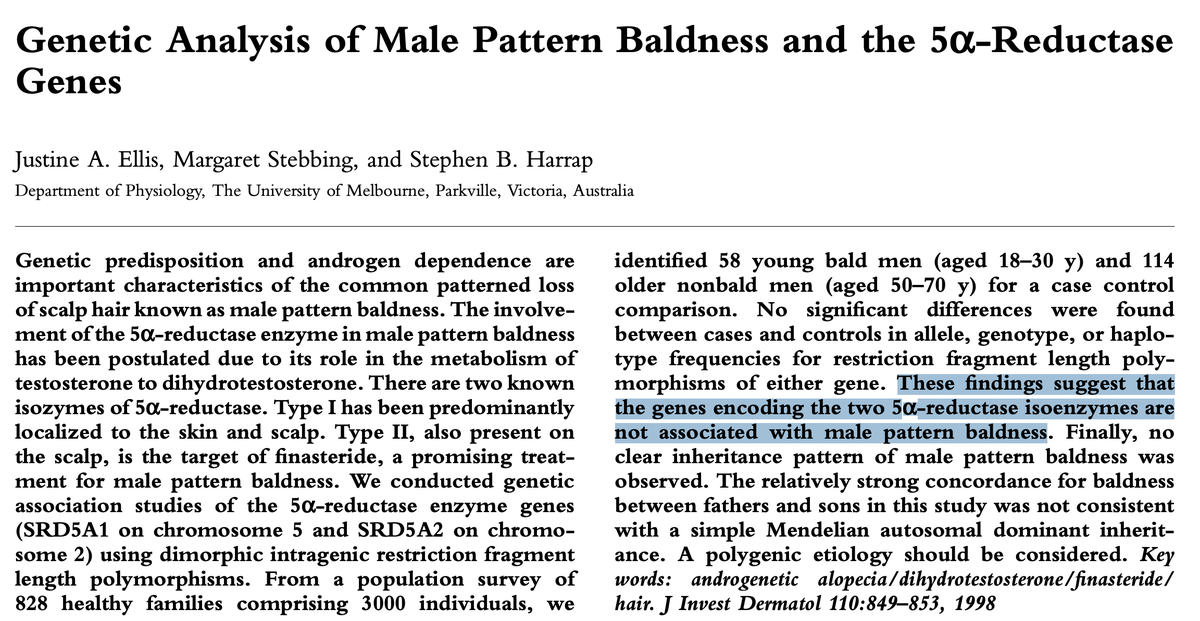
The enzyme that produces DHT, that finasteride inhibits, IS NOT genetically associated with baldness.
So, DHT might be higher in the balding scalp, but this is due to an environmental cause, not genes.
So, DHT might be higher in the balding scalp, but this is due to an environmental cause, not genes.
Finasteride, the drug that lowers DHT for hair loss, is not very effective.
For every person to see results, around 3-6 people need to be given the drug, meaning the majority of those given finasteride DO NOT BENEFIT.
For every person to see results, around 3-6 people need to be given the drug, meaning the majority of those given finasteride DO NOT BENEFIT.

If DHT is the main problem, why does crushing DHT barely work?
"after 5 years of faithful [finasteride] use, those threatened with baldness can expect somewhat more than a 10% improvement over what they would have experienced without any treatment."
"after 5 years of faithful [finasteride] use, those threatened with baldness can expect somewhat more than a 10% improvement over what they would have experienced without any treatment."

Hair loss is also mainly an issue of civilization.
In 1899, Dr J. Blaine stated…
“The bald head can only be found among enlightened nations, and it must therefore be caused by following the arts and customs of civilisation … Trace the genealogy of a bald head back through a few centuries and it will be found that the progenitors of our race had hair in abundance”
Hard to argue genetics, then.
In 1899, Dr J. Blaine stated…
“The bald head can only be found among enlightened nations, and it must therefore be caused by following the arts and customs of civilisation … Trace the genealogy of a bald head back through a few centuries and it will be found that the progenitors of our race had hair in abundance”
Hard to argue genetics, then.

Hair loss is also becoming MORE PREVALENT, especially among younger people.
Recent studies have stated that the prevalence of male pattern baldness may have DOUBLED in the last decade.
If its prevalence is changing rapidly with time, it cannot be mainly genetic.
Recent studies have stated that the prevalence of male pattern baldness may have DOUBLED in the last decade.
If its prevalence is changing rapidly with time, it cannot be mainly genetic.

People with male pattern baldness are less healthy across the board.
There is a 5X increased likelihood of insulin resistance in those with baldness,
and an elevated risk of heart disease.
It is clear that people who have MPB are simply unhealthy systemically.
There is a 5X increased likelihood of insulin resistance in those with baldness,
and an elevated risk of heart disease.
It is clear that people who have MPB are simply unhealthy systemically.

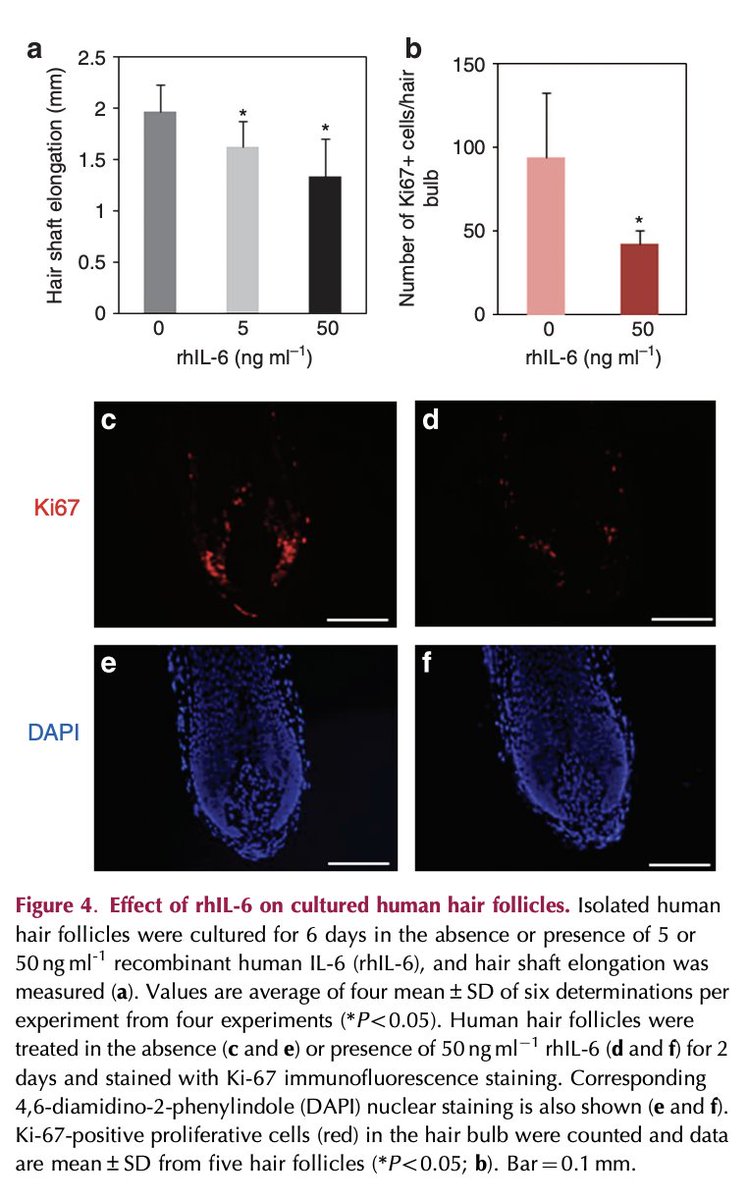
DHT can shrink the hair follicles, but mainly by stimulating inflammation.
This is the key point.
DHT works by increasing the levels of other proteins, and these mediators drive hair loss, not DHT directly.
This is the key point.
DHT works by increasing the levels of other proteins, and these mediators drive hair loss, not DHT directly.

Inflammation can stimulate the formation of DHT in the scalp.
Through increasing 5 alpha reductase.
This is probably why DHT is high in the balding scalp, not because of genetics.
(NF-KB is the master inflammation regulator in cells)
Through increasing 5 alpha reductase.
This is probably why DHT is high in the balding scalp, not because of genetics.
(NF-KB is the master inflammation regulator in cells)

But the increase in DHT might be a protective, adaptive response.
DHT in the scalp can lower key inflammatory mediators, like COX-2 and NF-KB.
DHT in the scalp can lower key inflammatory mediators, like COX-2 and NF-KB.

Balding scalp cells produce more inflammatory / balding mediators in response to DHT.
It is these mediators that actually drive the hair loss.
It is these mediators that actually drive the hair loss.

Anti-inflammatory remedies can treat male pattern baldness.
For example, antihistamines have shown great promise for hair growth.
For example, antihistamines have shown great promise for hair growth.

I've written more about histamine and what drives its release here, as a systemic inflammatory mediator:
View Tweet
Lowering inflammation regenerates hair.
DHT can increase the inflammatory mediator inducible nitric oxide synthase (iNOS),
but lowering nitric oxide without touching DHT regrows hair.
DHT can increase the inflammatory mediator inducible nitric oxide synthase (iNOS),
but lowering nitric oxide without touching DHT regrows hair.

I've also written about how nitric oxide is an anti-metabolic, inflammatory mediator here (and what drives its elevation):
View Tweet
Another example is how stopping prostaglandins can increase hair growth.
DHT can increase prostaglandins, but they are primarily increased under circumstances of inflammation.
Prostaglandins are also direct products of excess polyunsaturated fat (seed oils).
DHT can increase prostaglandins, but they are primarily increased under circumstances of inflammation.
Prostaglandins are also direct products of excess polyunsaturated fat (seed oils).

People with male pattern baldness have higher pathogenic microbes in the scalp, which drive inflammation.
especially Malassezia, a yeast that can directly cause hair loss by inducing inflammation and oxidative stress near hair follicles.
especially Malassezia, a yeast that can directly cause hair loss by inducing inflammation and oxidative stress near hair follicles.

OXIDATIVE STRESS is what makes DHT harmful.
DHT can increase the levels of hair loss mediators (like TGF-B), but only under conditions of high oxidative stress.
This is vital to understand.
DHT can increase the levels of hair loss mediators (like TGF-B), but only under conditions of high oxidative stress.
This is vital to understand.

Generated by Thread Navigator
Press ⌘ + S to quick-export
auto_awesome
Image exported!
Pro export renders embedded tweets & media at 2x Retina resolution.
Upgrade — $5 for 30 days