High cortisol, anxiety, and can’t sleep? This is for you.
This is the ULTIMATE GUIDE to STRESS - the signs, the biological mechanisms and what to do about it:


There are TONS of symptoms that you might not have realized are from stress.
1. Can’t fall asleep
2. Waking up in the night to pee
3. Waking up in the night for no reason
4. Nightmares / sleep paralysis
5. Foamy urine
6. Hair loss
7. Hair graying
8. Gain weight easily
9. Gaining weight in the abdomen (visceral fat)
10. Low appetite
11. Cold extremities (fingertips, nose, toes, ears)
12. Menstrual cramps
13. Irregular menstruation or premenstrual syndrome
14. Irritability
15. Anger or aggression
16. Twitching
17. Headaches
18. Itchiness
19. Jitters
20. Anxiety / fear
21. Lack of confidence
22. Insatiable appetite or sweet cravings
23. Trouble catching your breath or breathing heavily
24. Pounding heart
25. Constipation
26. Nausea
27. Diarrhea
28. Gut pain
29. Acid reflux
30. Frequent urination
1. Can’t fall asleep
2. Waking up in the night to pee
3. Waking up in the night for no reason
4. Nightmares / sleep paralysis
5. Foamy urine
6. Hair loss
7. Hair graying
8. Gain weight easily
9. Gaining weight in the abdomen (visceral fat)
10. Low appetite
11. Cold extremities (fingertips, nose, toes, ears)
12. Menstrual cramps
13. Irregular menstruation or premenstrual syndrome
14. Irritability
15. Anger or aggression
16. Twitching
17. Headaches
18. Itchiness
19. Jitters
20. Anxiety / fear
21. Lack of confidence
22. Insatiable appetite or sweet cravings
23. Trouble catching your breath or breathing heavily
24. Pounding heart
25. Constipation
26. Nausea
27. Diarrhea
28. Gut pain
29. Acid reflux
30. Frequent urination
One of the simplest test for stress is the heartbeat / blood pressure.
Feel your pulse - if it feels like there’s pressure / pounding, good sign your body is under stress.
The pupil test is another easy way to tell (linked below)
Feel your pulse - if it feels like there’s pressure / pounding, good sign your body is under stress.
The pupil test is another easy way to tell (linked below)
View Tweet

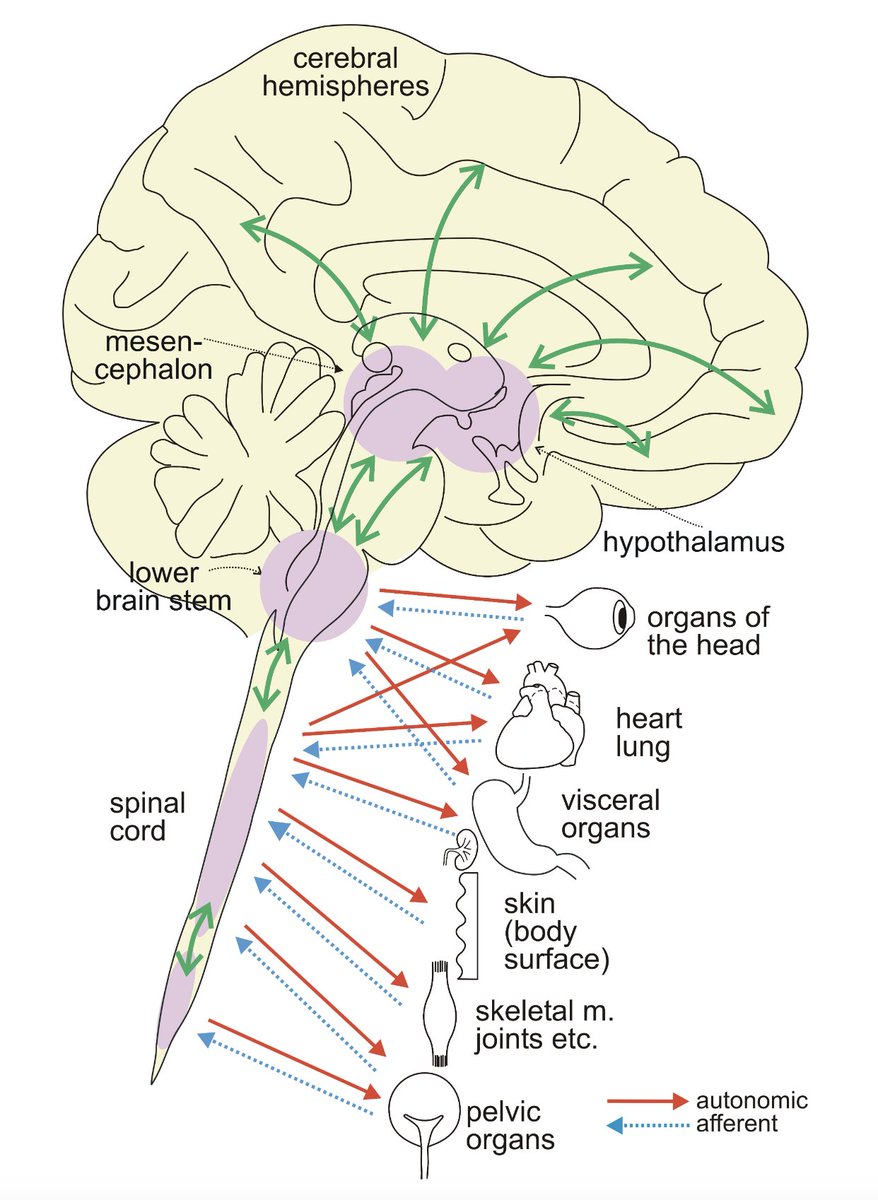
The body’s stress system:
EVERYTHING originates in the brain - this is what allows us to perceive stress and mount a physiological response.
The amygdala in the brain is where a lot of this perception happens,
And the hypothalamus is the control center - coordinating the stress to other parts of the body.
The hypothalamus:
→ Stimulates the pituitary (with a hormone called CRH), which then sends another hormone (ACTH) to the adrenal cortex to produce CORTISOL (among other hormones). This is known as the hypothalamus-pituitary-adrenal (HPA) axis, the primary stress system in the body.
→ Transmits signals to the brain stem and then to the spinal cord - which sends nerve fibers throughout the body
→ Some of these fibers connect to the adrenal medulla, which secretes adrenaline and noradrenaline
There are tons of other stress hormones and signals, which we will get into, but ultimately they all work by or as a result of these core systems.
It is perfectly designed to respond to external threats, where you SHOULD be stressed,
But that’s not what we’re focused on. We are talking about excessive, chronic, inappropriate and/or overactive stress responses.
How can we live calmly while not becoming numb to things that necessitate stress?
EVERYTHING originates in the brain - this is what allows us to perceive stress and mount a physiological response.
The amygdala in the brain is where a lot of this perception happens,
And the hypothalamus is the control center - coordinating the stress to other parts of the body.
The hypothalamus:
→ Stimulates the pituitary (with a hormone called CRH), which then sends another hormone (ACTH) to the adrenal cortex to produce CORTISOL (among other hormones). This is known as the hypothalamus-pituitary-adrenal (HPA) axis, the primary stress system in the body.
→ Transmits signals to the brain stem and then to the spinal cord - which sends nerve fibers throughout the body
→ Some of these fibers connect to the adrenal medulla, which secretes adrenaline and noradrenaline
There are tons of other stress hormones and signals, which we will get into, but ultimately they all work by or as a result of these core systems.
It is perfectly designed to respond to external threats, where you SHOULD be stressed,
But that’s not what we’re focused on. We are talking about excessive, chronic, inappropriate and/or overactive stress responses.
How can we live calmly while not becoming numb to things that necessitate stress?

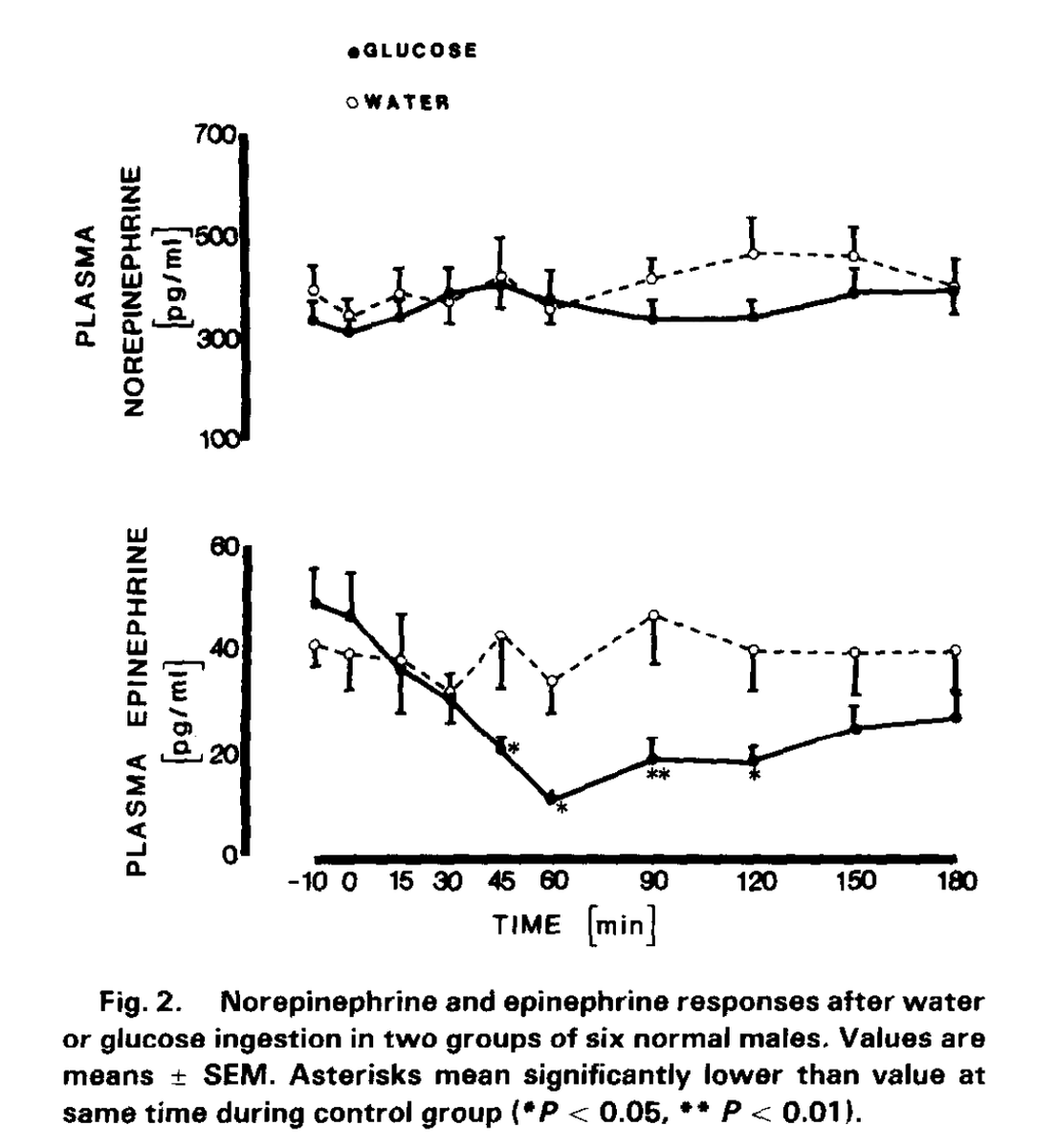
A lack of glucose (carbohydrate) drives the stress response.
The brain’s hypothalamus has cells that increase CRH in response to low glucose levels, which activates:
1. HPA axis (cortisol)
2. Sympathetic nervous system (adrenaline)
Both of which stimulate the hormone glucagon as well.
These hormones stimulate our body’s creation of glucose.
This is why eating carbohydrate or sugar acutely lowers the stress cascade,
and restriction of carbs promotes it.
The brain’s hypothalamus has cells that increase CRH in response to low glucose levels, which activates:
1. HPA axis (cortisol)
2. Sympathetic nervous system (adrenaline)
Both of which stimulate the hormone glucagon as well.
These hormones stimulate our body’s creation of glucose.
This is why eating carbohydrate or sugar acutely lowers the stress cascade,
and restriction of carbs promotes it.


Calorie restriction is another stressor.
There is a reason people “stress eat” - the stress systems are there to serve as backup when there’s not enough food.
This doesn’t mean stuffing your face, it just means not intentionally restricting food intake.
There is a reason people “stress eat” - the stress systems are there to serve as backup when there’s not enough food.
This doesn’t mean stuffing your face, it just means not intentionally restricting food intake.

Other nutrients are also key for lowering stress.
Vitamin C drastically lowers cortisol.
1,000 mg / day drops it by >35% after 2 months.
Vitamin C is released by the adrenal glands and becomes depleted during stress.
More on vitamin C linked below:
Vitamin C drastically lowers cortisol.
1,000 mg / day drops it by >35% after 2 months.
Vitamin C is released by the adrenal glands and becomes depleted during stress.
More on vitamin C linked below:
View Tweet

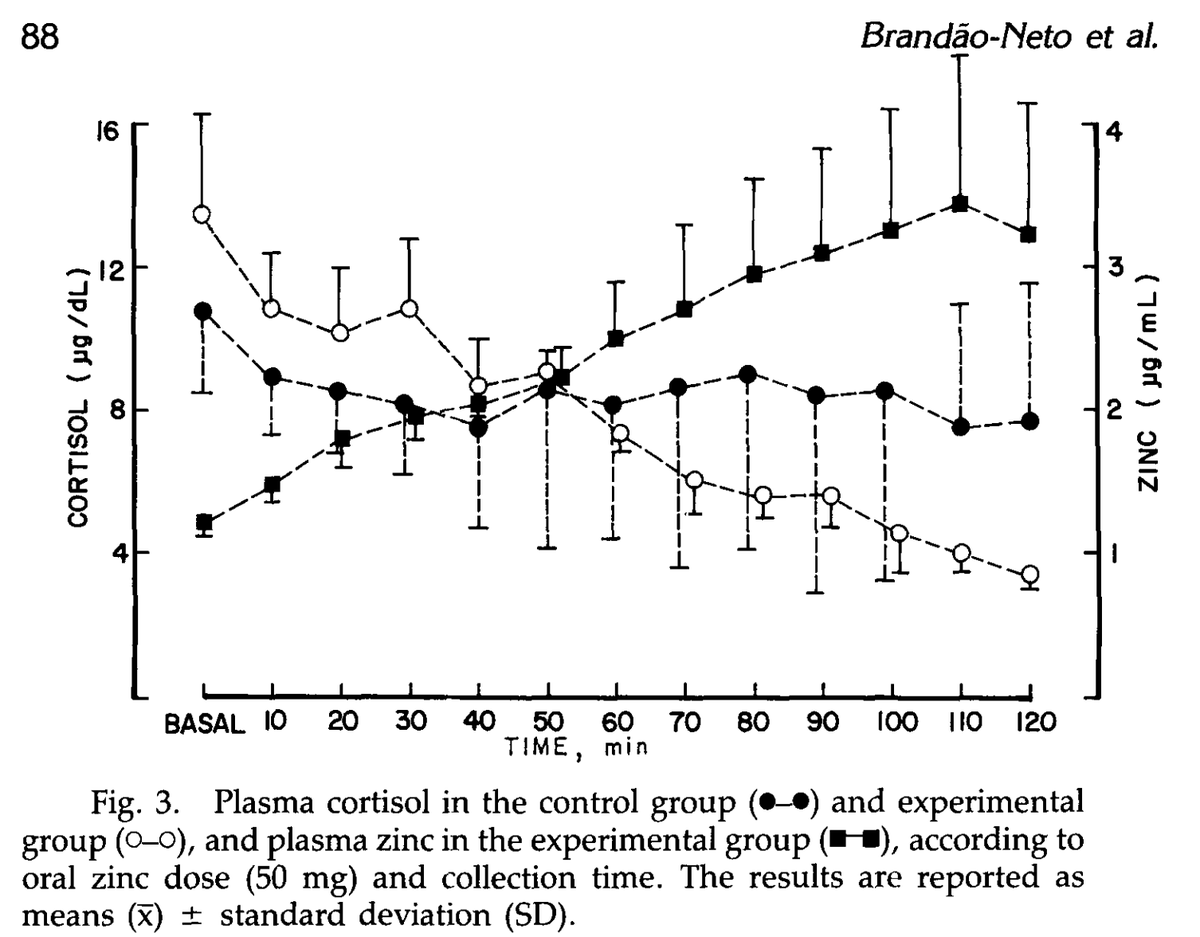
Zinc dramatically lowers cortisol.
A 50 mg zinc dose suppressed the stress hormone by around 70% here.
While the HPA axis, which produces cortisol, depletes zinc, adding it back in markedly lowers this stress system.
More reading on zinc linked below:
A 50 mg zinc dose suppressed the stress hormone by around 70% here.
While the HPA axis, which produces cortisol, depletes zinc, adding it back in markedly lowers this stress system.
More reading on zinc linked below:
View Tweet
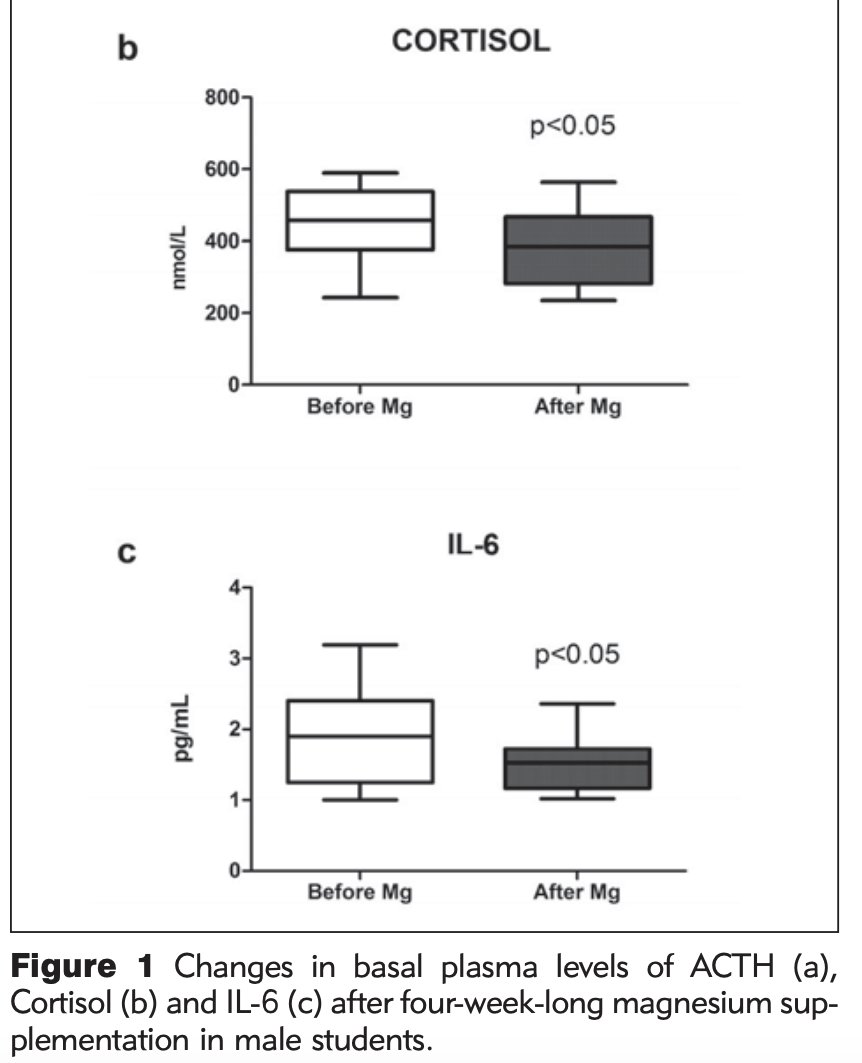
Magnesium powerfully lowers lowers cortisol + IL-6 (inflammation).
It acts as a calming mineral in the nervous system + brain.
Stress also depletes magnesium, creating a vicious cycle.
I've written a ton on magnesium linked below.
It acts as a calming mineral in the nervous system + brain.
Stress also depletes magnesium, creating a vicious cycle.
I've written a ton on magnesium linked below.
View Tweet
Vitamin E reduces stress.
200 IU/day markedly improves blood pressure, which is governed by stress hormones.
I've written tons about vitamin E linked below:
200 IU/day markedly improves blood pressure, which is governed by stress hormones.
I've written tons about vitamin E linked below:
View Tweet

Vitamin D is also a potent anti-stress nutrient.
2,000 IU lowered cortisol by 40% here.
Inflammation acts directly on the brain and adrenals to drive stress.
These nutrients all help to lower inflammation.
I've written a ton on vitamin D linked below:
2,000 IU lowered cortisol by 40% here.
Inflammation acts directly on the brain and adrenals to drive stress.
These nutrients all help to lower inflammation.
I've written a ton on vitamin D linked below:
View Tweet

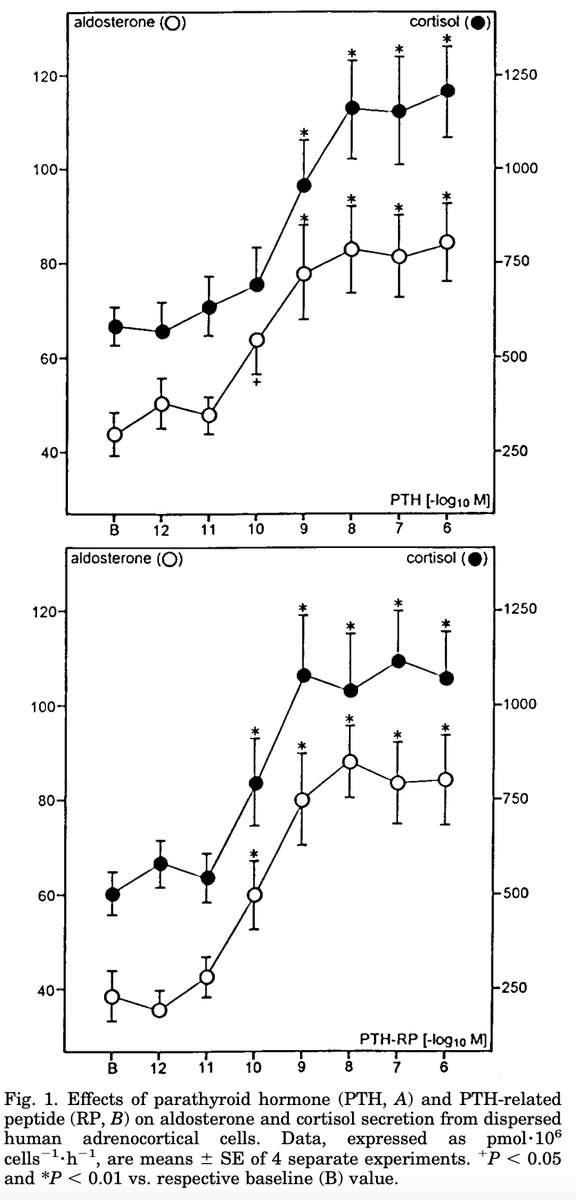
Another stress hormone is parathyroid hormone.
It increases with low dietary calcium and vitamin D.
High PTH can lead to high calcium in the blood, which can be very stressful and even toxic to the nervous system.
PTH increases other adrenal hormones, like cortisol.
It increases with low dietary calcium and vitamin D.
High PTH can lead to high calcium in the blood, which can be very stressful and even toxic to the nervous system.
PTH increases other adrenal hormones, like cortisol.
Restricting salt intake activates stress systems, too.
This stress is called the renin-angiotensin-aldosterone system.
The purpose of this system is to retain sodium,
increasing the excretion of potassium and activating the stress systems of the nervous system.
This stress is called the renin-angiotensin-aldosterone system.
The purpose of this system is to retain sodium,
increasing the excretion of potassium and activating the stress systems of the nervous system.

High salt diets are powerfully anti-stress.
1,150 milligrams vs 5175 mg of sodium, the higher salt amount cuts adrenaline in half.
I’ve written in depth on the benefits of adequate salt for stress here:
1,150 milligrams vs 5175 mg of sodium, the higher salt amount cuts adrenaline in half.
I’ve written in depth on the benefits of adequate salt for stress here:
View Tweet

Lifestyle is another foundation of stress reduction.
Expose your eyes to BRIGHT light. This lowers cortisol throughout the day.
Dim light causes it to stay elevated.
Have written more on bright light here:
Expose your eyes to BRIGHT light. This lowers cortisol throughout the day.
Dim light causes it to stay elevated.
Have written more on bright light here:
View Tweet
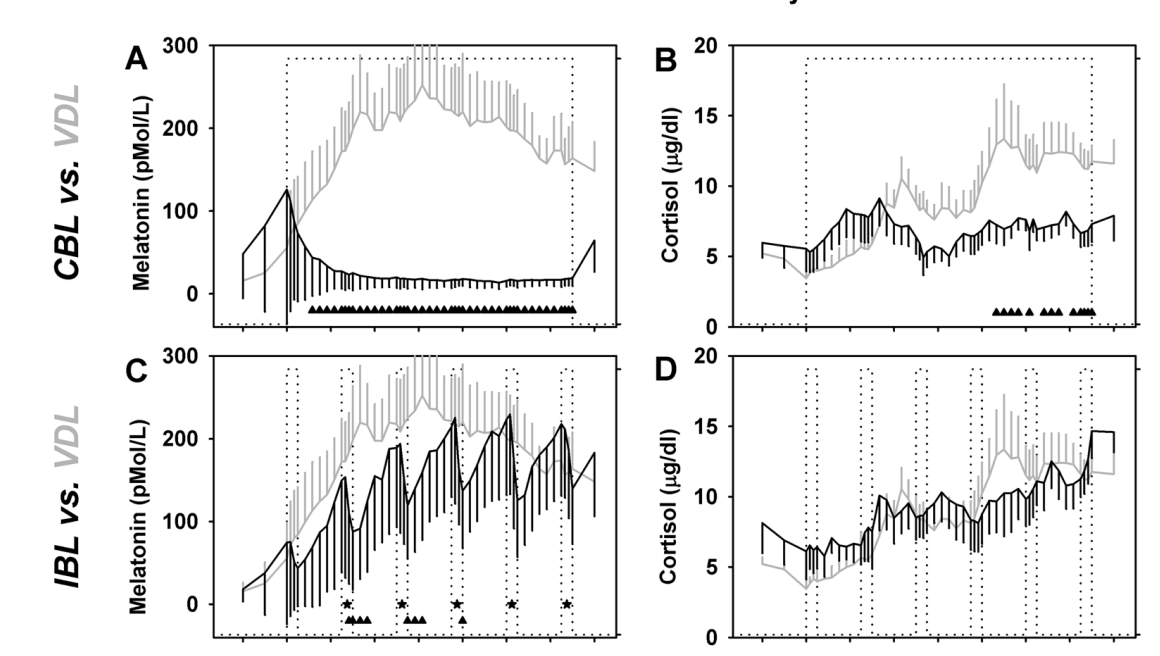
Sunlight in general is important.
The UV light hitting your eyes causes the brain to secrete a hormone called αMSH,
Which has anti inflammatory effects that stop the excessive activation of the HPA axis.
Sunlight has also been shown to help lower blood pressure.
The UV light hitting your eyes causes the brain to secrete a hormone called αMSH,
Which has anti inflammatory effects that stop the excessive activation of the HPA axis.
Sunlight has also been shown to help lower blood pressure.

Another important lifestyle factor for reducing stress is GROUNDING.
Grounding:
• Calms the sympathetic nervous system • Lowers inflammation • Lowers blood pressure • Lowers cortisol •
I’ve written a ton on grounding here:
Grounding:
• Calms the sympathetic nervous system • Lowers inflammation • Lowers blood pressure • Lowers cortisol •
I’ve written a ton on grounding here:
View Tweet
The way you breathe governs your stress levels, too.
Diaphragmatic breathing can dampen the sympathetic nervous system, while “chest” breathing stimulates it.
More on that here:
Diaphragmatic breathing can dampen the sympathetic nervous system, while “chest” breathing stimulates it.
More on that here:
View Tweet
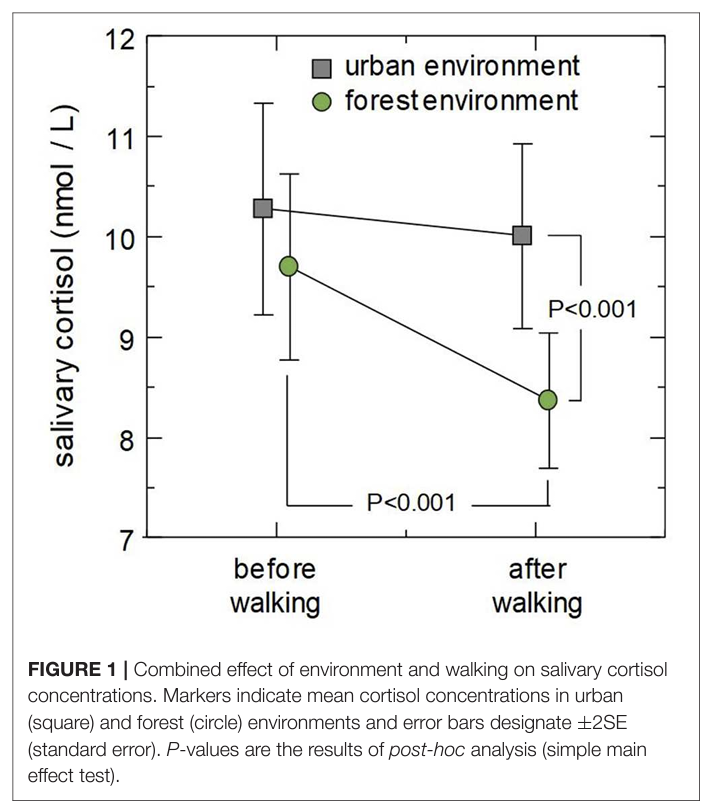
Simply being in nature is a great way to lower cortisol.
Very underrated aspect of it all, as it is easy to get caught up in the biochemistry.
Very underrated aspect of it all, as it is easy to get caught up in the biochemistry.
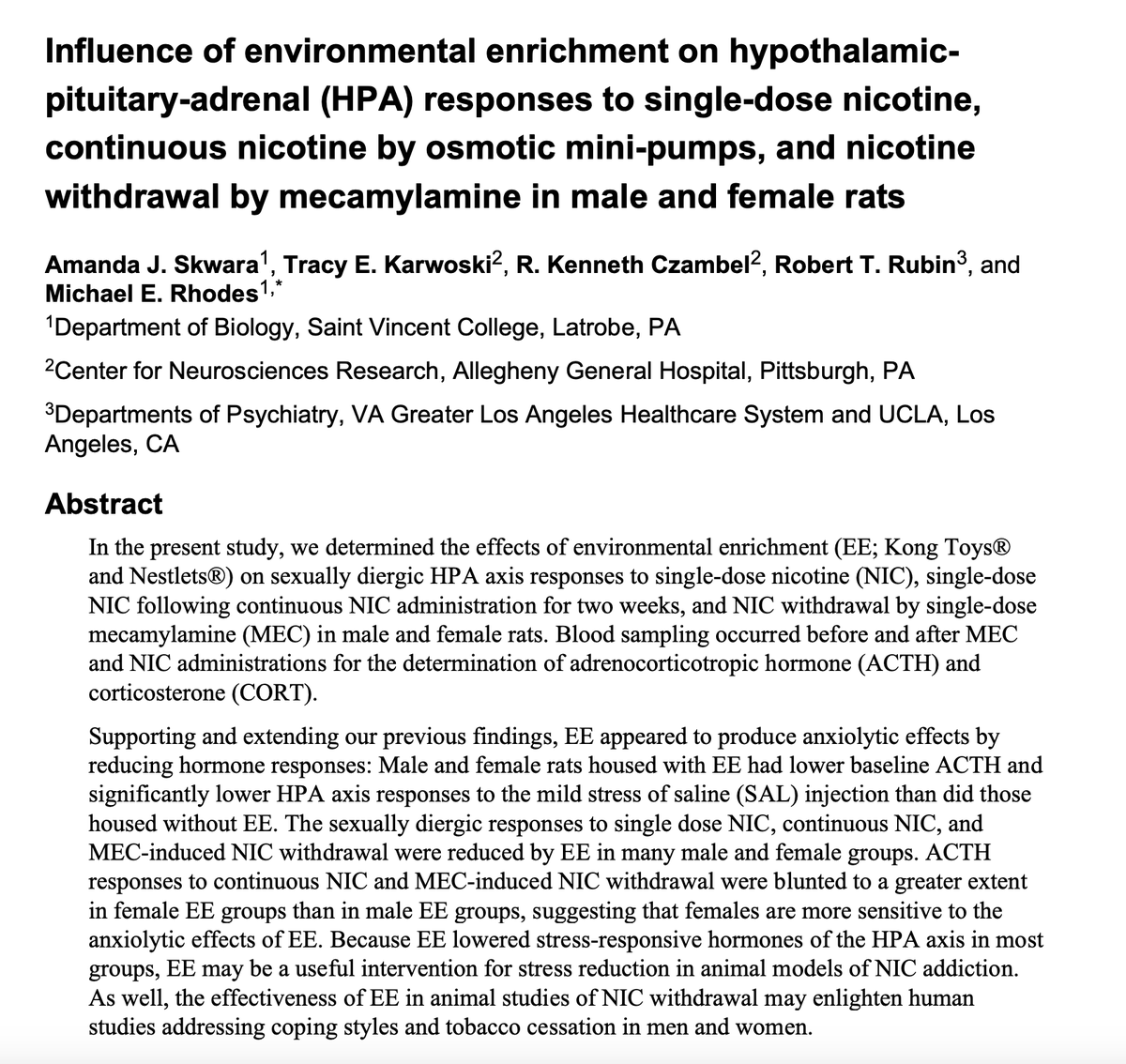
Your environment is a major dictator of your stress levels.
Taking animals from their bleak cages into an open environment with toys and such results in lower stress hormones.
If your day to day life is boring and lacks stimulation, you’re probably going to be stressed.
Taking animals from their bleak cages into an open environment with toys and such results in lower stress hormones.
If your day to day life is boring and lacks stimulation, you’re probably going to be stressed.
Generated by Thread Navigator
Press ⌘ + S to quick-export
auto_awesome
Image exported!
Pro export renders embedded tweets & media at 2x Retina resolution.
Upgrade — $5 for 30 days