Thread Truncated (Cap Enforced)
Only the first 20 tweets are unrolled into slides to ensure reliable PDF exporting and high server performance.
Canvas & Ratio
Choose your destination platform format
Layout Template
Choose a content structure for your slides
Preset Themes
Typography & Sizing
Brand Kit Customization
AGENCYConfigure brand assets for headers & footers
Outro Slide CTA
Customize your closing call-to-action slide
Background Pattern
Build Your Carousel
Drag and drop any post card below onto a slide, or use the quick buttons to insert content/images instantly!

an inquisitive treatise on jjk's political nature 🧵 critical analysis of gege's critique of extremism, anti-convertatism, and how an aristocracy + gerontocracy driven society slowly turned into a kratocracy.

i. preface ii. structure & order iii. the economy of ct iv. ideological fault lines v. extremism vi. sovereignty and stability vii. the collapse of jujutsu society viii. culling games as a hobbesian state of nature ix. hereditary logic x. aristocracy to kratocracy xi. end

i. in terms of profound details hidden beneath the depths of an anime narrative, submerged under a deep lens of media literacy and analytical undercurrent, jjk holds a prestigious title in this vein. ranging from politics, theology, and general philosophy, theres much to unpack.

it doesn't perplex the average reader that jujutsu society is heavily reliant on power and traditionalist conservatism. factors like legitimacy, violence, and institutional decay contribute to this greed. this leads us to seek meaning and what find what gege implies narratively
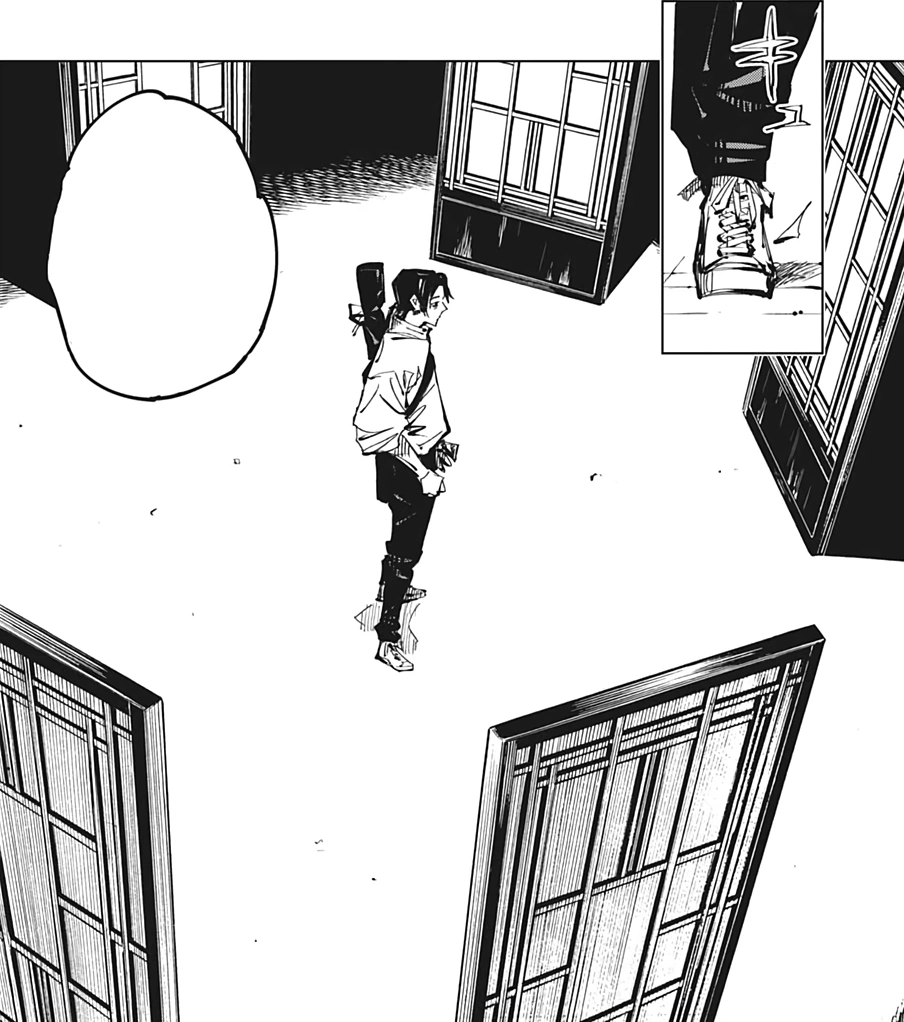
in this essay, i will explore several political aspects of jjk, including the meritocracy (rule by talented) and gerontocracy (rule by elderly) of jjk, as well as how it led to a disorderly kratocracy (rule by strongest) following extermination of jujutsu hq and the zenin clan

ii. how does jjk function? we must begin with this question, jujutsu society is fundamentally ruled by meritocractic and gerontocractic rule, jujutsu hq is described to be "older" men, similar to gakuganji. we eventually learn that this structure is extremely rigid and hollow.

clan structure is important too, the clan system is inherited aristocracy and feudal rule, making society radically conservative this conservatism is very detrimental, as it is something MANY characters we see are affected by, not only is it unfair, it values power over people
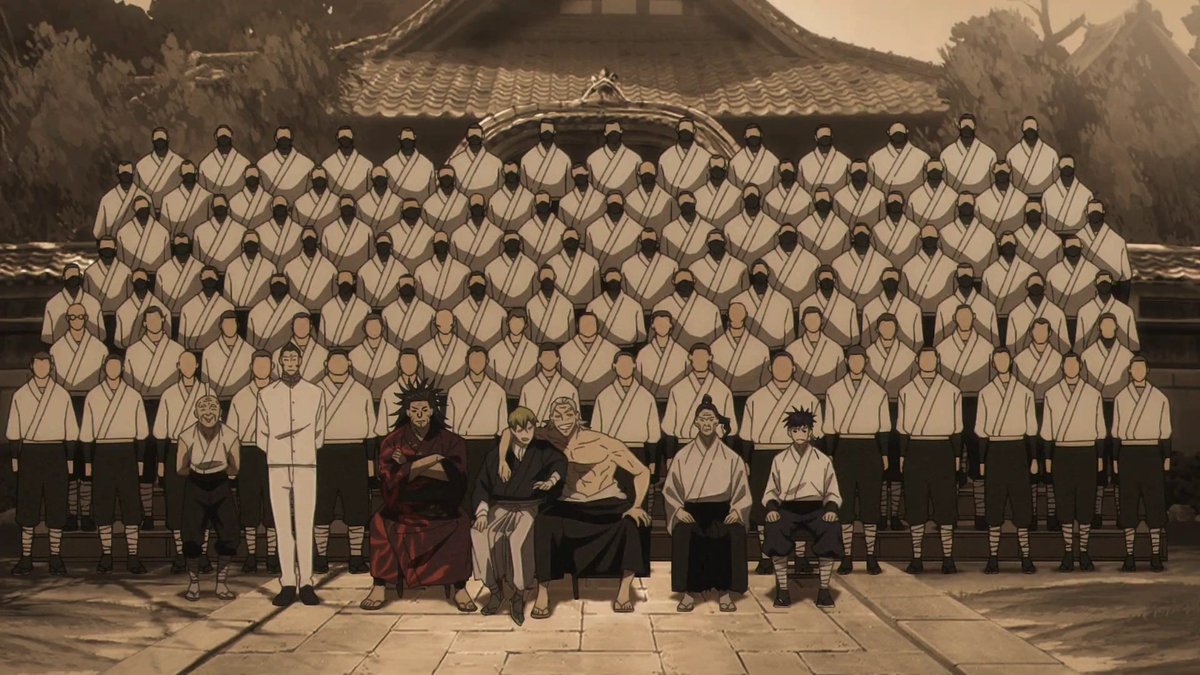
this ties directly into cursed techniques, as cursed techniques are treated as inherited capital and concentrating power within bloodlines such as the gojo, zenin, and kamo families. in this logic, biological inheritance determines one’s proximity to political and social power.

later on, we learn that certain cursed techniques are valued for how "traditional" they are, with higher-ups valuing ones they are familiar with rather than complex & overpowered ones (this is why nobara is valued highly to jujutsu hq) the higher-ups dislike unpredictability.

this logic is a contributor to why characters such as hakari, kirara, and yuki went on their own routes with an anti-conservative mindset, due to their unpredictable cursed techniques, they were viewed as enemies by higher-ups this is the reason why hakari started his fight club
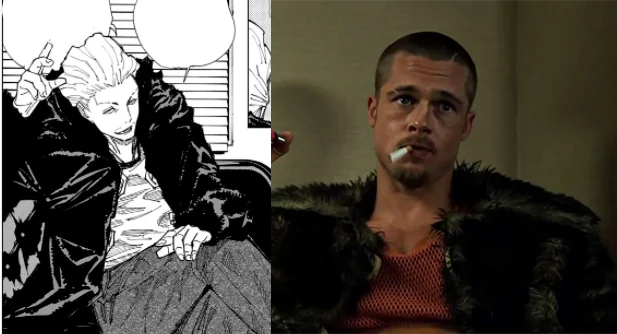
iii. due to the "inhereted curse technique" dilemma, it started to become an economy source due to political potential. ct's become commodified, and sorcerers function as assets embedded in a political economy of violence, where their abilities are evaluated for example, megumi
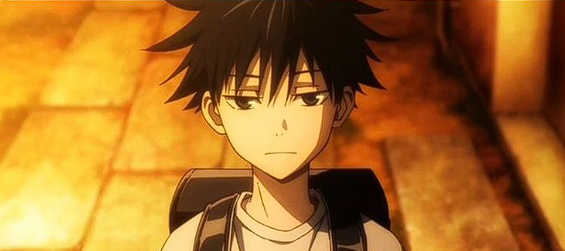
jujutsu hq reinforces this economy by formalizing sorcerer rank converting metaphysical ability into bureaucratic classification. even nominally meritocratic figures like gojo or yaga operate within and against this structure, exposing the tension between skill and inheritance

cursed energy becomes the currency through which both domination and survival are negotiated, binding metaphysical ability to a deeply stratified system of social reproduction. we see the system reward bad people like mei mei in terms of capitalistic greed sorcerers = assets

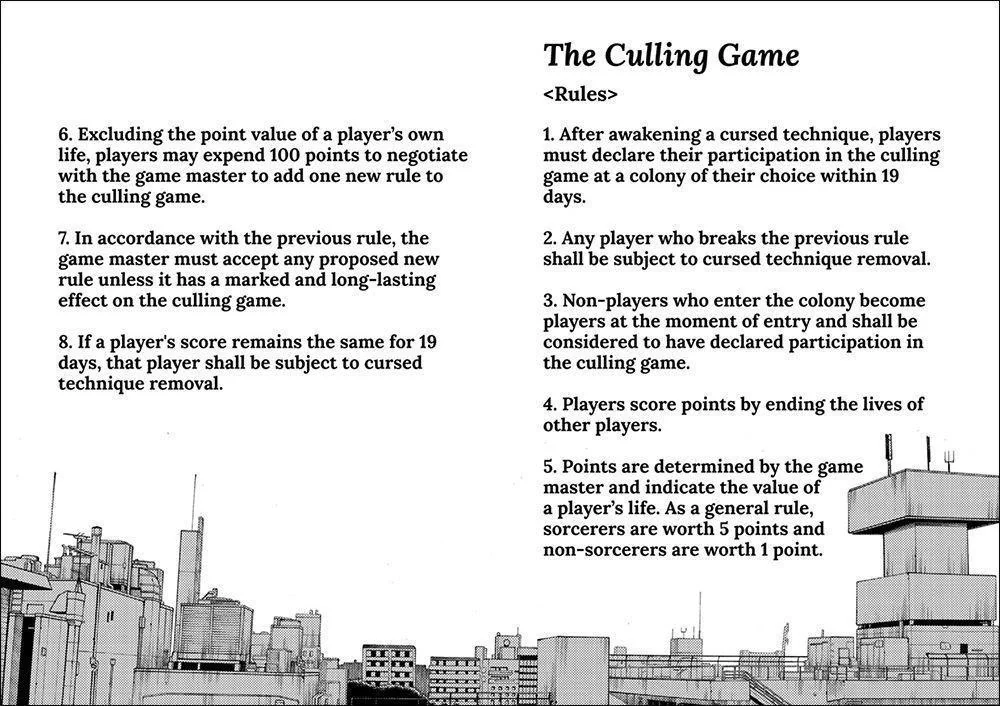
this commodification formalizes within kenjaku's culling game, where the introduction of a points system explicitly quantifies sorcerers and curses as units of exchange, this system directly links your strength (cursed technique) to your points (worth) as a commodified asset.
iv. i will begin to discuss ideology by individual characters rather than the systems themselves characters such as maki and gojo have anti-conserative mentalities, these arent the only characters with it, but they're the important since they directly destroy the structures

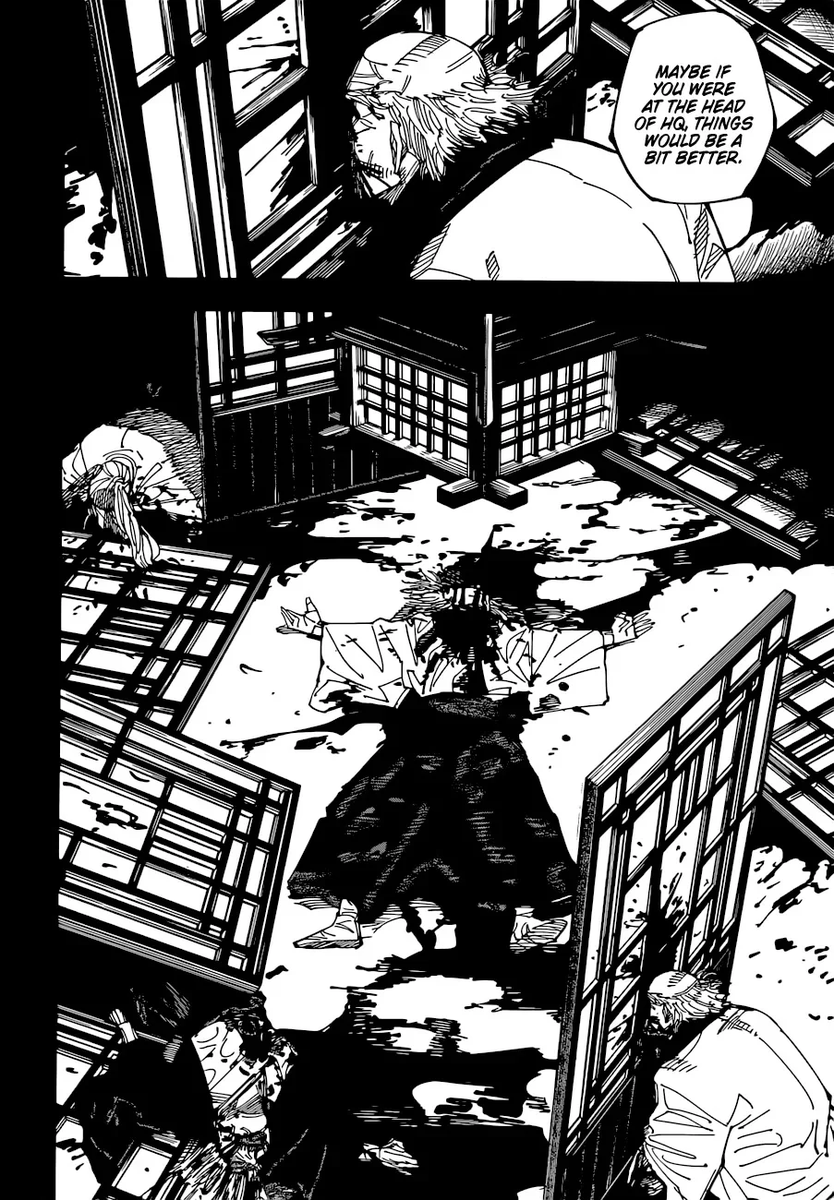
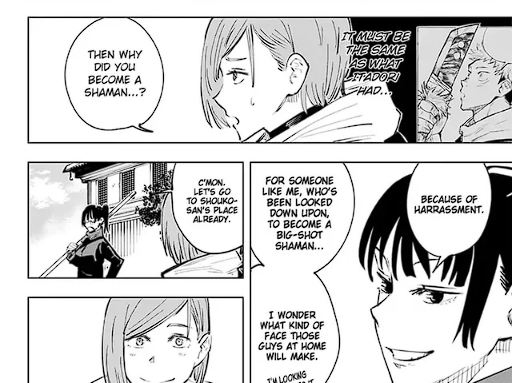
we see maki talk about how she wants to prove how shes better than her rigid clan, a goal she ultimately achieves. and we constantly are shown gojo saying how he wants to "fix" jujutsu society, fostering a new generation of indepedent allies. he is seen scorning gakuganji often

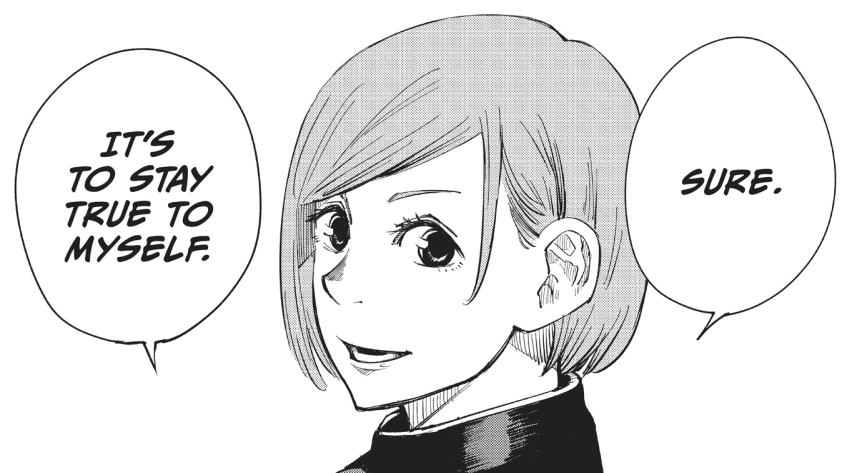
other characters worth noting with anti-conservative mindsets are megumi and nobara these two characters with very traditional cursed techniques, these two are actually known to "rebel" against jujutsu's standards, particularly nobara resisting societies roles.
gakuganji is actually an example of irony when it comes to his cursed technique, as its not actually traditional, he uses an electric guitar. metal culture is defined by its opposition to traditional societal norms, authority, and conventionality. which attracts outsiders.
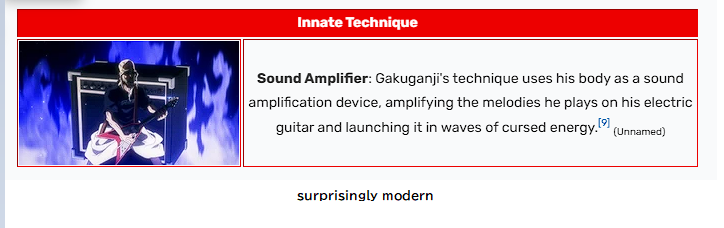
this + panda caling gakuganji a "fallen knife" shows that gakuganji is truly just a cog in the political system, who has anti-conservative roots, but fits into the hq's gerontocracy due to arrogance and personal factors.

v. when speaking on ideology in jjk, we must consider the most politically loaded character, suguru. geto becomes extremist as a distorted byproduct of a system already structured by violence, hierarchy, and hereditary exclusion, functioning as a catalyst for his ideology.
