
12 months ago a copycat website launched with a near-identical domain to one of our clients, EssayGrader.
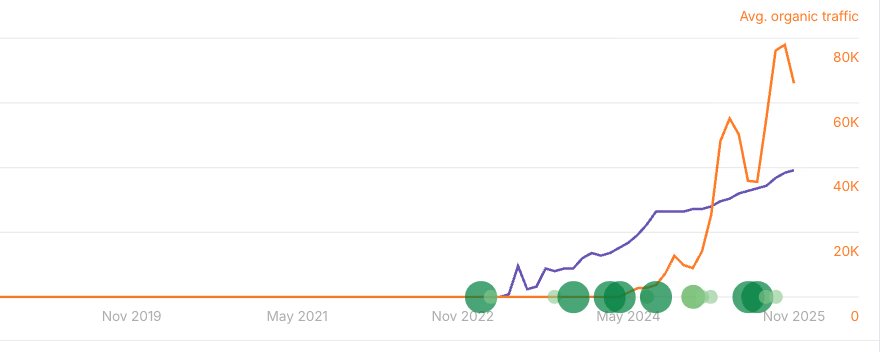
within weeks the copycat was sitting in positions 1-3 for EssayGrader's OWN brand name.
every lead doing due diligence was landing on the wrong site. revenue dropped and their team panicked.
most agencies would have told them to "wait it out and let Google sort it."
we went the other way.
instead of defending their brand, we attacked the copycat's entire keyword footprint with comparison and alternatives pages targeting every category term they ranked for.
12 months later EssayGrader had reclaimed their brand, gone from 3,000 to 77,000 monthly visitors (a 2,467% increase), and one single page ("Magic School AI alternatives") was driving over 5,000 visits a month on its own.

the entire strategy is now one of the most repeatable methods we run for B2B SaaS clients. here's how it works:
# The new buyer journey
it doesn't look like 2020 anymore.
then: search Google → open 8 tabs → compare features → demo → buy
now: search the default brand → search "[default brand] alternatives" → pick from the 3 names in the list → demo one → buy
roughly 40% of SaaS buyers now start their research in ChatGPT or Perplexity instead of Google.
and when they do that, the AI engine pulls its answer from whatever comparison pages are already ranking for "[competitor] alternatives" on Google.
own the comparison page = own the AI citation = own the deal.
that's how a single comparison page can outperform 50 blog posts in revenue. it's a double dip on every level.
# Why most founders refuse to do this
every category has 3-5 default brands sitting on top of the search volume:
• Salesforce in CRM
Generated by Thread Navigator
Press ⌘ + S to quick-export