Power and Endurance: Polar Opposites or Willing Partners?
📑 New Review Article
This review explores evidence for interference or reciprocation btw peak neuromuscular power & endurance performance
Key findings below 👇


Strength training enhances endurance performance via:
↑ Running economy / movement economy
↑ Fatigue resistance
↑ Neuromuscular reserve for end-sprint / surges
2–3 resistance sessions per week (≈25% of total training) is beneficial for endurance athletes.
↑ Running economy / movement economy
↑ Fatigue resistance
↑ Neuromuscular reserve for end-sprint / surges
2–3 resistance sessions per week (≈25% of total training) is beneficial for endurance athletes.
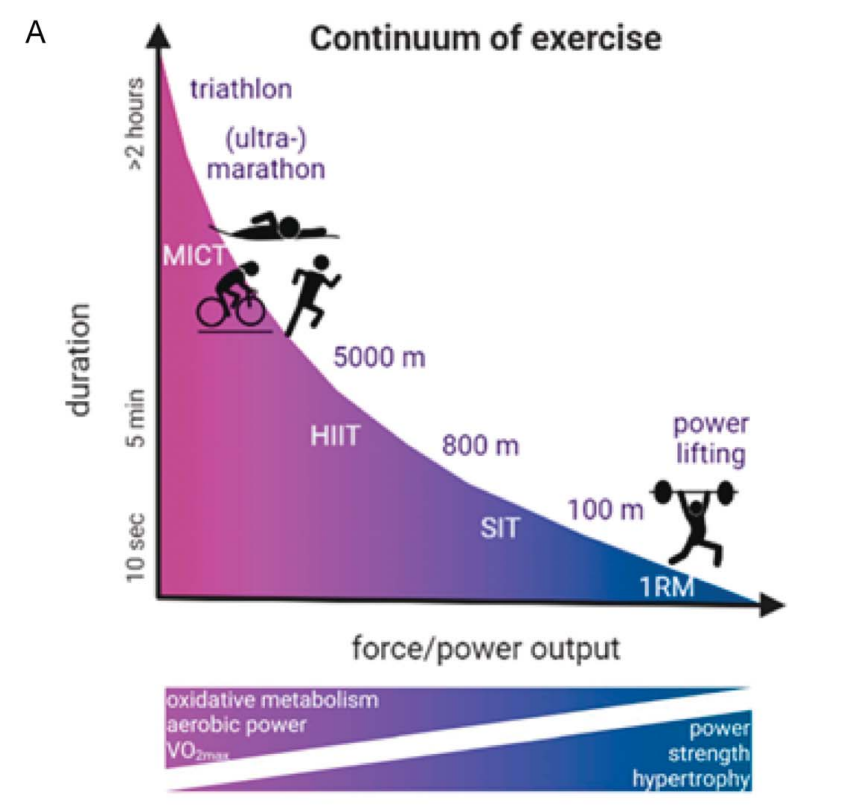
Strength and power training is particularly valuable for rowers and cyclists where both high aerobic capacity & leg muscle volume underpin performance.
Power & endurance are not polar opposites, but mutually reinforcing qualities across the performance and health spectrum.
Power & endurance are not polar opposites, but mutually reinforcing qualities across the performance and health spectrum.
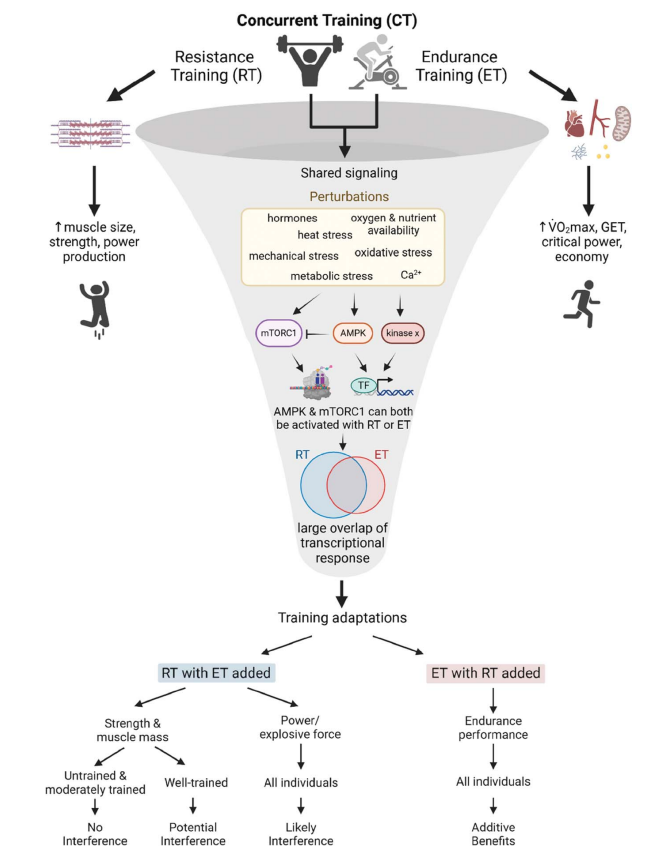
More recent evidence shows "Interference Effect” is overstated.
No sig. interference w strength or hypertrophy in moderately trained athletes
Explosive strength (RFD, jump performance) may be impaired if endurance & resistance are performed in same session w/ high fatigue
No sig. interference w strength or hypertrophy in moderately trained athletes
Explosive strength (RFD, jump performance) may be impaired if endurance & resistance are performed in same session w/ high fatigue
Practical application: Separate endurance & resistance sessions by >6 hours especially in highly trained athletes
Concurrent training isn't an issue. Poor sequencing, excessive fatigue, and lack of specificity are.
Identify priorities and program accordingly
Concurrent training isn't an issue. Poor sequencing, excessive fatigue, and lack of specificity are.
Identify priorities and program accordingly
Generated by Thread Navigator
Press ⌘ + S to quick-export