THE DEFINITIVE GUIDE TO MAGNESIUM
Today we're going back to the basics with an overview of my favorite mineral of all time, magnesium, one of the cornerstones of life on earth
Why magnesium is so important, and how to use it to improve your health
THREAD //


This thread will be split into two sections:
The chemistry of magnesium, and how to supplement magnesium
If you're only interested in practical advice feel free to scroll down to the second section
Now without further ado, let's jump right in
The chemistry of magnesium, and how to supplement magnesium
If you're only interested in practical advice feel free to scroll down to the second section
Now without further ado, let's jump right in
MAGNESIUM CHEMISTRY
Magnesium is what's known as a divalent cation
This means it has two outer orbital electrons, and it tends to lose them giving it a +2 charge in solution
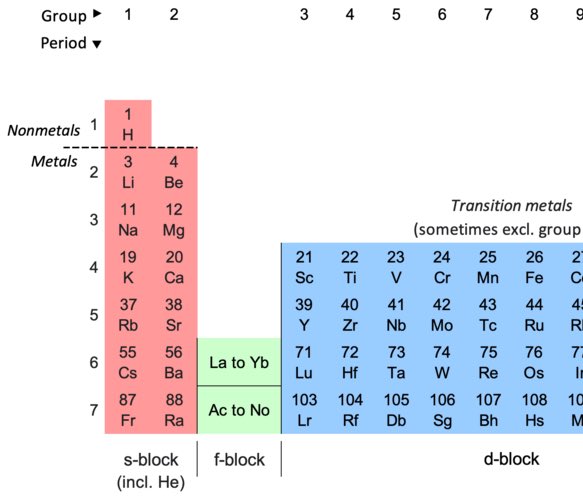
It's found in group 2 in the periodic table with other divalent cations like calcium and beryllium
Magnesium is what's known as a divalent cation
This means it has two outer orbital electrons, and it tends to lose them giving it a +2 charge in solution
It's found in group 2 in the periodic table with other divalent cations like calcium and beryllium
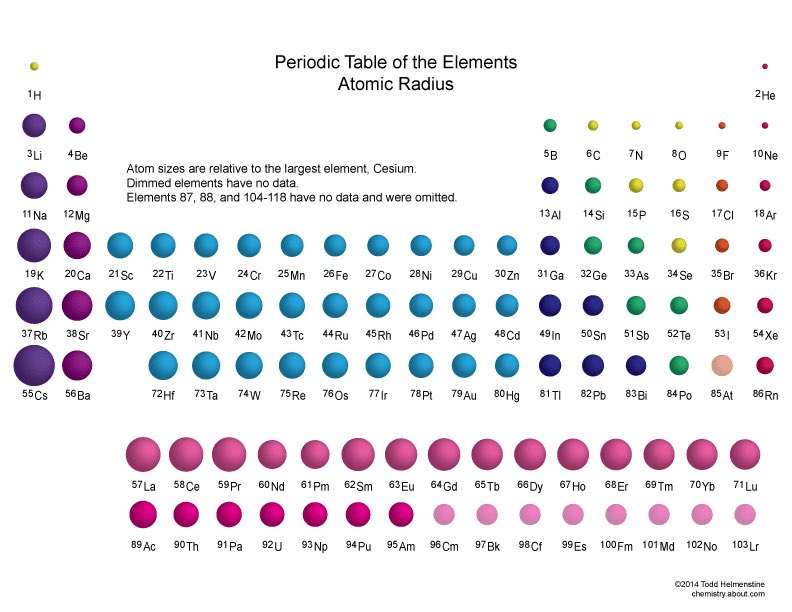
The defining property of magnesium as an element is its high charge/size ratio
Compared to the other cations used in biology (calcium, sodium, and potassium) magnesium has the smallest atomic radius but +2 charge
This plays a role in how magnesium interacts with water
Compared to the other cations used in biology (calcium, sodium, and potassium) magnesium has the smallest atomic radius but +2 charge
This plays a role in how magnesium interacts with water
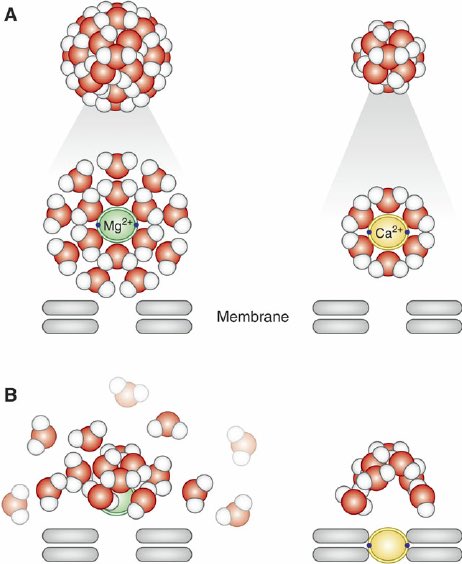
Water is a molecular dipole, the oxygen side holds more negative electrons, while the two hydrogens are more positive
This means a "hydration shell" of water molecules will cluster around charged ions dissolved in water
Magnesium forms a larger hydration shell than calcium
This means a "hydration shell" of water molecules will cluster around charged ions dissolved in water
Magnesium forms a larger hydration shell than calcium

Calcium's small hydration shell allows it to diffuse quickly
Because calcium and magnesium have the same +2 charge, calcium binding sites in proteins are occupied by magnesium at rest
Sudden calcium influx displaces it, activating various proteins and stimulating the cell
Because calcium and magnesium have the same +2 charge, calcium binding sites in proteins are occupied by magnesium at rest
Sudden calcium influx displaces it, activating various proteins and stimulating the cell
This is also what allows magnesium to act as a calcium channel blocker
It binds calcium channels, such as the excitatory NMDA glutamate receptors in neurons, but its hydration shell is too large to pass through
This gives it an inhibitory effect on muscle, neuron firing, etc
It binds calcium channels, such as the excitatory NMDA glutamate receptors in neurons, but its hydration shell is too large to pass through
This gives it an inhibitory effect on muscle, neuron firing, etc
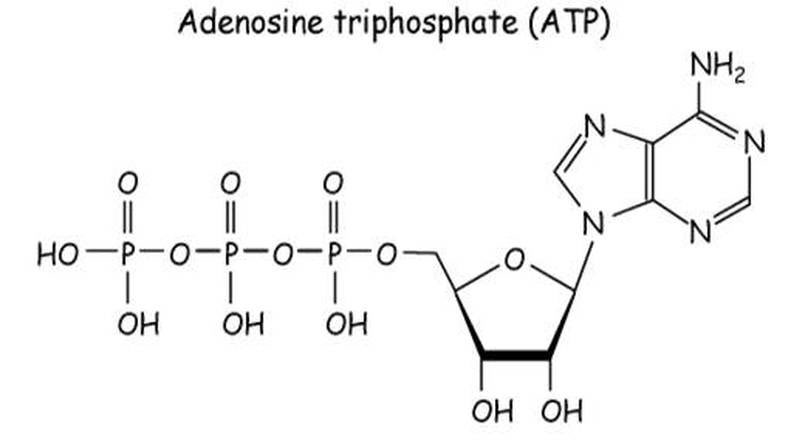
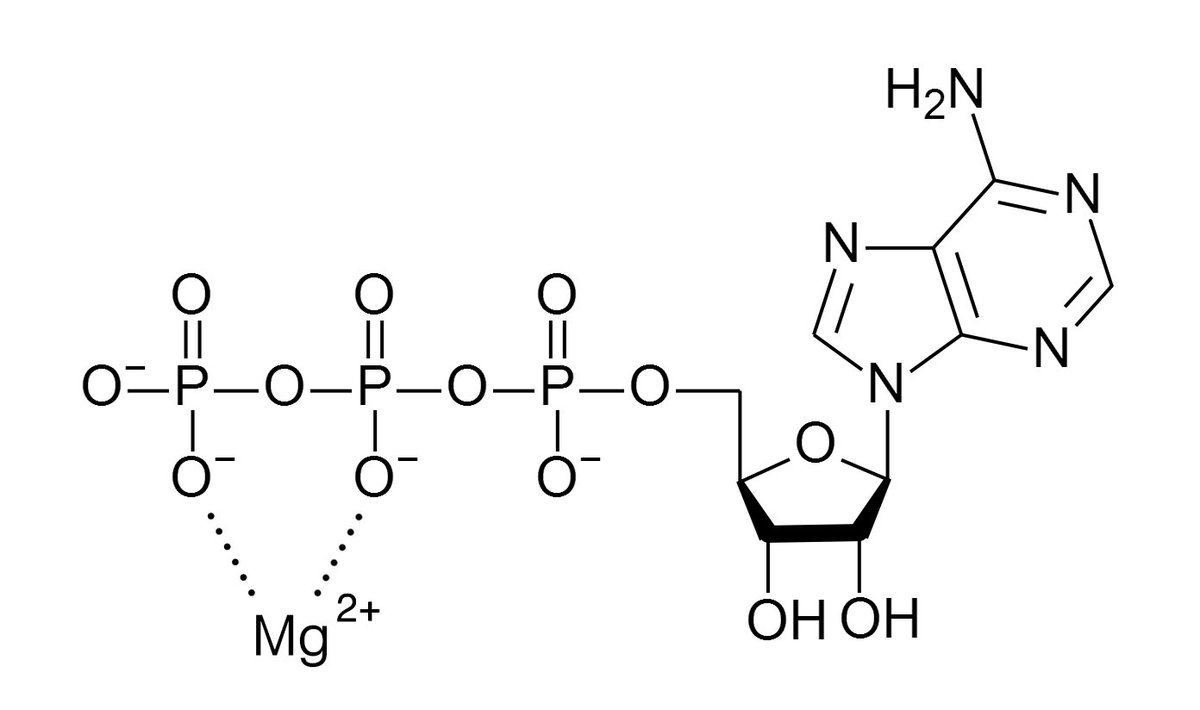
Another important role magnesium plays is its interaction with ATP
ATP serves several purposes in living cells
It contains a tail made of three phosphate groups, and directly activates many protein by attaching phosphate groups to them
It also acts as a marker of energy status
ATP serves several purposes in living cells
It contains a tail made of three phosphate groups, and directly activates many protein by attaching phosphate groups to them
It also acts as a marker of energy status
This is because the level of ATP is directly coupled to the charge separation that mitochondria use to generate energy
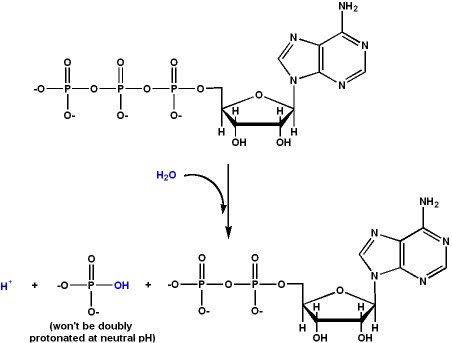
Normally in solution, ATP will rapidly degrade into ADP by losing phosphate groups
The cell maintains a far-from-entropy state by keeping a high ATP/ADP ratio
Normally in solution, ATP will rapidly degrade into ADP by losing phosphate groups
The cell maintains a far-from-entropy state by keeping a high ATP/ADP ratio

Magnesium slows down the natural breakdown of ATP into ADP by stabilizing its phosphate chain
Magnesium is ideal for this purpose because its high charge/size ratio allows it to form a tight bond with the phosphate groups
Replacing it with other ions tends to destabilize ATP
Magnesium is ideal for this purpose because its high charge/size ratio allows it to form a tight bond with the phosphate groups
Replacing it with other ions tends to destabilize ATP
Magnesium also acts as a direct cofactor by speeding up various reaction in cells
Some estimates suggest that more than 40% of all enzymes in the body require magnesium to function
Often this stems from magnesium's ability to bind nearby water rather than magnesium itself
Some estimates suggest that more than 40% of all enzymes in the body require magnesium to function
Often this stems from magnesium's ability to bind nearby water rather than magnesium itself
A good example of this is hydrolysis reactions
Hydrolysis refers to a type of bond-breaking reaction that uses water as a cofactor
Usually this involves splitting water into -OH and +H and attaching each half to one of the resulting byproducts, such as in breaking peptide bonds
Hydrolysis refers to a type of bond-breaking reaction that uses water as a cofactor
Usually this involves splitting water into -OH and +H and attaching each half to one of the resulting byproducts, such as in breaking peptide bonds

Another reason magnesium works closely with ATP is that breaking the phosphate bond in ATP also involves hydrolysis
This means proteins that are phosphorylated (activated) by ATP usually have a magnesium binding site that provides water
Magnesium is necessary to burn ATP
This means proteins that are phosphorylated (activated) by ATP usually have a magnesium binding site that provides water
Magnesium is necessary to burn ATP
Other factors in biology including GTP, vitamin B1, glucose, and creatine have phosphate forms that require magnesium to stabilize or use
Magnesium is also a mild Lewis acid and can speed up reactions that require acidity
DNA and other proteins even coil around magnesium ions
Magnesium is also a mild Lewis acid and can speed up reactions that require acidity
DNA and other proteins even coil around magnesium ions
HOW TO SUPPLEMENT MAGNESIUM
Magnesium is one of the most accessible, affordable, and well-tolerated supplements on the market
I think just about everyone could benefit from using it
First, let's talk about two concepts:
"magnesium burn rate" and
"magnesium saturation"
Magnesium is one of the most accessible, affordable, and well-tolerated supplements on the market
I think just about everyone could benefit from using it
First, let's talk about two concepts:
"magnesium burn rate" and
"magnesium saturation"
The "burn rate" for magnesium refers to how much the body uses in a given period of time
Factors like age, stress, disease, aging, and physical activity can all affect your daily magnesium requirement
This concept applies to other nutrients like potassium and B-vitamins as well
Factors like age, stress, disease, aging, and physical activity can all affect your daily magnesium requirement
This concept applies to other nutrients like potassium and B-vitamins as well
Magnesium saturation occurs when the magnesium supply is enough for the body to fulfill its requirements, with some extra
Most people don't realize that bone doesn't just serve as a reservoir for calcium
It's estimated that more than 10 grams of magnesium can be stored in bone!
Most people don't realize that bone doesn't just serve as a reservoir for calcium
It's estimated that more than 10 grams of magnesium can be stored in bone!
When magnesium burn rate is high, and magnesium intake is low, the storage levels of magnesium can be depleted over time
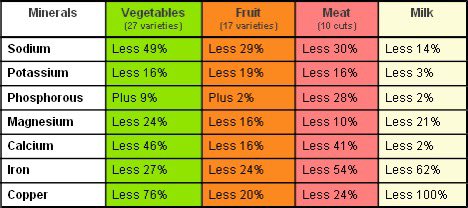
This is compounded by the fact that modern agriculture has led to most fruits/vegetables being significantly depleted of magnesium due to low soil levels
This is compounded by the fact that modern agriculture has led to most fruits/vegetables being significantly depleted of magnesium due to low soil levels
Magnesium storage also means that blood tests like serum magnesium are not able to detect deficiency
Patients often end up in the ICU before they're diagnosed with deficient magnesium
ncbi.nlm.nih.gov/pmc/articles/P…
RBC magnesium is a more accurate test that looks at cellular levels
Patients often end up in the ICU before they're diagnosed with deficient magnesium
ncbi.nlm.nih.gov/pmc/articles/P…
RBC magnesium is a more accurate test that looks at cellular levels
Some estimates suggest as much as 90% of the population is magnesium deficient
Often this is "sub-clinical" deficiency that could take years to cause problems, but severe illness will increase its severity
This is why I'm so passionate about supplementing magnesium
Often this is "sub-clinical" deficiency that could take years to cause problems, but severe illness will increase its severity
This is why I'm so passionate about supplementing magnesium
Generated by Thread Navigator
Press ⌘ + S to quick-export