We DID NOT eat less prior to obesity. We didn't even eat "healthy"...

Dalton (Analyze & Optimize)@Outdoctrination
107 views
Apr 07, 2026
~5 min read
Advertisement
1
We DID NOT eat less prior to obesity.
We didn't even eat "healthy" by modern standards.
In fact, we ate lots of calories, fat, sugar and carbs.
This is what we used to REALLY eat, back when everyone was skinny (based on historical evidence):
(🧵1/11)
We didn't even eat "healthy" by modern standards.
In fact, we ate lots of calories, fat, sugar and carbs.
This is what we used to REALLY eat, back when everyone was skinny (based on historical evidence):
(🧵1/11)
2
United states calorie supply:
1909 = ~3500 calories.
1989 = ~3500 calories.
Yet, obesity increased by about 10 FOLD.
What exactly were we eating? Well...
1909 = ~3500 calories.
1989 = ~3500 calories.
Yet, obesity increased by about 10 FOLD.
What exactly were we eating? Well...
3
We ate TONS of calories prior to the obesity epidemic.
Let's take a look at the 1939 USDA book of agriculture.
The more money people spent, the more calories were consumed.
On the low end: around 2,000.
On the high end: over 4,000, even close to 5,000 a day.
This is for a 154 pound man who was "moderately active."
This would be more active than a man today for sure, but the richest people would also be the least active of the day, yet no detectable obesity crisis.
Let's take a look at the 1939 USDA book of agriculture.
The more money people spent, the more calories were consumed.
On the low end: around 2,000.
On the high end: over 4,000, even close to 5,000 a day.
This is for a 154 pound man who was "moderately active."
This would be more active than a man today for sure, but the richest people would also be the least active of the day, yet no detectable obesity crisis.
4
We used to eat a high carb, high sugar, high fat, high calorie diet.
If we look at specific foods we get an idea of their diet.
Carbs: ≈ 430 g → ~1,700 kcal (~53% of energy)
ADDED SUGAR: ≈ 137 g
Protein: ≈ 110 g → ~430 kcal (~13% of energy)
Fat: ≈ 120 g → ~1,090 kcal (~34% of energy)
Total ≈ 3,200 cal/day for an average PERSON. Not even for an average adult man, average PERSON.
Plenty of potatoes, bread.
About half a pound of fruits + half a pound of vegetables a day.
It is true that some of this would go to waste, but it's unlikely that more than 10% would especially during this era of relative food insecurity.
If we look at specific foods we get an idea of their diet.
Carbs: ≈ 430 g → ~1,700 kcal (~53% of energy)
ADDED SUGAR: ≈ 137 g
Protein: ≈ 110 g → ~430 kcal (~13% of energy)
Fat: ≈ 120 g → ~1,090 kcal (~34% of energy)
Total ≈ 3,200 cal/day for an average PERSON. Not even for an average adult man, average PERSON.
Plenty of potatoes, bread.
About half a pound of fruits + half a pound of vegetables a day.
It is true that some of this would go to waste, but it's unlikely that more than 10% would especially during this era of relative food insecurity.
5
Based on these numbers, here's an average day of eating in the 1930s:
Breakfast
Oatmeal & toast
• 1 bowl cooked oatmeal made from ⅓ cup dry oats (~30 g grain)
• 1 Tbsp sugar on the oatmeal (~12 g sugar)
• 1 Tbsp raisins (~10 g dried fruit)
• Toast with butter & jam
3 slices white toast (~85 g bread)
• 2 tsp butter total (~10 g butter)
• 1.5 Tbsp jam (~20 g jam ≈ 12 g sugar + a little fruit)
Egg & bacon
• 1 fried egg (~50 g egg)
• 2–3 slices bacon (~30 g meat, a lot of fat counted in “other fats”)
Drinks
• 1 cup whole milk (~240 g milk)
• 1 cup coffee with 3 tsp sugar (~12 g) and a good splash of cream (~30 g milk/cream)
Lunch
Ham & cheese sandwich
• 2 slices white bread (~56 g grain)
• 2 oz ham (~56 g meat)
• 1 oz cheddar cheese (~28 g “other dairy”)
• Butter (~5 g)
Vegetable soup
• ½ cup mixed vegetables (~80 g veg)
• ⅓ cup potato (~50 g potato)
Fruit & milk
• 1 medium apple (~150 g fresh fruit)
• ½ cup whole milk (~120 g)
Sugar in tea/coffee (~8 g)
Dessert
Slice of fruit pie
• Crust made with ~¼ cup flour (~35 g grain)
• Pie fat (shortening/lard) ~20 g “other fat”
• Fruit filling ~½ cup cooked fruit (~80 g fruit)
• Sugar in the filling ~2½ Tbsp (~30 g sugar)
Maybe another small sweet drink or sugar in coffee/tea (extra ~15 g sugar).
Supper (Dinner)
Meat, potatoes, gravy
• Roast pork or beef, ~3–3½ oz cooked (~90 g meat)
• Mashed potatoes, ~1½ cups total (~180 g potato)
• Extra ladle of gravy made with drippings/flour (~15 g fat from “other fats”)
Vegetables
• Green beans, ~½ cup (~70 g)
• Carrots, ~½ cup (~40 g)
• Small salad of lettuce (~30 g) with an oily dressing (~10 g fat)
Bread & butter
• 1 dinner roll (~30 g grain)
• 1 tsp butter (~6 g)
• Side of baked beans (~¼–⅓ cup cooked, ~25 g legumes counted in “beans, peas, nuts”)
Dessert:
• A little more sugar from dessert or sweet drink (~20 g)
• Small scoop of ice cream (~40 g—counts toward milk/cream)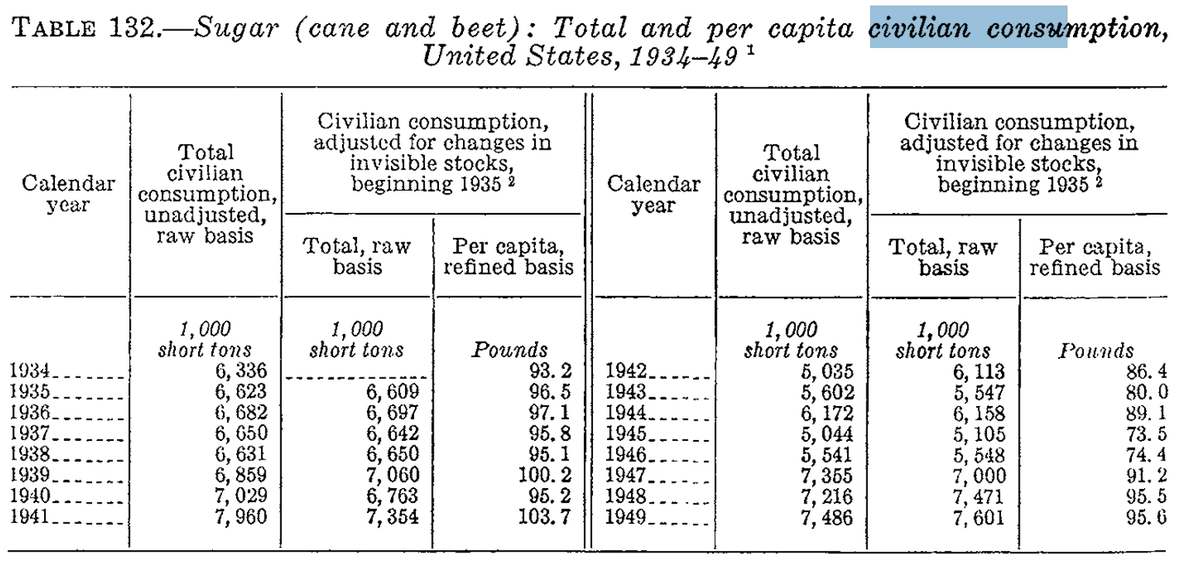
Breakfast
Oatmeal & toast
• 1 bowl cooked oatmeal made from ⅓ cup dry oats (~30 g grain)
• 1 Tbsp sugar on the oatmeal (~12 g sugar)
• 1 Tbsp raisins (~10 g dried fruit)
• Toast with butter & jam
3 slices white toast (~85 g bread)
• 2 tsp butter total (~10 g butter)
• 1.5 Tbsp jam (~20 g jam ≈ 12 g sugar + a little fruit)
Egg & bacon
• 1 fried egg (~50 g egg)
• 2–3 slices bacon (~30 g meat, a lot of fat counted in “other fats”)
Drinks
• 1 cup whole milk (~240 g milk)
• 1 cup coffee with 3 tsp sugar (~12 g) and a good splash of cream (~30 g milk/cream)
Lunch
Ham & cheese sandwich
• 2 slices white bread (~56 g grain)
• 2 oz ham (~56 g meat)
• 1 oz cheddar cheese (~28 g “other dairy”)
• Butter (~5 g)
Vegetable soup
• ½ cup mixed vegetables (~80 g veg)
• ⅓ cup potato (~50 g potato)
Fruit & milk
• 1 medium apple (~150 g fresh fruit)
• ½ cup whole milk (~120 g)
Sugar in tea/coffee (~8 g)
Dessert
Slice of fruit pie
• Crust made with ~¼ cup flour (~35 g grain)
• Pie fat (shortening/lard) ~20 g “other fat”
• Fruit filling ~½ cup cooked fruit (~80 g fruit)
• Sugar in the filling ~2½ Tbsp (~30 g sugar)
Maybe another small sweet drink or sugar in coffee/tea (extra ~15 g sugar).
Supper (Dinner)
Meat, potatoes, gravy
• Roast pork or beef, ~3–3½ oz cooked (~90 g meat)
• Mashed potatoes, ~1½ cups total (~180 g potato)
• Extra ladle of gravy made with drippings/flour (~15 g fat from “other fats”)
Vegetables
• Green beans, ~½ cup (~70 g)
• Carrots, ~½ cup (~40 g)
• Small salad of lettuce (~30 g) with an oily dressing (~10 g fat)
Bread & butter
• 1 dinner roll (~30 g grain)
• 1 tsp butter (~6 g)
• Side of baked beans (~¼–⅓ cup cooked, ~25 g legumes counted in “beans, peas, nuts”)
Dessert:
• A little more sugar from dessert or sweet drink (~20 g)
• Small scoop of ice cream (~40 g—counts toward milk/cream)
6
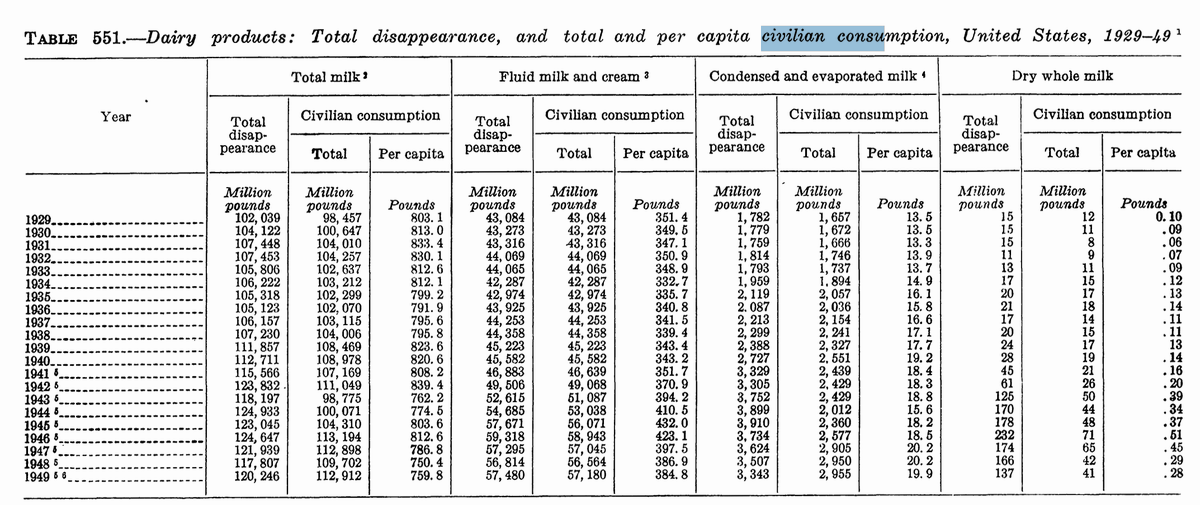
Other key diet notes from late 40s/50s:
◈ 175g of carbs from grains (rice, flour, etc)
◈ 4 cups (!) of milk (& cream) daily
◈ No chicken recorded, main meat was PORK - about 6 oz of meat total a day

◈ 175g of carbs from grains (rice, flour, etc)
◈ 4 cups (!) of milk (& cream) daily
◈ No chicken recorded, main meat was PORK - about 6 oz of meat total a day
7
1955 - Food records were this time determined by interviewing house members.
The numbers line up well with the country wide consumption numbers.
➠ >2 cups of milk a day
➠ >1 cup of ICE CREAM per week
➠ 12 oz of proteins - over 8 oz of meat / fish
➠ ~1/2 pound of vegetables
➠ Orange juice + 6 oz of other fruit
➠ 92 grams of added sugar!
The numbers line up well with the country wide consumption numbers.
➠ >2 cups of milk a day
➠ >1 cup of ICE CREAM per week
➠ 12 oz of proteins - over 8 oz of meat / fish
➠ ~1/2 pound of vegetables
➠ Orange juice + 6 oz of other fruit
➠ 92 grams of added sugar!
8
I was shocked to find out that they were actually on a higher fat diet.
➠ 44% of calories from fat
➠ 43% from carbs
A whopping 155g of fat a day!
65 grams of saturated fat!
4.5% of calories came from linoleic acid, the main fat in seed oils. This is about 1/3 of what we consume today.
Based on these numbers - we see an average intake of 3170 calories per day.
➠ 44% of calories from fat
➠ 43% from carbs
A whopping 155g of fat a day!
65 grams of saturated fat!
4.5% of calories came from linoleic acid, the main fat in seed oils. This is about 1/3 of what we consume today.
Based on these numbers - we see an average intake of 3170 calories per day.
9
About HALF of the carbs consumed in 1955 were SUGARS, about 21% of the total diet.
The other half were starches.
This aligns with what I have been writing about recently, that sugar synergizes with starch metabolically as a part of the diet.
x.com/Outdoctrinatio…
The other half were starches.
This aligns with what I have been writing about recently, that sugar synergizes with starch metabolically as a part of the diet.
x.com/Outdoctrinatio…
10
So how were people back then able to eat so much food, sugar, fat, etc and remain lean and healthy?
Sure, moving more is definitely a part of it, but even relatively generous estimates put that as accounting for 100 calories throughout the workday.
My take is that it's a TON of factors that all come together - death by 1000 cuts, if you will:
◇ More seed oils
◇ Less time outside (sunlight highly protective)
◇ Disrupted circadian rhythms
◇ Less nutritious food (less vitamins + minerals + phenolics and other protective compounds)
◇ Worse gut health (rise of antibiotics, C sections, food additives, overly sterilized environments)
and the list goes on and on. I'm writing about it constantly here.
Almost no one can eat like this today, because almost nobody has the metabolism of a person from the 1930s-50s.
Our goal should be to fix that.
Sure, moving more is definitely a part of it, but even relatively generous estimates put that as accounting for 100 calories throughout the workday.
My take is that it's a TON of factors that all come together - death by 1000 cuts, if you will:
◇ More seed oils
◇ Less time outside (sunlight highly protective)
◇ Disrupted circadian rhythms
◇ Less nutritious food (less vitamins + minerals + phenolics and other protective compounds)
◇ Worse gut health (rise of antibiotics, C sections, food additives, overly sterilized environments)
and the list goes on and on. I'm writing about it constantly here.
Almost no one can eat like this today, because almost nobody has the metabolism of a person from the 1930s-50s.
Our goal should be to fix that.
11
SOURCES
esmis.nal.usda.gov/sites/default/… - “civilian consumption”
fireinabottle.net/torpor-sloth-a…
ars.usda.gov/ARSUserFiles/8… - 1955
esmis.nal.usda.gov/sites/default/… - “civilian consumption”
fireinabottle.net/torpor-sloth-a…
ars.usda.gov/ARSUserFiles/8… - 1955