@lowmegatron: The thyroid hormone T3 is esse...
@lowmegatron
79 views
Apr 28, 2025
1
The thyroid hormone T3 is essential for a fast metabolism - but the thyroid gland only releases a little T3 - and a lot of inactive T4. The local conversion of T4 to T3 is critical for metabolic health.
Here are some tips for optimizing conversion. 🧵
Here are some tips for optimizing conversion. 🧵

2
Eat enough.
Eat regularly.
Eat carbs.
Caloric restriction, fasting, and low-carb diets decrease thyroid hormone conversion. These diets program the body to survive famine, slowing the metabolism by creating reverse T3 instead of T3.
Eat regularly.
Eat carbs.
Caloric restriction, fasting, and low-carb diets decrease thyroid hormone conversion. These diets program the body to survive famine, slowing the metabolism by creating reverse T3 instead of T3.
View Tweet


3
For people needing thyroid hormone, choosing the right type is key.
Reverse T3 blocks T3, but both are made from T4. The more T4 in the system, the greater the substrate for creating reverse T3. So, T4-only increases the likelihood of conversion issues.
T3-only can be used to deplete or prevent reverse T3 from getting too high. However, for many people, a combination of both works best.
Reverse T3 blocks T3, but both are made from T4. The more T4 in the system, the greater the substrate for creating reverse T3. So, T4-only increases the likelihood of conversion issues.
T3-only can be used to deplete or prevent reverse T3 from getting too high. However, for many people, a combination of both works best.
View Tweet
4
The liver is the biggest point of thyroid hormone conversion, making far more thyroid hormone (T3) than the thyroid itself.
Women, in particular, need to pay attention to the liver - especially the estrogen load on the organ. Estrogen takes up a lot of liver resources.
The Ray Peat Carrot Salad is very effective for some women as it can help absorb estrogen and other things that otherwise stress the liver and decrease conversion.
The recipe is simple:
One large shredded carrot.
A teaspoon of coconut or olive oil.
A teaspoon of vinegar.
The carrot should be shredded lengthwise to maximize the fiber in contact with the gastrointestinal system.
Women, in particular, need to pay attention to the liver - especially the estrogen load on the organ. Estrogen takes up a lot of liver resources.
The Ray Peat Carrot Salad is very effective for some women as it can help absorb estrogen and other things that otherwise stress the liver and decrease conversion.
The recipe is simple:
One large shredded carrot.
A teaspoon of coconut or olive oil.
A teaspoon of vinegar.
The carrot should be shredded lengthwise to maximize the fiber in contact with the gastrointestinal system.
View Tweet
5
Zinc is an essential and often overlooked factor in thyroid hormone conversion. People at higher risk for zinc deficiency include older adults, pregnant and lactating women, vegetarians and vegans, and individuals with gastrointestinal disorders. Oysters are a great source of zinc.
View Tweet

6
Exercise stress can decrease thyroid hormone conversion, partly by increasing stress hormones. Combining dietary stresses like those mentioned earlier can amplify the anti-thyroid effects.
I'm not saying don't exercise, but do recognize that it is stressful. At a certain point, excess stress will downregulate the thyroid.
Build, don't break.
I'm not saying don't exercise, but do recognize that it is stressful. At a certain point, excess stress will downregulate the thyroid.
Build, don't break.
View Tweet

7
Decades ago, Dr. Broda Barnes noted that high-protein diets increase the need for thyroid supplementation in his hypothyroid patients.
High-protein diets tend to increase stress hormones that lower conversion, as those stress hormones are required to turn amino acids into glucose. Some amino acids like methionine also seem to inhibit thyroid hormone conversion. DIO2 converts T4 to T3.
High-protein diets tend to increase stress hormones that lower conversion, as those stress hormones are required to turn amino acids into glucose. Some amino acids like methionine also seem to inhibit thyroid hormone conversion. DIO2 converts T4 to T3.
View Tweet

8
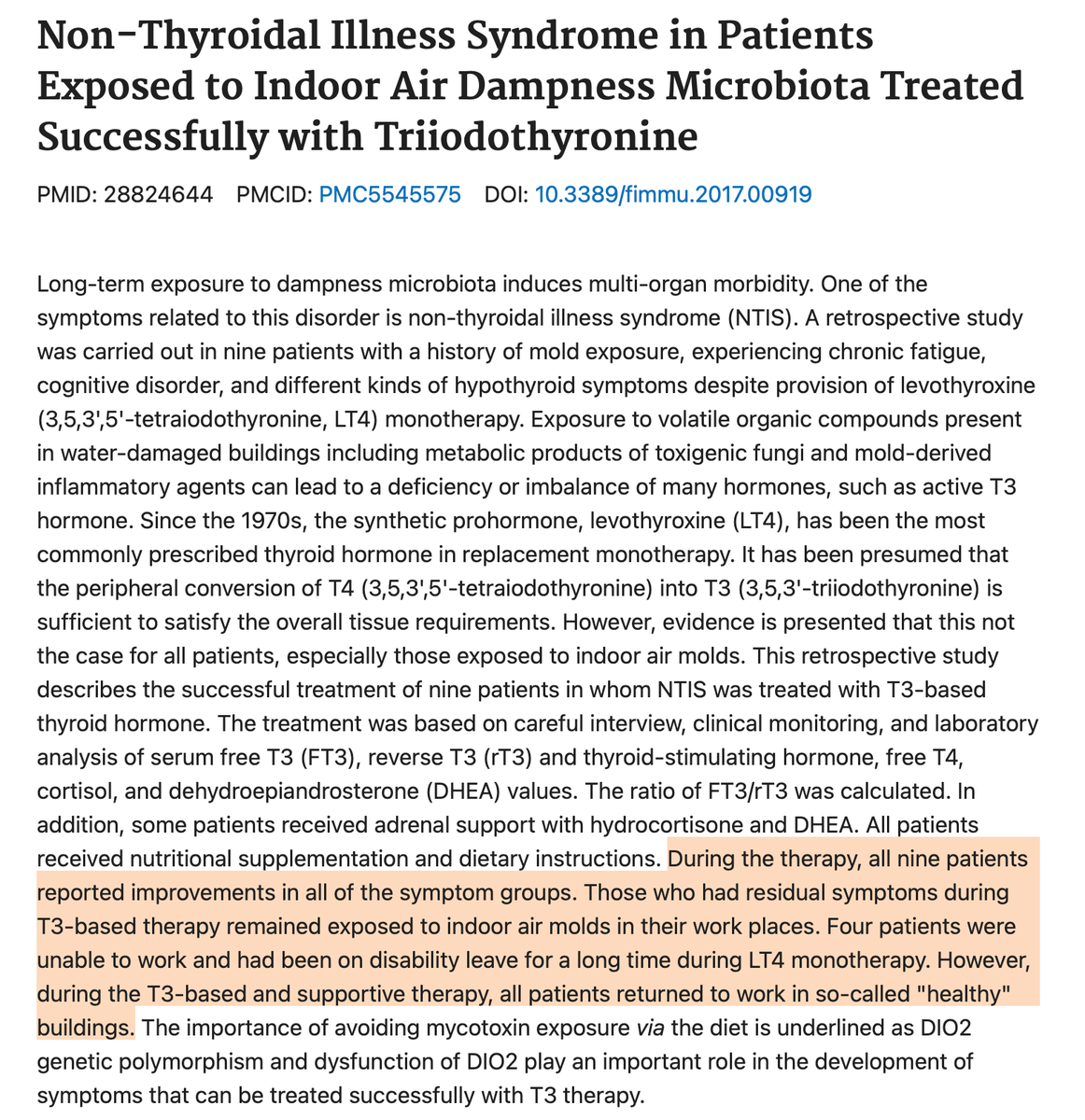
One reason mold is such a pervasive toxin is that it inhibits thyroid hormone conversion, impeding the body's ability to deal with the immune and inflammatory attack.
Mold can cause simple hypothyroidism, downregulating the release of thyroid hormones from the gland, which is often treated with T4 supplements.
However, because mold also blocks conversion, people often get worse on T4-only. Many don't get well until they are given T3.
Mold overloads and inflames the liver, a main point of thyroid conversion, while increasing stress hormones and inflammatory proteins that also downregulate conversion.
Mold can cause simple hypothyroidism, downregulating the release of thyroid hormones from the gland, which is often treated with T4 supplements.
However, because mold also blocks conversion, people often get worse on T4-only. Many don't get well until they are given T3.
Mold overloads and inflames the liver, a main point of thyroid conversion, while increasing stress hormones and inflammatory proteins that also downregulate conversion.

9
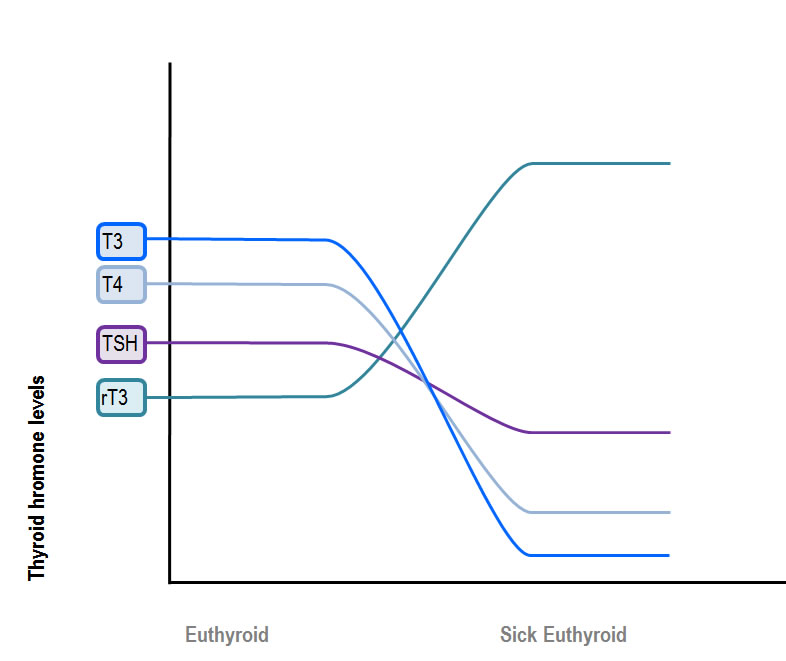
Mold and other pathogens cause nonthyroidal illness, also called euthyroid sick syndrome. It is characterized by low T3, low T3/rT3 ratio, and a normal TSH. T4 may be normal or high.
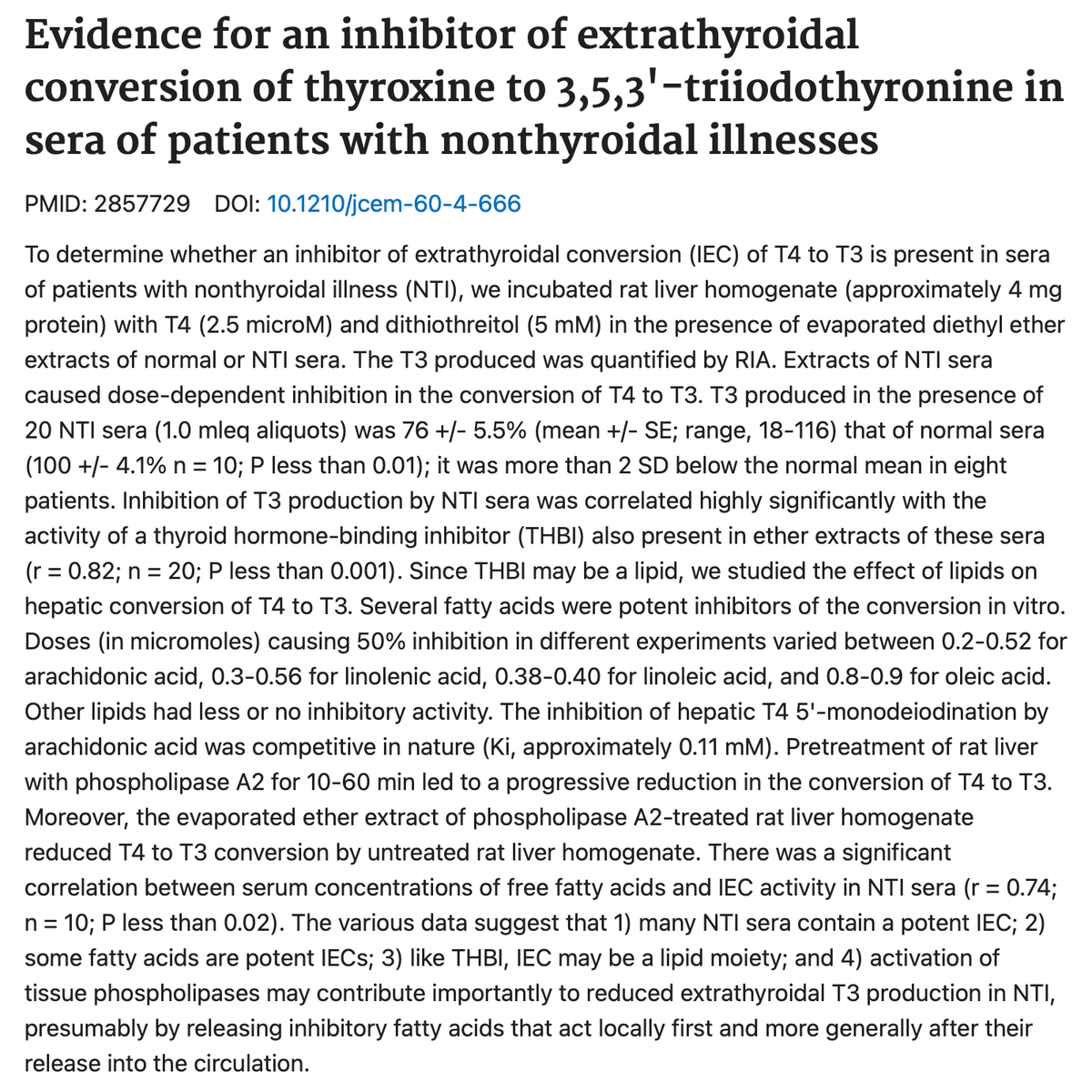
It seems that part of this effect is mediated by the release of large amounts of free fatty acids into the blood, inhibiting conversion to T3 and elevating reverse T3.
These polyunsaturated fats are linoleic, arachidonic, and linolenic acid, omega-6s, and omega-3s. They have broad-ranging anti-thyroid effects. Seed oils, pork, and poultry are major sources.
It seems that part of this effect is mediated by the release of large amounts of free fatty acids into the blood, inhibiting conversion to T3 and elevating reverse T3.
These polyunsaturated fats are linoleic, arachidonic, and linolenic acid, omega-6s, and omega-3s. They have broad-ranging anti-thyroid effects. Seed oils, pork, and poultry are major sources.
View Tweet
10
Selenium is essential for thyroid hormone conversion, and correcting a deficiency seems to prevent and somewhat reverse general thyroid dysfunction. 200-400 mcg per day seems sufficient.
View Tweet

11
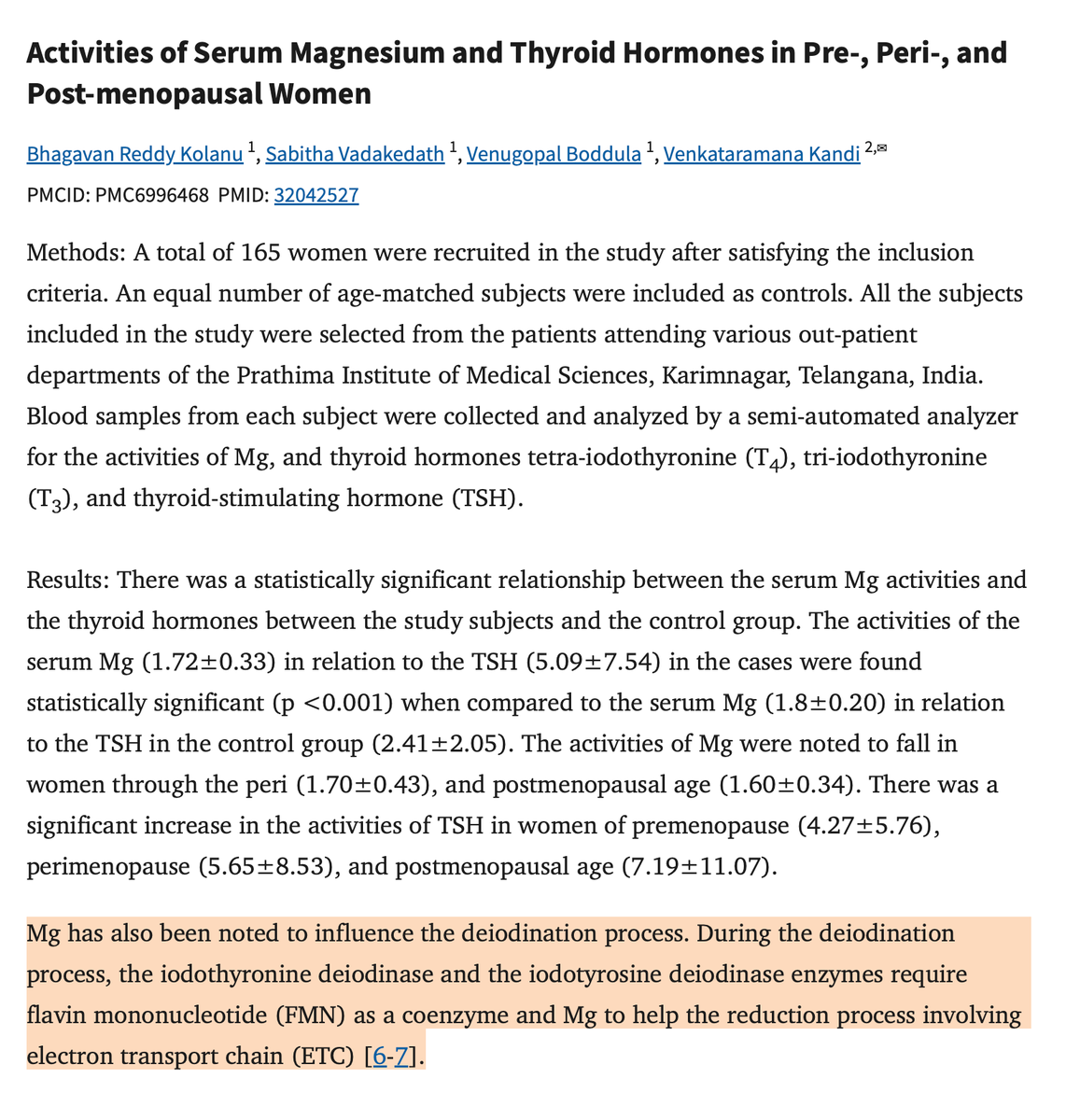
Magnesium is another often-deficient nutrient needed for thyroid hormone conversion. Many people only get 2-300 mg daily, but they could see huge benefits from getting 3-4 times this. Magnesium helps lower stress hormones that decrease thyroid hormone conversion.
View Tweet